What is Kanak Grande Case?
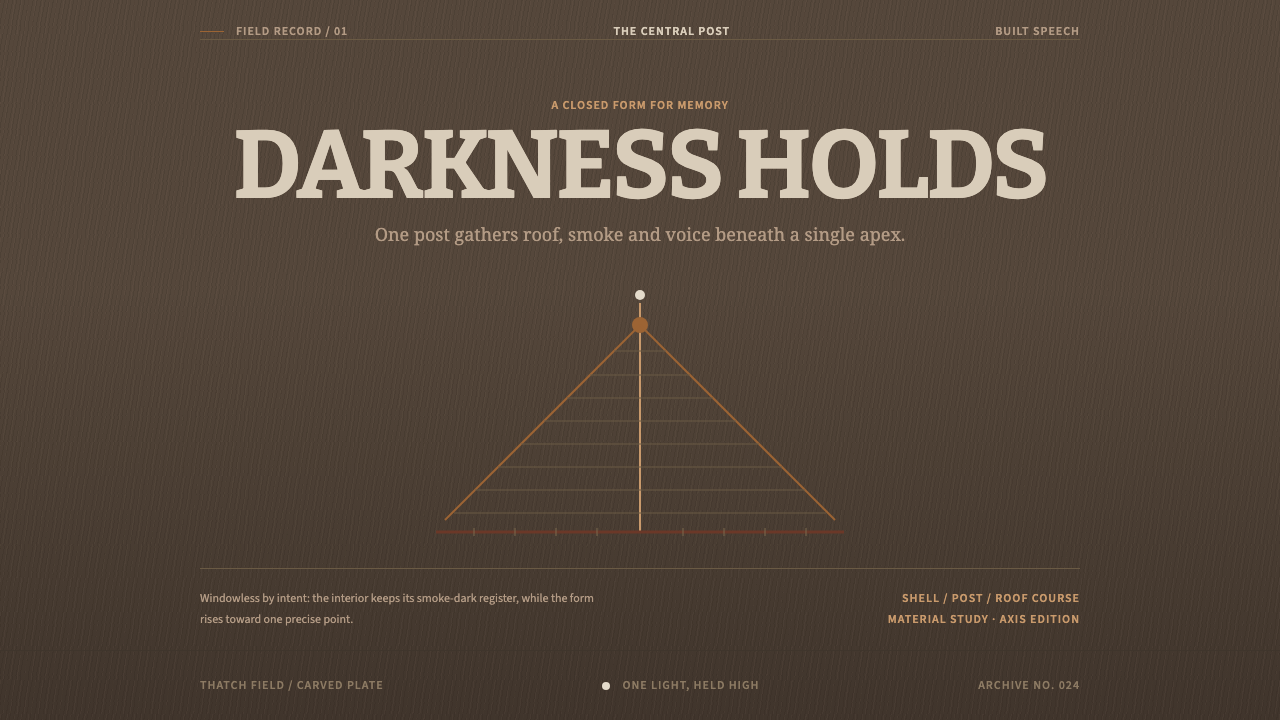
Darkness gives memory a shape in this style: a single cone of thatch, a smoke-dark interior and one bright shell high on a carved spire, the point toward which everything else converges.
Kanak Grande Case in brief
Kanak Grande Case takes its form from the grande case, the great house of Kanak customary architecture in New Caledonia, known in Kanak usage as Kanaky. It is a single cone: one houp post at the centre, a ring of carved uprights around it, niaouli bark and straw laid over the whole, and no window at all. The interior stays dark and smoky by design. The building is not a room with a roof; it is a roof that has become a room.
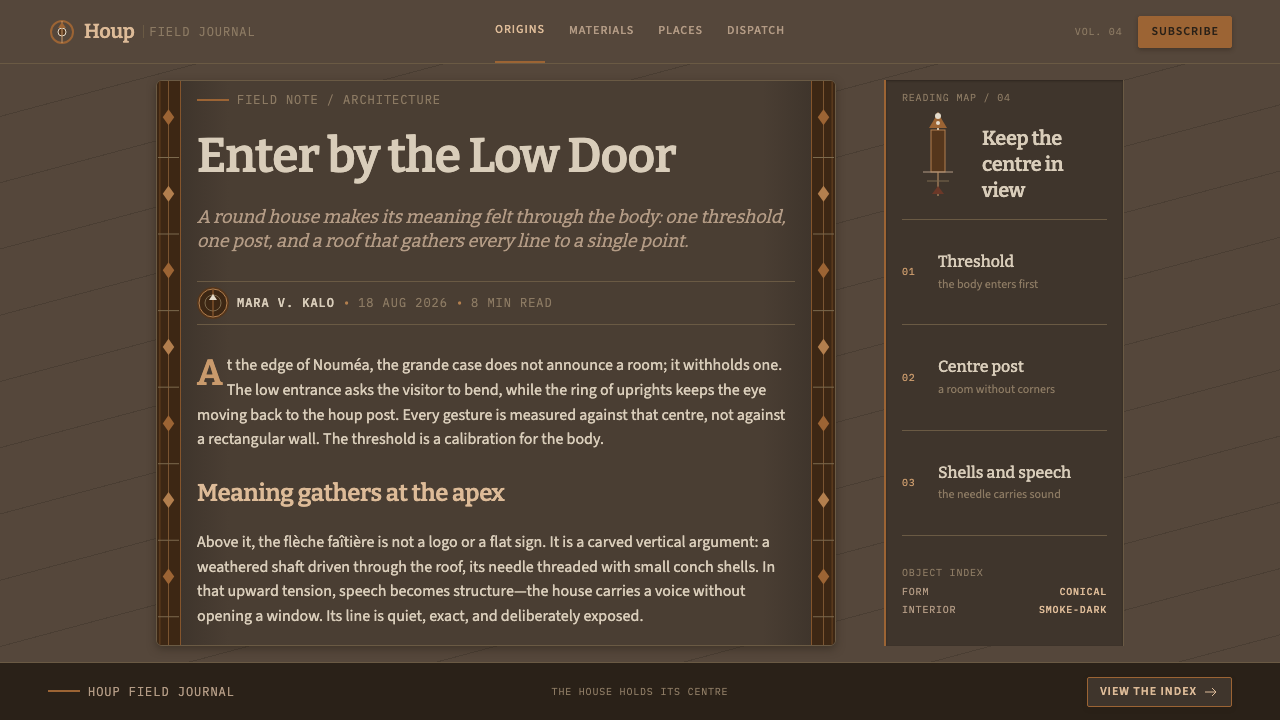
Two carved elements hold the meaning. The first is the chambranle, a pair of door jambs on either side of the low entrance, bearing the faces of ancestors. Anyone who enters passes between them. The second is the flèche faîtière, the spire driven through the apex of the roof. Its needle is threaded with conch shells that stand for the breath of speech. Everything else is thatch and lashing. Meaning is concentrated at the threshold and at the summit, and the walls between them are left plain.
The design system turns this into a palette and a composition. The ground is the grey-brown of aged thatch, a dark, matte, weathered colour rather than a clean black. The primary colour is the tone of carved houp wood, a deep, warm brown that carries the structure of the layout. A bright, shell-white accent appears only once, at the highest point, and is never spread out as a background. The layout gathers upward along a central axis, as every roofline of a conical house leans toward the same apex. The typography is a sturdy, slab-leaning serif that reads like lettering cut into wood rather than printed ink.
Where does Kanak Grande Case come from?
The grande case belongs to Grande Terre, the main island of New Caledonia, and to the Loyalty Islands to its east. The source material treats it as customary chiefly architecture: the house of a chief, built and maintained by a community according to long-standing rules, and placed from before 1900 to the present. The tradition has not stopped. This is not heritage in the sense of a closed past; the grande case is a living building type, rebuilt when it needs rebuilding and still standing at the centre of Kanak ceremonial life.
Its structure is a lesson in how a single decision organises everything else. The central post, made of houp, is the spine of the house; the ring of carved uprights around it supports the cone; the covering of niaouli bark and straw sheds water and holds smoke. With no windows, the only light enters through the low door, and the fire's smoke darkens the inner surfaces over time. The darkness is therefore not a failure of lighting but a quality of the place, comparable to the dim of a church or a cave, where attention turns inward.
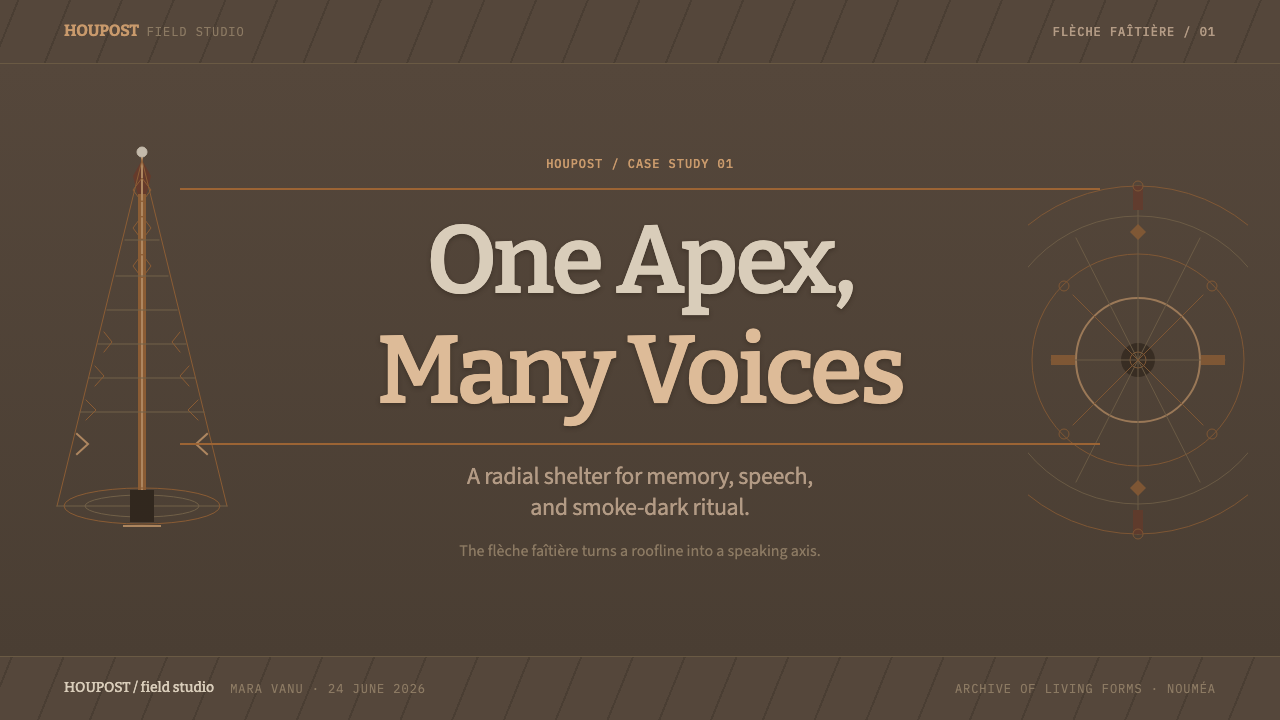
The meaning of the house lives in two carved assemblies. The chambranle presents ancestral faces frontally at the door, so a visitor crossing the threshold does so under the gaze of those who came before. The flèche faîtière, the roof spire, rises through the apex like a needle standing in the sky, and the conch shells threaded on it represent the breath of speech: the voice of the house and the speech that binds a community. Both elements belong to the broader Oceanic carving traditions named in the source material, in which wood is shaped to hold ancestry and voice. The design system takes from them its vertical emphasis and its habit of concentrating meaning in a few places.
The source material names Jean-Marie Tjibaou and Renzo Piano, and the pairing says something about how this tradition entered the wider world. Tjibaou, a Kanak leader, championed the affirmation of Kanak culture and identity; the cultural centre in Nouméa that bears his name was designed by the Italian architect Renzo Piano, who answered the grande case with a row of tall, curved wooden shells of varying heights. Alongside them stands the contemporary Kanak revival, in which carvers, builders and artists keep the customary forms alive while adapting them to present life. A design system that draws on the grande case enters that conversation, whether it intends to or not.
What defines the Kanak Grande Case look?
Thatch-Brown Ground
The page ground is the grey-brown of aged thatch: dark, matte and weathered, never a clean digital black. It reads as a surface that has stood through seasons of smoke and weather. Because the ground itself is a building material, everything placed on it feels attached to a structure rather than floating in a void.
Houp-Wood Primary
The main colour is the deep, warm brown of carved houp wood. It carries the structural parts of a layout: the central axis, major headings, key shapes and the frames around primary content. It is a colour of load-bearing things, and it should appear where the design needs to feel held up rather than decorated.
A Single Conch-White Accent
A bright, shell-white point appears once, at the highest position in the composition, and nowhere else. It is the conch on the spire: the breath of speech at the summit of the house. Because it is rare, it carries enormous weight. It is never used as a background, never repeated in rows, and never spread across a section.
Central Axis
Layouts gather upward along one vertical axis, the way every roofline in a conical house leans toward a single apex. Content is arranged symmetrically about that line, margins narrow towards the top, and the eye is led to a final point of emphasis. It is a composition of convergence, the opposite of a scattered grid of equal cards.
Smoke-Dark Interior
Darkness is a design decision, not an absence of light. The house has no windows, and the style likewise avoids large bright panels and white-flooded screens. Lighting is low-key: content emerges from the dark with restraint, lit as if from a single fire. The result is a quiet, inward-looking intensity suited to memory and story.
Paired Jambs and the Low Door
The main content is often framed by a pair of vertical elements, in the manner of the chambranle on either side of a narrow, low entrance. The viewer enters the page between them. The pair is a threshold device: it slows the eye, marks a change of state, and gives the content a sense of arrival that a simple margin cannot.
Sturdy Lettering
Type is a robust, slab-leaning serif with a carved quality: stout stems, firm terminals and a steady rhythm. It looks cut rather than printed, and it holds its own beside heavy wood-brown shapes. Headings rise on the axis; body text stays calm, left to the plain dark ground where it can be read without ornament.

Who shaped Kanak Grande Case?
Listed among the key figures of the style as a Kanak leader who championed the affirmation of Kanak culture and identity. The cultural centre in Nouméa that carries his name has become one of the best-known modern interpretations of the grande case, and it is largely through that building that the form reached audiences far beyond the Pacific.
The Italian architect who designed the Nouméa cultural centre, which answers the grande case with a row of tall curved timber shells of differing heights. Piano's work shows one way of honouring a customary form without copying it: keeping its conical logic, its vertical emphasis and its relationship with wind, light and timber, while translating the structure into a contemporary idiom.
The grande case is chiefly architecture: the house of a chief, built and cared for by the community around it and carved by skilled hands. The source material names no individuals here, and that is appropriate, because the real authors of the form are the generations of builders and carvers who have kept it standing. The style is a distillation of their decisions, not an invention of its own.
How do you use Kanak Grande Case today?
Kanak Grande Case is a dark, centred and ceremonial style. It suits subjects where gravity, memory, heritage or voice are central: archives and oral-history projects, cultural institutions, documentary, publishing, music and storytelling, and brands that want to project depth and permanence rather than speed. Its signature move is restraint: darkness, one axis and a single bright point.
On slides, a cover places the title on the central axis in thatch-brown darkness, with a slim vertical element rising to a single white point near the top, like the spire above a roof. Content slides keep one column down the middle, with generous side margins that read as the walls of the cone. Data slides work best with centred, converging structures: funnels, pyramids, tree diagrams and timelines that rise towards a conclusion. Use the shell-white accent for the one number or finding that matters, and nowhere else.
In web interfaces, the style suits long-form reading experiences, museum and archive sites, audio and podcast products, and editorial dashboards that want a calm, low-light feel. Layouts centre on a single column; navigation can sit at the base like a threshold; primary actions use the carved-wood brown, and the bright accent is reserved for the one control that completes the task. On pricing pages, present plans in a centred stack that narrows towards the recommended option, and keep the featured plan's highlight to a single point of brightness.
For editorial and marketing work, the style produces strong opening pages, feature stories and campaign launches. Large type centred on an axis, long passages of calm text on a dark ground, and photography of wood, thatch, smoke and hands sit naturally within it. Pull quotes can be set as the centred spires of a page. Keep the number of bright elements on any screen to a minimum, so that when the white does appear it reads as speech.
The most common mistake is to scatter the bright accent. A white shell is meaningful because it appears once, at the top; sprinkled across the page it becomes decoration and the whole composition loses its apex. Other mistakes include replacing the thatch-brown with flat black, which removes the weathered quality; opening the page up with windows of bright cards, which defeats the smoke-dark interior; and treating the style as a pattern, because the grande case is architecture, not ornament. Finally, the carved ancestral faces are not clip-art: honour their position in the structure if you wish, but do not use sacred carved imagery as casual decoration.
Kanak Grande Case — FAQ
What is a grande case?
A grande case is the great house of Kanak customary architecture in New Caledonia: a single cone with a central houp post, a ring of carved uprights, a covering of niaouli bark and straw, and no windows. It is chiefly architecture, built and maintained by the community, and it is still built today on Grande Terre and the Loyalty Islands.
What is the flèche faîtière?
It is the carved spire driven through the apex of the grande case roof. Its needle is threaded with conch shells, which in this tradition stand for the breath of speech. It marks the highest point of the house and is the source of the single bright accent in the design style.
Why does the style use only one bright accent?
Because the original object does. The conch shells appear once, at the top of the spire, and the rest of the house is dark thatch and wood. The rarity is what gives the accent its meaning. A page in this style should have one place where the eye is invited to rest, and that place should be earned by everything else being quiet.
Is the dark interior just a dark mode?
No. Dark mode is usually an inversion of a light interface, with the same layout and a different background. Here the darkness is part of the concept: it governs how much is shown at once, how bright accents behave, and how content is arranged around a single axis. A dark mode that simply inverts colours will not capture the style.
Can I use this style outside Kanak contexts?
Yes, if you borrow the structure — dark ground, central axis, a single bright point, sturdy lettering — and are honest about where it comes from. Avoid presenting it as generic Pacific or tribal decoration, and avoid using the carved ancestral faces or other sacred imagery as ornament. Where a project is about Kanak culture itself, involve the community and credit the source.
Related design styles
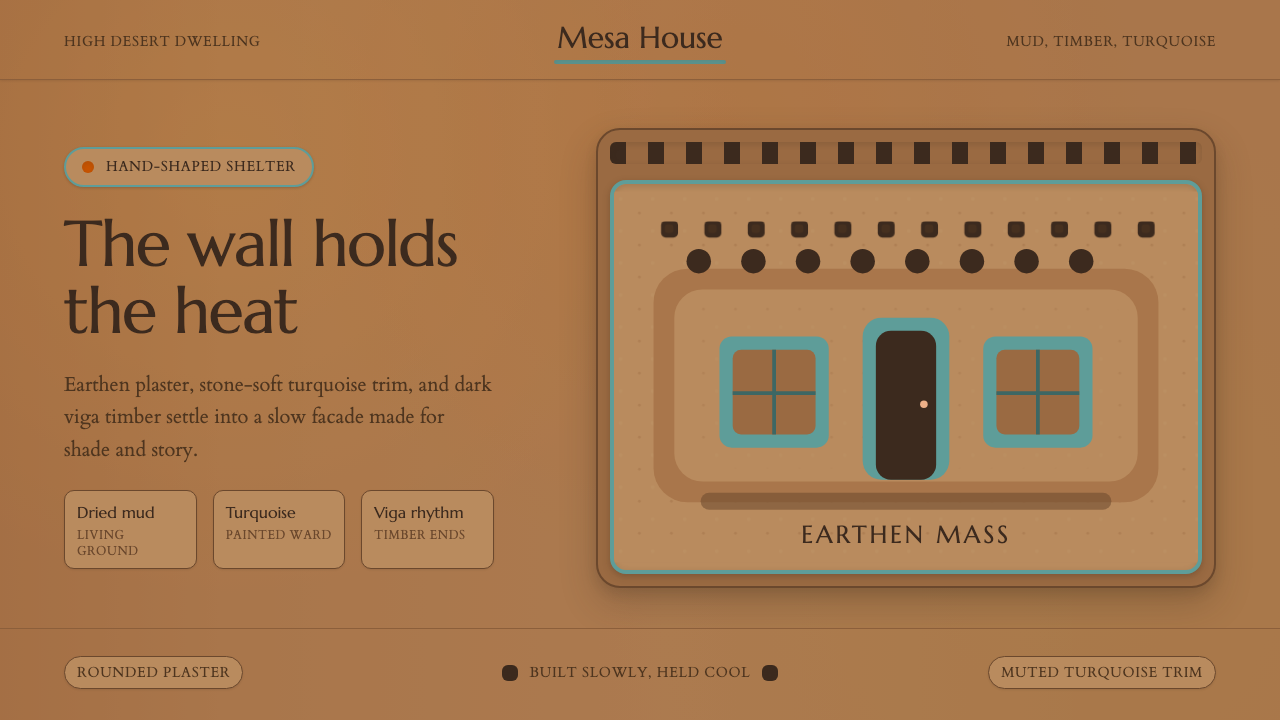 Adobe Pueblo SouthwestFeels made by hand. Earthen tan, turquoise trim, and viga rhythm shape the fr…
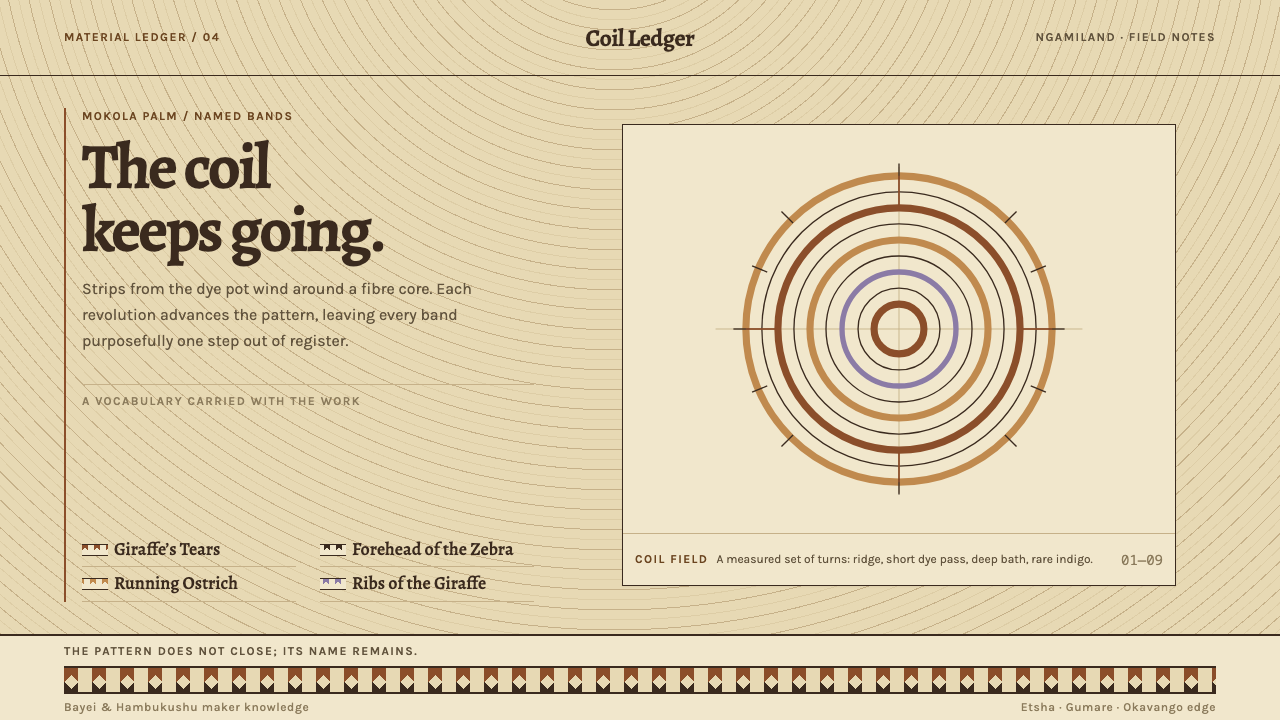 Botswana Coiled BasketThe pattern keeps travelling. Bark-brown stepped bands wind across a straw co…
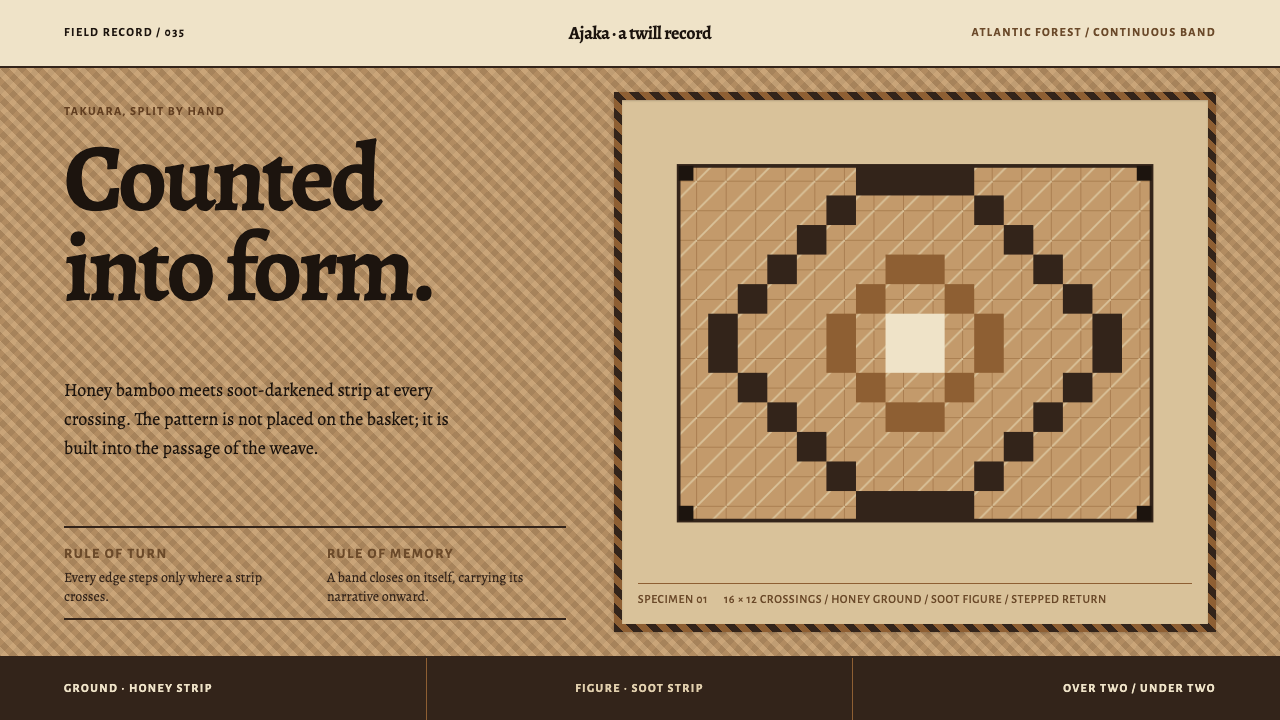 Guaraní Takuara BasketPattern is a record, not garnish. Honey bamboo and soot strips lock into a co…
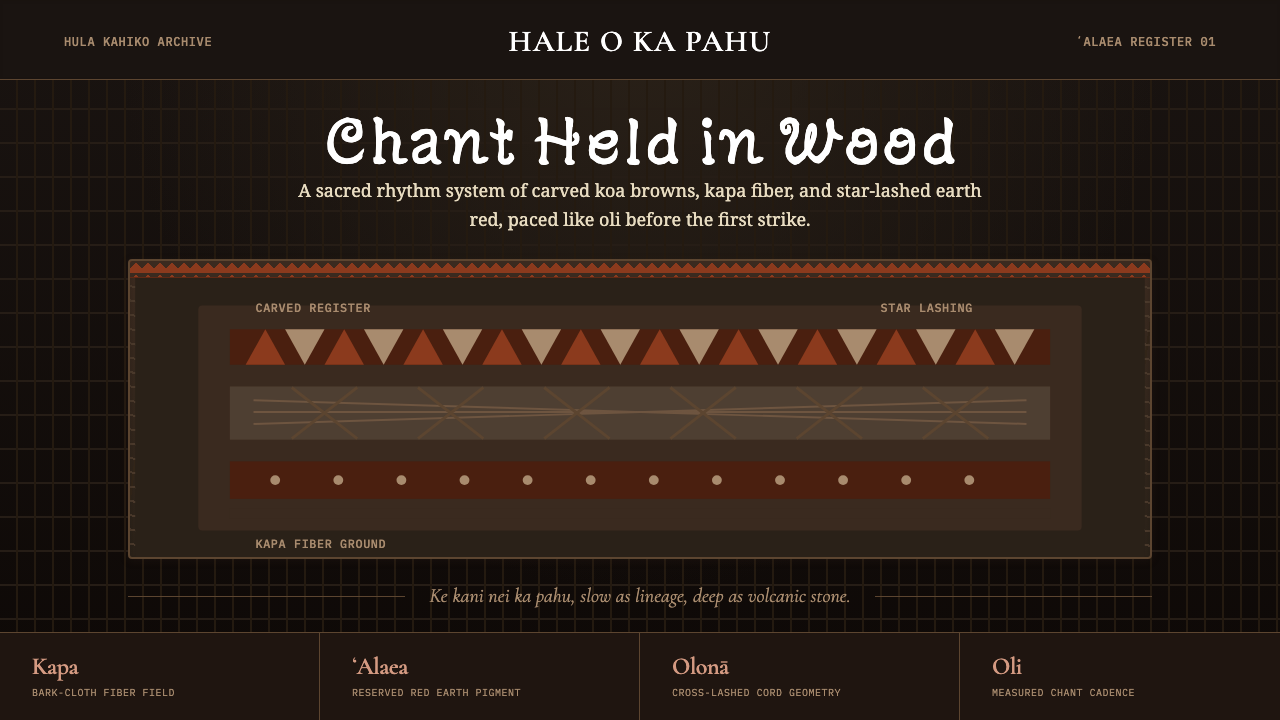 Hawaiian Hula Pahu DrumSacred weight, hand-marked. ʻAlaea red, kapa texture, and stacked carved regi…
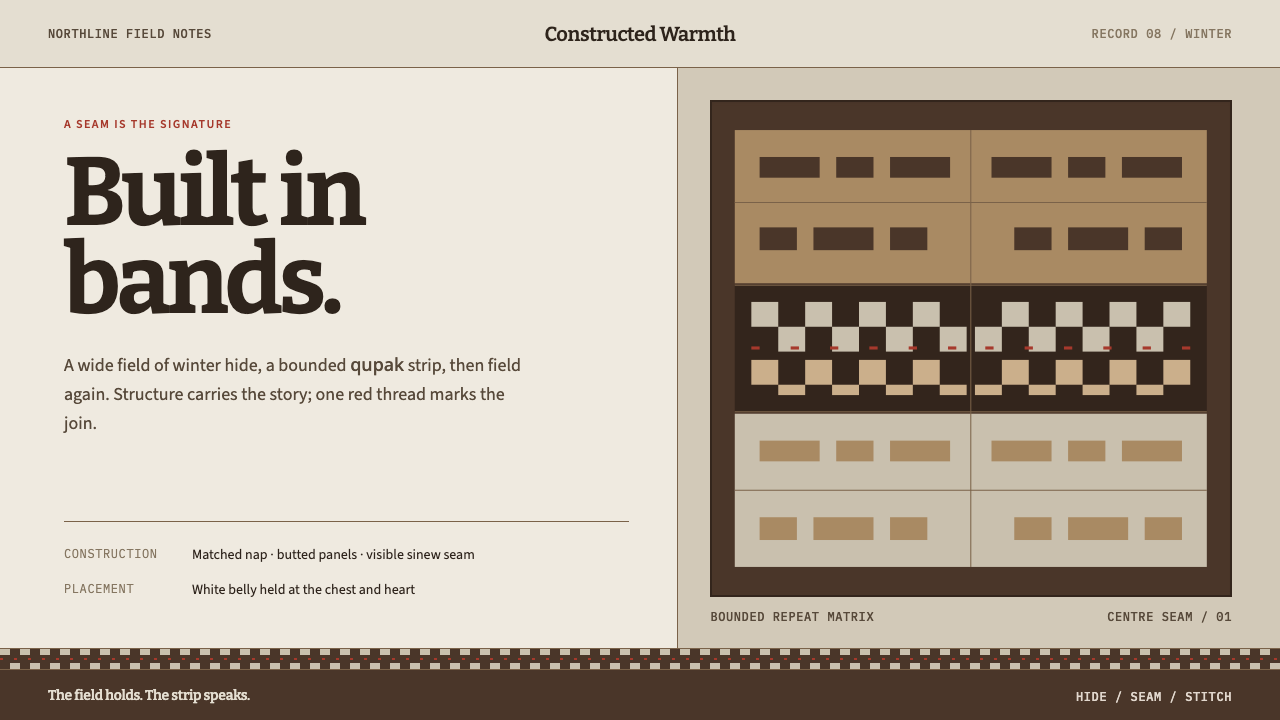 Iñupiat ParkaStructure carries the signature. Caribou-hide bands frame a bounded qupak rep…
 Knossos Minoan FrescoColour becomes wall. Six mineral fields meet swift contours and honest fragme…