What is Kadazan Sompoton?
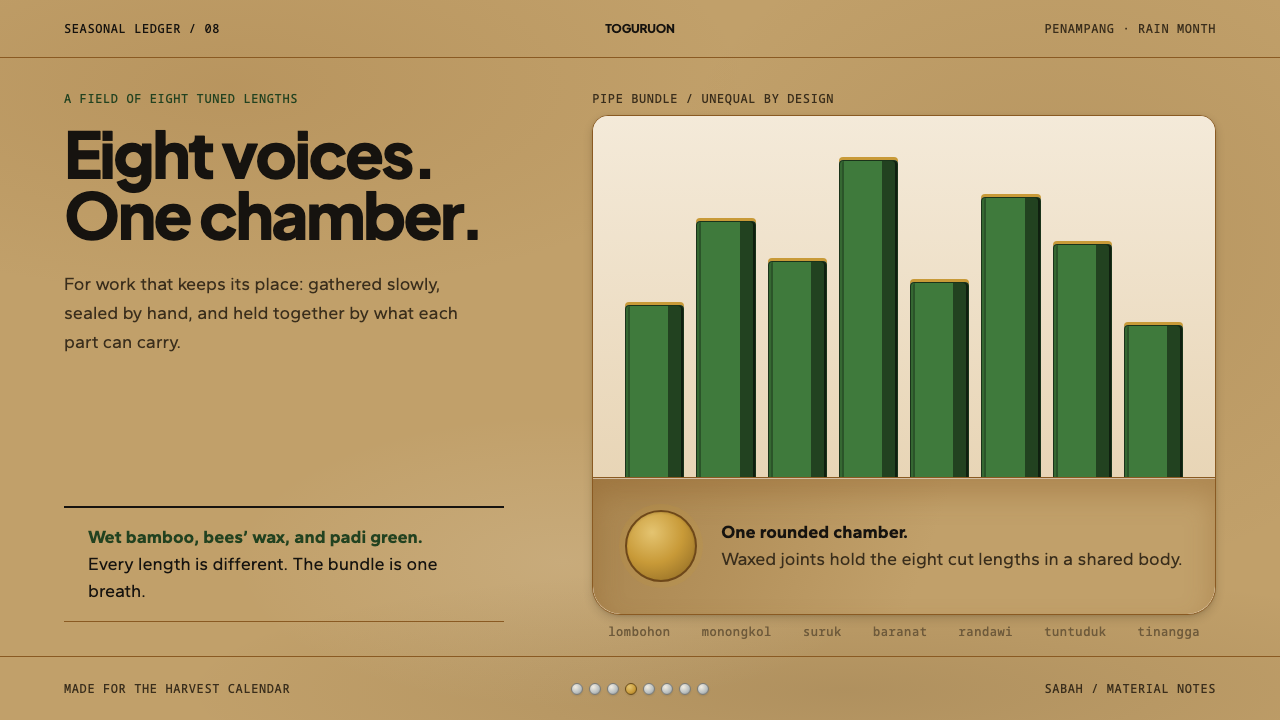
A whole dried gourd, eight bamboo pipes of unequal length and a seal of bees' wax: this style turns the Kadazan-Dusun sompoton into a palette of padi green, waxed gourd skin and ritual black.
Kadazan Sompoton in brief
Kadazan Sompoton takes its look directly from an instrument. The sompoton is a mouth organ made from a single dried calabash into which eight bamboo pipes of different lengths are driven, with every joint sealed in bees' wax. Each pipe carries its own name — among them lombohon, monongkol, suruk, baranat, randawi, tuntuduk and tinangga — and each is sounded by a small reed that the maker shapes and tunes by ear. The design system reads this object as a recipe: what the instrument is made of becomes the palette, and how its parts are gathered becomes the layout.
The ground of the page is the colour of the seasoned gourd, a warm, matte skin that has been darkened by wax and by the hands that hold it. The primary colour is the green of wet bamboo and of the padi fields, fresh and slightly cool against the warm ground. On top of these sit the ritual black of festival clothing, the muted gold of trim and brass buttons, and a pale silver-grey borrowed from the coin belt called himpogot. The result is warm, earthy and ceremonial, yet light: a light-ground style that feels handmade rather than themed.
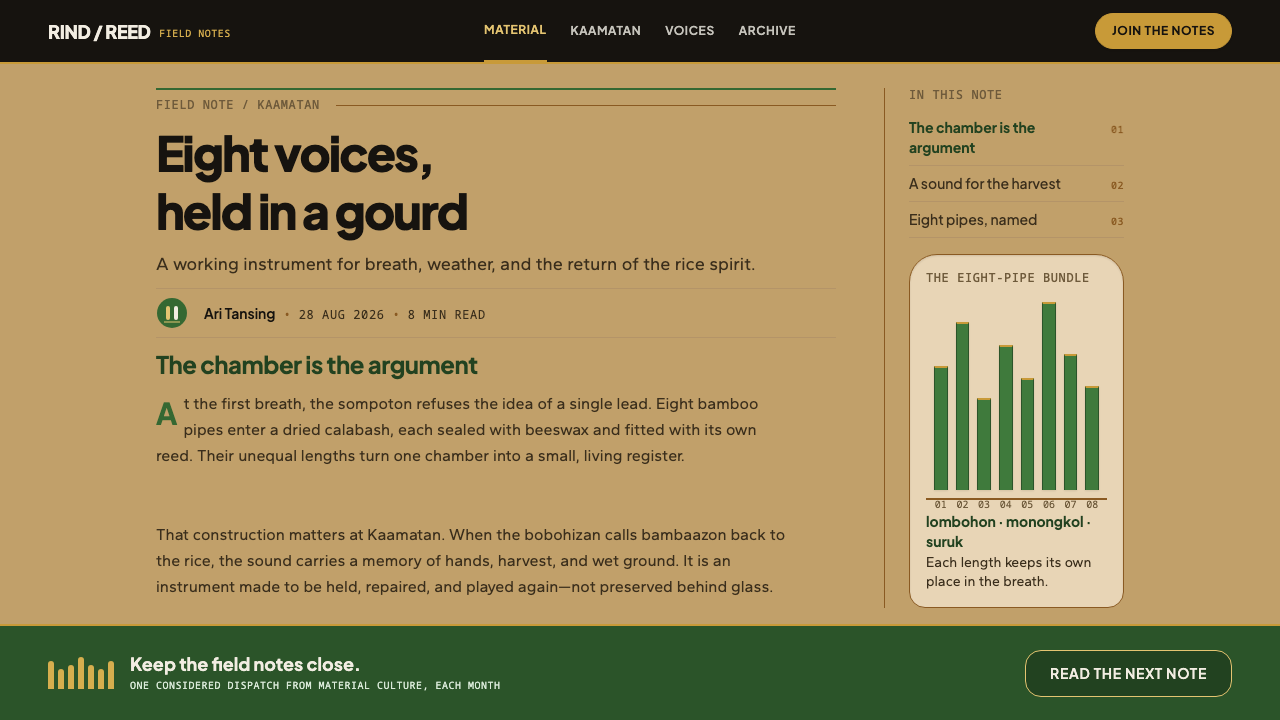
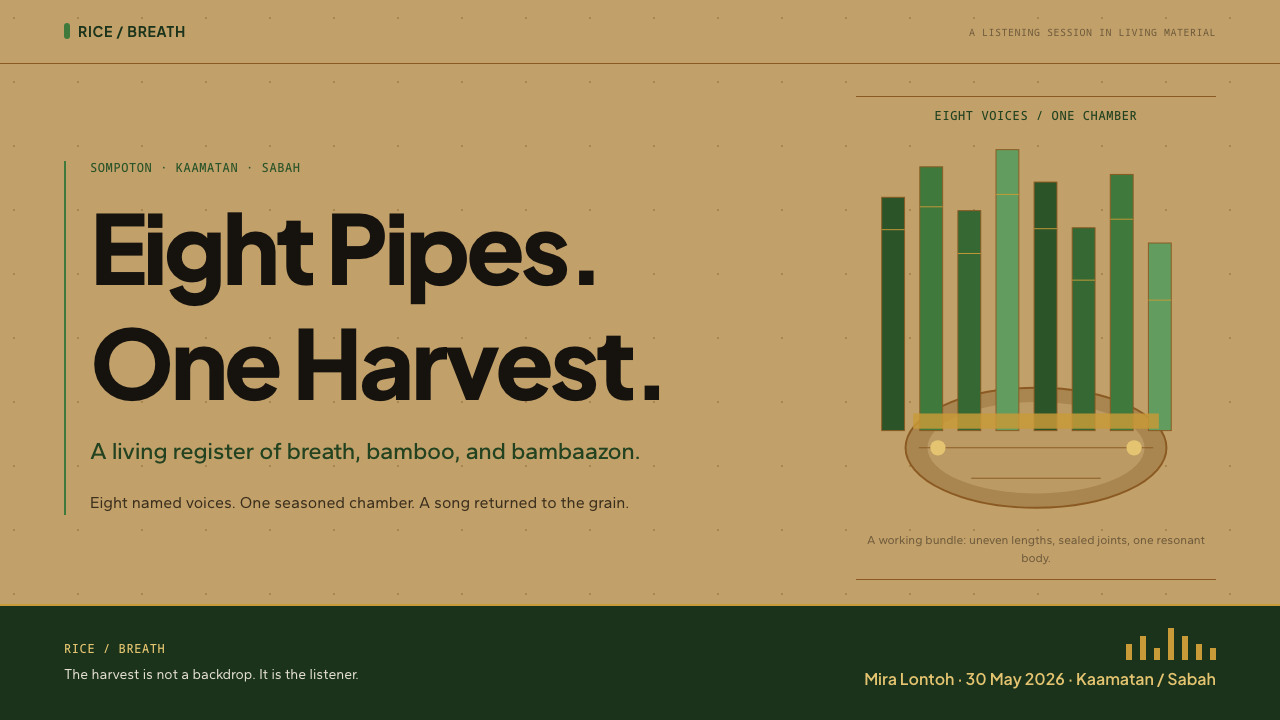
Layout follows the pipe bundle. Eight uneven verticals are gathered into one rounded chamber, so the composition tends towards columns of different heights held within a single soft container, never a symmetrical fan or a tidy pan-pipe row. The unevenness is intentional. The sompoton makes harmony out of difference, and the design lets unequal parts read as one voice. That idea — many unequal elements bound by one rounded body — is the thread that runs through the whole system.
Where does Kadazan Sompoton come from?
The sompoton belongs to Sabah, on the northern tip of Borneo, and in particular to the Kadazan-Dusun communities around Penampang and in the valleys of the Crocker Range; the Murut people of Sabah are also associated with the instrument. This is farming country built around rice. The source material dates the instrument's documented modern form to roughly 1900 to 1950, while stressing that both the instrument and the ritual it serves are far older than any record of them. The design therefore treats the sompoton not as a museum piece but as a living object whose making has been stable enough to be described and old enough to be trusted.
The instrument's setting is Kaamatan, the harvest festival, during which the sompoton sounds almost without pause. Its sound is part of the ritual rather than a background to it. In the magavau rite, the bobohizan — the ritual priestesses who carry the knowledge of the old invocations — perform with it to call the rice spirit, named bambaazon in the source, back into the grain. A palette of padi green and a bamboo-and-gourd structure is therefore not an exotic costume. It is the visual world of a harvest: the field, the grain, the vessel that holds it and the breath that calls the spirit home.
Making a sompoton is a craft of patient selection. The maker chooses a gourd and lets it dry until it is hard, cuts bamboo to the lengths that will give the instrument its range, fits a reed into each pipe and shapes each reed until it sounds right to the ear. Nothing here is measured against a machine; pitch is judged by listening. Bees' wax closes every joint, which makes the whole object airtight, and over years of handling it also gives the gourd its glow. This is the origin of the style's tactile qualities: sealed seams, rounded forms and a surface that looks cared for rather than manufactured. The source places the tradition within the wider craft of Bornean bamboo-and-gourd instrument making, a family of mouth organs and pipes found across the island.
The source material names three kinds of people. The bobohizan priestesses of the magavau rite are the ritual practitioners for whom the instrument sounds. Patricia Regis and Rita Lasimbang are listed as figures associated with the study and documentation of Kadazan-Dusun culture in Sabah, part of the effort that keeps the vocabulary of the instrument — its pipe names, its occasions, its makers' knowledge — in writing as well as in practice. Together they mark the two ways a tradition survives: through performance and through record. A design system that borrows from the sompoton inherits both, and owes the same respect to each.
What defines the Kadazan Sompoton look?
Seasoned Gourd Ground
The page background is the warm, matte colour of a gourd that has been waxed and handled for years. It is neither white nor cream but a lived-in skin tone with a faint sheen of wax, and it gives every other colour a warm, slightly weathered setting. Nothing about it is sterile; it looks like something that has been held.
Padi Green
The primary colour is the green of wet bamboo and flooded rice fields: fresh, saturated enough to read as a signal, cool enough to stay clear of the warm ground. It is used for structure and emphasis — headings, key shapes, active states — rather than as a wash over everything. When green appears, it should look like something growing.
Ritual Black and Trim Gold
Black and gold come from ceremonial dress: the black of the ritual garment and the gold of brass buttons and trim. They are accents, not fields. Black settles text and outlines; gold appears in small, repeated touches such as rules, bullets and highlights, never as a large surface. Used this way they give the page its ceremonial gravity without heaviness.
Silver-Grey Coin Belt
A pale silver-grey, borrowed from the himpogot coin belt, supplies the fine detail: dividers, secondary text, subtle borders. It adds a note of metal and ceremony without competing with the green, and it keeps the quieter parts of a layout from falling back on a generic neutral.
Pipe-Bundle Layout
Elements of unequal height stand side by side as vertical columns and are gathered into a single rounded container. The composition is asymmetrical and organic: a bundle, not a fan. Heights differ because the pipes differ, and the eye reads the whole as one chord rather than as a row of identical items.
Rounded Chamber
Containers, cards and badges are soft and rounded like the gourd body that holds the pipes. Corners are generous, shapes swell slightly, and hard, sharp rectangles are avoided. The rounded chamber is where unequal parts are collected, and the roundness is functional: it is the visual equivalent of the wind that every pipe shares.
Wax-Sealed Seams
Joints are visible and finished: soft rules and thin bands where one part meets another, the way wax closes a joint on the instrument. The effect is a surface that looks assembled by hand with care, in which every connection is deliberate and nothing is left to look accidental.
Who shaped Kadazan Sompoton?
The bobohizan are the ritual specialists of the Kadazan-Dusun tradition, and in the magavau rite they perform with the sompoton to call the rice spirit, bambaazon, back into the grain. They are the reason the instrument has a ceremonial life at all. For a designer they are a reminder that this palette is borrowed from a sacred setting and should be handled as such.
Listed among the key figures of the style as a scholar associated with Sabah's Kadazan-Dusun culture. Work of this kind — documenting instruments, rites and vocabulary in writing — is what allows a design system to describe the sompoton accurately instead of guessing at it, and it keeps the tradition legible beyond the communities that practise it.
Another figure associated with the study and preservation of Kadazan-Dusun culture and its musical tradition in Sabah, named in the source material alongside Patricia Regis. Her place in the record points to the work of keeping a living tradition documented as well as played.
How do you use Kadazan Sompoton today?
Kadazan Sompoton is a light-ground, warm and organic style that suits subjects with a human, harvest or craft dimension: food and agriculture, sustainability, wellbeing, regional culture, education, music and community. Its greatest strength is composition. It gives you a way to present several unequal things — products, chapters, voices, metrics — as parts of one body, without forcing them into a uniform grid.
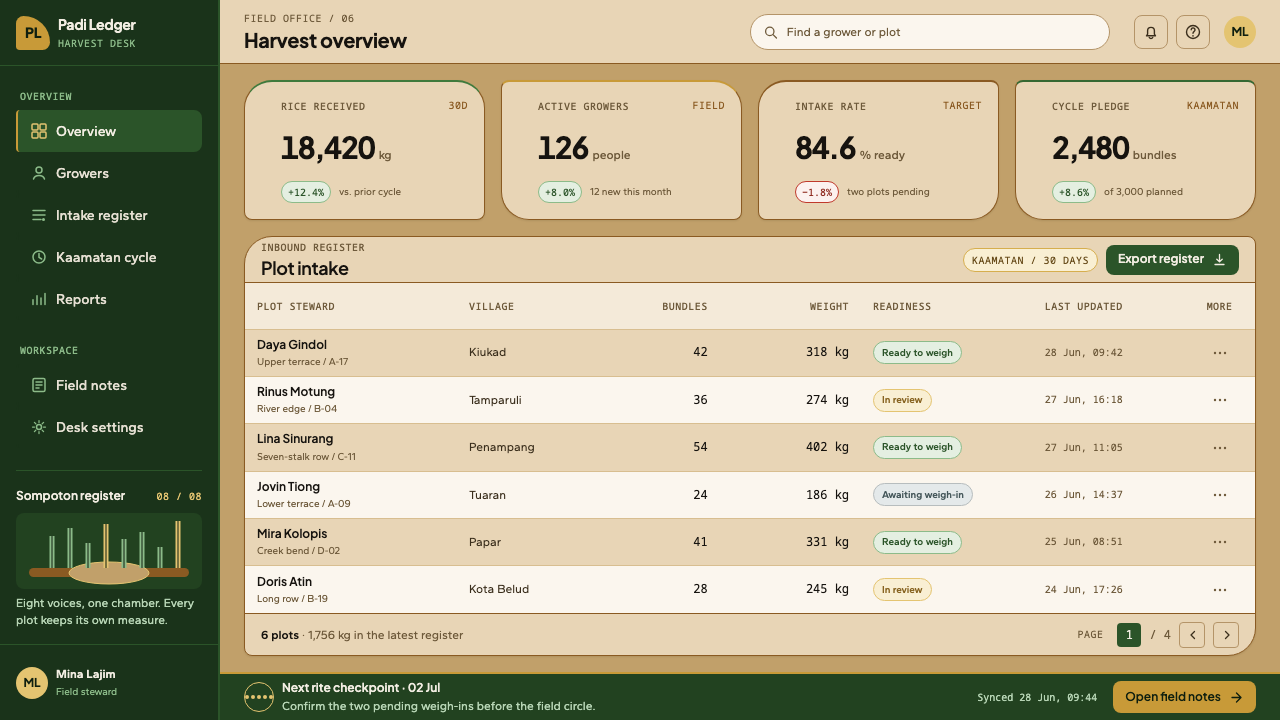
On slides, a cover works well with a single large rounded form in padi green on a gourd-coloured ground, and a cluster of vertical bars of different heights rising from it like a pipe bundle. Content slides can use the same logic: unequal columns held inside a rounded panel instead of a three-column grid of identical boxes. For data slides, vertical bar charts are the natural form, with bars of different heights gathered in a soft container, the highlighted bar in green, supporting bars in grey and one gold accent for the label that matters.
In web interfaces, the style fits product pages for food, craft, travel and education, and dashboards that want a calmer tone than the usual cold blue. Use green for primary actions, black for text, gold for small markers and grey for borders. Cards should be rounded and spacing generous, and tab or filter groups can imitate the pipe bundle with items of slightly different heights. On pricing pages, three plans of unequal emphasis can be set side by side as pipes of different lengths inside a single rounded frame, with the recommended plan taller and in green.
For editorial and marketing work, the style gives long-form pages a warm, paper-like feeling. Pull quotes can sit in rounded chambers, section dividers can echo the wax-sealed joint as a soft band, and photography of fields, bamboo, textiles and hands sits naturally against the palette. Campaign pages around harvest, gratitude, seasonal products or cultural events are an especially good fit.
The most common mistake is symmetry. A neat row of equal columns, or a perfectly mirrored fan, turns the sompoton into a pan-pipe cliché and loses the idea of unequal voices becoming one. Other mistakes include using the green at full strength over large areas, which overwhelms the warm ground; using gold as a background; and decorating with generic tribal motifs. Because the style draws on a living ritual tradition, avoid using sacred or ceremonial imagery as casual ornament, and where the subject is Kadazan-Dusun culture itself, credit the source and involve the community.
Kadazan Sompoton — FAQ
What is a sompoton?
A sompoton is a mouth organ of the Kadazan-Dusun and Murut peoples of Sabah, Malaysia. It consists of a whole dried calabash, which serves as the wind chamber, with eight bamboo pipes of different lengths inserted into it, each sounded by a reed. Joints are sealed with bees' wax so the chamber holds air. Its pipes have individual names, and its sound is closely tied to the Kaamatan harvest festival.
What does Kaamatan have to do with the design?
Kaamatan is the harvest festival during which the sompoton is heard throughout. The palette — padi green, a ripened-gourd ground, ritual black and trim gold — comes from the same world: the rice field, the grain, the vessel and the ceremonial dress. It is why the style feels like a harvest rather than like generic nature branding.
Why is the layout asymmetrical?
Because the instrument is. Eight pipes of unequal length are gathered into one rounded chamber, and the sound is a blend of uneven voices. A symmetrical fan would erase the very difference that gives the instrument its character. The style treats unequal heights as a feature and lets the container, not the grid, unify them.
Can I use this style for a brand that has nothing to do with Borneo?
Yes, as long as you borrow the structure rather than the costume. The warm ground, the green primary, the rounded container and the bundle of unequal columns work for many subjects. Avoid presenting it as Kadazan culture if it is not, and avoid placing ritual imagery where it does not belong.
Does it work in dark mode?
It is designed as a light-ground style, because the gourd skin is the page. A dark variant is possible by moving to the ritual black as the ground and keeping green and gold as accents, but you lose the warm, waxed quality that defines the original, so treat it as a different mood rather than a simple inversion.
Related design styles
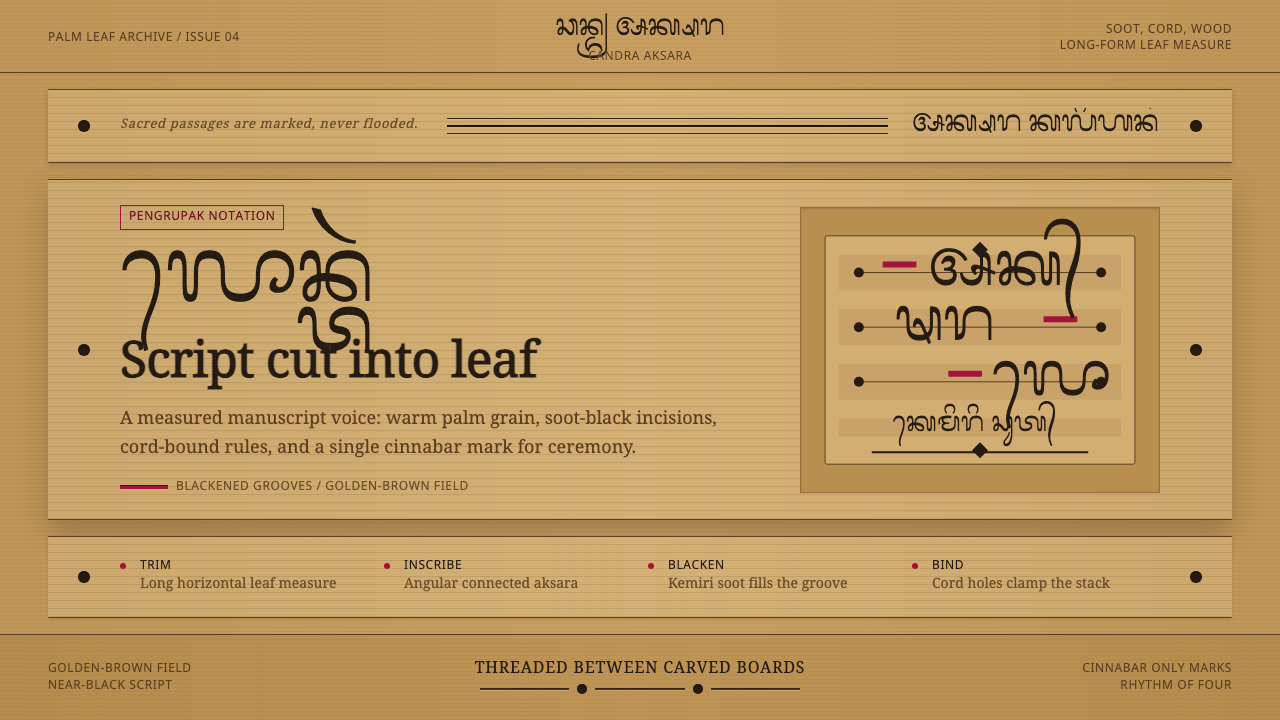 Balinese LontarHandmade memory, incised. Golden leaf strips carry soot script and spare cinn…
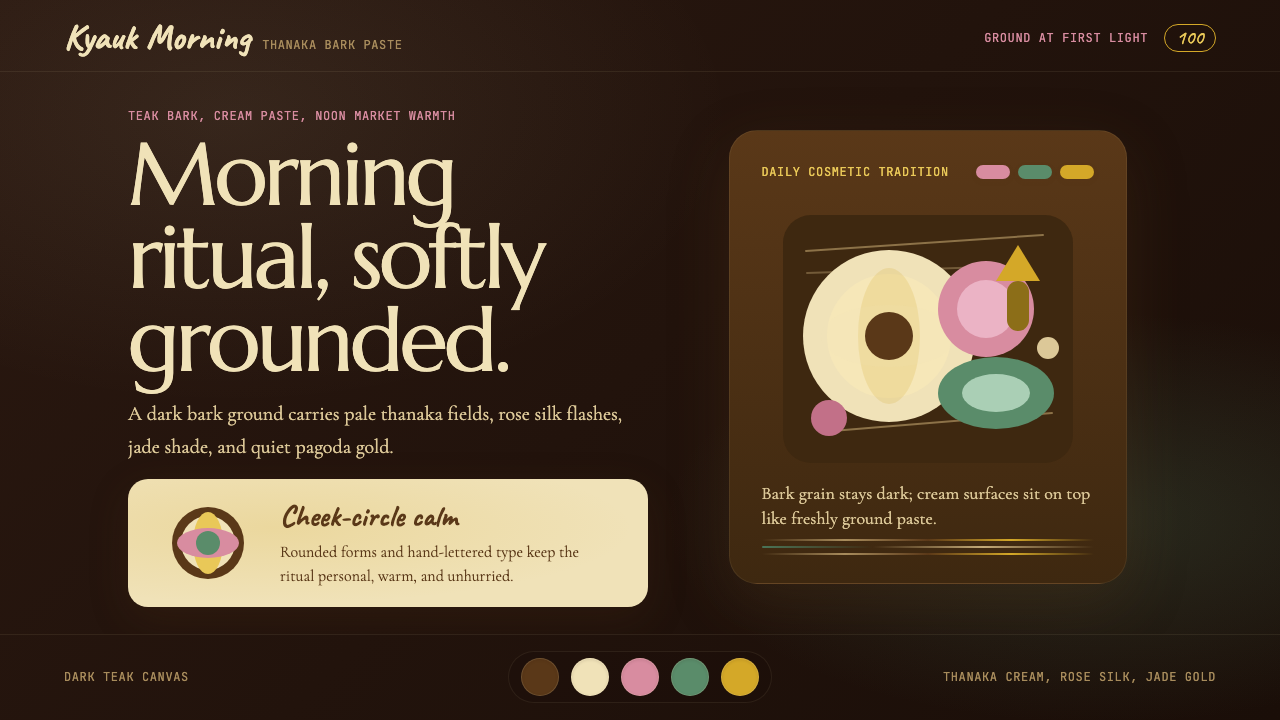 Burmese Shan Thanaka (Bark Paste)Handmade warmth on dark bark. Thanaka cream roundels soften rose, jade, and g…
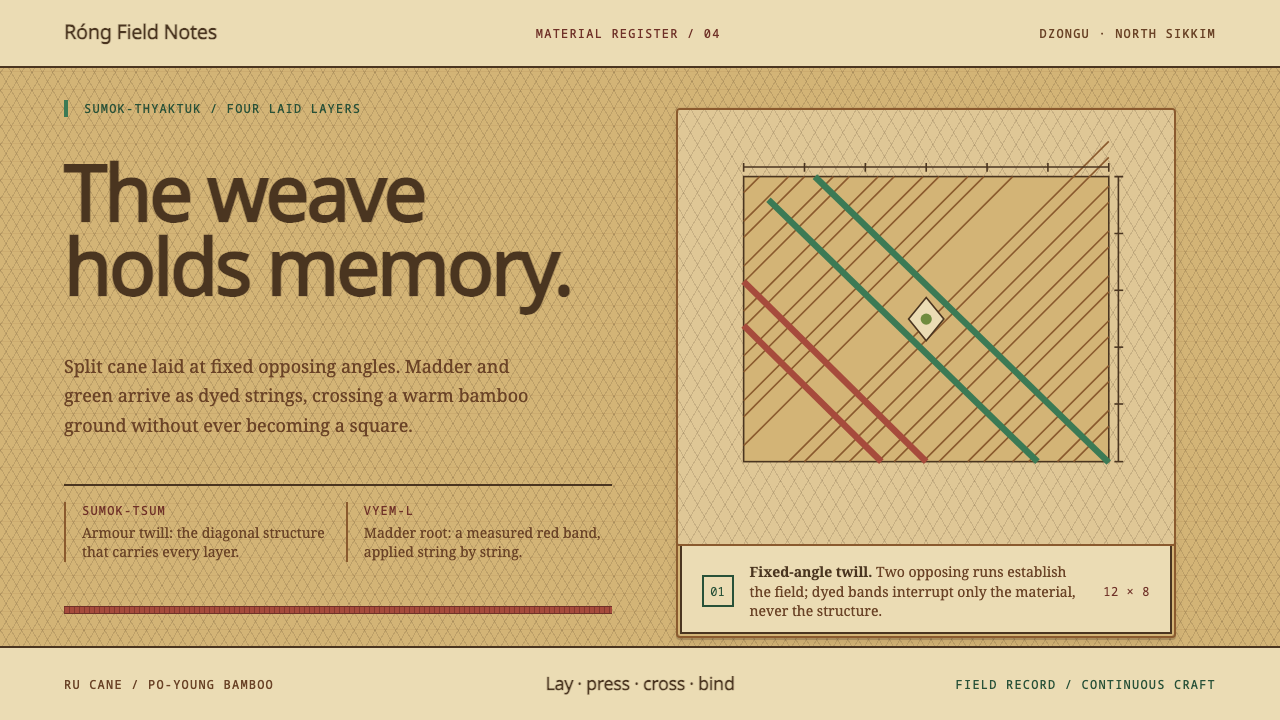 Lepcha Bamboo CraftThe weave holds memory. Madder and green bands cross split-bamboo diagonal tw…
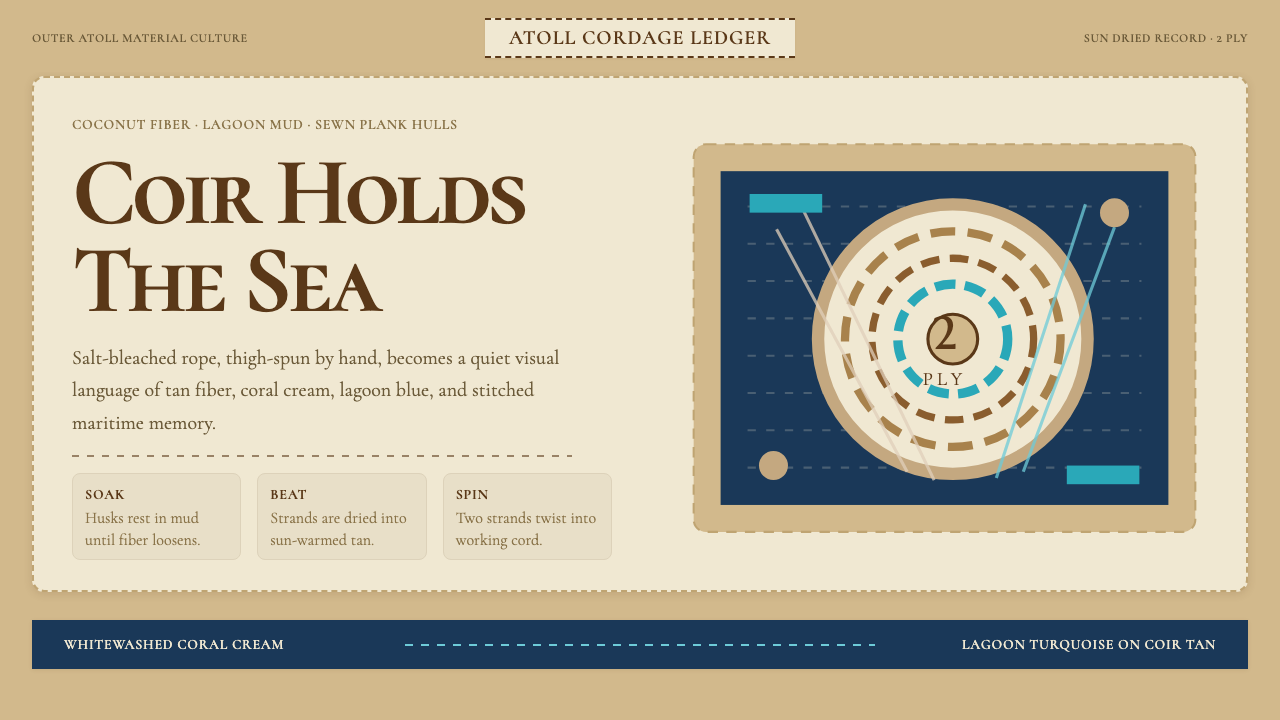 Maldivian Coir (Coconut Rope)Ocean-tested craft. Coir tan, coral cream, Cormorant type, and dashed seam ge…
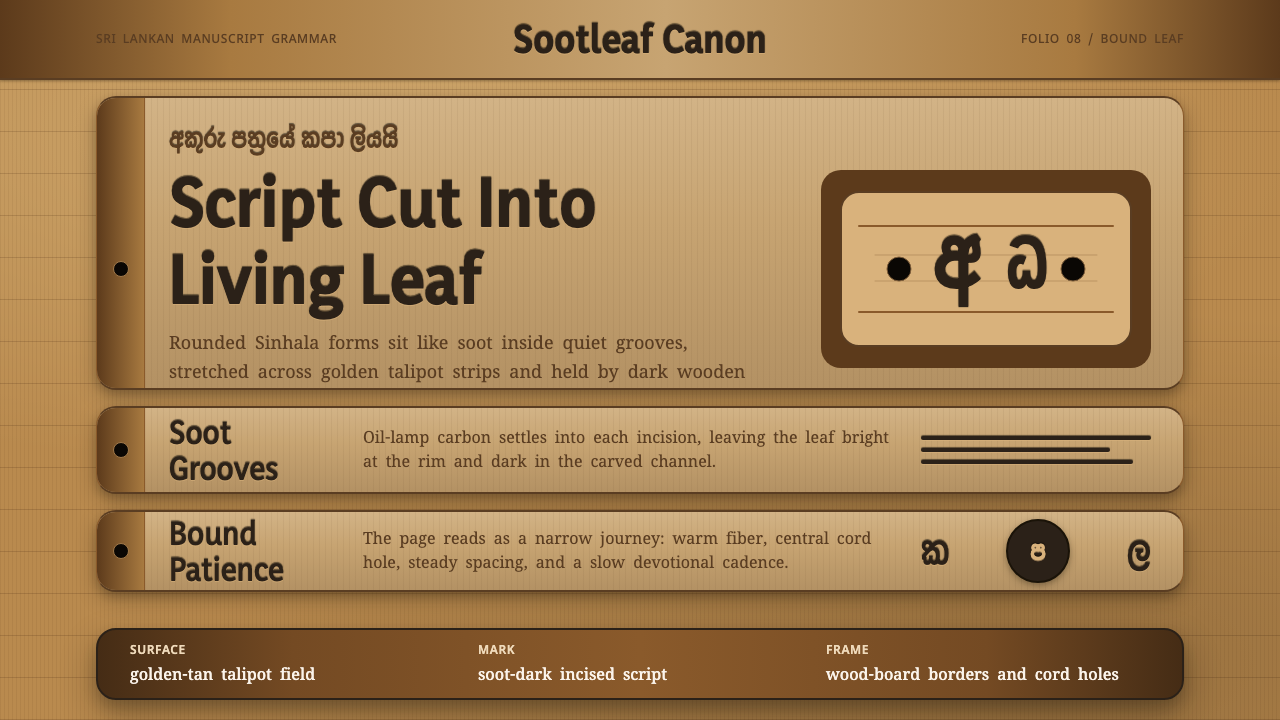 Sinhala Ola-LeafDevotion turns tactile. Soot text, Yaldevi curves, and palm-brown strips bind…
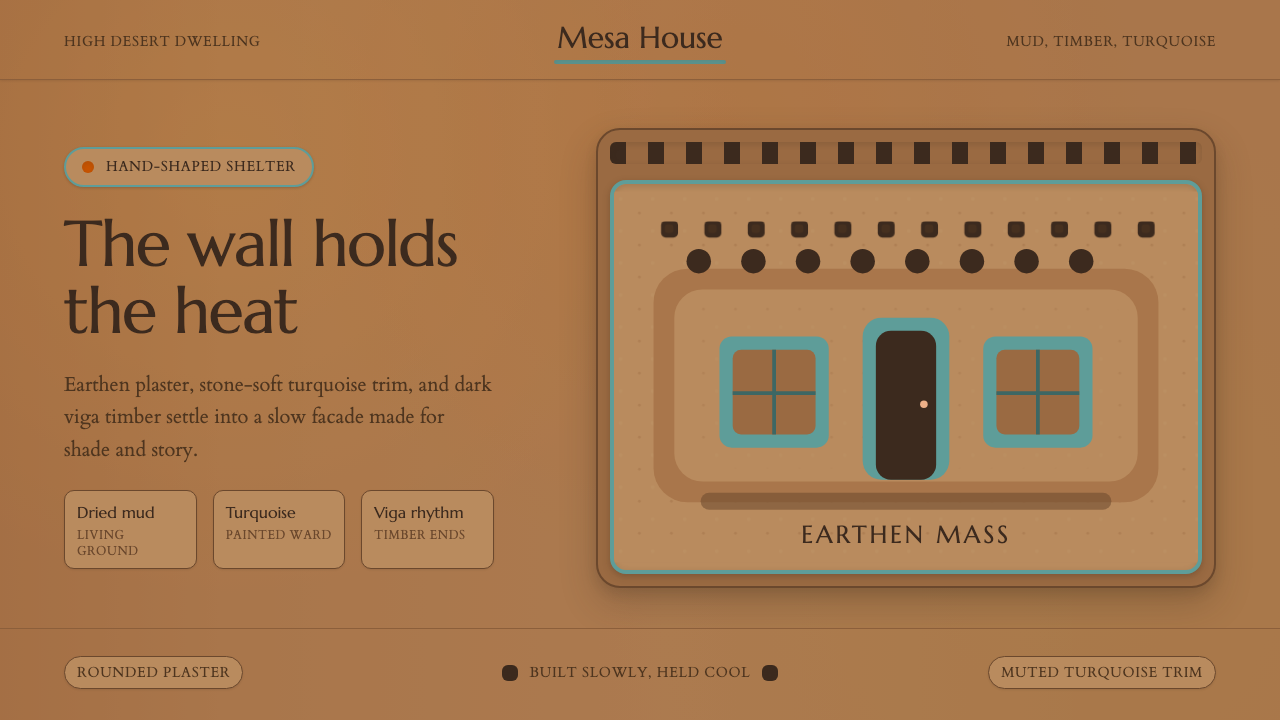 Adobe Pueblo SouthwestFeels made by hand. Earthen tan, turquoise trim, and viga rhythm shape the fr…