What is John Deere?
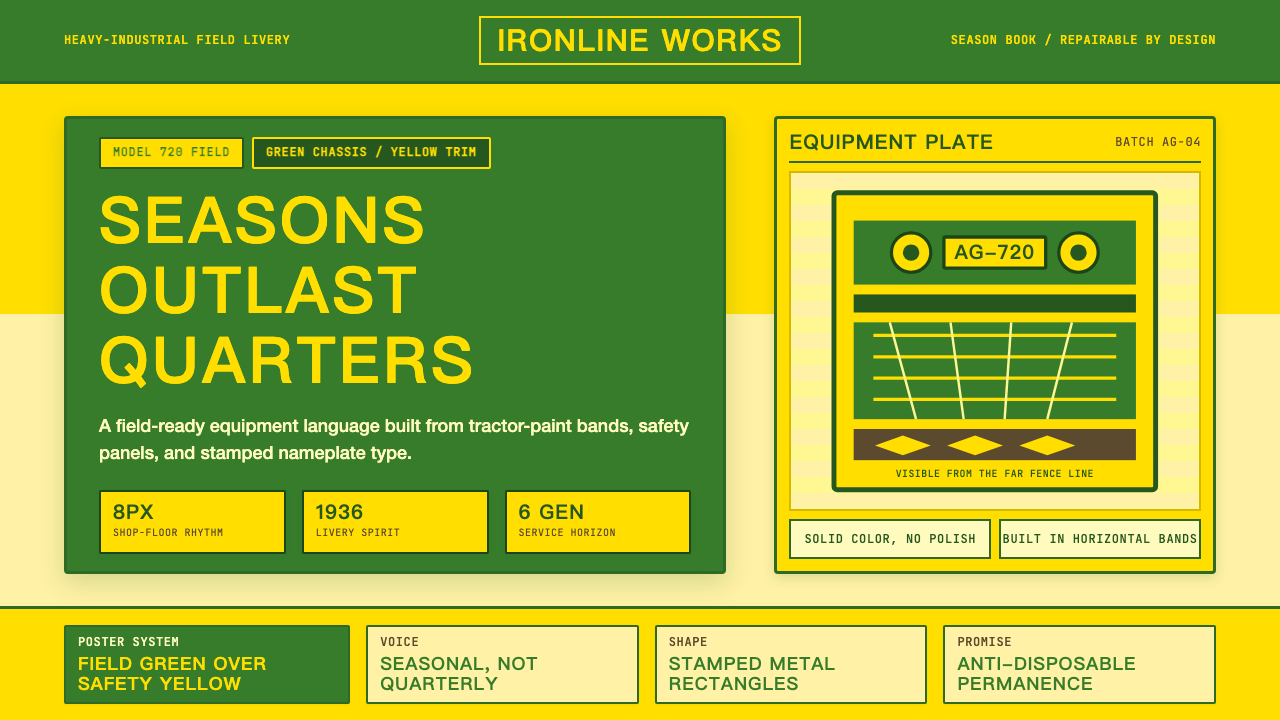
Deep forest green meets safety yellow — John Deere's two-color livery is the most recognized mark in global agriculture, carrying six generations of Midwestern industrial permanence into every pixel.
John Deere in brief
John Deere is not merely a color palette — it is a visual grammar rooted in tractor paint, stamped-metal nameplates, and the hard geometry of farm equipment. The system is defined by two dominant colors: a deep, saturated forest green that reads as permanence and trust, and a vivid safety yellow used for accents, guards, and trim. Together they form a contrast so immediate and directional that the combination has achieved a near-universal cultural shorthand for agricultural authority.
The typographic character of the system reflects its industrial origins. Lettering is condensed, uppercase, and generously tracked — the proportions of a stamped serial number or a cast-iron badge rather than a refined editorial typeface. Nothing about this system whispers; it is designed to communicate clearly from a distance, across a field, in direct sunlight, at the speed of a tractor moving between rows. That specificity of context shapes every design decision.
What makes John Deere's visual language remarkable is its extraordinary stability. The pairing of green and yellow has been recognizable in essentially the same spirit since the 1930s, surviving decades of typographic fashion, digital transformation, and global brand extension. The leaping-stag silhouette — a symbol whose lineage traces to a drawing made in 1876 — still governs the system. This is a design identity defined not by reinvention but by the accumulation of trust.

Where does John Deere come from?
John Deere founded his eponymous company in Grand Detour, Illinois in 1837, after inventing a self-scouring steel plow that could cut through the heavy, sticky prairie soil of the American Midwest — soil that had defeated the cast-iron plows carried west from the Eastern states. This practical breakthrough was the foundation of a brand identity built entirely on working-class reliability: the product had to perform across seasons, across generations, and across the enormous distances of American agricultural land.
For most of the company's first century, equipment appeared in a variety of colors — including black, gray, and various greens — and the brand identity was not centrally managed. The standardization of the now-iconic green and yellow combination occurred around 1936, as the company modernized its product line and recognized the competitive value of a consistent, memorable livery. The safety yellow was chosen partly for its high visibility in field conditions — an early acknowledgment that industrial design and worker safety were inseparable.
The leaping-deer trademark has a longer history than the color system. The stag motif was first used in 1876, evolving through several iterations — sometimes depicted in full detail, sometimes reduced to a silhouette — before arriving at the bold, simplified jumping-deer form that became a globally recognized icon. The logo was significantly refined in 2000, when a more streamlined, angular version was introduced, and again in subsequent years, but the essential gesture — the upward leap — has never changed. It signals vitality, forward motion, and the instinct to clear obstacles.
The industrial designer Henry Dreyfuss, who shaped the ergonomics and aesthetics of John Deere tractor cabs and equipment through a long partnership beginning in the 1950s, brought an added layer of considered human-factors thinking to the brand's physical expression. Dreyfuss was a champion of user-centered design before that vocabulary existed, and his influence ensured that John Deere machinery looked like it was designed for the people who operated it — readable controls, considered sightlines, and a visual coherence that extended from the color scheme into the form language of the machines themselves.
What defines the John Deere look?
Color: Green and Yellow
The palette is built on two colors that function as a permanent pair. The green is a deep, forest-rich tone — not the bright green of springtime foliage but the darker, more saturated green of painted iron, evoking durability and seasonal endurance. The yellow is a high-visibility safety tone, warm and assertive, chosen for legibility under field conditions rather than aesthetic refinement. Together they create maximum contrast without the starkness of black-and-white, and their combination has no ambiguity: seen anywhere in the world, they signal John Deere.
Typography: Industrial Uppercase
Text in this system is almost always capitalized and set with wide, open tracking that echoes the spacing of stamped metal lettering. The preferred proportions are condensed — tall and narrow — allowing long strings of text to sit across narrow surfaces like machinery casings and decal bands without breaking into multiple lines. The effect is forceful and declarative, never conversational. Body text, where it appears, tends to be set in plain, legible sans-serif forms with no decorative variation.
Logo: The Leaping Stag
The deer silhouette functions as the system's most powerful single mark. Rendered as a bold, flat shape — no gradients, no fine detail, no naturalistic shading — it reads clearly at any scale, from the side of a combine harvester to a favicon or a hat pin. The simplified, upward-leaping posture communicates kinetic energy and obstacle-clearing confidence. The mark is always used in green on yellow or yellow on green, almost never reversed into a neutral ground, preserving its association with the brand's defining color pair.
Geometry: Mechanical Proportions
The visual system favors chunky, solid proportions over elegance or refinement. Borders are thick. Rules are heavy. Buttons and badges carry enough visual weight to feel like hardware components rather than software elements. This preference for substantial geometry is not arbitrary: it mirrors the physical world of the machinery the brand makes, where thin parts fail and heavy construction endures. Applied to digital contexts, it produces interfaces that feel grounded and substantial rather than lightweight or provisional.
Tone: Seasons, Not Quarters
John Deere's brand voice is calibrated to the agricultural calendar — it speaks of planting seasons, harvest yields, and generational land stewardship rather than product cycles and quarterly innovation. This temporal register influences the visual system as well: nothing is designed to feel fashionable or time-bound. Imagery tends toward the expansive — wide-open fields, panoramic skies, working machines in motion — rather than the enclosed or abstract. The underlying message is always permanence, reliability, and respect for the work.
Material Honesty: Paint on Steel
The aesthetic root of this system is the surface of a painted metal machine — not a screen, not a poster, not a fabric. That origin means the system has an inherent directness and resistance to ornament: paint on steel does not benefit from gradients, drop shadows, or decorative flourishes. Translated into digital applications, this material honesty becomes an argument for flat color fields, hard edges, and surface clarity. The system looks best when it resists the temptation to add visual complexity that its physical ancestor could not have carried.
Legibility at Distance
Every element in the system is calibrated for outdoor legibility — text large enough to read across a field, colors contrasting enough to register against sky and soil, shapes simple enough to recognize at the periphery of vision. This is not a system designed for close reading or intimate exploration; it is designed for immediate recognition at a distance, in variable light, by people focused on a task. That emphasis on instant comprehension over aesthetic nuance is itself an aesthetic position, one that gives the system its distinctive bold authority.

Who shaped John Deere?
The founder's central contribution was pragmatic rather than aesthetic: his 1837 steel plow solved a specific agricultural problem, and the company that grew from that invention inherited its founder's values — practical ingenuity, manufacturing integrity, and a relationship with customers measured in decades rather than transactions. The brand's visual identity absorbed those values over generations, becoming a graphic expression of the idea that tools should outlast the people who buy them.
Dreyfuss was one of the founding figures of American industrial design and brought a rigorous, research-based approach to ergonomics that transformed how products were designed around the human body. His long collaboration with John Deere, beginning in the 1950s, shaped the cab interiors, control layouts, and overall form language of multiple tractor generations. Dreyfuss insisted that the aesthetic and the functional were inseparable — that a machine which looked right was more likely to work right. His influence helped give John Deere machinery a visual coherence and human-centered purposefulness that reinforced the brand's reputation for quality.
As the company's president during the 1930s and 1940s, Wiman oversaw the critical period in which John Deere standardized its green and yellow color scheme and began investing seriously in its brand identity as a long-term competitive asset. His leadership during the Great Depression — when the company chose to continue manufacturing and stand behind its dealer network rather than contract — established a brand narrative of institutional steadfastness that the visual identity would go on to embody.
Hewitt served as CEO from 1955 to 1982 and was the architect of John Deere's transformation from a regional American manufacturer into a global agricultural equipment leader. Under his leadership, the company expanded into Europe, Australia, and other markets, which required the visual identity to communicate trustworthiness and durability to farmers who had no prior relationship with the brand. The consistent deployment of the green and yellow livery across all markets was central to this global strategy — the colors functioned as a universal credential.
How do you use John Deere today?
The John Deere visual system translates most powerfully when it is applied with the same conviction the original engineers brought to tractor paint: commit fully to the color pair, resist the urge to soften or sophisticate, and trust that legibility at scale is a form of elegance. Applying it correctly is less about reproducing surface details and more about understanding what the system is communicating — reliability, outdoor authority, and a relationship with the physical world that predates digital aesthetics by a century.
For presentation slides, the system works best when the cover establishes the green-and-yellow pair immediately and unapologetically. A full-bleed green background with yellow type and the stag mark centered or anchored in a corner is more effective than a modulated, subtle interpretation. Content slides should mirror the industrial clarity of the brand: wide heading type in uppercase, no decorative rules that compete with the content, and data visualizations that treat bars and segments as solid, substantial forms rather than transparent or gradient-filled shapes. The overall impression should be that this deck was built to outlast the presentation.
For web and dashboard interfaces, the system is well suited to enterprise contexts — fleet management tools, precision agriculture dashboards, dealer inventory platforms, and equipment configurators — where the user needs to extract information quickly under variable conditions. Define a firm layout with clear zones, use the primary green for structural elements like navigation and key actions, and deploy the yellow exclusively for alerts, highlights, and calls to action. Buttons should feel solid and substantial, not light or rounded. Card components benefit from hard, defined borders rather than soft shadow treatments. The interface should feel built, not designed.
For editorial and marketing work, the style supports a poster-like directness that suits product launches, campaign headers, and print advertising. A Deere-system layout uses bold uppercase headlines that take up significant visual real estate, photography treated as a secondary layer behind the typographic hierarchy, and a single accent color — almost always the yellow — used consistently and sparingly as the visual punctuation. Full-width image panels alternating between green-dominant and photography-dominant panels create rhythm without requiring decorative flourishes. The brand's agricultural identity lends particular credibility to sustainability, rural economy, and infrastructure-focused editorial contexts.
A common mistake when applying this system is treating the green as a neutral background and adding a full palette of secondary colors on top of it. The system's power comes from its refusal to negotiate — green and yellow are not two colors among many, they are the entire palette, and every other color introduced into the layout reads as an intrusion. A second frequent error is softening the yellow into a warm cream or the green into a sage tone in order to appear more contemporary; this dilutes the industrial authority that makes the system distinctive. The correct response to the system feeling too bold is to use less of it, not to weaken it.

John Deere — FAQ
Can the John Deere visual system work for non-agricultural brands?
Yes, but the application requires acknowledging what cultural meaning the color pair carries. Forest green and safety yellow together carry unavoidable associations with John Deere specifically and with agricultural and construction equipment more broadly. Brands that want to communicate durability, outdoor authority, and working-class trust — including construction technology, logistics platforms, outdoor apparel, and sustainability ventures — can draw on the system's grammar effectively. Brands that need to project elegance, exclusivity, or cultural sophistication will find the associations work against them. The system is best thought of as a vocabulary of earned reliability: it works when the brand has something substantive to back it up.
How does the John Deere system handle dark-mode interfaces?
The canonical John Deere palette is light-dominant — green chassis, yellow accents, against the natural backdrop of sky, field, and white page. A dark inversion is uncommon in the brand's own applications but workable in third-party digital contexts. The key is that on a dark ground, the safety yellow becomes the primary foreground element and can overpower the composition if used broadly. The most effective dark-mode interpretation uses deep green as the primary structural layer, reserves yellow for a small number of high-priority actions or alerts, and treats near-white or light-tan as the readable type color. The stag mark remains effective in yellow on dark green. Resist the temptation to introduce warm amber or olive tones as compromises — they dissolve the identity.
What is the relationship between this system and broader agricultural design culture?
John Deere's green and yellow is the most recognized entry in a broader language of equipment liveries where color functions as a corporate identifier and safety signal simultaneously. Competitors including CNH Industrial and AGCO each have their own established color identities — red for Case, orange for Kubota, and so on — creating a category-wide system in which color is a primary differentiator before any logotype is legible. John Deere's dominance within this system is a function of both market size and the particular cultural prestige of its history; but the underlying logic — that working equipment should be identifiable at distance in variable conditions — is shared across the category. Designers working in adjacent industries like logistics, utilities, and infrastructure will recognize the same functional imperative.
How should photographic imagery be handled in this visual system?
Photography in this system functions as evidence rather than atmosphere. Images should show machines working, fields being harvested, operators in context — documentary and purpose-driven rather than stylized or abstract. Color treatment should preserve the natural greens and yellows of the landscape without pushing them toward artificial saturation or cinematic color grading, since the brand color pair already provides sufficient chromatic identity. Close crops of machinery details — the geometry of a tire tread, the texture of a cab handle, the silhouette of an attachment — can be powerful when they echo the system's preference for solid, substantial forms. Portrait-oriented imagery of farmers and operators should feel authentic and unglamorized.
Does this system suit software and SaaS products?
John Deere has in fact built a significant precision agriculture software ecosystem — including its Operations Center platform — in which the visual identity needed to function credibly in a data-intensive digital environment. The system translates to software when the design commits to the industrial principles underlying it: substantial interface elements, clear hierarchy, minimum ornamentation, and a color discipline that reserves the yellow for genuinely actionable or alert-bearing content. Where the system struggles in software contexts is in consumer-facing onboarding flows, marketing sites targeted at non-farmers, and contexts that expect the visual warmth and playfulness of consumer technology. The heavier, more declarative register of the system is an advantage in enterprise and professional tools; it can feel austere or unfamiliar in consumer contexts.
Related design styles
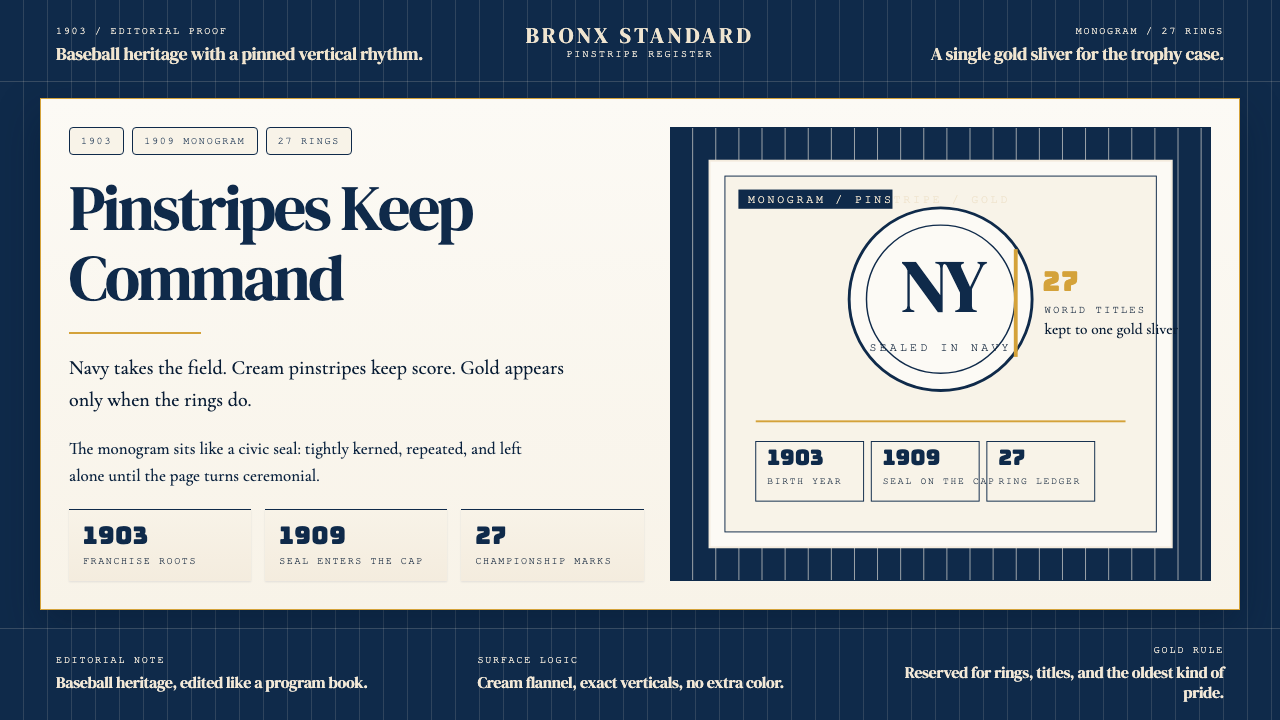 New York Yankees (Navy-Pinstripe)Navy restraint, not noise. Cream pinstripes and a gold monogram seal do the w…
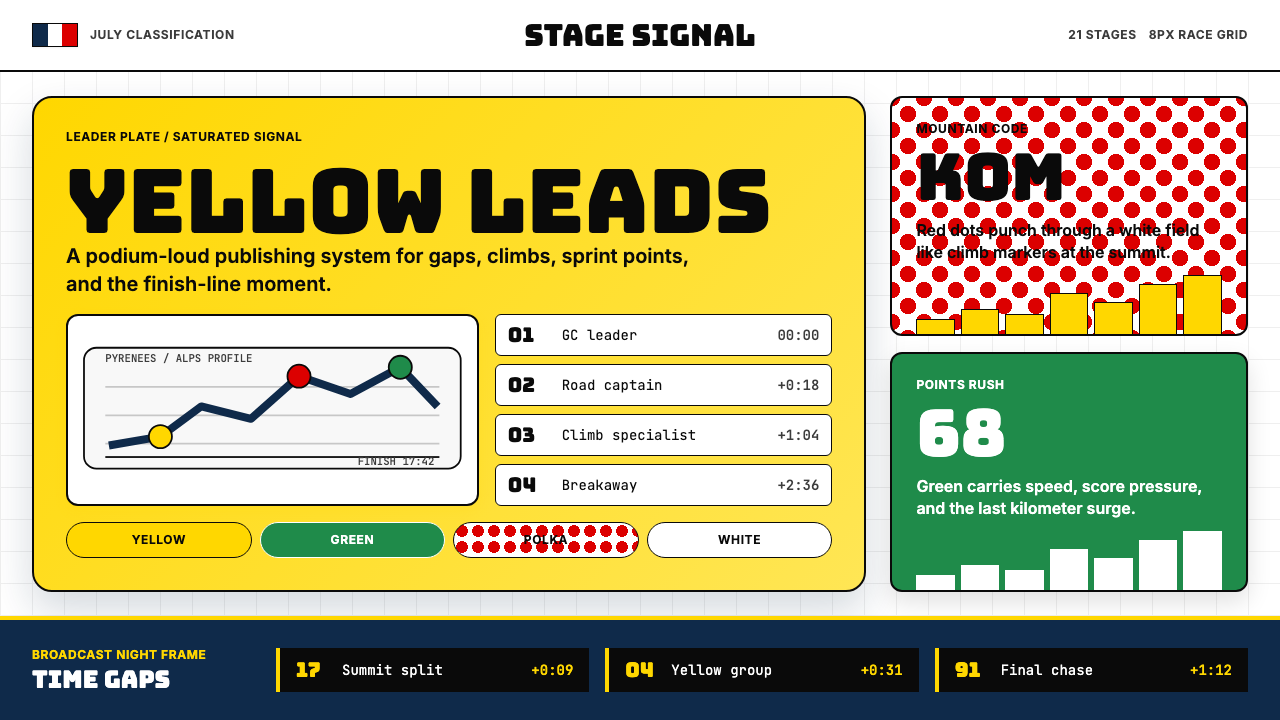 Tour de France (Yellow Jersey)Yellow owns the finish. Bungee type, polka dots, and navy tickers snap to an…
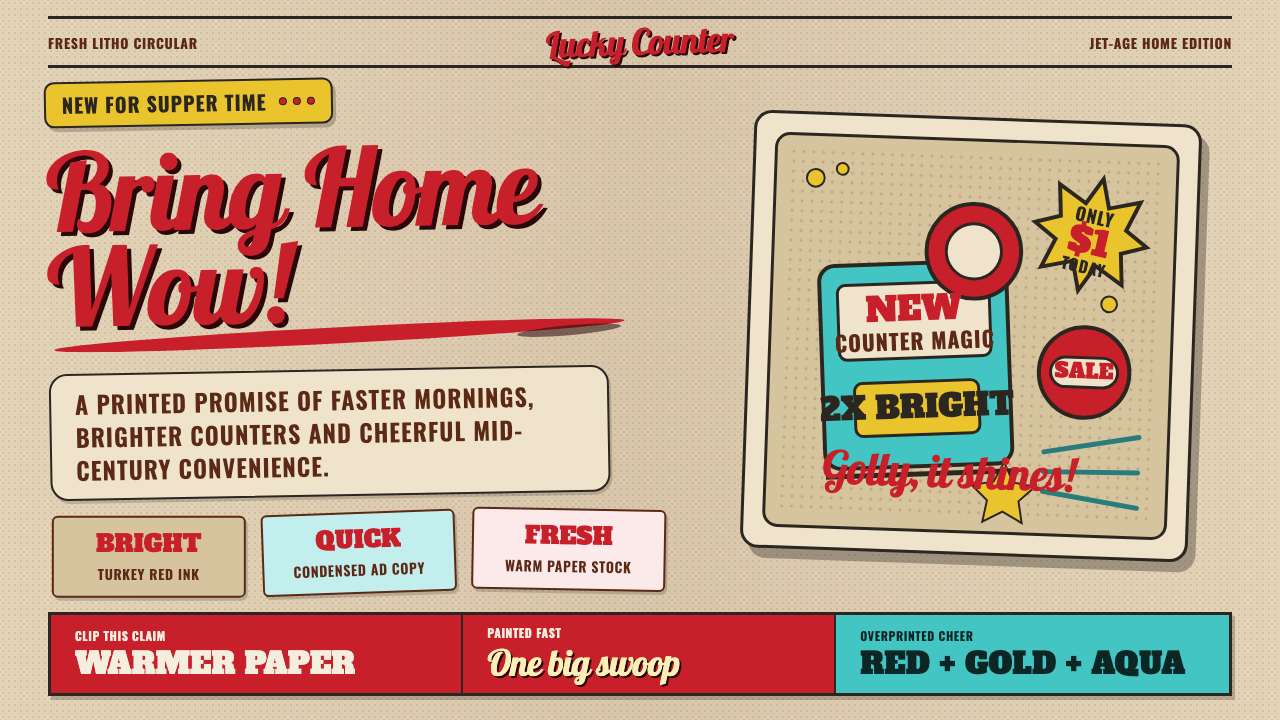 1950s Brush Script AdSells tomorrow in one swoop. Turkey red script, tan paper, starbursts, and ha…
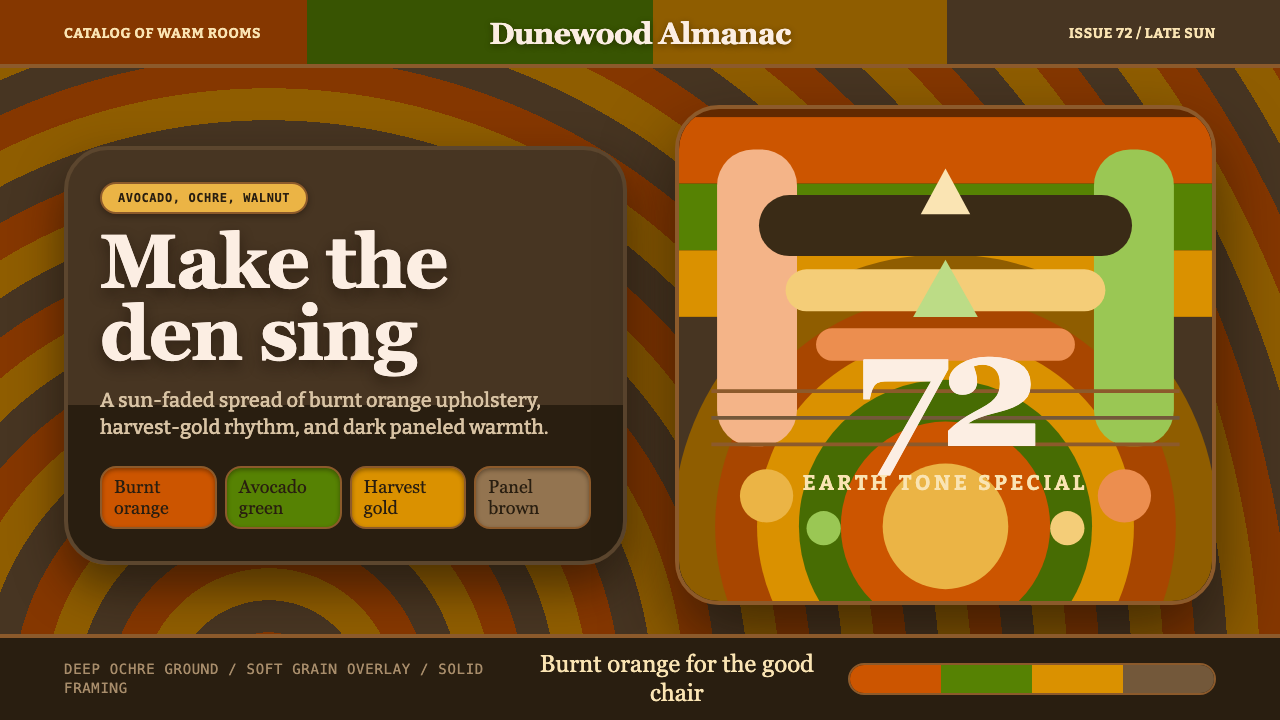 1970s Earth TonesWarm maximalism stays muddy. Bulbous slabs, avocado bands, and harvest-gold r…
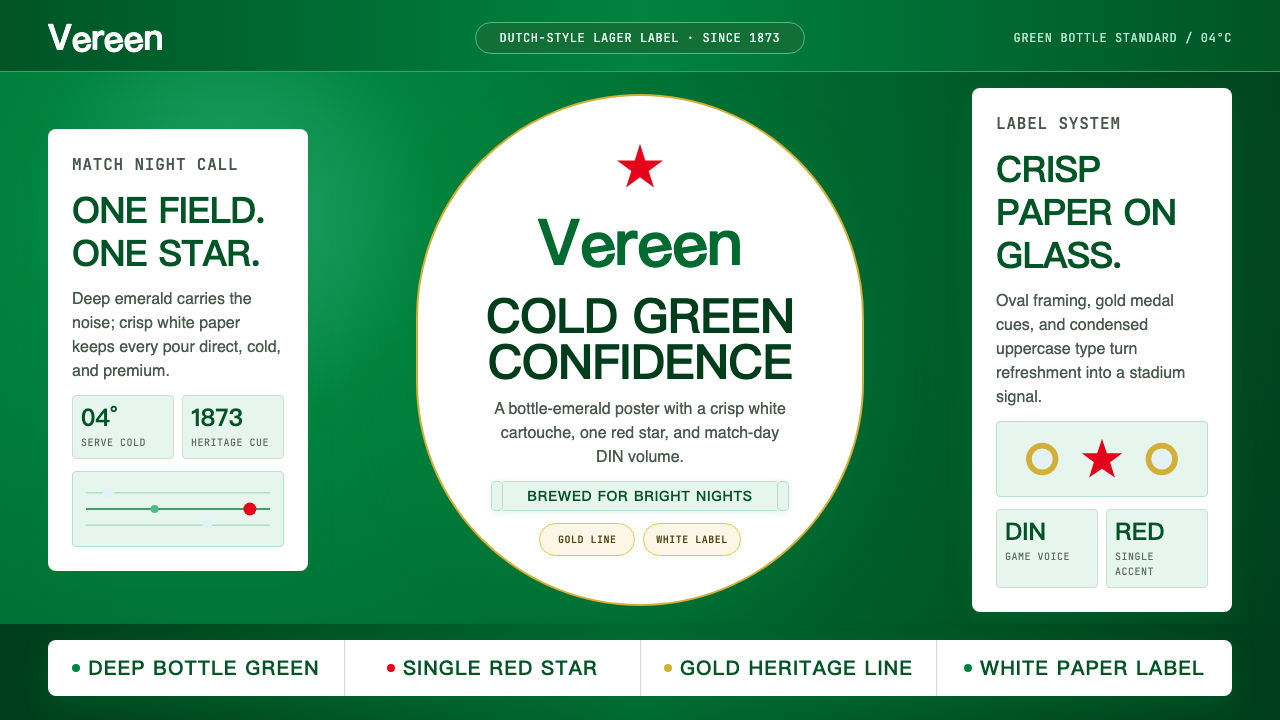 HeinekenEmerald owns the field. White label, red star, gold line, and condensed type…
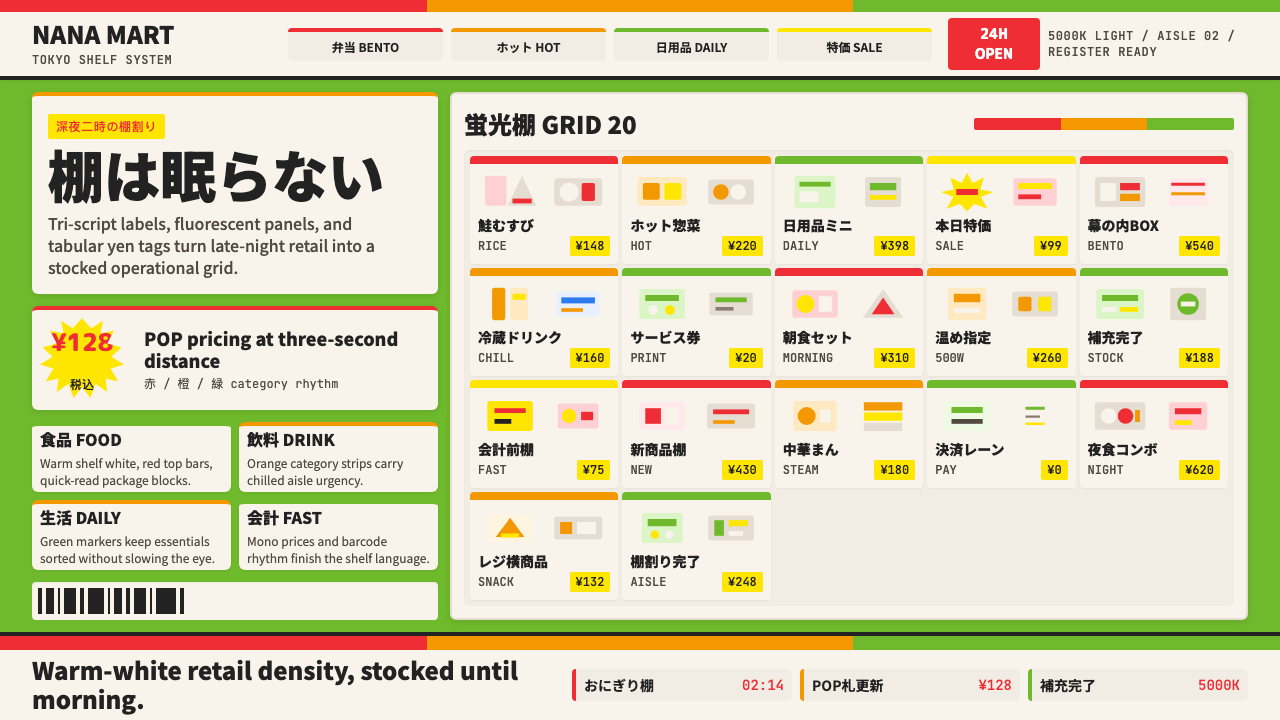 Japanese Konbini 7-ElevenAlways stocked, always bright. Green canopy, warm shelves, POP yen tags, tigh…