What is Baule Goldweight?
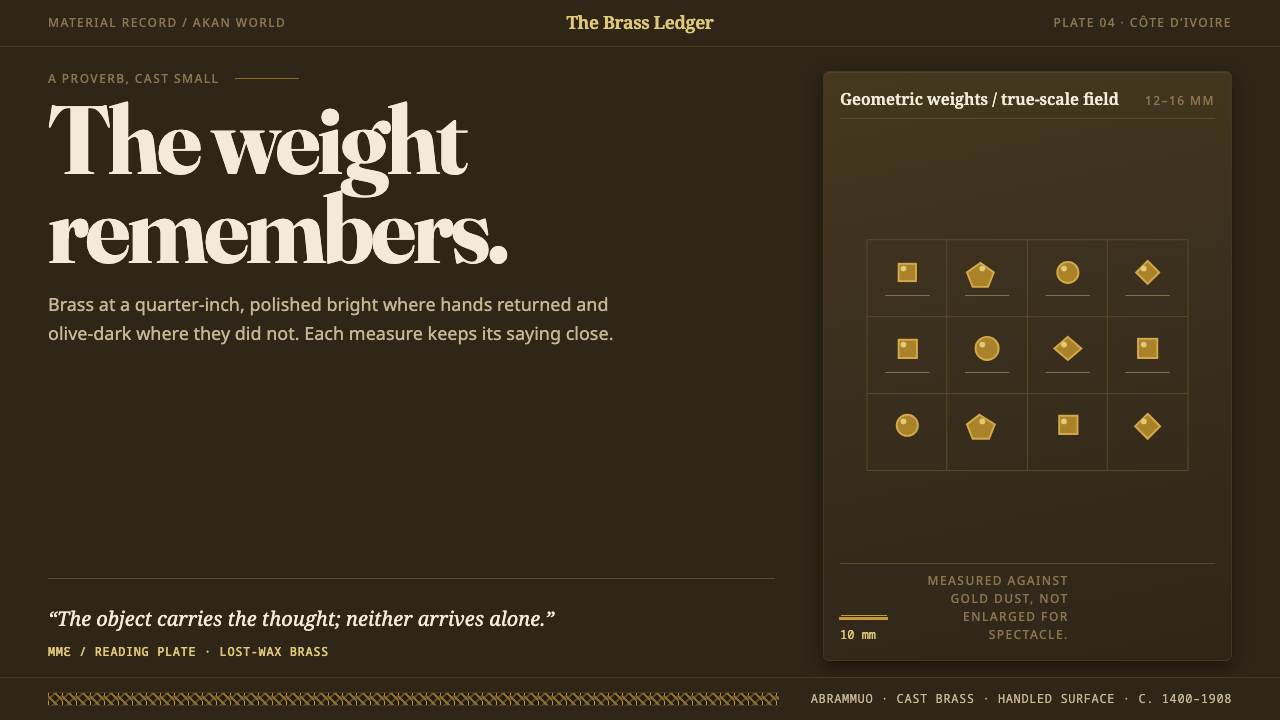
A Baule goldweight is a pinch of cast brass that spent centuries in human hands, and the wear on it — bright where fingers touched, dark where they never reached — is the whole design.
Baule Goldweight in brief
Baule Goldweight is a dark, tactile design style drawn from the abrammuo, the small cast-brass weights that Akan traders used to measure gold dust. Its governing idea is that a surface becomes beautiful by being used. Raised detail glows a burnished yellow, the recesses around it sink into olive-brown and near-black, and nothing looks freshly gilded. The base colour of the system is worn metal, not new gold.
Each weight was made by lost-wax casting. A model was shaped in beeswax and packed in clay, the clay was fired until the wax burned away, and the empty mould was then filled with molten metal from imported copper-zinc stock. Around three million weights were made across the Akan world. The geometric ones are smaller than a thumbnail, and even the figurative ones, such as the pair of men in Princeton's collection, sit comfortably inside a closed hand. At that scale there is no room for decoration that does not carry meaning.
The second idea matters as much as the first. Every weight carries a saying, and the sculpture is the proverb's body rather than its ornament. A tiny figure is not illustrating a message; it is the message made solid, small enough to be passed across a table and understood at a glance. That is why this style is more than a colour scheme. It asks a designer to treat every image as a statement and every surface as a record of handling.
Where does Baule Goldweight come from?
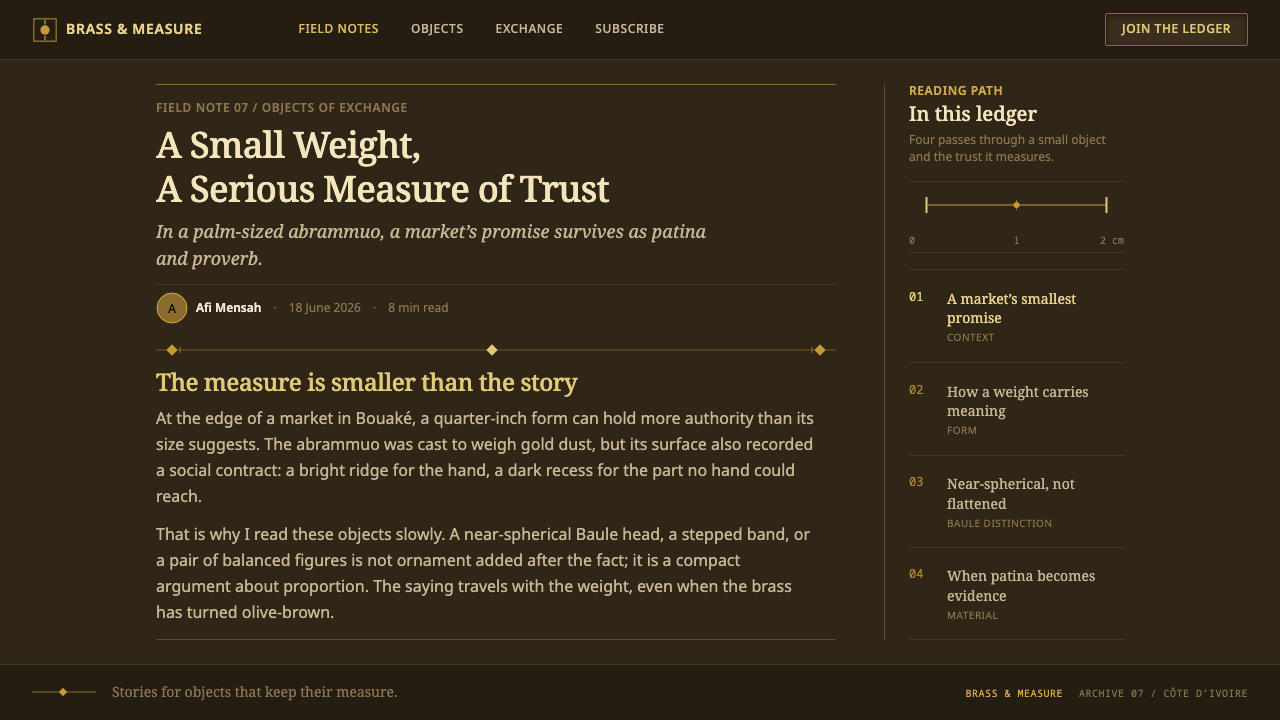
The abrammuo belong to the Akan gold-dust weighing systems, in which gold was measured out by weight and every trader needed a set of trusted standards. Production runs from roughly 1400 to 1908, with a Late Period of decline setting in from the 1890s. The geography is Côte d'Ivoire and the wider Akan world, a region in which the Baule and the Asante, among others, made weights in manners their neighbours could recognise.
The technique is lost-wax brass casting, and its details are telling. The metal was imported copper-zinc stock, so even the humblest weight embeds a trade route, while the form was shaped by local hands in beeswax. Because a clay mould of this kind is normally broken open to free the casting, every weight is a one-off. Two weights of the same pattern are siblings, never twins, and that slight irregularity is part of what a good digital translation has to preserve.
Two families of form coexist. Geometric weights are abstract and patterned, and tiny. Figurative weights show people, animals and objects, and they are tied to sayings: the tradition is called proverb sculpture and is glossed as mmɛ. Regional character is carried in proportion. Baule figures are told from Asante ones by their near-spherical heads, while Asante heads run flatter and more elongated. The philosopher Kwame Anthony Appiah, listed among the key figures of this lineage, wrote about Akan proverbs as compressed arguments rather than ornaments, which is exactly the way these objects ask to be read.
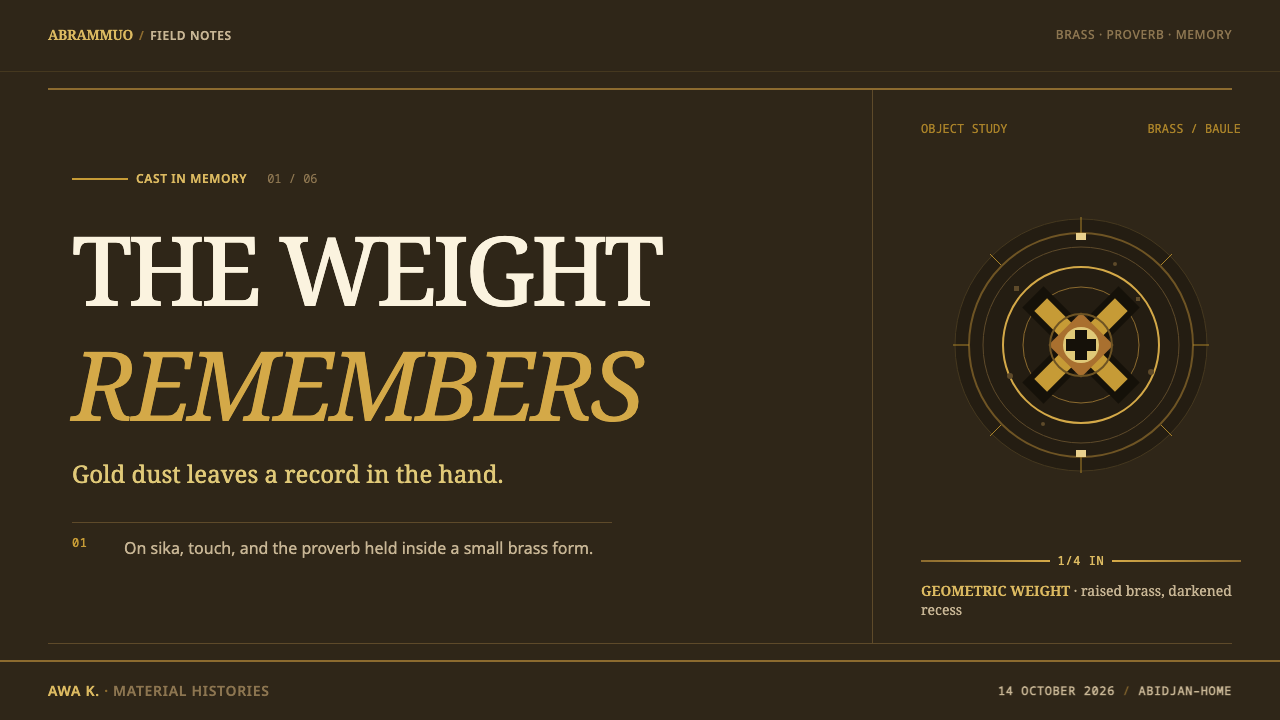
The surface is the point. Centuries of handling burnished the raised detail to bright yellow and sank the recesses to olive-brown and near-black. The colour is therefore a biography, not a pigment: it records who held the weight, how often and for how long. Nobody designed that finish; use did. Curio's style takes the patina as both palette and logic, and the makers themselves, anonymous casters of an enormous output, remain the real authors of the look.
What defines the Baule Goldweight look?
Burnished Relief
Raised areas read as a bright, warm yellow, the colour of brass rubbed by thumbs. The brightness collects on the high points and falls away toward the edges of each form, so the highlight is a consequence of shape and handling rather than of an imagined light source. Anything that is raised, active or important earns this yellow; nothing else does.
Olive Recesses
The hollows between and around raised detail sink to olive-brown and, in the deepest places, near-black. This gives the style a narrow two-register palette: touched and untouched, lit and unlit. Depth comes from the tonal gap between the two registers, not from cast shadows or blur, which keeps every form feeling like solid metal rather than a rendered effect.
Dark Ground
The system is built dark from the start. Against a near-black field, the burnished yellow reads like a lit object in a museum case, and the quiet olive tones read as the object's own shadowed relief. Neutral text is kept subdued so that the brass remains the only warm presence on the page; a light-ground version would lose the very contrast the patina depends on.
Small, Dense Scale
A weight is made to be held, so every form is compact and every detail deliberate. The style favours tight clusters of small objects, generous dark surroundings and a sense that each thing on the page could be picked up. Large flat expanses of colour are foreign to it; interest lives in the small, handled surface.
Proverb as Content
The sculpture is the proverb's body, not its ornament. Imagery in this style is never filler: each figure, pattern or icon should correspond to a statement the page is actually making, ideally one that can be put in a single line. Decorative images that mean nothing are the opposite of everything the objects stand for.
Cast, Not Machined
Lost-wax forms start as hand-modelled wax, so edges tend to be slightly softened and proportion carries regional character, as in the near-spherical Baule head. Geometry is present but never mechanical. Perfect vector precision and razor-sharp corners work against the grain of this material, and wear, not polish, is the finishing treatment: wear is the ornament.
Who shaped Baule Goldweight?
The craftspeople who modelled, cast and finished the weights left no names, yet their output, around three million objects across the Akan world, is a very large body of work by any measure. They are the true authors of this style: every burnished high point and olive hollow is the joint product of their casting and of centuries of other people's hands. Any design that borrows the look inherits a debt to them.
Appiah is listed among the key figures of this lineage because of his writing on Akan thought and proverbs. His treatment of the proverb as a compact, argumentative unit of meaning is the most useful lens for understanding why a goldweight's figure is never merely decorative. For designers, he is a reminder that the content of a proverb sculpture is intellectual before it is visual.
The two traditions are told apart by the head: near-spherical for Baule figures, flatter and more elongated for Asante ones. The distinction is a useful reminder that identity in this art lives in proportion rather than in labels or ornament. A faithful application of the style keeps its forms rounded and compact, and does not flatten them into a generic West African pastiche.
A figurative weight showing two men, held at Princeton, serves as the reference example for the whole genre: a complete scene and, by implication, a complete saying, in an object that fits inside a closed hand. It shows the economy the style aims for, where a handful of figures and a worn surface carry as much meaning as a paragraph.
How do you use Baule Goldweight today?
Baule Goldweight is a dark-mode style with a very specific job: it makes small, valuable things feel handled and trusted. It suits products that deal in worth, measurement, craft and record, and it suits interfaces where one highlighted thing at a time must stand out against a deep, quiet field. Applying it well means understanding that brightness is earned by relief, not sprayed on.
For presentation slides, a cover can behave like a museum label: a near-black field, one burnished-yellow shape or emblem sitting low and left, and a title in restrained type. Content slides work as recessed wells. Panels in olive-brown hold the text, and bright yellow is reserved for the one raised element per slide that the audience must remember. Data slides do best with bars and markers in burnished yellow against olive-brown fields, with grid lines sunk into the background rather than drawn over the data.
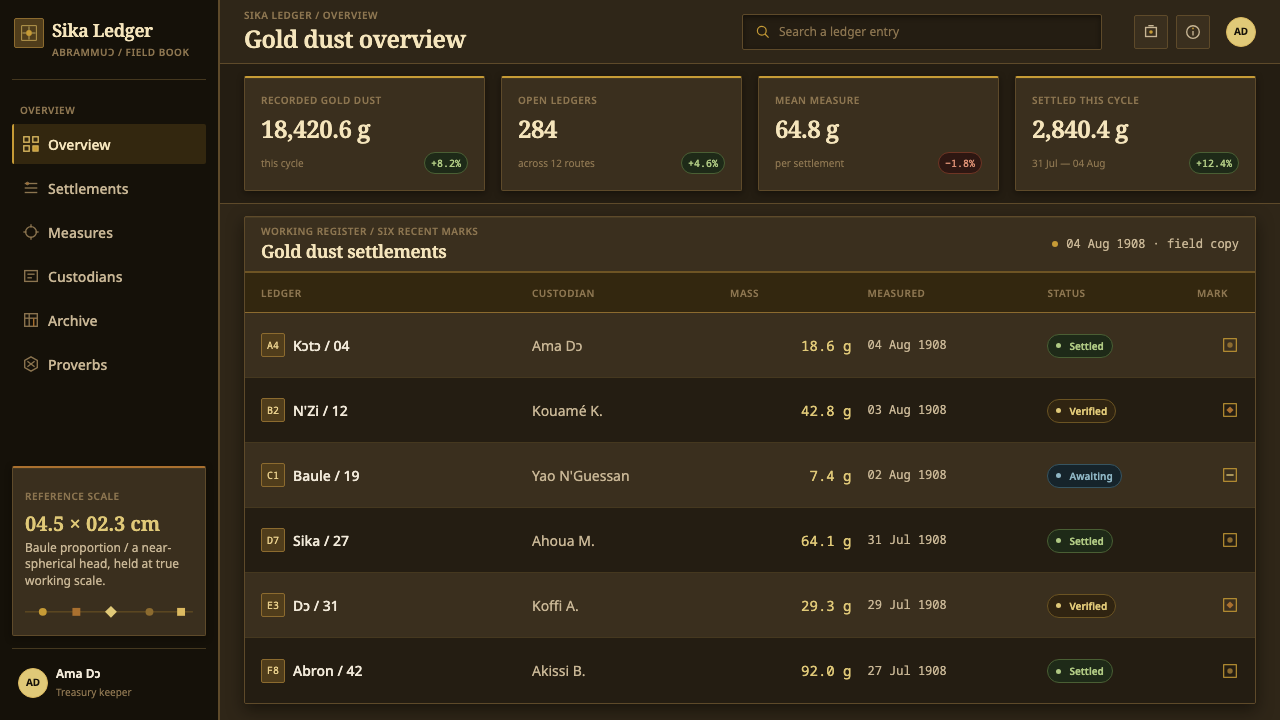
For web interfaces, this is a natural fit for dark dashboards, ledgers, asset catalogues and pricing pages. The chosen tier or the active control is the raised, burnished element; everything else sits in the recess. Hover and focus states can read as burnishing, a warmer and brighter surface rather than a glow. Depth is built from tonal steps between near-black, olive-brown and yellow, so soft drop shadows and blurred halos are unnecessary and generally harmful.
For editorial and marketing work, the style rewards object-led storytelling. Photograph or draw single small things against dark fields, pair each with a one-line saying that explains what it means, and let captions do the work of the proverbs. Tell the cultural story honestly: name the Akan and Baule origins, credit museum sources where you use their images, and avoid using the look as exotic wallpaper for unrelated products.
The most common mistake is fresh gilding. Metallic gradients, glossy bevels, sparkles and glow effects all say new gold, which is the opposite of this style, whose beauty is that it is old, rubbed and used. A second mistake is spreading the bright yellow across everything; once every element is burnished, none is raised. And a third is treating the figurative weights as generic tribal clip art. Each form here belongs to a saying, and an image with no statement behind it should not be on the page.
Baule Goldweight — FAQ
What is an abrammuo?
An abrammuo is a small brass weight used by Akan traders to measure gold dust, and mrammuo is the plural. They were produced from roughly 1400 to 1908, with decline from the 1890s, and around three million were cast across the Akan world. Some are purely geometric, others figurative, and the figurative ones are tied to proverbs. Beyond their practical use they are a remarkable sculptural tradition at the scale of a hand.
How were the weights made?
By lost-wax casting. The maker shaped a beeswax model and packed it in clay, then fired the clay until the wax burned away, leaving a hollow in the exact shape of the model. Molten metal from imported copper-zinc stock was poured into that hollow. Since the mould is usually broken to release the casting, each weight is unique, even when it follows a familiar pattern.
How can you tell a Baule figure from an Asante one?
By the head. Baule figures are recognised by their near-spherical heads, while Asante heads are flatter and more elongated. It is a good example of how regional identity in this art is carried by proportion, which is also why a faithful design translation should keep forms compact and rounded rather than flattening them.
Why not use a shiny gold gradient for the brass?
A gold gradient simulates new metal catching a light, whereas this style is about metal that has been worn. Burnish happens on the raised points that hands touched, and the recesses stay dark, so the brightness is local, uneven and earned. A glossy sweep across a whole button erases that logic and makes the interface look newly gilded rather than trusted by use.
Is it appropriate to borrow the look of a cultural artefact?
It can be, if the borrowing is informed and credited. Take the structural ideas the objects teach, namely wear as ornament, small scale and imagery that carries a saying, and apply them to products whose values genuinely fit. Name the Akan and Baule sources, credit the collections whose photographs you use, and avoid turning specific figures into decorative filler or using them for subjects they have nothing to do with.
Related design styles
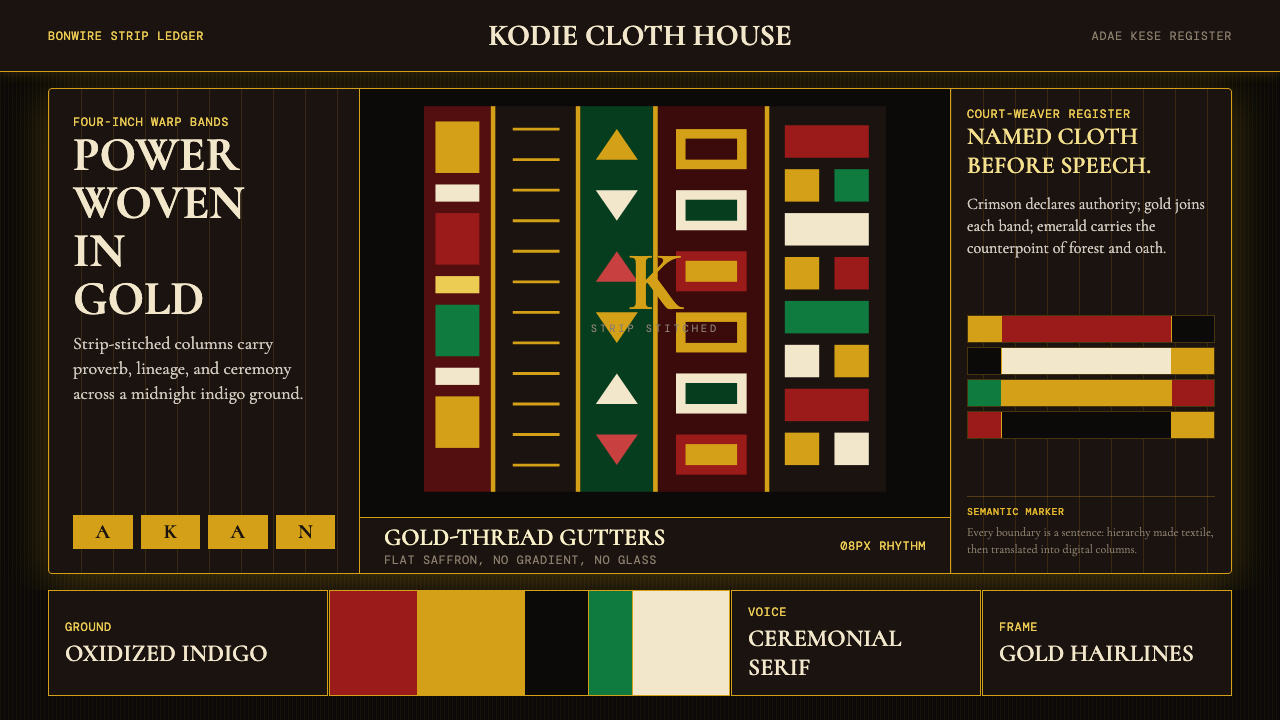 Ghanaian Kente (Asante Royal Gold)Royal authority, woven dark. Gold gutters stitch crimson and indigo strips in…
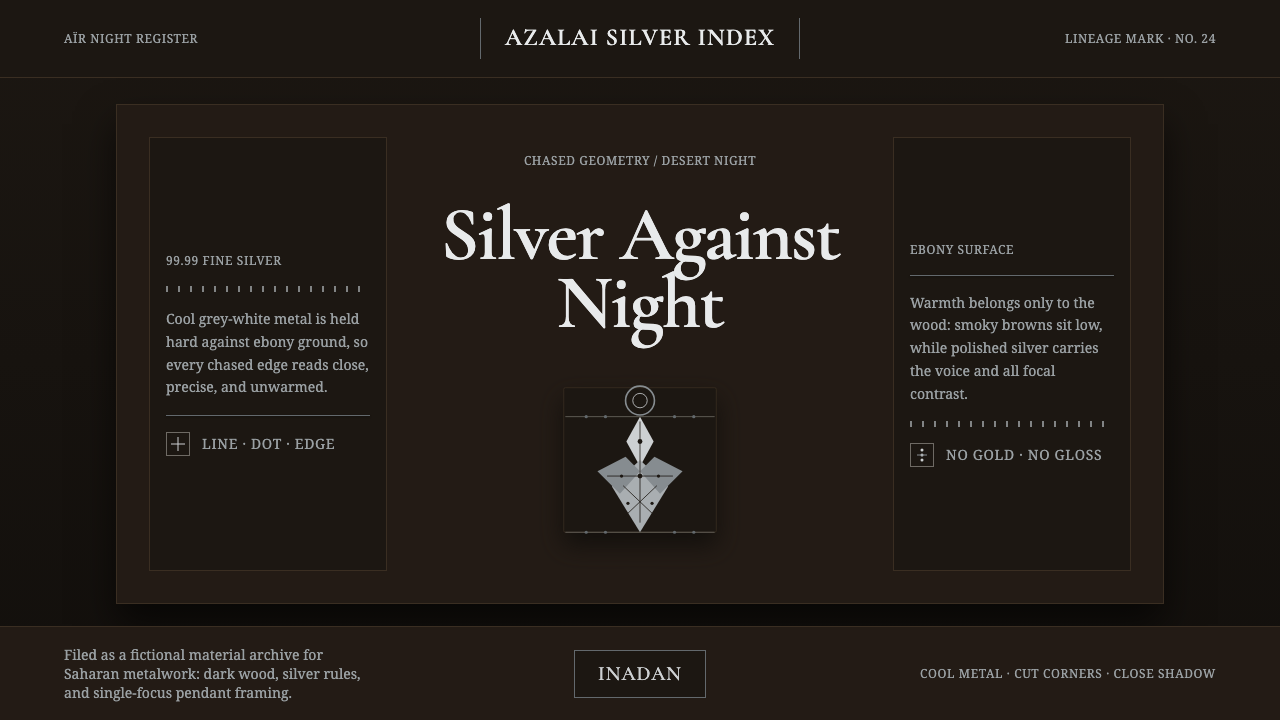 Tuareg Agadez Cross SilverSilver refuses warmth. Cool chased geometry cuts across ebony-dark surfaces.
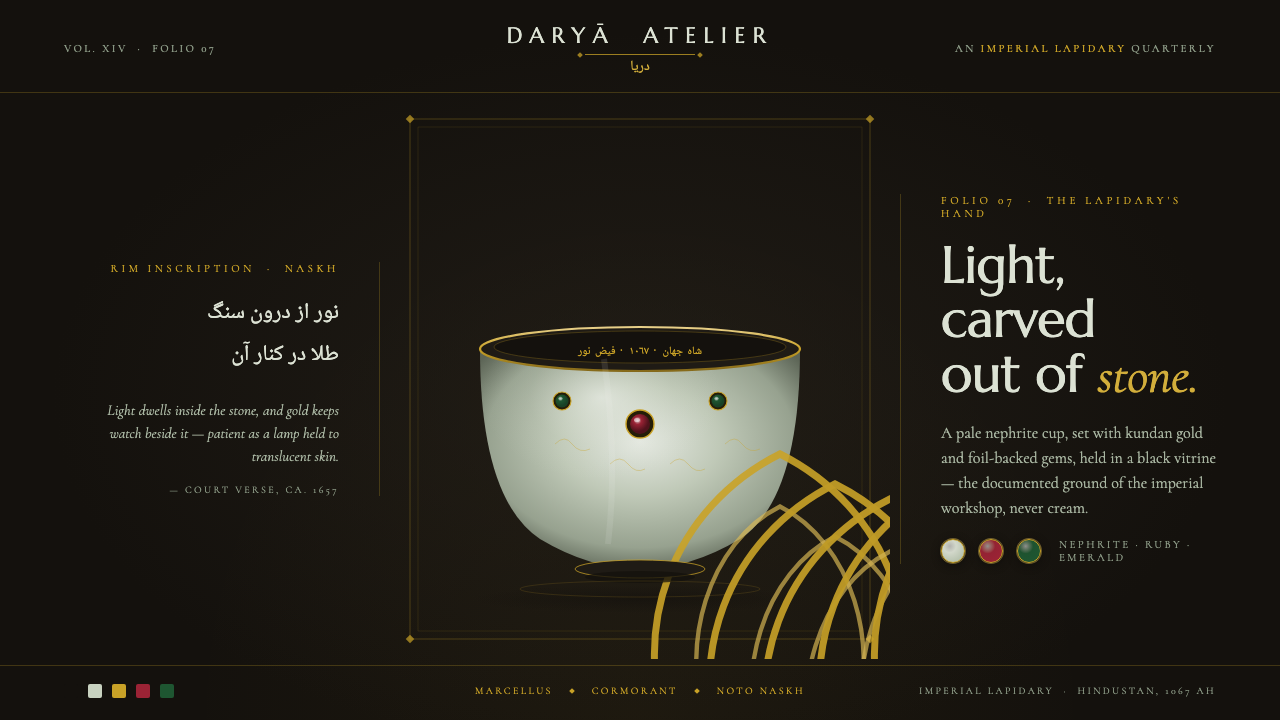 Mughal Jade CarvingImperial luxury, lit from inside. Pale nephrite glows on black, kundan gold f…
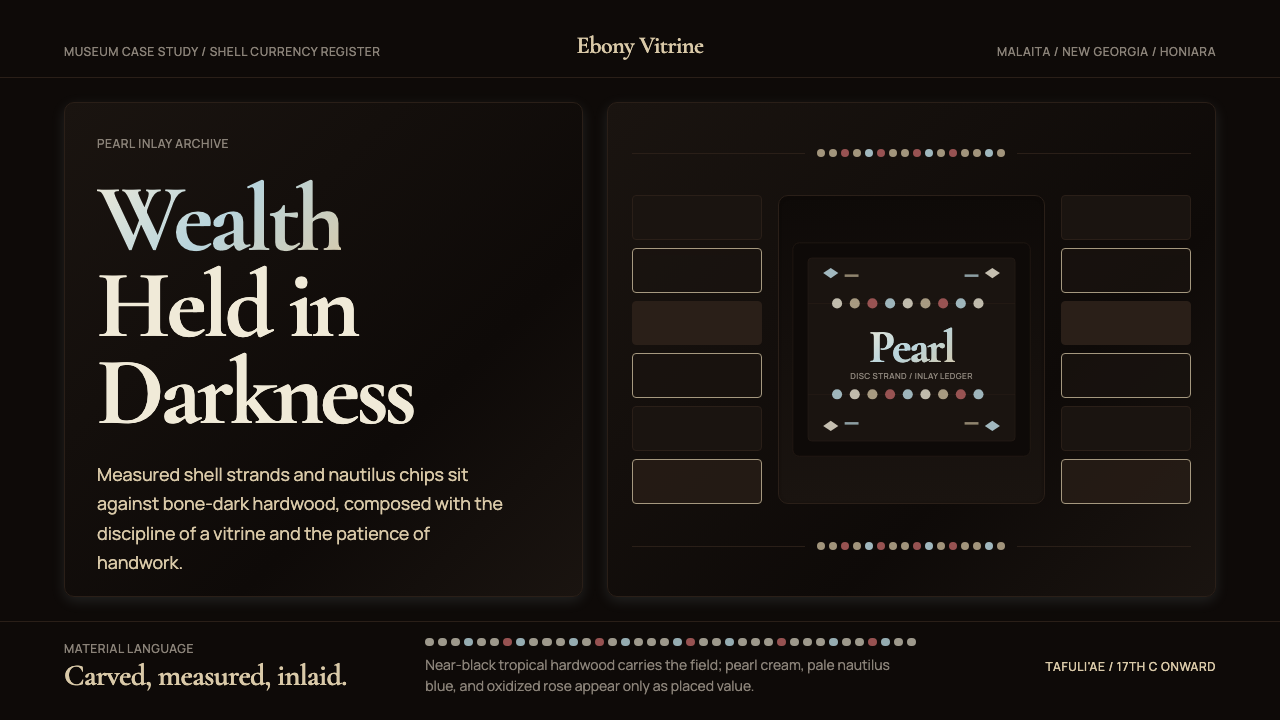 Solomon Shell Money & Pearl InlayDignity inlaid in darkness. Pearl cream and nautilus blue form strict shell-s…
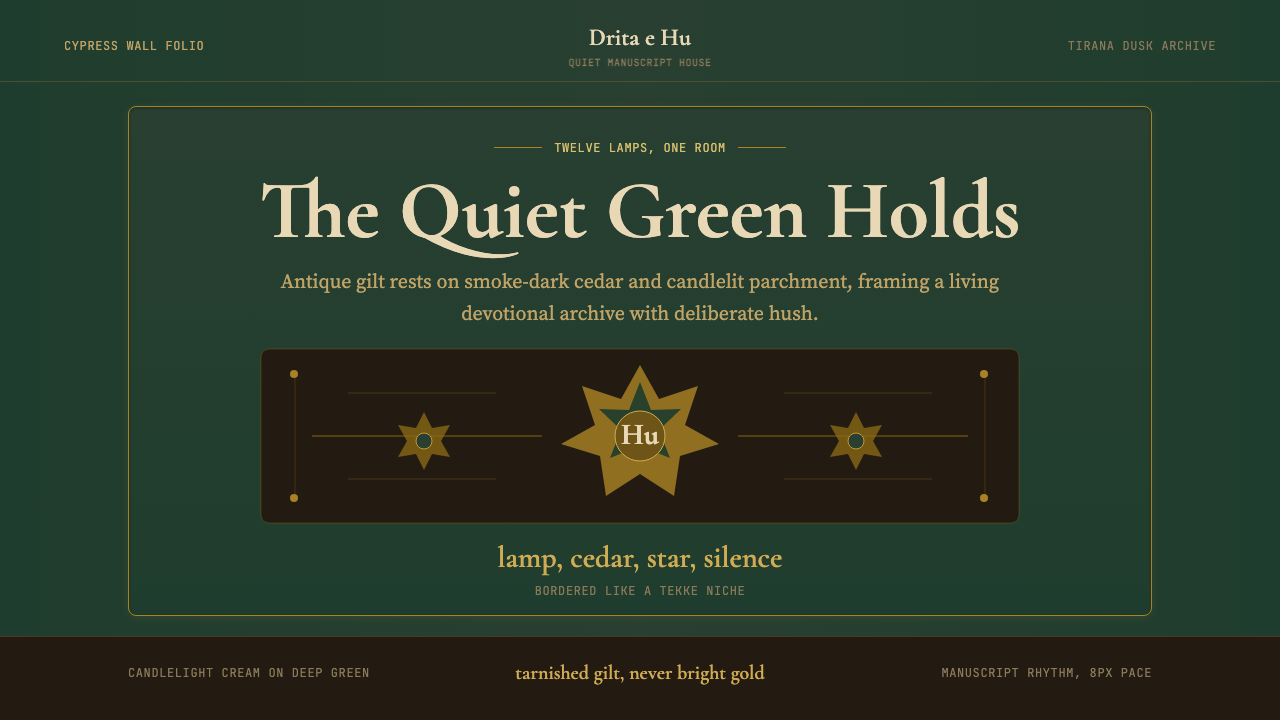 Albanian Bektashi Sufi (Tekke)Sacred quiet in cypress green. Gilt stars and Cormorant type frame a dusk tek…
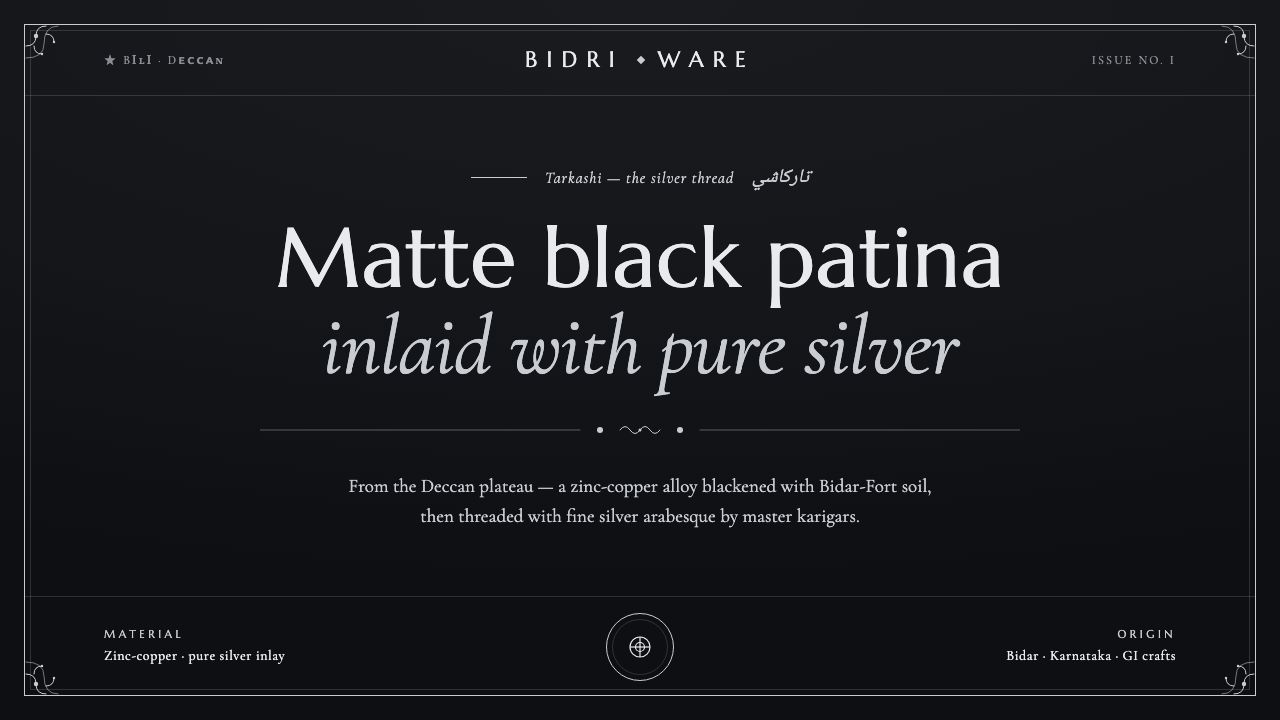 Bidriware Black MetalMonochrome luxury, hammered by hand. Matte-black Deccan patina threaded with…