What is Selvedge Denim?
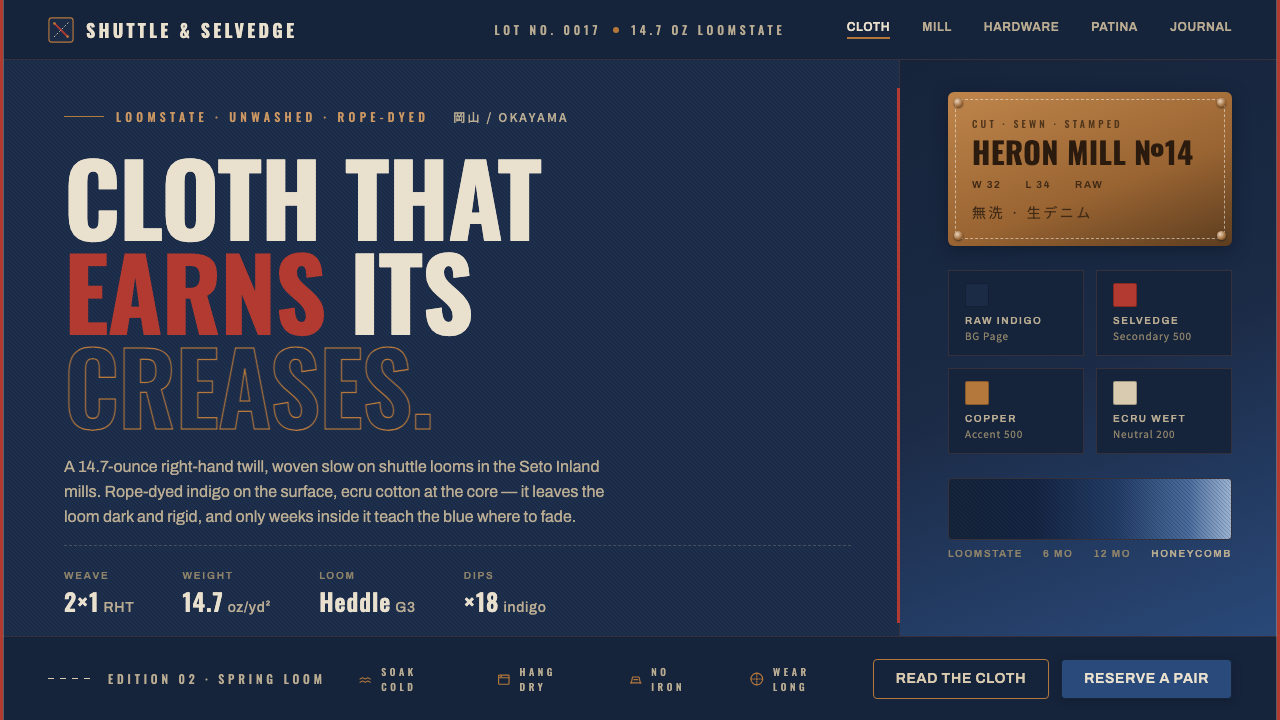
Selvedge Denim lets cloth earn its character — raw indigo twill, a woven red edge, copper hardware, and creases recorded by wear.
Selvedge Denim in brief
Selvedge Denim is a dark, tactile design language based on Japanese raw indigo as it leaves the shuttle loom. Its visual foundation is unwashed greenish navy-indigo twill, reinforced by a red selvedge identifier, copper rivets, and a leather patch. The result is not polished luxury and not distressed nostalgia. It is workwear craft made visible: dense, durable, exacting, and meant to change through use.
The style treats wear as authorship. Raw cloth begins deep and nearly uniform, then develops a range of worn blues as the garment is handled, folded, and lived in. Creases are not imperfections to be erased; they are evidence that the material has participated in a life. This gives Selvedge Denim a rare temporal quality: the design is delivered unfinished, with part of its final appearance left to use.
In interface terms, the system translates cloth into structure. Diagonal twill supplies a restrained tactile grain, the red selvedge becomes a literal accent rule, and copper and leather details mark points of value or interaction. The ground remains dark rather than cream or white. Every brighter element should feel like a material exception against that dark cloth, not like decoration scattered across an empty canvas.
Where does Selvedge Denim come from?
The contemporary Selvedge Denim system belongs to the Japanese selvedge and raw-denim revival from 2010 to now, centered on the mills of Okayama. Its identity comes from a return to cloth as a made object: the weave, dye, edge, hardware, and patch remain legible instead of being hidden beneath a uniform finish. The regional association matters because Okayama is presented here not as a generic backdrop, but as the craft origin of the visual language.
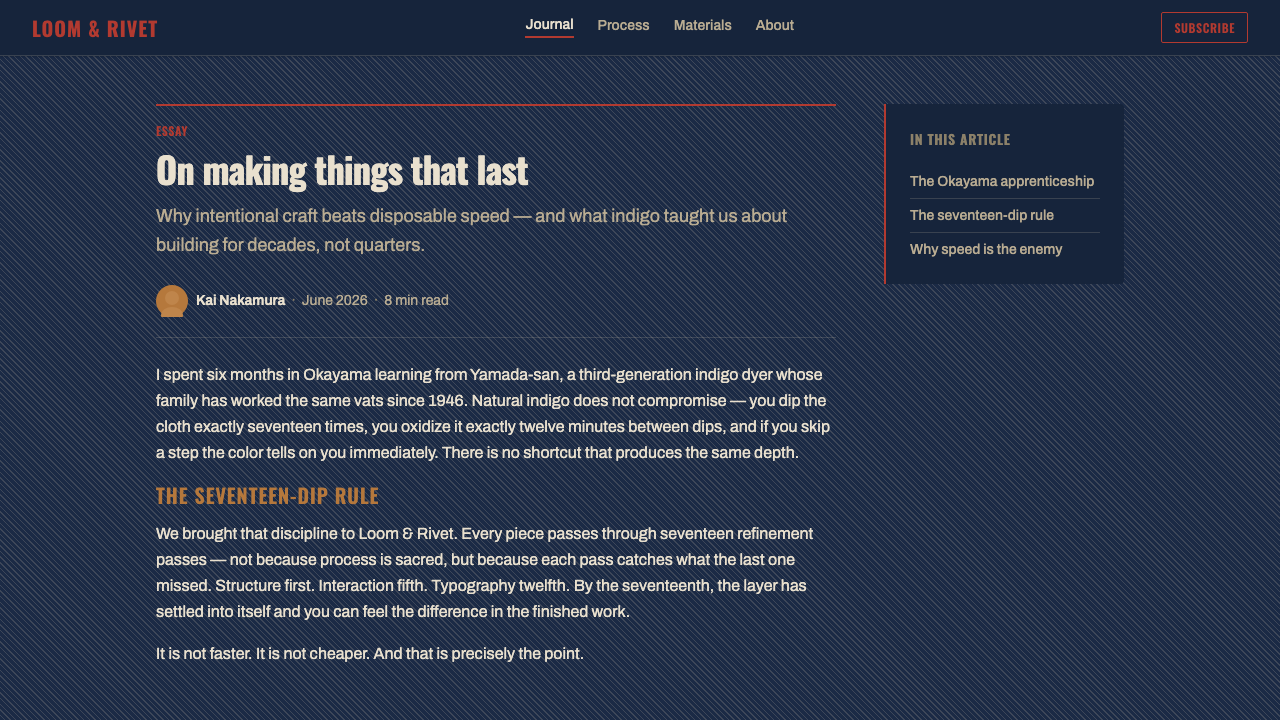
Rope-dyed indigo craft provides the color foundation. The cloth arrives in a raw-dark indigo state, with a greenish navy cast that feels deeper and more substantial than ordinary blue. Shuttle-loom selvedge weaving supplies the physical logic of the system: a finished woven edge becomes a visible identifier, and the red line embedded in that edge can be carried into graphic composition as a rule, divider, or boundary.
The revival also draws on workwear heritage. Workwear contributes the language of serviceable construction, repeated use, and visible reinforcement. Copper rivets and a leather patch are therefore not ornamental add-ons; they are signs that the object has been assembled for durability and handled as something real. The style's premium character comes from attention to process and material, not from gloss, ornament, or pristine smoothness.
Several communities sustain the system. Japanese shuttle-loom mills represent the making of the cloth, Naked & Famous represents a recognizable contemporary presence within the raw-denim field, and the raw-denim community gives the material its culture of observation and wear. Together they frame Selvedge Denim as a living revival rather than a frozen historical costume: rope-dyed indigo, shuttle-loom weaving, and workwear heritage translated into present-day visual practice.
What defines the Selvedge Denim look?
Indigo Ground
The dominant field is deep, greenish navy-indigo, closer to raw cloth than to a bright fashion blue. It should feel dense and absorbent, with enough tonal depth for red, copper, leather, and worn-blue accents to emerge sparingly. Cream and white grounds break the material premise; the darkness is foundational, not optional.
Diagonal Twill
Texture is directional rather than noisy. The diagonal twill should read as a quiet, repeated grain that gives large dark areas a physical presence without becoming a pattern competing with content. In digital work, it is best treated as an atmospheric weave: perceptible at close attention, subordinate at reading distance.
Red Selvedge
The red selvedge is the clearest graphic accent in the system. It behaves like a woven edge translated into a line: narrow, decisive, and attached to structure. Use it to mark a boundary, signal a selected state, or pull the eye through a composition. Its strength comes from restraint and continuity, not from repeated decoration.
Copper and Leather
Copper rivets and the leather patch introduce warmer, more tactile notes against the indigo ground. Copper should feel aged and functional rather than mirror-bright; leather should feel like a label or reinforcement, not a luxury trim. Together they create small points of material contrast that reward attention and imply construction.
Earned Fades
Change moves from raw-dark indigo toward worn blue. The transition should feel directional and accumulated, as if pressure and handling have gradually revealed the cloth beneath the dye. Fades are therefore visual records, not decorative gradients. Preserve irregularity and allow the dark original state to remain visible around the worn passages.
Constructed Dark Composition
Layouts begin with a dark cloth-like field and build hierarchy through seams, rules, panels, and restrained material accents. Space should feel organized like a garment assembled from parts: joins are visible, boundaries matter, and details cluster where construction would require them. The composition gains authority from density and order rather than from spacious minimalism.
Who shaped Selvedge Denim?
The Japanese shuttle-loom mills are the material foundation of Selvedge Denim. They represent the slow, exacting production logic behind the woven edge and the diagonal twill. In the design system, their role is expressed through visible texture, dark indigo depth, and details that make construction feel present rather than simulated.
Naked & Famous is one of the recognizable contemporary names associated with the raw-denim field in the source material. Its presence helps position Selvedge Denim as a current design language rather than an archival reference. The connection is useful when a product needs craft credibility, strong material identity, and a visible relationship to the raw-denim revival.
The raw-denim community gives the style its social practice of waiting, observing, and allowing wear to become visible. It supports the idea that the finished appearance is not fully predetermined. In interface work, this becomes a permission to show change, accumulation, and evidence of use instead of presenting every surface as permanently new.
How do you use Selvedge Denim today?
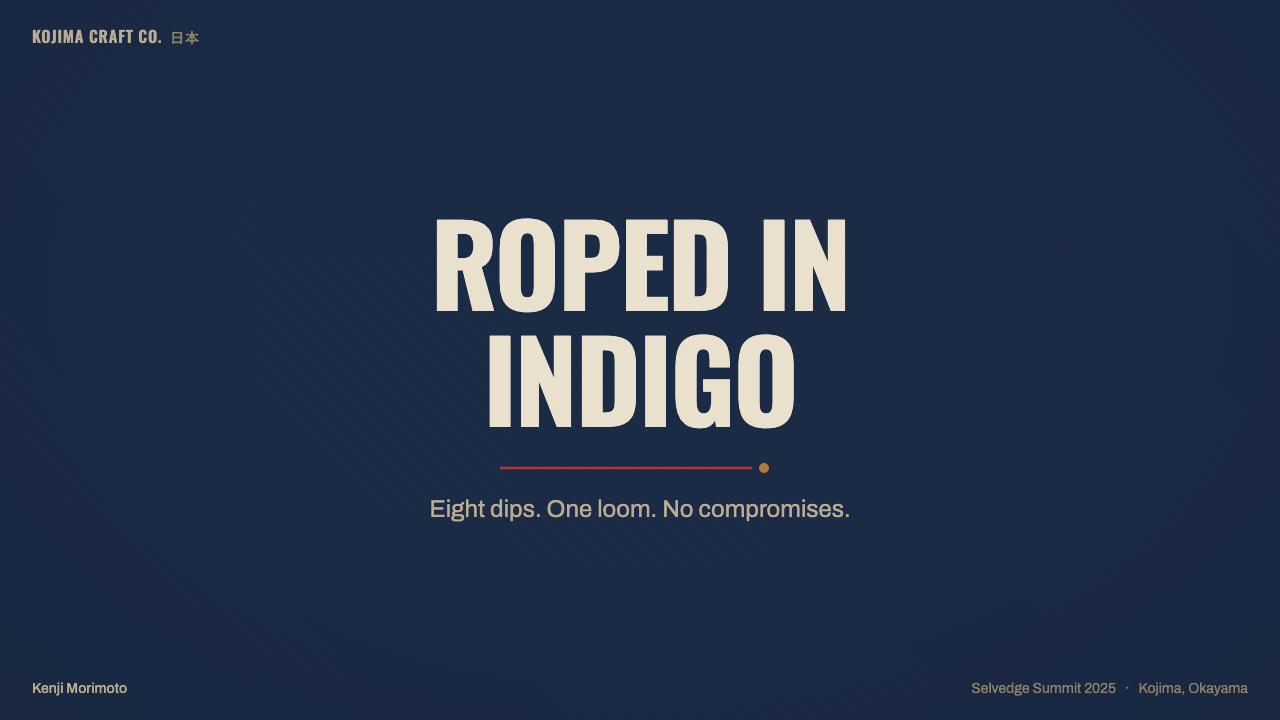
For presentation slides, use the dark indigo ground as the constant field across cover, content, and data pages. A cover can introduce the system with a strong red selvedge rule, a compact title block, and a restrained copper or leather detail that feels attached to the composition. Content slides should behave like assembled panels, with clear seams between sections and typography organized by hierarchy rather than ornamental framing. Data slides can treat charts as stitched constructions: dark fields hold the information, red marks the active series or threshold, and worn-blue variation indicates change over time.
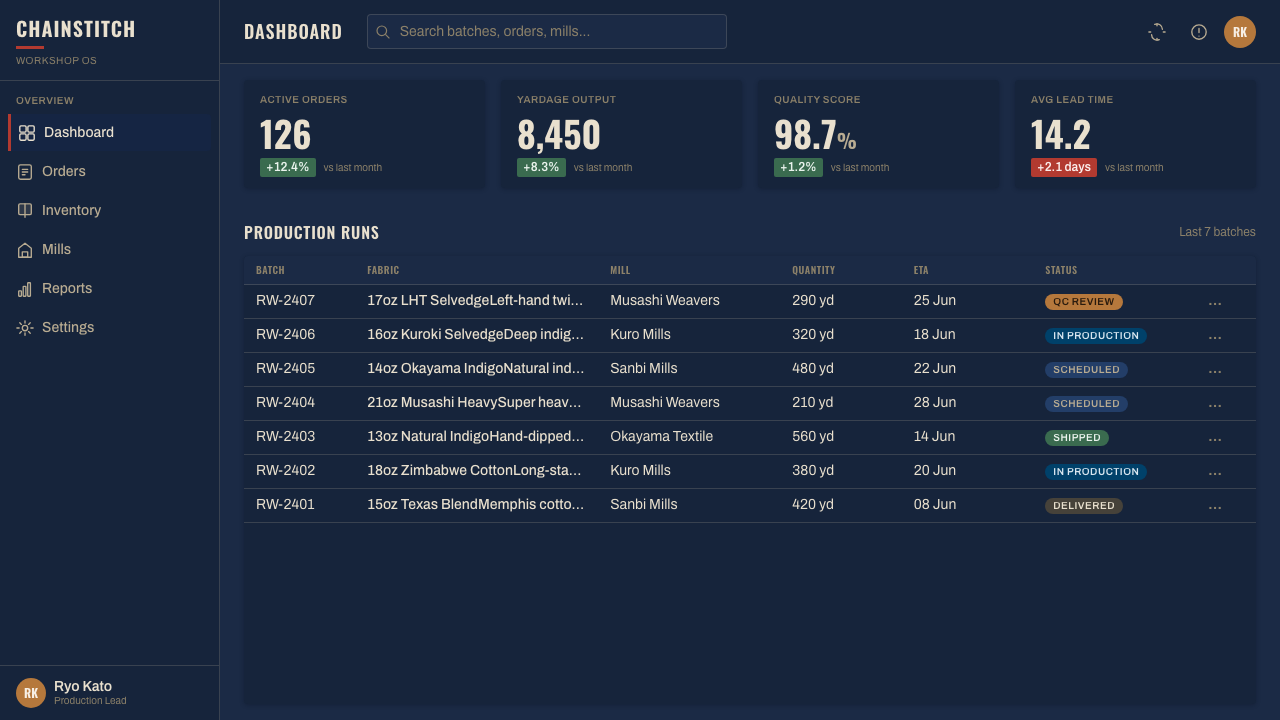
For web interfaces, Selvedge Denim suits dashboards and pricing pages that want to communicate durability, craft, and premium specificity. Use the indigo field to establish continuity across navigation, cards, and panels; use red for selected states, action paths, or important boundaries; reserve copper and leather tones for badges, labels, or high-value details. Inputs and controls should feel like reinforced components, with visible edges and deliberate grouping. Texture must remain quiet enough for scanning, while the occasional fade can signal progression, history, or user-generated accumulation.
For editorial and marketing work, the style supports product stories, craft narratives, launch pages, and campaigns centered on making or longevity. Treat the page like a garment pattern: establish a strong main panel, let rules act as seams, and place metadata where a label or patch would naturally belong. Photography or imagery, when present, should support the material story through dark indigo, worn-blue transitions, copper warmth, or visible construction. Marketing calls to action work best when they feel like purposeful hardware or a red edge stitched into the layout, not like bright buttons floating above it.
A common mistake is to make Selvedge Denim look merely dark, rustic, or distressed. Darkness without indigo specificity becomes generic; random scratches replace the meaningful logic of earned wear; excessive red, copper, or leather accents turn craft details into costume. The system depends on an active relationship between raw origin and gradual change. Keep the original dark cloth dominant, make texture directional and controlled, and let every warmer detail appear to belong to a construction rather than to a decorative theme.
Selvedge Denim — FAQ
Is Selvedge Denim simply a dark denim color palette?
No. Dark indigo is only the ground. The system also depends on diagonal twill texture, a woven red selvedge identifier, copper rivets, a leather patch, and a visible movement from raw-dark cloth toward worn blue. Remove those relationships and the result becomes a generic dark interface rather than Selvedge Denim. Its identity comes from material construction and earned change working together.
Can the style use a cream or white background?
The source system is explicit that the ground is dark cloth, never cream. A light background would reverse the central material logic and make the red edge, copper, and leather details feel detached. If a lighter surface is needed for a particular content area, keep it subordinate and treat it as an exception, while preserving the dark indigo field as the dominant environment.
How should fades be represented without making the interface look distressed?
Treat fades as records of pressure and use, not as random surface damage. The movement should run from raw-dark indigo toward worn blue, with directional emphasis and visible areas of the original dark state left intact. Use change to communicate progression, history, or accumulated interaction. Avoid scattering scratches or distressed marks that have no relationship to structure or behavior.
What kinds of products suit Selvedge Denim best?
It is strongest for products and communications that value craft, durability, workwear heritage, and premium material identity. Dashboards, pricing pages, product catalogs, launch campaigns, and editorial stories about making can all benefit from its constructed darkness and visible process. It is less natural for experiences whose central promise is airy neutrality or delicate softness, because the system deliberately carries weight, texture, and the evidence of use.
Related design styles
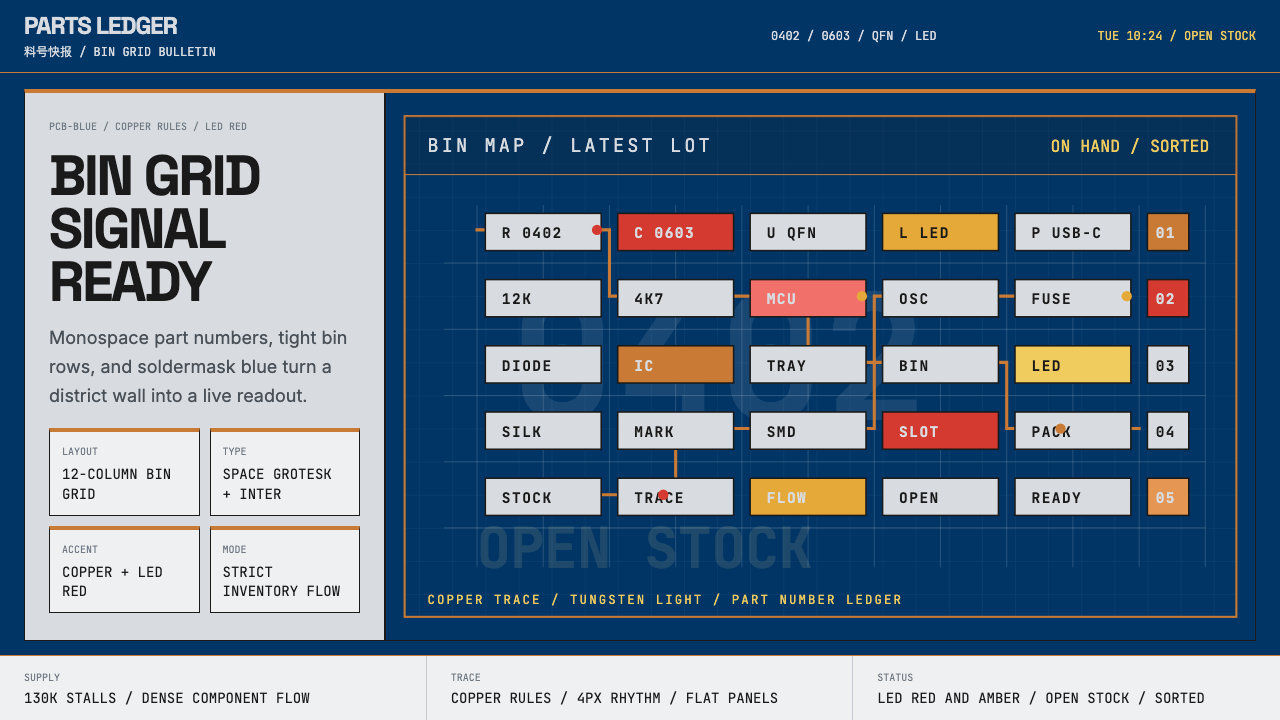 Shenzhen HuaqiangbeiDensely practical. PCB-blue panels, mono part numbers, and copper grid lines.
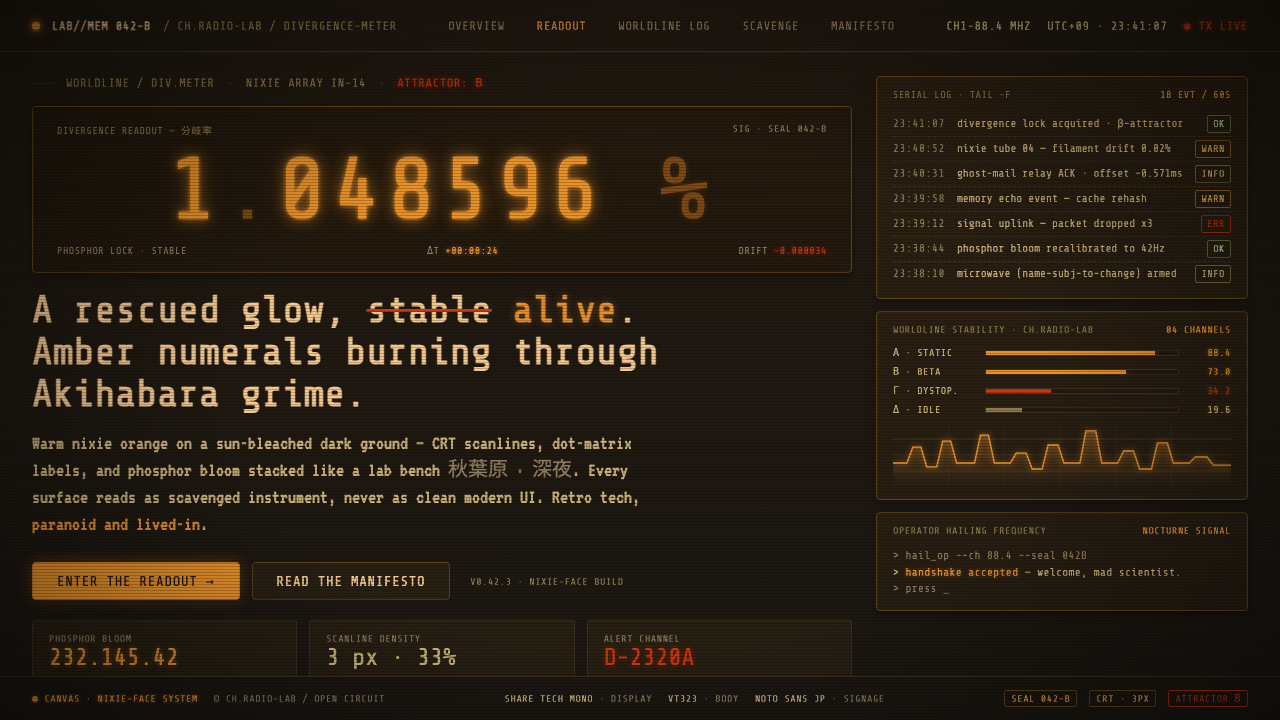 Steins;Gate CRTJunk-tech nostalgia. Nixie-amber digits glow on sun-bleached warm-black under…
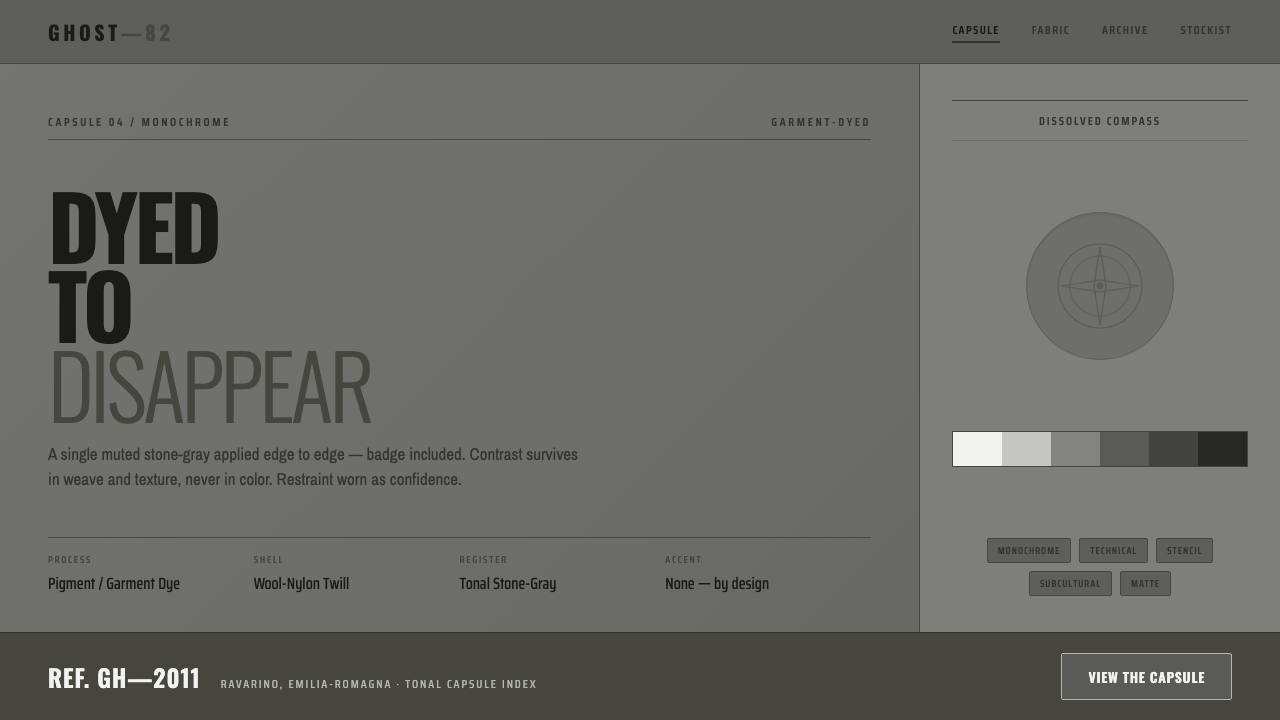 Stone Island GhostDyed to disappear. One garment-dyed stone-gray edge to edge, badge dissolved,…
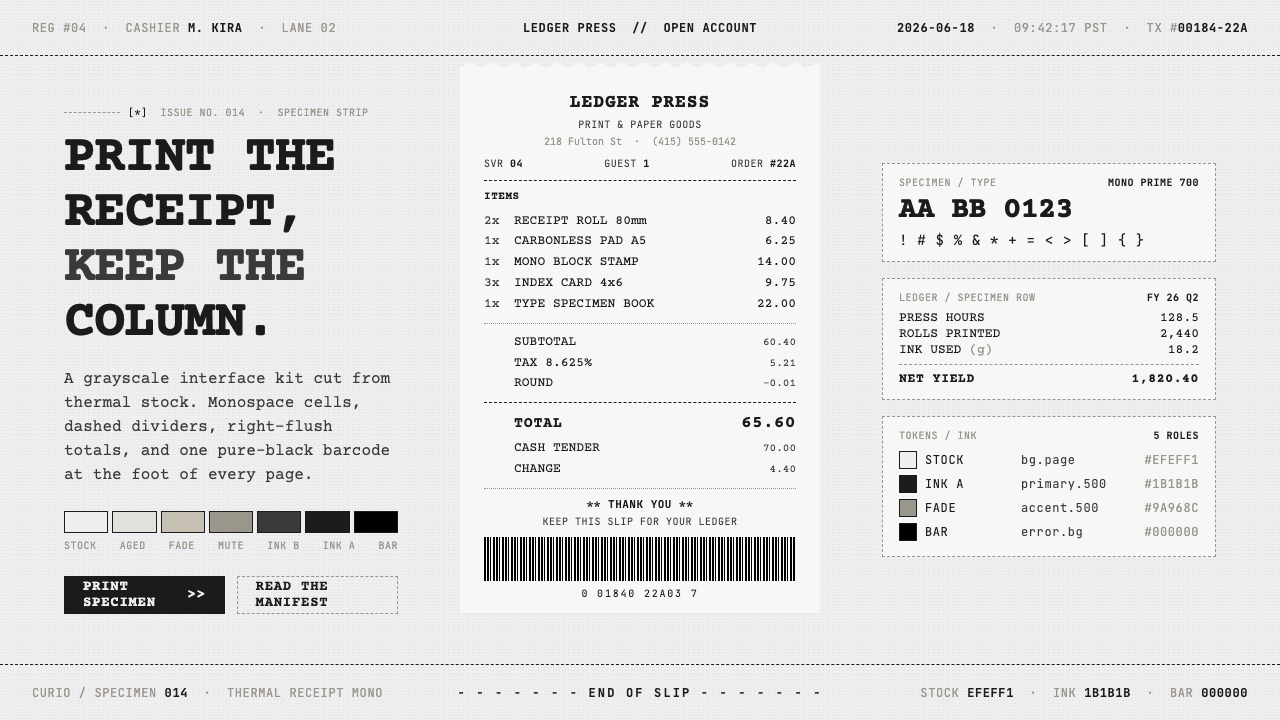 Thermal Receipt MonoReceipts as an interface. Grainy near-black monospace on warm-gray thermal st…
 Cardboard Box CraftPlain utility has texture. Manila board, black stencil type, tape seams, red…
 Cumbia VilleraLow-budget defiance. Neon green and hot magenta crowd black with chrome inlin…