What is Paytm Indian Fintech?
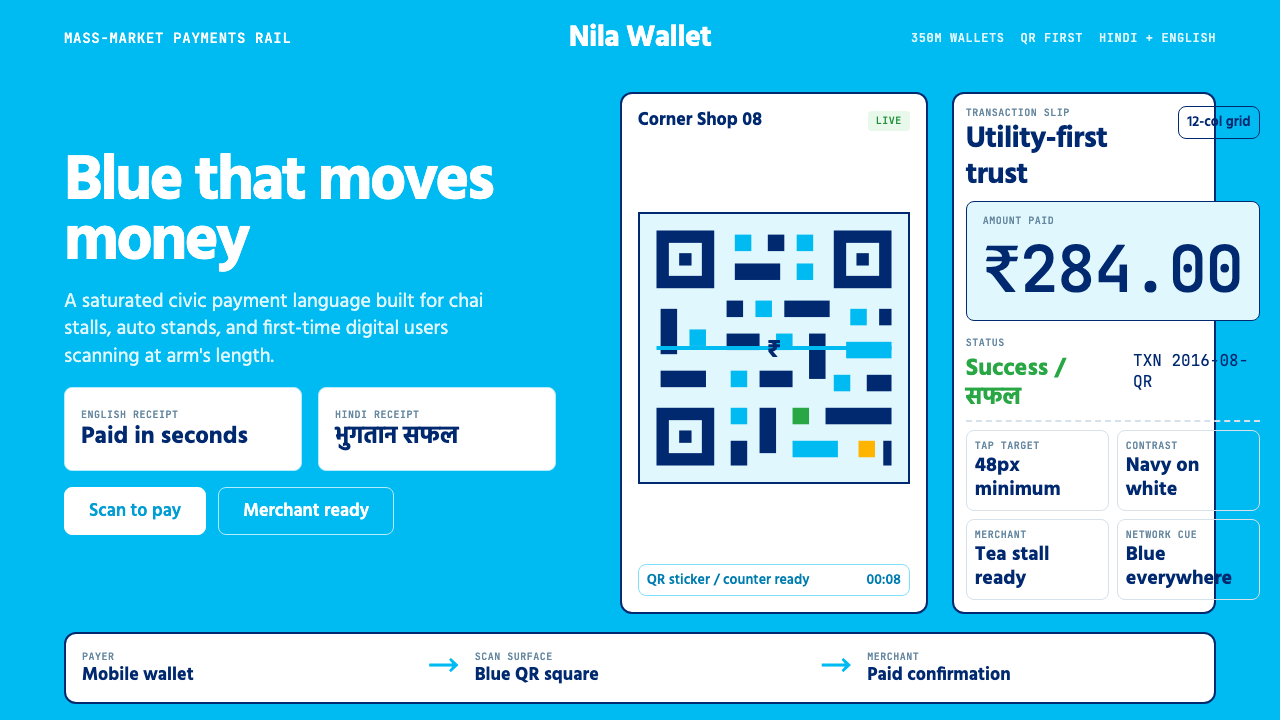
A single saturated blue, bilingual numerals, and a QR-code square turned India's most chaotic street corners into a seamless digital payment network.
Paytm Indian Fintech in brief
Paytm Indian Fintech is a visual design language born from the specific constraints of bringing digital payments to a population of hundreds of millions of first-time smartphone users. It combines a dominant brand blue — deeply saturated and unwavering in identity — with numeric-first typography, bilingual Hindi-English legibility, and the functional directness of an ATM interface. The result is a system that communicates trustworthiness and clarity to users regardless of literacy level or prior experience with technology.
The aesthetic is not minimalism in the Western sense. Where Scandinavian or Swiss-derived minimalism removes elements to achieve elegance, Paytm's design language removes ambiguity to achieve confidence. Transaction amounts appear large and unambiguous. Status messages are brief and declarative. Icons are concrete rather than metaphorical. The QR-code square — reproduced on stickers affixed to chai stalls, auto-rickshaws, and corner pharmacies across the subcontinent — became the system's most iconic element: a dense grid of machine-readable blocks that paradoxically reads as warmly familiar because of how ubiquitously it appeared during the demonetization crisis of 2016.
What distinguishes this style from generic 'app-style fintech' is its regional authenticity. The color temperature, the way numerals are sized relative to surrounding text, the embrace of dense information without sacrificing clarity — these choices reflect a design sensibility shaped by India's visual culture: the bright, saturated signage of bazaars; the direct, high-contrast communication of railway timetables; the trustworthy visual weight of government-issued identity documents.

Where does Paytm Indian Fintech come from?
Paytm was founded in 2010 in Noida, Uttar Pradesh, by Vijay Shekhar Sharma as a prepaid mobile recharge platform. The early product had no distinctive visual identity — it looked like thousands of other Indian utility apps of the era. The design trajectory changed fundamentally in 2016, when the Indian government's demonetization policy — the overnight withdrawal of high-denomination banknotes — created an emergency demand for cashless payment alternatives. Paytm's user base expanded from tens of millions to over three hundred million within months. The design system had to scale at the same pace as the network, and it had to work for users who had never before made a digital transaction.
The blue that became Paytm's visual signature was not chosen for aesthetic reasons alone. In the Indian cultural context, blue carries associations with trust, authority, and institutional reliability — from the blue of government forms to the blue of school uniforms. Paytm's particular shade is deeply saturated, not the corporate cobalt of global tech giants but a warmer, more enveloping tone that reads as approachable at street scale. When reproduced on the small sticker affixed to a merchant's counter, this blue had to be immediately legible from several feet away, in varied lighting conditions, competing with the visual density of an Indian market street.
The QR code's centrality to the design system emerged from a specific infrastructural constraint: India's UPI (Unified Payments Interface) ecosystem, launched by the National Payments Corporation of India in 2016, made interoperable QR-based payments possible across apps. Paytm was among the earliest adopters, and the blue-bordered QR square — standardized, stackable, reproducible — became the visual symbol of the entire mobile payments revolution. Merchants who had never dealt with point-of-sale terminals could simply display a printed QR code and accept payments from any UPI-linked app. The design system was built around this artifact.
The typographic and bilingual dimension of the design reflects the JAM Trinity — Jan Dhan bank accounts, Aadhaar identity numbers, and Mobile connectivity — the government initiative that created the infrastructure for financial inclusion at scale. For a platform serving users whose primary language might be Hindi, Punjabi, Tamil, or Bengali, the commitment to clear Hindi-English bilingual display was not a cosmetic choice but a functional requirement. Numerals, being largely language-agnostic in the context of currency amounts, became the most universal element of the interface — sized generously, weighted heavily, and centered in the visual hierarchy. Madhur Deora, who later led Paytm's financial services expansion, and Mahima Kaul, who shaped the platform's communications strategy, were among the figures who helped translate these product imperatives into a coherent public-facing identity.
What defines the Paytm Indian Fintech look?
Dominant Brand Blue
The defining color of this system is a deeply saturated, mid-spectrum blue that functions simultaneously as brand identifier, trust signal, and wayfinding device. Unlike the cool, desaturated blues common in global fintech, this blue is warm enough to avoid institutional coldness while remaining visually authoritative. It appears on primary action buttons, header bars, QR-code borders, and merchant stickers — always at full saturation, never tinted or toned down. White and light grey are used as the primary neutral grounds; pure black is reserved for high-priority numeric content and critical labels.
Numeric-First Typography
In a payment interface, the transaction amount is the single most important piece of information on screen. Paytm's typographic system treats numerals as primary visual objects — set at a size significantly larger than surrounding text, weighted heavily for immediate legibility, and positioned at the optical center of each screen or card. Supporting text — labels, currency codes, status messages — is subordinate in size and weight. This hierarchy is not negotiable: even on dense informational screens listing multiple transactions, each amount is visually separated and immediately parseable. The system accommodates both Latin numerals and the Devanagari numeral forms used in Hindi contexts.
QR-Code Grid as Motif
The QR code is not merely a functional element in this design language — it is the system's organizing visual symbol. The grid of black-and-white squares, bounded by a colored border and anchored by registration corner squares, has become so associated with the Paytm ecosystem that it functions as a logo-level identifier. In marketing and editorial applications, QR-code grid texture is referenced as a pattern motif, suggesting connectivity and the digital-physical bridge. The visual language extends this grid sensibility: data visualizations use dense tiled layouts, merchant onboarding screens organize information in square card grids, and the overall sense of structure evokes the ordered, systematic quality of a machine-readable code.
Bilingual Visual Rhythm
Operating across a linguistically diverse market, the design system builds bilingual Hindi-English display directly into its structural logic rather than treating one language as a footnote to the other. Labels, button text, and onboarding instructions are sized and spaced to accommodate both scripts simultaneously — Devanagari's stacked diacritics and the dense vertical rhythm of Hindi text sit alongside Latin characters without visual collision. This bilingual rhythm gives the interface a layered, information-rich quality that distinguishes it from purely Latin-script fintech design. When only Latin numerals appear, the surrounding negative space compensates for the absence of Hindi content, maintaining the expected visual weight.
Functional Flatness with Selective Depth
The interface is predominantly flat — actions, information panels, and merchant cards exist on a single visual plane without decorative gradients or ornamental shadows. This flatness serves legibility in outdoor and low-quality screen contexts, where gradient rendering is inconsistent. However, the system uses selective, purposeful depth cues for critical affordances: a button may have a solid, slightly offset shadow to signal pressability; a modal confirmation dialog may sit on a clearly elevated plane to communicate its priority. These depth cues are structural and minimal — they indicate hierarchy and interaction state without importing the skeuomorphic richness of earlier mobile interfaces.
High-Contrast Status Communication
Payment completion, failure, and pending states are communicated through bold, full-screen or full-card color fills — a vibrant green for success, a warm red for failure, the brand blue for processing — accompanied by a single large icon and one or two words of confirmation. This approach borrows from the visual language of traffic signals and public infrastructure signage: universally legible, immediately decisive, requiring no literacy to interpret. Transitional animations, where present, are brief and purposeful rather than decorative. The design assumes that the user needs certainty fast, and the visual system delivers it through color field and icon scale rather than verbal explanation.
Density Without Clutter
Indian digital product design has historically been comfortable with information density that Western minimalism would consider overcrowded. Paytm's design system embraces this density deliberately: a home screen might display recent transactions, a promotional offer, a utility shortcut grid, and a balance indicator simultaneously. The system manages this complexity through consistent typographic hierarchy, strong color discipline, and card-based segmentation that groups related content into clearly bounded units. Each card is a self-contained visual module. The grid of cards reads coherently even when individual content varies widely, because the structural frame — size, border treatment, internal padding rhythm — is unwavering.

Who shaped Paytm Indian Fintech?
The founder and long-serving CEO of Paytm, Sharma launched the company in Noida in 2010 as a mobile recharge service before steering it through its transformation into India's dominant digital wallet and payments platform. His aggressive expansion strategy during the 2016 demonetization — deploying merchant QR stickers at unprecedented scale across India — was inseparable from the visual design decisions that made the Paytm blue and QR square into nationally recognized icons. Sharma's product philosophy emphasized accessibility for first-time digital users, which shaped the design system's prioritization of clarity, bilingual support, and the ATM-like directness of the transaction interface.
As President and later co-CEO of Paytm, Deora led the company's financial services expansion including Paytm Payments Bank, insurance distribution, and lending products. His tenure oversaw the period when Paytm's design system had to stretch from a consumer payments app into a full financial services platform — a transition that required the visual identity to communicate regulatory credibility and institutional gravity alongside its original street-level accessibility. The design language's evolution toward more formal information hierarchy and document-style layouts during this period reflects the product demands of serving both street vendors and institutional partners.
Kaul led Paytm's public policy and communications, working at the intersection of government relations, media strategy, and public-facing brand identity. Her role was critical during the demonetization period when Paytm's communication had to operate at national scale — addressing government policy makers, merchant communities, and hundreds of millions of new users simultaneously. The clarity and accessibility that characterize the Paytm design language at the communication level — the decision to use plain declarative language, direct visual messaging, and minimal friction in onboarding materials — reflects the communications strategy that her team shaped.
Not an individual but the institutional actor whose UPI infrastructure made the entire Paytm design system's QR-code centrality possible. NPCI's standardization of the interoperable QR format and the UPI payment rail — launched in 2016 — created the technical substrate on which Paytm's visual language was built. The blue-bordered QR square that became Paytm's most iconic artifact is, at a technical level, a rendering of an NPCI-standardized payment address. This institutional relationship between a government payment authority and a private design language is one of the defining features of the Indian fintech aesthetic, distinguishing it from purely market-driven design systems.
A government decision rather than a person, but the single most significant design brief that the Paytm visual system ever received. When India's government announced on November 8, 2016 that high-denomination banknotes would cease to be legal tender the following day, it created an overnight mass-market demand for digital payments. Paytm's design team had to scale merchant onboarding materials, user communications, and the visual presence of the QR-code sticker across millions of retail locations within weeks. The constraint of that emergency — designing for millions of users who had never used a digital wallet, in multiple languages, on low-end devices, at street level — permanently shaped the design system's values: speed, trust, clarity, and accessibility above all.
How do you use Paytm Indian Fintech today?
Paytm Indian Fintech is a design language with strong cultural specificity, which is both its greatest strength and the key variable to manage when applying it. It works best when the goal is to communicate transactional trust, accessible authority, and the reassuring clarity of a public-facing financial service — particularly for products targeting South Asian markets or any context where first-time digital users form a significant portion of the audience. Applied outside its cultural context, the style's visual directness and information density read as confident rather than generic, provided the blue and QR motif are treated with restraint.
For presentation slides, the style works especially well on financial or operational content. A cover slide benefits from the system's bold, centered numeric or icon composition: a large amount, percentage, or QR-derived grid pattern fills the dominant visual field, with the title in heavy, high-contrast type below or alongside. Content slides should use a card-based grid structure — each section of information contained in a clearly bordered module, with amounts and key metrics displayed at large scale relative to supporting text. Data slides translate naturally: bar charts and transaction flow diagrams rendered in the brand blue with white labels read with the same confident directness as an ATM confirmation screen.
For web interfaces, the style suits dashboards, pricing pages, payment confirmation flows, and merchant-facing analytics panels. The approach: establish a clean white or very light background as the base; use the dominant blue exclusively for primary actions, active states, and key data highlights; reserve green and red strictly for success and error states. Card components should have clearly visible borders or subtle solid shadows rather than diffuse drop shadows. Navigation and labeling should be typographically heavy and direct — no ghost buttons, no outline-only icons, no ambiguous metaphors. Forms should display field labels above inputs, not as placeholder text that disappears on focus.
For editorial and marketing applications, the Paytm design language supports bold, poster-like layouts with strong information hierarchy. A marketing page works well with full-width blue header sections alternating with white content areas — the blue zones used for headlines and calls to action, white zones for supporting information and testimonials. QR-code grid texture, used sparingly as a background motif, immediately signals payment technology without requiring explicit iconography. For financial inclusion or social impact narratives, the style's inherent accessibility values — bilingual text, large numerals, clear status indicators — can be highlighted as deliberate design choices that reflect the product's values.
A common mistake when applying this style is overusing the saturated blue, letting it dominate the entire layout rather than anchoring specific elements. In the authentic Paytm system, most of the visual field is white or light grey; the blue appears at high impact on buttons, status bars, and the QR-code border. Flooding a slide or web page with blue background removes the contrast that makes the blue meaningful. A second common error is treating the QR-code motif as a decoration — tiling it across backgrounds at large scale or using it as a texture fill. The QR square works because it is functional; when reproduced at a scale where it cannot be scanned, it should appear only as a tight, small graphic element — never as wallpaper.

Paytm Indian Fintech — FAQ
Is Paytm Indian Fintech style appropriate for non-Indian products?
Yes, with intentionality. The core design values of the style — transactional clarity, accessible authority, high-contrast numeric hierarchy, and the reassuring presence of the brand blue — are universally applicable to any product where financial trust is the primary communication goal. The QR-code motif is also now globally legible following its widespread adoption across payment systems worldwide. What requires care is avoiding a pastiche that borrows the surface aesthetic (the blue, the QR graphic) without the functional logic underneath. A financial dashboard, a ticketing interface, or a utility payments product from any market can legitimately adopt this vocabulary if those products share the style's core values: serving users who need fast, unambiguous confirmation that a transaction has succeeded.
How does this style handle dark mode?
The canonical Paytm design language is light-ground: the dominant background is white or very light grey, with the saturated blue and high-contrast black type reading against it. A dark inversion is technically possible but requires significant recalibration. On a dark background, the saturated blue tends to read as glowing or electric rather than trustworthy — which can undermine the style's primary emotional goal. The success green and failure red also shift in perceptual weight on dark grounds. If a dark mode is required, the most faithful approach is to move the dominant blue to a slightly lighter, less saturated variant on the dark ground, maintain high contrast for all numeric content, and keep the QR-code square bordered in a pale version of the blue rather than filled with it. Status color fills — the full-screen green or red — translate well to dark mode with minimal adjustment.
What makes this style different from generic fintech blue?
Generic fintech blue — the cobalt or navy that appears across thousands of Western banking and payments apps — is typically chosen for its associations with authority and corporate stability. It is usually cooler in tone, more desaturated, and applied with generous white space in a minimal layout. Paytm Indian Fintech blue is warmer, more fully saturated, and applied in a context of deliberate information density rather than minimalist restraint. The bilingual typography, the numeric-first hierarchy, the QR-code centrality, and the high-contrast status communication are not stylistic decorations — they are functional responses to specific market conditions. Generic fintech blue communicates 'we are institutional and trustworthy'; Paytm blue communicates 'your money is here, the transaction worked, you can trust this at street level'. The emotional register is different, and so is the design logic.
Can the QR-code motif be used decoratively without looking like a mistake?
Yes, but with strict scale and placement discipline. The QR motif works decoratively when it appears at actual scannable size — small, tight, sharp — as a graphic element within a composition, not as a full-bleed background pattern. A single QR square in a corner of a slide, a small QR detail on a business card, or a row of QR codes representing different payment destinations in a merchant-facing document all read as intentional and contextually appropriate. The mistake occurs when the motif is scaled up as a texture or pattern — at large size, it loses both its functional meaning and its visual coherence, and reads as a misapplication of clipart. The rule of thumb: if someone looking at it could theoretically scan it with a phone camera, it is at the right scale for decorative use.
How should success and error states be handled in this style?
In the Paytm design language, success and error states are treated as moments of maximum visual clarity — not subtle indicators but full-field communications. A successful payment triggers a full-card or full-screen green fill with a large checkmark icon and one word of confirmation. A failed transaction triggers an equivalent red field with a clear failure icon and a brief, plain-language explanation. This approach comes from the ATM and public infrastructure design tradition: when something important has happened, the visual system shouts it clearly rather than whispering it in a toast notification. For digital products applying this style, the principle translates to: never rely on a small icon or muted color chip to communicate a completed transaction. Give success and failure their own visual moment, sized proportionally to the importance of the action.
Related design styles
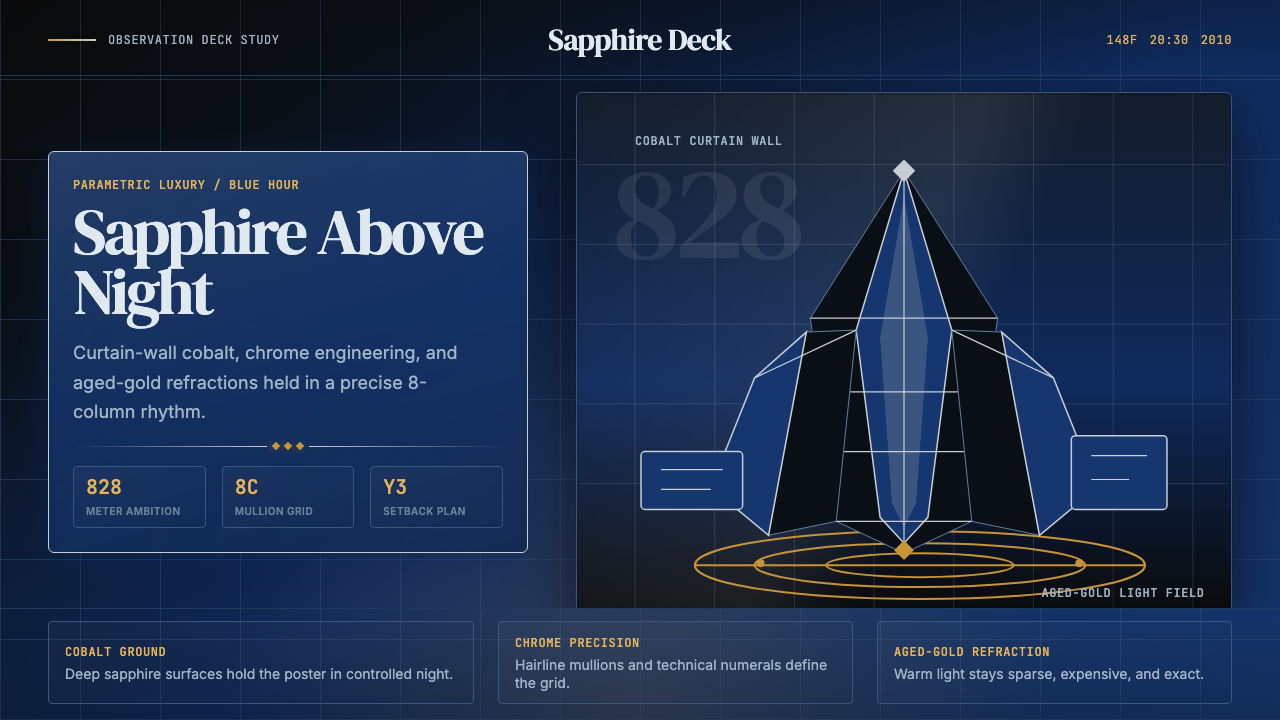 Emirati Burj Khalifa Sapphire (2010)Commanding height, controlled light. Sapphire glass, chrome grid, aged-gold g…
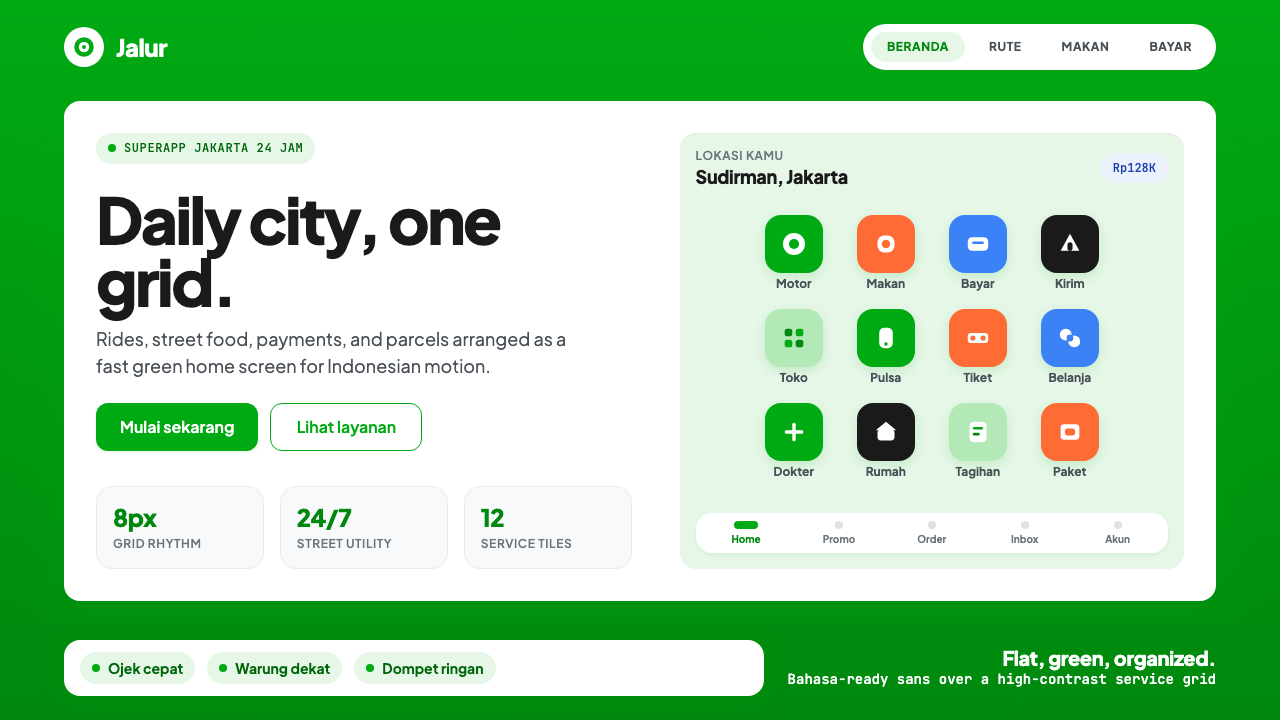 Gojek SuperappCity speed, ordered. Electric green tile grid turns rides, food, and pay into…
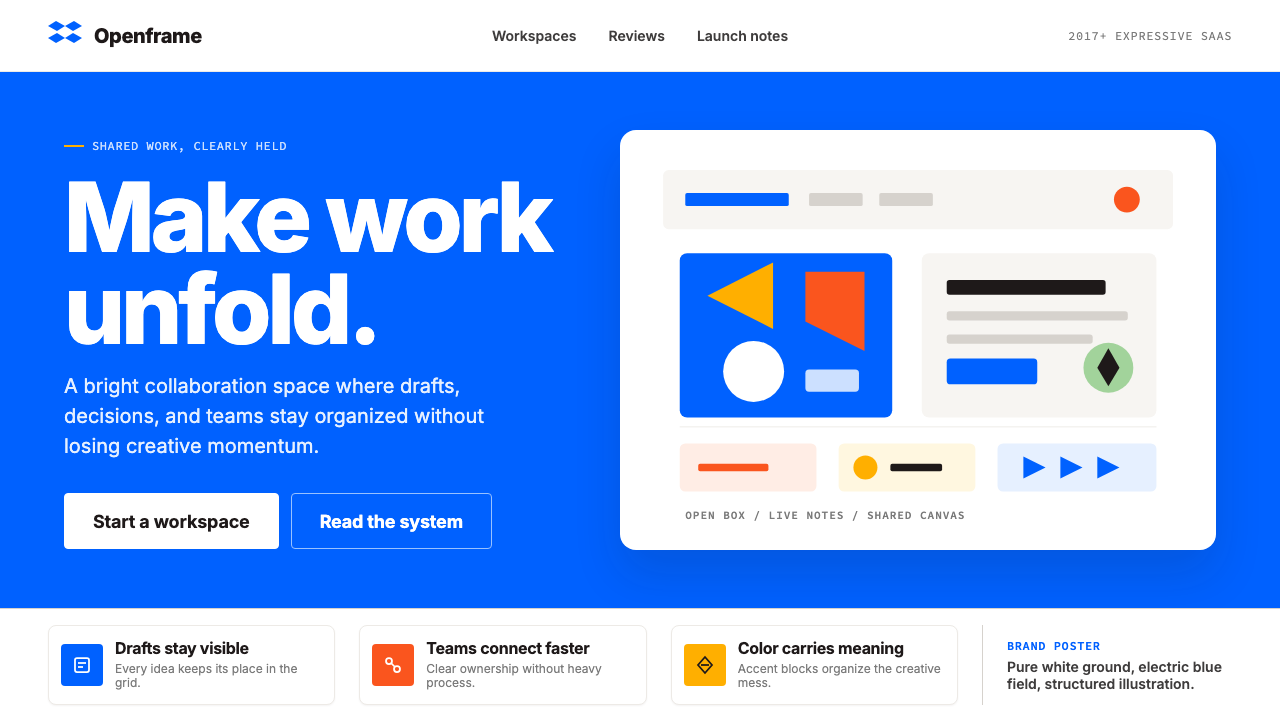 Dropbox ModernFriendly SaaS gets loud. Electric blue and Sharp Sans drive a structured geom…
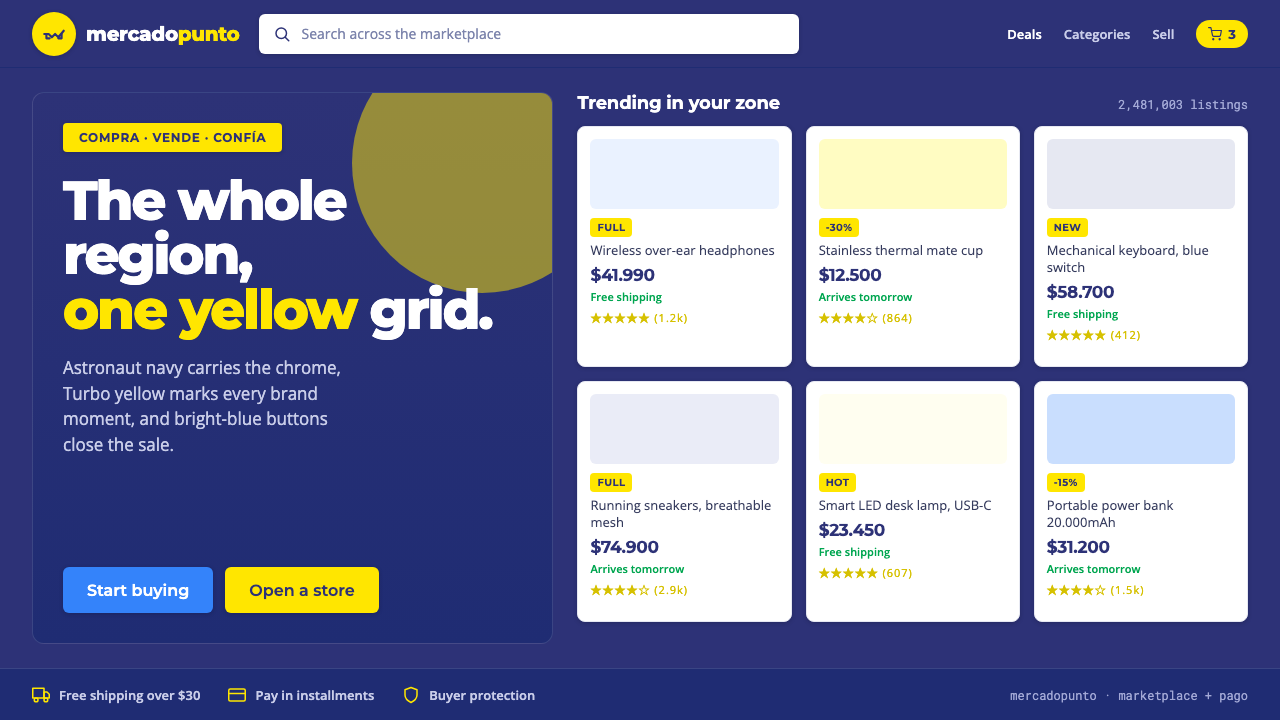 Mercado Libre YellowLatin America's marketplace energy. Turbo yellow brand moments, blue CTAs on…
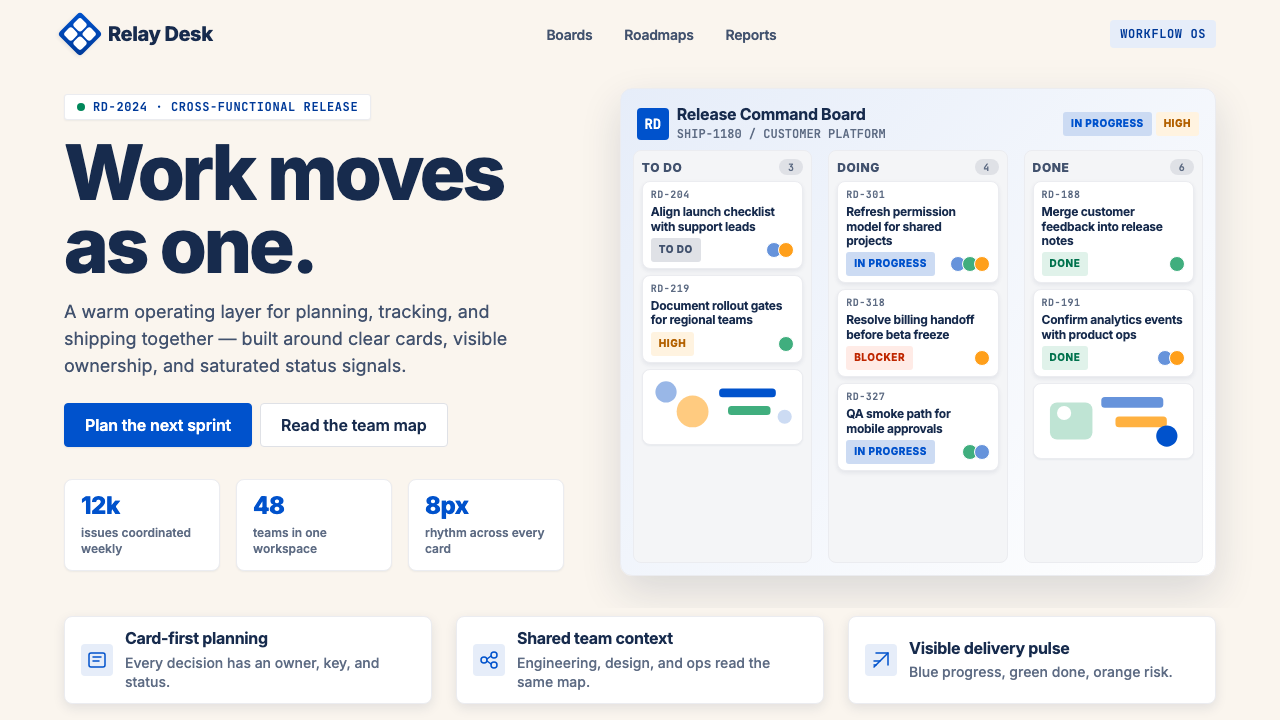 Atlassian Jira BlueWarm enterprise teamwork. Saturated blue cards on cream make status feel huma…
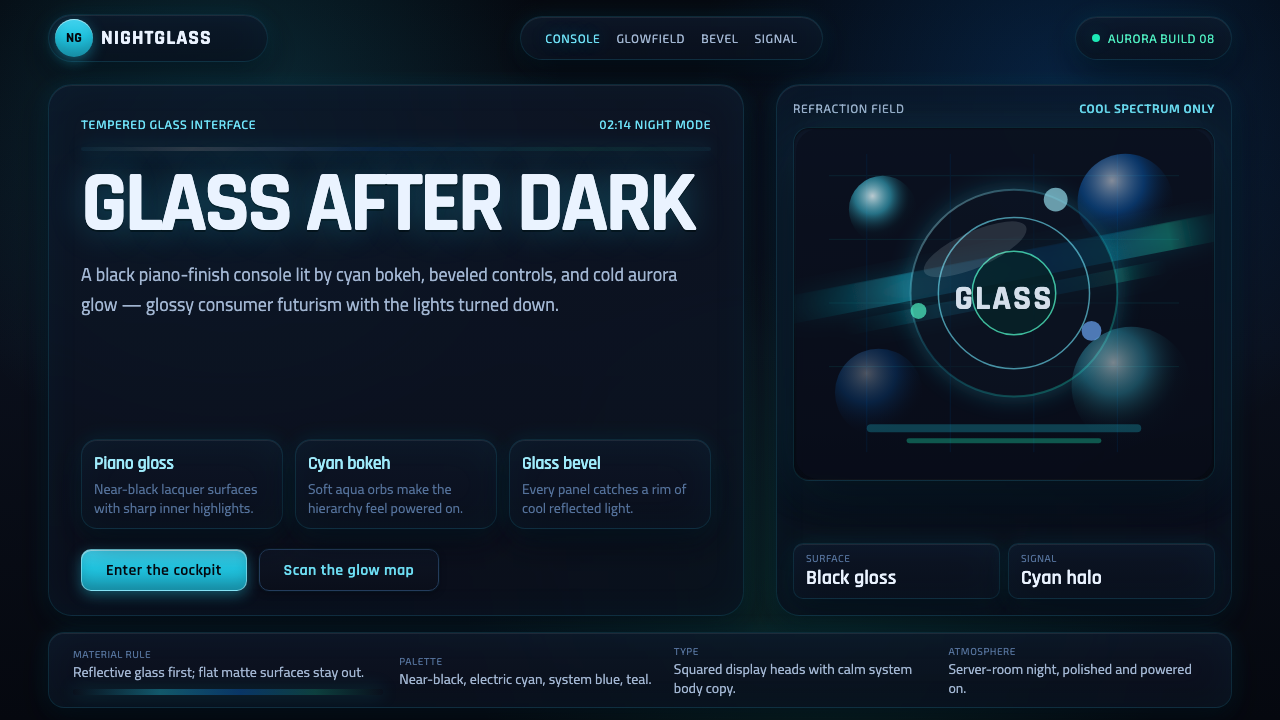 Dark AeroGlass glows after dark. Black lacquer, cyan bokeh, and beveled panels turn Ae…