What is Igbo-Ukwu Bronze?
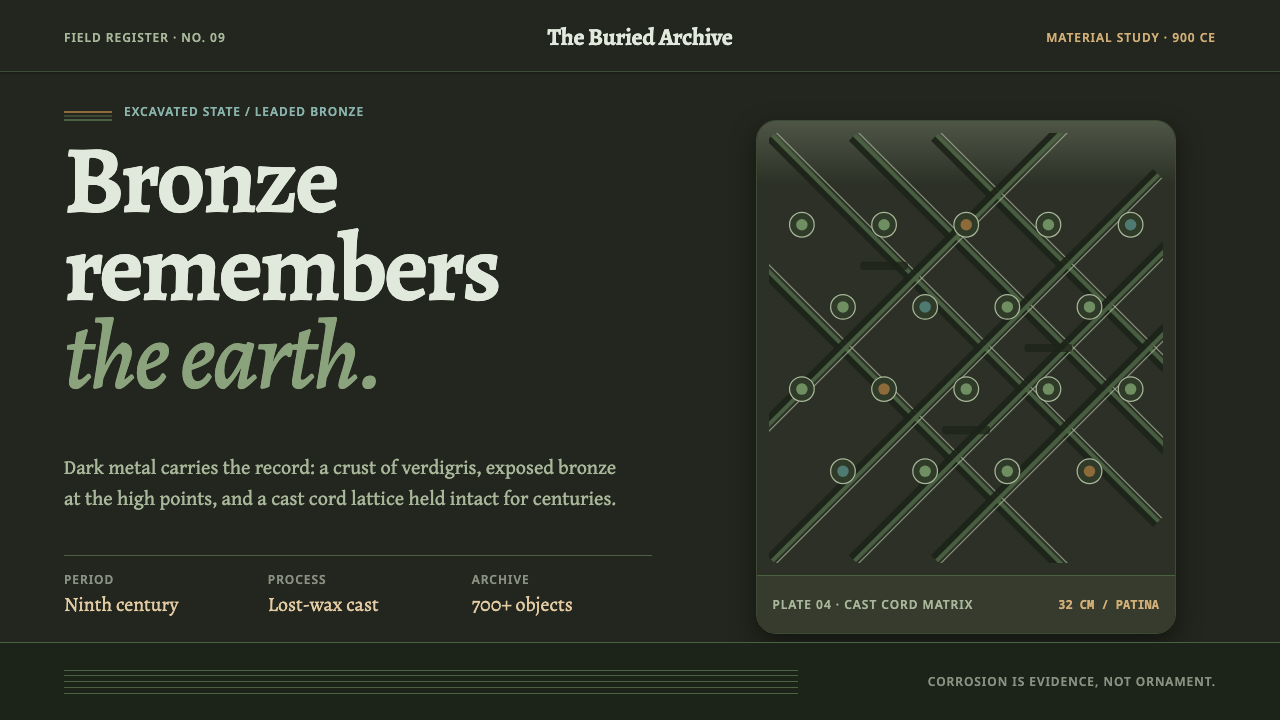
Igbo-Ukwu bronze turns corrosion into testimony: a dark oxidised ground, a verdigris crust, and a cast net of rope that holds a buried record together.
Igbo-Ukwu Bronze in brief
Igbo-Ukwu bronze refers to the metalwork found at three sites in Anambra State, in south-eastern Nigeria, and dated in the record to the ninth century CE. Excavation turned up more than seven hundred objects in leaded bronze, copper and iron, together with some 165,000 beads. They include the earliest complex lost-wax castings known in West Africa, made about four centuries before the better-known work of Ife or Benin. As a visual system it is dark, mineral and intricate: an oxidised metal ground, green crust, pale corrosion bloom, and a pervasive texture of cast rope and tiny relief insects.
The most famous object is a roped pot, about thirty-two centimetres tall, whose body is sheathed in a cast net of twisted cord. At the intersections of the net sit grasshoppers, locusts, beetles, flies and spiders, raised in relief. The whole thing was made by the lost-wax method in a way that reproduces the rope's twist and the insects' limbs in metal, and the record notes that the wax used for the models involved the latex of a Euphorbia plant. It is a piece that is simultaneously a container, a net and a tiny ecosystem, and its logic of structure wrapped in cord is the basis of the whole design language.
What makes this style distinctive for designers is that it is built from the objects as they were found, not as they looked when new. The buried bronzes arrived in the modern world corroded, encrusted and stained by soil. The design system keeps that evidence. It does not restore the shine of freshly cast metal; it treats the green crust and worn patches as the face of the work. The effect should be of something just lifted from wet ground, not something taken from a display case.

Where does Igbo-Ukwu Bronze come from?
Igbo-Ukwu lies in Anambra State, in the Igbo heartland of south-eastern Nigeria. The finds came to scholarly attention through local digging: Isaiah Anozie is named in the record as the man whose work at his compound first turned up the bronzes, an accident of ordinary life that led to one of the most important archaeological discoveries in African history. His name stays attached to the story because the site's discovery depended on a local person recognising that what he had hit was not rubble.
The systematic excavations were led by the British archaeologist Charles Thurstan Shaw, who worked at the sites in 1959 and 1960 and again in 1964. Over those seasons his team recovered the leaded bronzes, copper and iron objects and the enormous quantity of beads, and recorded the settings in which they lay. Shaw's dating placed the material in the ninth century CE, a result that startled many contemporaries because it showed a sophisticated bronze-casting tradition in the West African forest belt centuries before the court arts of Ife and Benin. The record places these objects within the metalworking culture linked to Nri, an Igbo ritual and political centre, though the details of their original use continue to be studied.
The technical achievement behind the objects is as important as their imagery. Lost-wax casting means shaping the form in wax, encasing it in clay, melting the wax out, and pouring molten metal into the cavity it left. At Igbo-Ukwu this process was used for forms of striking complexity: openwork, thin walls, twisted cord and tiny creatures cast integrally with the body of the vessel. The wax involved latex from Euphorbia, according to the record, a detail that places the craft firmly in local materials and knowledge. Nothing about this was a late borrowing; it was a mature, inventive tradition.
The afterlife of the objects belongs to the story too. Once excavated, they became museum pieces and then icons, and recent decades have brought a conversation about digitisation and repatriation: who holds the objects, who can see them, and who is entitled to tell their story. The design system's insistence on corrosion and burial can be read as part of that conversation. It declines to polish the past into a commodity, and it keeps the marks of the ground, the dig and the long time in between.
What defines the Igbo-Ukwu Bronze look?
An oxidised ground
The base of the system is dark metal, darkened by long burial rather than painted black. It is deep and slightly warm, with subtle variation rather than a single flat value. This is a dark style by nature, and the darkness has material meaning: it is the colour of bronze after a thousand years in the soil. Large areas should feel dense and weighty, with a faint mottling that avoids digital flatness.
Verdigris as the interface colour
The green crust that forms on corroded copper alloys is the system's primary colour. It carries the interface: headings, links, active states and key surfaces. It should read as a mineral, slightly greyed and chalky, never as a neon or minty green. Its calm saturation lets it sit comfortably against the dark ground and gives the whole page the colour of buried metal.
Corrosion bloom on the high points
Where the surface stands proud, a pale, crystalline bloom collects, like frost on metal. In a layout this becomes the highlight colour: borders catching light, the leading edge of a card, small flecks on a raised element. It is the lightest tone in the system and should be used for emphasis and legible text, with a granular rather than glossy feel.
Worn bronze where the crust breaks
Where the green has cracked or worn through, a warm copper-yellow shows. This is the accent: sparing, unpredictable and physical, appearing at edges, corners and points of use. It works best for small details such as active indicators, focus rings or the end of a divider, and loses meaning if applied as a general fill.
Red earth in the crevices
Traces of the red soil from Anambra remain lodged in the recesses, and the design keeps a muted brick-red tone for shadows, insets and the lowest layers. It reminds the viewer that the object came out of the ground, and it provides a warm counterweight to the green without competing with it.
Rope instead of frames
The defining structural idea is the cast net. Elements are bound, wrapped and held together by twisted cord, not boxed in rectangles. Borders become rope edges, groupings become lattices, and the grid itself can show as a net with nodes at intersections. This gives the page a woven, tensile feel that a plain rectangular frame can never produce.
Incisions and insects
Dividers are sets of parallel incisions, the ichi marks that echo the facial scarification associated with Igbo title-holders. List markers are tiny relief insects in the manner of the grasshoppers and beetles on the roped pot. These details are small, repeated and carefully placed. They give the system its micro-texture and its quiet sense of life inside the dark.

Who shaped Igbo-Ukwu Bronze?
The archaeologist who led the excavations at the Igbo-Ukwu sites in 1959 and 1960 and again in 1964. His careful recording of where each object lay and his dating of the material to the ninth century CE reshaped the history of metallurgy in West Africa. For a design system built on corrosion and burial, his work is the evidence that the buried condition of the objects is itself worth showing.
The Igbo-Ukwu man whose digging at his own compound first turned up bronzes, the find that eventually brought archaeologists to the site. His role is a reminder that major discoveries often begin with local knowledge and ordinary work, and that credit for the Igbo-Ukwu story belongs to the community as well as to the scholars.
The metalworkers, anonymous in the record, who made the vessels, regalia and ornaments by lost-wax casting. The pot sheathed in cord, with insects raised at its intersections, shows planning, modelling and casting skill of a very high order. Any system inspired by their work should pay attention to the same virtues: patience, fine detail and a structure in which every ornament also holds something together.
How do you use Igbo-Ukwu Bronze today?
The Igbo-Ukwu system is a dark, material-rich style. It suits archives, museums and heritage projects, documentary and long-form storytelling, premium craft and metalwork brands, game and film worlds, and technology products that want depth and gravity rather than sleekness. It asks for patience: the details reward close viewing, and the dark ground slows the reader down.
For presentation slides, the cover can be a nearly full-bleed dark metal field with a rope-bound frame around the title and a few relief insects as quiet punctuation. Content slides keep the dark ground, set text in the pale bloom tone, and use verdigris for headings and rules. Parallel incisions divide sections. Data slides look excellent in this system if charts are treated as cast objects: bars and areas in the green crust, with highlights in the worn copper-yellow and labels in pale bloom.
For web interfaces, use verdigris for links, active states and primary buttons, pale bloom for readable text and raised edges, and the brick-red tone for secondary regions and shadows. Cards can be bound by rope-style borders, and lists can use insect markers. Because this is a dark theme, pay particular attention to contrast: body text should be the lightest tone, never the green, and small insect or incision details must stay decorative rather than carry meaning. The style handles dashboards for archives or analytics well, as long as colour is not overloaded.
For editorial and marketing work, use long, slow layouts with generous dark space, large images of objects in raking light, and captions that name the sites, the excavators and the people who found them. A page can open with an enlarged rope motif that wraps the headline and then relax into plain dark columns. Calls to action should be understated: a verdigris button with a worn-edge detail is more convincing than an oversized glowing one.
The most common mistake is making it shiny. Polished gold-and-bronze gradients, metallic reflections and glowing edges turn a style about corrosion into a luxury cliche, and they contradict the premise that the work should look unrestored. A second mistake is overusing the rope and insect motifs on every component, which turns subtle structure into costume. A third is treating the Igbo-Ukwu name as a generic African or tribal label; it refers to specific, documented objects from a specific place and century, and the writing should say so.

Igbo-Ukwu Bronze — FAQ
What is Igbo-Ukwu bronze?
It is the body of ninth-century metalwork excavated at three sites in Anambra State, Nigeria, in 1959 to 1960 and 1964. It comprises more than seven hundred leaded-bronze, copper and iron objects and about 165,000 beads, and includes the earliest complex lost-wax castings known in West Africa, centuries before Ife or Benin. The roped pot with insects at the intersections of its cast net is the best-known piece.
Why does the design system look corroded instead of polished?
Because the objects came out of the ground corroded, and the system treats that condition as evidence. Dark oxidised metal, a green verdigris crust, pale corrosion bloom and exposed worn bronze are the real surface of the finds. The aim is a page that looks freshly lifted from wet soil rather than restored for a display case, with corrosion functioning as testimony instead of damage.
What is lost-wax casting, and why does it matter here?
Lost-wax casting is a process in which a form is modelled in wax, covered in clay, heated so the wax melts and drains away, and then filled with molten metal. At Igbo-Ukwu it was used to cast extremely intricate shapes, including twisted cord and tiny insects, in one piece. The record notes that the wax involved Euphorbia latex. It matters because it shows a mature local casting tradition far earlier than many histories assumed.
Do I need to use rope and insects on every component?
No. The rope is a structural idea, and it works best at a few key places: page frames, major groupings and the main navigation. The insect and incision details belong in lists, dividers and corners, where they act as quiet punctuation. If everything is roped and everything has a beetle, the details become noise and the system looks like a costume.
How do I keep a dark verdigris interface readable?
Put body text in the lightest, bloom-like tone and reserve verdigris for headings, links and active surfaces, not for long paragraphs. Keep the ground mottled but low in contrast so it does not interfere with letters, and test small text on the darkest areas. Use the worn copper-yellow only as a small accent. Decorative detail such as insects or incisions should never carry information that a screen reader or a low-contrast display would lose.
Related design styles
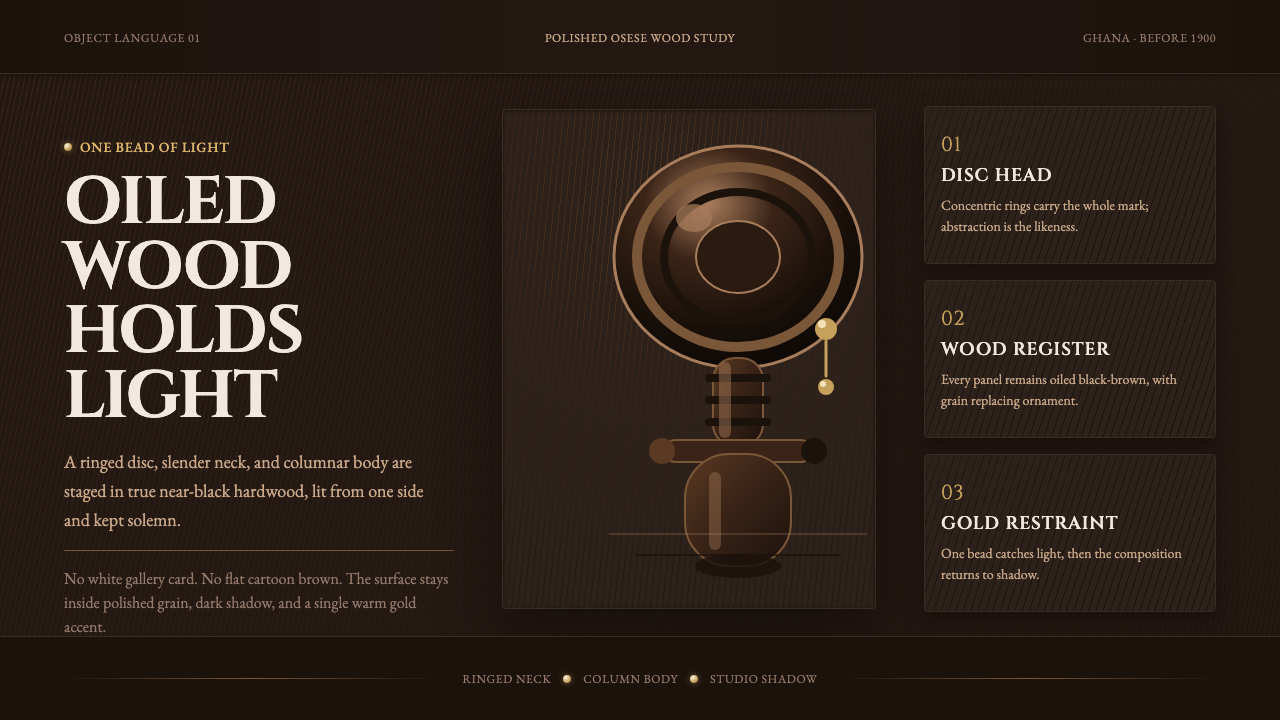 Akuaba Akan Fertility DollDarkness becomes sculpture. Near-black wood, ringed geometry, and one gold be…
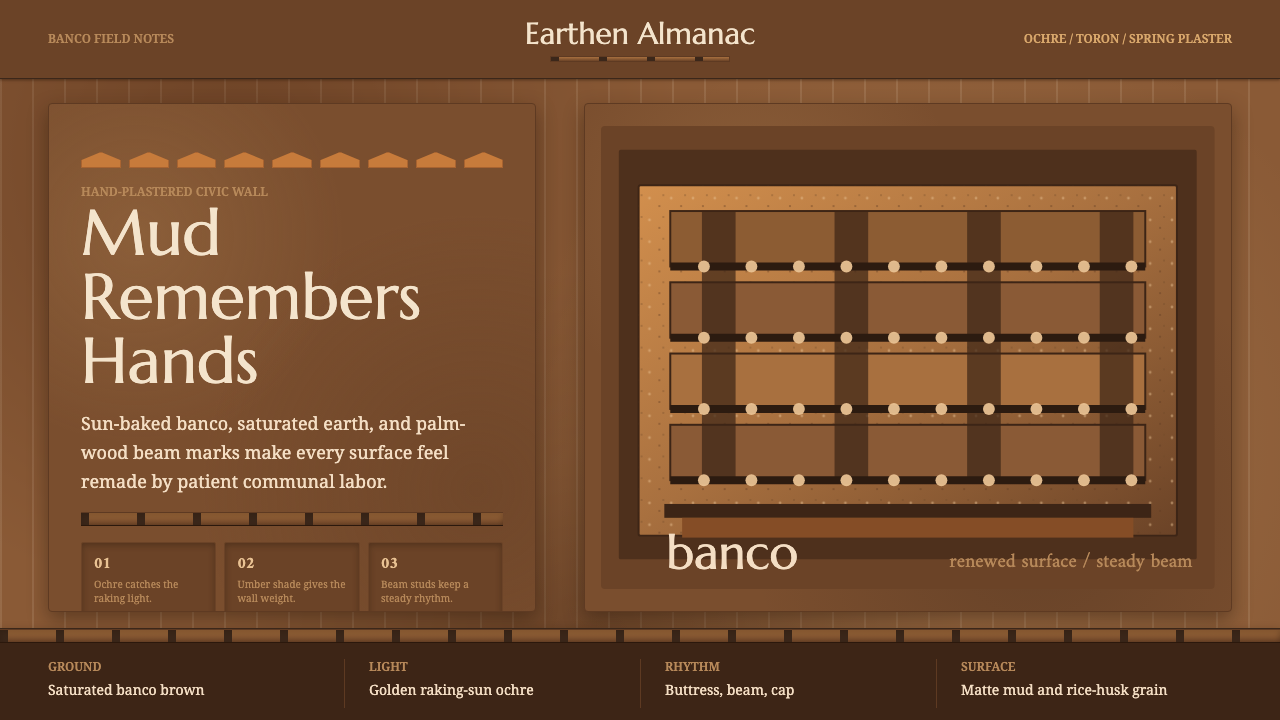 Djenné Mud MosqueBuilt from renewal. Banco brown, ochre caps, and toron grids feel hand-plaste…
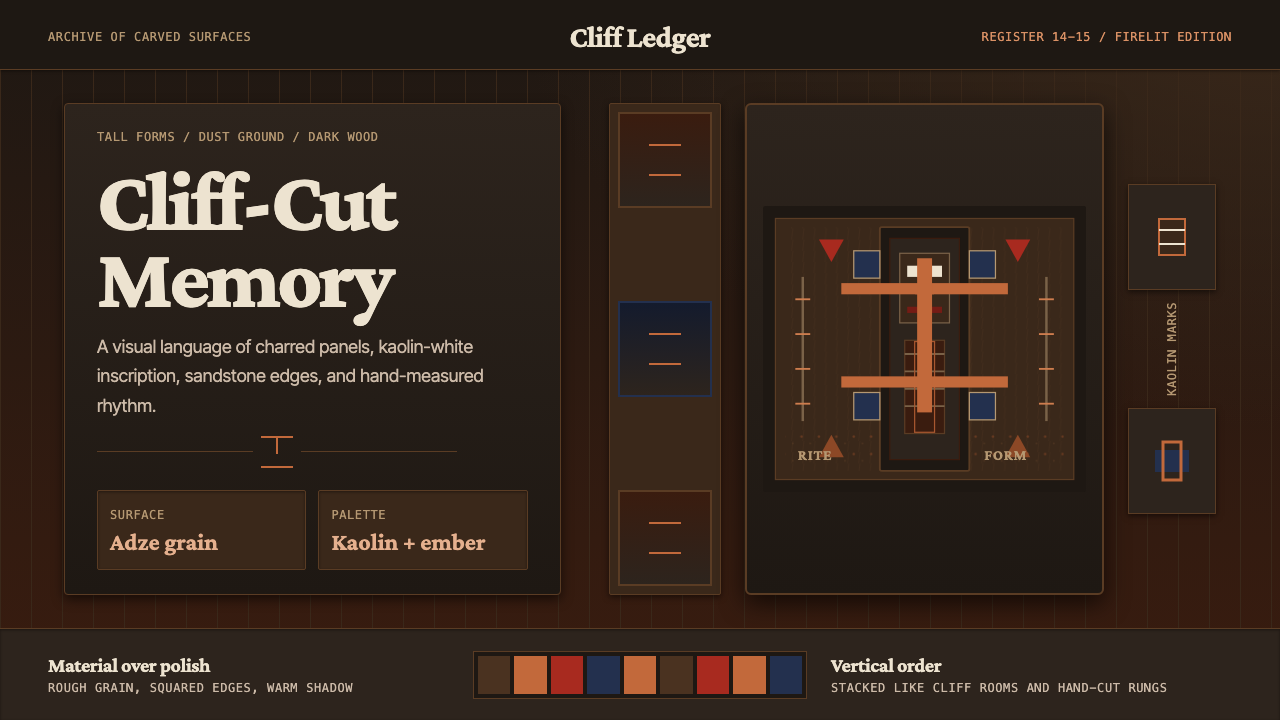 Dogon Bandiagara Cliff MaskHand-hewn gravity. Charred wood, kaolin type, and sandstone geometry stack li…
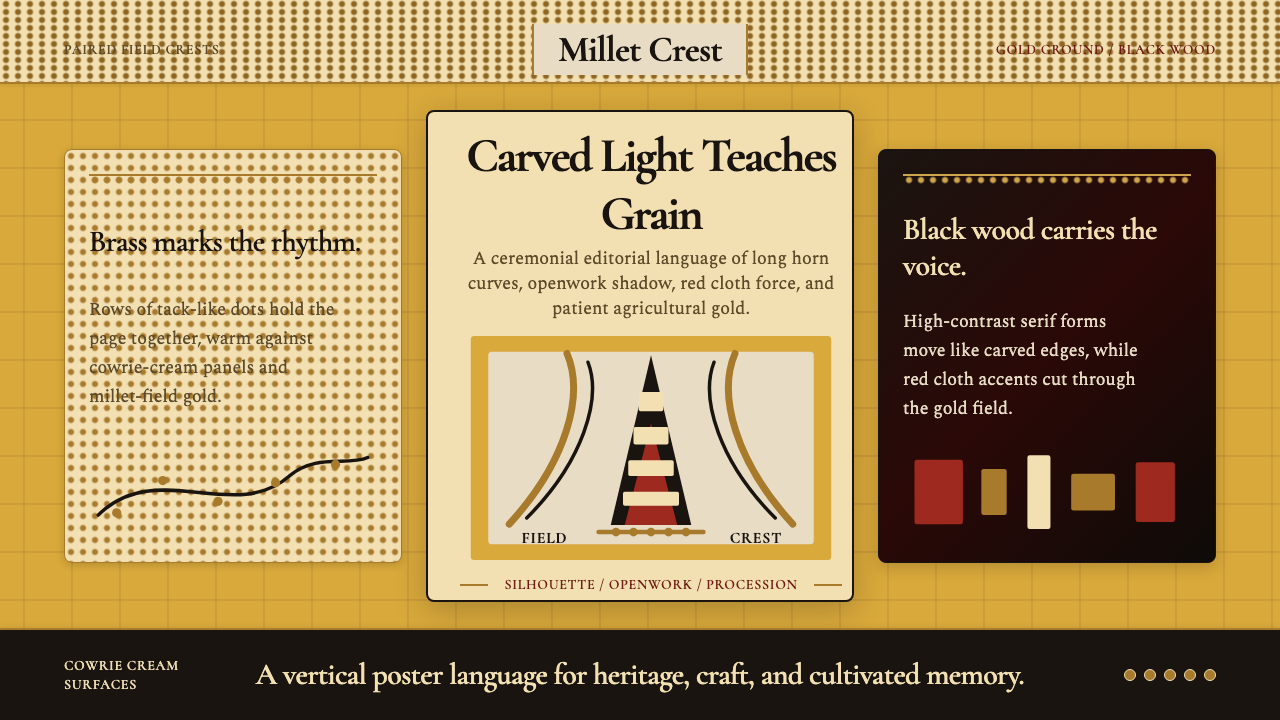 Bambara Chi Wara AntelopeCarved memory in gold. Black serif silhouettes and brass-dot borders carry th…
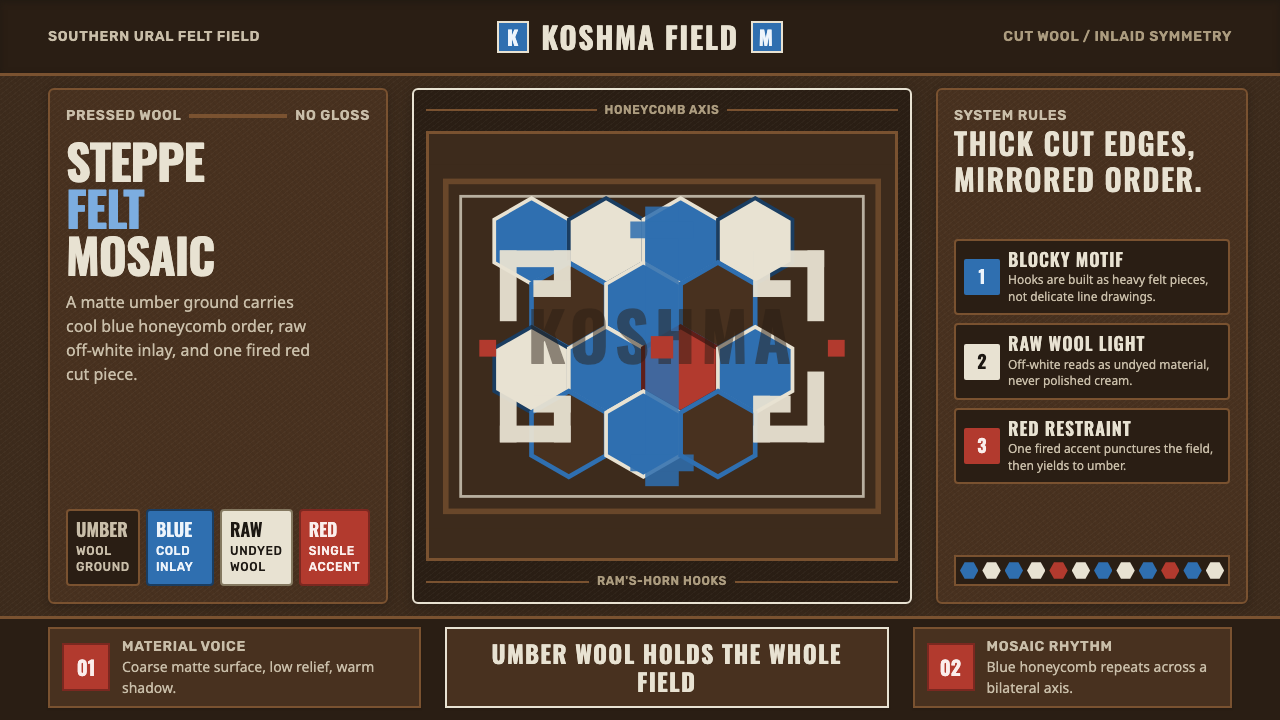 Bashkir Honeycomb Felt OrnamentSteppe craft feels weighty. Umber felt holds blue honeycomb and raw-wool hook…
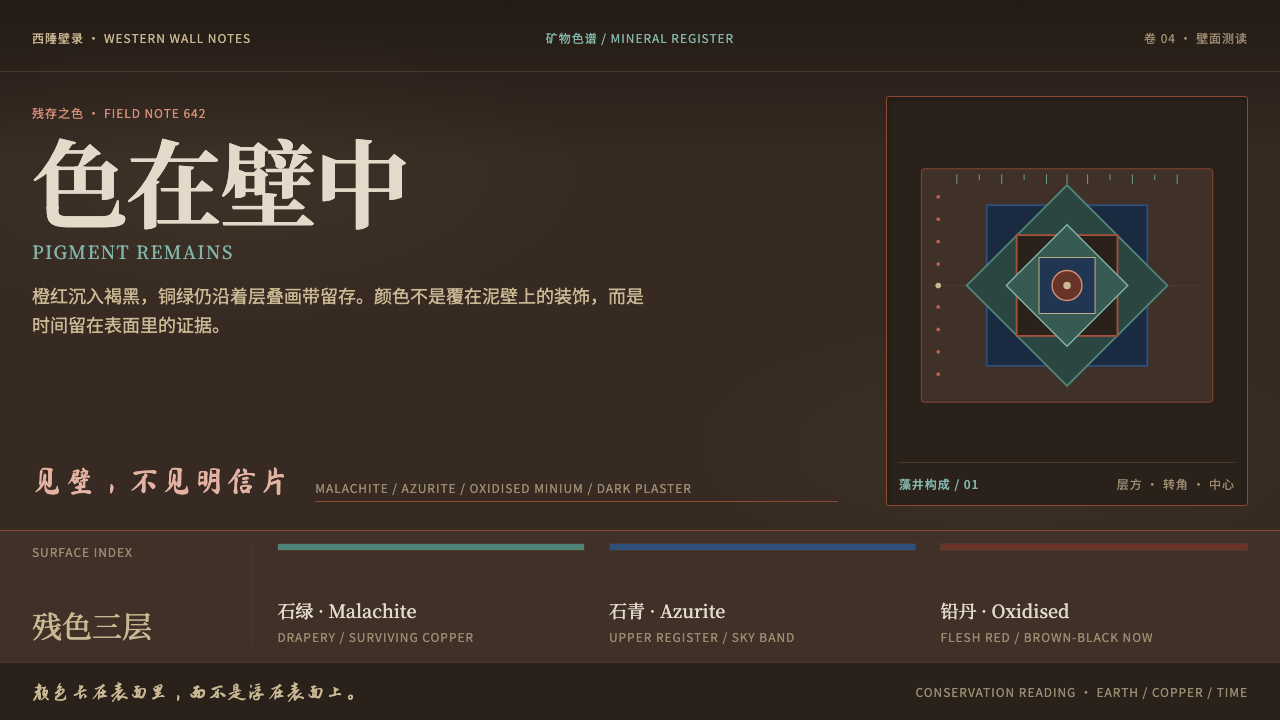 Dunhuang Mogao MuralsTime lives in the wall. Mineral green and azurite endure on oxidised brown pl…