What is Huichol Yarn Nierika?
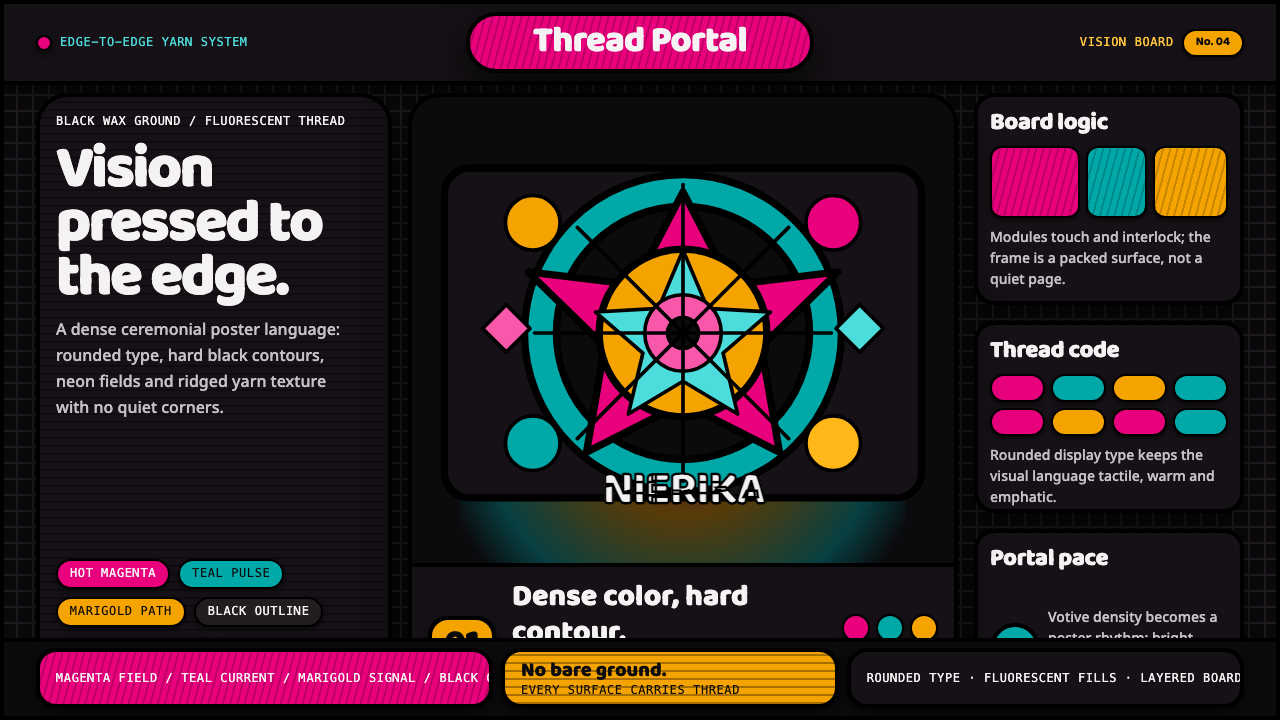
Ceremonial density glows in Huichol Yarn Nierika, where fluorescent yarn, black contours, and visionary symbols turn a fully covered field into a portal of light.
Huichol Yarn Nierika in brief
Nierika means face or vision in Wixárika. It describes a portal through which the mara'akáme, or shaman, sees the sacred world. In visual terms, the style is not simply decorative folk craft: it is a dense, symbolic image field in which every motif participates in a relationship between the visible surface and the spiritual world it opens toward.
The practice began as small votive tablets made by pressing colored yarn into beeswax. These objects sealed prayers for maize, deer, and rain. Through the twentieth century, the form developed into large fine-art panels made for collectors while retaining its ceremonial intensity. Contemporary works from the 1970s into the present preserve the sense that the image is an offering, a vision, and a constructed surface at the same time.
Visually, Nierika is immediately recognizable. Acrylic yarn covers the board from edge to edge over black wax, leaving no exposed ground. Deer, corn, peyote blossoms, and pilgrimage imagery appear in fluorescent pinks, teals, and oranges. Each shape is enclosed by black yarn, so the bright fills vibrate against a near-black field. The result is luminous, crowded, and deliberate rather than soft, atmospheric, or casually psychedelic.

Where does Huichol Yarn Nierika come from?
Nierika belongs to Wixárika communities in the Sierra Madre Occidental of Mexico. Its name identifies the work with seeing: a face or vision, and a threshold through which sacred reality becomes accessible. This origin matters to the style because the finished image is not merely a picture placed on a board. It is a surface understood as an opening, with visual density serving the intensity of the encounter.
The earliest form described in the approved material was a small votive tablet. A board was coated with beeswax, and colored yarn was pressed into that adhesive surface to form a prayer. The subjects were tied to essential forms of life and ceremony: maize, deer, and rain. Material, image, and intention were therefore joined from the beginning. The yarn was not an afterthought applied to an already separate illustration; it was the means by which the vision was fixed and sealed.
During the twentieth century, the practice was codified and expanded into large panels that entered collector markets. This change in scale and circulation did not erase the original density. Instead, the contemporary panel preserves the visual pressure of a votive object while allowing the image to occupy a broader field. Works from roughly the 1970s to the present continue to draw on Nierika visionary yarn-painting and on peyote or Wirikuta pilgrimage imagery.
The resulting style carries two histories at once. It remains connected to Wixárika mara'akáme lineages and to sacred seeing, while also functioning as a contemporary art form encountered by collectors and wider audiences. That dual identity explains its unusual visual authority: the work can appear exuberant and electrically colorful, yet its organization is never casual. The black wax, continuous yarn surface, symbolic motifs, and enclosing contours all reinforce the sense that the panel is holding something consequential in place.
What defines the Huichol Yarn Nierika look?
Neon Color
Color is fluorescent, concentrated, and emotionally direct. Pink, teal, and orange sit against near-black rather than dissolving into a broad natural palette. The brightness feels ceremonial because it is selective: vivid yarn is used to make symbolic forms visible, not to create a cheerful decorative background. The contrast should feel charged, almost electrically alive.
Black Contour
Every major shape is enclosed by a black yarn outline. The contour does more than separate colors; it gives each motif a protected boundary and makes the bright interior vibrate. The line should feel tactile and deliberate, with enough visual authority to hold the image together without becoming a secondary illustration drawn over it.
Edge-to-Edge Density
The field is covered continuously, from edge to edge, so empty board is not treated as a neutral resting place. Density is part of the meaning. Patterns, symbols, and color blocks interlock until the surface feels sealed. Any breathing room should be intentional and shaped by the surrounding motifs rather than produced by a casually empty background.
Visionary Motifs
Deer, corn, peyote blossoms, and pilgrimage imagery provide the recognizable symbolic vocabulary. They should not be treated as generic decorative icons. Their strength comes from repetition, framing, and placement within a charged field. A motif may be simplified, enlarged, or surrounded by radiating forms, but it should retain the sense of carrying a story beyond its outline.
Wax and Yarn
Material presence is essential. Beeswax establishes the dark adhesive ground, while acrylic yarn creates the raised, continuous image surface. The style depends on the tension between softness and structure: yarn is flexible and tactile, yet the finished panel is tightly organized. A flat digital imitation should preserve that relationship through visible layering, contour, and surface pressure.
Near-Black Field
The almost-black ground is active, not merely a background color. It absorbs stray light and gives the fluorescent forms their force. Because the field is dark and visually dense, bright areas should be grouped into legible symbolic units. The contrast creates depth without atmospheric shading: forms appear to emerge from a ceremonial night.
Ceremonial Repetition
Repetition should feel accumulative rather than mechanically patterned. Repeated petals, rays, yarn paths, or contour shapes build intensity by returning the eye to related forms. Variation prevents the surface from becoming a generic tile pattern. The overall rhythm should suggest a vision unfolding through recurrence, with each return adding pressure and significance.

Who shaped Huichol Yarn Nierika?
Ramón Medina Silva is identified in the approved material as one of the key figures connected with Huichol Yarn Nierika. His name belongs within the modern field of visionary yarn-painting, where the votive tablet becomes a large, densely worked panel without losing its ceremonial charge.
José Benítez Sánchez is named as a key figure in the source material. His inclusion places his work within the contemporary visibility of Nierika, a form that carries Wixárika visionary imagery from small beeswax votives into collector-facing panels while preserving its symbolic density.
The Wixárika mara'akáme lineages are a collective figure rather than a single artist. They represent the living ceremonial knowledge behind Nierika: the understanding of the work as a face or vision, and of the image as a portal toward the sacred world rather than an ornamental surface alone.
How do you use Huichol Yarn Nierika today?
For presentation covers, use Nierika as a field of immediate ceremonial impact. Let the cover feel fully occupied by a near-black ground, a few large fluorescent symbolic forms, and emphatic black contours. The title should enter as a clear interruption within the density, not as a competing decorative layer. Content slides can reduce the motif scale and use repeated bordered shapes to organize sections. Data slides should turn charts into symbolic constellations: bright bars, rings, or blocks held together by dark outlines and surrounded by a controlled field.
For web interfaces, the style is especially effective for dashboards and pricing pages that need a memorable dark identity. Use the near-black field as the structural environment, reserve fluorescent yarn-like colors for active states and meaningful categories, and make cards feel assembled rather than softly floating. Borders should be visible and decisive. A dashboard can use repeated symbolic marks for status, while a pricing page can give each tier a distinct color family without abandoning the common black contour that keeps the system coherent.
For editorial work, Nierika supports articles about culture, ritual, craft, collecting, and visionary imagery. A dense opening spread can establish the visual world, followed by calmer text passages that retain the dark field and use small, repeated motifs as navigational anchors. Pull quotes should feel embedded in the field rather than placed in separate ornamental boxes. Captions, labels, and metadata can be treated as narrow bands of information enclosed by contour, echoing the way yarn locks each image into place.
For marketing, the style works best when the product or event can carry intensity, symbolism, or a strong night-time atmosphere. Campaign art can use one dominant visionary motif surrounded by repeated rays, petals, or contour paths, while calls to action appear as bright, clearly bounded forms. The contrast between fluorescent color and black ground creates immediate recognition, but the composition should retain ceremonial gravity rather than becoming a generic neon festival aesthetic.
The common mistake is to borrow only the neon palette. Bright pink, teal, and orange on black are not enough to create Nierika. Without edge-to-edge density, black contour, tactile layering, and symbolic imagery, the result becomes ordinary nightlife graphics. Another mistake is to make every element equally loud. The style needs hierarchy within its density: some motifs carry the vision, some repeat it, and some dark spaces or contours hold the whole field together.

Huichol Yarn Nierika — FAQ
Is Huichol Yarn Nierika simply a neon folk-art style?
No. Its neon intensity is only one visible aspect. Nierika means face or vision in Wixárika and refers to a portal through which the mara'akáme sees the sacred world. The yarn image developed from votive tablets used to seal prayers for maize, deer, and rain. Its density, motifs, material layering, and black contours all carry that ceremonial context. Removing those relationships leaves a neon surface but not the logic of Nierika.
Why is the black ground so important?
The near-black field gives the fluorescent yarn its force and makes the image feel enclosed, nocturnal, and charged. It also connects the contemporary panel to the original beeswax construction, in which the dark adhesive ground supports the colored yarn. Black is therefore both a practical contrast and a structural part of the style. A pale background can display the motifs, but it will not produce the same sense of a vision emerging from darkness.
How should the style handle empty space?
Empty space should be treated as an intentional structural decision, not as an automatic default. The physical works are covered from edge to edge so that the board does not show through, and this continuous surface creates ceremonial density. In a digital adaptation, quieter areas may be useful for reading or hierarchy, but they should be shaped by contours, dark fields, or the spacing between symbolic units. Casual blankness weakens the sense that the surface has been sealed.
Can other imagery replace deer, corn, and peyote blossoms?
A contemporary application may adapt the visual system, but it should understand what the established motifs are doing before replacing them. Deer, corn, peyote blossoms, and pilgrimage imagery are not interchangeable decoration; they form the symbolic vocabulary named in the source material. If another subject is necessary, it should be simplified into a similarly meaningful emblem and treated with the same density, contour, and repetition. Otherwise the work may resemble the palette while losing the style's visionary character.
What distinguishes a contemporary Nierika-inspired interface from generic dark neon design?
The distinction lies in organization and symbolic pressure. Generic dark neon design often depends on glow, gradients, and atmosphere. Nierika-inspired work depends on fluorescent solid color, black contour, edge-to-edge density, tactile layering, and repeated symbolic forms. The image should feel assembled and sealed rather than softly illuminated. Its darkness is a field that holds the motifs, and its brightness is assigned to meaningful forms rather than scattered everywhere for excitement.
Related design styles
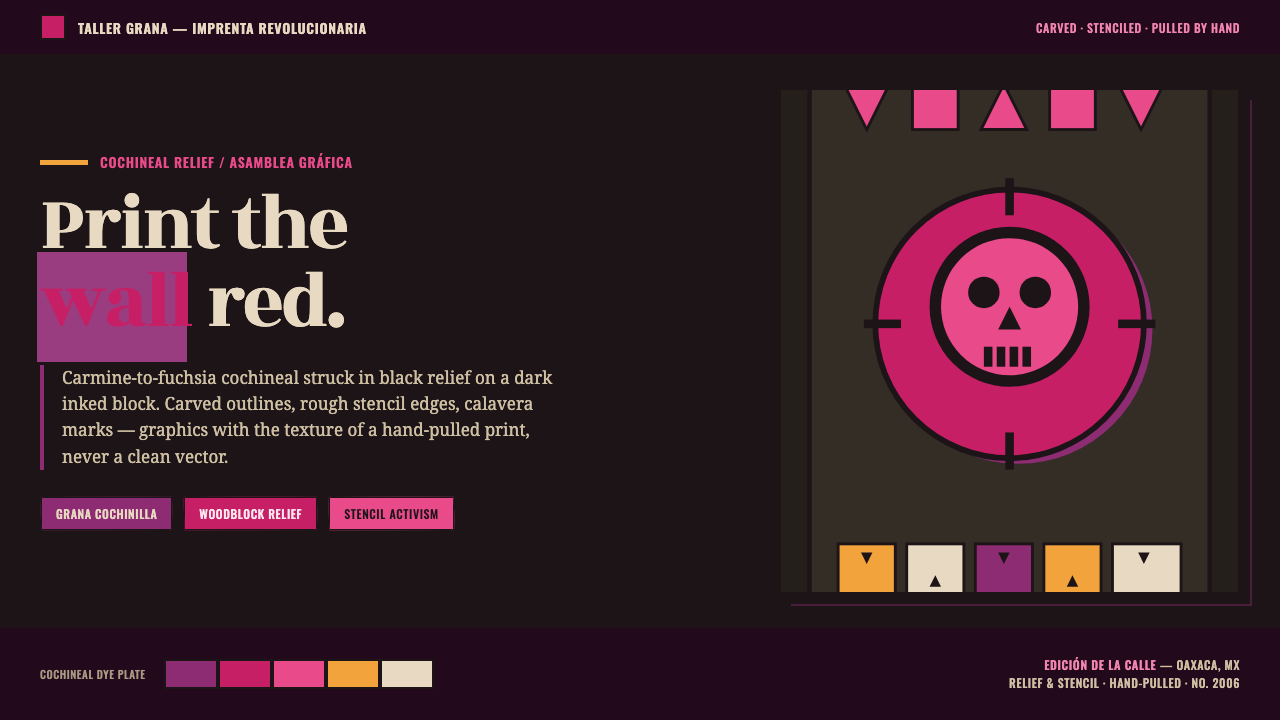 Oaxaca Indigenous-ModernActivist woodblock graphics. Cochineal carmine-fuchsia struck in black relief…
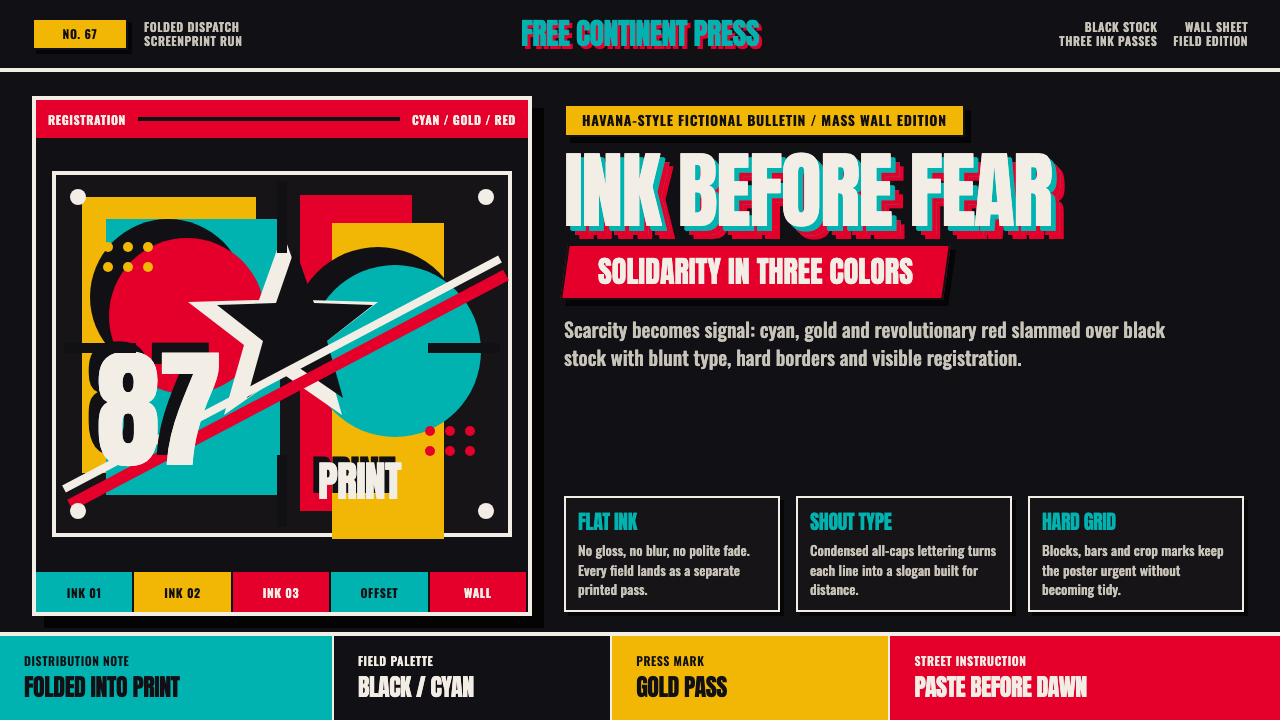 Cuban OSPAAAL Tricontinental PosterUrgency from scarcity. Cyan, gold and red slam over black in blunt silkscreen…
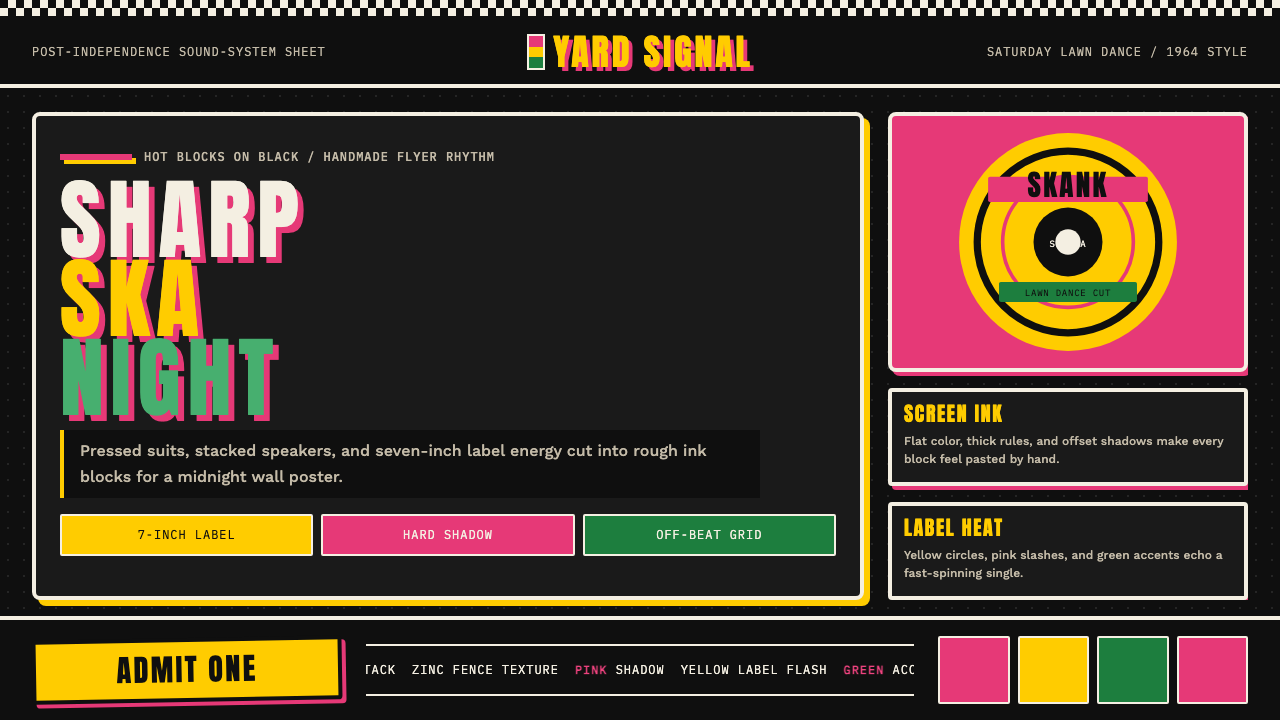 Rude Boy Jamaica Ska (1960)Street swagger hits hard. Hot pink and yellow blocks, checker trim, chunky ty…
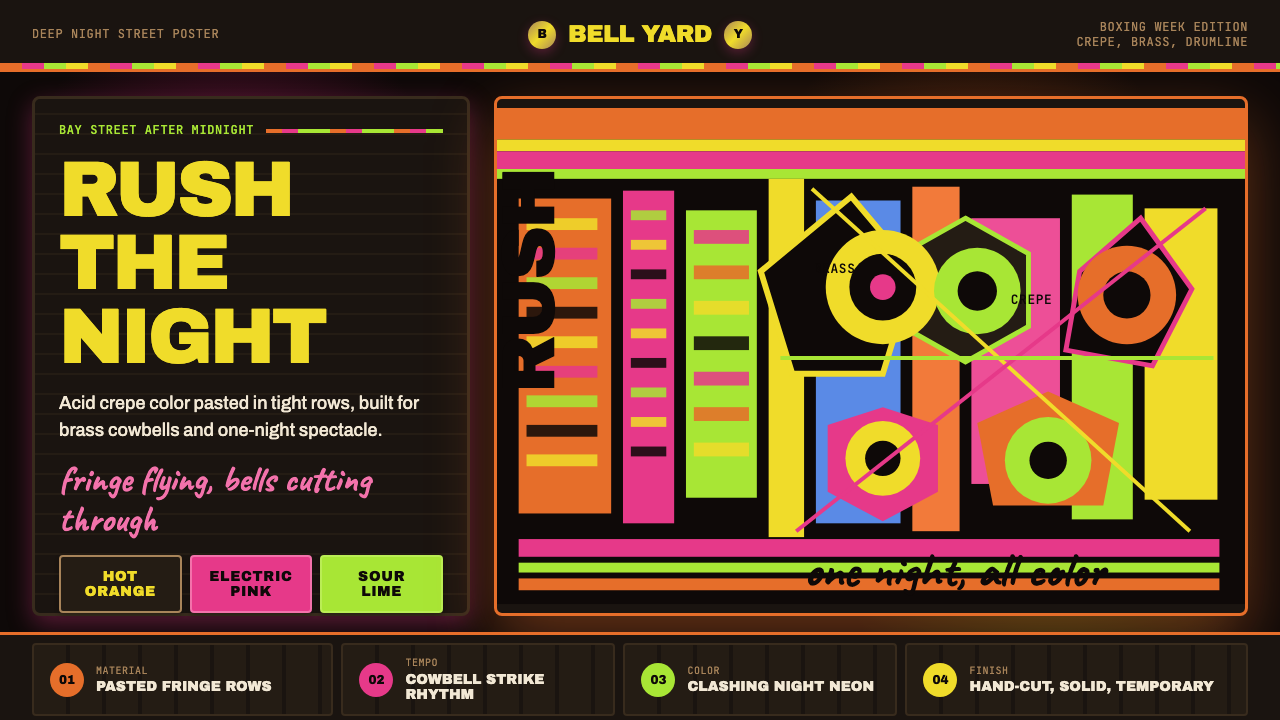 Bahamian Junkanoo CowbellNight refuses silence. Acid crepe stripes and block type collide like cowbell…
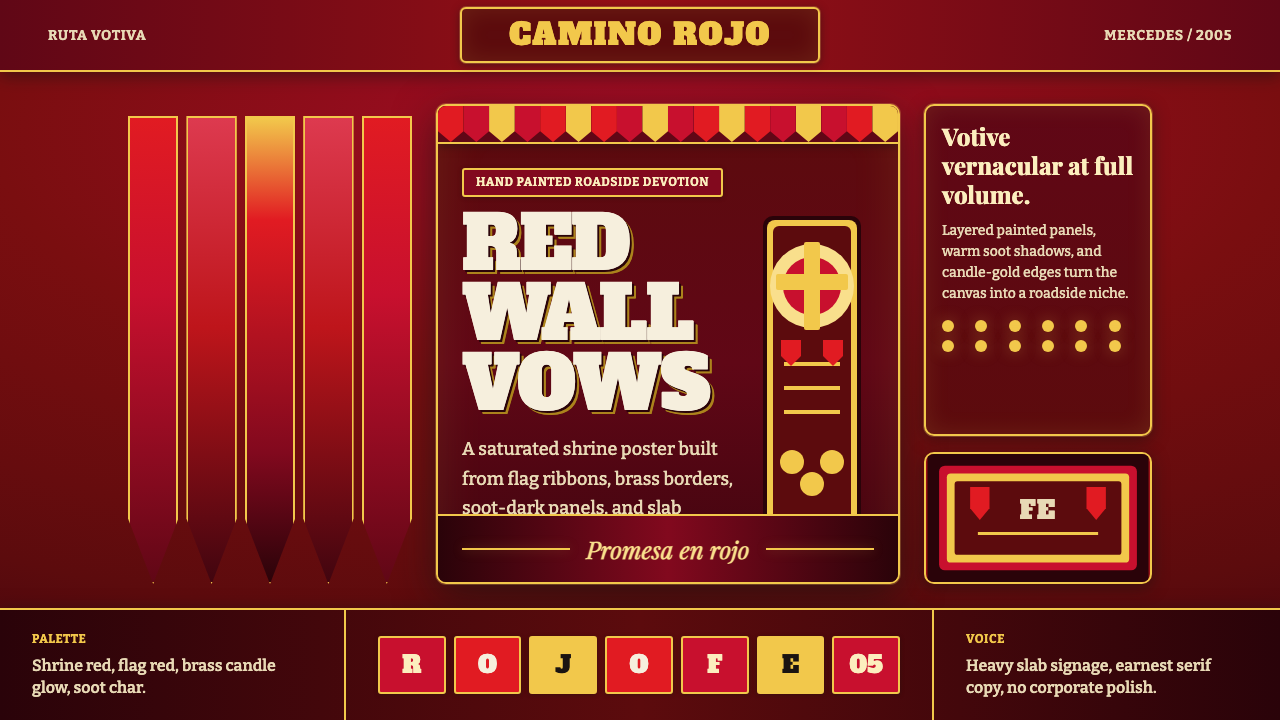 Gauchito Gil ShrineDevotion burns red. Flag ribbons, brass borders, and slab signage glow on soo…
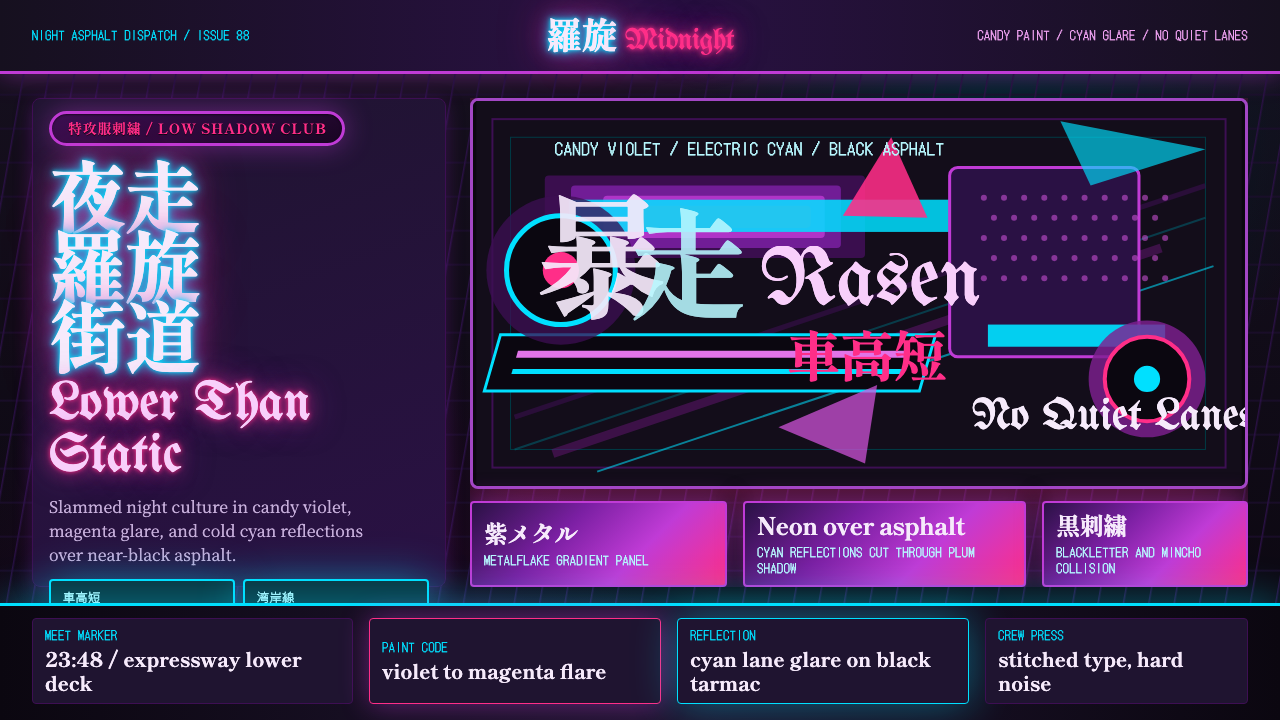 JDM BosozokuNight culture shouts. Candy violet, cyan neon, and stacked Mincho-blackletter…