What is Hugging Face Emoji-Yellow?
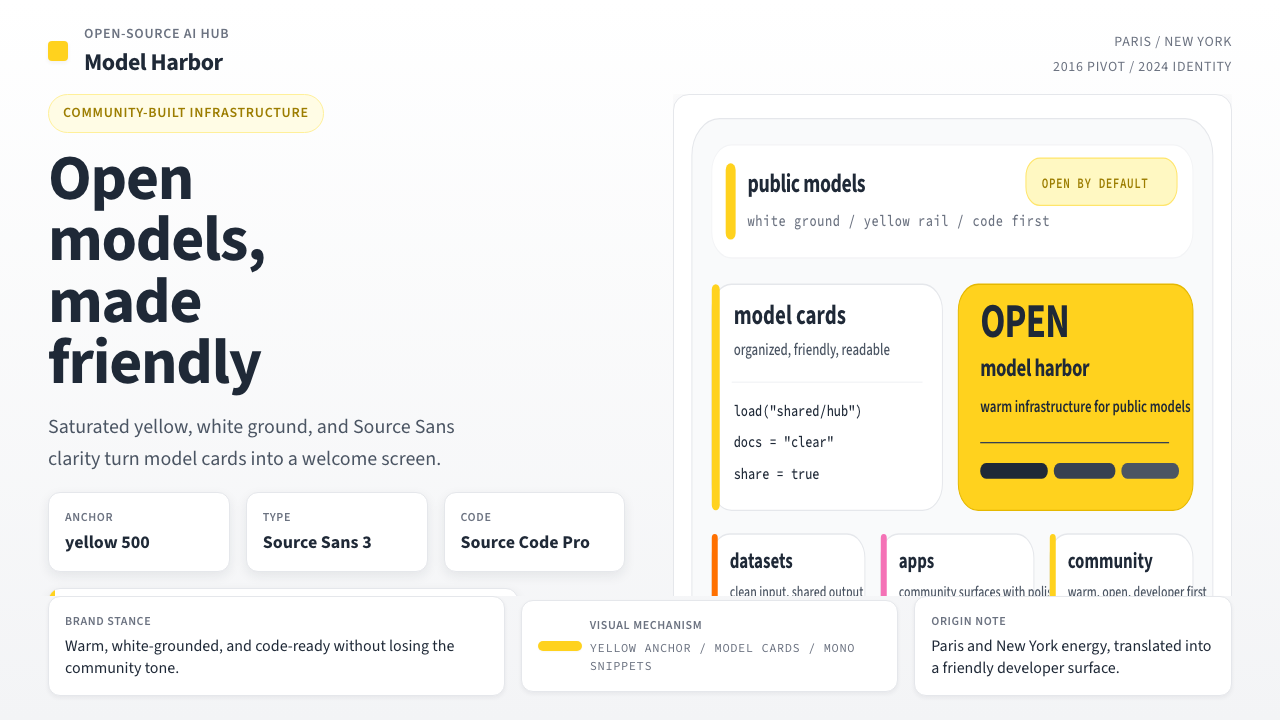
Where most AI brands go cold and corporate, Hugging Face went warm, playful, and unmistakably yellow — proving that open-source infrastructure can smile back.
Hugging Face Emoji-Yellow in brief
Hugging Face Emoji-Yellow is the visual identity system of Hugging Face, the open-source AI model hub often called the GitHub of machine learning. The aesthetic centers on a single saturated brand-yellow paired with the platform's signature hugging-face emoji, deployed across a white-grounded, card-organized interface that feels simultaneously like documentation and a social network. The result is a design language that is warm, developer-friendly, and instantly recognizable — an anomaly in an industry that otherwise defaults to cold gradients and corporate neutrality.
The system borrows its structural clarity from modernist developer tooling — clean humanist sans-serif type, generous white space, syntax-highlighted code blocks, and restrained card shadows — then welds all of it to a single joyful chromatic anchor. Yellow appears in navigation rails, section headers, call-to-action buttons, notification badges, and hover states. Everything else is held in white, near-white, and a deep slate that grounds text and structural elements. The color hierarchy is strict: yellow signals interactivity and brand identity; slate carries information; white provides breathing room.
What makes the Hugging Face aesthetic distinctive is not sophistication but intentionality. The emoji is deployed seriously — in hero sections, in model card headers, in documentation — without irony or apology. The effect communicates that the platform is community-built, openly hosted, and genuinely welcoming. It is the visual equivalent of a README that opens with a friendly greeting rather than a legal disclaimer.

Where does Hugging Face Emoji-Yellow come from?
Hugging Face was founded in 2016 by Clément Delangue, Julien Chaumond, and Thomas Wolf — originally as a conversational AI app for teenagers. The company's name and emoji came first, chosen for their warmth and approachability long before anyone considered what a developer platform should look like. The hugging-face emoji was a deliberate bet against the prevailing assumption that serious technology requires a serious face: the founders believed that friendliness and technical rigor were not in tension.
The company pivoted toward becoming an AI developer platform in 2018 and accelerated dramatically in the early 2020s, when transformer-based models like BERT, GPT-2, and later the open-source releases of large language models made the platform's model-hosting infrastructure indispensable to researchers, startups, and enterprise teams alike. As the platform scaled, its visual identity crystallized around the same values that drove its technical decisions: openness, community, and the conviction that the best tools should be accessible to everyone.
The visual system that emerged around 2020 and refined through 2024 drew directly from the culture of open-source software. Documentation aesthetics — monospace code blocks, high-information-density layouts, structured card grids — were taken seriously rather than replaced with a consumer-facing gloss. The brand yellow was chosen as a deliberate interruption of the neutral grey-and-blue palette that dominated developer tooling at the time. In a landscape of dignified restraint, yellow was a declaration: this platform has a personality.
Thomas Wolf, as Chief Science Officer, and the growing design team shaped a visual language that needed to work simultaneously for three very different audiences: academic researchers who value precision and density, startup engineers who want tools that feel modern and credible, and community contributors who want to feel welcome and celebrated. The Emoji-Yellow system addresses all three by separating information architecture (white, slate, structured grids) from brand warmth (yellow, emoji, rounded card corners) — layering them rather than forcing a choice.
What defines the Hugging Face Emoji-Yellow look?
Saturated Brand Yellow
A single high-saturation warm yellow functions as the sole chromatic anchor of the entire system. It appears in navigation highlights, primary buttons, active states, notification indicators, and anywhere the interface signals interactivity or identity. Its warmth distinguishes it from the cool accent colors typical of developer tooling: it reads as energetic and approachable rather than clinical. The yellow is used sparingly enough that it retains shock value — a page dominated by white and slate makes any yellow element immediately focal.
White-Ground Architecture
White is the true foundation of the system. Backgrounds, card surfaces, and content areas are held in pure or near-pure white, which performs two functions: it maximizes legibility for code-heavy content, and it makes the yellow brand accent read clearly without needing to compete against a tinted ground. The white-ground discipline also connects visually to the tradition of technical documentation — users feel they are reading something authoritative and well-organized rather than something marketed at them.
Humanist Sans-Serif Type
Body text, headings, and interface labels are set in humanist sans-serif type — letterforms that carry geometric clarity while retaining the subtle warmth of human calligraphic origins. This choice sits deliberately between the cold neutrality of strictly geometric sans-serifs and the formality of serifs: it reads as professional without feeling distant. Monospace type carries all code, commands, and technical identifiers, creating a clear visual grammar that separates natural language from executable content.
Card-Grid Information Structure
Model listings, dataset entries, space previews, and user profiles are organized into uniform card grids with softly rounded corners and restrained shadows. The rounding is deliberate — it softens the interface without introducing the organic irregularity of fully curved or blob-based design. Shadows are present but minimal, providing just enough depth to separate card from ground without introducing the visual noise of strong elevation. This card grammar allows dense information to be presented in a scannable, approachable format.
Emoji as Functional Graphic Element
The hugging-face emoji and a broader set of emoji appear throughout the interface not as decoration but as a functioning part of the visual communication system. Emoji serve as category markers, mood indicators, section labels, and celebratory feedback signals. They are treated with the same compositional seriousness as icons in other design systems — placed with purpose, scaled consistently, and never used so densely that they overwhelm the information they annotate. This approach breaks the convention that professional interfaces must rely solely on geometric iconography.
Deep Slate for Text and Structure
Rather than pure black, the system uses a deep, slightly warm slate for body text, interface labels, and structural dividers. This choice softens the contrast against white backgrounds just enough to reduce reading fatigue during extended documentation sessions, while remaining decisively legible. The slate also creates a tonal bridge between the white ground and the yellow accent — the three-value system of white, slate, and yellow is internally coherent and requires no additional neutrals to function.
Syntax-Highlighted Code Presentation
Code blocks are first-class citizens in the visual hierarchy, not afterthoughts embedded in prose. They appear in dedicated containers with a subtly distinct background, monospace type, and syntax highlighting that uses a restrained palette — typically distinguishing keywords, strings, comments, and function names through hue shifts rather than saturation extremes. The code presentation connects the interface to the tradition of well-designed developer documentation and signals that the platform takes technical precision seriously.

Who shaped Hugging Face Emoji-Yellow?
Co-founder and CEO of Hugging Face, Delangue was instrumental in the company's strategic pivot from a consumer chatbot into an open-source AI platform. His consistent advocacy for openness and community — including the decision to release transformers as a public library and to host model weights freely — directly shaped the platform's identity as a welcoming, inclusive resource. The warmth embedded in the Emoji-Yellow visual system reflects values he has articulated publicly throughout the company's growth.
Co-founder and Chief Science Officer, Wolf led the technical effort to build the transformers library that made Hugging Face's reputation. His background bridging academic machine learning and open-source software culture influenced both what the platform prioritized technically and how it chose to present itself visually. The commitment to documentation quality, community contribution norms, and technical transparency that Wolf championed is encoded in the design system's clarity and information density.
Co-founder and CTO, Chaumond shaped the engineering culture that underpins the platform's reliability and scale. His emphasis on developer experience — making the API clean, the documentation thorough, and the tooling frictionless — is reflected in the visual system's prioritization of legibility and information architecture over decorative gesture. The interface's readability is not an accident; it is the product of an engineering culture that treats clarity as a form of respect for the user's time.
Unlike most design systems, which are authored by centralized brand teams, the Emoji-Yellow aesthetic was shaped as much by community practice as by internal decisions. Hundreds of thousands of contributors writing model cards, dataset descriptions, and Space demonstrations established informal norms for how the platform's content should look and feel. The design system evolved to accommodate and celebrate this community output — which is why emoji, informal language, and personality are treated as legitimate rather than suppressed in favor of corporate uniformity.
How do you use Hugging Face Emoji-Yellow today?
Hugging Face Emoji-Yellow translates with high fidelity into presentation slides, particularly for AI, machine learning, and developer-tooling contexts. A cover slide benefits from a bold yellow band or block anchoring the top or left edge, with the title set in large, light-weight humanist sans-serif against a white field. The contrast is immediate and warm — it signals technical seriousness without the coldness of a purely monochromatic dark scheme. Content slides should replicate the platform's card grammar: each major point lives in a softly rounded container with a hairline border, separated by generous white space. Data slides — model benchmark comparisons, accuracy tables, infrastructure cost charts — work well with yellow used as the highlight color for the primary metric, slate for secondary values, and white as the chart ground. Avoid filling bar charts or area graphs with heavy color; let the data breathe.
For web interfaces and dashboards, the system is particularly well-suited to platforms that host content created by many different contributors — model registries, dataset catalogs, community forums, developer portals. The approach: build on a strict column grid, hold the background at white or near-white, use the slate for all body text and navigation labels, and deploy yellow only for primary interactive elements and active states. Card components should have softly rounded corners and minimal shadow — enough to separate them from the background, not enough to create the impression of strong physical elevation. Pricing pages work well with the system: tier differentiation can be achieved through yellow as the accent on the recommended plan, with slate and white handling the rest. Avoid heavy gradients in pricing tier backgrounds — they conflict with the flat, clear-ground aesthetic.
For editorial and marketing contexts — blog posts, model launch announcements, conference materials, social sharing cards — the Emoji-Yellow system produces work that is recognizably warm and community-oriented. Section headers benefit from a yellow underscore or left border in place of a decorative ornament. Pull quotes can sit in yellow-tinted containers with the text itself in deep slate. Hero sections for major announcements work with a large, centered emoji as the primary visual element — this approach sounds unconventional but reads as confident and distinctive when executed with adequate white space and typographic scale. The emoji should be the only non-typographic element; resist the urge to add background illustrations or textured surfaces.
A common mistake when applying this style is treating yellow as a neutral background rather than an accent. Yellow at large area will dominate the composition and shift the reading from energetic to aggressive — it competes with text legibility rather than enhancing it. Confine yellow to interface elements, borders, highlights, and small structural markers. A second frequent error is abandoning the white-ground discipline in favor of grey backgrounds — the grey-on-grey card patterns common in many design systems flatten the Emoji-Yellow system's warmth entirely. A third mistake is using the emoji casually and densely: one or two emoji per section, placed with purpose, reinforces the brand character; a scattering of emoji across every element reads as visual clutter rather than personality.

Hugging Face Emoji-Yellow — FAQ
Can this style work for non-AI products that want a warm developer aesthetic?
Yes, with attention to context. The Emoji-Yellow system's core principles — white ground, restrained accent color, card grammar, humanist type, emoji-as-communication — are transferable to any developer platform, open-source project, or community-oriented product that wants to feel approachable without sacrificing technical credibility. The emoji usage requires more care in contexts where the audience expects strict formality, but the broader color and layout principles work broadly. The main risk is that a very saturated yellow reads as reminiscent of Hugging Face specifically — consider whether that association is an asset or a liability for your product.
How does Emoji-Yellow differ from other warm, developer-friendly design systems?
Most developer-friendly design systems choose warmth through typography and spacing rather than through color — they use off-white backgrounds, slightly warmer neutral tones, and restrained illustrations, but keep the primary accent color in a safe blue or teal. Emoji-Yellow is distinctive in choosing a genuinely saturated warm yellow as its primary accent, and in treating emoji as a first-class design element rather than a concession to informality. This combination is unusual in developer contexts: it produces a result that feels simultaneously more playful and more community-oriented than competitors like GitHub's Primer or Vercel's geometric monochrome.
Is it appropriate to use this style for a dark-mode version of an interface?
A dark-mode adaptation is possible but requires deliberate adjustment. The system's warmth comes substantially from the white-ground discipline — removing it changes the character significantly. On a dark background, the brand yellow tends to vibrate strongly against the dark field, which can read as energetic or as harsh depending on the saturation level. The most successful dark adaptations reduce the yellow's saturation slightly, use it for highlights and active states only, and replace the white-card surface with a slightly lighter dark rather than pure black. The emoji elements perform well in dark mode and can serve as warm anchors that soften the overall atmosphere.
How do you handle the emoji elements in contexts where emoji rendering is unreliable?
Emoji rendering varies meaningfully across operating systems, browsers, and print environments — what looks like the intended face on one platform may look subtly different or misaligned on another. For web contexts, the risk is manageable: modern browsers render common emoji consistently enough that the core communication is preserved even if pixel-level details differ. For print, conference materials, or environments where rendering cannot be predicted, replace emoji with custom icon components that replicate the visual character of the emoji at the relevant size — a rounded, filled circle with simplified feature geometry achieves the same warmth with predictable output. Never use emoji as the sole carrier of critical information; always pair them with text labels.
Does the Emoji-Yellow system work for data-heavy analytical interfaces, or is it too playful for that context?
The system works well for data-heavy interfaces precisely because its playfulness is surface-level — the underlying structure is rigorous. The white ground, strict grid, high-density card layout, and clear typographic hierarchy are all analytically capable. The yellow accent and emoji elements operate as selective warmth within a fundamentally serious information architecture. Model leaderboards on Hugging Face itself demonstrate this: dense numerical data, sortable tables, and technical metadata presented within the Emoji-Yellow system reads as both approachable and credible. The key is keeping emoji away from the data tables themselves and using yellow only for row highlights, active filters, or top-ranked items — not as background fills for data cells.
Related design styles
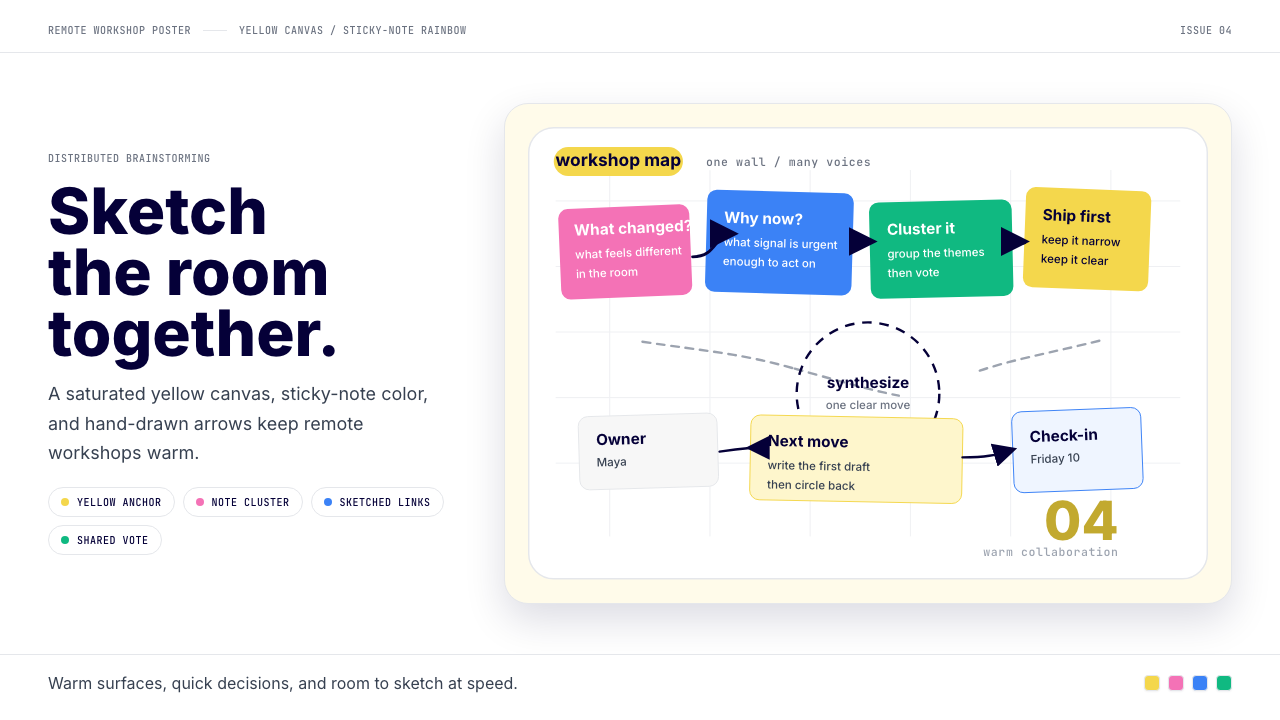 Miro Collab YellowWarm brainstorming in motion. Yellow canvas, sticky-note rainbow, hand-drawn…
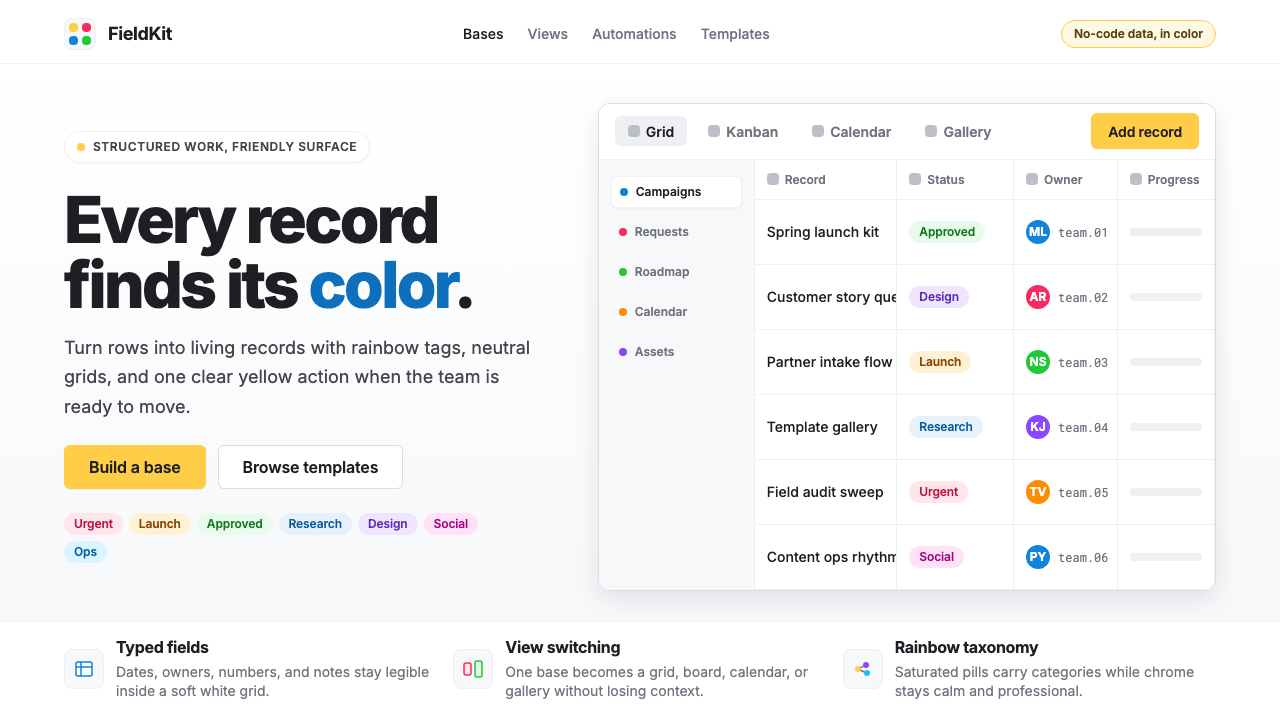 Airtable Spreadsheet-RainbowWork becomes celebratory. Inter grids stay white while rainbow pills and yell…
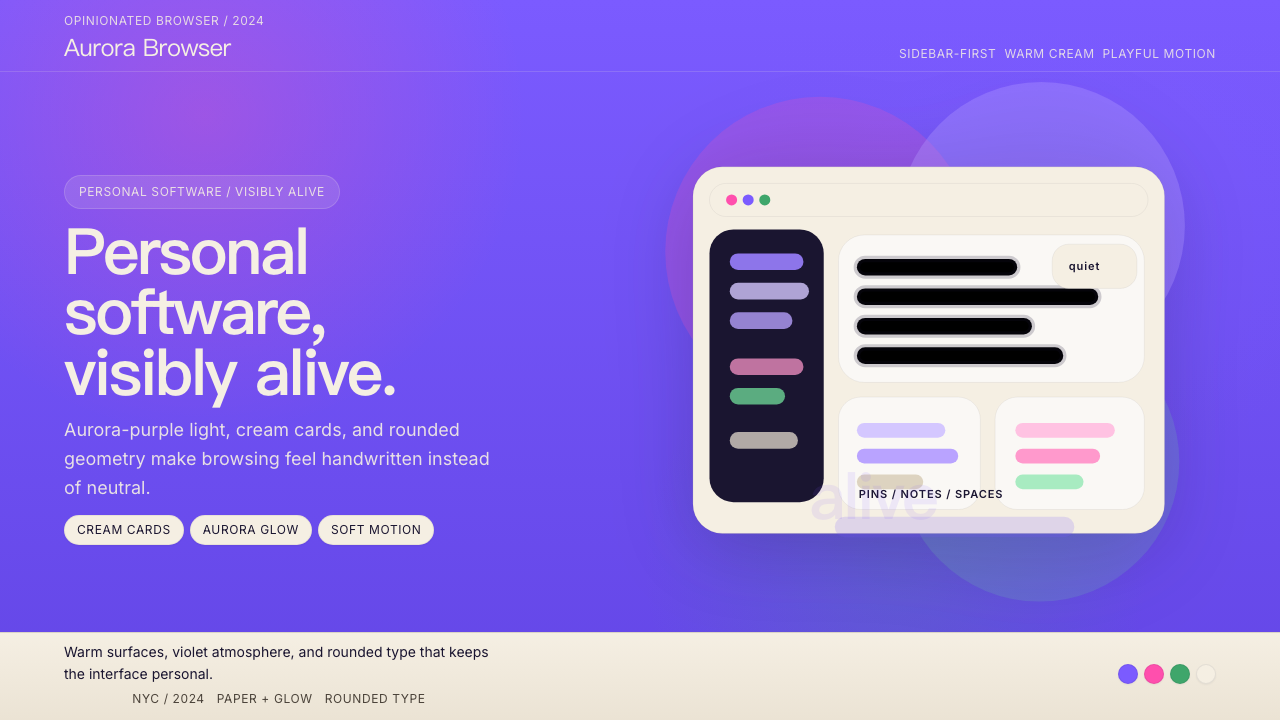 Arc BrowserPersonal software, visibly alive. Aurora purple glows over cream cards and ro…
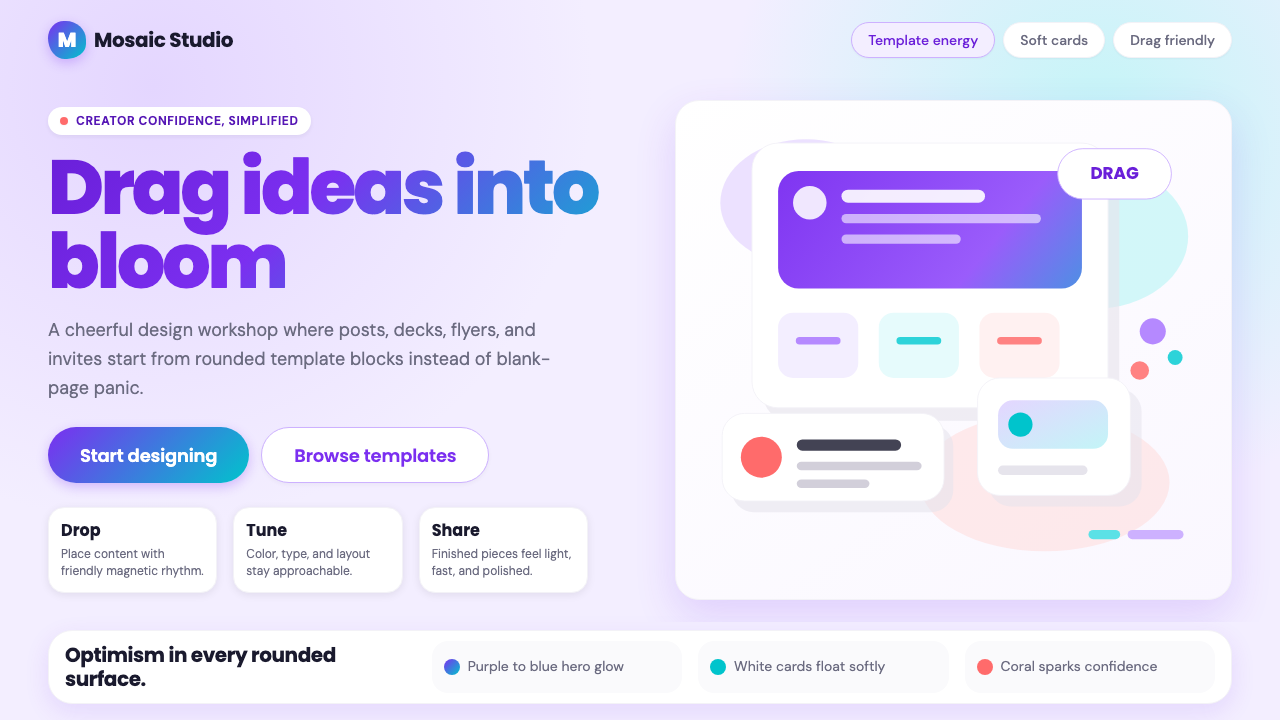 Canva 2024Confidence feels draggable. Purple-blue gradients and floating white template…
 Cohere Coral-AIEnterprise AI feels humane. Coral panels, sky-blue chips, and organic curves…
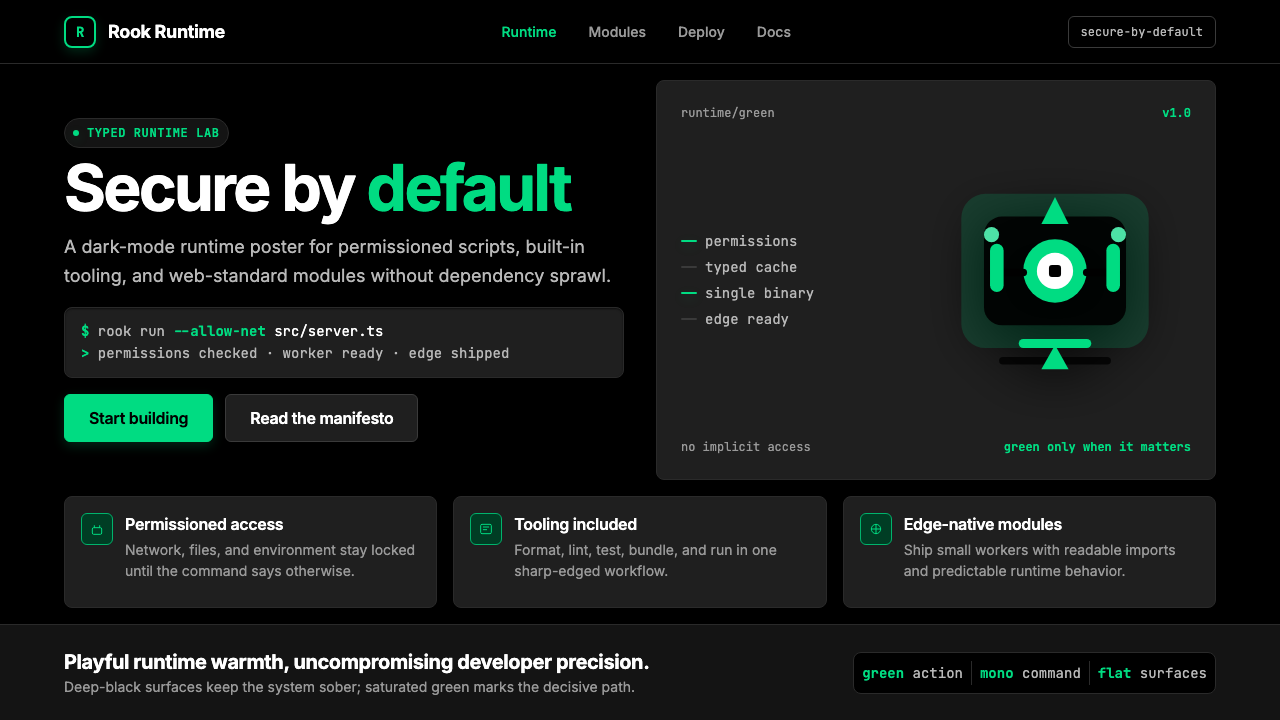 Deno Runtime-GreenWarm precision on black. Saturated green, Inter, and mono code turn security…