What is Pseudo-Satellite Fleet?
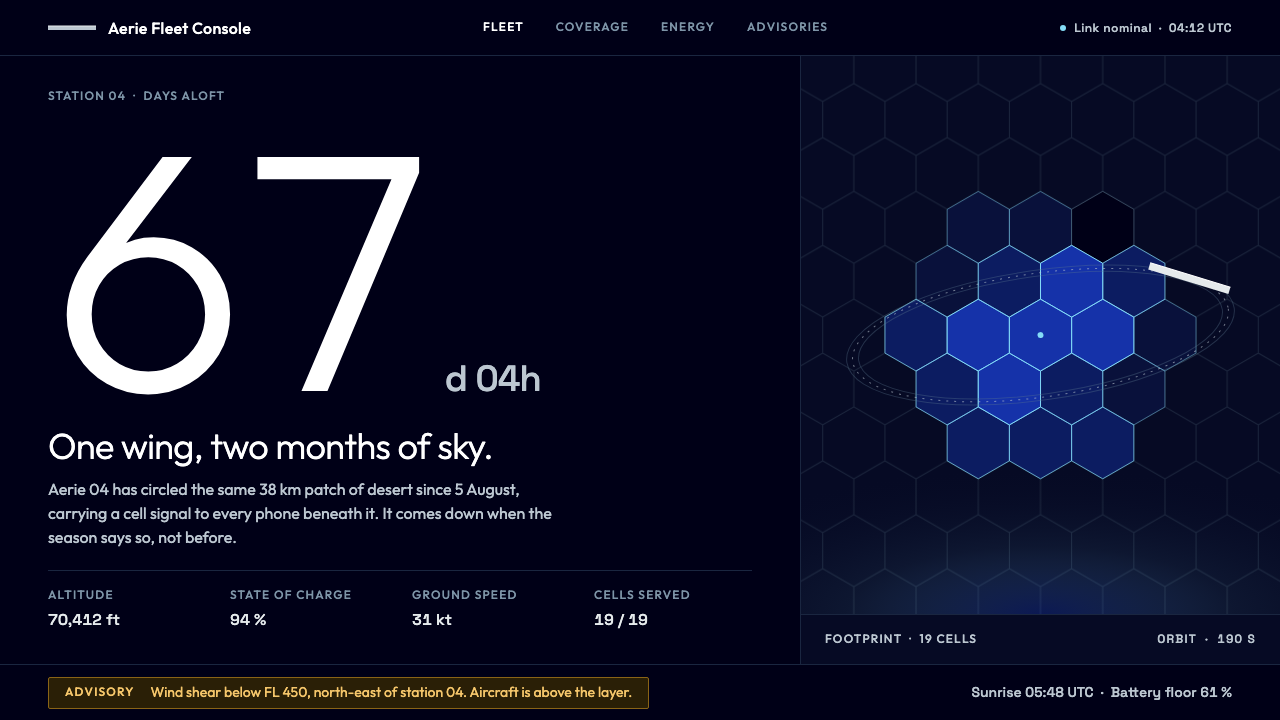
The Pseudo-Satellite Fleet style is an operations console for aircraft that stay up for weeks: night-navy sky, a silver wing, hexagonal coverage and a screen left mostly empty.
Pseudo-Satellite Fleet in brief
This style imagines an operations console for a fleet of high-altitude pseudo-satellites: solar-electric aircraft that circle above the weather for weeks or months and stand in for cell towers on the ground. Its palette takes the night-navy stratosphere associated with AALTO and sets a silver film-and-carbon wing against it.
It is a quiet interface by design. Flight tracks are thin, slow loops. Coverage shows up as hexagonal footprints. Endurance is counted in days, not minutes. Most of the screen is left empty on purpose, the way the sky at that altitude is empty. The calm is a functional choice, because the people using such a console may watch it for long stretches and cannot afford noise.
Taken together, the style combines the seriousness of aerospace operations with the patience of a system that is designed to stay aloft. It is dark, spare and slow-moving, and it communicates through scale and space more than through ornament.

Where does Pseudo-Satellite Fleet come from?
High-altitude pseudo-satellites, often called HAPS, are uncrewed aircraft that fly in the stratosphere, above weather and commercial air traffic. Powered by solar cells and carrying batteries for the night, they are designed to remain airborne for very long periods and to provide services usually associated with satellites, such as communication or observation, from a position much closer to the ground. The interface in this style is imagined for operating a whole fleet of them.
Its real-world reference points are specific. The Zephyr aircraft set record flights between 2018 and 2025, and the Sunglider conducted a stratosphere test in 2020. The organizations named in connection with this field include AALTO HAPS, part of Airbus; Airbus Defence and Space; QinetiQ; SoftBank and HAPSMobile with AeroVironment; and Skydweller Aero. Their work spans Farnborough in the United Kingdom, Arizona in the United States and Tokyo in Japan. The fleet-operations interface itself is a speculative design for roughly 2026 to 2030, a projection of what an operator's screen might look like as such fleets become routine.
Three movements frame the style. High-altitude platform stations are the technical concept: platforms parked in the stratosphere as part of a communications network. Solar-electric ultralight aviation provides the physical language, with thin, long wings, delicate structure and the discipline of weight. Non-terrestrial networks describe the larger idea of wireless service delivered from above rather than from towers. Each of these pushes toward a visual language of lightness, endurance and quiet.
The design system draws its mood from these facts. The night-navy sky comes from the stratosphere seen as a permanent dusk; the silver wing comes from the film-and-carbon construction of the aircraft; the hexagonal footprints come from the way coverage cells are mapped. The result is a style that feels like engineering and landscape at once.
What defines the Pseudo-Satellite Fleet look?
Night-navy sky
The background is a very deep navy, close to black but clearly blue. It gives the sense of altitude and of an environment above weather. Because the ground is so dark and so uniform, small light elements gain a large presence, and the screen reads as a sky rather than a panel.
The silver wing
The hero of the visual language is a long, thin wing in a silver-grey film-and-carbon finish. It is drawn with delicate lines and a muted metallic sheen, and it appears as the central object or as a recurring motif. Its proportions, very long and very slender, set the horizontal, patient rhythm of the layouts.
Hexagonal coverage cells
Coverage areas are drawn as hexagons tiled across a map or field. The shape comes from how network cells are modelled, and it gives the interface a recognizable geometry. Hexagons are rendered with thin outlines and very faint fills so that they suggest area without dominating the view.
Slow flight tracks
Aircraft paths appear as thin, gentle loops, not as fast arrows. They suggest patience: an aircraft circling a region for days. Motion, where used, should be slow and continuous, and lines should be fine enough that a dozen tracks do not create clutter.
Endurance counted in days
Time is shown in days and long durations, not in seconds or minutes. Gauges and timelines have a wide horizontal scale, and values change gradually. This reshapes the typical dashboard: the key number is how long something has been up, not how fast it moves.
Deliberate emptiness
Most of the screen is empty on purpose. Spacing is generous, content is sparse, and elements are separated by wide margins of dark. The emptiness is not a lack of content but a statement: the sky at that altitude is empty, and the interface respects it. This also reduces fatigue for long watching sessions.
Fine, quiet type
Type is light and small, in pale tones against the dark. It labels rather than shouts, and it favors clear, even letterforms that remain readable at a glance. Hierarchy comes from placement and spacing more than from weight or color.

Who shaped Pseudo-Satellite Fleet?
The Airbus-backed organization behind the high-altitude platform work whose night-navy imagery informs this palette. It stands for the long-endurance, solar-electric approach that the style is built around.
Part of Airbus and a key name in the field, connected with the Zephyr line of aircraft. Its presence reflects how aerospace and defence engineering sits behind civilian communication ambitions.
A British organization named among the key players in the early work on long-endurance solar aircraft. It is part of the Farnborough connection that grounds the style in real engineering history.
The Japan and United States partnership behind the Sunglider and its stratosphere test in 2020. It represents the telecommunications side of the field, where the aircraft are treated as flying cell towers.
A company named among the participants in solar-electric, long-endurance flight. It extends the field beyond the larger aerospace groups and shows how many parties are pursuing persistent aircraft.
How do you use Pseudo-Satellite Fleet today?
This style is well suited to satellite and telecom operations, aerospace and aviation tools, energy and infrastructure monitoring, environmental dashboards, research products and any application that needs to be watched for long periods without causing fatigue. It communicates reliability, scale and patience.
For presentation slides, use the night-navy field as the whole slide, with a single thin silver wing line or a faint hexagonal grid as the cover image. Titles are small and quiet, placed with generous margins. Content slides keep one idea per slide, with a lot of empty space; data slides use thin line charts with long horizontal axes and numbers expressed in days, not minutes. Avoid filling the empty space just because it is there.
For web interfaces, build operations dashboards with a dark navy background and thin, pale lines. A map area can show hexagonal coverage cells and slow loops for flight tracks; status panels sit at the edges with small labels. Alerts should be rare and clearly different, but otherwise the interface should remain calm. Update motion should be slow, with gentle transitions, to match the character of the system.
For editorial and marketing work, the style supports long, atmospheric pages about technology and infrastructure. Large dark fields, thin hexagon patterns and a single silver illustration can carry a section, with brief text beside them. Photography should be high-altitude or atmospheric, with muted color grading. The tone is confident and measured rather than excited.
The most common mistake is to fill the screen. Adding extra widgets, bright colors or dense tables destroys the idea that emptiness is the design. Another is using fast animations or urgent colors for ordinary data, which contradicts the sense of endurance. A third is rendering the wing as glossy chrome; it should look like thin film and carbon, matte and light. Keep the sky quiet and let a few precise elements stand against it.

Pseudo-Satellite Fleet — FAQ
What is a pseudo-satellite?
A high-altitude pseudo-satellite is an uncrewed, usually solar-electric aircraft that flies in the stratosphere for weeks or months and performs tasks normally given to satellites, such as providing communication coverage. Because it is far closer to the ground than a satellite, it can behave like a cell tower in the sky. The style is built to operate a fleet of these aircraft.
Why are the hexagons important?
Hexagons are a standard way to tile coverage areas because they fit together without gaps and approximate circular reach. In this style they give the interface a distinctive geometry and communicate the service function of the aircraft. They are drawn faintly so that they describe area without overpowering other elements.
Is the style a real interface or a concept?
It is a speculative design. The aircraft and companies are real, with record flights and stratosphere tests between 2018 and 2025, but the fleet-operations interface is imagined for roughly 2026 to 2030. It uses real technology as inspiration while projecting a future operator's console.
Can I use this style for a consumer app?
It can work for consumer products that revolve around monitoring, weather, travel or sky-related information, but it is calibrated for professional, long-session use. If the app needs energy, playfulness or dense content, the emptiness and slow pace may feel too sparse. Use it when calm and trust matter more than excitement.
Related design styles
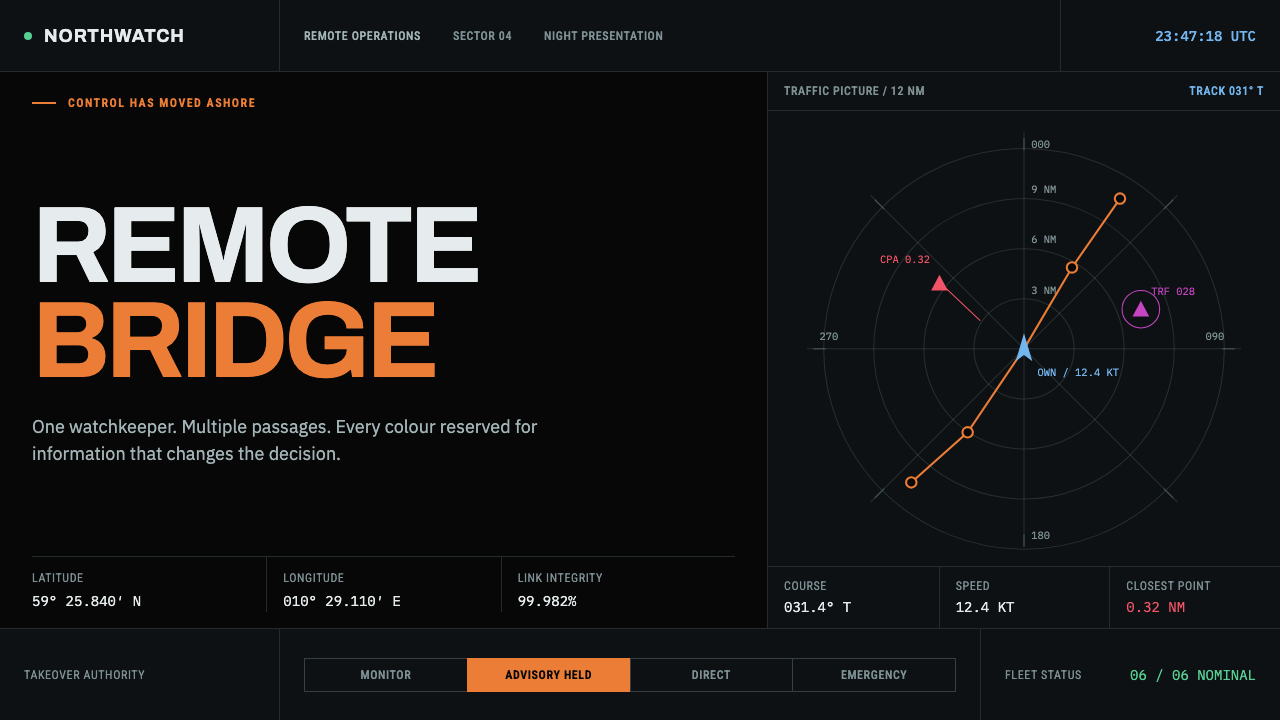 Autonomous Cargo Ship BridgeColour is protocol. Near-black chart grids reserve orange for decisions that…
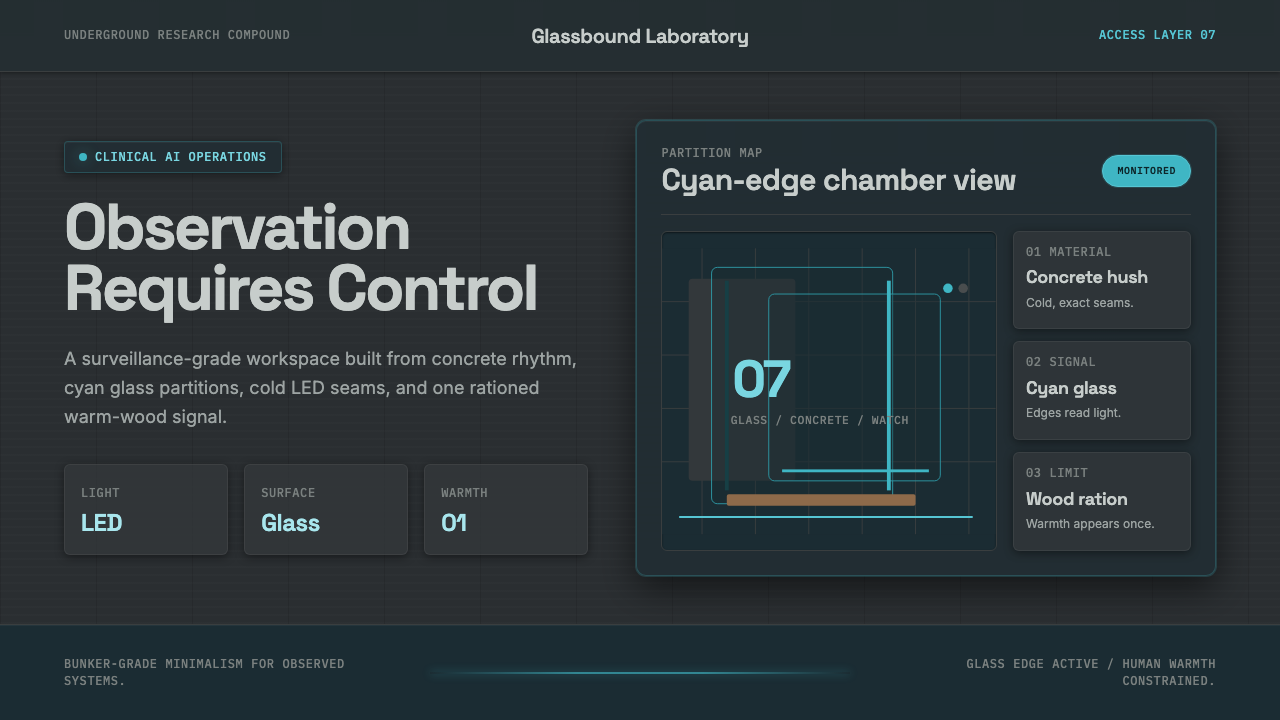 Ex MachinaClinical control, made visible. Concrete gray, cyan glass, LED seams, one woo…
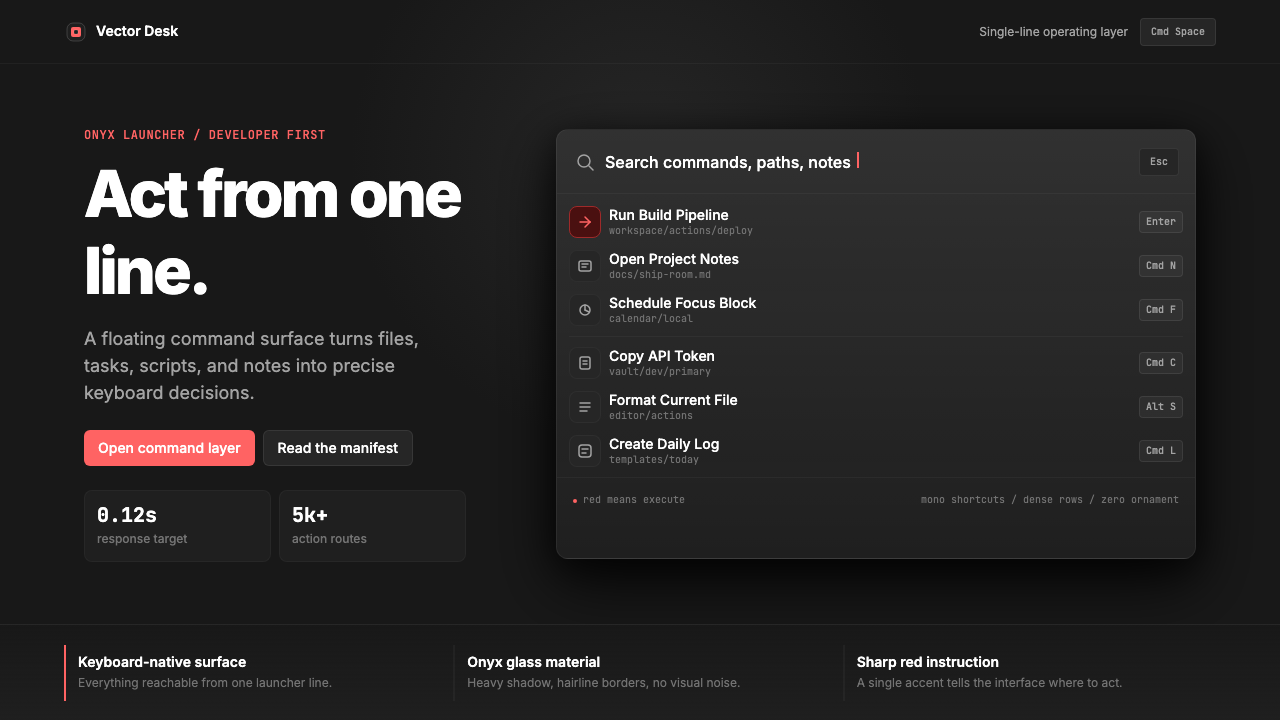 Raycast Spotlight Launcher (2023)Obsidian confidence. Sharp red cuts through Inter rows and mono shortcut chip…
 Revolut Black FinanceBanking as instrument. Pure black, hairline borders, and one electric purple…
 Apple Fitness Rings Closed (2024)Midnight feels exact. Magenta, green, and cyan rings lock onto OLED black.
 Arctic Terraform StationEvery colour carries a duty. Sky-blue panels, coded modules and hard seams en…