What is Herero Victorian Dress (Namibia)?
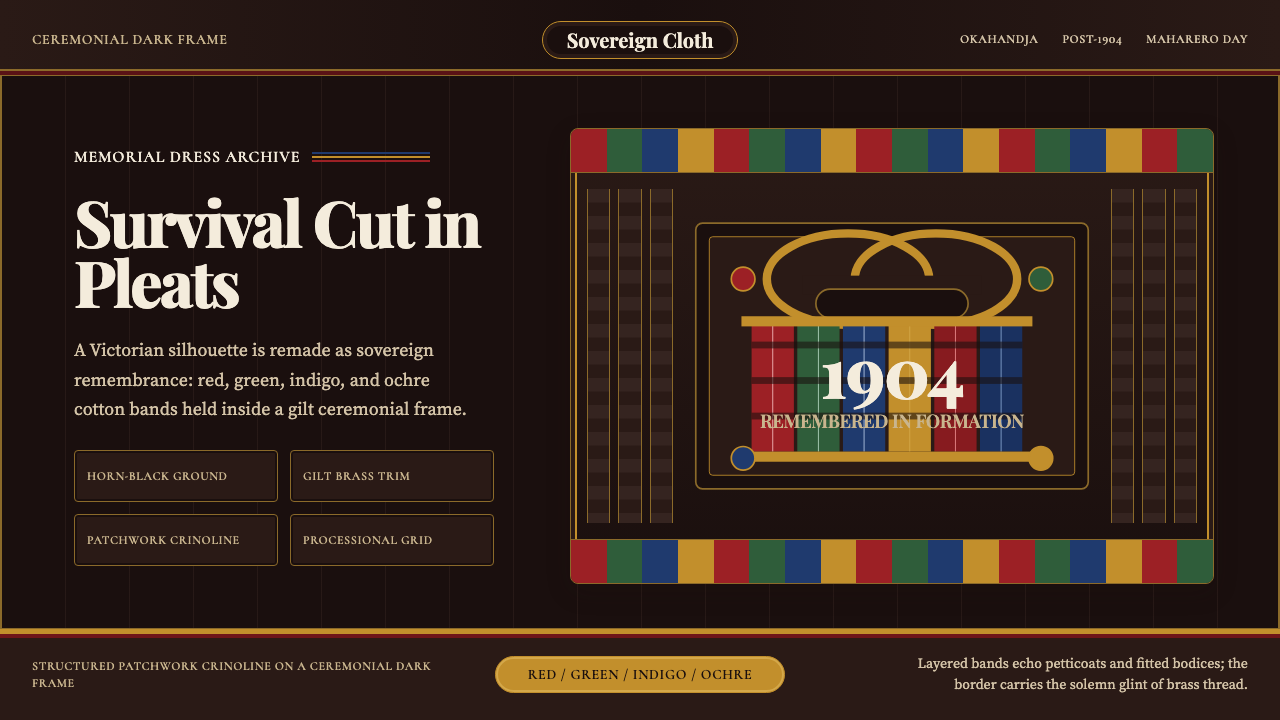
After genocide, Herero women turned a colonizer's silhouette into a sovereign monument — and made it the most photographed dress tradition in southern Africa.
Herero Victorian Dress (Namibia) in brief
The Herero Victorian dress is one of the most visually commanding dress traditions in the world — and one of the most historically charged. Floor-length crinoline skirts, leg-of-mutton sleeves, layered petticoats, tightly fitted bodices, and the horn-shaped otjikaiva headdress together form a silhouette that is unmistakably Victorian in its structural logic yet entirely Herero in its meaning. The effect is monumental: women who wear this dress do not merely dress up — they become living memorials.
The design system derived from this tradition translates the dress's visual drama into a digital aesthetic language. A deep, ceremonial dark ground functions as the stage. Against it, structured columns of saturated color — the reds, indigos, and greens of the parade formations — read like vertical fabric strips or pleat panels. Gilt brass accents echo the metallic trim and jewelry worn with the dress. The overall composition is one of structured abundance: the richness is not random but organized, each color band and accent element placed with the same deliberateness that governs the arrangement of a ceremonial outfit.
This is a style about survival through beauty. The Herero dress is not nostalgic for Victorian England; it consciously appropriates and transforms a colonial aesthetic into something that belongs entirely to the women who wear it. In design terms, this means formal structure and historical depth coexist with vivid, unapologetic color — the restraint is in the composition, never in the palette.
Where does Herero Victorian Dress (Namibia) come from?
The origins of the Herero Victorian dress lie in one of history's darkest colonial chapters. Between 1904 and 1908, the German colonial administration in South West Africa (present-day Namibia) carried out a systematic extermination campaign against the Herero and Nama peoples — what historians now recognize as the first genocide of the twentieth century. The Herero population was decimated, forced into the Omaheke Desert, and stripped of cattle, land, and political structure. What survived was culture — held, in part, through dress.
The Victorian silhouette that Herero women transformed had arrived through German missionaries in the nineteenth century. Mission stations attempted to impose European dress codes on indigenous peoples as part of a broader project of cultural erasure. Herero women were instructed to wear the long-skirted, high-collared, full-sleeved dresses of German missionary wives. Rather than submit passively, Herero women made the style their own — adapting it, expanding it, and loading it with their own symbolic freight. The otjikaiva hat, shaped to evoke cattle horns, is the most visible assertion of this transformation: cattle are the central symbol of Herero identity, wealth, and spiritual life, and to crown the German silhouette with horns was to reclaim the top of the form.
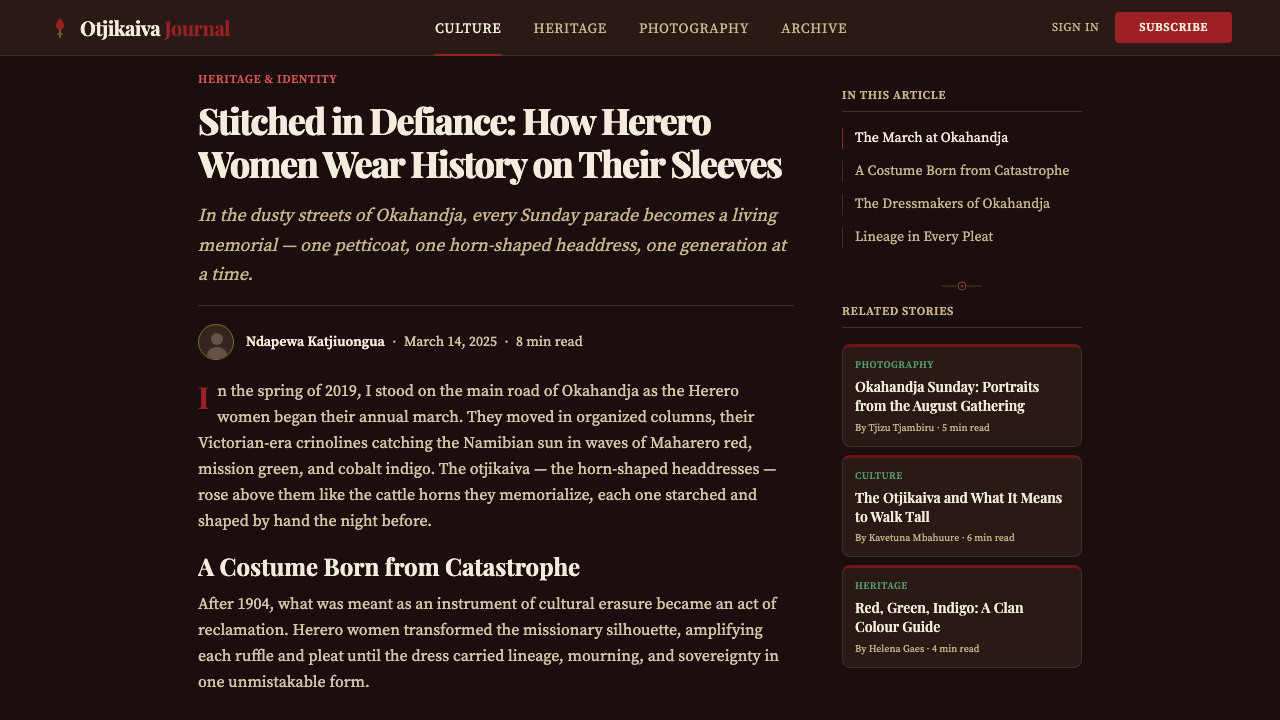
After the genocide, the dress became a memorial practice. The annual Maharero Day parade — held in Okahandja and named for Chief Samuel Maharero, who led Herero resistance — has been observed since at least 1923. Women gather in strict color formations: red for the paramount chief's regiment, green and white for others, with each family group identified by color and the direction of the hat horns. The parade is simultaneously a funeral procession, a political demonstration, and a fashion event of extraordinary collective coordination.
The international art world encountered this tradition most visibly through the photography of Jim Naughten, whose portraits of Herero women in ceremonial dress circulated widely in the 2010s. Scholar Hildi Hendrickson's anthropological work established the academic framework for understanding the dress as a deliberate, politically charged aesthetic system rather than simple cultural adoption. Chief Vekuii Rukoro kept the tradition visible in political contexts as leader of the Herero paramount chiefs' council, demanding formal genocide reparations from Germany. The dress is now recognized globally both as a design artifact of remarkable visual power and as an ongoing political statement.
What defines the Herero Victorian Dress (Namibia) look?
Dark Ceremonial Ground
The foundational surface of this aesthetic is deep and dark — a field that reads as formal, night-like, and weighty. It is not the flat black of minimalism but something richer: closer to the depth of heavy cloth, absorbing light rather than reflecting it. Against this ground, all other color and texture elements gain maximum presence. The darkness is not emptiness but a dignified stage, establishing the ceremonial register before any other element appears.
Structured Color Columns
The palette is saturated and assertive: deep red, indigo blue, and forest green are the primary actors, with ochre and warm ivory as supporting tones. These colors appear not as washes or gradients but as distinct vertical bands — evoking the pleated skirt panels and color-coordinated parade formations of Maharero Day. Each color column has clear edges, like fabric strips sewn together, reinforcing the sense that the composition is constructed rather than rendered.
Gilt Brass Accents
Metallic warm gold — evoking the brass buttons, belt buckles, and jewelry that adorn the ceremonial dress — functions as the system's accent layer. These accents are used sparingly and with precision: at borders, at structural intersections, as dividing lines between color zones. They introduce warmth and luminosity into the deep-toned composition without disrupting its gravity. The effect is of something ornamented with intention, not scattered decoration.
Pleated Fabric Geometry
The silhouette of the Victorian crinoline — a bell shape built from structured layers — informs the visual architecture of the system. Patterns evoke layered pleats: rhythmic vertical repetitions, stacked horizontal bands, and the slight formal stiffness of a garment held in shape by internal structure. This is not soft, flowing textile imagery but the geometry of constructed clothing — orderly, voluminous, and commanding.
Horn-Crown Motif
The otjikaiva hat — two forward-pointing peaks evoking cattle horns — is the most distinctive silhouette element of the Herero dress and the system's primary symbolic marker. In design applications, this horn-crown shape appears as a structural motif: arched headers, paired upward-pointing forms, elements that frame content from above. It carries the system's core meaning — survival, dignity, the claiming of height — without requiring literal representation.
Layered Textile Richness
The Herero dress is built on layers — multiple petticoats, an outer skirt, a bodice, a collar, a headdress. The visual system mirrors this through compositional depth: elements sit in distinct planes, borders frame borders, and no surface is left entirely unadorned. The richness feels earned rather than excessive, structured rather than chaotic — the abundance of a dress assembled with care, not the noise of too many competing decisions.
Memorial Solemnity
Beneath the visual drama is a consistent emotional register: this style is solemn. The combinations are bold but not playful, rich but not festive in a trivial sense. There is weight in every composition — the weight of history, of collective memory, of something worn in witness to the dead. Design applications should preserve this gravity; using the system for entertainment or ironic purposes dissolves the quality that makes it distinctive.

Who shaped Herero Victorian Dress (Namibia)?
Samuel Maharero led the Herero uprising against German colonial rule in January 1904, which triggered the genocide campaign. After the Herero defeat at the Battle of Waterberg, he fled into British Bechuanaland (present-day Botswana), where he died in exile in 1923. His annual memorial at Okahandja became the Maharero Day parade — the occasion that crystallized the ceremonial dress tradition into its current form. Maharero's name now anchors the most important annual gathering of the Herero diaspora, and his memory is woven directly into what the dress means.
Jim Naughten is a British photographer whose series 'Conflict and Costume' — portraits of Herero women in ceremonial dress shot against studio-style neutral backgrounds — brought the tradition to international attention in the 2010s. His photographs were exhibited widely and reproduced in publications around the world, introducing the visual language of the Herero dress to audiences who had no prior connection to Namibian history. Naughten's work raises ongoing questions about who narrates colonized cultures and under what conditions, but it remains the primary point of entry for many designers and artists encountering the tradition for the first time.
Hildi Hendrickson is an anthropologist whose edited volume 'Clothing and Difference: Embodied Identities in Colonial and Post-Colonial Africa' (1996) established the scholarly framework for understanding the Herero dress as a deliberate aesthetic and political system. Her analysis showed that Herero women's adoption and transformation of missionary dress was not passive imitation but active cultural negotiation — a reinterpretation that preserved Herero identity markers (cattle symbolism, community color-coding) within a European form. Her work is foundational for anyone seeking to understand the dress as design rather than curiosity.
Vekuii Rukoro served as paramount chief of the Herero people and as a prominent advocate for genocide reparations from Germany in the 2010s. He pursued legal action in United States courts and made international appearances wearing the full ceremonial regalia of the Herero chieftaincy, ensuring that the visual tradition of the dress appeared alongside political arguments for historical accountability. Rukoro's insistence on the ceremonial form as a political instrument demonstrated that the Herero dress has never been purely aesthetic — it has always also been an argument.
How do you use Herero Victorian Dress (Namibia) today?
The Herero Victorian dress aesthetic is built for contexts where ceremony, dignity, and visual authority are primary requirements. Its combination of deep ground tones, structured color columns, and restrained metallic accents translates naturally to presentations, editorial layouts, and web interfaces that need to carry cultural weight or communicate formal prestige. It is not a style for casual or playful applications — the memorial gravity it carries should be respected, not diluted.
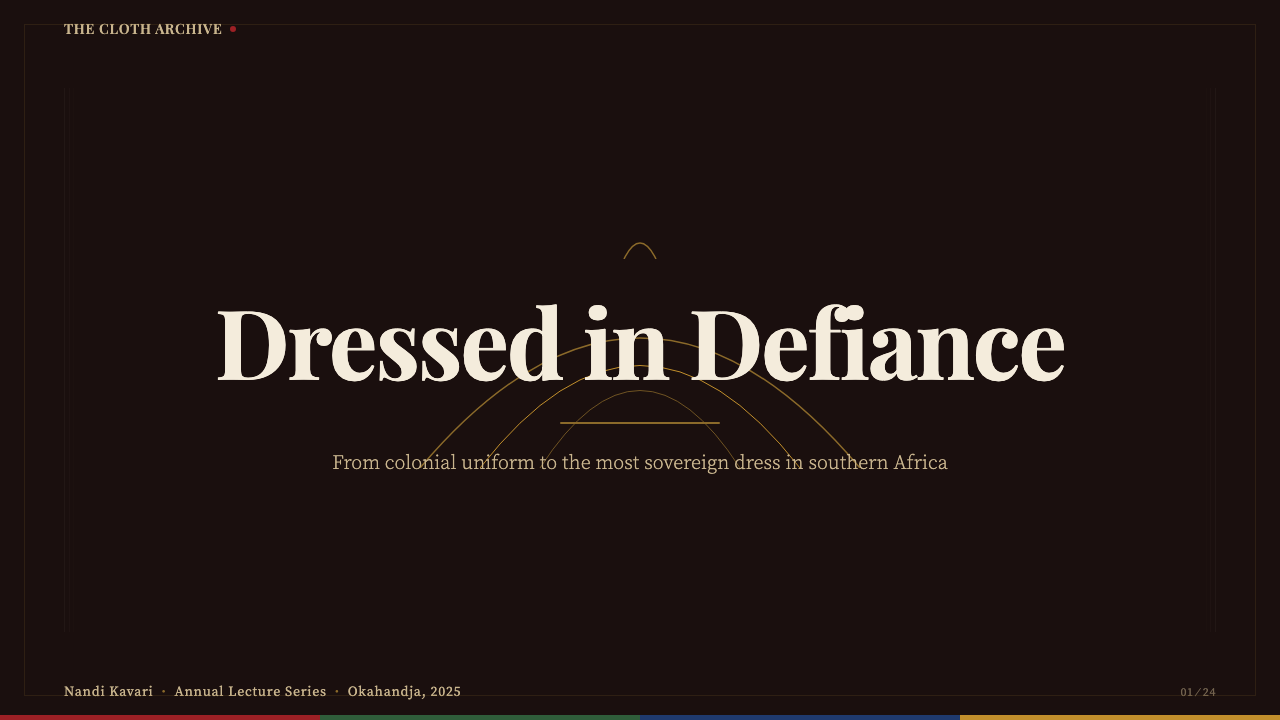
For presentation slides, this system works powerfully on both cover and section divider pages. A cover built on a deep dark ground with two vertical color bands — one in deep red, one in indigo — creates an immediate sense of ceremony and importance. The otjikaiva horn motif can inform arched header shapes. Gold-toned horizontal rules serve as structural dividers, evoking brass trim. Content slides should keep the background dark and use the saturated colors sparingly as accent: a colored side rule to indicate category, a gold-toned icon to signal a key point. Data visualization benefits from the distinct, high-contrast color bands applied to chart elements — each series reads clearly against the dark ground.
For web interfaces, the style is best suited to editorial publishing, cultural institutions, heritage brands, and cause-driven platforms. A dashboard or landing page built in this aesthetic uses deep-toned backgrounds, gold-accented navigation elements, and saturated color panels to indicate major content sections. Cards should use the deep ground with colored top borders or side accent strips rather than light backgrounds — the composition depends on darkness as the base. Typography should be set in formal weights with generous leading, evoking the upright posture of the dress itself.
For editorial and marketing applications, this style excels in contexts requiring visual authority: campaign materials, commemorative publications, cultural event collateral, and identity systems for organizations that work with history and memory. A full-bleed deep-toned spread with a single column of saturated color on the left margin, gold-ruled section breaks, and formal serif or strong sans-serif headings delivers the compositional logic of the dress translated into the page. Avoid placing the style in promotional contexts that feel commercial or trivial — the aesthetic has a semantic weight that sits awkwardly alongside sales urgency.
A common mistake when applying this style is treating the color palette as an opportunity for maximalism — stacking all three primary colors at full saturation simultaneously. In the actual Maharero Day parade, color is organized by regiment: groups wear one primary color, not all of them at once. The design system follows this logic. Lead with one dominant color column, use a second as structural accent, and let the dark ground carry the composition. Similarly, the gilt accents should remain genuinely sparse — a single gold rule or gold icon per section is enough. When everything is gilded, the ceremony disappears.
Herero Victorian Dress (Namibia) — FAQ
Is it appropriate to use this style for commercial design work?
The question of appropriateness is worth taking seriously. The Herero dress is a living cultural and political practice, not a historical artifact — women still wear it at active memorial ceremonies. Using the aesthetic vocabulary of this tradition in a thoughtful, crediting way — acknowledging its origin — is different from lifting it without context. The style suits purposes where authority, dignity, and historical seriousness are genuine requirements. It sits uncomfortably in contexts that feel extractive or trivializing. The strongest test: would the end product feel respectful to the community whose tradition it draws from?
How does this style differ from other African-inspired design aesthetics?
The Herero Victorian dress is unusual among African design traditions in that its visual language is not derived from pre-colonial craft forms but from the deliberate transformation of a European colonial aesthetic. The silhouette is Victorian; the meaning is Herero. This makes its design logic distinctive: rather than geometric abstraction drawn from kente or kuba cloth, rather than the earth-tone palette of Saharan textile traditions, this system works with structured European forms filled with African cultural content. The tension between form and meaning is part of what the style communicates, and any design application that erases that tension misses the point.
Can this style work in a light-background layout?
The dark ground is structurally important, not merely an aesthetic preference. The whole compositional logic — saturated colors reading as light against darkness, gilt accents catching attention — depends on the depth of the background. A light inversion is possible but requires significant adaptation: the color columns would need to be deepened and the dark tones brought forward as accent elements rather than ground. The result would likely feel more like a Victorian fashion reference than like the Herero ceremonial tradition specifically. If a light background is a hard requirement, consider whether this style is the right choice for the application.
What does the otjikaiva hat add to a design system beyond visual interest?
The horn-crown motif is the system's primary carrier of meaning. In the dress, the horns reference cattle — the central symbol of Herero identity, the measure of wealth and spiritual standing that the genocide tried to destroy. In design terms, the motif introduces the ideas of elevation, aspiration, and framing: something positioned above, something that defines the top of the form. When used as an architectural element — an arched header, paired upward-pointing shapes flanking a title — it does symbolic work beyond decoration. It says: this content is being honored, not simply presented.
How much historical context should accompany use of this style?
There is no rule, but there is a principle. The Herero dress is not an anonymous folk tradition — it has a documented origin, specific communities of practice, and an ongoing political meaning. When this aesthetic is used in a design project, noting the source takes seconds and changes the ethical register of the work entirely. A caption, a footnote, a brief origin note in a style guide — any of these acknowledges that the visual language being used has a history and belongs to people. The alternative, presenting it as simply a 'Victorian African style' or an undifferentiated global aesthetic, erases exactly what makes it powerful.
Related design styles
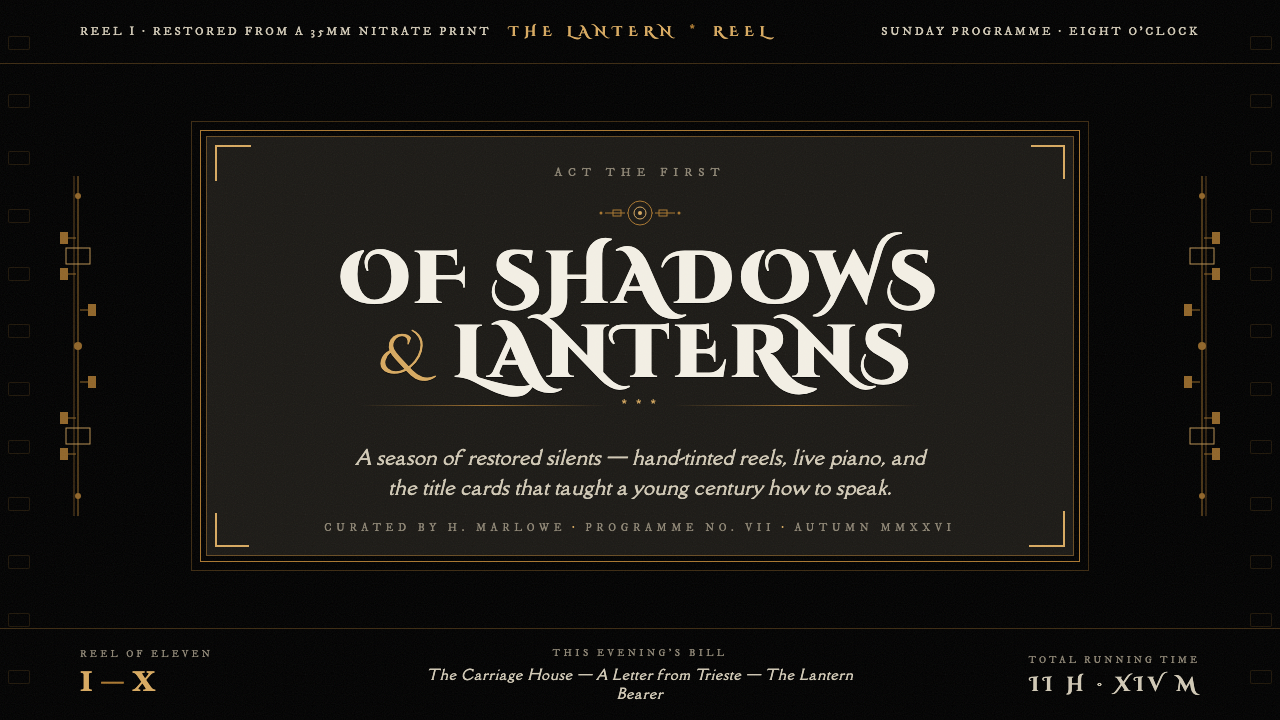 Silent Film IntertitleThe screen darkens, words appear. Warm off-white serif on jet-black film, fra…
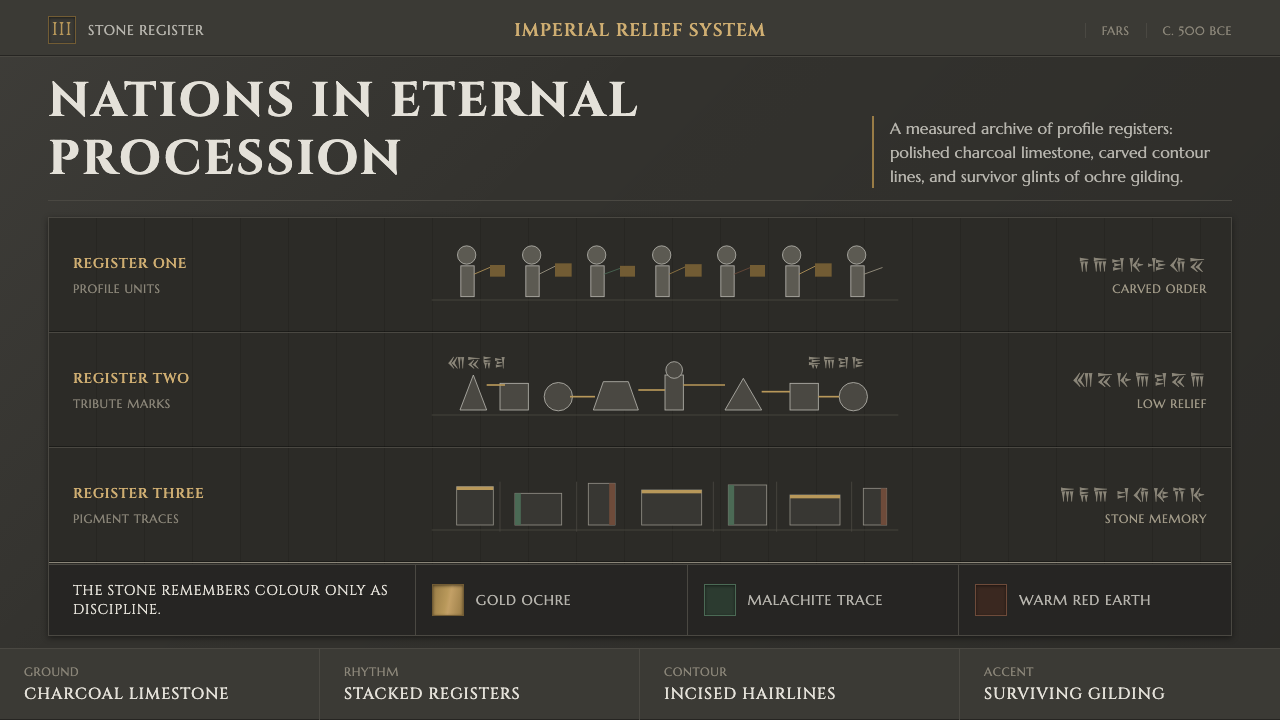 Achaemenid Persepolis ReliefImperial restraint in stone. Charcoal registers carry ochre, green, and red p…
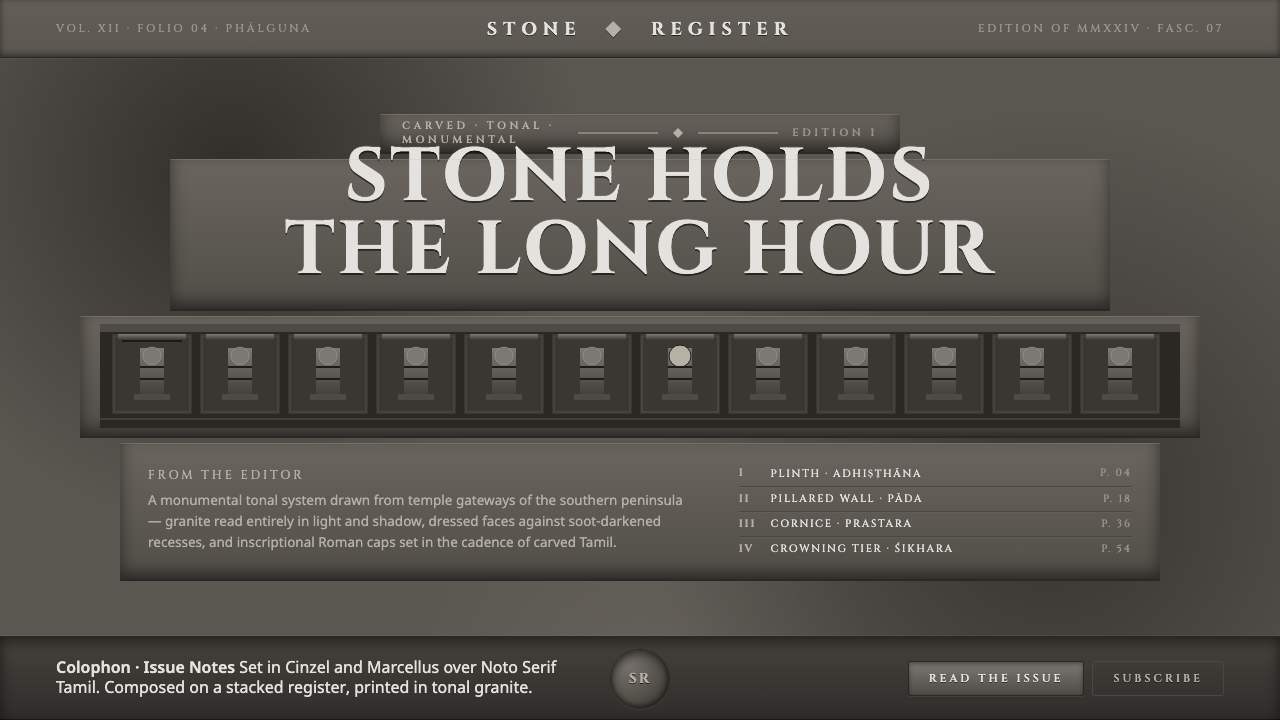 Dravidian Granite GrayscaleRead entirely in grayscale. Soot-dark recesses against dressed granite, Cinze…
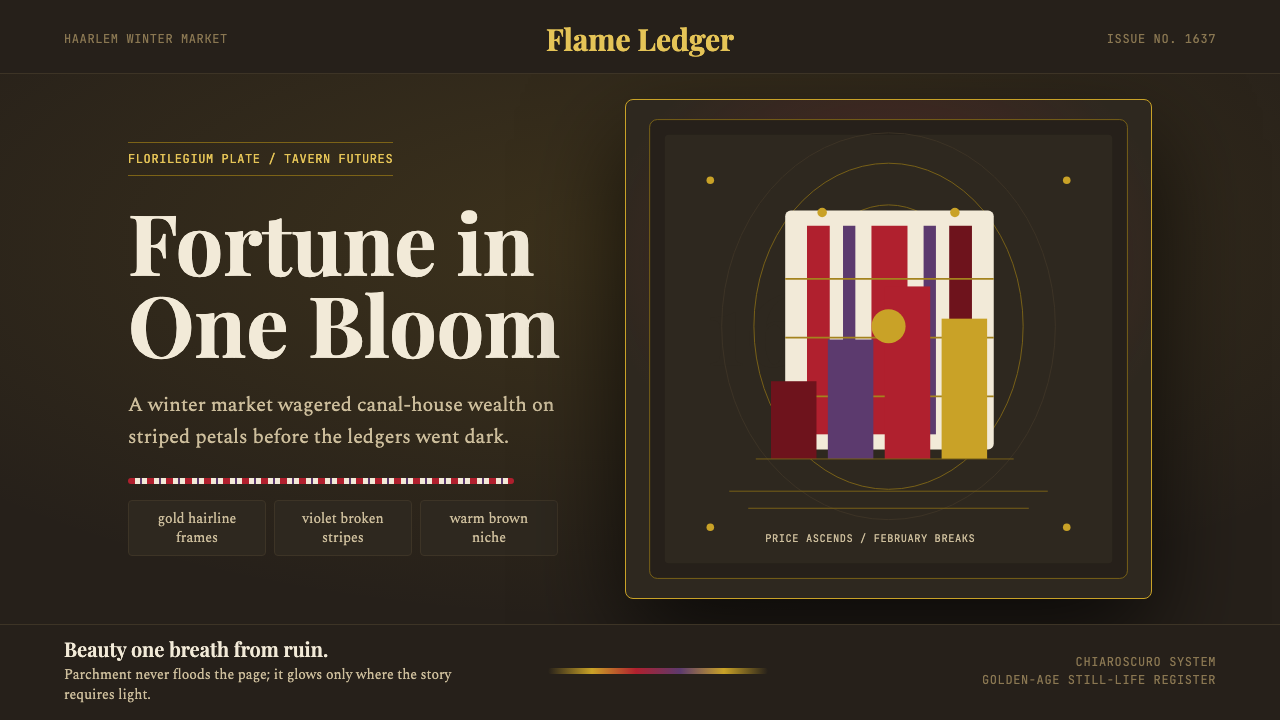 Dutch Tulip ManiaSpeculation burns in shadow. Flame red petals, violet stripes, gold frames on…
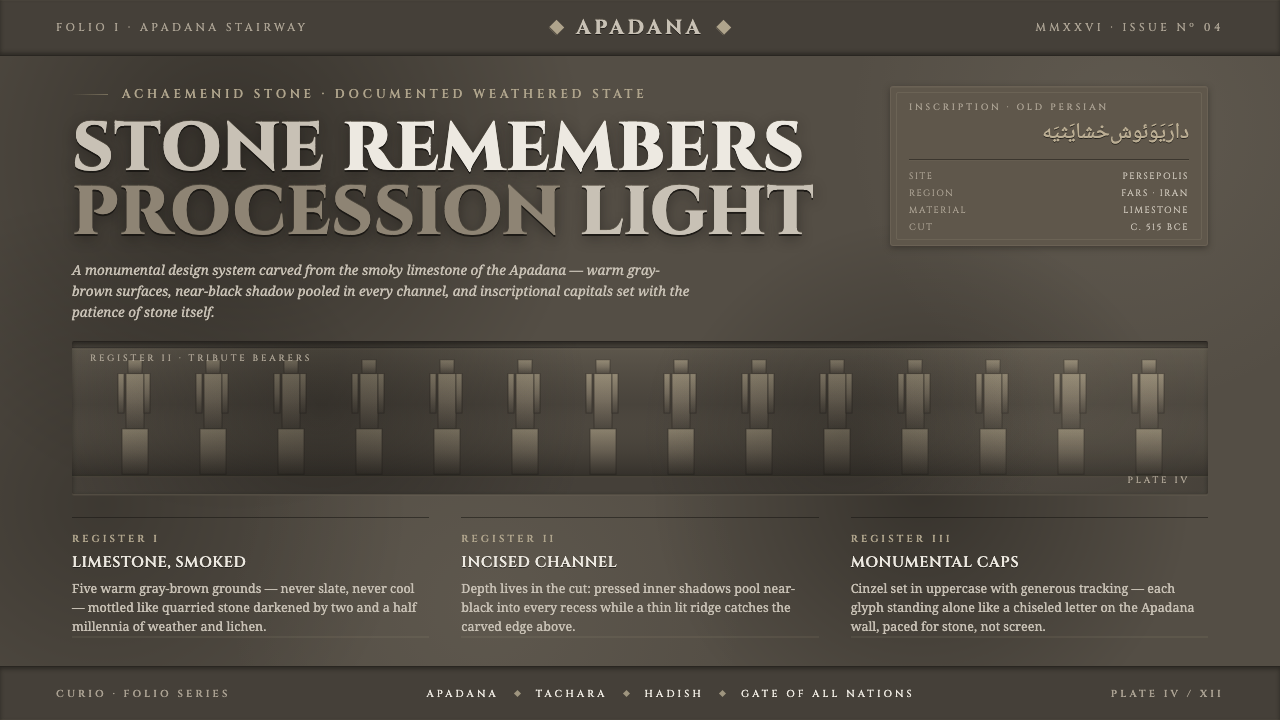 Persian Gray Stone ReliefStone remembers. Smoky weathered limestone, near-black shadow in every channe…
 Sandakada Pahana MoonstoneDepth carved from shadow, never hue. Weathered-granite grays in concentric mo…