What is Gumroad Creator?
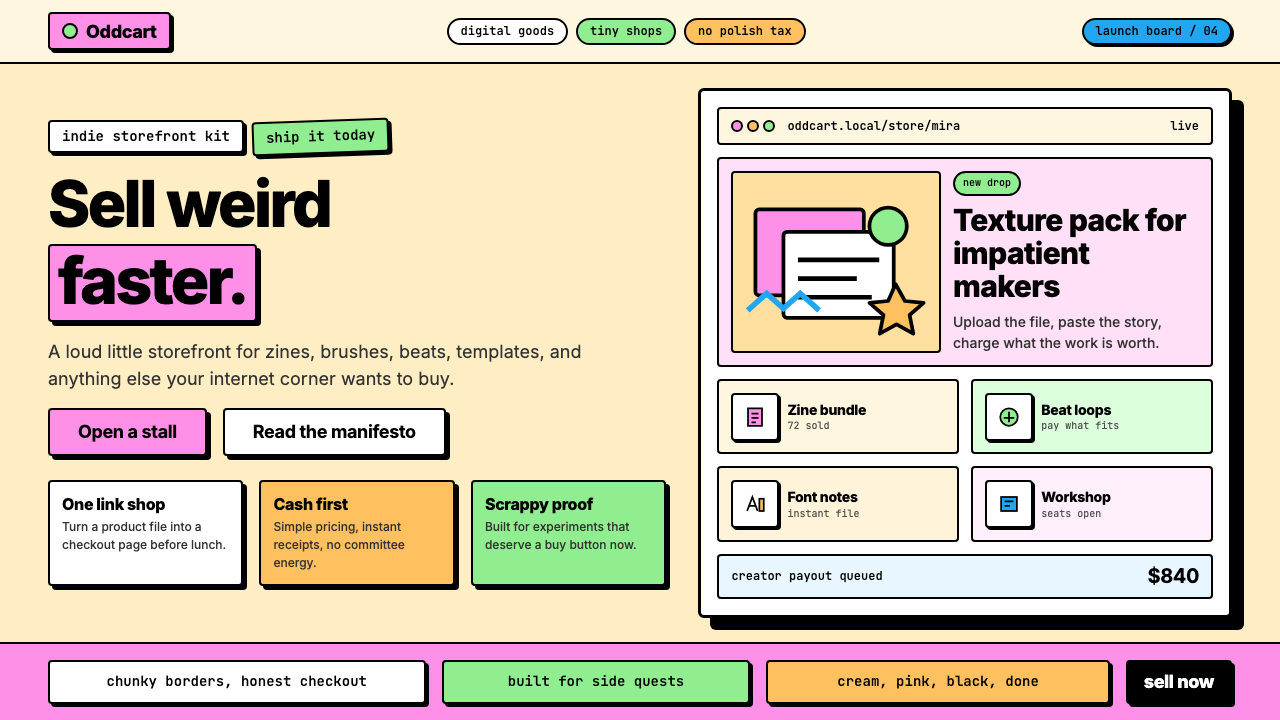
Hot pink on cream, chunky black borders, hard offset shadows — Gumroad made neo-brutalism the unofficial uniform of the indie creator economy.
Gumroad Creator in brief
Gumroad Creator is the visual design language pioneered by the indie-creator commerce platform Gumroad: a self-conscious neo-brutalist aesthetic built on hot pink and cream grounds, thick black borders that ring every card and button, and hard-edged offset shadows that give flat elements a punchy, almost hand-stamped presence. It is deliberately loud where mainstream SaaS design is quiet, deliberately simple where Silicon Valley polish is complex.
The style draws on two unlikely ancestors — the Memphis Group's maximalist joy in bold color and flat pattern, and the raw sincerity of 1990s personal web pages on GeoCities. Both sources were considered naive or low-status at the time; Gumroad Creator rehabilitates that naivety as a virtue, arguing visually that authenticity and personality matter more than refinement. The result is a design system that feels like it was made by a person, not by a committee, which is precisely the point for a platform built around individual creators.
At its core, Gumroad Creator is a grid-based, high-contrast system. Flat fills replace gradients everywhere. Square or barely-rounded corners signal directness. The palette is narrow and unapologetic. Type is bold, chunky, and stacked simply. Hand-drawn doodle accents appear as decoration — a rare concession to playfulness that reinforces the human-made quality of the whole. Nothing whispers; everything announces.

Where does Gumroad Creator come from?
Gumroad was founded in 2011 by Sahil Lavingia, who had previously worked as a designer at Pinterest before leaving to build a simpler way for creators to sell digital products directly to their audiences. The platform's original visual identity was relatively conventional for its era — a clean, startup-friendly face that fit comfortably alongside the SaaS aesthetic norms of the early 2010s. It was competent but unremarkable, a design that could have belonged to any of a dozen similar platforms.
The pivotal shift came around 2021 when Gumroad underwent a deliberate brand redesign that rejected the company's earlier minimalism in favor of something that would be immediately, unmistakably distinct. The redesign embraced neo-brutalism — a movement that was emerging in web design circles as a reaction against the era's prevailing soft-shadow glassmorphism and neutral-toned enterprise UI. Neo-brutalism reclaimed the raw, structural honesty of architectural brutalism and applied it to digital interfaces: visible borders, flat fills, hard shadows, unpolished energy.
Lavingia's background as a designer gave the rebrand its unusual self-awareness. The new visual direction did not simply follow a trend; it made an argument. A platform for independent creators selling PDFs, courses, and templates needed a face that said 'this is built by people like you' — not 'this is a venture-backed enterprise suite.' The hot pink on cream palette and the chunky black borders were chosen precisely because they looked nothing like Stripe, Notion, or Linear. The conspicuous anti-elegance was the message.
The timing aligned with a broader cultural moment: the rise of the creator economy, the mainstreaming of digital-first independent work, and a growing fatigue with the homogenized Figma-era UI that had come to dominate software interfaces. Gumroad's neo-brutalist identity became a visual shorthand for creator-first values across the wider industry. Other indie platforms, creator tools, and personal brand sites began adopting similar aesthetic signatures — thick borders, offset hard shadows, flat color — in recognition that the style communicated a particular kind of authenticity that polished corporate design could not.
What defines the Gumroad Creator look?
Color Palette
The signature Gumroad Creator palette centers on a vivid, warm pink used as the primary brand and accent color, deployed against an off-white or warm cream background. Black is used heavily — for borders, type, and shadows — and serves as the structural backbone that gives the palette its graphic punch. Secondary colors, when they appear, are equally saturated and flat: bright yellow, lime green, sky blue. There are no desaturated neutrals and no soft pastels; every color earns its place by being unambiguous.
Border System
Thick, solid black borders are the single most distinctive feature of the style. Every interactive element — cards, buttons, input fields, modal dialogs — is outlined with a border that is far heavier than conventional UI norms. This border weight gives individual elements a clear, almost comic-book quality, separating them sharply from their background and from each other. The border system replaces shadow and color-shift as the primary means of defining element boundaries.
Hard Offset Shadow
Cards and prominent elements cast a hard, solid-color shadow that is offset at a consistent angle — typically down and to the right. Unlike soft drop shadows that simulate natural light, this shadow is rendered as a flat black shape with no blur, no gradient, and no feathering. The combination of thick border plus hard shadow gives elements a stacked, dimensional quality, as though each card were a physical object lifted slightly off the page. This technique is the most imitated aspect of the neo-brutalist aesthetic.
Typography
Type in the Gumroad Creator style is bold, matter-of-fact, and hierarchical without being elaborate. Headlines are set large and heavy — sometimes playfully so — while body text maintains a readable but direct tone. The style avoids delicate or highly refined serif typefaces; the preference runs toward sturdy, humanist, or display grotesques that hold their weight at any size. Letter-spacing is kept natural rather than artificially expanded. Type often sits in tight, blocky arrangements that mirror the grid-like quality of the overall layout.
Flat Fill and Zero Gradient
Every color region in the Gumroad Creator vocabulary is a flat, even fill. Buttons are one solid color; backgrounds are one solid color; icons and illustrations are flat. There are no gradients, no glows, no color transitions of any kind. This absolute flatness is part of what gives the style its graphic, print-like clarity — the visual logic is immediately legible because there is no atmospheric depth to parse. The flatness also makes the hard offset shadow read as a deliberate stylistic choice rather than an accident.
Grid and Blocky Layout
Gumroad Creator layouts are organized on a visible, fairly rigid grid where elements snap into columns and rows without much visual tension or off-grid placements. Cards stack in uniform arrays; sections break cleanly at full width. The blocky quality extends to shape language as well: containers are rectangular, corners are square or minimally rounded, and the overall impression is of tiles or building blocks assembled with confident directness rather than refined spatial composition. Negative space is used generously, but always in regular intervals.
Hand-Drawn Doodle Accents
One distinguishing concession to decoration in an otherwise austere system is the selective use of hand-drawn doodle elements — small sketched arrows, stars, underlines, bracket shapes, or simple illustrated figures that appear as overlays or annotations. These doodles humanize the otherwise geometric and gridded composition, reinforcing the message that a real person made this thing. They are used sparingly so that their informal energy stands out rather than becoming visual noise, and they echo the personality-forward communication style of the creator economy.

Who shaped Gumroad Creator?
Lavingia founded Gumroad in 2011 after leaving his role as a designer at Pinterest. His design background made the 2021 brand rebrand unusually intentional — the shift to neo-brutalism was a deliberate philosophical statement about creator-first values, not merely a trend adoption. As the public face of the company, Lavingia's transparent, anti-corporate communication style on social media mirrored and amplified the brand aesthetic, helping Gumroad Creator become associated with a broader ethos of radical simplicity and creator empowerment.
The Memphis Group — the Italian design collective formed around Ettore Sottsass in Milan in 1981 — is the most direct historical precedent for Gumroad Creator's color sensibility and pattern logic. Memphis rejected the functionalist austerity of late modernism in favor of bold color combinations, flat geometric patterns, and a joyful anti-elitism that treated decoration as a legitimate design statement. While Gumroad Creator does not reproduce Memphis motifs directly, it inherits the same conviction that high saturation, visual boldness, and deliberate rule-breaking can be forms of honesty rather than vulgarity.
The aesthetic of GeoCities — the web-hosting platform that ran from 1994 to 2009 and defined early personal homepage culture — is the second major influence on Gumroad Creator's sensibility. GeoCities pages were typically made by non-designers: tiled backgrounds, bright colors, visible borders, animated GIFs, and general disregard for the restraint norms that professional graphic design upheld. Gumroad Creator selectively rehabilitates this visual energy — particularly the unapologetic brightness and the hand-assembled quality — as a signal of authenticity in a design environment that had become overly polished.
Gumroad's rebrand emerged just as neo-brutalism was crystallizing as a named movement in web design, roughly between 2020 and 2023. The broader movement — associated with designers and studios who wanted to push back against the glassmorphism, neutral-palette enterprise UI, and shadow-heavy card-based layouts that had dominated the previous decade — provided the theoretical framing within which Gumroad's specific choices made sense. Gumroad Creator became one of the most widely cited practical examples of neo-brutalism applied at product scale, influencing not just aesthetics but also the discourse about what visual design communicates about company values.
How do you use Gumroad Creator today?
Gumroad Creator translates most naturally to contexts that celebrate individual authorship and creative commerce — landing pages for digital products, personal portfolio sites, course or workshop sales pages, and any interface where the designer or founder wants the product to feel made by a person, not manufactured by a corporation. The key to applying it effectively is committing fully to its system: the thick border, the hard shadow, and the flat fill work as a cohesive unit. Picking only one or two of these elements without the others produces an inconsistent result that reads as unfinished rather than stylistically bold.
For presentation slides, the style excels on cover pages and section dividers. A cover benefits from a large block of the signature pink anchoring one quadrant, with the title set in heavy, oversized type on the cream field. The thick-border-plus-hard-shadow treatment works particularly well for feature callout boxes within content slides — applying it to a stat, quote, or key term makes that element jump off the slide without requiring animation. Data slides should lean into the style's grid quality: simple bar charts rendered in the flat primary palette, with axis lines drawn as visible thick rules, feel native to the aesthetic. Avoid soft drop shadows on charts — they break the flat-and-hard visual grammar.
For web interfaces, Gumroad Creator is an especially strong fit for pricing pages, product feature grids, and checkout flows where scannable hierarchy and trust signals are important. Define a clear column grid and let card components carry the thick-border treatment consistently. Use the hard offset shadow to distinguish interactive elements (cards that link, buttons that act) from static display elements (labels, metadata text). Reserve the signature pink for primary calls-to-action and active states; use cream as the dominant background and black as the typographic baseline. Navigation bars and footers look best in a solid black background with cream or white type, anchoring the page without requiring any decorative treatment.
For editorial and marketing applications, the style supports a poster-like directness. A hero section that pairs an oversized headline in heavy type with a single color block behind it, bounded by a thick border, does the work of dozens of smaller graphic elements. Marketing emails in this language use minimal columns — ideally one — with prominent bordered call-to-action buttons in the signature pink and generous cream space around them. Avoid the temptation to add photographic backgrounds or textured overlays; the style's power comes from the graphic flatness, and texture dilutes that signal. If imagery is necessary, crop photographs to hard-edge rectangular shapes and frame them with the border system.
The most common mistake when applying Gumroad Creator is using soft or blurred drop shadows anywhere in the layout. A soft shadow immediately breaks the neo-brutalist contract and pulls the design back toward the polished SaaS aesthetic the style is actively rejecting. Similarly, rounding corners beyond a minimal amount loses the blocky, direct quality that is essential to the system — overly rounded corners slide toward the friendly-rounded-SaaS look rather than the confident-direct-creator look. A second common error is overloading the palette: the signature pink is bold enough that using it for more than the primary accent and call-to-action areas makes the layout feel chaotic rather than confident. Let cream and black do most of the work; pink is a signal, not a fill.

Gumroad Creator — FAQ
Is Gumroad Creator the same as neo-brutalism, or is it a specific variant?
Gumroad Creator is best understood as a specific, highly recognizable instance of neo-brutalism rather than the whole movement. Neo-brutalism as a broader trend encompasses many different interpretations — some much rawer and more typographically extreme, others more restrained. Gumroad's version is distinctive for its consistent pink-and-cream palette, its relatively clean grid structure, and its use of hand-drawn doodle accents that soften the system's graphic intensity with a human touch. A pure neo-brutalist approach might use black and white exclusively, or embrace much more chaotic layout energy. Gumroad Creator is neo-brutalism made commercially approachable — bold enough to be memorable, organized enough to be usable.
Can this style work for a corporate or enterprise product, or does it only suit indie brands?
The style can technically be applied to any product, but it carries strong semantic freight: it communicates informality, individual personality, and an explicit rejection of corporate-enterprise conventions. For a product targeting individual consumers, small businesses, or creator-economy participants, that signal is an asset. For a product targeting large enterprise buyers — where trust is built through signals of institutional stability, precision, and scalability — the style's deliberate anti-corporate energy works against the brief. Enterprise buyers have been trained to associate visual polish with professional reliability; Gumroad Creator's aesthetic reads as the opposite of that. The style is best saved for contexts where its values align with the audience's values.
How do I avoid the layout feeling chaotic given the high visual intensity of this style?
The key discipline is grid rigidity. Because the individual elements in a Gumroad Creator layout are visually loud — thick borders, hard shadows, saturated color — the grid structure must be unusually strict to hold them together. Resist the temptation to use off-grid placements, overlapping elements, or irregular spacing between components. Every element should snap to a clear column or row. Similarly, resist adding multiple accent colors simultaneously; the pink works precisely because it appears rarely against the cream and black backdrop. Generous, consistent negative space between sections is the other essential control — it gives each loud element room to read before the next one arrives.
Does the style work in a light-on-dark or fully dark layout?
A dark inversion is possible but requires careful adjustment. The canonical Gumroad Creator palette is light-ground — the cream background is not incidental but structural, providing the warm, slightly analog feeling that offsets the sharpness of the black borders and hard shadows. On a dark ground, the hard shadow loses much of its legibility because dark shadows on dark backgrounds have little contrast. To adapt the style to dark mode, the offset shadow typically needs to shift to a lighter or colored fill — often the signature pink itself — which maintains the dimensional effect while providing contrast. The thick black border must also shift to a light or colored border. The result can be effective but feels more aggressive and less warm than the standard palette.
How does Gumroad Creator relate to other contemporary styles like Stripe or Notion?
Gumroad Creator is in many respects a deliberate negation of the Stripe and Notion schools of design. Stripe's visual identity is characterized by precise geometric illustration, a controlled blue-and-white palette, subtle gradients, and a sense of refined engineering craft — it communicates institutional trust and technical precision. Notion's design language is neutral, flexible, and deliberately recessive — a canvas that does not impose personality. Both prioritize professional legibility and scalability over individual expression. Gumroad Creator inverts these priorities: it foregrounds personality and individuality at the expense of neutrality and polish. Understanding the three in relation to each other helps clarify the semantic territory each occupies: Stripe for fintech trust, Notion for cognitive flexibility, Gumroad Creator for creator authenticity.
Related design styles
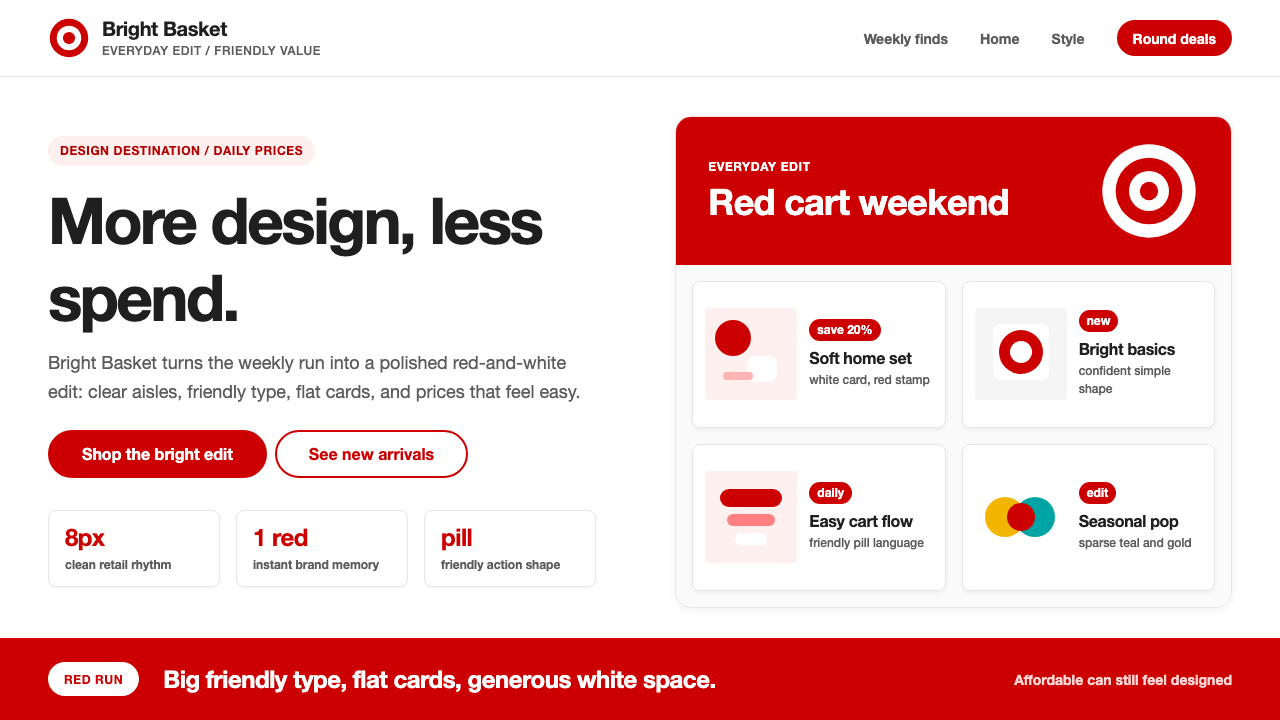 Target — Bullseye RedCheap-chic feels warm. Red bullseyes, pill CTAs, and white space make value l…
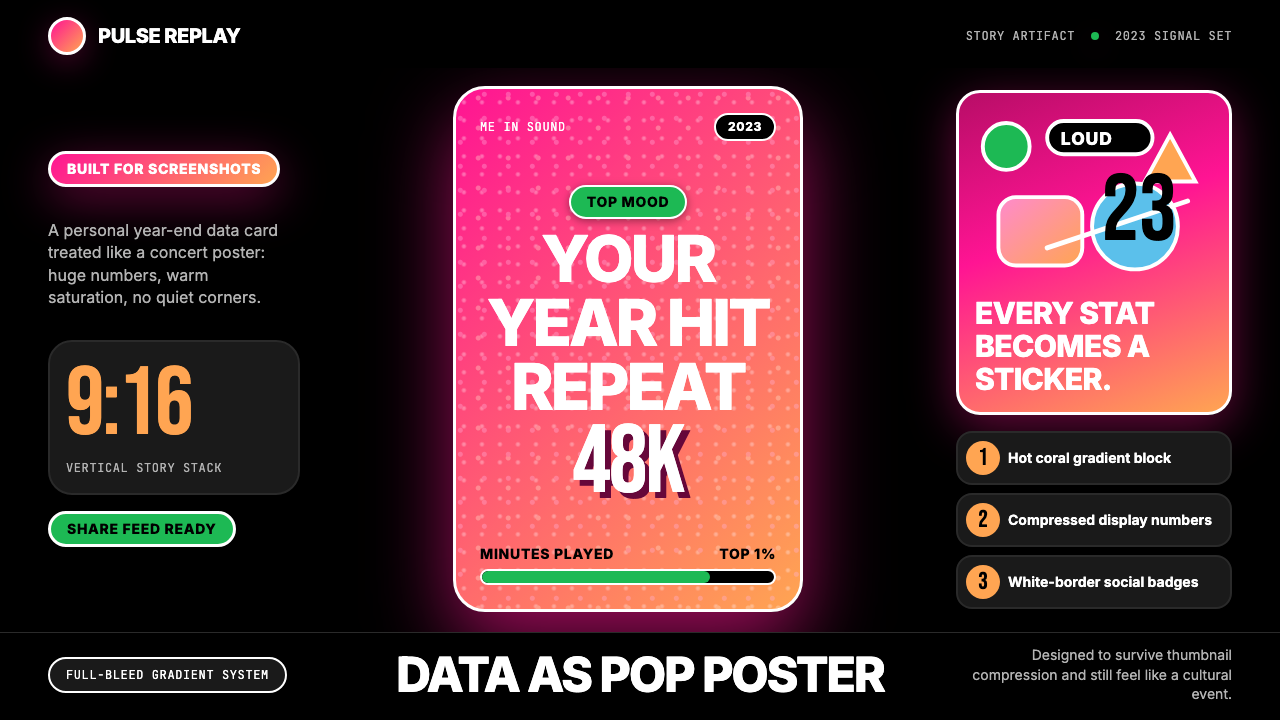 Spotify Wrapped 2023Social data goes neon. Hot pink-orange gradients, huge Inter stats, sticker b…
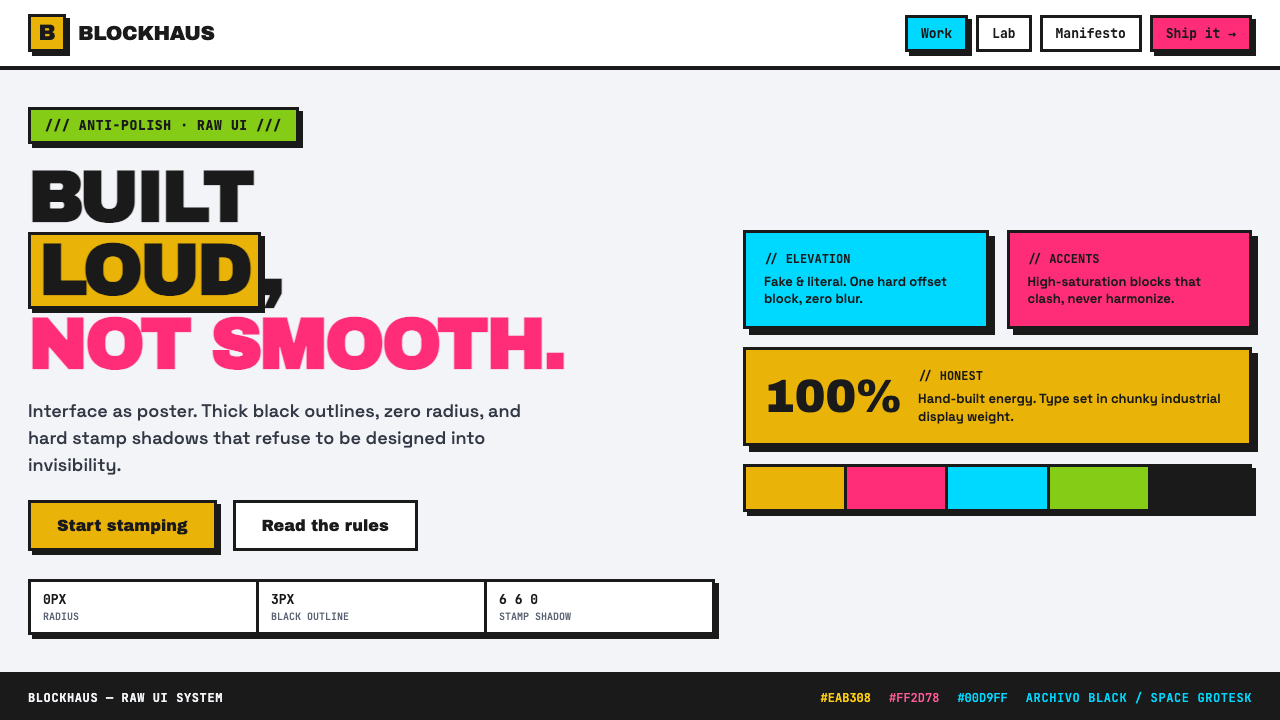 Neubrutalist Web DesignAnti-polish, on purpose. Black outlines, zero radius, hard stamp shadows, cla…
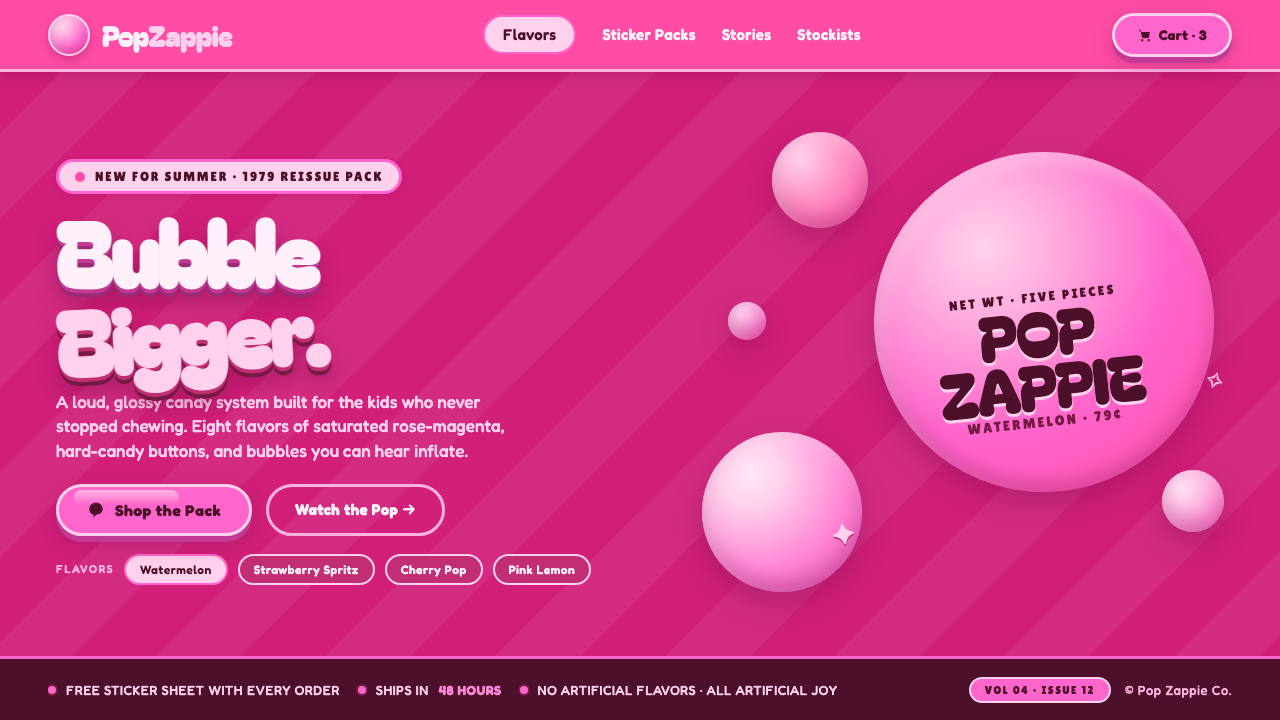 Watermelon Bubblegum Pink80s candy maximalism. Neon pink on rose-magenta, sugar-shine highlights, infl…
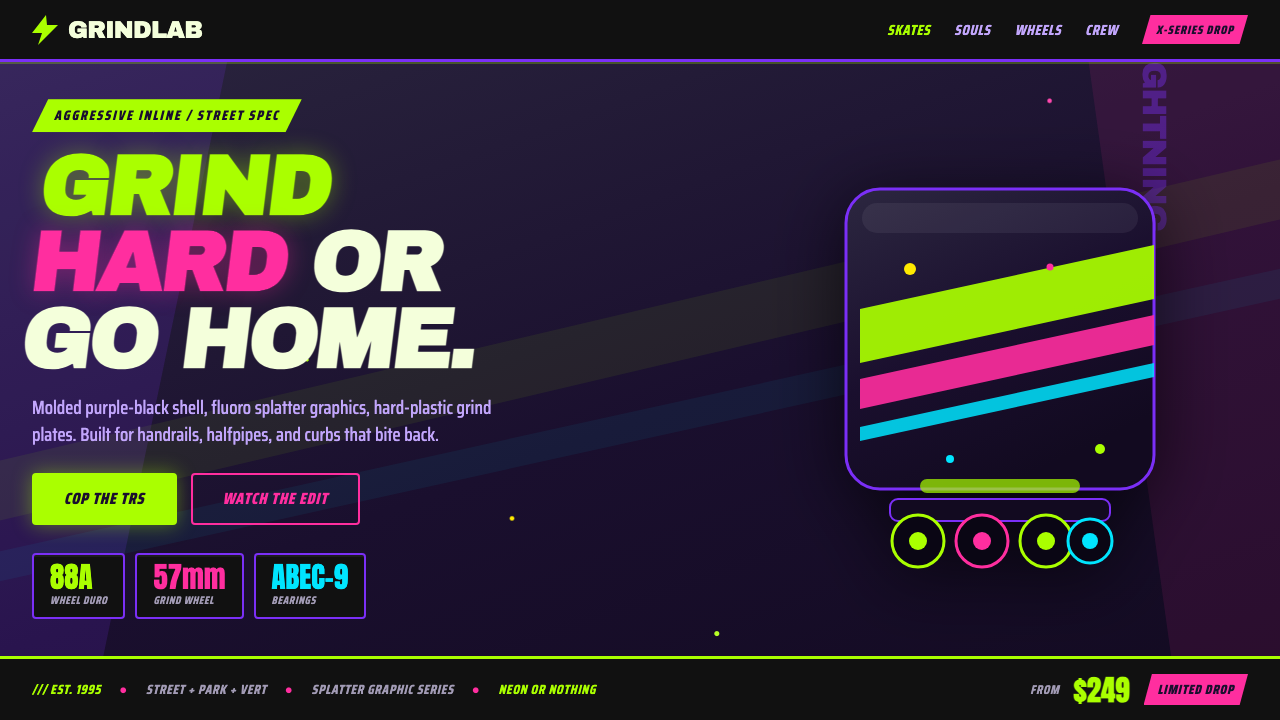 90s Aggressive Inline SkateX-Games attitude in plastic and paint. Fluoro lime and magenta slash across m…
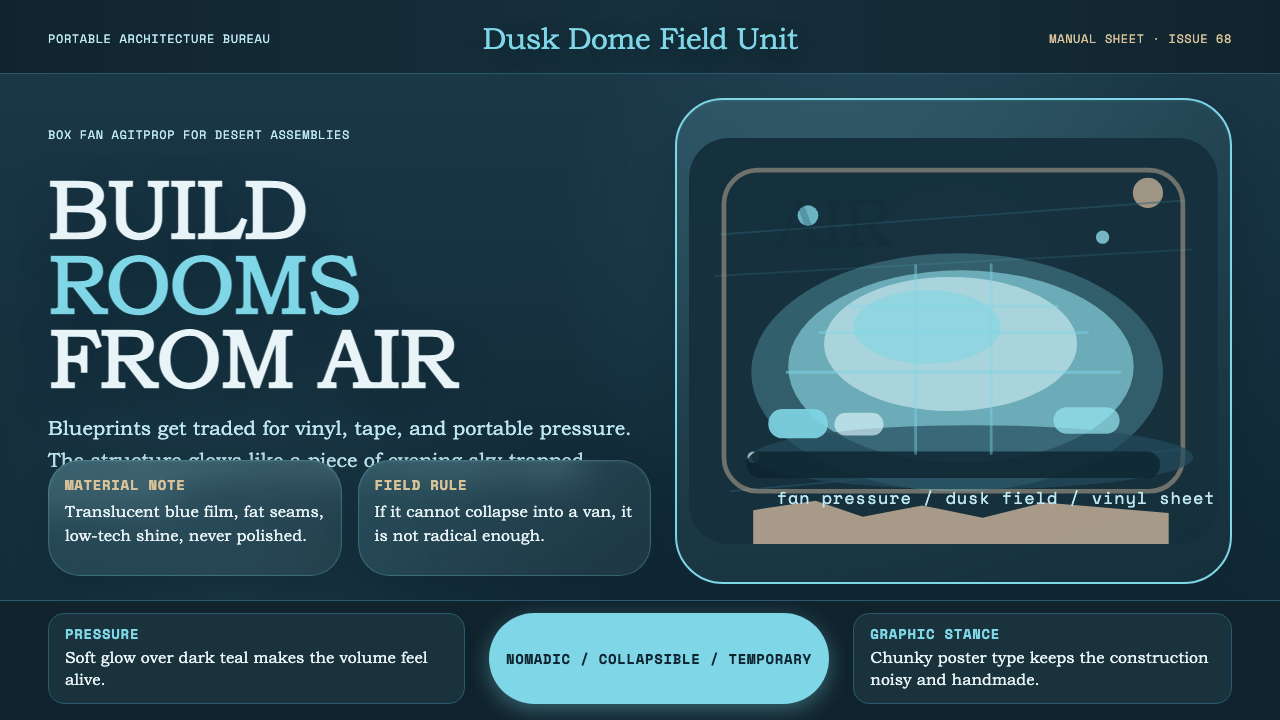 Ant Farm InflatablesTemporary architecture glows. Vinyl-blue domes swell over dark desert teal.