What is Firefly Bioluminescence?
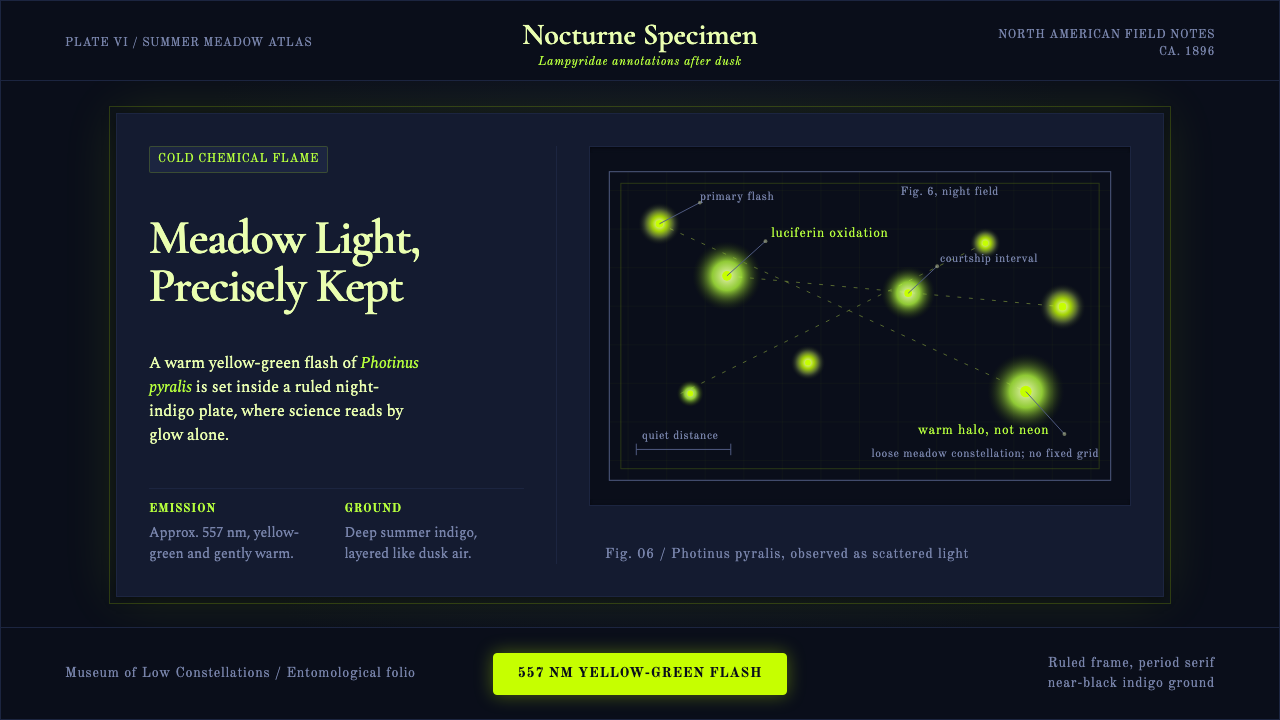
Firefly Bioluminescence turns a summer-night flash into a naturalist plate — yellow-green sparks drifting through ruled indigo frames with the hush of a meadow after dusk.
Firefly Bioluminescence in brief
Firefly Bioluminescence is a dark visual style built from two closely joined subjects: the efficient yellow-green light of the common eastern firefly, Photinus pyralis, and the disciplined presentation of North American naturalist and entomological plates made before 1900. Its imagery belongs to the summer night, but its organizing intelligence comes from the study table, where specimens, observations, captions, and ruled frames are assembled into a legible record.
The central visual event is always the flash. Small warm point-lights appear against near-black indigo like a constellation hanging low over a meadow. They are luminous without becoming electric, theatrical, or futuristic. The yellow-green emission may warm toward orange, but the palette remains rooted in natural fire rather than synthetic neon. Darkness is not an empty background here; it is the environmental field that allows each restrained spark to register.
Around that light sits a language of classification. Fine rules divide the field into plate-like compartments, while classical serif captions and handwritten-looking annotations lend the composition an archival, observational character. The result balances wonder with evidence: neither a romantic fantasy of glowing insects nor a clinical scientific chart, but a refined visual record in which mystery has been carefully labeled without being extinguished.
Where does Firefly Bioluminescence come from?
The style takes its historical frame from the North American naturalist and entomological plate tradition before 1900, especially the visual atmosphere associated with plates from roughly 1850 to 1899. Such work treated illustration as a means of attentive study. The page was not merely a picture surface; it was a structured place where a living subject could be isolated, examined, named, and related to written observation. Ruled borders and formal captions gave visual evidence an orderly home.
Within this tradition, nineteenth-century Lampyridae entomologists supplied the culture of classification. Their importance to the style lies less in any single personality than in a shared mode of looking: patient, comparative, and alert to distinctions. Fireflies enter the design not as generic decorative specks but as observed natural subjects. The use of the name Photinus pyralis reinforces that taxonomic attitude, giving the luminous insect a specific identity within a larger natural order.
Naturalist-plate illustrators translated observation into composition. Their legacy appears in the separation between image field and annotation, the measured use of borders, and the authority of period serif lettering. This design adapts those conventions to an unusual subject because bioluminescence cannot be represented like an ordinary specimen under even light. The surrounding darkness must remain visible, so the plate becomes a night field in which the phenomenon, rather than the insect alone, is the specimen.
Bioluminescence natural-history research supplies the scientific core. The common eastern firefly produces an exceptionally efficient yellow-green light at approximately 557 nm, described here as a cold flame that becomes warmer and more orange with heat. Luciferin and luciferase researchers represent the continuing effort to understand that emission as a natural process. The style unites that scientific attention with the older plate tradition: a phenomenon studied through careful observation is presented with the dignity, restraint, and quiet wonder of a historical record.
What defines the Firefly Bioluminescence look?
Nocturnal Palette
The ground is a deep, near-black indigo rather than neutral black. This distinction gives the darkness atmospheric depth and evokes an open summer sky without illustrating one literally. Yellow-green is the principal luminous note, with occasional warmth tending toward orange. Pale ink tones support captions and rules. The palette should feel aged, natural, and low-lit; bright synthetic color would destroy the meadow-at-dusk mood.
Point-Light Constellations
Light appears as isolated sparks, never as a broad glowing wash. The points scatter unevenly, forming loose clusters and open intervals like a low constellation. Some may feel more present and others more distant, but the composition avoids spectacle. Empty dark areas are essential because they establish silence, scale, and anticipation. A point becomes meaningful through the darkness surrounding it.
Naturalist Plate Frames
Fine ruled lines organize the dark field into a plate rather than a cinematic scene. Borders, subdivisions, and caption zones imply that the luminous subject has been collected through observation and placed within a system of knowledge. The rules remain delicate so they do not compete with the flashes. Their purpose is to steady the page, define relationships, and make wonder appear examinable.
Period Typography
Classical serif type carries titles, specimen names, and explanatory captions. Its tone is learned and archival rather than luxurious. Hierarchy comes through changes in scale, placement, capitalization, and spacing, while the number of typographic voices remains limited. Lettering should appear composed by a careful editor of natural history, not styled as gothic fantasy or distressed into theatrical antiquity.
Annotated Observation
Labels behave as evidence. Short notes, identifiers, and connecting rules accompany the light field as if recording a specimen or phenomenon under study. Annotation should clarify without exhausting the image. Its restraint preserves the sense that the viewer has encountered one page from a larger archive, where each caption contributes a fragment of knowledge and the uncaptioned darkness retains what remains unknown.
Cold Flame, Warm Mood
The firefly flash is scientifically a cold light, yet the visual mood is never cold. Yellow-green points gain warmth from their relationship to indigo and may lean toward orange as the source material describes the emission under heat. This tension is central to the style: factual precision coexists with emotional gentleness. The image should feel quietly alive, not chemically fluorescent or digitally radiant.
Refined Restraint
Every element is subdued except the tiny events of light. Frames are thin, captions are measured, and the background remains largely unoccupied. Refinement comes from control rather than ornament. The style fails when glow becomes abundant, borders become elaborate, or archival cues turn into costume. Its strongest compositions feel discovered rather than staged: a disciplined page holding a phenomenon too delicate to dominate.
Who shaped Firefly Bioluminescence?
Nineteenth-century Lampyridae entomologists provide the style's taxonomic discipline. Their work represents the patient identification and comparison of fireflies as members of a natural family rather than as anonymous symbols of summer. In visual terms, that legacy supports specimen naming, concise labels, and the sense that each luminous point belongs to an observed biological subject. The resulting authority is quiet: knowledge is conveyed through careful distinctions and orderly presentation.
Naturalist-plate illustrators established the compositional grammar that makes the theme more than a dark palette with glowing dots. Their contribution is the plate itself: a bounded field, carefully placed subjects, written identifiers, and a hierarchy that separates observation from explanation. By adapting those conventions to a nocturnal phenomenon, the style allows darkness to become part of scientific representation while preserving the precision and dignity of classical illustration.
Luciferin and luciferase bioluminescence researchers represent the inquiry behind the light. Their presence keeps the theme grounded in a natural process rather than treating luminosity as supernatural decoration. The approximately 557 nm yellow-green emission of Photinus pyralis becomes both subject and organizing accent. This research tradition also explains the style's characteristic balance: visual wonder is welcomed, but it remains framed by observation, terminology, and scientific curiosity.
How do you use Firefly Bioluminescence today?
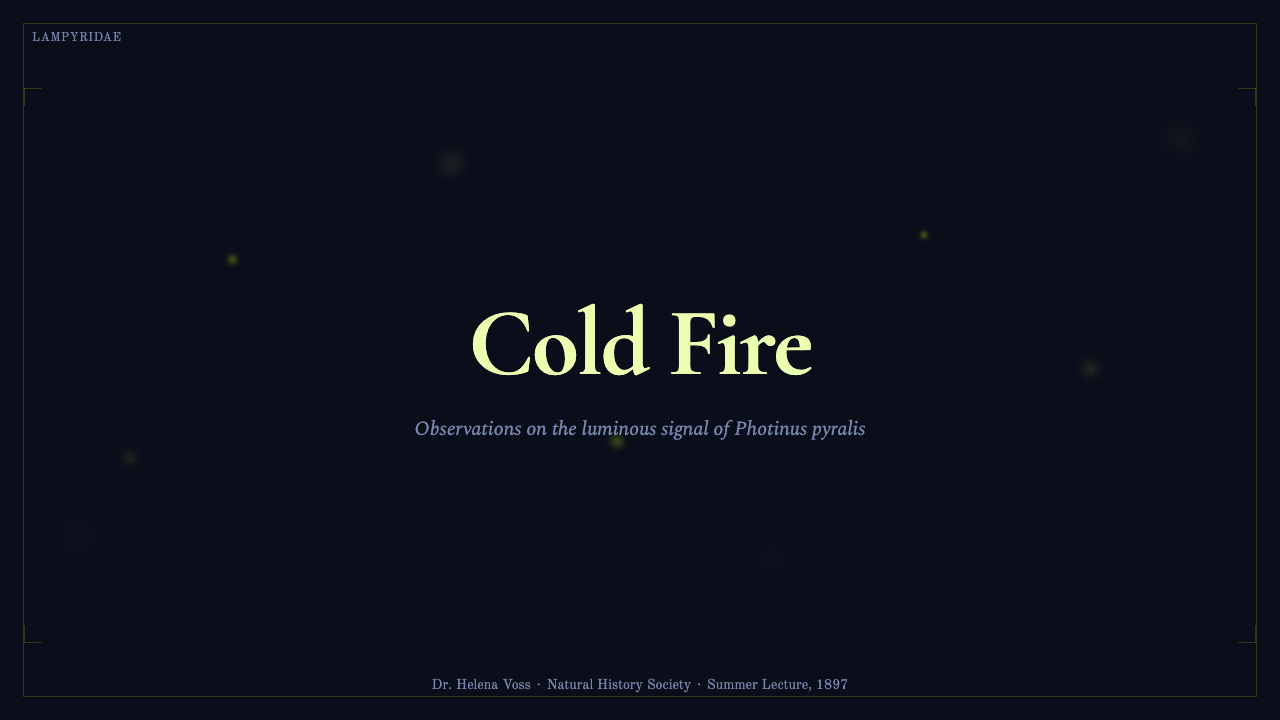
For presentation covers, begin with darkness and allow only a few lights to establish the subject. A title in period serif can occupy one formal region of the plate while an open indigo field carries a sparse drift of yellow-green sparks. A ruled border or specimen-style caption completes the frame. The cover should feel like the opening leaf of an archival folio, not a promotional poster filled with effects.
Content slides work best when the naturalist plate becomes an information system. Divide the page with fine rules, reserve one area for the principal statement, and place supporting observations in caption-like blocks. Use typographic scale and position to distinguish title, explanation, and annotation. Data slides can treat point-lights as observations, distributions, or highlighted findings, while ruled axes and labels remain quiet. The data must stay readable even when the luminous metaphor is removed.
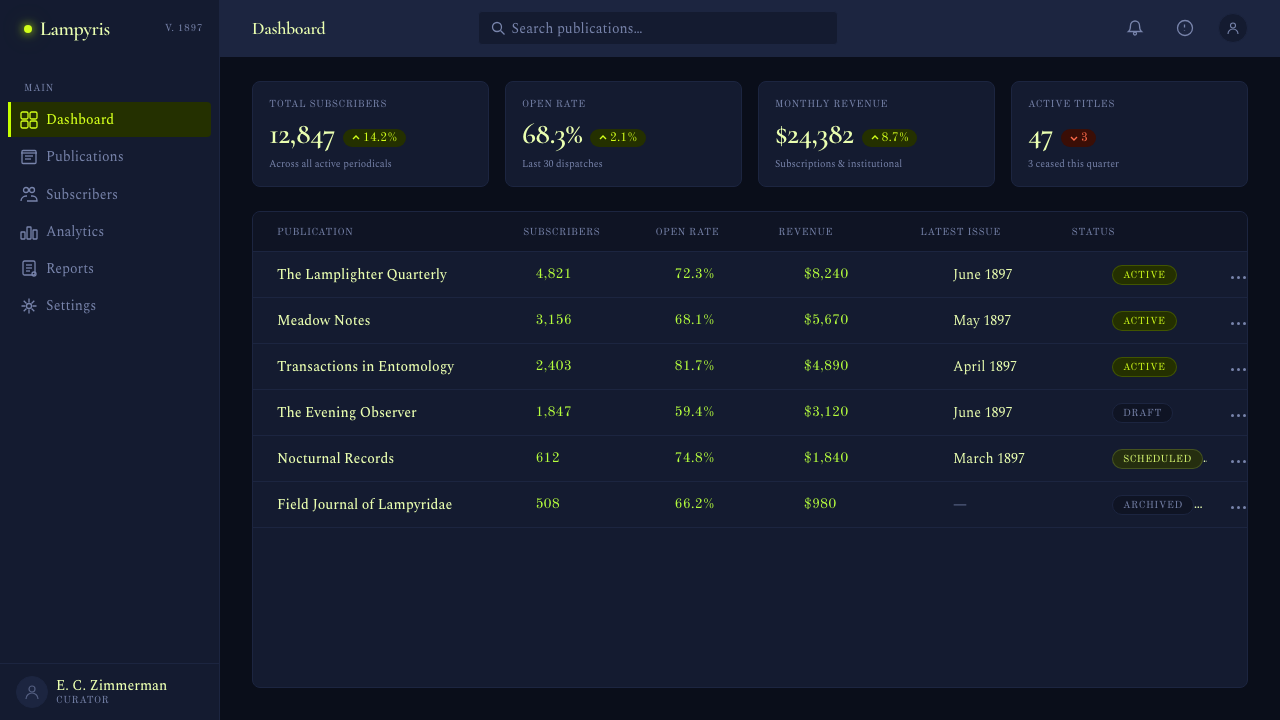
For web interfaces, the style suits focused dashboards, scientific collections, and pricing pages that benefit from a nocturnal sense of concentration. Panels can behave like sections of an entomological plate, separated by lines rather than floating through exaggerated depth. Body copy should remain calm and legible, with yellow-green reserved for selected states, important readings, or primary actions. Pricing tiers can be distinguished through annotation, framing, and density instead of assigning every option a competing bright color.
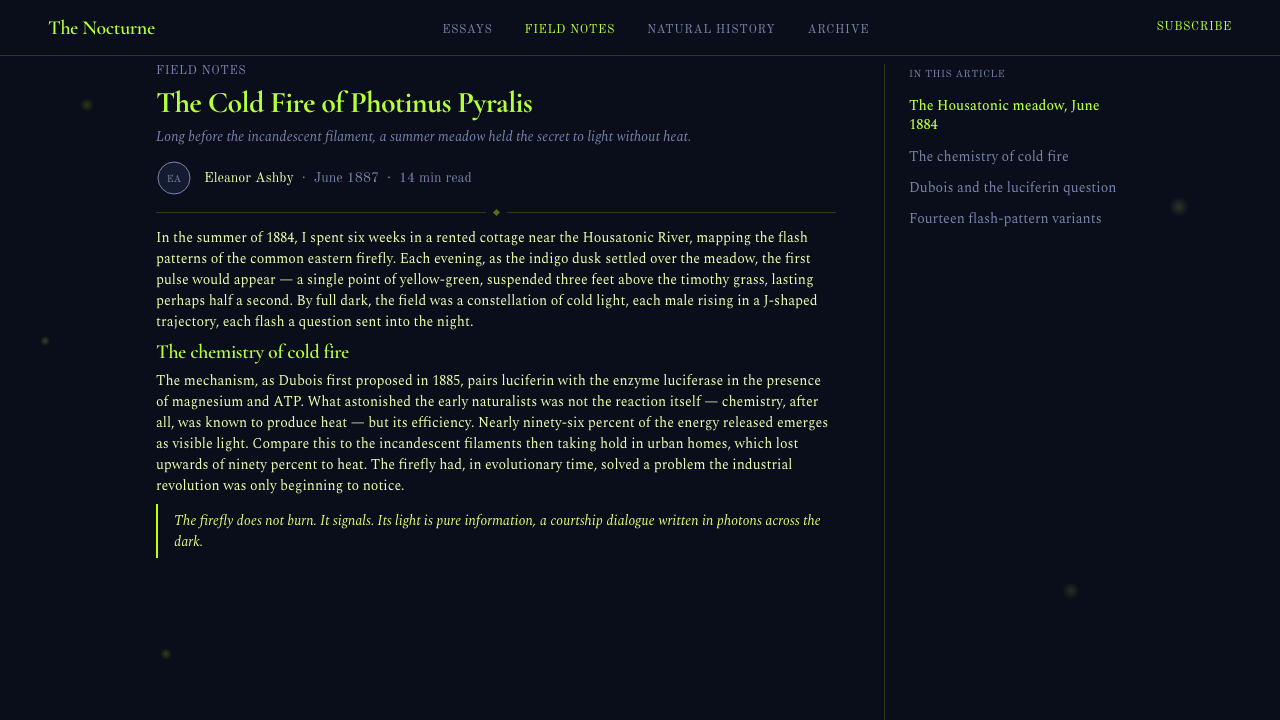
Editorial and marketing layouts gain atmosphere from the contrast between archival structure and living light. An article may open with a broad indigo field, a small taxonomic heading, and a low constellation of sparks before settling into restrained text columns. Section breaks can resemble plate captions or catalog entries. In marketing, one luminous accent can guide the reader from evidence to invitation, while the naturalist framing signals curiosity, craft, and patient attention rather than urgency or technological spectacle.
The common mistake is to confuse bioluminescence with neon. Large halos, saturated multicolor glow, crowded particles, and futuristic lettering turn the theme into generic digital nightlife. Another error is overdecorating the historical layer with ornate borders, distressed paper effects, or excessive handwritten notes. Authentic application depends on restraint: deep indigo, a limited yellow-green light, measured serif typography, thin rules, and enough darkness for each observed flash to remain rare.
Firefly Bioluminescence — FAQ
Is Firefly Bioluminescence a neon style?
No. Both may place bright color against darkness, but their emotional and visual logic differ. Neon tends to announce itself through saturated intensity, broad glow, and an urban or technological atmosphere. Firefly Bioluminescence uses small, warm yellow-green points within near-black indigo, leaving most of the field quiet. Its reference is a meadow at dusk and a historical naturalist plate. The light is observed as a delicate natural event, not deployed as luminous signage.
Why is indigo preferable to pure black?
Near-black indigo preserves the sensation of night as an environment. Pure black can flatten the page into graphic contrast, while indigo suggests sky, depth, and summer air without requiring literal landscape illustration. It also gives the yellow-green flash a gentler relationship to its ground. The effect remains dark and highly focused, but it avoids the hard technological polarity that often appears when luminous color is placed directly on neutral black.
How much historical ornament should the naturalist framing include?
Very little. The historical character comes primarily from disciplined framing, serif captions, taxonomic naming, and the separation of image from annotation. Elaborate flourishes or heavily aged surfaces shift attention away from observation and turn the plate into theatrical nostalgia. The best result feels plausibly archival because its information is organized with care. Age is communicated through editorial manner and compositional restraint, not through a dense layer of decorative damage.
Can photography or detailed illustration be used?
Yes, if the image is treated as observed material within a plate. A firefly, meadow detail, or luminous field should occupy a defined region and remain subordinate to the system of captions, rules, and negative space. The image should not become a glossy cinematic background that overwhelms the annotations. Whether photographic or illustrated, it must support the encounter between natural phenomenon and scientific record, preserving both specificity and quietness.
Where does Firefly Bioluminescence work poorly?
It struggles when an interface must display many equally urgent actions, when a brand depends on loud daytime energy, or when dense information leaves no room for darkness. The style relies on rarity: a few luminous accents, measured annotations, and generous quiet fields. If every control glows or every section becomes a framed specimen, hierarchy collapses. It is strongest for reflective storytelling, focused data, scientific or cultural material, and experiences where attention can unfold slowly.
Related design styles
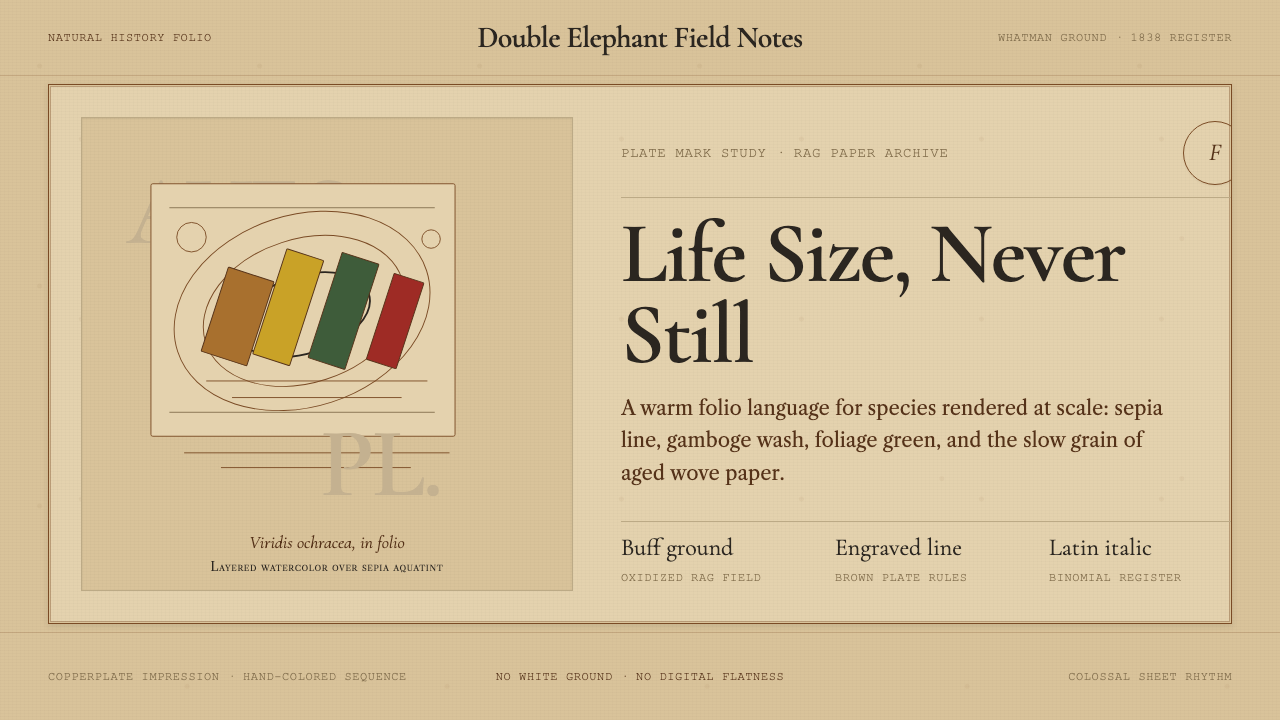 Audubon Birds of AmericaAged natural history breathes. Buff rag paper, sepia rules, and italic binomi…
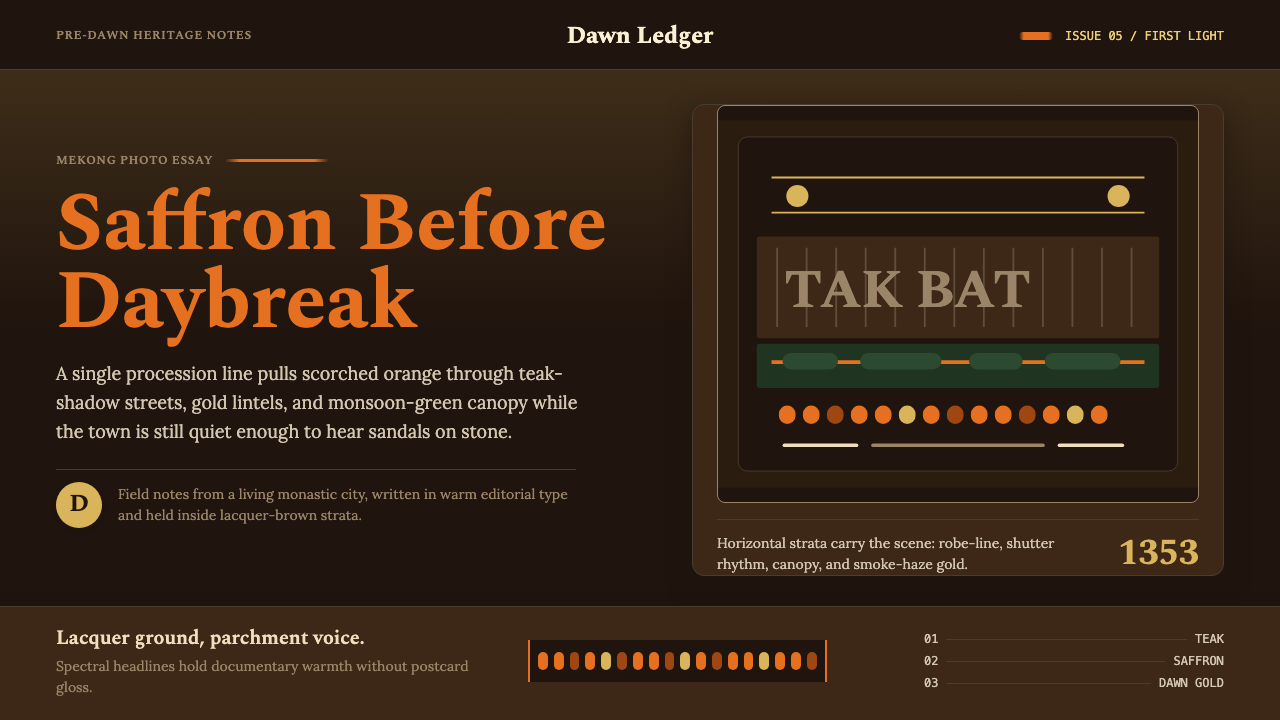 Luang Prabang Saffron AlmsDawn has weight. Saffron bands cut through teak brown and smoke-gold editoria…
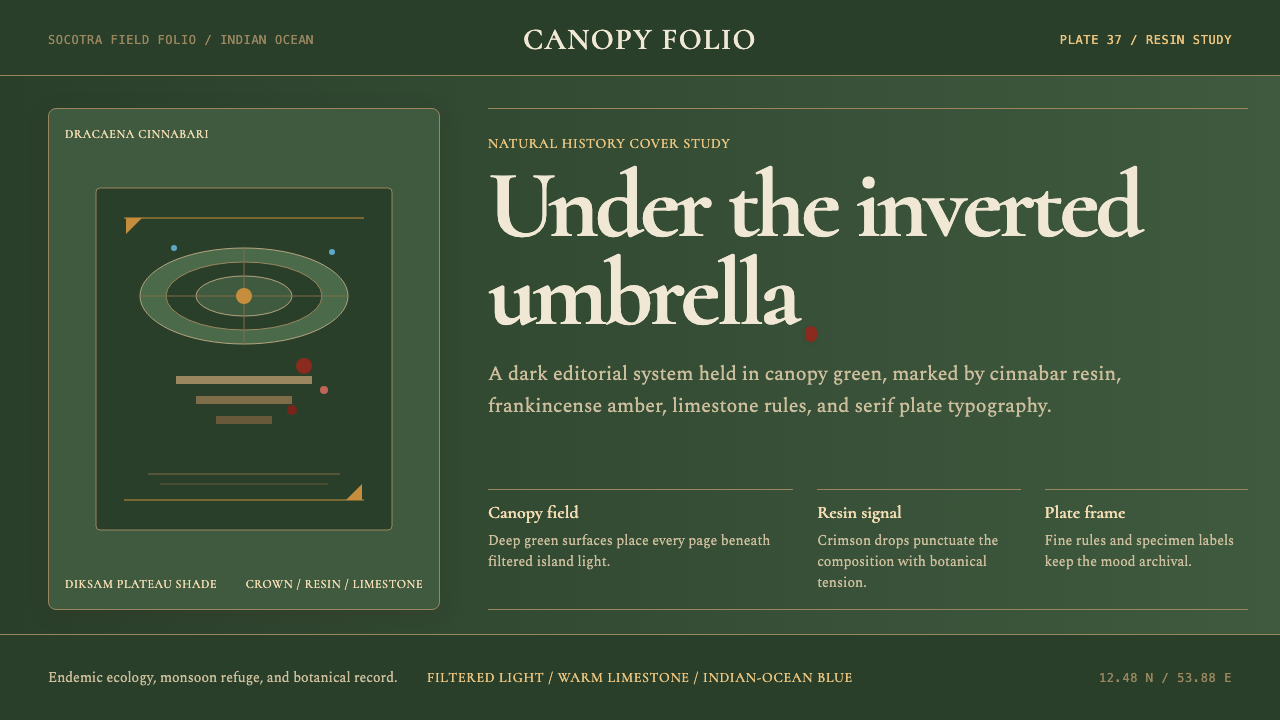 Yemeni Socotra Dragon's Blood TreeCanopy shade holds the page. Resin red, amber rules, and serif specimen frami…
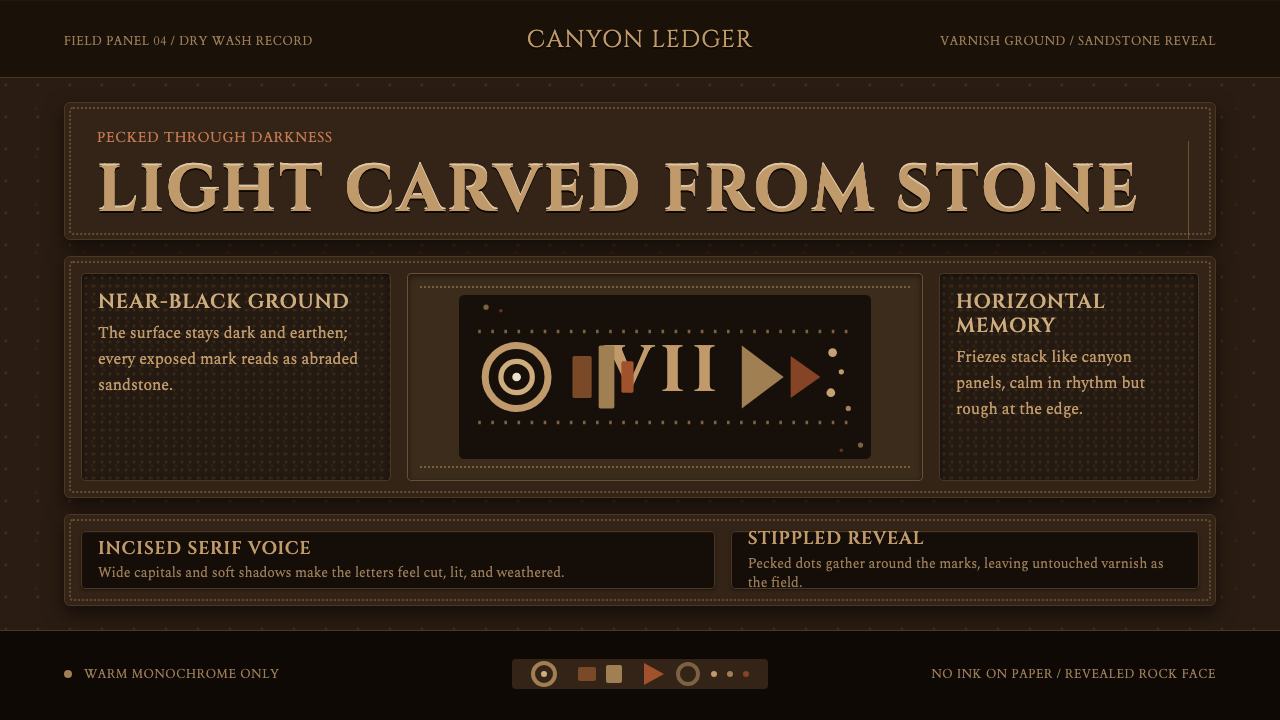 Desert VarnishStone remembers. Sandstone glyphs cut through near-black varnish in stacked f…
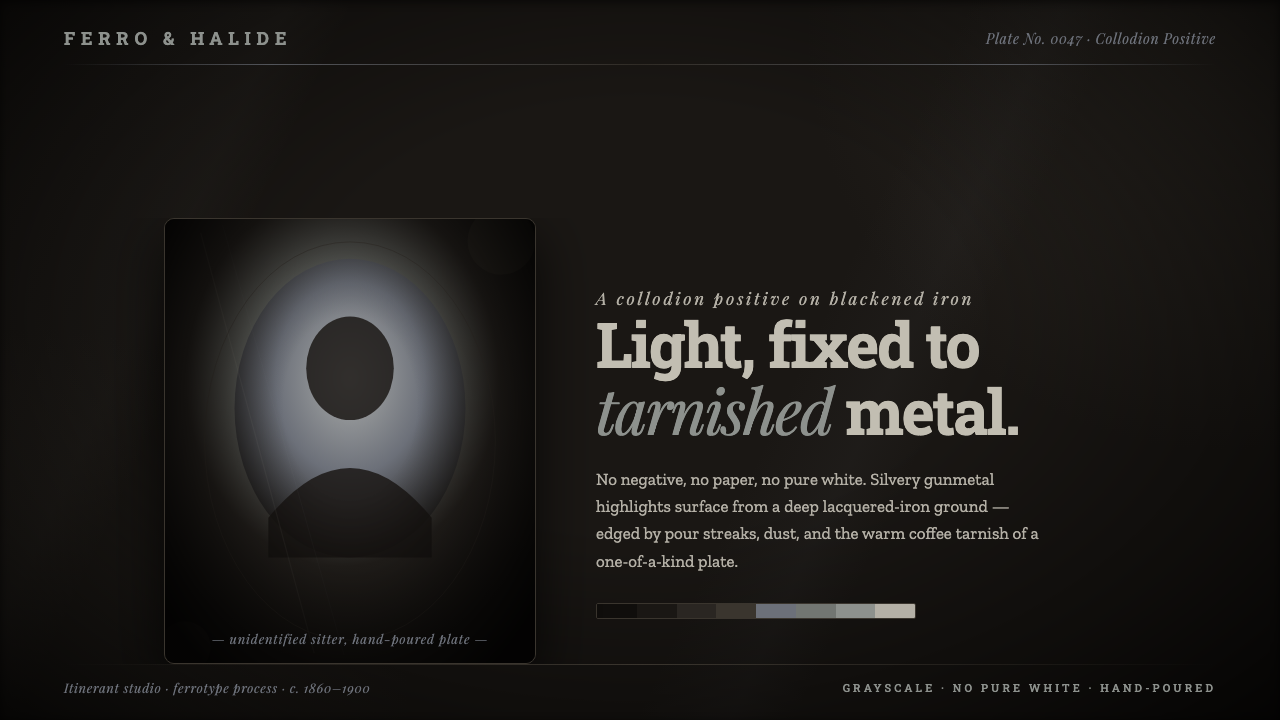 Tintype Wet PlateLight fixed to tarnished metal. Gunmetal grays rise from blackened iron, capp…
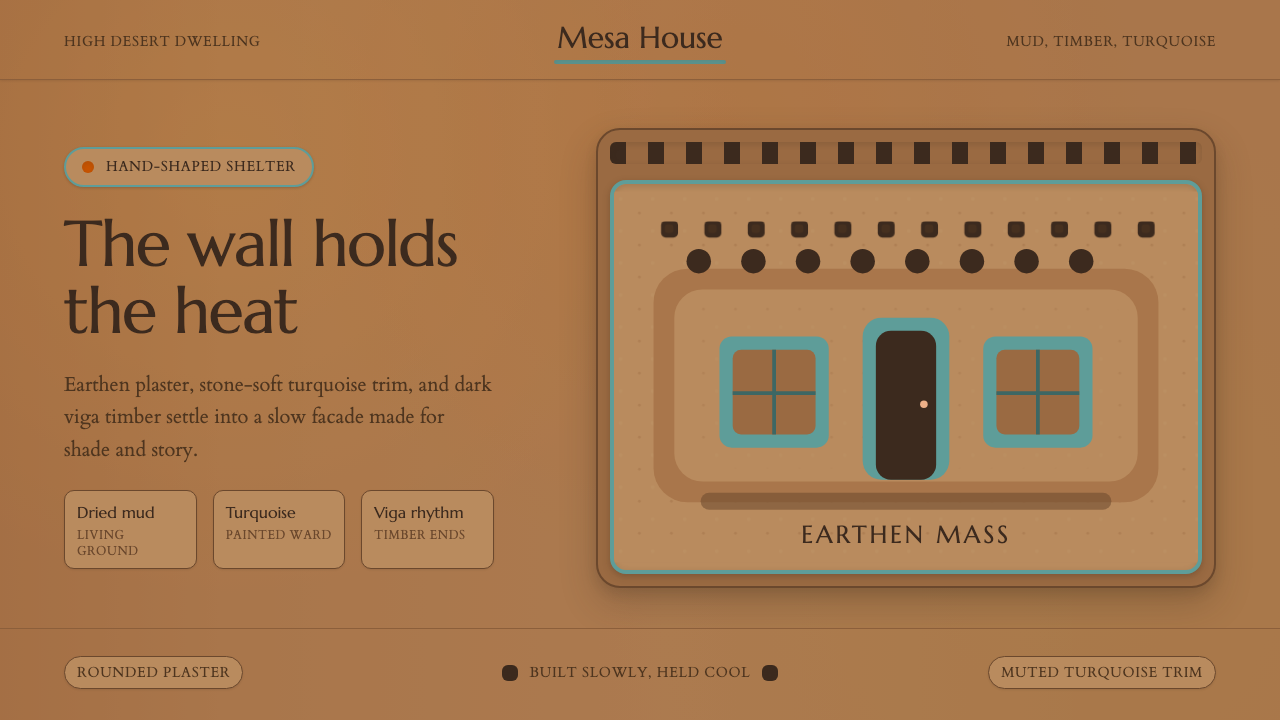 Adobe Pueblo SouthwestFeels made by hand. Earthen tan, turquoise trim, and viga rhythm shape the fr…