What is Finnish Himmeli?
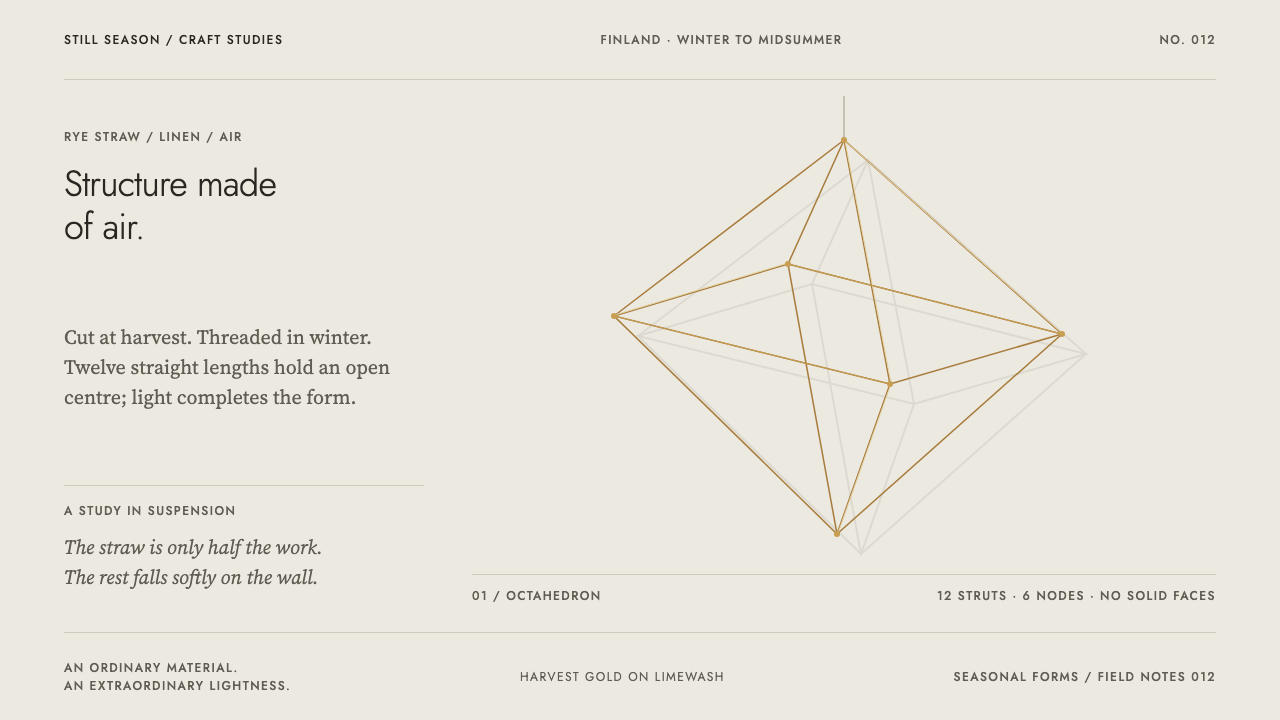
Finnish Himmeli is a design that is almost entirely air: hairline struts in straw gold meeting at visible nodes, hung against pale limewash, with a faint offset shadow finishing the form.
Finnish Himmeli in brief
A himmeli is a hanging ornament made from rye straw. The straw is cut at harvest, dried from green to gold, and threaded on linen into octahedra that hang over the Finnish dinner table from Christmas to Midsummer. The base usually has twelve segments, one for each month of the year, and a bigger himmeli meant a bigger crop. It is a farm craft, born at the end of a harvest, and it is made almost entirely of nothing: the straw outlines a shape, and the room does the rest.
The design system takes that construction literally. Everything is a straight hairline strut meeting another at a visible node. Cards are frames, not boxes: they define a volume by its edges and leave the inside open. The page is pale limewash, a cool and slightly chalky ground. Straw gold is the only warm thing on it, and the shadow that the straw throws is treated as part of the object rather than as decoration.
The overall impression is lightness with structure. Large areas of the layout are deliberately empty, because a himmeli is almost entirely air. What is there is thin, straight and precise, and it is allowed to move slowly, like straw turning in a draught beneath a ceiling. This is a style for work that wants to feel quiet, handmade and exact at once, without resorting to heavy ornament.

Where does Finnish Himmeli come from?
The himmeli belongs to Finnish agrarian folk craft and predates 1900, and it has been made continuously through to the present day. Its home is the farmhouse interior, specifically the ceiling above the dining table, where the finished ornament hangs. It is a product of a farming year: the rye is harvested in autumn, the stalks are cut and dried from green to gold, and in winter the straw is threaded into shape by hand.
The construction is simple and exact. Short lengths of straw are threaded on linen and drawn together into octahedra, solids made of eight triangular faces. Each junction becomes a node and each length of straw a strut. The twelve segments in the base tie the object to the calendar, and the size of the ornament has been read as a sign of the harvest: when the crop was good, the himmeli was built bigger.
The himmeli also sits within Nordic winter-solstice decoration, the family of seasonal ornaments associated with the middle of winter. Hung from Christmas until Midsummer, it spans the long half-year of dark and light, and it lives in the draught of the room, turning slowly. The shadow it casts on the wall is regarded as half of the work, which is why the design language gives shadow such careful treatment.
Straw work is a craft tradition in its own right, and the himmeli is a well-known Finnish form of it. Eija Koski is among the key figures named with this craft in its contemporary life. Because the tradition is continuous, the design language derived from it does not read as nostalgia. It reads as a contemporary system with a farmhouse logic: material first, structure visible, nothing added that the straw would not do by itself.
What defines the Finnish Himmeli look?
Hairline Struts
All form is built from straight, thin lines, each one a straw drawn at full length. Lines never curve and never thicken for emphasis. Thin does not mean faint: the lines stay crisp and consistent so that the structure can be read at a glance, and weight is reserved for the single job of making a connection clear.
Visible Nodes
Lines meet at nodes that are shown rather than hidden. Where two struts join, a small joint marks the junction, the way a thread knots the straw. The result is a diagrammatic clarity, reminiscent of a wireframe or a network diagram, in which you can see exactly how the whole is held together.
Frames, Not Boxes
Cards, panels and containers are drawn as frames. Their edges are lines and their interiors are open, so the page remains visible through them. A filled box would close the volume and add mass, while a frame defines the same space and keeps it light.
Almost Entirely Air
Negative space is the main material. Large areas are left open on purpose, and content is allowed to float within them. The style judges a layout not by how much it holds but by how little it needs. Emptiness here is a structural choice, comparable to the space inside the octahedron.
Cool Limewash Ground
The page is the colour of limewash on an old ceiling: pale, cool and a little rough, with a slightly chalky quality. It is neither bright white nor cream. This cool ground gives the warm straw gold something to contrast against, and the restraint of the ground is what lets one warm hue read as warm.
Straw Gold
Straw gold is the only warm note, the colour of rye dried from green. It is used for the struts and for the small number of accents that need to feel alive. Because it appears on the structure itself and not on fills, it stays delicate: a thin line of warmth against the cool ground, never a block of yellow.
Shadow as Part of the Object
The shadow is faint, offset and soft at its edge, and it is treated as half of the artwork. It recalls how a himmeli's shadow moves on a wall. It is never heavy, never a thick drop shadow and never a bevel; it reads as a lighter echo of the frame, and where it would add weight it is left out. Any movement follows the same spirit: slow, drifting and unforced, like straw turning in a draught.

Who shaped Finnish Himmeli?
Eija Koski is the name this style lists among the key figures of the himmeli. Her place in the record marks the craft's continuity: himmeli is not a museum object but something still being made. For designers, that continuity is the reason to treat the form as a living grammar, with rules about structure, proportion and light that can be carried into new work.
The farmhouse households who cut rye at harvest, dried it from green to gold and threaded it on linen are the unnamed authors of the form. Their rule that a bigger crop meant a bigger himmeli tied the object to a measure of abundance, and their habit of hanging it over the dinner table placed it in the middle of daily life. The style inherits both: scale as a sign of plenty, and quiet beauty close to the everyday.
Straw work is a craft tradition of its own, and the himmeli sits within it. What the craft asks of its makers, which is to join straight lengths rather than bend or carve them and to let the material's own colour do the decorating, is what the design system asks of its layouts. The standard is honest construction: nothing that the straw would not do by itself.
How do you use Finnish Himmeli today?
Finnish Himmeli rewards restraint and structural thinking. It suits products and presentations that want to feel calm, handmade and precise, and it fails when forced to carry density. The test is whether a layout can lose half its fill and still make sense. If it can, the style will make it lighter and clearer.
On presentation slides, a cover can be a single himmeli-like construction in straw gold, hung from the top edge against the pale limewash, with the title in quiet type beside it. Content slides use frames instead of filled panels and a few thin connecting lines to show relationships. Data slides are an especially natural fit. Line charts, network diagrams, org charts and flow diagrams, drawn with thin straw-gold struts and visible nodes, look like the style's native form.
For web interfaces, the style suits portfolios, studios, craft and design brands, wellness and editorial products, and any site that benefits from calm. Cards are outlined frames with open interiors, dividers are hairlines, and hover states can add a faint offset shadow rather than a fill. Dashboards work if they favour line charts and diagrams over filled bars. Pricing pages can present tiers as frames side by side, with the recommended tier distinguished by a straw-gold edge. Motion should be slow, drifting and unforced.
In editorial and marketing work, the style supports slow reading and generous layouts. A long article can sit on a pale limewash page with thin rules between sections and a single straw-gold line to mark the lead. Seasonal campaigns, particularly around midwinter, can use the form directly. Photography fits best when it is quiet and low in contrast, and illustrations should follow the same line-and-node language.
The most common mistake is to add weight. Thick lines, filled cards, heavy drop shadows and bevelled edges turn a straw construction into plastic. A second is warmth: if the ground becomes cream or the accent colours multiply, straw gold stops being the only warm thing on the page and the contrast that drives the look disappears. A third is clutter. A page that fills the air gives up the idea that the air is the point.

Finnish Himmeli — FAQ
What is a himmeli?
A himmeli is a Finnish hanging ornament made from rye straw. The straw is cut at harvest, dried from green to gold and threaded on linen into octahedra, which hang over the dining table from Christmas to Midsummer. As a design style, it means building everything from straight lines that meet at visible nodes, with large areas of empty space.
Why does the base have twelve segments?
In the tradition, the twelve segments in the base stand for the twelve months of the year. Alongside that, the size of the ornament was read as a sign of the harvest: a bigger himmeli meant a bigger crop. In design terms, the lesson is that structure can carry meaning, and that scale can be used as a quiet signal rather than a loud one.
Why is the ground cool rather than warm?
Because straw gold needs to be the only warm thing on the page. The ground references limewash on an old ceiling, which is pale, cool and a little chalky. Against that coolness, a thin line of gold reads as warm and alive. If the ground itself were cream or beige, the contrast would flatten and the straw would lose its glow.
Can it work for data-heavy products?
Yes, if the data is drawn as lines and nodes. Line charts, network diagrams, trees and flow diagrams are natural for the style, because they are made of exactly the struts and joints that define it. Heavily filled charts, dense tables with shaded rows and thick bars fit less well, since they add the mass this style tries to avoid.
Does it work in dark mode?
Not comfortably. The style depends on a pale, cool limewash ground, and its shadow idea needs a light surface to fall on. On a dark ground, straw gold begins to look like glowing wire, which changes the meaning from handmade craft to illuminated signage. If a dark variant is unavoidable, keep the lines thin and the glow out, and let the shadow disappear rather than fake it.
Related design styles
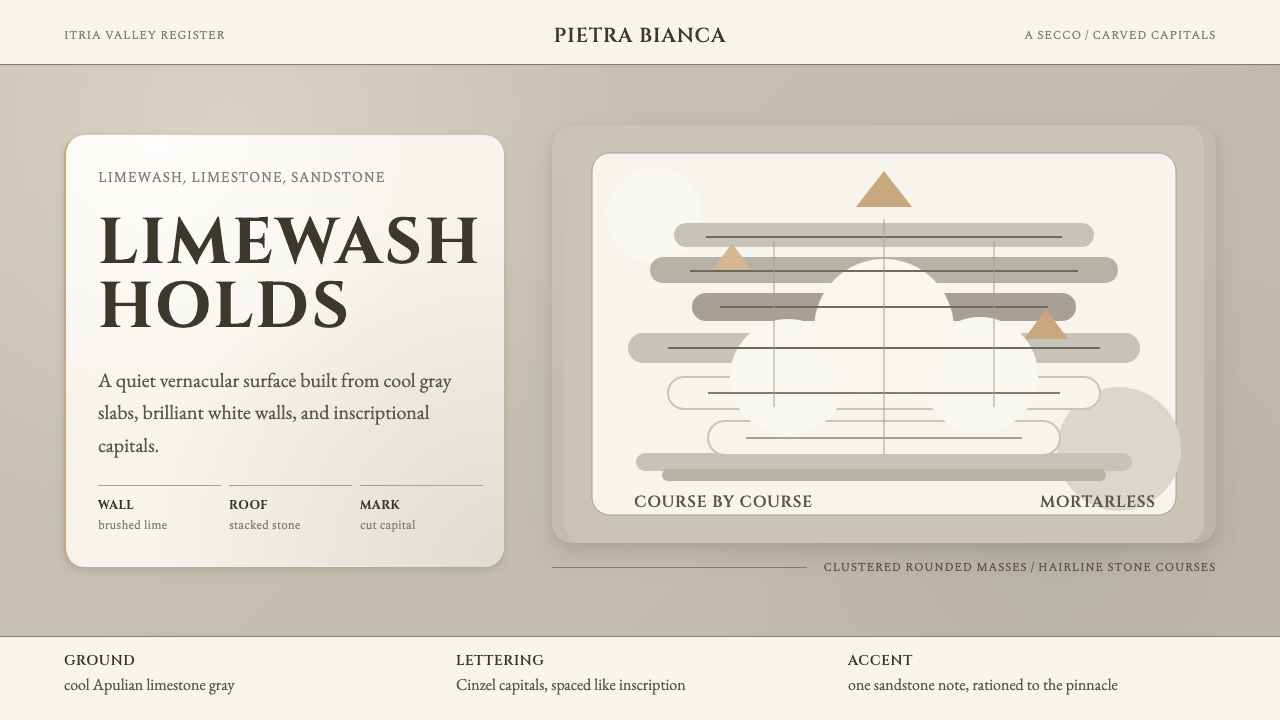 Trulli AlberobelloQuietly monumental. Cool limestone, limewash fields, and Cinzel capitals stac…
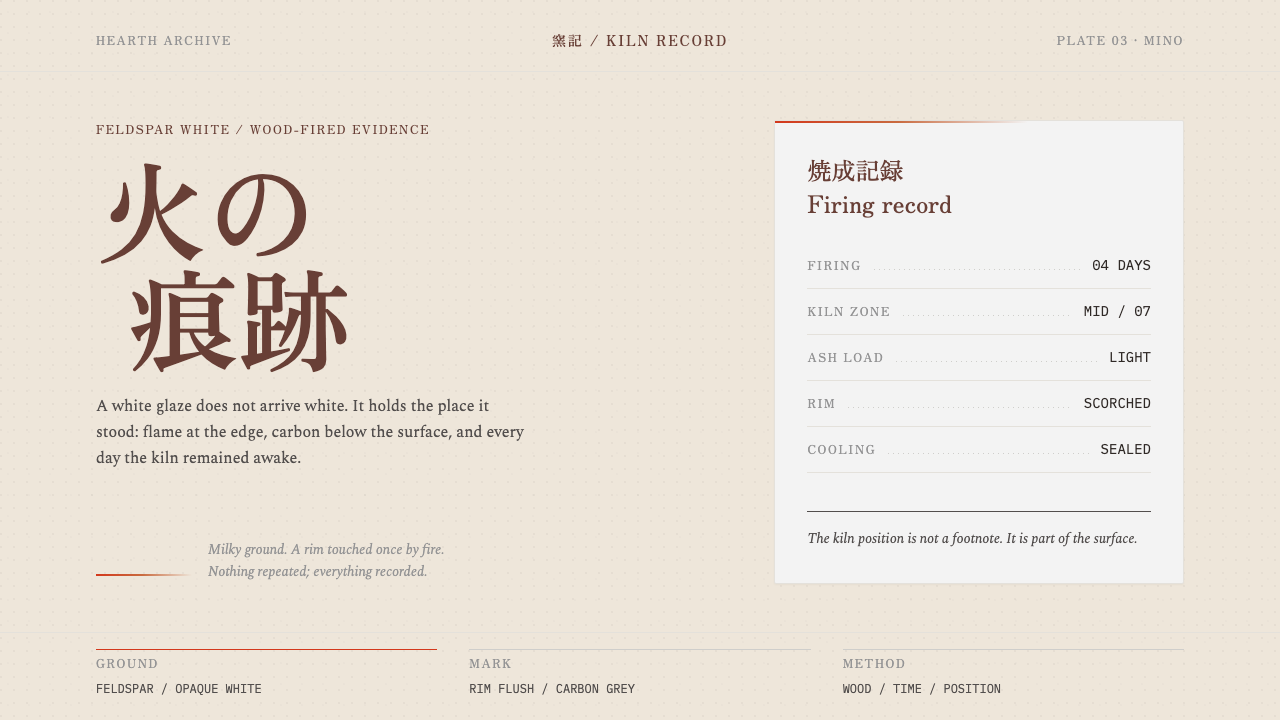 Anagama Shino GlazeFire leaves evidence, not decoration. Milky feldspar ground meets a sparse ki…
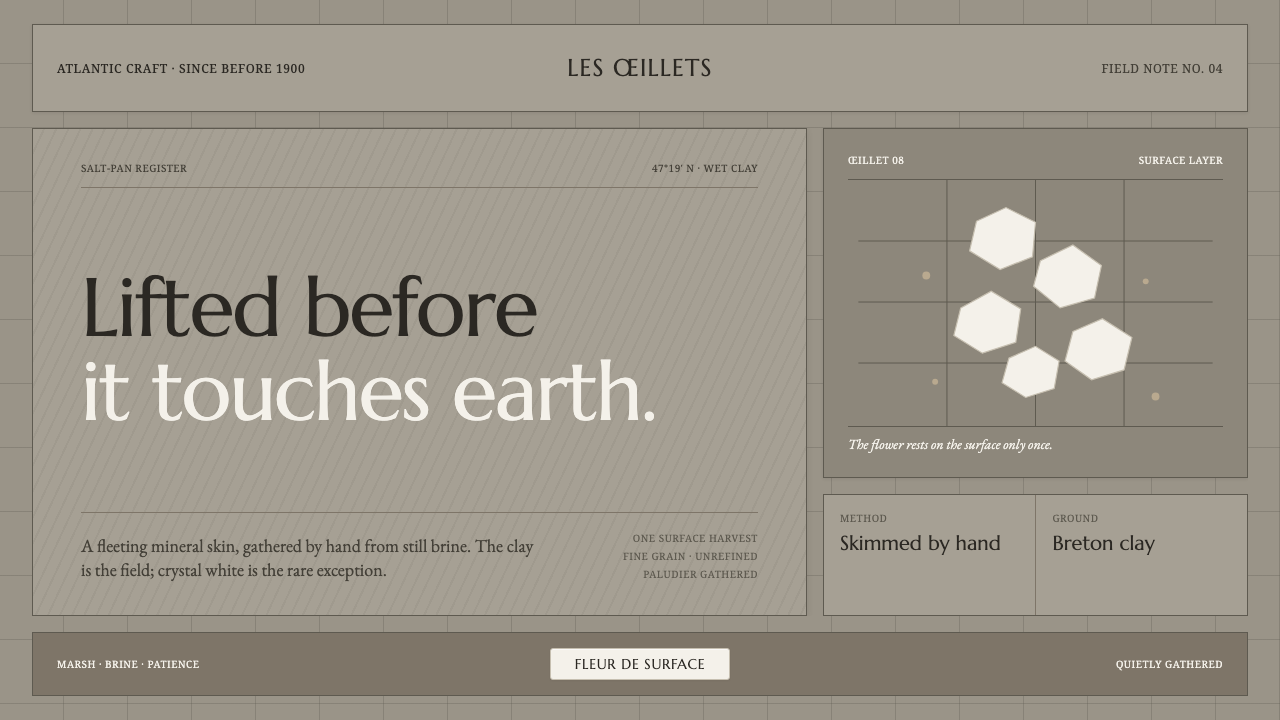 Guérande Fleur de SelCrystal white is the exception. Mineral serif and hairline grids rise from we…
 Beni Ourain Berber CarpetRestraint feels tactile. Greige wool field, Oswald type, and a loose charcoal…
 Ifugao BululTouch reveals the archive. Narra red breaks through near-black patina in a qu…
 Japanese Tea CeremonyStillness has weight. Tatami straw, matcha green, and Mincho type leave room…