What is Fiji Tropical Resort Luxe Modern?
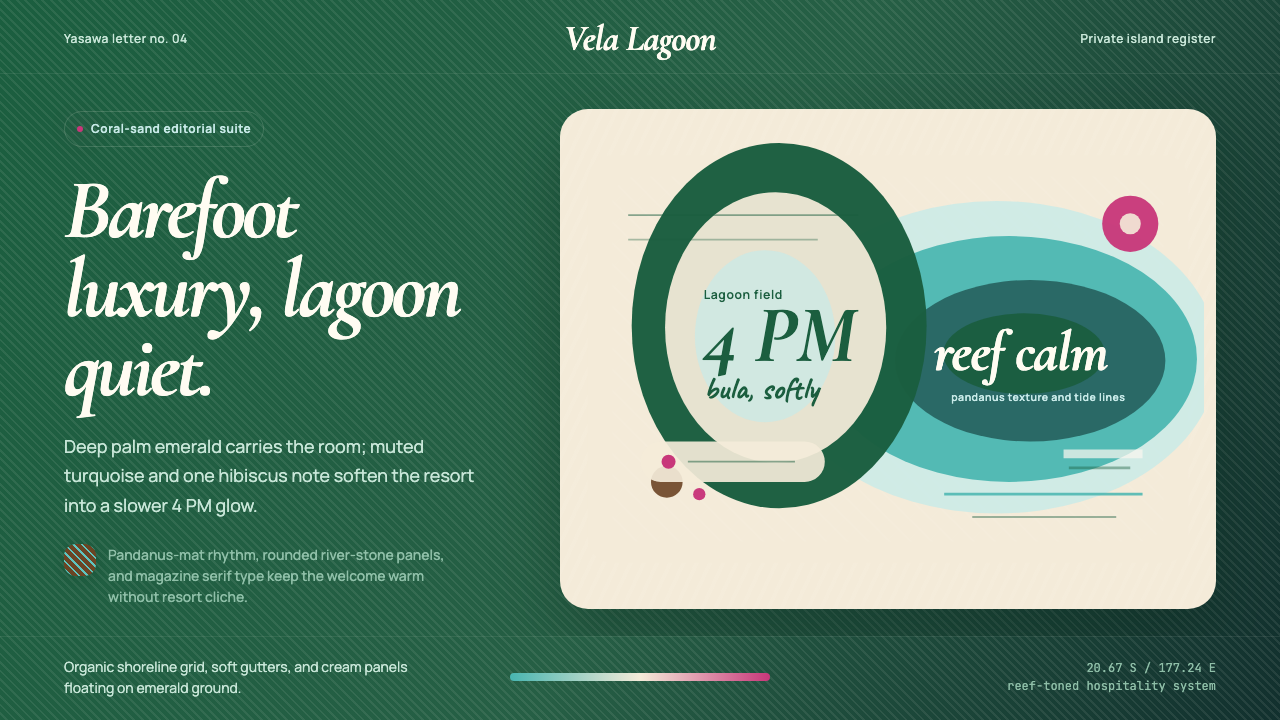
Barefoot luxury at its most editorial: deep palm-frond emerald, lagoon-curve geometry, and the unhurried warmth of a Yasawa overwater bungalow at golden hour.
Fiji Tropical Resort Luxe Modern in brief
Fiji Tropical Resort Luxe Modern is a design language drawn from the visual identity of the world's most refined private-island hospitality — Likuliku Lagoon Resort, COMO Laucala, and Six Senses Fiji among its primary touchstones. Its palette centers on a deep, saturated palm-frond emerald as the dominant ground, tempered by a soft lagoon turquoise that recalls still water in morning light, and punctuated by a single hibiscus-magenta accent that carries all the emotional warmth of a Bula greeting without competing with the surrounding green.
The style achieves its signature tension between restraint and richness by pairing editorial discipline with Melanesian craft warmth. Layouts are unhurried — generous white and cream space allows each element to breathe the way a resort allows guests to slow down. Organic, river-stone-inspired curves soften what might otherwise become a rigid system, and pandanus-mat weave textures appear as subtle surface motifs rather than background noise. The overall register is that of a Travel + Leisure editorial spread: authoritative but never cold, luxurious but never gilded.
Typography reinforces the dual character: a Cormorant Garamond italic display weight carries the languorous grace of a hand-lettered resort sign, while a clean, modern wayfinding face provides the operational clarity that premium hospitality demands. This pairing — expressive display with rational text — is the typographic equivalent of the resort's architectural logic: thatched bure rooflines over poured-concrete pools.

Where does Fiji Tropical Resort Luxe Modern come from?
The mature form of this aesthetic emerged between roughly 2015 and the present, coinciding with what hospitality analysts call the private-island resort era — a period in which ultra-high-net-worth travelers began demanding experiences that felt simultaneously wild and curated, remote and effortlessly comfortable. Fiji's Yasawa Islands, Mamanuca Islands, and Vanua Levu became the geographic crucible for this sensibility. The islands' extraordinary combination of ancient Melanesian culture, French Polynesian-adjacent marine ecology, and relatively accessible Pacific routing made them the preferred canvas for a new generation of barefoot-luxury resorts.
COMO Laucala, developed on an island previously owned by Malcolm Forbes and later by Dietrich Mateschitz — the Red Bull co-founder — represents perhaps the clearest articulation of the aesthetic in built form. Laucala's design brief was essentially: no compromise between ecological authenticity and sensory richness. The resort's architecture uses locally sourced stone and timber in ways that feel structurally honest, its palette draws directly from the reef and forest surrounding it, and its graphic identity translates those material choices into a two-dimensional system precise enough to carry across print collateral, digital interfaces, and wayfinding signage without losing coherence. Mateschitz's vision of Laucala as a self-sufficient ecosystem — with its own farm, dairy, and coral restoration program — gave the aesthetic an ethical backbone that reinforced its visual restraint.
Australian developer Lang Walker and resort designer Lynda Anne Anstey, through projects including Kokomo Private Island and several Yasawa properties, developed a parallel strand of the style that leaned more explicitly into Pacific-Melanesian craft traditions. Pandanus-leaf weaving, hand-carved ivi-timber joinery, and tapa-cloth surface patterns entered the design vocabulary not as decorative pastiche but as structural gestures — forms that communicated provenance and artisanal labor as legibly as any logo. This craft-revival thread transformed what might have been a generic tropical luxury visual system into something culturally located.
The aesthetic's third major influence is the regenerative-tourism marketing movement, which gained momentum in the late 2010s as luxury travelers began demanding that their indulgences leave a positive ecological and community footprint. Resorts operating under this philosophy needed design systems that communicated simultaneously: sensory pleasure, environmental responsibility, and cultural respect. The result was a visual language in which restraint carries moral weight — cream and emerald chosen not merely because they are beautiful but because they suggest stewardship, patience, and a relationship with place that predates the arrival of any guest.
What defines the Fiji Tropical Resort Luxe Modern look?
Color Palette
The palette is organized around three principals: a deep, forest-saturated emerald that functions as the dominant ground — dark enough to carry weight, rich enough to suggest the interior canopy of a Fijian palm grove; a soft, desaturated lagoon turquoise used for secondary fields and hover states, evoking the pale shallow water visible from overwater bungalow decks at midday; and a single hibiscus-magenta accent deployed with restraint for moments that demand emotional warmth or a call to action. Cream and warm off-white serve as the text and panel ground throughout, never pure white. Charcoal, not black, anchors typographic hierarchy.
Organic Geometry
Where other luxury systems reach for hard edges, this style insists on softened corners, gentle arcs, and forms that echo the river stones, wave-worn shells, and lagoon outlines of the Fijian coastal landscape. Dividers curve rather than cut. Card components have corners that feel rounded by water rather than specified by a style guide. Large decorative shapes — section backgrounds, image masks, pull-quote containers — read as organic rather than constructed, as though they were traced from a map of the reef rather than drawn in a vector editor.
Texture as Restraint
Pandanus-mat weave patterns, tapa-cloth geometric motifs, and the subtle grain of natural linen appear as background textures or micro-surface treatments — never loud, never central. Their role is to prevent the palette's depth from tipping into flatness, and to signal craft provenance without competing with content. Applied well, these textures make the layout feel like it was produced by a thoughtful studio rather than assembled from a generic template. The key discipline is scale: used large, they read as cultural cliché; kept small and low-contrast against the ground, they read as material honesty.
Typography: Display and Wayfinding
The typographic system pairs two voices that should never compete: an italic serif display face with high stroke contrast and classical proportions — the kind of letterform that communicates heritage, hand-craft, and slow time — alongside a clean geometric sans-serif used for all functional text, labels, pricing, and navigation. Headlines lean into the serif's natural slope to suggest unhurried elegance; body text in the sans stands upright and legible at any size. Mixing these two registers within a single component — a serif headline over a sans-serif descriptor — is the system's defining typographic gesture.
Generous Negative Space
Resort design teaches guests that slowness is a luxury. This style carries the same lesson into two-dimensional work: whitespace and cream space are not gaps waiting to be filled — they are the pacing of the layout. Section margins are wide. Inter-element spacing within cards and panels is generous. Pull quotes and callouts occupy more vertical territory than their content strictly requires. The effect is a layout that feels costly not because it deploys expensive materials but because it refuses to crowd. Density is the opposite of luxury here.
Photographic Register
Imagery in this system works within a carefully controlled tonal range: warm-shifted, softly golden, and consistently overexposed enough to feel like afternoon light rather than studio flash. The subject matter prioritizes natural detail — the texture of reef coral, the translucency of a palm frond against sky, the grain of hand-planed timber — over human figures or action. When people appear, they are typically peripheral, scale figures, or shot from behind, preserving the sense that the landscape is the protagonist. No HDR drama, no deep shadows, no travel-stock wide angles: every image should look as though it was taken by someone who lives there.
Ornament Hierarchy
Unlike minimalist systems that eliminate ornament entirely, this style permits decoration — but places it firmly in service of cultural context. A tapa-inspired border on a section divider communicates Pacific provenance. A hibiscus-derived motif in a corner serves as wayfinding. A woven-mat pattern in a table header distinguishes it from body rows. What is not permitted is ornament for its own sake: gradient overlays that add visual noise without meaning, decorative flourishes borrowed from unrelated traditions, or drop shadows softened merely to suggest depth. Decoration must earn its place by saying something specific about where this aesthetic comes from.

Who shaped Fiji Tropical Resort Luxe Modern?
The Austrian co-founder of Red Bull acquired Laucala Island and developed it into COMO Laucala — widely regarded as the design benchmark for the Pacific private-island category. Mateschitz's insistence on total ecological and operational self-sufficiency (the island runs its own organic farm, dairy, desalination system, and coral restoration program) gave the resort's visual identity an ethical dimension that became integral to the aesthetic: restraint and richness coexisting because one earns the other.
Working alongside developer Steve Anstey on several Fijian resort projects including Kokomo Private Island, Lynda Anne Anstey helped define the craft-inflected strand of the style — the integration of traditional pandanus weaving, hand-carved timber, and Melanesian textile traditions into contemporary resort interiors and, by extension, the graphic systems that represent those interiors. Her work demonstrates that the aesthetic's warmth is not applied surface decoration but a consequence of genuine material and cultural engagement.
Australian property developer and philanthropist Lang Walker brought this aesthetic register to commercial scale through his Fiji investments, demonstrating that the visual language of ultra-private island hospitality could be sustained across properties with different geographic characters — reef-facing versus interior-valley — without collapsing into formula. His projects helped establish the regional expectation that high-end Fijian resort design should carry legible cultural specificity, not generic tropical luxury.
Six Senses' Fijian property brought the brand's signature wellness-inflected restraint to the Pacific register, helping establish the convention that barefoot-luxury design should never feel energetically aggressive. The Six Senses approach — slow reveal, sensory layering, deliberate pace in every designed interaction from arrival sequence to menu typography — contributed the wellness-design principle that this visual style inherits: comfort should be achieved through subtraction, not addition.
While not a single individual, the editorial art direction of Travel + Leisure magazine over the past decade functioned as the primary taste-arbiter for the aspirational Pacific luxury aesthetic. Its typographic choices — pairing editorial serifs with functional sans-serifs, using white space as editorial luxury, treating photography as documentary evidence rather than fantasy marketing — directly shaped how Fijian and broader Pacific resort brands understood their own visual identity, and how design teams working for those brands were briefed.
How do you use Fiji Tropical Resort Luxe Modern today?
Fiji Tropical Resort Luxe Modern is a contextually specific style: its values — sensory richness earned through restraint, cultural provenance as a design argument, organic warmth in opposition to corporate polish — must align with the product's own positioning for the style to work. Applied correctly, it communicates premium quality, geographical and cultural authenticity, and a considered slowness that feels like a meaningful differentiator in crowded luxury markets. The checklist before applying it: does the product belong in or aspire to the premium hospitality, sustainable travel, wellness, or editorial lifestyle category? If yes, proceed.
For presentation slides, this style works best on decks where the selling point is experiential or aspirational rather than analytical. A cover slide benefits from a full-bleed emerald ground with cream typography: the title set in an italic serif display face, the subtitle in a smaller geometric sans-serif directly beneath, and a single organic shape — an arcing lagoon-curve panel in lagoon turquoise — as the sole compositional element beyond type. Content slides should breathe: one strong image or data point per slide, generous top and bottom margins, section titles in the serif and body in the sans. Data slides adopt the color system directly: use the emerald for primary series, turquoise for secondary, and reserve the magenta accent exclusively for the highest-value or most critical data point on the chart.
For web and dashboard interfaces, the style suits premium brand homepages, booking flows, resort membership portals, and wellness subscription platforms. Define a layout grid with wide outer margins — the negative space is not wasted, it signals category. Use the emerald as a hero section background with cream text, the lagoon turquoise for card borders and hover states, and cream panels for content areas. Organic-curve image masks and rounded section containers carry the resort character into digital form without requiring literal photography of beaches. Interactive states use the magenta accent. Navigation is typographic — serif wordmark, sans-serif links — no icon-only navigation.
For editorial and marketing materials — printed brochures, digital magazines, social card templates, email campaigns — the style's poster-like quality translates directly. An email header in deep emerald with cream italic headline and a single turquoise horizontal rule has the tonal authority of a resort letter. Marketing pages work well with alternating section treatments: cream-ground sections with emerald type alternating with full-emerald sections with cream type. The magenta accent appears once per page, at most, for the primary call to action. Photography should follow the overexposed, warm-shifted, detail-centric brief described above; stock imagery with hard flash lighting, HDR skies, or artificial color grading will break the aesthetic immediately.
A common mistake when applying this style is treating the emerald as a background color that permits dense text and complex layouts on top of it. In practice, dark grounds require sparser composition, larger type, and more breathing room than light grounds — not less. Designers who carry over their light-ground content density into the emerald sections produce slides and pages that feel heavy and unreadable. A related error is reaching for the magenta accent too frequently: used more than once or twice per composition, it stops reading as a warm punctuation and starts reading as an alert or error state. The entire palette must maintain its resort-pace cadence — generous, deliberate, unhurried — or the style collapses into something that merely uses tropical colors.

Fiji Tropical Resort Luxe Modern — FAQ
How is this different from generic tropical design?
Generic tropical design reaches for maximum vibrancy: saturated teal, hot coral, white grounds, and palm-leaf motifs reproduced at decorative scale. Fiji Tropical Resort Luxe Modern moves in the opposite direction — the emerald is deep rather than bright, the accent is restrained to a single hibiscus-magenta moment per composition, and the palm-leaf and pandanus motifs appear as micro-texture rather than hero imagery. The cultural reference is specific (Melanesian craft, Yasawa island geography) rather than generically tropical. Where generic tropical says 'vacation,' this style says 'private island' — and that distinction requires disciplined restraint in color weight, ornament frequency, and spatial density.
Can this style work on a dark or night-mode layout?
Yes, but with specific adjustments. The deep emerald ground, which functions as the hero color in light-mode compositions, becomes an even richer near-black when pushed toward the dark end of its tonal range — this works well as a full-page night mode background. The cream that serves as body-text ground in light mode should shift to a warm white or pale gold for maximum legibility against dark grounds. The lagoon turquoise accent becomes more active on dark grounds and requires proportional reduction in surface area to maintain the same visual weight it carries against cream. The magenta accent should be used even more sparingly in dark mode — its energy reads amplified on dark backgrounds. The overall effect in dark mode should still feel like 4 AM at a resort: quiet, warm, unhurried.
How do I handle data-heavy slides without losing the resort aesthetic?
The single most important rule is: one insight per slide. Resort design works on the principle of reveal — you do not see the whole property at once, you discover it room by room, view by view. Apply the same principle to data: resist the temptation to combine three charts on one slide. For the charts themselves, use the emerald-turquoise-magenta system strictly — emerald for the primary series, turquoise for comparison, magenta for the single most critical value only. Keep gridlines hair-thin and in a warm mid-tone rather than standard gray. Replace standard chart borders with organic curve containers. Label directly on or beside data points rather than relying on legend boxes, which add visual weight without adding resort cadence.
Does this style suit B2B or enterprise software contexts?
It is a poor fit for most standard B2B and enterprise software contexts, where the expected design register is one of efficiency, rationality, and scalability — values better served by Swiss-influenced systems, flat neutral palettes, and typographic hierarchies that prioritize legibility over elegance. The exceptions are enterprise tools built for the hospitality, travel, or wellness verticals — property management systems for boutique resort groups, booking platforms for high-end travel agencies, internal dashboards for resort operations teams. In these contexts, the style can create meaningful product-market coherence: the software feels like it belongs in the same world as the properties it manages. Outside those verticals, using this style in B2B contexts risks communicating leisureliness where clients expect rigor.
What is the most common mistake that makes this style feel generic?
Over-saturation of the accent and under-restraint on ornament. The magenta hibiscus accent exists to create one warm emotional beat per composition — when it appears on every button, every icon, every highlighted line, it ceases to be an accent and becomes noise. Simultaneously, when pandanus-mat textures, wave motifs, and palm-leaf patterns are all present simultaneously at high contrast, the layout stops saying 'Fiji private island' and starts saying 'generic tropical hotel lobby.' The discipline is subtractive: for every motif or accent touch you want to add, remove one that is already there. The style reads most authentically when it feels as though a considered editorial hand removed everything that was not essential — which is exactly the experience that its source resorts are designed to produce.
Related design styles
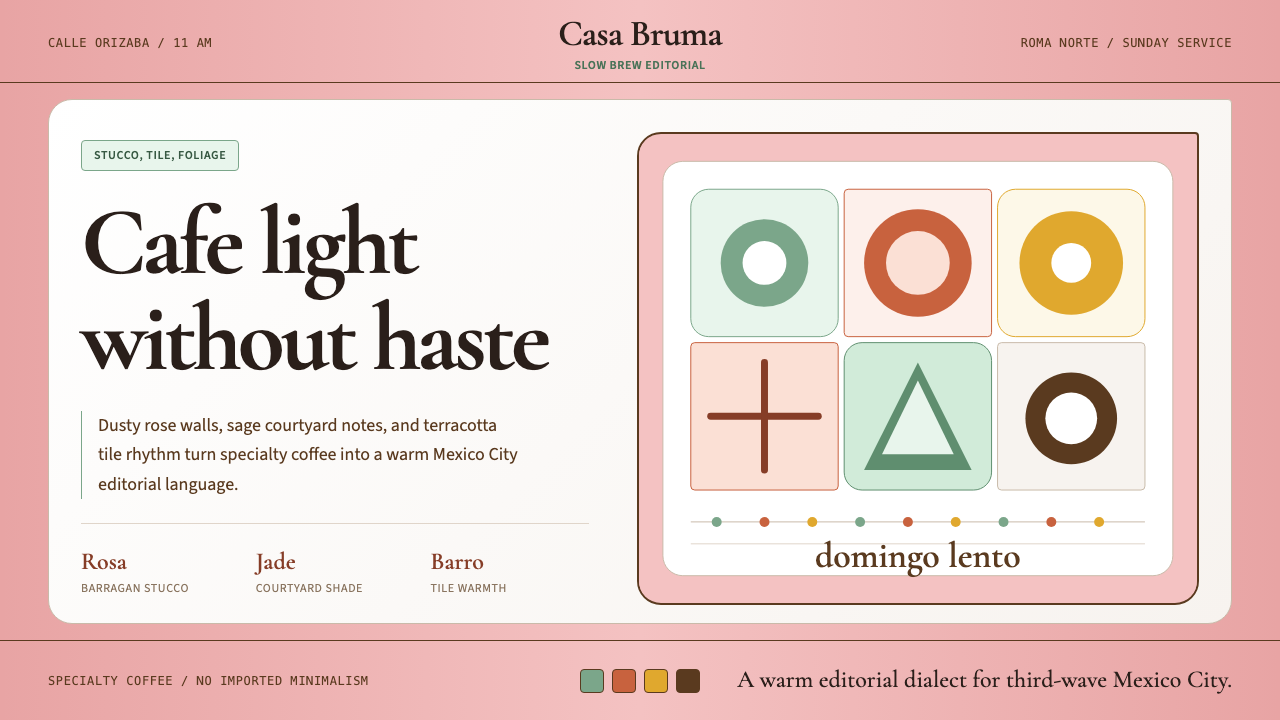 CDMX Roma Norte CafeMexico City coffee, unhurried. Dusty rose, sage jade, and serif rhythm carry…
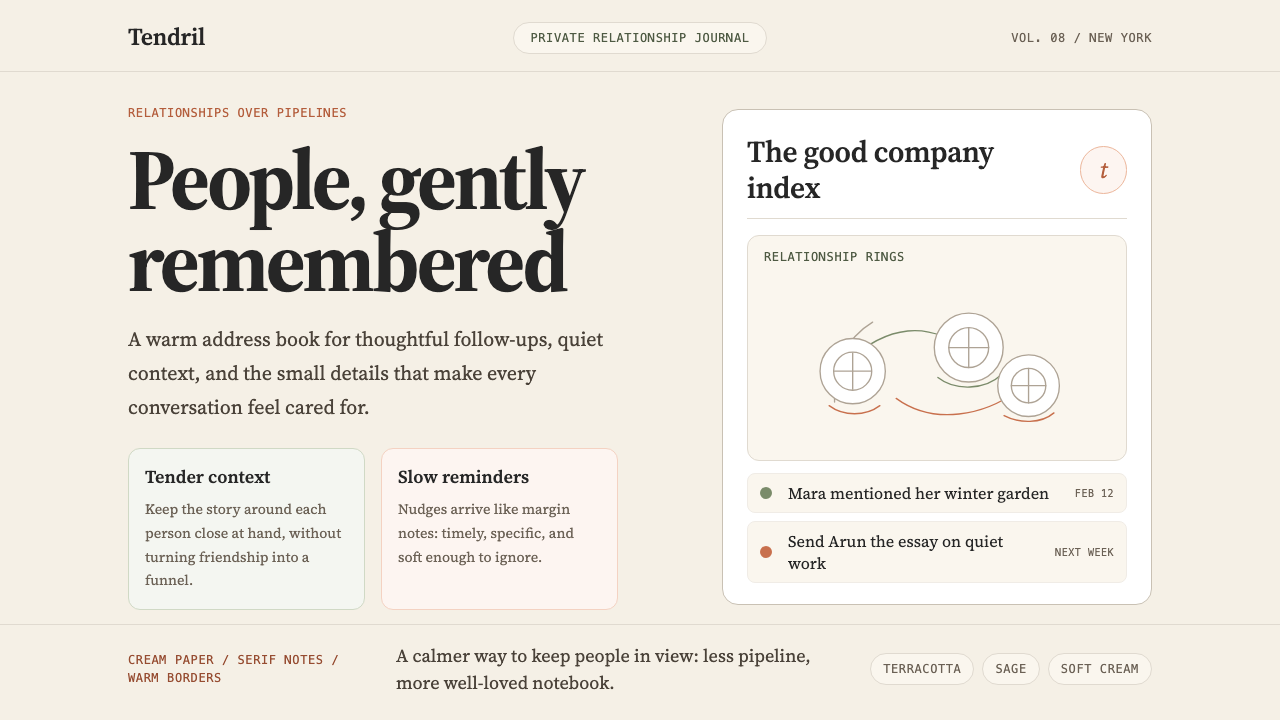 Clay 2024CRM as a sketchbook, not a sales pipeline. Cream backgrounds, terracotta, han…
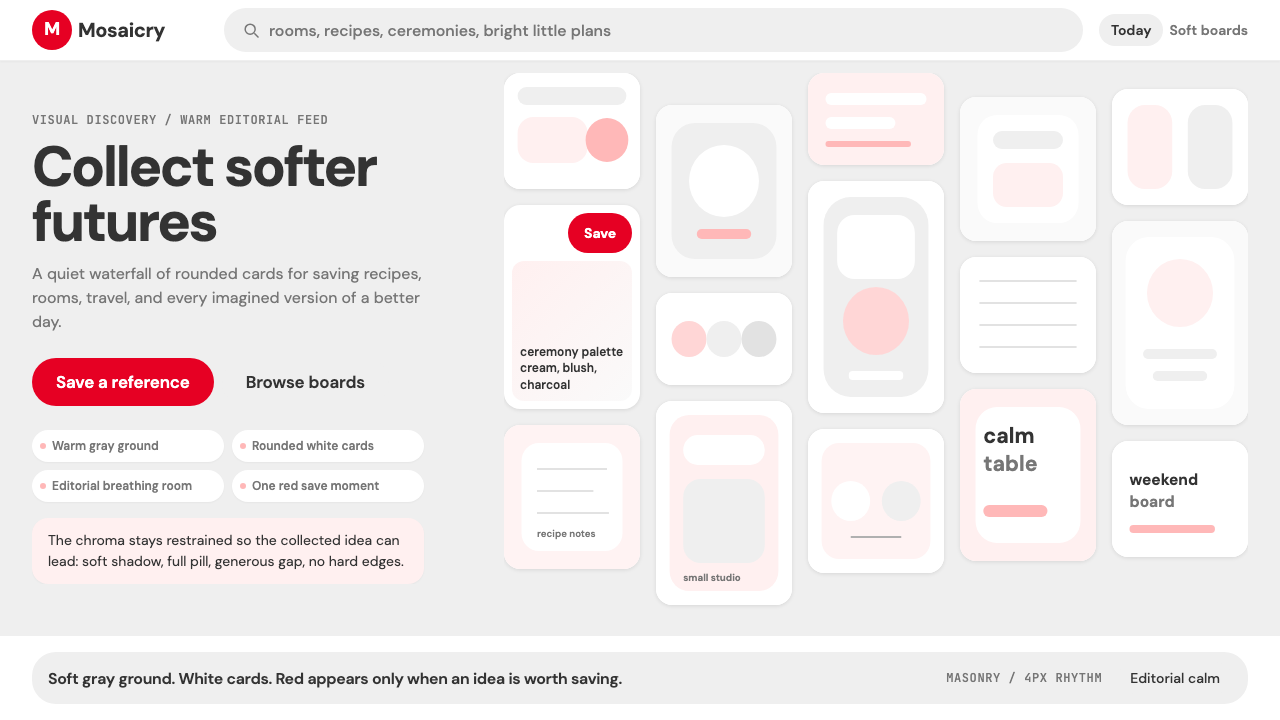 Pinterest 2024Aspirational calm. Warm gray masonry, rounded white pins, one surgical red sa…
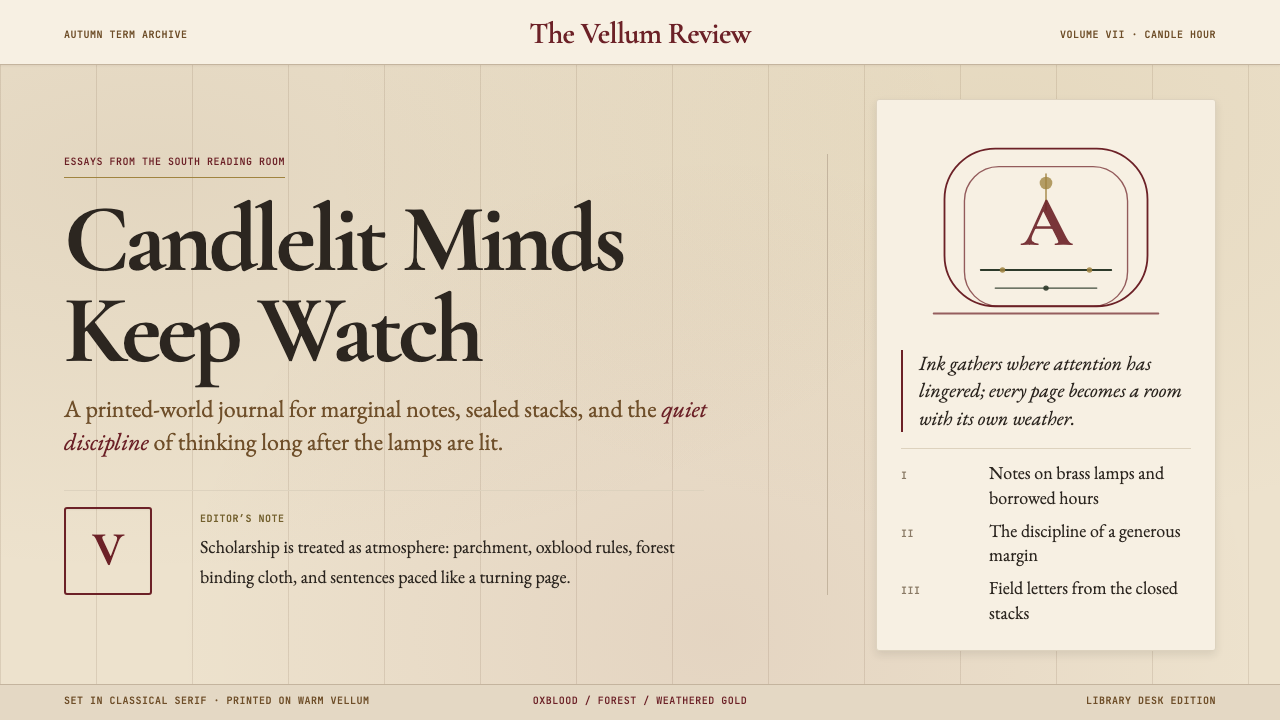 Dark AcademiaCandlelit nostalgia for old books. Parchment grounds, oxblood accents, classi…
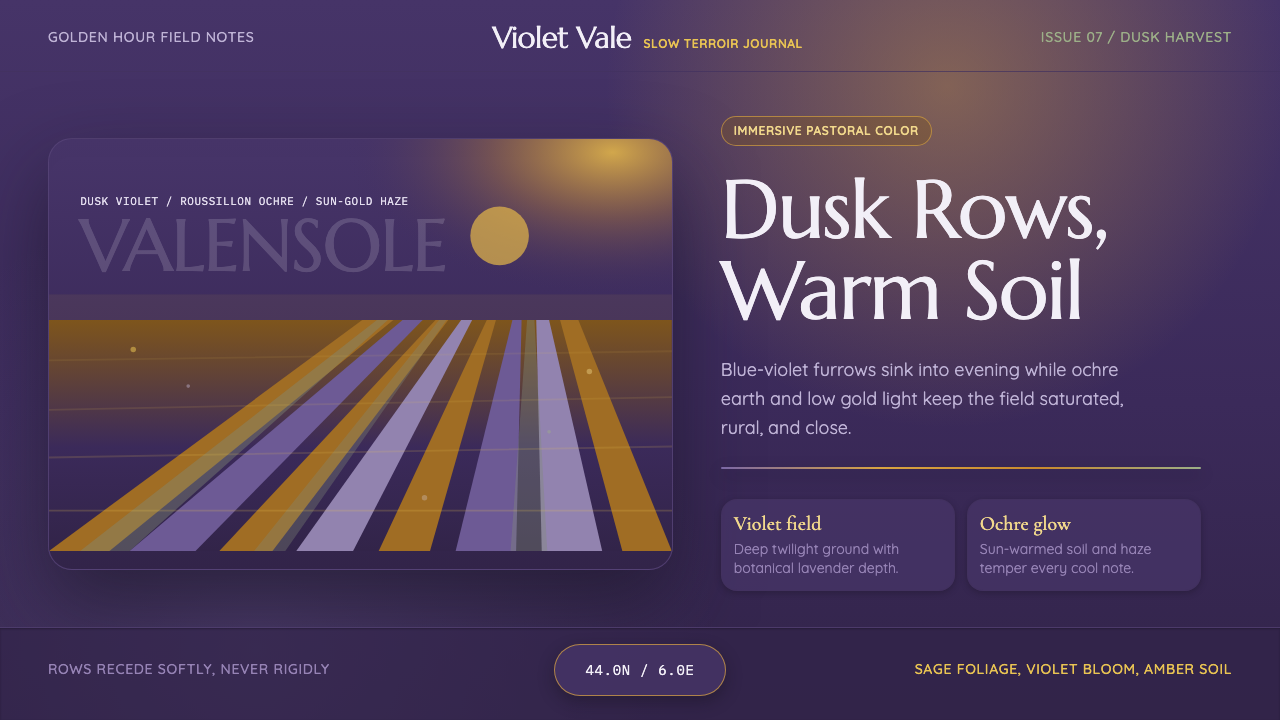 Provence LavenderSaturated pastoral dusk. Violet rows, ochre soil, and sun-gold haze build the…
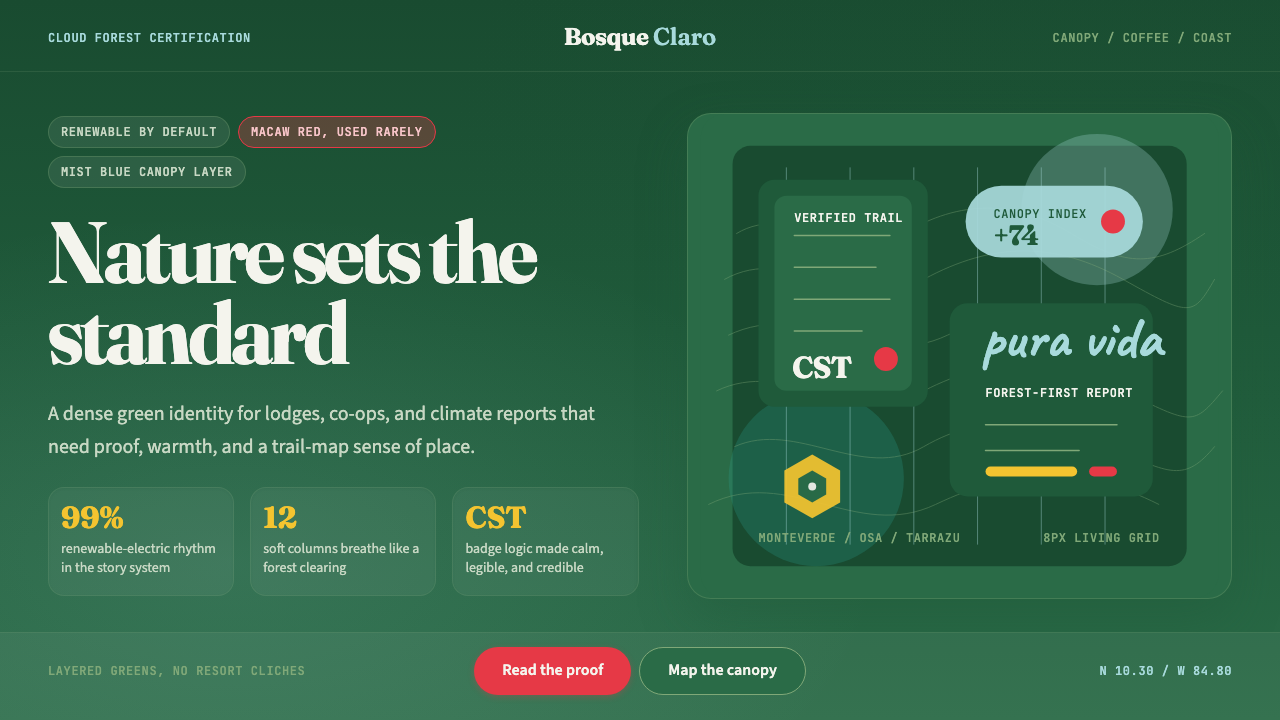 Costa Rica Pura Vida EcoAlive without greenwash. Cloud-forest green, Fraunces serif, and scarlet acce…