What is CDMX Roma Norte Cafe?
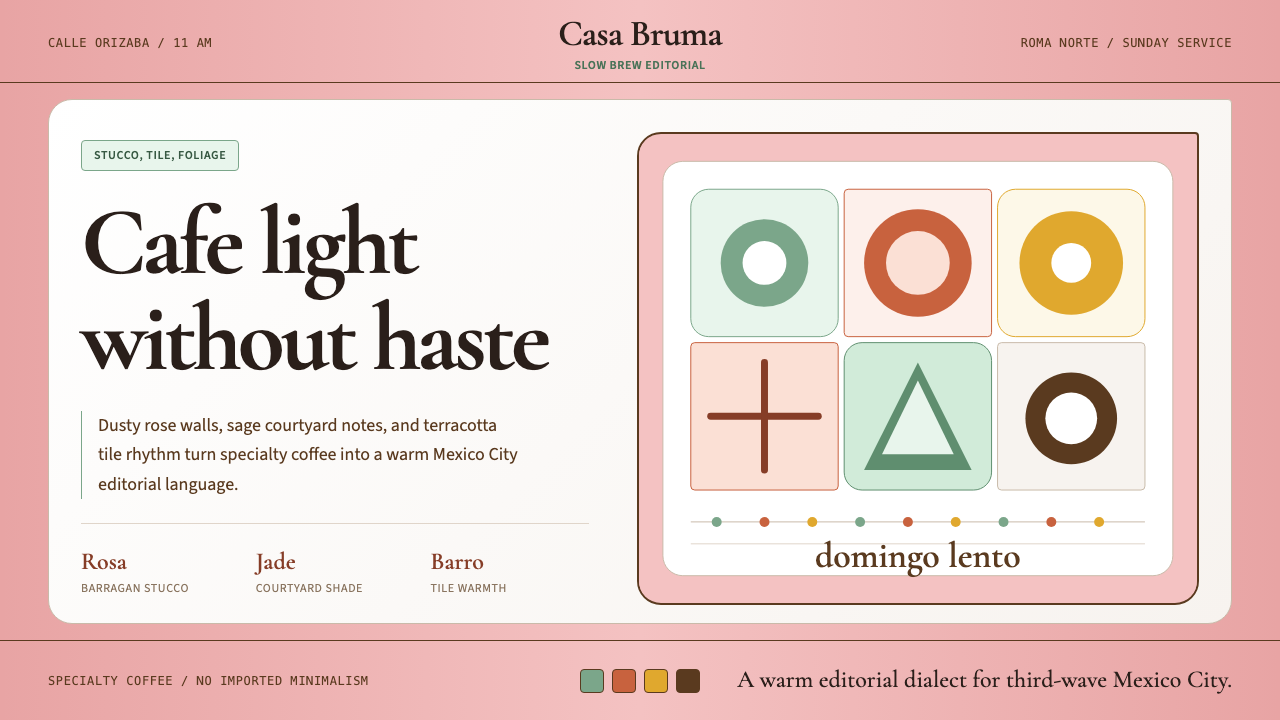
Roma Norte's cafe aesthetic is Mexico City's most coherent contemporary design dialect — dusty Barragán pinks, sage-jade greens, and the unhurried warmth of a slow-brew Sunday on Calle Orizaba.
CDMX Roma Norte Cafe in brief
The CDMX Roma Norte Cafe aesthetic is a visual system distilled from Mexico City's third-wave specialty coffee scene — a coherent design language that emerged in the neighborhoods of Colonia Roma Norte, Condesa, and Juárez between roughly 2014 and 2024. It is not a single brand's invention but a collective visual agreement forged across dozens of independent cafes, roasters, and design studios working in close geographic and cultural proximity.
At its core, the aesthetic reconciles two inheritances: the warm, sensory richness of Mexican material culture — terracotta tile, hand-plastered stucco, foliage-draped courtyards — with the disciplined visual restraint of contemporary specialty coffee branding. The result is neither generic Scandinavian minimalism nor folkloric maximalism. It is unmistakably Mexican, unmistakably contemporary, and rooted in a specific urban experience: the morning light of a Roma townhouse patio, filtered through bougainvillea.
The style carries a distinct emotional register. It communicates quality and intentionality without coldness, warmth without nostalgia, and sophistication without exclusion. This balance — simultaneously inviting and refined — explains why it has traveled beyond its geographic origin into independent hospitality and lifestyle branding across Latin America and internationally.
Where does CDMX Roma Norte Cafe come from?
The story begins with Mexico City's third-wave coffee awakening. For most of the twentieth century, Mexico was a major coffee-producing nation that paradoxically drank little of its finest exports. The specialty coffee shift arrived in earnest around 2010 to 2014, led by pioneering roasters and cafe owners who had trained or traveled in Australia, Japan, and Northern Europe. Colonia Roma Norte — a dense, walkable neighborhood of Art Nouveau townhouses, leafy streets, and a long tradition of artistic and intellectual bohemia — became the natural epicenter. Its low rents, culturally adventurous residents, and built environment of warm masonry and interior courtyards provided the perfect incubator.
Key figures shaped the aesthetic consensus. Pepe Vega and Pedro Cano were among the baristas and cafe founders whose venues gave the scene its early visual grammar — editorial serif signage, warm terracotta and sage color palettes, hand-lettered chalk boards that gestured toward craft without performing rusticity. Sebastian Romero contributed through design work that linked the specialty coffee scene to Mexico City's broader independent design culture. Catalina Mladin brought curatorial sensibility and an eye for how material choices — glazed ceramic cups, linen napkins, unfinished concrete counters beside warm wood — could add up to a coherent spatial identity. The influential Buna cafe, founded in 2014, offered an early and unusually complete expression of what the aesthetic could be at its most resolved.
The movement drew deeply from mid-century Mexican modernism — specifically from the architectural and chromatic legacy of Luis Barragán, whose use of dusty pinks, muted yellows, and saturated earth tones in his residential and garden designs had long defined a distinctively Mexican approach to color. The cafe designers who followed were not quoting Barragán directly, but his palette had seeped into the visual consciousness of Mexico City so thoroughly that it became a natural reference point for anyone trying to create spaces that felt simultaneously sophisticated and rooted in local culture.
Between 2018 and 2024, the aesthetic consolidated and codified. Graphic design studios working with the Roma Norte cafe scene began producing identities that shared a recognizable visual family: serif logotypes with editorial weight, palettes anchored in dusty rose, sage jade, and terracotta, paper textures and stamp-printed finishes that evoked artisanal process without folk-art pastiche, and typographic hierarchies that borrowed from early twentieth-century Mexican editorial design. The visual system crossed from print into digital channels — Instagram grids, website design, packaging — and in doing so became one of the most widely recognized contemporary design signatures to emerge from Latin America.
What defines the CDMX Roma Norte Cafe look?
Palette
The palette is built around three anchors: a dusty, muted rose that recalls Barragán's famous pink walls; a sage-jade green borrowed from the foliage of courtyard plants and glazed ceramic; and a warm terracotta that echoes the patio tile of a Colonia Roma townhouse. These are supported by warm neutrals — creamy off-whites, warm stone, and mid-century walnut tones — rather than stark white or gray. The overall register is warm, slightly desaturated, and sunlit. Colors coexist in quiet harmony rather than high-contrast opposition, giving the system its characteristic sense of unhurried ease.
Typography
Editorial serif typefaces anchor the visual identity. The preference runs toward typefaces with old-style proportions and moderate contrast — letterforms that carry cultural authority without formality, and that echo the mastheads of early twentieth-century Mexican periodicals. Serif headlines are typically set at generous sizes with relaxed tracking, projecting confidence and calm. Supporting text may use a warm humanist companion — a typeface with the organic, hand-influenced qualities that complement the overall material warmth of the palette. The typographic hierarchy is legible but never clinical, always communicating craft and intentionality.
Texture and Material
Tactile material quality is central to the aesthetic. Stucco textures, uncoated paper stocks, letterpress or risograph printing effects, hand-stamped marks, and the patina of aged ceramic all contribute to an overall sense of material richness that digital applications simulate through careful use of texture overlays and grain. The aesthetic actively resists the frictionless glossiness of generic digital design, asserting instead that quality is something you can feel — rough, warm, and specific to place.
Spatial Rhythm and Negative Space
Layouts favor generous negative space and a relaxed, unhurried rhythm — qualities that mirror the experience of sitting in a Roma Norte cafe on a weekday morning. Compositions are never crowded. Elements are given room to breathe, and the space between them carries as much meaning as the elements themselves. This stands in deliberate contrast to the information-dense visual compression of mass-market design. The message encoded in the white space is the same as the message encoded in a single well-made espresso: less, done better.
Ornamental Restraint
Decorative elements appear sparingly and are always rooted in material or cultural logic: a hand-drawn botanical sprig, a simple tile-pattern border, a stamp that reads like a mark of origin rather than a flourish. Ornamentation is never applied for visual busyness. When it appears, it carries referential weight — to Mexican craft tradition, to botanical courtyard life, to the cafe's geographic and cultural specificity. The system is warm rather than austere, but the warmth comes from palette and texture, not from decorative accumulation.
Photography and Visual Imagery
Photography in the Roma Norte aesthetic favors warm, natural light and an intimate editorial quality — the kind of imagery that feels observed rather than staged. Close-ups of ceramic cups, light falling across a tiled surface, foliage against stucco, hands at a pour-over — these compositions emphasize texture, material specificity, and the unhurried quality of physical experience. Color grading skews warm and slightly desaturated, consistent with the overall palette. Images rarely feature the heroic or aspirational framings of mainstream lifestyle photography; the register is quiet, specific, and confident.
Cultural Rootedness
The aesthetic's most distinctive quality is that it feels genuinely located — in a specific city, a specific neighborhood, a specific moment in Mexican cultural history. Unlike globalized minimalism, which achieves coherence by erasing local character, the Roma Norte style achieves coherence by deepening it. The Barragán palette, the colonial courtyard architecture, the mid-century Mexican editorial tradition, the Colonia Roma bohemian intellectual culture — these are not decorative references but structural foundations. The style is contemporary but not stateless.
Who shaped CDMX Roma Norte Cafe?
Though not a cafe designer himself, the architect Luis Barragán (1902–1988) is the single most important aesthetic ancestor of the Roma Norte style. His use of dusty pinks, warm yellows, and deep earth tones in his residential walls, water gardens, and plazas established that these colors were not decorative choices but structural ones — capable of carrying emotional and cultural weight. The Barragán palette became the shared visual inheritance of Mexico City design culture, and the Roma Norte cafe scene is among its most direct contemporary expressions.
Pepe Vega was among the early baristas and cafe founders whose venues helped establish the visual and experiential grammar of the Roma Norte scene. His work in shaping cafe spaces — the material choices, the spatial rhythm, the relationship between counter, seating, and light — contributed to the collective understanding of what a Mexico City specialty coffee space could and should look like. He represents the broader group of practitioner-founders whose aesthetic decisions, made in close proximity to each other, produced a coherent neighborhood style.
Pedro Cano's contribution sits at the intersection of barista culture and visual identity. As one of the founding-generation figures of Mexico City's specialty coffee movement, his sensibility helped define what the scene valued aesthetically — craft legibility, material honesty, the avoidance of international-chain pastiche. His presence in the scene during its formative years at Colonia Roma Norte gave him influence over the collective standards that shaped what came to be recognized as the neighborhood's distinctive design language.
Sebastian Romero represents the bridge between the Roma Norte cafe scene and Mexico City's broader independent design culture. His design work for cafes and related brands helped translate the spatial and material sensibility of the physical cafe experience into graphic and digital form — logotypes, packaging, print collateral, and eventually digital interfaces. This translation work is what allowed the aesthetic to travel beyond its geographic origin and establish itself as a recognizable design signature across independent hospitality and lifestyle branding internationally.
Catalina Mladin brought a curatorial and editorial intelligence to the Roma Norte scene that elevated it above mere trend. Her ability to read how individual material and design choices — a specific glaze on a ceramic cup, the weight of a particular paper stock, the proportion of a shelf against a stucco wall — accumulated into a coherent spatial and brand identity was formative. She represents the editorial layer of the scene: the discernment that distinguished considered, rooted design from superficial imitation of international cafe aesthetics.
How do you use CDMX Roma Norte Cafe today?
The Roma Norte cafe aesthetic translates into contemporary design work with unusual directness, because its visual logic is grounded in material and emotional truth rather than trend. Applying it well requires understanding what the system is doing beneath the surface: building warmth through desaturation rather than saturation, earning refinement through restraint rather than complexity, and signaling cultural specificity rather than aspirational placelessness. When those principles are honored, the output feels genuine. When they are ignored in favor of surface-level palette borrowing, the output reads as pastiche.
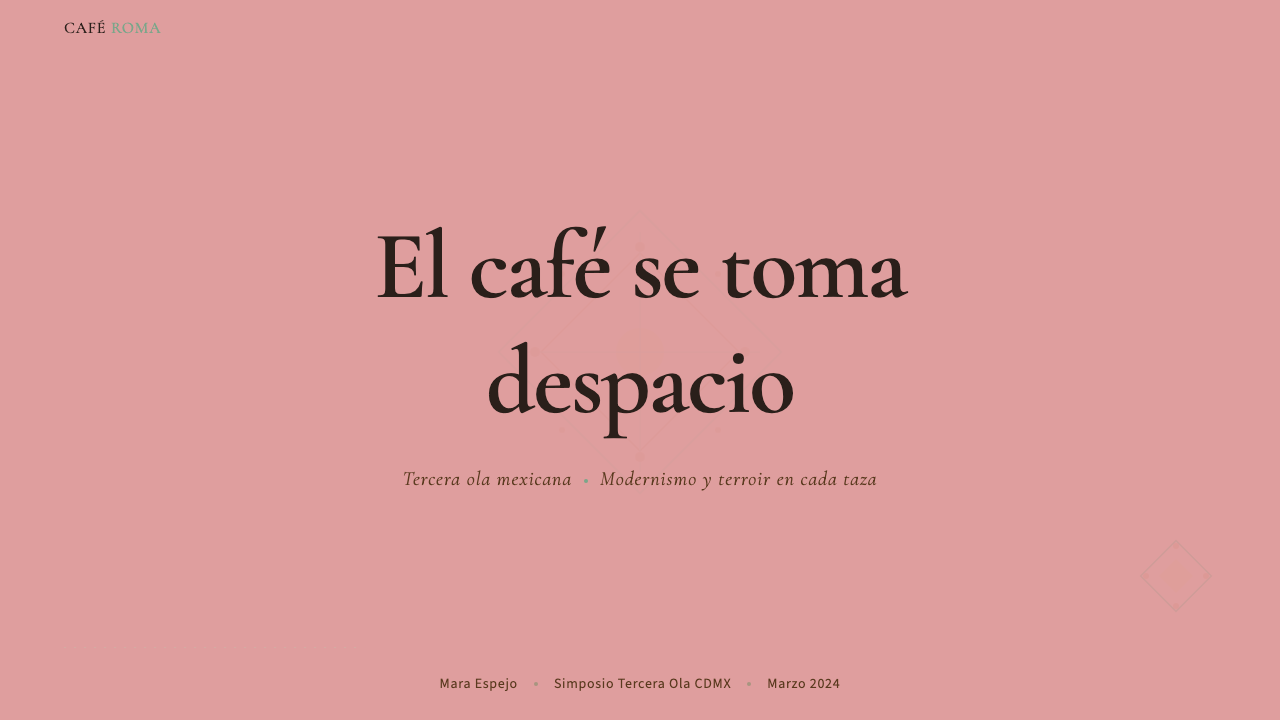
For presentation slides, the style is best suited to cover and section-divider pages, and to any slide where atmosphere matters as much as information density. A cover built in this system uses warm, generous negative space, a single editorial serif heading set at a relaxed pace, and a palette pulled from the dusty rose, sage, and terracotta range against a warm off-white ground. Content slides should resist the urge to add texture everywhere — one textured background element per slide is enough. Data slides work best when charts are treated as part of the composition rather than dropped-in objects: warm neutrals for base bars, the terracotta or sage as highlight color, no cold blue or stark gray.
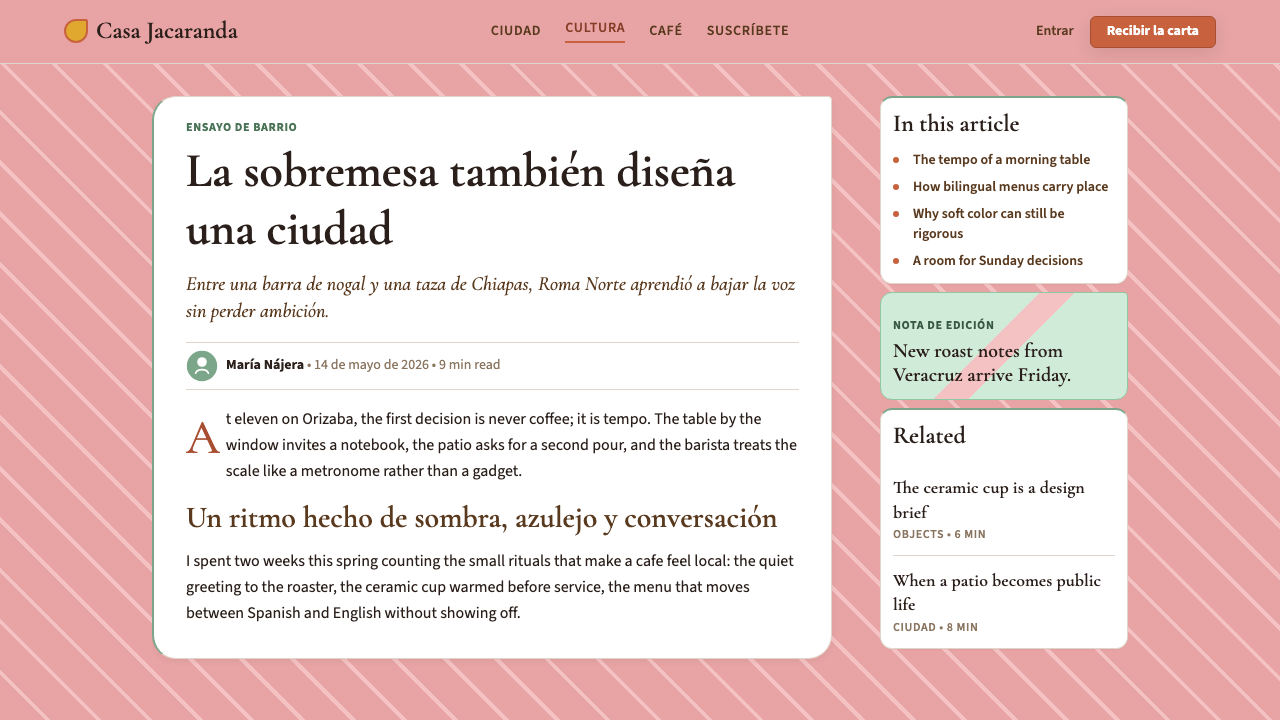
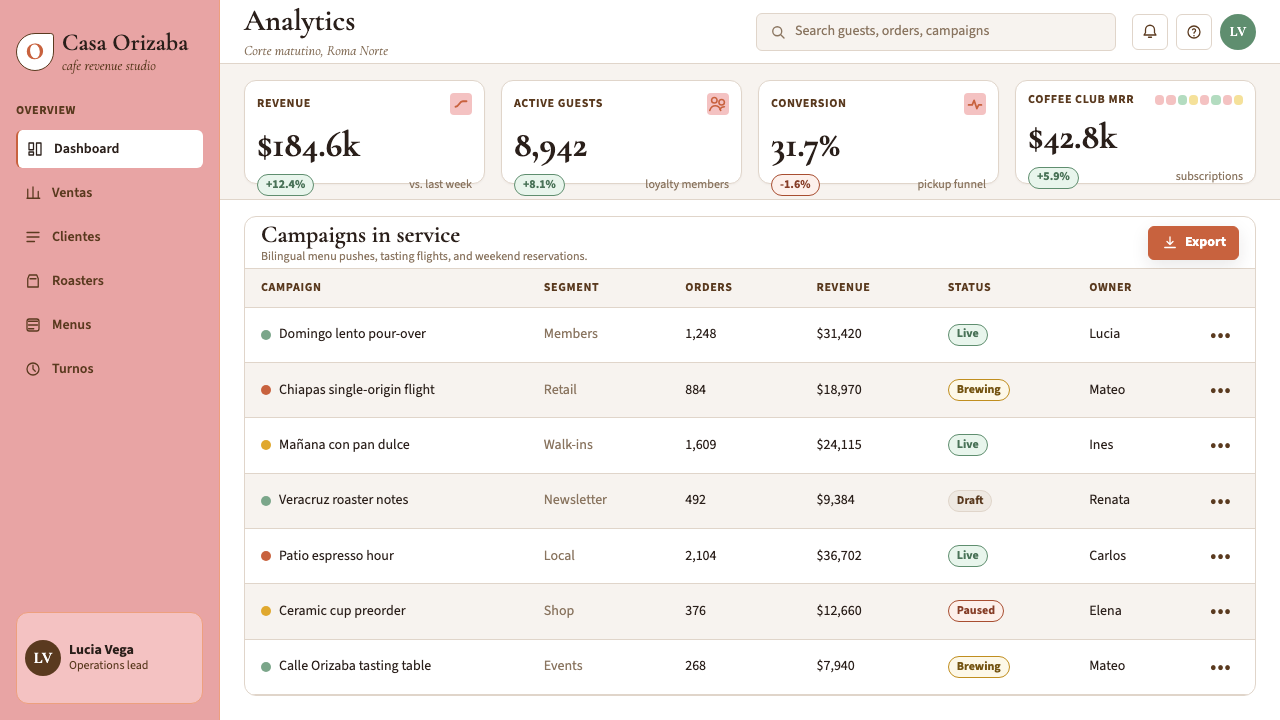
For web interfaces — particularly in hospitality, independent retail, food and beverage, and lifestyle categories — the system excels. A well-executed Roma Norte web UI uses a warm off-white body background, serif headings with editorial weight, card components that rely on subtle grain and warm shadow rather than hard borders, and navigation typography that reads as confident without being aggressive. Pricing pages benefit from the system's natural warmth: the tone communicates quality and care, which softens the transactional register. Dashboard applications should use the aesthetic selectively — the full system reads as slow and ambient in high-information-density contexts, so pare back texture and let the palette do the structural work instead.
For editorial and marketing work, the style's heritage in print and poster design makes it particularly strong. Long-form editorial layouts benefit from the system's relaxed typographic rhythm: wider margins, generous leading, and section breaks marked by a warm rule or small botanical ornament rather than a hard geometric line. Marketing campaigns with a warmth-and-quality brand positioning — specialty food, independent hotels, artisanal goods, wellness — can use the system's visual vocabulary directly. Hero images should follow the photographic sensibility described above: warm, intimate, observational. Avoid the cold-blue or high-key white photography conventions of generic e-commerce.
A common mistake when applying this aesthetic is reaching for the palette without honoring the spatial philosophy. Dusty pink, sage, and terracotta on a crowded, information-dense layout does not produce Roma Norte — it produces confusion. The white space is not optional; it is structural. A second common error is mixing this system with global-tech design conventions: sharp-corner cards, dark-mode defaults, icon-heavy navigation, and micro-animation all undercut the system's warmth and sense of place. The Roma Norte aesthetic requires a slower register, and that slowness is a feature, not a limitation.
CDMX Roma Norte Cafe — FAQ
Is this style tied to Mexico City specifically, or can it work for any cafe or hospitality brand?
The style emerged from a specific place and carries genuine cultural rootedness — that specificity is part of what makes it powerful. A brand that applies it without any connection to the cultural tradition risks producing something that looks borrowed rather than authentic. That said, the underlying principles — warmth through desaturated palettes, refinement through restraint, spatial generosity, craft-legible typography — are transferable, and independent hospitality brands globally have applied these values in locally meaningful ways. The key is to adapt the system to your own cultural and geographic specificity rather than applying it as a global costume.
How does this style differ from Scandinavian minimalism or Japanese wabi-sabi, which also emphasize restraint and natural material?
All three value restraint and material honesty, but their emotional and chromatic registers are distinct. Scandinavian minimalism tends toward cool, clean neutrals — whites, light grays, pale woods — with a functional and egalitarian ethos. Wabi-sabi emphasizes impermanence and the beauty of aging, with a palette that skews toward ash, silver, and muted brown. The Roma Norte palette is warmer, more saturated (in a dusky, sunlit way), and more chromatic — the pinks and greens carry cultural resonance rather than just tonal warmth. The mood is sociable and generative rather than contemplative or ascetic. Think of it as warmth with editorial intelligence, rather than austerity with aesthetic principle.
Can this aesthetic work in digital product design, or is it limited to branding and print?
It works in digital contexts, but requires thoughtful adaptation. The aesthetic emerged from physical spaces — the light, texture, and material of actual cafes — and some of its qualities (rough plaster, handmade ceramics, the warmth of a specific afternoon light) do not translate directly into pixels. Successful digital applications focus on the elements that do translate: the warm palette, the editorial typographic hierarchy, the generous negative space, and the avoidance of cold or high-contrast visual language. Texture can be simulated through careful layering, though subtlety is key — heavy grain or paper effects quickly read as decoration rather than system. The slowness and spaciousness of the aesthetic make it better suited to websites and marketing landing pages than to dense, fast-moving application interfaces.
What is the most common error designers make when borrowing from this aesthetic?
The most common error is palette-first, philosophy-last: copying the dusty rose and sage without internalizing the spatial principles that give those colors meaning. The result is a crowded, busy layout in Roma Norte colors — which produces neither the Roma Norte feeling nor any other coherent feeling. The second most common error is treating the aesthetic as nostalgic or retro: adding aged texture, distressed type, and vintage ornament to evoke a past that the original scene never actually referenced. The Roma Norte style is contemporary, not historicist — its warmth comes from cultural rootedness, not from simulated age. A third error is applying it to contexts where warmth and slowness work against the product's purpose: high-frequency trading tools, emergency services interfaces, or any application where speed and urgency are non-negotiable values.
How does the Roma Norte aesthetic relate to broader trends in Latin American design?
The Roma Norte aesthetic is part of a broader movement in Latin American design that reasserts regional identity against the homogenizing pressure of global brand culture. Across Mexico, Colombia, Argentina, and Brazil, a generation of designers has developed visual systems that are simultaneously contemporary in their craft and production standards, and explicitly rooted in local material, chromatic, and cultural traditions. This stands in contrast to the previous generation's tendency to import European or North American design conventions wholesale. The Roma Norte scene is notable within this broader movement for having achieved particularly wide international visibility — its coherence, its Instagram-legible visual character, and its timing at the intersection of specialty coffee culture and global design platform culture all contributed to its reach beyond Mexico City.
Related design styles
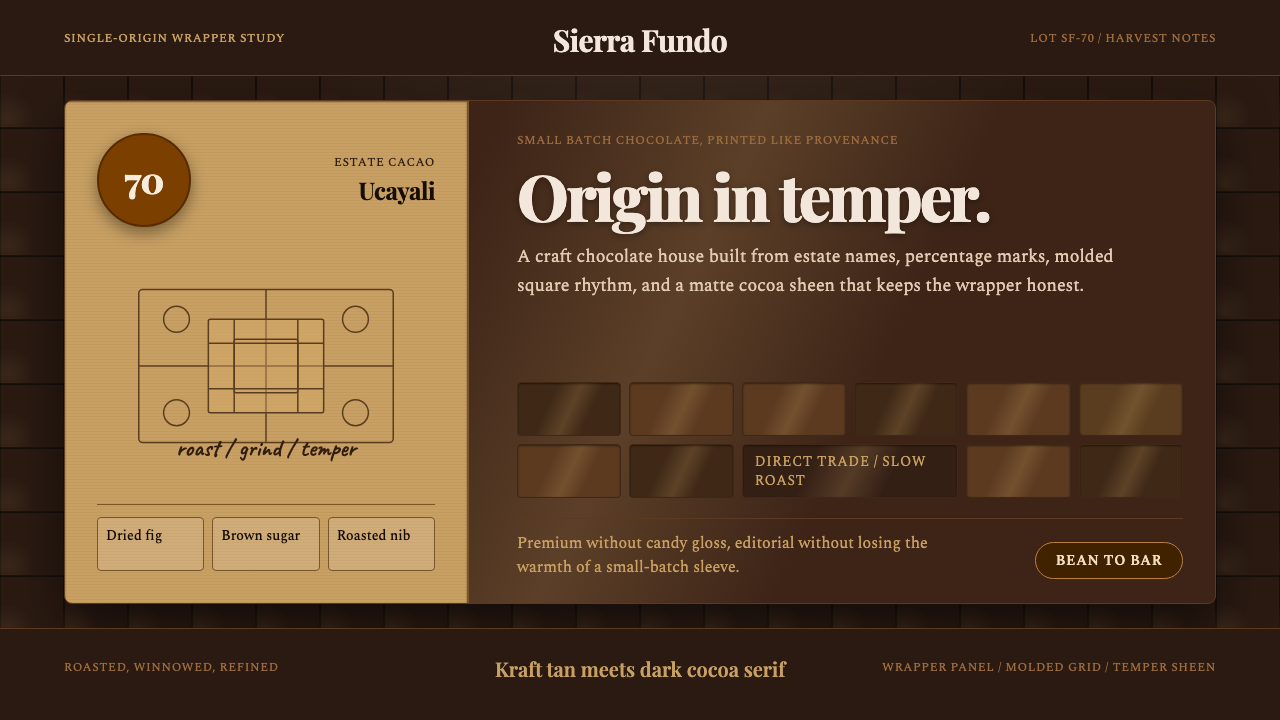 Bean-to-Bar ChocolateOrigin tastes tactile. Cocoa serif, kraft panel, and molded squares carry the…
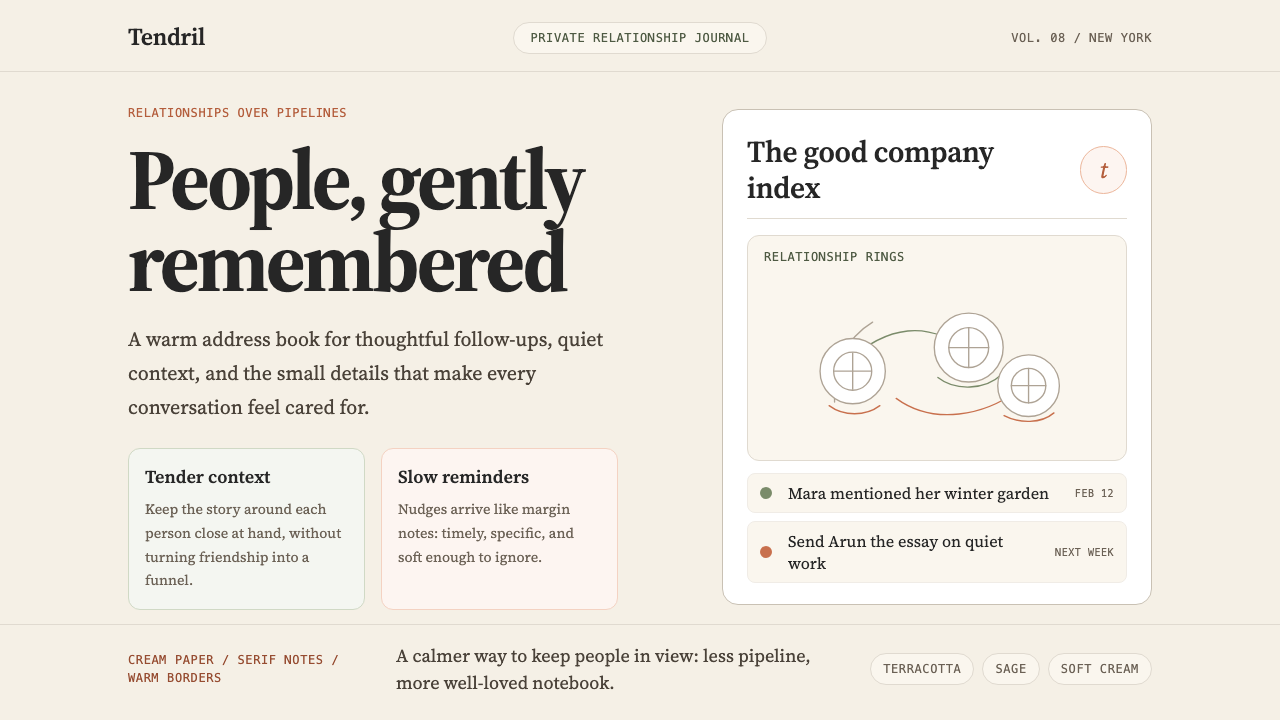 Clay 2024CRM as a sketchbook, not a sales pipeline. Cream backgrounds, terracotta, han…
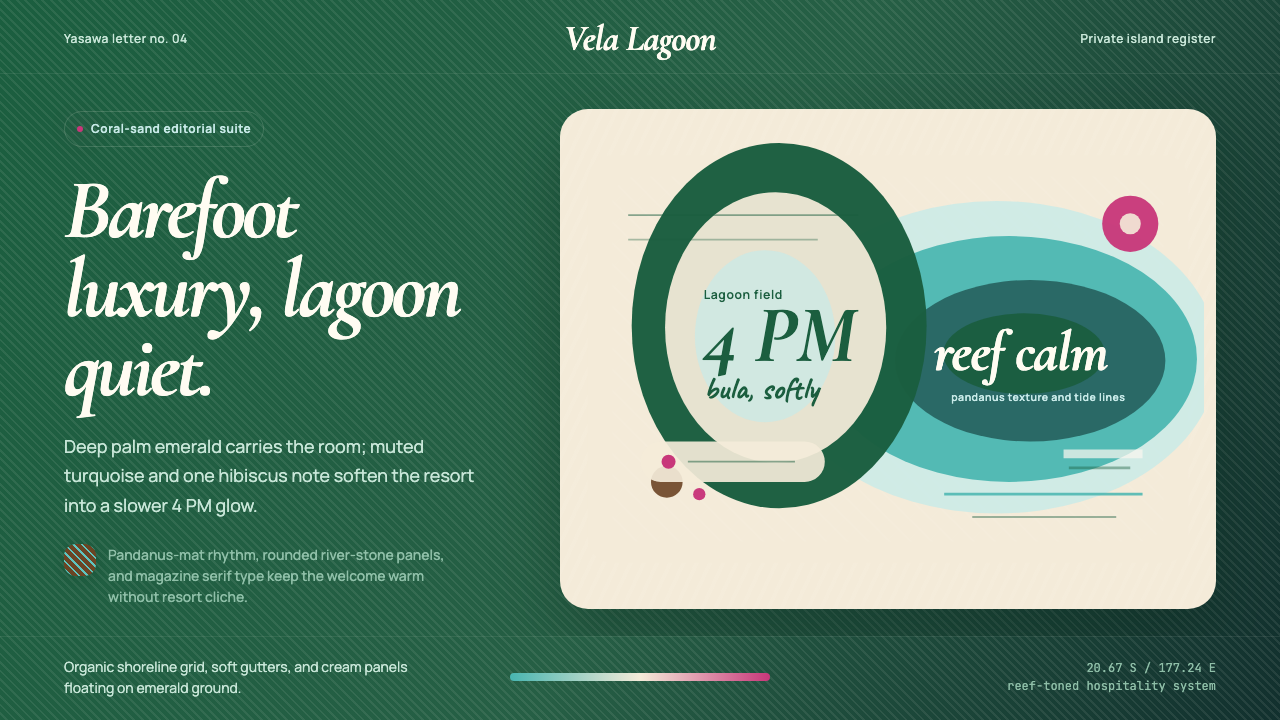 Fiji Tropical Resort Luxe ModernBarefoot luxury breathes slowly. Emerald field, cream panels, and lagoon curv…
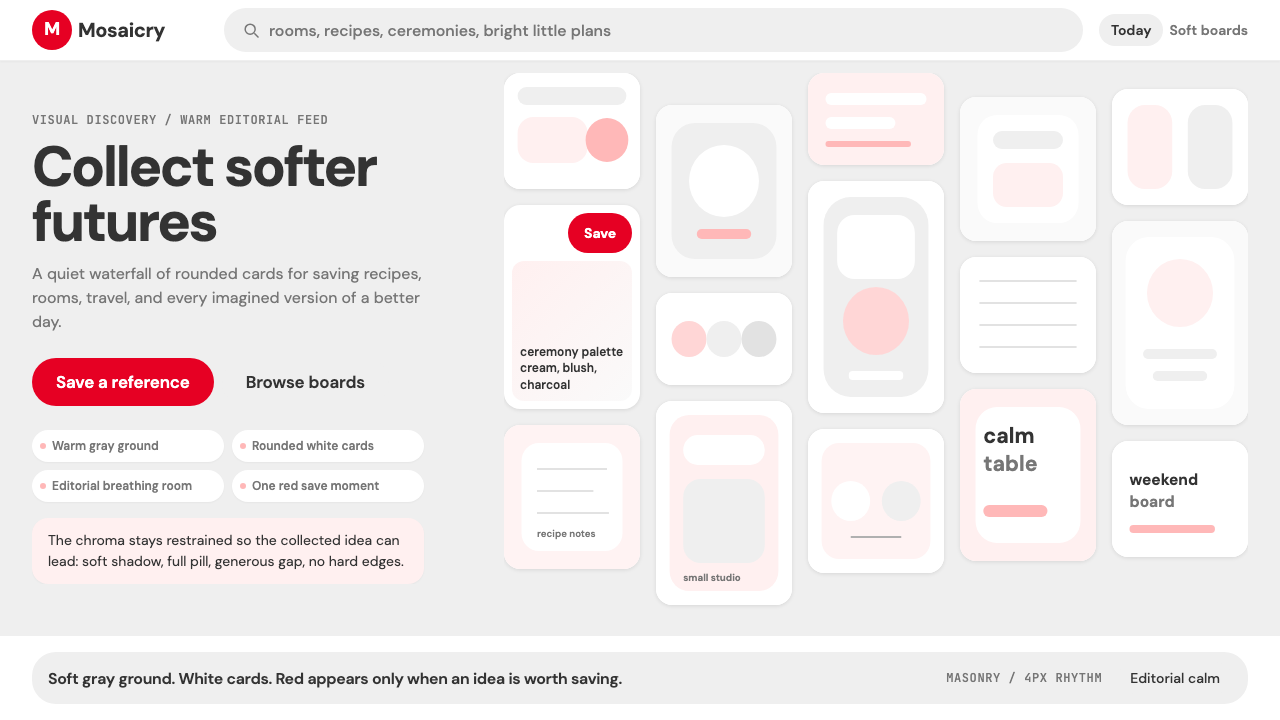 Pinterest 2024Aspirational calm. Warm gray masonry, rounded white pins, one surgical red sa…
 Animal Crossing — New HorizonsNo pressure, only daylight. Mint fields and sand bubbles soften every edge.
 Cork Board StudioWarm ideas stay tactile. Cork tan, Caveat handwriting, pinned paper, and tape…