What is Etsy Handmade?
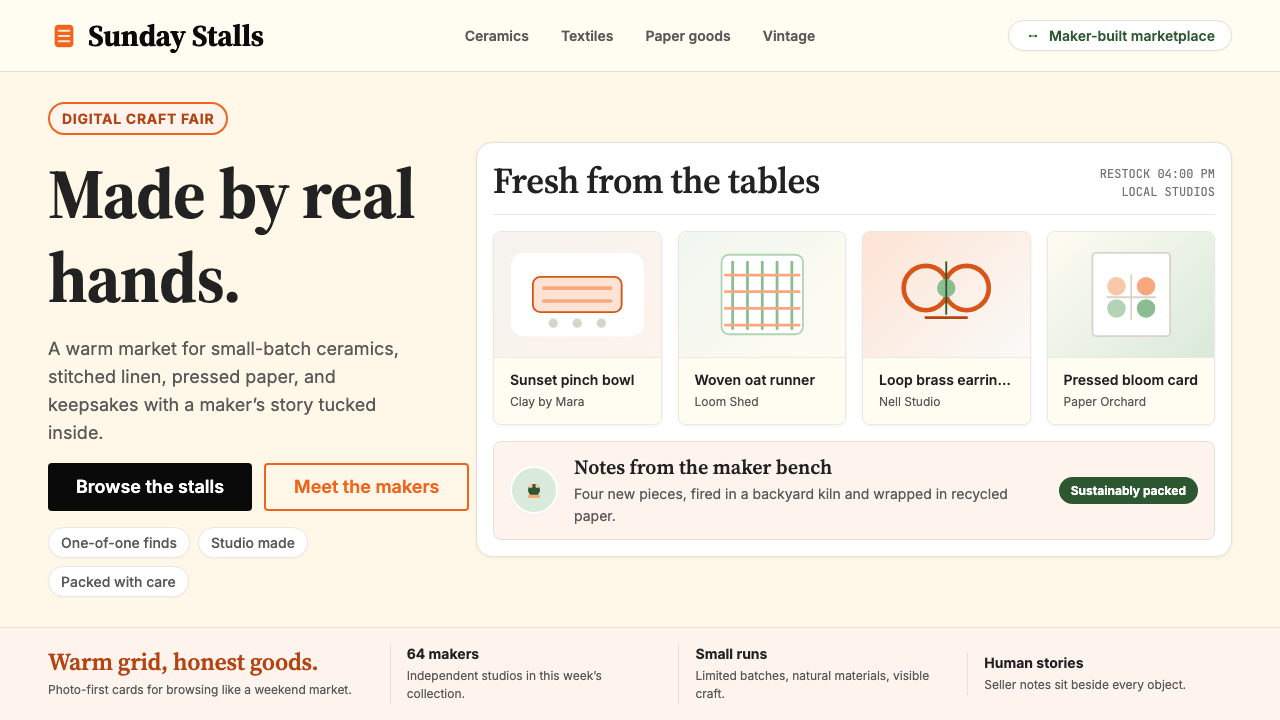
Etsy Handmade turns digital commerce into a craft fair — warm orange, cream grounds, and hand-drawn accents signal that every item was made by a real person.
Etsy Handmade in brief
Etsy Handmade is the visual design language of the Etsy marketplace — a system built around warmth, authenticity, and deliberate imperfection. Where most e-commerce platforms pursue corporate neutrality, Etsy's aesthetic leans in the opposite direction: cream and warm white backgrounds, a signature orange that reads like kiln-fired clay, serif typefaces that evoke letterpress printing, and photography that looks like it was shot at a maker's market stall rather than a professional studio.
The style is defined as much by what it refuses as by what it employs. High-gloss finishes, cool grays, hard-edged geometric minimalism, and the visual vocabulary of enterprise software are all consciously absent. In their place are organic edges, hand-drawn illustration accents, tactile product photography, and a typography palette that mixes serif warmth with readable sans-serif practicality. The overall impression is of a platform that values human involvement over automated efficiency.
Etsy Handmade is not folk art or nostalgia for its own sake. It is a carefully engineered brand language that uses approachability and craft cues to build trust with a specific audience: buyers who consciously prefer goods with a story over commodities with a price tag. Every visual decision — the warmth of the orange, the deliberate imperfection in illustrated accents, the unhurried breathing room in product layouts — reinforces that the marketplace is governed by human hands, not algorithms.

Where does Etsy Handmade come from?
Etsy was founded in June 2005 by Rob Kalin, Chris Maguire, and Haim Schoppik in a Brooklyn apartment. Kalin, a furniture maker and photographer, conceived the platform as a direct response to what he saw as the soullessness of mainstream e-commerce. The name 'Etsy' had no particular prior meaning — Kalin later said he wanted a nonsense word that would be easy to trademark and remember — but the visual identity he and the early team assembled was anything but arbitrary. It drew on the visual culture of independent craft markets, letterpress revival printing, and the indie-craft movement that had been building momentum in American cities since the late 1990s.
The indie-craft movement, which found its clearest expression in events like the Renegade Craft Fair (founded in Chicago in 2003) and publications like Craft magazine (launched by O'Reilly Media in 2006), positioned handmade goods as a form of cultural and economic resistance to mass production. This was not nostalgia alone — it carried a genuine political dimension, linked to anti-globalization sentiment and the emerging 'buy local' consciousness. Etsy's visual language absorbed this context directly: warm, human-scaled, deliberately non-corporate, it signaled membership in a community of makers rather than a transaction with a retailer.
The current visual identity — with its refined orange, its confident use of serif display type, and its consistent warmth — emerged through a series of brand evolutions, with the most significant refinements arriving between roughly 2018 and 2024 as the Etsy Brand team professionalized the system. The early site had a looser, scrappier aesthetic; the mature brand tightened the palette, standardized the illustration style, and brought the photography direction under clearer creative control. Through all iterations, the core signal remained: imperfection is intentional, warmth is structural, and every product has a maker behind it.
Etsy's growth — from a niche crafts marketplace to a public company with tens of millions of active buyers — put the design system under enormous pressure. The risk, which the Brand team navigated with considerable skill, was that professionalization would strip the handmade aesthetic of its authenticity and produce something that merely performed warmth while operating at corporate scale. The solution the team arrived at was to treat the handmade cues not as decorative frosting but as structural values: the orange is not a brand color selected for differentiation alone, it is a warmth signal; the imperfect illustration style is not a nostalgic flourish, it is a proof of human authorship. This distinction between performed authenticity and structural authenticity is the core intellectual achievement of the Etsy Handmade design language.
What defines the Etsy Handmade look?
Signature Warm Orange
The defining hue of the Etsy Handmade palette is a deep, warm orange that sits closer to terracotta and kiln-fired clay than to the bright traffic orange common in tech branding. It carries the visual weight of something natural and handmade — earthy, warm, and slightly unpredictable. This orange functions as the system's primary anchor: used for key calls to action, brand moments, and high-attention interface elements. It is never used ironically or at low saturation; its warmth is always fully committed.
Cream and Warm White Grounds
Backgrounds in the Etsy Handmade system are never cool white or neutral gray. They lean warm — cream, off-white, and occasionally a very light warm beige — giving every layout a sense of aged paper, linen, or the natural ground of a craft fair table. This warmth extends to the negative space itself: even the empty areas of a page feel tactile and human-scaled rather than digital and infinite. The warm ground is what prevents the orange accent from reading as aggressive.
Serif Typography with Human Warmth
Display and headline type in the Etsy system favors serif letterforms — the kind of type associated with letterpress printing, book covers, and artisanal packaging. Serifs carry an implicit history: they reference a time when type was set by hand, letter by letter, and that association is precisely why they work within this system. Body text may shift to a clean, humanist sans-serif for readability at smaller sizes, but the emotional register of the system is set by its serif display choices. The type is never geometric or grotesque — it always retains some calligraphic warmth in its stroke variation.
Hand-Drawn Illustration Accents
One of the most distinctive features of the Etsy Handmade aesthetic is its use of hand-drawn illustration as an accent layer — small botanical sketches, loose gestural marks, imperfect borders and frames, and illustrated icons that deliberately retain the evidence of a drawing hand. These illustrations are not polished vector constructions; they are designed to look as though a real person drew them with an actual tool. The imperfection is not a flaw — it is proof of human authorship, and it is precisely this proof that makes the system feel trustworthy to its audience.
Tactile Product Photography
Product photography in the Etsy system avoids the antiseptic perfection of commercial catalog photography. Shots are styled with natural light, imperfect backgrounds — raw wood, linen cloth, weathered surfaces — and are composed to suggest discovery rather than presentation. Objects are photographed with context: a hand holding a mug, a necklace laid on a journal, a knitted blanket on a rumpled bed. This contextual styling converts product display into narrative, implying that each item has a life beyond the transaction and a place within a real person's world.
Breathing Layout and Generous Margins
Layouts in the Etsy Handmade system give content room to breathe. There is no compression, no information density for its own sake. Product listings are spacious; category pages give each item enough white space that it reads as singular rather than as part of an undifferentiated mass. This generosity of space is a form of respect — for the maker who created the object, for the buyer who is considering it, and for the object itself. It is the digital equivalent of a well-arranged market stall where each item has its own territory.
Warmth Through Color Temperature
Across the entire palette, every color choice skews warm. Secondary colors — sage greens, dusty roses, muted mustards — are selected for their warmth and natural origin rather than their vibrancy or digital brightness. Cool blues, electric greens, and stark neutrals are absent. Even the blacks used in the system lean toward warm dark brown rather than pure cool black. This systematic warmth is not accidental; it is a deliberate signal that the platform operates in an emotional register defined by human touch, seasonal materials, and natural pigments rather than the cold precision of digital manufacturing.

Who shaped Etsy Handmade?
Rob Kalin co-founded Etsy in 2005 and served as CEO through the company's early years. A furniture maker and photographer before he was a technologist, Kalin brought a craftsman's sensibility to the platform's founding vision — the belief that making things by hand was a legitimate economic and cultural alternative to mass production. His background in physical craft directly shaped the visual vocabulary of the early Etsy identity, which borrowed its warmth and imperfection from the indie-craft culture he was part of. Kalin left the company in 2011, but the aesthetic DNA he helped establish proved durable enough to survive multiple rounds of brand evolution.
Chris Maguire was a co-founder and the primary technical architect behind the original Etsy platform. His contribution to the visual identity was less about art direction and more about establishing the technical infrastructure that allowed the brand to be applied consistently across a marketplace built on user-generated content. The challenge of maintaining a warm, handmade aesthetic across millions of seller storefronts — each controlled by a different maker — was a structural design problem as much as a visual one, and Maguire's engineering decisions shaped the constraints within which the brand could operate.
Haim Schoppik was the third co-founder of Etsy and played a central role in the early product and design decisions that set the platform's initial visual direction. Working alongside Kalin and Maguire in the Brooklyn apartment where the site was built, Schoppik helped translate the craft-market ethos into a digital interface — a translation that required finding digital equivalents for the sensory qualities of browsing a real maker's market. His work during the founding period established many of the design principles that the Etsy Brand team would later systematize and scale.
The Etsy Brand team — the in-house design and brand organization that grew substantially through the company's public years — is responsible for the mature, codified version of the Etsy Handmade visual identity. Working through the 2018–2024 period in particular, the team rationalized the color system, standardized the illustration vocabulary, professionalized the photography direction, and built the design system documentation that made consistent application possible across a global platform. Their achievement was preserving the authentic warmth and craft-market feeling of the original identity while scaling it to operate at the level of a multi-billion dollar marketplace.
How do you use Etsy Handmade today?
The Etsy Handmade aesthetic is highly transferable to any context where warmth, authenticity, and human-scale storytelling are the desired values. Applying it correctly is a matter of understanding what the visual system is actually communicating — that this was made by a person, not a machine; that imperfection is a feature, not a defect; that the relationship between buyer and maker is personal, not transactional — and then building that communication into every design decision rather than applying it as a surface layer.
For presentation slides, the Etsy Handmade style works particularly well when the content involves brand storytelling, creative industries, craft-adjacent markets, or any narrative where human connection is a selling point. Cover slides benefit from a warm-ground layout anchored by the signature orange and a serif headline set at generous scale. Content slides should carry the breathing room of the marketplace itself: one idea per slide, generous margins, product or maker photography given space to read without crowding. Data and chart slides can incorporate hand-drawn graphic accents — imperfect circles for icons, loose rectangular frames for callouts — to keep the statistical content from feeling cold and corporate.
For web interfaces, the style is well-suited to marketplaces, portfolio platforms, independent shop storefronts, creative agency sites, and any web product where the maker-to-buyer relationship is central. Navigation should favor serif wordmarks and clear typographic hierarchy over icon-heavy minimalism. Card components work best with warm shadow treatments — not the cool, diffuse shadows of corporate design systems, but warmer, slightly more opaque treatments that echo the shadow of an object on a wooden table. Pricing and feature pages should use the orange sparingly and intentionally, reserving it for moments of genuine decision.
For editorial and marketing work, the Etsy Handmade visual language supports rich, narrative-first content design. Magazine-style layouts with generous left or right margins for pull quotes and metadata, section breaks marked by a hand-drawn rule or botanical accent rather than a geometric divider, and photography that feels candid and contextual rather than staged and clinical — these elements together build the feeling of a thoughtfully produced independent publication rather than a corporate content hub. Marketing campaigns are strongest when they lead with the maker story rather than the product specifications, because the system's warmth derives from human narrative.
A common mistake when applying Etsy Handmade is mistaking the aesthetic for mere nostalgia and over-applying the rustic elements — too many hand-drawn textures, too much deliberately aged type, too many sepia-toned photographs — until the result feels like a parody of craft rather than a celebration of it. The authentic version of this style is not about looking old; it is about feeling human. The warmth should come from color temperature and typographic choice, the imperfection from illustration accents used sparingly, and the authenticity from photography that shows real objects in real contexts. Every rustic element added beyond necessity undermines the credibility it is meant to establish.

Etsy Handmade — FAQ
Is Etsy Handmade the same as a general 'rustic' or 'vintage' aesthetic?
They overlap but are distinct. Rustic and vintage aesthetics are primarily about period references and material patina — aged textures, antique typefaces, sepia tones. Etsy Handmade is not about evoking a specific era; it is about communicating the presence of a human maker. The warm orange is a contemporary brand color, not a vintage hue. The hand-drawn accents signal current human authorship, not historical period style. The key difference: rustic looks old, Etsy Handmade looks made-by-someone. A vintage poster and an Etsy product page may share certain textures, but their emotional signals are entirely different.
Can the Etsy Handmade style work for digital or software products, not just physical goods?
Yes, with selectivity. The style works for any digital product where the human-made quality of the experience is a genuine differentiator: small-team software tools, creative applications, independent publishing platforms, personal finance apps targeting creative entrepreneurs, educational platforms for makers. It works less well for enterprise software, data-intensive applications, or any product where authority and precision are the primary trust signals. The question to ask is: does the warmth of this aesthetic reinforce what our product actually is, or does it create a mismatch between the brand promise and the product reality?
How do you handle dark mode in the Etsy Handmade system?
Dark mode is genuinely challenging for this system, because the warmth of the aesthetic is deeply tied to its light, cream-ground palette. A straight inversion — cream becomes dark brown, orange remains — can work but produces something closer to a candlelit interior than the craft-fair feeling of the light version. The most successful dark variants in this style use a very deep warm brown rather than true black as the ground, preserve the orange as the primary accent, and reduce the number of active colors to two at most. Hand-drawn illustration accents become more legible on dark grounds when rendered in a light cream rather than dark ink, reversing the usual relationship. Expect some loss of the original warmth — it is a genuine trade-off, not a solved problem.
What is the right amount of imperfection in Etsy Handmade design?
Imperfection in this system is a seasoning, not a main ingredient. It should appear in the illustration layer — slightly wobbly lines, non-uniform stroke weights, botanical details that look drawn rather than constructed — and in the photography styling, where real surfaces and natural light do the work. It should not appear in the typography (type should be correctly set and well-kerned), the layout grid (spacing should be consistent and intentional), or the color application (the orange should be consistently the same orange). A useful test: if you removed all the hand-drawn elements and photographed everything on a clean studio background, would the remaining design still feel warm and human? If not, you have been relying on imperfection as a crutch rather than as a complement.
Does Etsy Handmade work when you do not actually have handmade products to show?
The style can work without literal handmade products, but it requires honesty about what you are communicating. The aesthetic signals human involvement, care, and craft — values that exist in many contexts beyond physical goods: services designed with attention, educational content made by real experts, tools built by small teams for specific communities. If those values genuinely describe your product or organization, the style is appropriate. If they do not — if you are a large automated platform, a data-driven service with no human curation, or a product whose primary value is speed and efficiency — then adopting this aesthetic creates a misleading promise. The warmth of Etsy Handmade only converts to trust when it accurately represents what lies behind it.
Related design styles
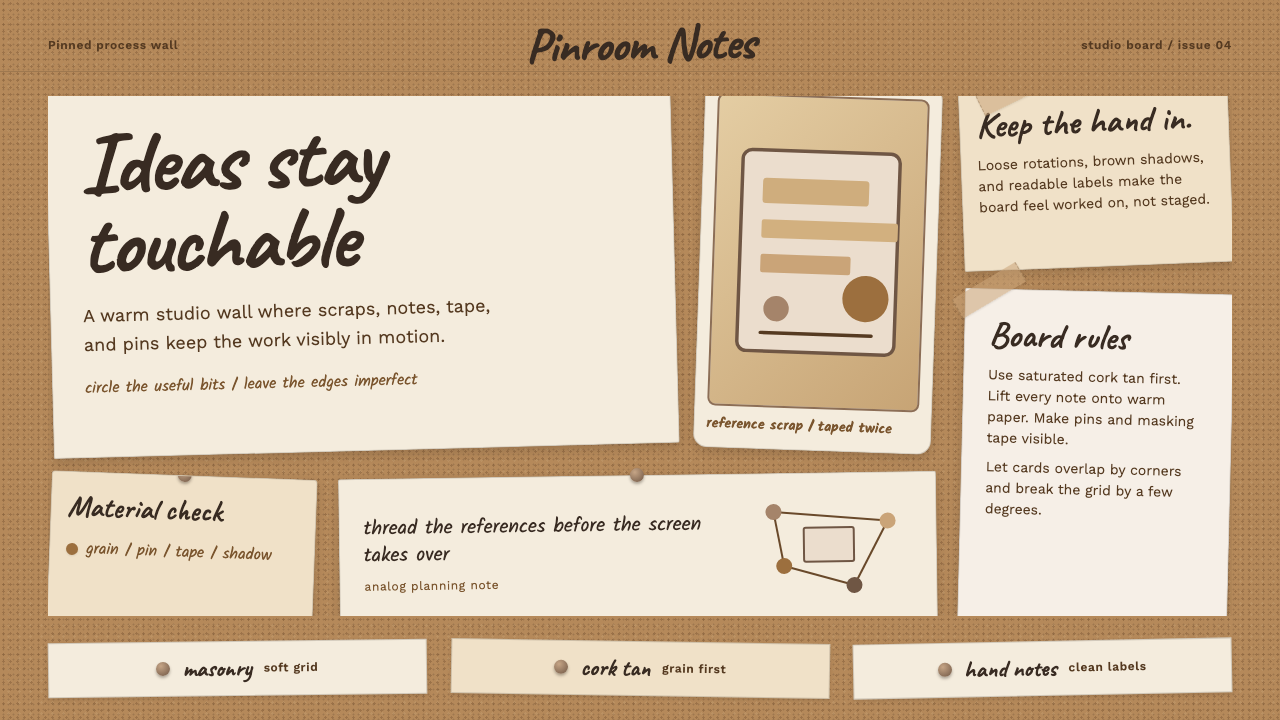 Cork Board StudioWarm ideas stay tactile. Cork tan, Caveat handwriting, pinned paper, and tape…
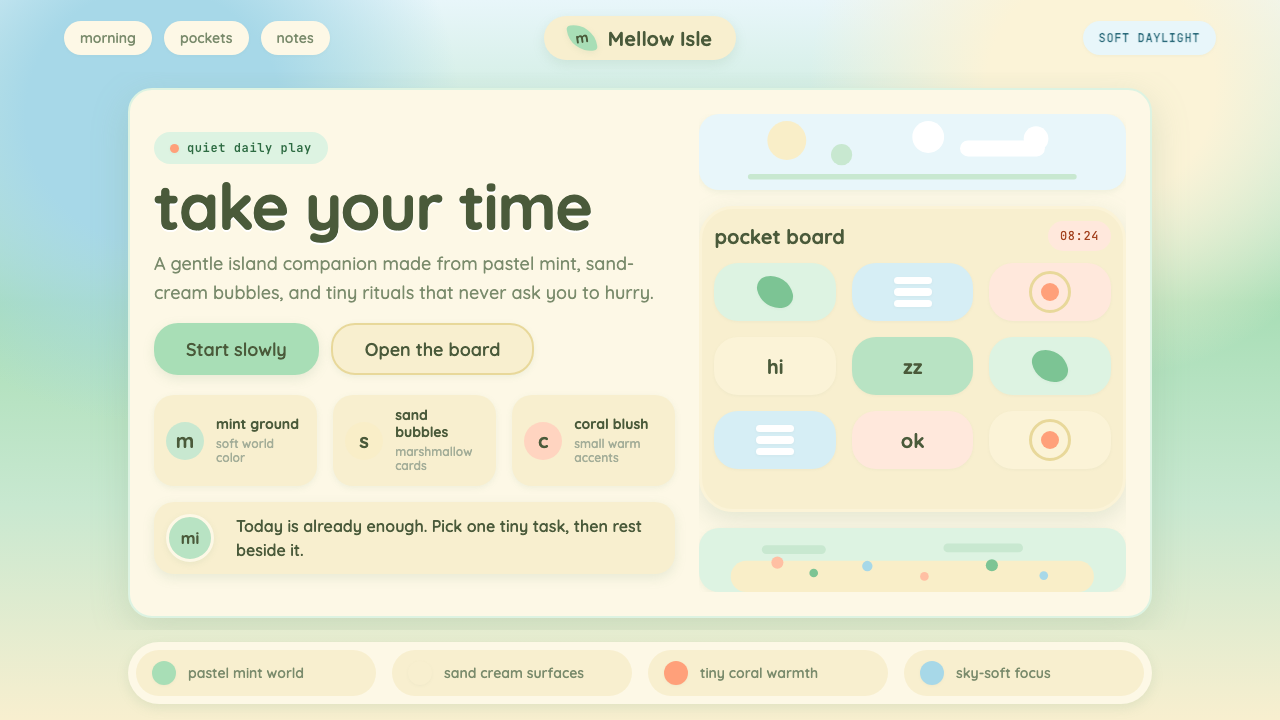 Animal Crossing — New HorizonsNo pressure, only daylight. Mint fields and sand bubbles soften every edge.
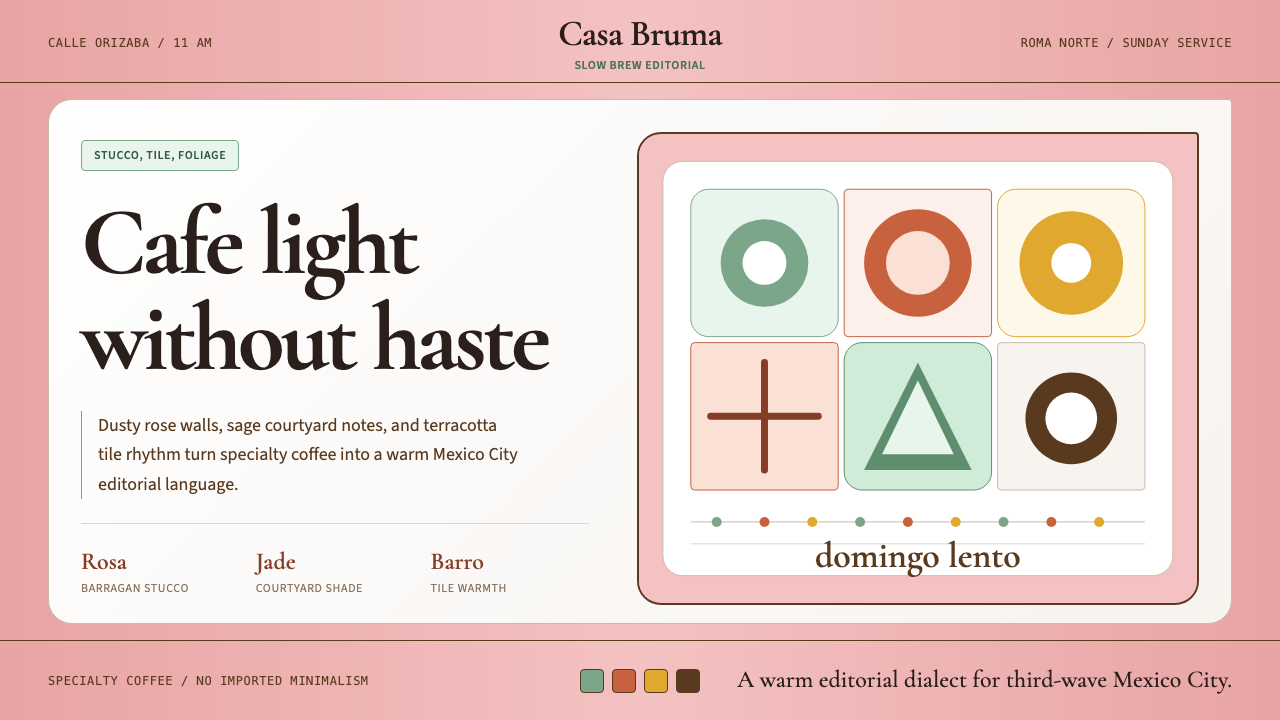 CDMX Roma Norte CafeMexico City coffee, unhurried. Dusty rose, sage jade, and serif rhythm carry…
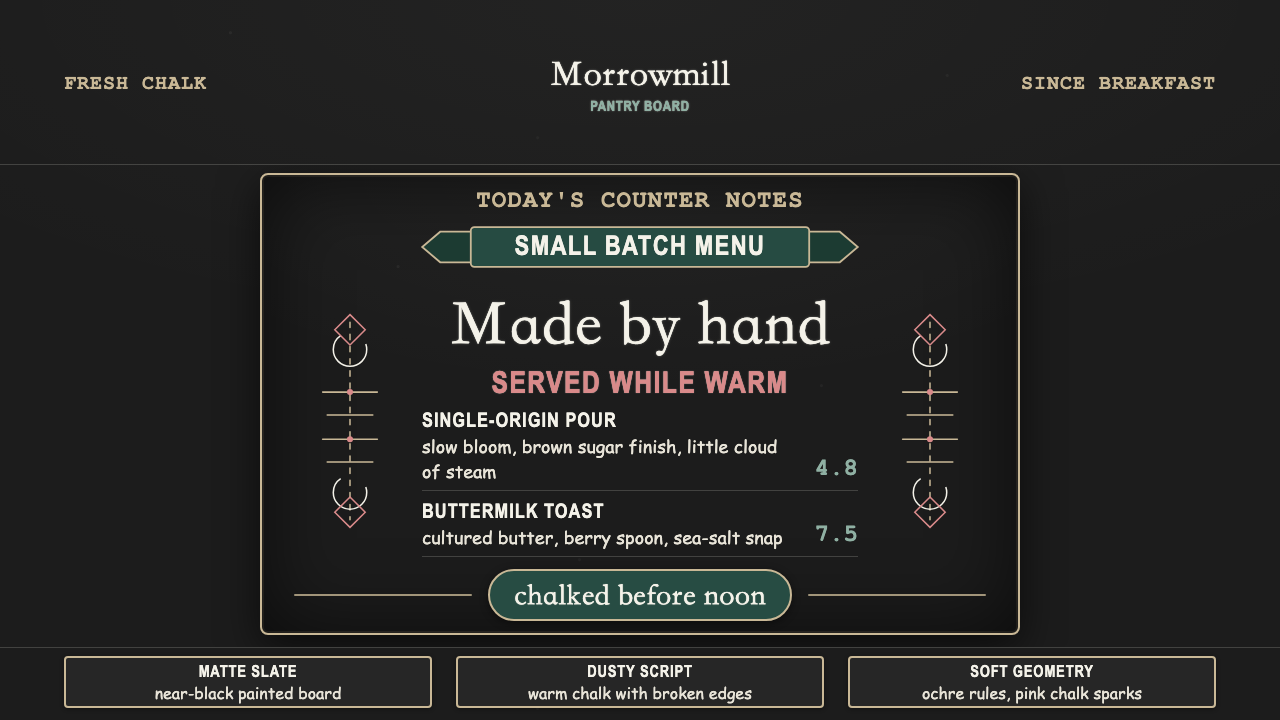 Chalk Café BoardWarmth written by hand. Dusty chalk script on graphite slate, framed by soft…
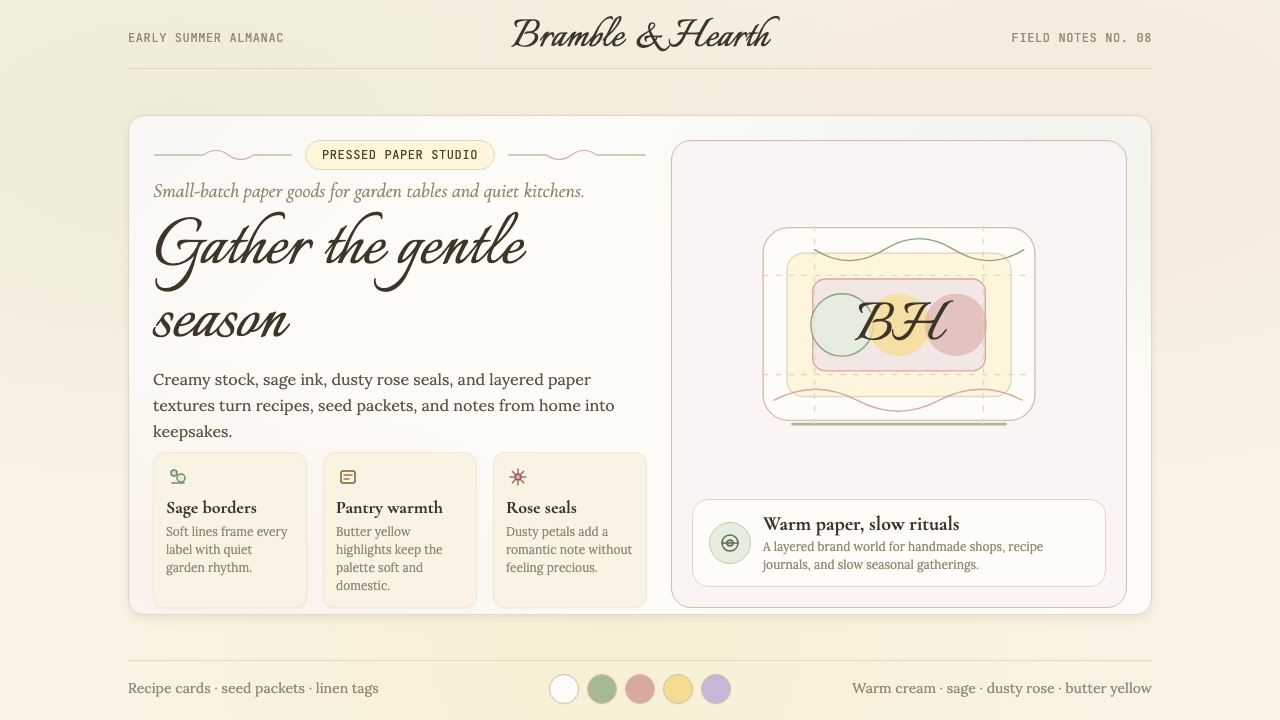 CottagecoreRural romance, hand-drawn. Sage and dusty rose, gingham textures, serif paire…
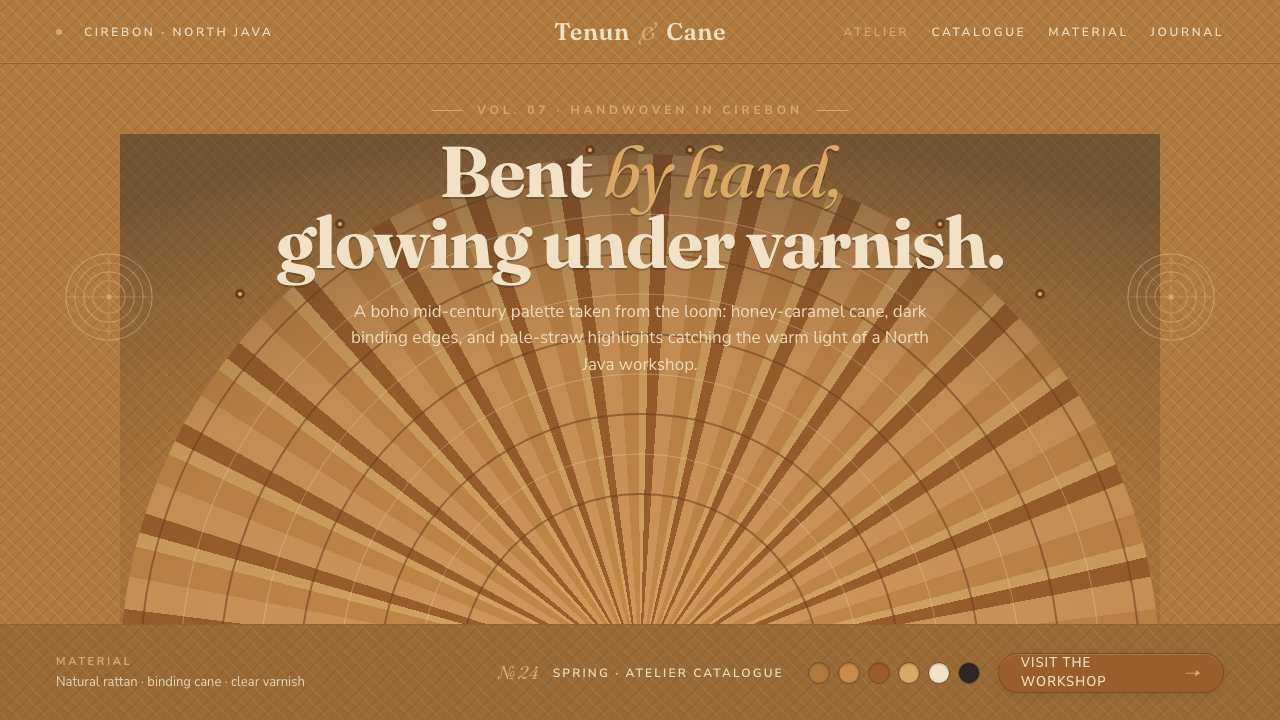 Indonesian Rattan WeaveBent by hand, varnished warm. Honey-caramel cane and dark binding edges over…