What is Animal Crossing — New Horizons?
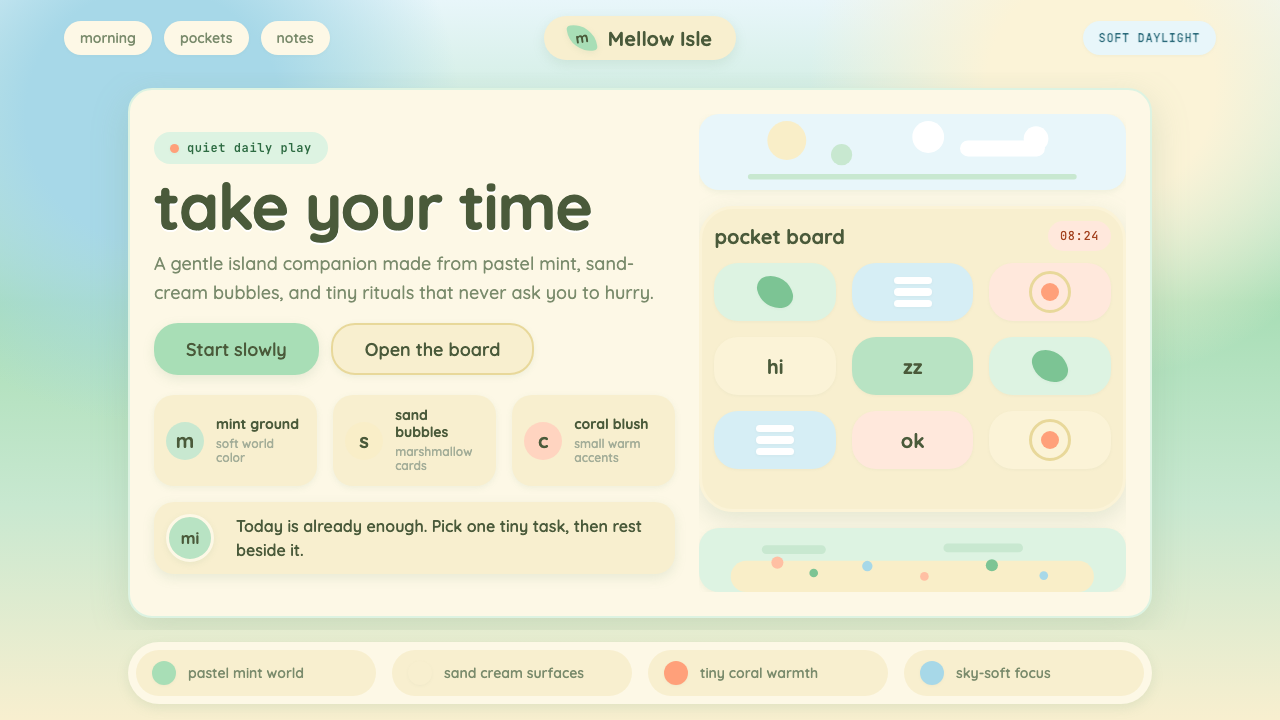
Animal Crossing: New Horizons turned the panic of 2020 into a design lesson: that softness, roundness, and perpetual gentle daylight can carry an entire visual language.
Animal Crossing — New Horizons in brief
Animal Crossing: New Horizons is a life-simulation video game released by Nintendo in March 2020, whose visual identity has since become one of the most recognizable comfort aesthetics in contemporary digital culture. Its design language centers on a palette of pastel mint greens, sand-cream neutrals, and soft sky tones — colors that never push into loud saturation and never recede into harshness. Every surface in the interface seems lit by the same overcast island morning: gentle, directionless, and permanently forgiving.
The system draws heavily from the kawaii tradition that has defined Japanese consumer culture since the 1970s — a philosophy in which cuteness is not merely decorative but functional, communicating safety, approachability, and emotional ease. In the game's interface, this translates to marshmallow-rounded button shapes, speech-balloon dialogue boxes with soft outlines and character portrait insets, and leaf-shaped or pebble-shaped icons that feel hand-hewn rather than machine-generated. Nothing has a sharp corner. Nothing asserts itself aggressively. The entire visual register operates just below the threshold of excitement.
What distinguishes the New Horizons aesthetic from generic kawaii is the precision with which Nintendo's EPD team maintained these constraints across every touchpoint — UI chrome, seasonal color shifts, furniture item thumbnails, invitation cards, in-game signage. The coherence is total. The style has since escaped its original game context and entered broader design vocabulary: applied to slide decks, brand identities, social media templates, and web interfaces that seek the same quality of ambient warmth and low visual pressure.

Where does Animal Crossing — New Horizons come from?
The Animal Crossing series was born in Kyoto, Japan, inside Nintendo's internal development organization. The original Animal Crossing launched in 2001 for the Nintendo 64 in Japan and arrived in North America in 2002 on the GameCube. Series producer Katsuya Eguchi had conceived a game about moving to a new town, making acquaintances gradually, and inhabiting a domestic space that changed with the real-world passage of time — days, seasons, annual holidays. The premise required a visual tone that was unhurried and unhierarchical: no enemies to defeat, no urgent visual signals, no color coding for danger. From the earliest game in the series, softness was a structural requirement rather than a stylistic afterthought.
New Horizons, the fourth mainline entry, entered development under director Aya Kyogoku and producer Hisashi Nogami. The shift in setting from a village to a deserted island introduced a specific palette rationale: island environments naturally produce soft ambient light, bleached sand, shallow turquoise water, and tropical foliage in muted greens. The design team built its visual vocabulary around these environmental references, arriving at a palette that felt geographically motivated rather than arbitrarily sweetened. The mint-green and cream combination has photographic precedent in the over-exposed look of film photography shot in bright, sandy outdoor environments.
The timing of New Horizons' March 2020 release coincided with the beginning of global pandemic lockdowns, and the game became a cultural phenomenon precisely because its design values matched a collective psychological need. The soft palette, the absence of visual urgency, the looping ambient music, and the game's core loop of gentle daily tasks — picking fruit, talking to neighbors, decorating interiors — offered a controlled environment radically unlike the visual overload of news and social media. Cultural critics and design writers noted that New Horizons had effectively prototyped what therapeutic digital design might look like at scale.
The game's aesthetic inheritance is traceable to several parallel traditions in Japanese visual culture. Sanrio's character design vocabulary — Hello Kitty, My Melody, the extended cast of soft-edged, emotionally neutral characters — established the template for facial simplicity and color restraint in Japanese consumer goods from the 1970s onward. Nintendo's own design lineage, running from the original Game Boy's compact screen to the DS's dual-display intimacy, had always favored legibility and emotional approachability over graphical spectacle. New Horizons synthesized these traditions into a system precise enough to be reproducible — which is why it has proven so influential outside gaming contexts.
What defines the Animal Crossing — New Horizons look?
Palette
The signature color system is built from desaturated, light-valued tones: mint green as the primary accent, sand cream as the dominant neutral ground, and soft sky blue as a secondary field color. Supporting tones include pale peach, warm ivory, and muted sage. No color in the system raises its saturation above a gentle mid-level whisper — the effect is of a world that has been left in soft afternoon light rather than lit for commercial photography. Dark values are used sparingly and only for type legibility or subtle boundary marking, never as mood-setting fields.
Roundness
Rounded corners are not a detail in this system — they are a structural value. Buttons, dialog boxes, item thumbnails, map tiles, and notification badges all share an extreme corner radius that approaches the oval or lozenge. The effect removes every sharp visual threat from the interface. In borrowed applications, maintaining this degree of roundness is more important than matching any specific color, because the rounded geometry is what communicates psychological safety and approachability at a perceptual level before color is even consciously registered.
Typography
Type in the Animal Crossing visual system is consistently round-stroked, friendly, and at a comfortable medium weight — never condensed, never heavy to the point of aggression, never styled with sharp ink-trap details that would create visual tension. Letterforms are spaced generously, and text hierarchies are created through gentle size steps rather than dramatic weight contrasts. Headlines and body text exist in the same friendly register; even instructional text is presented as if handwritten on a signboard rather than output by a system.
Illustrated Texture
Rather than photographic imagery or clean vector flatness, the system uses a lightly illustrated quality — objects have subtle hand-drawn outlines, gentle watercolor-adjacent fills, and a slight softness to their edges that suggests pencil or brush rather than mouse or bezier curve. This illustrated quality is consistent across all object categories: furniture, clothing items, plants, tools, and food all share the same rendering style, creating a world that feels entirely hand-made. Applied to design work beyond games, this quality can be approximated through loose icon styles, slightly imperfect fill shapes, and hand-lettered accents.
Ambient Warmth
Unlike design systems that use warmth as an accent layered over a neutral base, Animal Crossing saturates the entire visual field with ambient warmth. There is no cool, neutral backdrop waiting in reserve — even the sky tones and water hues carry a hint of warmth. Shadows, where they appear, are tinted rather than gray or black; highlights are cream rather than pure white. The effect is of an environment that has already been pre-warmed — as if the sun set the tone before any design decisions were made. This pervasive warmth is what gives the style its characteristic feeling of arriving home.
Low Hierarchy Pressure
Most design systems use strong visual hierarchy to direct user attention — urgent red for alerts, high-contrast black for primary actions, recessive gray for secondary content. Animal Crossing deliberately flattens this hierarchy. Everything occupies approximately the same calm register, and the user is trusted to look at what interests them rather than being pushed through a prescribed attention path. Applied to non-game contexts, this principle suggests restraint in the use of bold emphasis, aggressive calls to action, and notification-style visual urgency that ruptures the ambient tone.
Seasonal Responsiveness
One of the system's most distinctive qualities is its explicit acknowledgment of time and season as design variables. The game's palette shifts across the year: cherry blossom pinks in spring, deep greens and bright blues in summer, amber and terracotta in autumn, and muted silver-whites in winter. This seasonal responsiveness is unusual in UI design, which typically strives for timeless consistency. Applied to design systems outside the game, it suggests a model where core palette tokens remain stable but a seasonal or contextual accent layer shifts appropriately — giving a brand a sense of aliveness without instability.

Who shaped Animal Crossing — New Horizons?
Kyogoku served as director of Animal Crossing: New Horizons, becoming the first woman to direct a mainline Animal Crossing title. Under her direction, the game's core experience shifted toward player creative agency — the island construction tools, the terraforming system, the expanded furniture placement flexibility — while rigorously preserving the visual softness and low-pressure aesthetic established by the series. Her approach demonstrated that a design language can accommodate deep functionality without sacrificing its tonal warmth.
Nogami has produced the Animal Crossing series since its Nintendo 64 origins, making him the single most continuous creative steward of its visual and experiential identity. His long tenure gives him a rare vantage on what the series' aesthetic core actually is — as distinct from any individual game's implementation. Nogami has spoken publicly about designing for players who are not motivated by competition or mastery, a philosophical position that directly explains the series' restrained, non-urgent color and layout language.
Eguchi originated the Animal Crossing concept and directed the earliest entries, establishing the foundational premise that would define the series visual tone for two decades. His key insight — that a game about unhurried daily life requires a visual system with no urgency signals — translated directly into the palette and interface decisions that New Horizons later refined. Eguchi's work is a case study in how an experiential philosophy, when committed to with sufficient precision, generates a coherent aesthetic system as a natural consequence.
Nintendo Entertainment Planning and Development, the internal studio responsible for New Horizons, operates with an unusually tight integration of design, engineering, and product management. The cross-functional nature of EPD's structure is evident in the New Horizons aesthetic: seasonal palette shifts, real-time weather systems, and time-of-day lighting are not mere graphical effects but designed behaviors that required deliberate coordination across teams. The consistency of the visual system across all of these dynamic variables — which could easily have produced incoherence — reflects a design culture with shared values rather than a single designer's vision.
How do you use Animal Crossing — New Horizons today?
Animal Crossing: New Horizons has escaped its game-context origins and become a transferable design reference precisely because its principles are emotional and tonal rather than narrowly iconographic. Applying it does not mean drawing leaf icons or Tom Nook avatars — it means committing to a consistent register of softness, roundness, and ambient warmth across every element of a composition. The most important discipline is restraint: allowing nothing to escalate into visual urgency, never letting a color reach full saturation, and defaulting always to more rounded corners rather than fewer.
For presentation slides, the style works particularly well for cover slides, section dividers, and any content page where the goal is receptive attention rather than alert urgency. A cover built in this aesthetic places a soft mint or sand-cream background beneath a round-cornered card or illustrated element, with the title in a friendly medium-weight typeface that does not demand attention so much as invite it. Content slides should resist the temptation to use high-contrast accent colors for bullet points or data labels — instead, hierarchy is communicated through gentle size differences and generous white space. Data slides benefit from the style's softness if charts are rendered in tinted, slightly desaturated bar or area forms rather than full-saturation primaries.
For web user interfaces, the aesthetic suits wellness applications, community platforms, onboarding flows, and any product where the user's emotional state at arrival is anxious or uncertain and the design's job is to de-escalate. Dashboard layouts in this style use a cream or very light mint background, card containers with significant corner radii and a faint warm drop shadow (soft and blurred rather than hard-offset), and action buttons in a muted mint or warm sand that suggest possibility without demanding a click. Pricing pages translate well because the tier distinctions can be communicated through soft background color differences — one tier on cream, another on pale mint — without requiring the aggressive contrast that many SaaS pricing pages use.
For editorial and marketing contexts, the style supports a narrative of care, accessibility, and human warmth. Magazine layouts can adopt the ambient palette for section openers and pull-quote backgrounds, using the cream-and-mint combination to signal a tonal shift from harder editorial content. Marketing landing pages work best when the overall page background is a warm off-white and distinct sections are differentiated by one step of softness — a slightly more saturated mint for a feature panel, for instance — rather than by dramatic contrast reversals. Social media graphics in this style tend to center an illustrated or softly photographed subject against a generous expanse of one ambient tone, with minimal text and no hard-edged graphic violence.
A common mistake when applying this aesthetic is softening the palette while retaining sharp layout decisions: using the mint-and-cream colors on a layout that still features tight margins, aggressive typographic hierarchy, and hard-edged card containers. The result is a color palette working against a structure that contradicts it. The opposite error is pushing roundness and softness so far that the layout loses all legibility hierarchy — every element at the same gentle scale with no organizing structure. Both errors come from treating the style's visual qualities as independent variables rather than an integrated system where palette, corner radius, spacing, and type weight all serve the same emotional purpose.

Animal Crossing — New Horizons — FAQ
Is this style too playful for professional or business contexts?
The style's playfulness is a matter of implementation depth rather than inherent incompatibility. At full intensity — leaf icons, character illustrations, bouncing animations — it is indeed calibrated for a consumer and entertainment audience. Pulled back to its structural principles — soft palette, rounded containers, generous spacing, low visual urgency — it becomes a credible vocabulary for wellness brands, educational platforms, financial products targeting anxiety reduction, and any B2C context where the user's emotional safety is a design goal. The key is to adopt the tonal principles while substituting professional illustration standards and type choices for the game's more exuberant iconography.
How does this differ from generic pastel or millennial pink aesthetics?
Generic pastel aesthetics typically reduce to a color palette choice applied over conventional layout structures — round images, cursive type, and pink backgrounds. The Animal Crossing system is more architecturally coherent: roundness is applied to geometry, not just to color choices; warmth is ambient rather than accent; type choices reinforce rather than contrast the softness; and the system includes a rationale for hierarchy, spacing, and seasonal variation that generic pastel aesthetics lack. The difference is between a visual mood and a design system. One is applied, the other is built.
Can this style work in dark mode?
With significant care. The Animal Crossing palette is fundamentally light-ground — its warmth and softness depend on light values doing structural work. A direct inversion produces a color system that reads as murky rather than warm: dark mint and dark cream on black are not the dark-mode equivalents of their light versions. A more successful dark-mode adaptation treats deep navy or very dark warm gray as the ground, uses the original mint and cream tones as foreground accents in their light forms, and reduces overall element density to maintain the generous-space quality the style requires. The ambient warmth that defines the style on a light ground must be approximated through other means — warm-tinted shadows, slightly amber-shifted neutrals — in a dark context.
What makes this style feel therapeutic, and can that quality be reproduced intentionally?
Researchers in environmental psychology have identified several visual properties associated with reduced cognitive load and emotional de-escalation: low contrast, soft boundaries, warm ambient light, a low density of visual events per unit area, and an absence of urgency signals. The Animal Crossing interface exhibits all of these properties simultaneously and consistently. The therapeutic quality is not accidental — it is the direct consequence of a design system built around a premise of no pressure. To reproduce it intentionally, the designer must commit to every one of these properties at once: reducing contrast means also reducing type weight and also softening shadows and also lowering color saturation. Partial application — soft colors on a high-contrast layout — produces the opposite of the intended effect, creating tension between palette and structure.
Where does this style struggle or become inappropriate?
The style's structural weakness is in contexts that require urgency, authority, or high information density. Emergency interfaces, financial trading platforms, security dashboards, and any product where the user must process large amounts of data rapidly are poorly served by a visual system that is architecturally committed to lowering visual urgency. The softness that creates warmth in a low-stakes context creates ambiguity in a high-stakes one — if every element reads at the same calm register, critical alerts and secondary labels become equally soft and equally ignorable. Additionally, the style can feel culturally misaligned in contexts that call for formality, seriousness, or institutional authority — legal documents, medical record interfaces, enterprise procurement tools — where the ambient kawaii associations undermine rather than support the product's credibility.
Related design styles
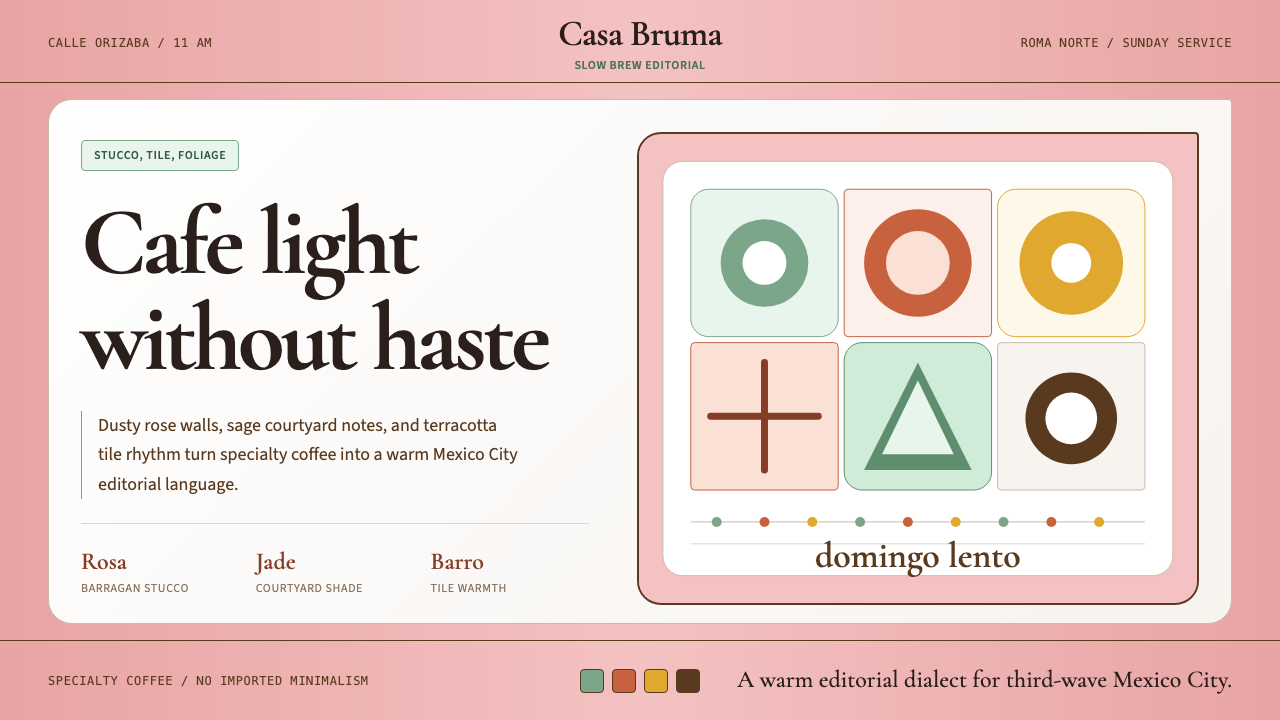 CDMX Roma Norte CafeMexico City coffee, unhurried. Dusty rose, sage jade, and serif rhythm carry…
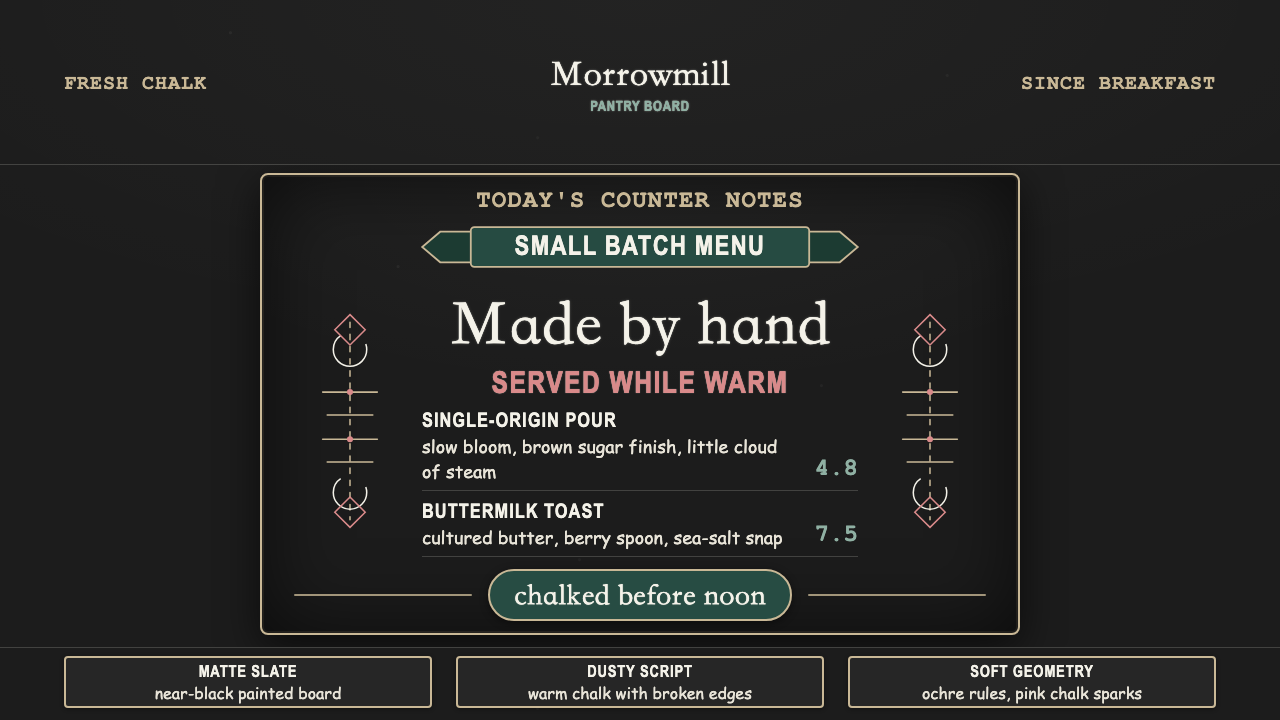 Chalk Café BoardWarmth written by hand. Dusty chalk script on graphite slate, framed by soft…
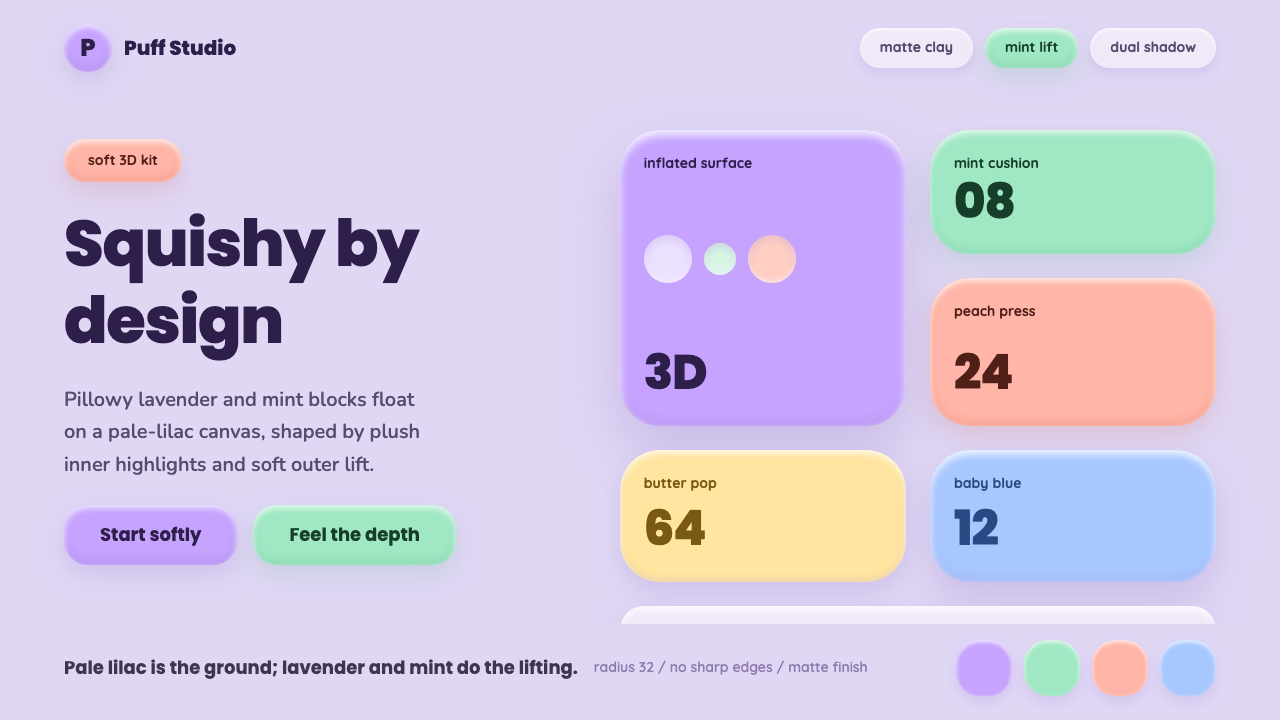 ClaymorphismSquishy, not flat. Lilac clay surfaces puff up with mint and lavender dual sh…
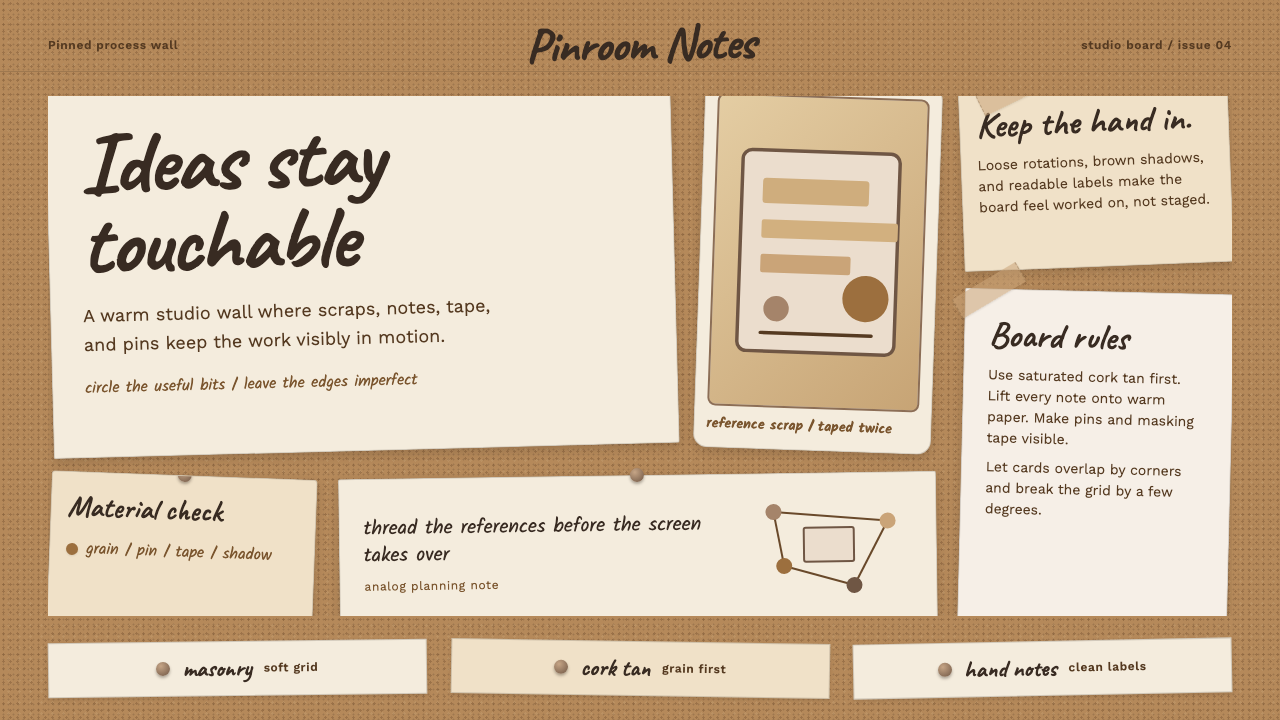 Cork Board StudioWarm ideas stay tactile. Cork tan, Caveat handwriting, pinned paper, and tape…
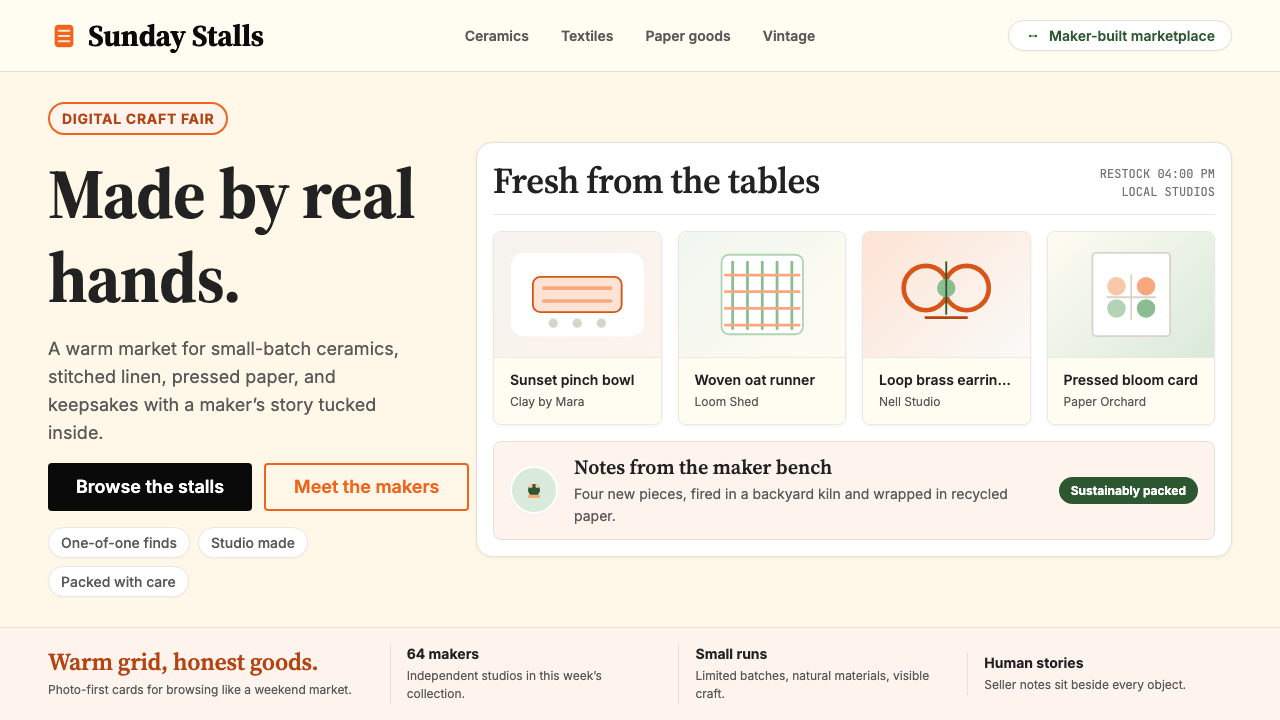 Etsy HandmadeA digital craft fair, in orange. Hand-drawn accents, cream backgrounds, delib…
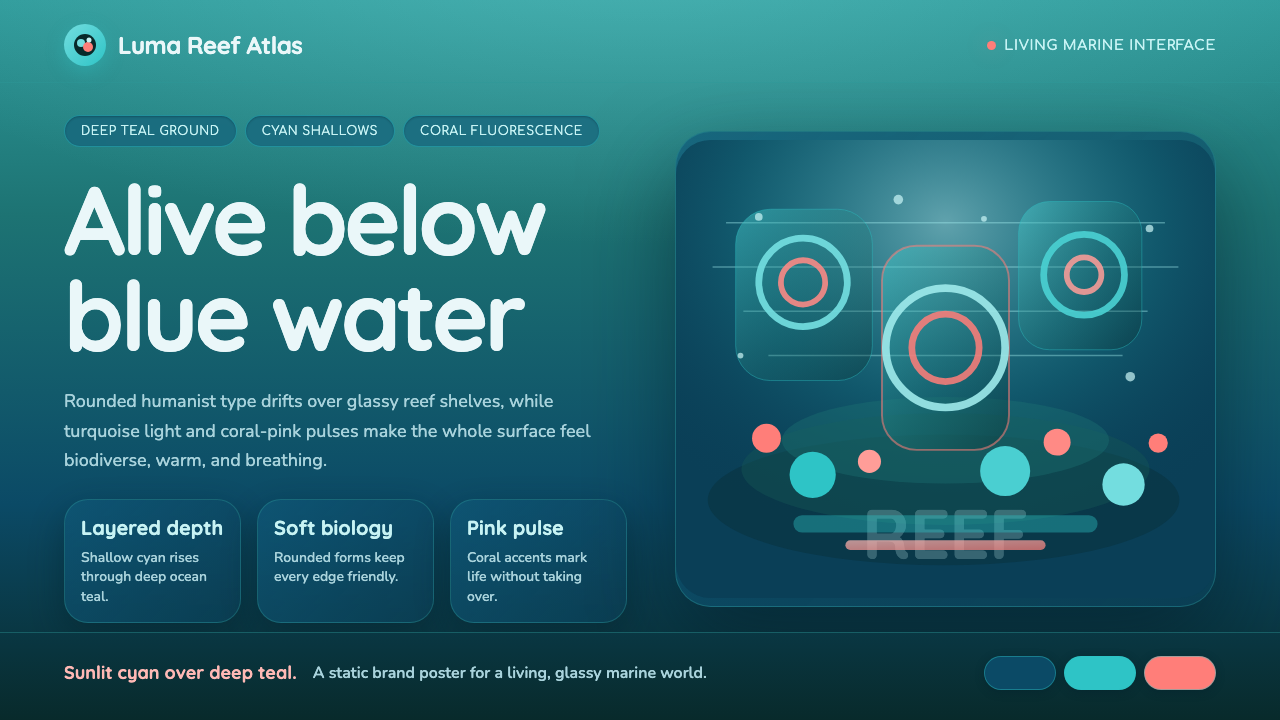 Great Barrier ReefAlive under deep teal. Quicksand curves, cyan glow, and coral-pink pulses bui…