What is DNA Gel Electrophoresis?
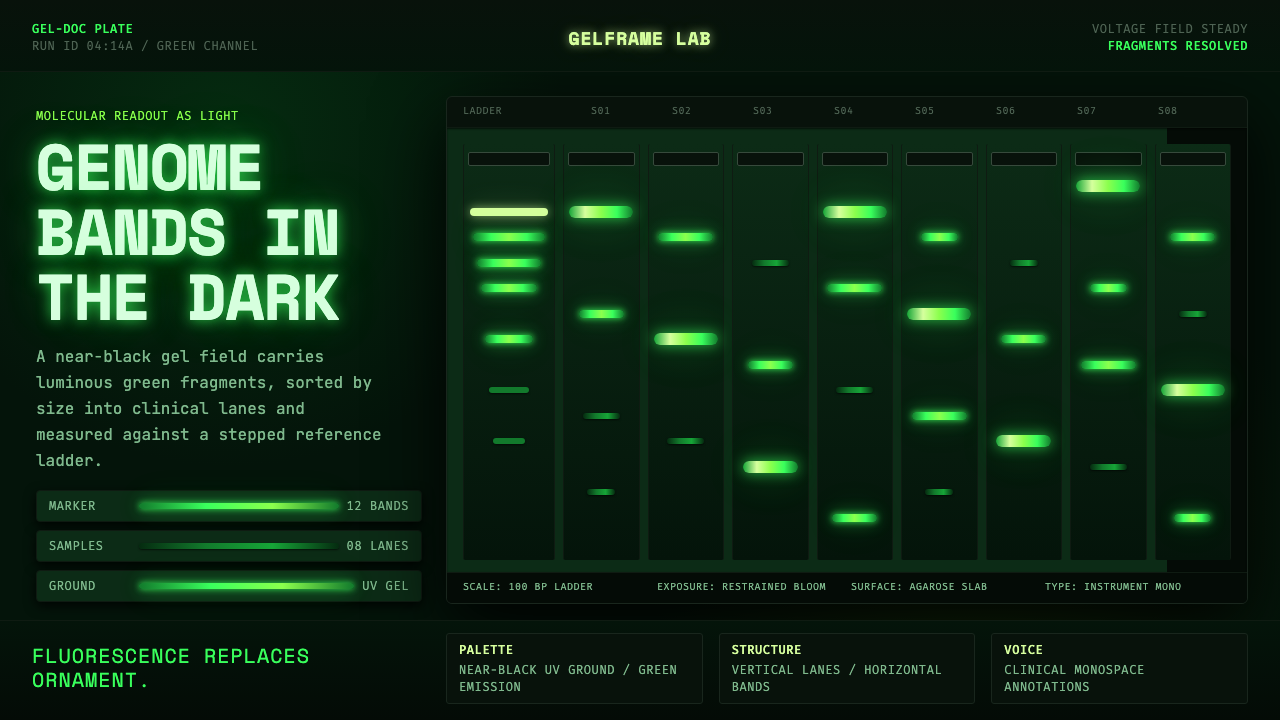
DNA Gel Electrophoresis turns laboratory output into a night-dark field of fluorescent green: separated fragments become horizontal bands, lanes become structure, and measurement becomes atmosphere.
DNA Gel Electrophoresis in brief
DNA Gel Electrophoresis takes the everyday image of molecular biology and treats it as a complete visual language. Under a UV transilluminator, an agarose slab becomes near-black while DNA fragments fluoresce as bright green horizontal bands, stacked from top to bottom within separate lanes. The result is simultaneously image, measurement, and archive: a dark field whose smallest luminous marks carry the most information.
The palette is deliberately narrow. A deep UV-gel ground establishes darkness, while fluorescent green identifies the readout. Bands receive a soft bloom at their edges, enough to suggest emitted light without turning the composition into decorative neon. A stepped reference ladder supplies scale and makes the image legible as an instrument result rather than an abstract pattern.
Typography completes the laboratory fiction. Monospace lettering, clinical captions, specimen labels, and archival numbers behave like annotations placed beside a gel plate. The style is not simply dark technology branding. Its identity depends on the relationship between ground, lane, band, ladder, and label: every element should feel recorded, positioned, and available for inspection.

Where does DNA Gel Electrophoresis come from?
The source places the style around 1990, when routine agarose electrophoresis, fluorescent staining, and gel-documentation imaging formed a familiar laboratory workflow. This period matters less as a claim about a single invention than as the point at which a recurring visual scene became ordinary: a near-black slab, luminous green bands, and a recorded image that could be read after the experiment was over.
Its region is global. The reference belongs to molecular biology and genetics laboratories worldwide rather than to one national school, studio, or regional craft tradition. That shared setting gives the style its unusual neutrality. The dark field is not theatrical darkness; it is the common background of a practical readout. The green bands are not chosen for mood alone; they are the marks that make the result visible.
Two movements define the source material. Molecular-biology instrumentation contributes the gel, the channel, the lane, and the reference ladder. Laboratory data-readout visualization contributes the insistence that information must remain organized, inspectable, and visually distinct. Together they produce an aesthetic that feels technical without becoming ornamental: the beauty comes from ordered evidence appearing inside darkness.
As a design style, the language emerges by preserving the hierarchy of the original image. The gel ground must remain dominant, lanes must remain readable, bands must carry attention, and the ladder must retain its role as scale. Type is added as an annotation system rather than as a competing visual voice. The result is a translation of laboratory output into interface, editorial, and presentation form while keeping its archival character intact.
What defines the DNA Gel Electrophoresis look?
UV-Gel Ground
The background is near-black with the dense, quiet presence of a gel image under ultraviolet illumination. It should feel like a material field rather than a generic dark interface. A near-black ground gives every green mark maximum authority and keeps the composition visually close to laboratory documentation.
Fluorescent Green
Green is the primary signal color. It belongs to the bands and to the visual channel that makes them visible. Use it with discipline: concentrated luminous marks are more convincing than a surface covered in green. The color should indicate evidence, activity, or a captured result.
Lane Structure
Vertical lanes organize the field and prevent luminous bands from becoming scattered decoration. Each lane should read as a contained column of evidence, with clear separation from its neighbors. Repetition creates the grid, but the grid remains organic to the gel rather than imposed as a graphic ornament.
Band Rhythm
Horizontal bands create the style's strongest rhythm. Some marks may be bright and dominant, while others remain faint or distant, but their placement should always feel intentional. Bands are not glowing rules added for atmosphere; they are the primary events in the image and must retain visual hierarchy.
Reference Ladder
The stepped reference ladder is the visual proof that the composition represents measurement. It introduces scale without requiring decorative rulers or explanatory clutter. Treat it as a stable anchor: quieter than the strongest bands, but always available to explain how the surrounding marks should be read.
Monospace Annotation
Monospace type gives captions, labels, and archival numbers the voice of an instrument readout. Letterforms should remain clinical and legible, with hierarchy created through placement, contrast, and scale rather than expressive typography. Text is a record attached to the image, not a poster headline floating above it.

Who shaped DNA Gel Electrophoresis?
Thermo Fisher is named in the approved source as one of the key figures for this style. Its inclusion anchors the reference in molecular-biology instrumentation and reinforces the reading of the gel as practical laboratory output rather than decorative science fiction.
Addgene appears in the approved source as another key figure. The name helps place the visual language within the global molecular-biology and genetics laboratory context, where lanes, bands, and archived readouts form a shared visual vocabulary.
EdvoTek completes the trio of key figures named by the source. In the article's reference frame, it helps preserve the connection between the dark gel image and the broader laboratory data-readout tradition from which the style takes its discipline.
How do you use DNA Gel Electrophoresis today?
Apply DNA Gel Electrophoresis by preserving the logic of a recorded result. Begin with a dark gel-like field, establish lanes or columns, reserve luminous green for meaningful marks, and use monospace annotation to identify what is being read. Soft bloom can suggest fluorescence, but it should support the bands rather than become a general atmosphere applied to every element.
For presentation slides, let the cover behave like a single striking gel image: a near-black field, a restrained lane structure, and a small number of bright green bands carrying the title or central message. Content slides should feel like annotated readouts, with clear columns and clinical labels. Data slides benefit from the reference ladder as a compositional cue, giving charts and comparisons a sense of scale without adding ornamental framing.
For web interfaces, the style suits dashboards, monitoring views, and pricing pages that need a strong relationship between status and evidence. Use the near-black ground as the stable workspace, green for active or confirmed states, and monospace labels for identifiers, measurements, or archived entries. Cards and panels should feel like bounded inspection areas. Avoid turning every control into a glowing object; the interface should reserve luminosity for information that matters.
For editorial and marketing work, the style can make technical material feel precise and memorable. An article may place a large gel-like field beside narrow annotated text, using lane divisions to separate sections or case studies. A campaign can treat the green bands as a visual signature, repeating them across covers, product stories, and callouts while keeping the surrounding field quiet. The strongest compositions make the reader feel that information has just emerged from an instrument.
The common mistake is confusing laboratory readout with generic cyberpunk styling. Excessive glow, scattered green decoration, futuristic display type, and unstructured darkness weaken the reference because they remove the evidence hierarchy. Another mistake is omitting the ladder or lane logic entirely. If the image no longer suggests a gel, a channel, and a readable record, it may still look dramatic, but it is no longer recognizably DNA Gel Electrophoresis.

DNA Gel Electrophoresis — FAQ
Is DNA Gel Electrophoresis simply a neon science-fiction style?
No. Its darkness and green light come from the gel-documentation image, not from a general futuristic mood. The style depends on lanes, horizontal bands, a reference ladder, and clinical annotation. Remove that measurement structure and the result becomes generic neon rather than a laboratory readout.
Why is the background so close to black?
The near-black ground preserves the visual condition of an agarose slab under a UV transilluminator. More importantly, it gives the fluorescent green bands maximum contrast and keeps the image focused on the marks that carry the result. The darkness should feel like a working field, not an empty decorative backdrop.
What is the role of the stepped reference ladder?
It provides scale. In visual terms, the ladder tells the viewer that the surrounding bands are not placed arbitrarily; they belong to a system that can be compared and inspected. It should remain visible and stable, but usually quieter than the strongest result bands.
Why use monospace typography?
Monospace type recalls instrument captions and archival numbers, so it naturally supports the style's clinical voice. It also makes labels feel positioned within a technical record. Hierarchy should come from placement, contrast, and scale, allowing the text to annotate the image instead of competing with the fluorescent bands.
Can this style work beyond laboratory interfaces?
Yes, provided the design preserves its evidence-led structure. It translates well to presentation covers and data slides, dashboards, pricing pages, editorial features, and technical marketing. It is less convincing when the product depends primarily on warmth, softness, or decorative richness. The closer the communication is to a captured result or inspectable record, the more naturally the style fits.
Related design styles
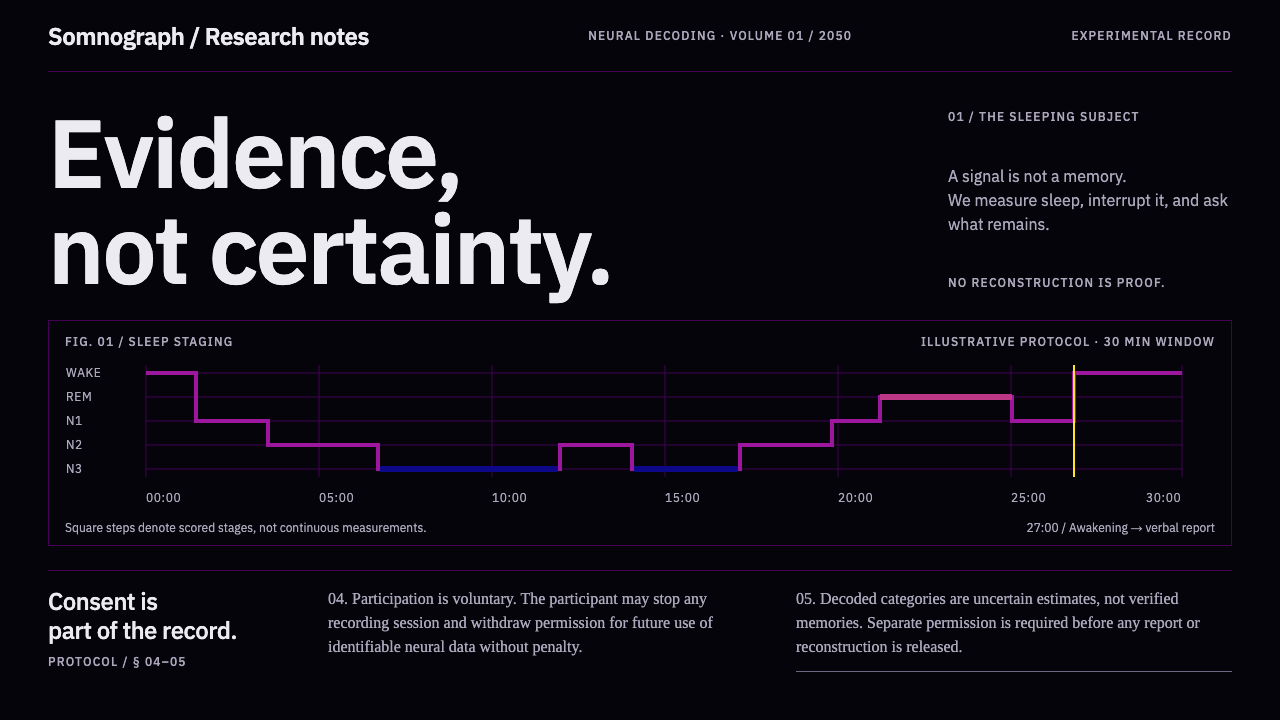 Dream Recording LabEvidence, not certainty. Plasma sleep-stage traces on black; consent stays fu…
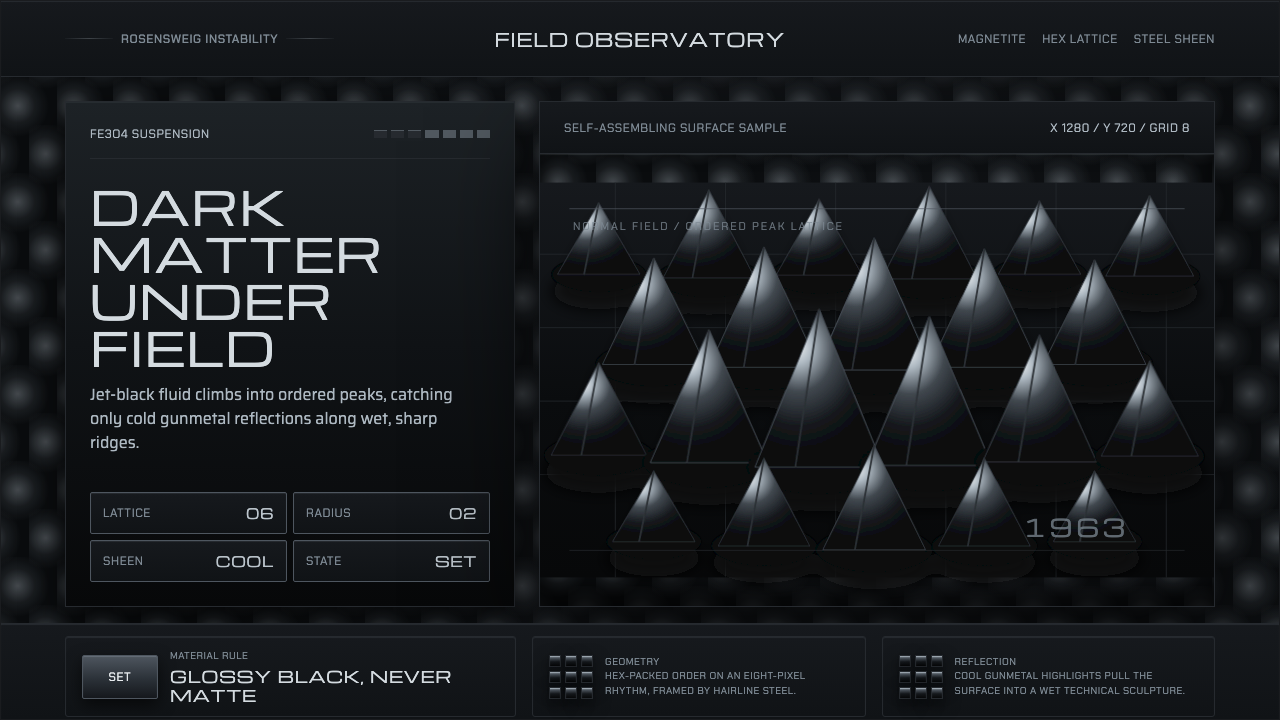 Ferrofluid Spike FieldPhysics turns sculptural. Jet black peaks, steel sheen, hex order.
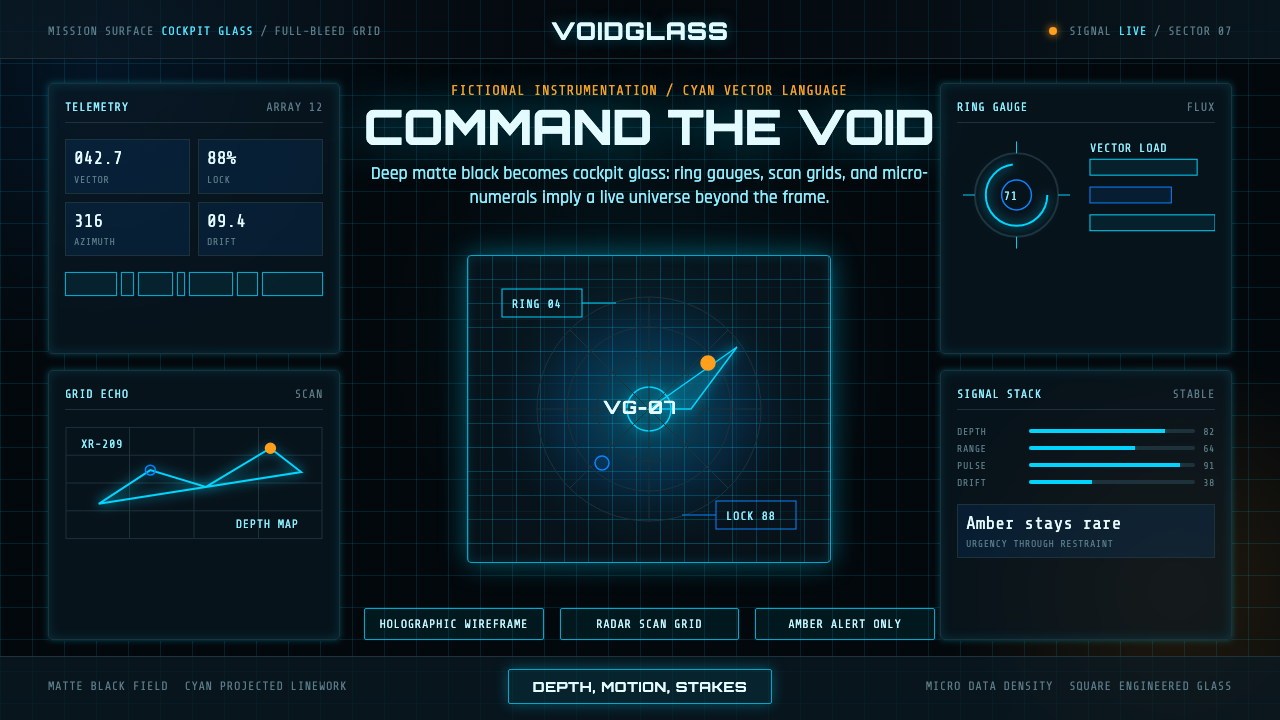 FUI Sci-Fi HUDBlack until it glows. Cyan wireframes, ring gauges, and radar grids sell live…
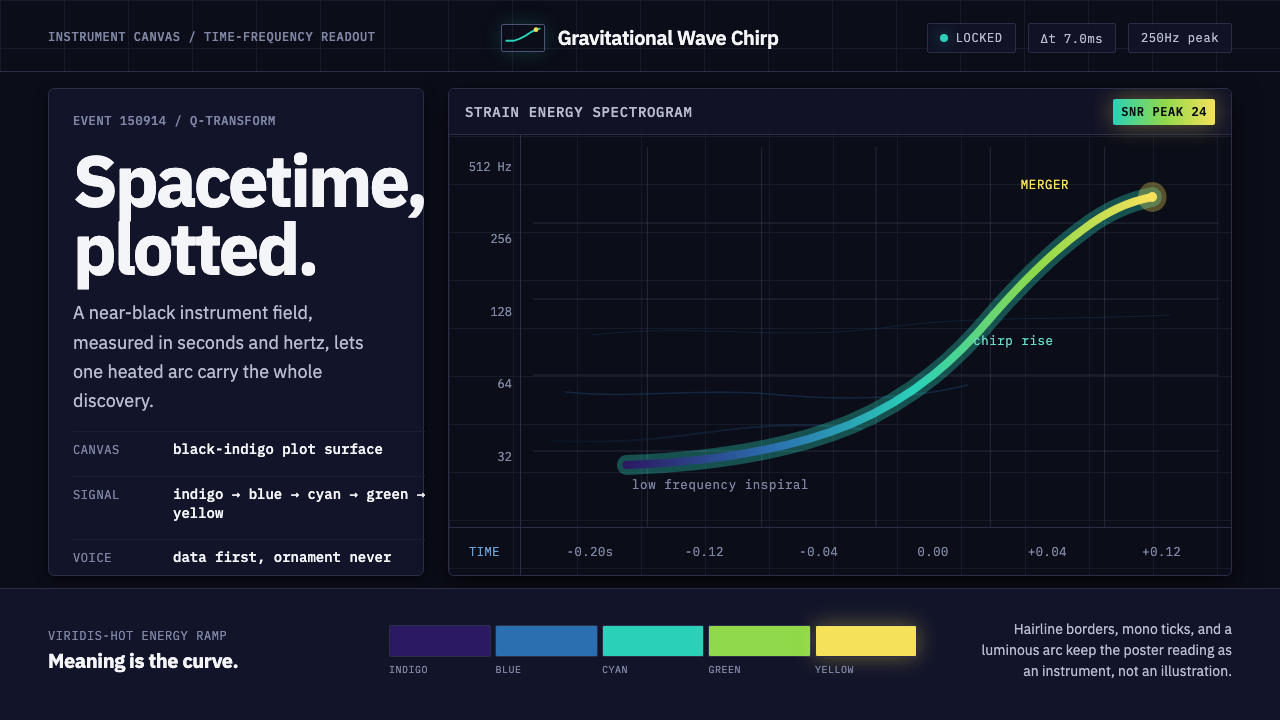 Gravitational Wave ChirpData makes the drama. Near-black grid, mono Hz ticks, and a viridis-hot chirp…
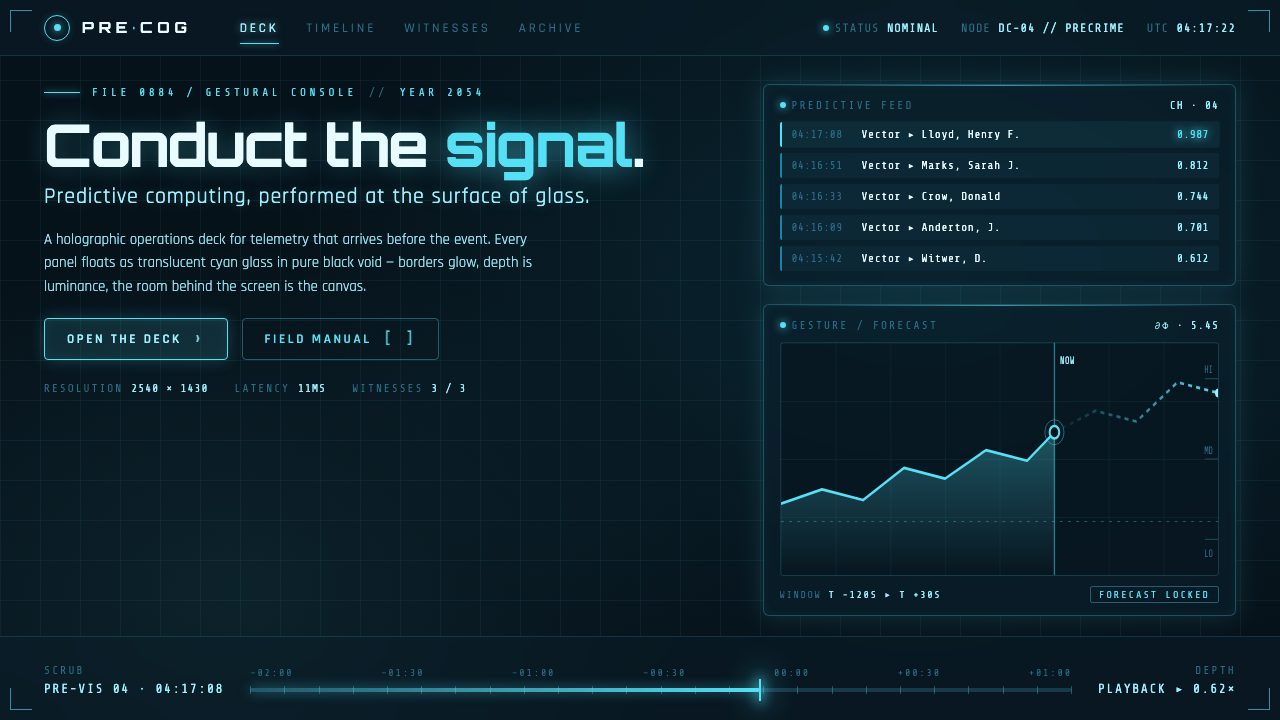 Minority Report Gestural UIPredictive computing, conducted on glass. Luminous cyan panels floating in pu…
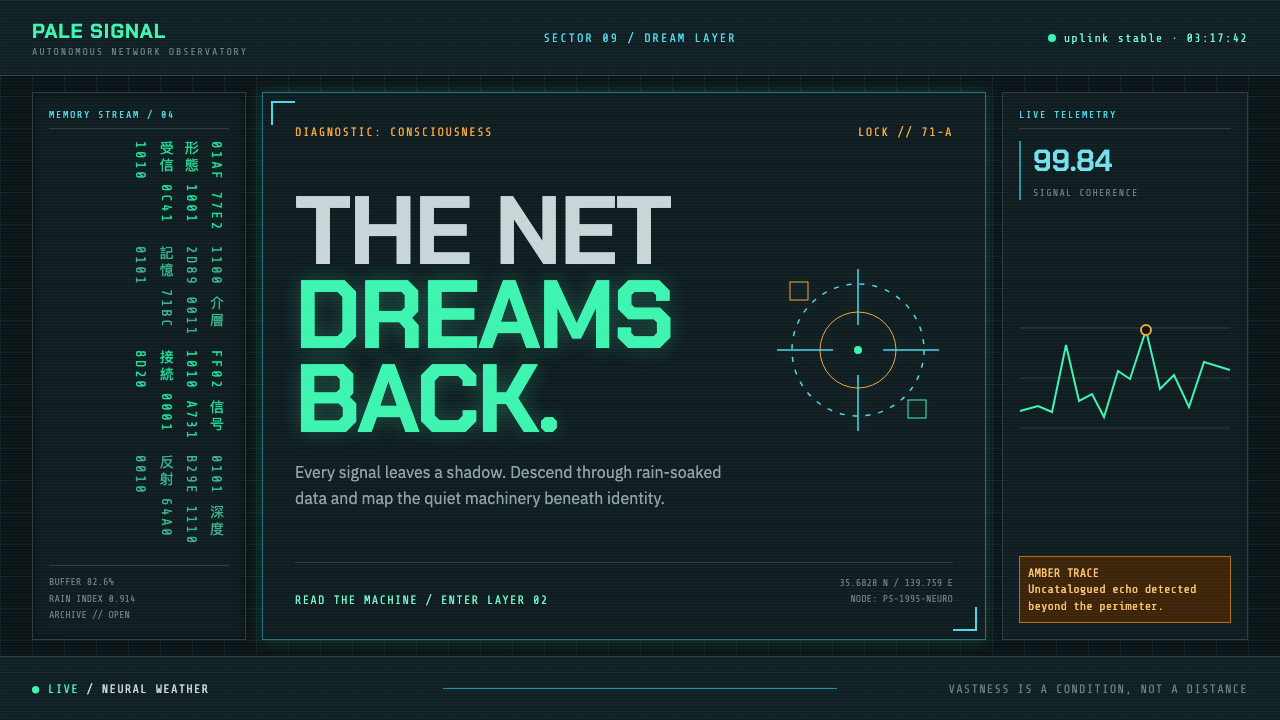 Ghost in the Shell (1995)A machine dreams in the rain. Phosphor green code burns through black-teal gl…