What is Dehua Blanc de Chine?
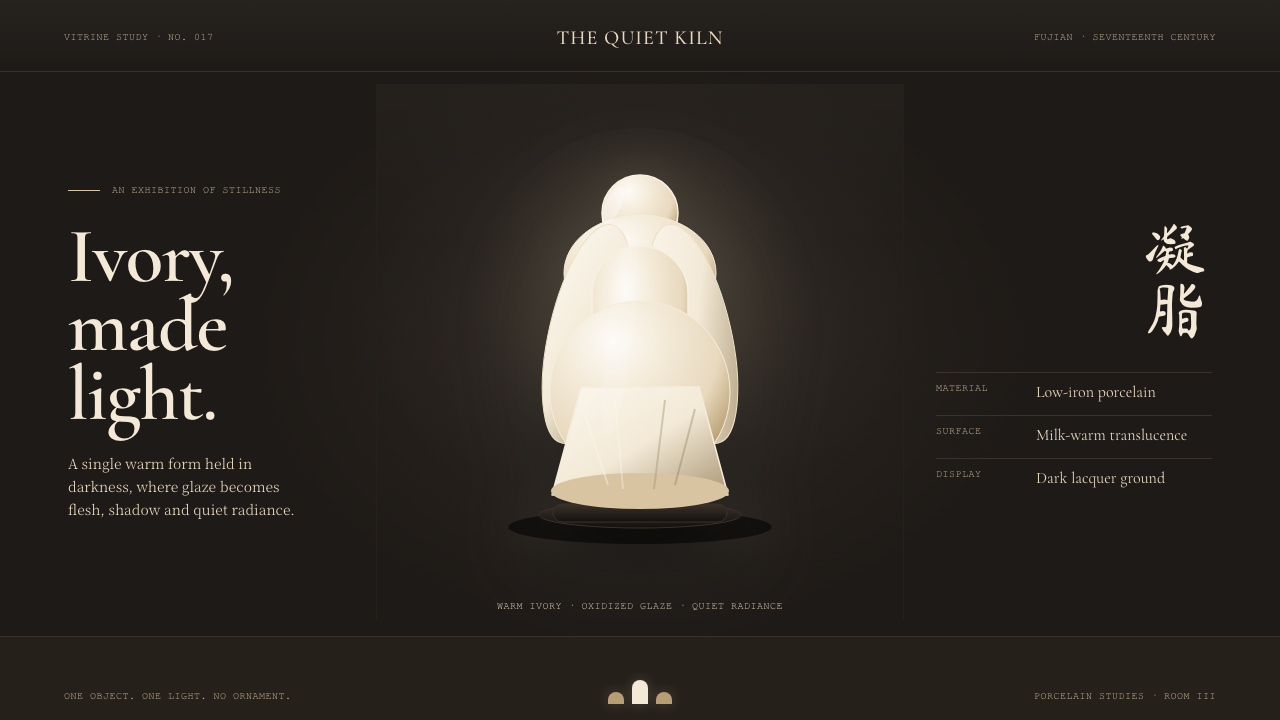
Dehua blanc de chine turns warm ivory into light, placing one quiet porcelain form against a near-black ground.
Dehua Blanc de Chine in brief
Dehua blanc de chine is the ivory-white porcelain of the Dehua kilns in Fujian, southeastern China. Prized since the Ming and Qing dynasties, it is recognized for a warm, translucent, mutton-fat glaze that feels closer to flesh and condensed light than to a cold manufactured surface. The glaze is not merely a finish applied over the object; it is the visual identity of the object itself.
The most iconic Dehua form is the Guanyin figure associated with the tradition of He Chaozong. It is typically imagined as a complete, undecorated porcelain presence: creamy glaze, quiet modeling, and no painted color competing with the form. Placed on a black lacquer stand or inside a dark museum vitrine, the figure becomes a luminous subject whose whiteness reads as emitted light rather than as a neutral background.
As a design system, Dehua blanc de chine is built around restraint, warmth, and concentrated presence. Every layout should feel like the display of a single treasured object: a near-black field, one warm-ivory subject, a measured sense of surrounding space, and a subtle edge of light that clarifies the silhouette. The darkness is not an empty backdrop; it is the condition that allows the porcelain to glow.

Where does Dehua Blanc de Chine come from?
The Dehua blanc de chine tradition belongs to the Dehua kilns of Fujian Province in southeastern China. Its historical frame is the Ming–Qing period before 1900, when the region became associated with a distinctive white porcelain whose surface possessed a warm, translucent character. The name blanc de chine identifies this export-facing tradition through the color and material effect that made it recognizable beyond its place of production.
The material language begins with low-iron porcelain clay fired in an oxidation flame. That combination produces the characteristic creamy warmth of the glaze rather than a stark, bluish white. The result is a surface that seems to hold light within it. In design terms, the important quality is not brightness alone but the meeting of brightness and warmth: ivory that feels bodily and tactile even when the form is presented in silence.
Dehua porcelain reached an export peak during the seventeenth and eighteenth centuries. Its identity developed through Chinese export porcelain while remaining connected to devotional objects and scholar’s objects. Those two directions give the style its unusual balance. It can feel sacred and intimate, yet it also carries the composure of an object made to be observed, collected, and placed within a carefully controlled setting.
The Guanyin figure became the defining image of the tradition, and He Chaozong 何朝宗 is the key named figure associated with it in the approved material. The form’s power comes from unity: a single glaze, a calm silhouette, and an absence of surface color. Set against a near-black lacquer stand or dark vitrine, the figure demonstrates the central visual principle that later design applications borrow — the object must remain luminous, while the ground must remain quiet enough to support it.
What defines the Dehua Blanc de Chine look?
Warm Ivory
The defining color is not pure white but warm ivory: creamy, lightly translucent, and close to the softness of mutton-fat glaze. It should feel illuminated from within rather than painted onto a surface. White belongs to the subject alone, while surrounding elements remain subdued so the porcelain quality is never diluted.
Near-Black Ground
The ground is near-black, deep enough to create separation without becoming a theatrical void. Its role is supportive rather than expressive. It gives the ivory form visual silence, allowing the glaze to read as light and making the subject feel placed within a dark lacquer stand or vitrine.
Single Presence
Composition should be organized around one luminous subject or one clearly dominant group. Supporting information remains secondary and quiet. The visual rhythm is not built from abundance, but from the tension between a concentrated object and the spacious darkness surrounding it.
Quiet Contour
Edges carry more authority than decoration. A restrained rim of light, a clear silhouette, or a gentle tonal transition can reveal the form without turning it glossy or theatrical. The contour should feel discovered in darkness, like the outline of a figure emerging from a vitrine.
Undecorated Surface
The style depends on a surface free from competing color and ornamental noise. Form, glaze, and light carry the expression. Any added element should clarify the object, its placement, or its meaning; if it merely makes the surface busier, it works against the tradition’s quiet authority.
Centered Display
The subject often feels centered even when the wider composition is not mechanically symmetrical. Space gathers around the object as it would around a displayed sculpture. Alignment should communicate care, stillness, and reverence rather than speed or casual utility.

Who shaped Dehua Blanc de Chine?
He Chaozong is the key named figure in the approved Dehua material, associated with the Guanyin tradition that gives blanc de chine its most recognizable form. In this system, his importance is expressed through the ideal of a complete, undecorated figure whose authority comes from modeling, glaze, and presence rather than painted surface.
The Guanyin figure is the iconic form of Dehua blanc de chine. Its creamy glaze, quiet silhouette, and devotional presence establish the system’s central composition: one luminous body held in visual silence. It is the clearest model for layouts that ask the viewer to pause and look.
The Dehua kilns in Fujian provide the geographic and material identity of the tradition. Their low-iron porcelain clay and oxidation firing are the source of the warm white surface that separates this style from an impersonal cold white. The kiln is therefore part of the aesthetic, not merely its historical setting.
The blanc de chine tradition joins Chinese export porcelain with devotional and scholar’s-object culture. That dual identity explains why the style can feel both intimate and ceremonial. It belongs equally to the hand, the shrine, the collection, and the carefully composed display.
How do you use Dehua Blanc de Chine today?
For presentation slides, use the Dehua logic most clearly on the cover: a near-black field, one warm-ivory focal form, and a title that behaves like a quiet label beside an exhibited object. Content slides should preserve the same calm hierarchy. Keep information grouped around a dominant visual or statement, let empty darkness separate sections, and make data feel curated rather than crowded. A data slide can treat each major finding as a porcelain-like presence: isolated, legible, and gently brought forward by light.
For web interfaces, the system suits dashboards, pricing pages, and product spaces that want to communicate confidence without visual noise. Use near-black as the stable environment, reserve warm ivory for primary content and key actions, and keep supporting text restrained. Cards should feel like display plinths rather than floating software panels. Borders, when needed, should clarify containment quietly; they should never compete with the main subject.
For editorial and marketing work, Dehua blanc de chine supports a slow, object-centered reading experience. Give the headline room to stand alone, keep body copy in a calm and narrow measure, and use captions or metadata as museum-like labels. Campaign pages can alternate between dark fields and close views of warm ivory, but the alternation should feel like movement through a gallery, not a sequence of promotional effects.
For imagery, choose forms that can hold quiet attention: porcelain bodies, close contours, black lacquer settings, or isolated objects against darkness. Cropping should preserve the sense of a complete presence whenever possible. If a photograph is used, its role is to reveal glaze, silhouette, or placement; it should not introduce a competing palette or a busy environment.
The common mistake is to treat the style as a generic dark theme with bright white text. That reverses the hierarchy. Dehua blanc de chine is not darkness plus contrast; it is warm porcelain against darkness. If the white spreads across every label, border, and background surface, it stops belonging to the object. Keep the luminous quality selective, preserve warmth, and let the ground remain quiet enough for the subject to carry the page.

Dehua Blanc de Chine — FAQ
Is Dehua blanc de chine simply a white-on-black color scheme?
No. Its identity depends on the quality of the white: warm, creamy, lightly translucent, and connected to porcelain glaze rather than to neutral interface white. The near-black ground exists to make that material warmth visible. If the white becomes generic, evenly distributed, or cold, the visual system loses its connection to Dehua porcelain.
Why must the ground remain near-black?
The dark ground is the visual condition that allows the porcelain to read as light. It recalls the black lacquer stand or deep museum vitrine in which a Dehua figure is displayed. A lighter ground can still show ivory, but it reduces the sense that the object is glowing independently from its surroundings.
Can the style use several bright colors?
It can, but doing so moves away from the approved Dehua language. The source tradition is defined by one warm ivory subject against a near-black ground, with expression carried by form, glaze, and light. Additional color should be rare and subordinate, never a second spectacle competing with the porcelain presence.
What makes the style feel devotional rather than merely luxurious?
Its devotional quality comes from concentration and stillness. The Guanyin figure is presented as a complete presence, without painted ornament or a busy setting, and the surrounding darkness creates space for attention. Luxury may be part of the material impression, but the deeper mood is reverence toward a quiet object.
Related design styles
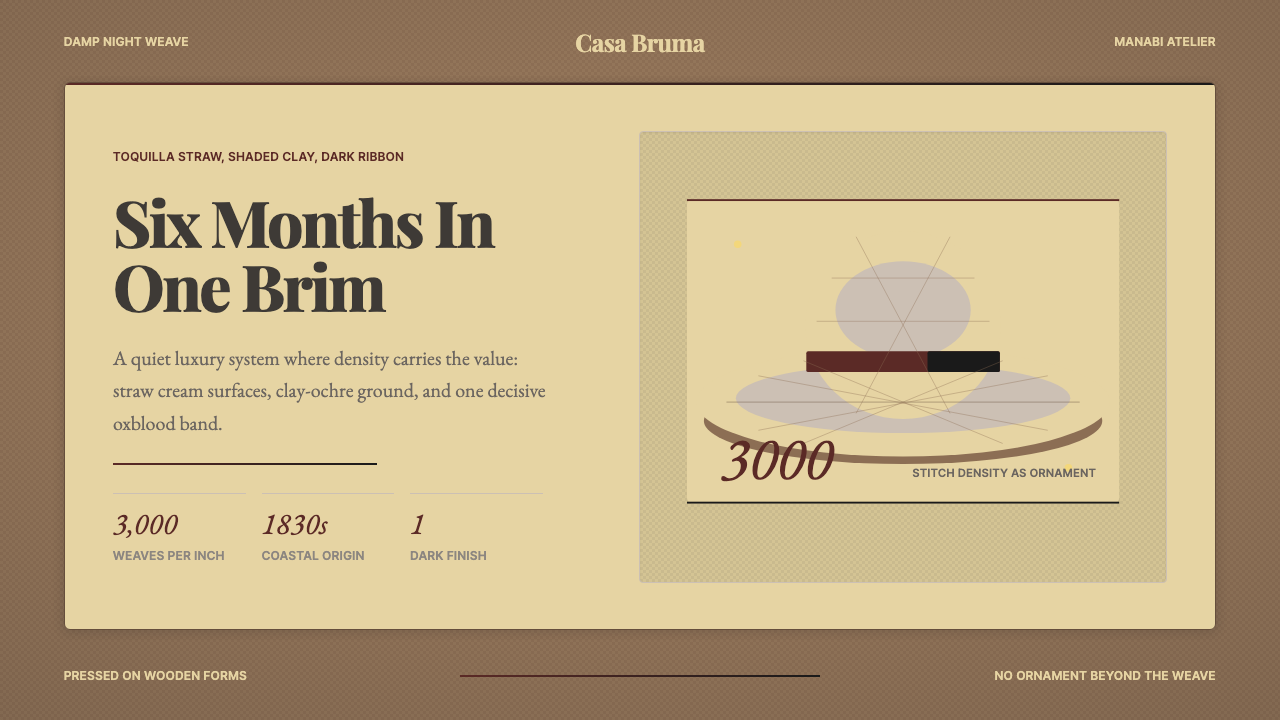 Ecuadorian Montecristi Panama HatLuxury disappears into density. Straw cream, clay ochre, and one oxblood ribb…
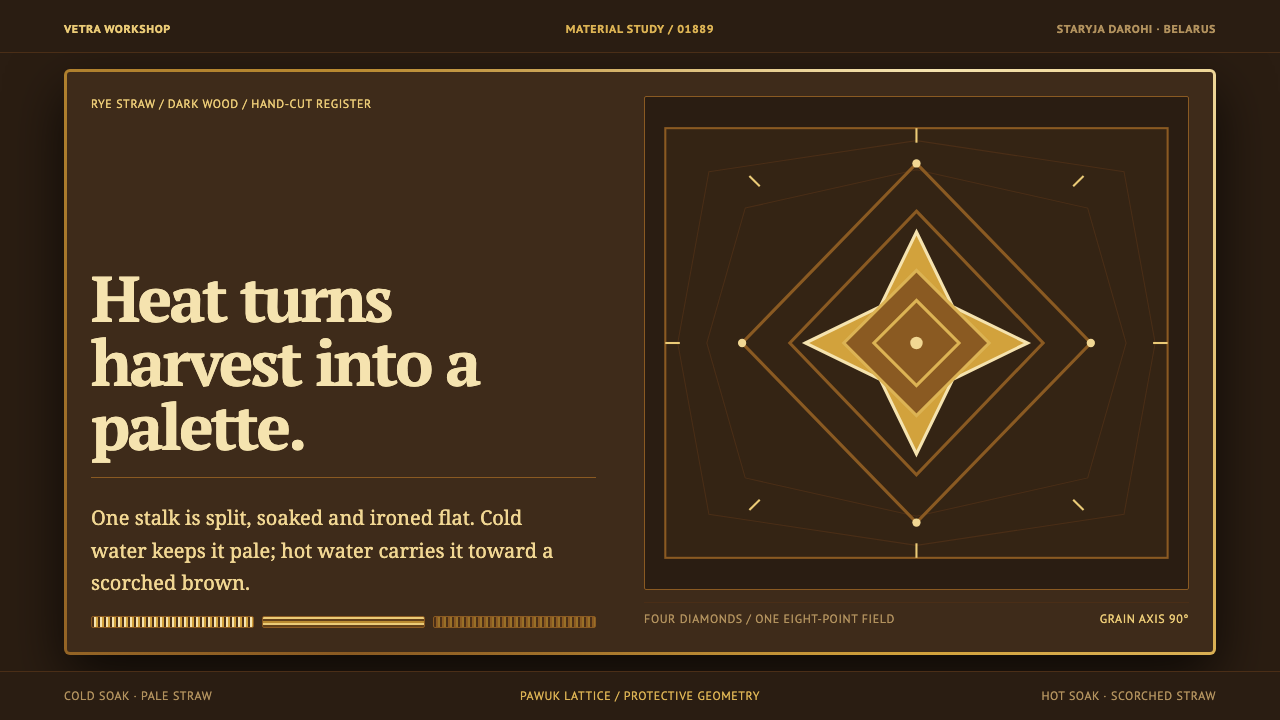 Belarusian SolomkaOne harvest, a tonal ladder. Straw diamonds turn pale gold to scorched brown…
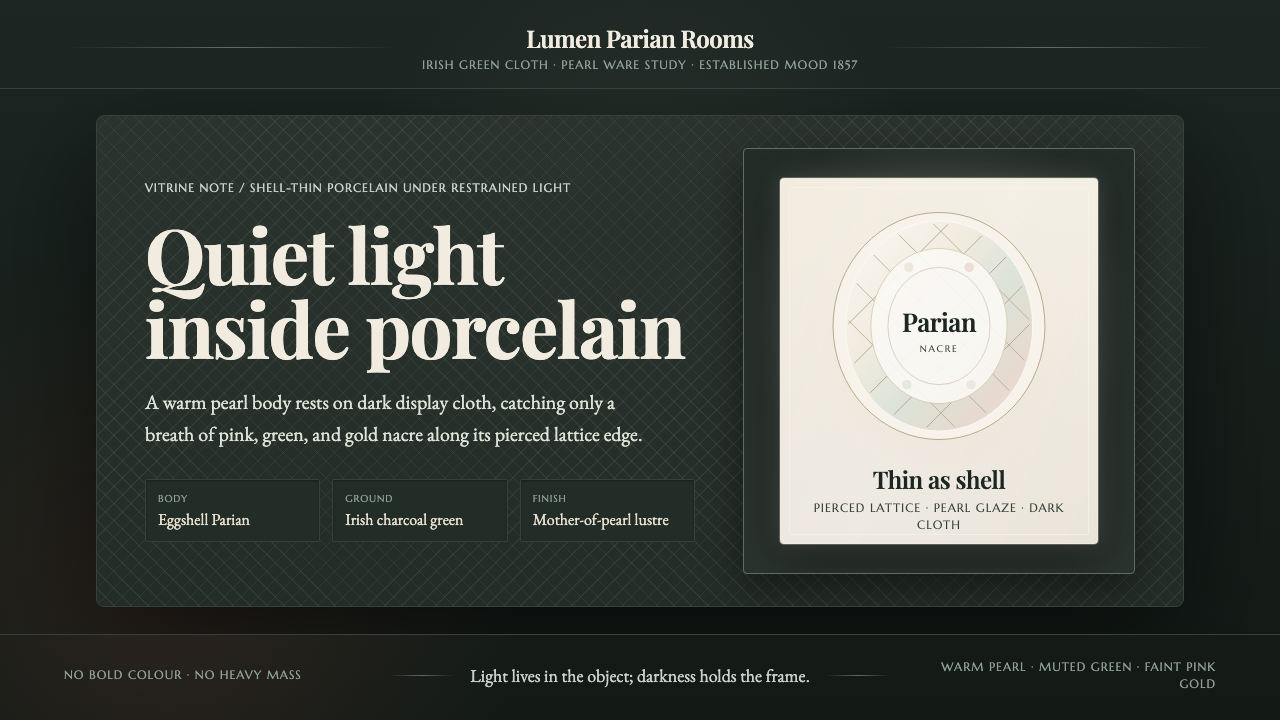 Belleek Parian ChinaPorcelain glows in restraint. Pearl white, nacre tints, and lattice sit on da…
 Jingdezhen BlancQuiet porcelain glows. Warm glaze-white on slate reveals hidden anhua incisio…
 Sake Brewery KuraQuiet indigo authority. Resist-white kanji and cedar accents frame a vertical…
 Wool FeltingHandmade stillness. Oatmeal-gray felt, humanist serifs, and soft rolled panel…