What is Caterpillar Construction Yellow (1925)?
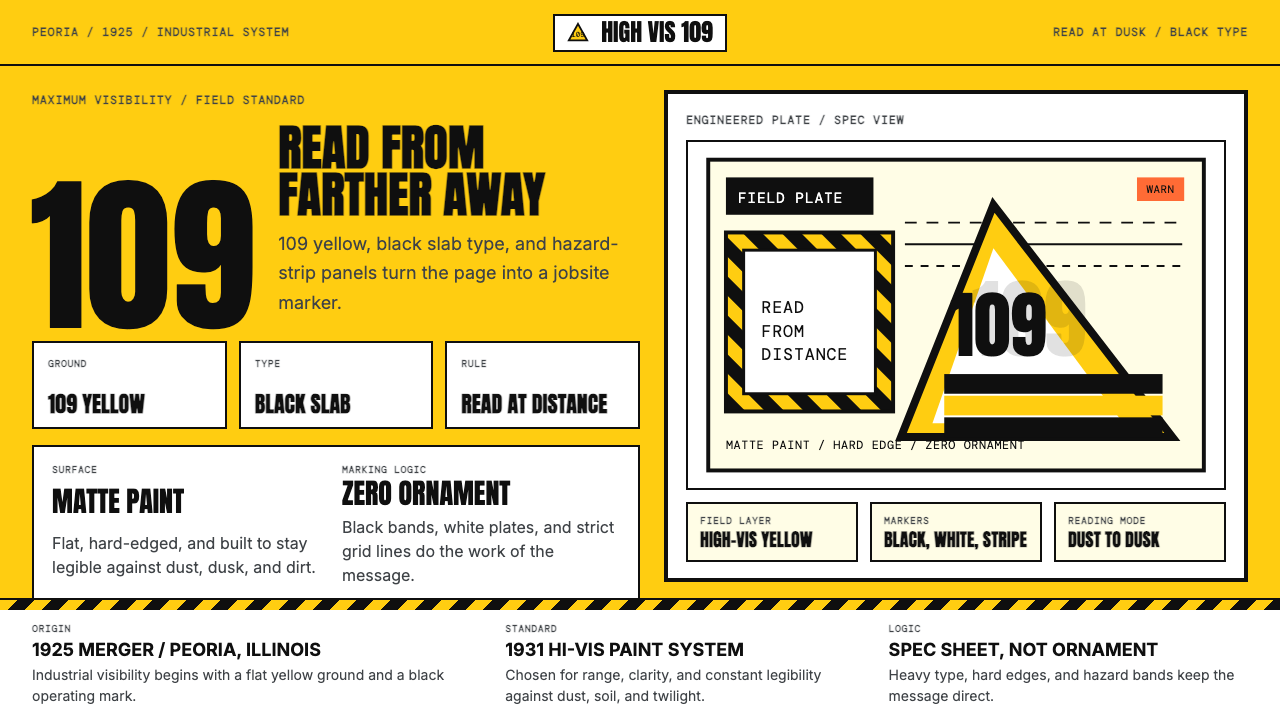
Born on the jobsite and built to be seen from a mile away, Caterpillar Construction Yellow turned the most saturated hue in heavy industry into a complete typographic system.
Caterpillar Construction Yellow (1925) in brief
Caterpillar Construction Yellow is a design system rooted in the identity of one of the world's most recognizable industrial brands. Its foundation is a single, uncompromising saturated yellow — the same shade that coats every bulldozer, excavator, and motor grader bearing the CAT name — paired with the stark contrast of pure black type and the crisp relief of white specification panels. There is no softness, no gradation, and no decorative intent. The palette exists entirely to serve visibility and directness.
What distinguishes this system from ordinary high-visibility color use is its elevation into a full graphic language. The yellow is not merely a brand color applied to a surface — it becomes the page itself, the ground on which all communication sits. Black slab-style letterforms deliver information with the authority of an engineering schematic. White panels cut through the yellow field to isolate data, specifications, or secondary content. Hazard stripe motifs, drawn from the physical safety markings on machinery, translate into compositional devices that signal urgency and structure simultaneously.
The aesthetic sensibility is industrial without apology. It does not borrow the warmth of craftwork or the elegance of luxury. It draws its legitimacy from function: every bulldozer painted in this yellow is a safety decision made visible. Bringing that logic into print and screen design means treating visibility and legibility as the highest values — not as constraints, but as the entire brief.

See the Caterpillar Construction Yellow (1925) design system
Where does Caterpillar Construction Yellow (1925) come from?
The story of Caterpillar's yellow begins not with a brand manager but with a practical problem on a road construction site. In the late 1920s and early 1930s, as mechanized earthmoving equipment became heavier and more numerous on American infrastructure projects, the risk of collision between machines — and between machines and workers — grew severe. Equipment needed to be visible. The solution was color: a chrome-rich, cadmium-influenced saturated yellow that could be spotted against dirt, dust, gravel, and the flat gray light of overcast skies. Caterpillar formally adopted Hi-Way Yellow — a color that maps closely to Pantone 109 — in 1931 for exactly this reason.
The company itself had formed six years earlier, in 1925, from the merger of two California-based competitors: the Holt Manufacturing Company and the C. L. Best Tractor Co. Benjamin Holt had pioneered the tracked crawler tractor, famously testing it in the soft peat soils of the San Joaquin Valley where wheeled machines sank. C. L. Best had refined similar technology independently. Their merger in Peoria, Illinois, created what would become the dominant force in global construction and mining equipment. The 1925 founding date carried forward by this design system marks that origin — the moment the identity's industrial lineage begins.
The visual identity evolved across decades. For much of the mid-twentieth century, the brand used varied wordmarks and logotype treatments alongside the yellow. The decisive modern form emerged in 1989, when the branding firm Lippincott redesigned the corporate identity around three elements: the saturated yellow, a bold condensed black wordmark, and the yellow triangle that forms the negative-space letter 'A' in the CAT logotype. This triangle — a piece of geometric precision that doubles as a hazard signal — gave the system its most memorable compositional device and cemented the relationship between the brand's color and its typographic DNA.
The industrial context gave the color a semantic weight that few brand colors carry. Yellow had long been associated with caution and warning in the Western regulatory tradition — traffic signals, hazard tape, and safety vests all draw from the same chromatic convention. Caterpillar's yellow is not cautionary in the passive sense; it is assertive, occupying space aggressively and demanding acknowledgment. When translated into a design system for print and screen, that assertiveness becomes a structural principle: the yellow does not recede, it commands.
What defines the Caterpillar Construction Yellow (1925) look?
The Yellow Ground
Unlike most design systems where color is applied to a neutral ground, Caterpillar Construction Yellow inverts the hierarchy: the saturated yellow is the ground, and everything else is placed upon it. This means the yellow is never a highlight or an accent — it is the totality of the visual field from which black type and white panels are carved. The saturation level is uncompromising; any movement toward a lighter or more muted yellow breaks the system's industrial authority.
Black Type as Structure
The black used in this system is not merely typographic — it is structural. Letterforms are heavy and condensed, echoing the slab-serif tradition of industrial signage and machine nameplates. Headlines carry the weight of cast iron; they do not hint, they announce. Body text is set with tight spacing to maximize information density, in keeping with the spec-sheet logic that underpins the aesthetic. The contrast between the luminous yellow ground and the absolute black type is one of the most legible pairings achievable in print or on screen.
White as Relief
White panels serve as controlled interruptions within the yellow field — zones of technical information, data tables, or secondary content that require a neutral reading environment. These panels are never decorative; they are functional enclosures. Their edges are crisp and deliberate. The white does not blend into the yellow or soften against it; it asserts its boundary with the same directness as a painted specification box on the side of a piece of equipment.
Hazard Stripe Logic
Diagonal stripes alternating between deep black and the base yellow — drawn directly from the physical hazard markings painted on construction machinery and safety barriers — function as both a decorative and semantic device. As a border or divider, they signal transition, urgency, or restricted zones within a composition. They should be used sparingly and with intention: a hazard stripe deployed carelessly becomes visual noise, but one placed at a critical boundary reinforces the system's industrial authority.
Geometric Precision
Every compositional element is governed by angles and right relationships rather than organic or intuitive placement. The triangle — codified in the CAT logotype — is the system's most distinctive geometric unit, appearing as a directional indicator, a structural anchor, or a negative-space cut. Rectangles are used to define information zones with the same discipline as a technical drawing. There are no rounded corners softening the system's authority, no curves introducing warmth. The geometry is declarative.
Zero Atmospheric Softness
Gradients, soft shadows, glows, blurs, and any visual technique that simulates natural light or atmospheric depth are entirely absent from this system. Where shadows appear at all, they are hard-edged and offset — geometric decisions, not lighting simulations. This is not minimalism in the contemporary wellness-influenced sense; it is the visual logic of a machine manual, where ambiguity costs lives and clarity is non-negotiable.
Information Density
The system is engineered for high-density information delivery. Unlike lifestyle or luxury design systems that use generous whitespace as a signifier of quality, Caterpillar Construction Yellow treats space as a resource to be used, not wasted. Type is set tightly, white panels are packed with structured data, and every zone of the composition is expected to carry communicative load. The model is the equipment specification sheet: every square centimeter earns its place.

See the Caterpillar Construction Yellow (1925) design system
Who shaped Caterpillar Construction Yellow (1925)?
Benjamin Holt was the engineering entrepreneur whose tracked crawler tractor — tested in the San Joaquin Valley in 1904 — solved the fundamental problem of moving heavy loads across soft ground. His company, Holt Manufacturing, became half of the 1925 merger that created Caterpillar. Holt's core insight — that a machine's contact with the ground determined its usefulness — is the same principle that drives the brand's visual identity: contact with the viewer's eye, through maximum visibility, determines whether the machine is safe.
Clarence Leo Best developed his own line of crawler tractors independently of Holt, driven by the same California agricultural and construction market demands. The competitive intensity between Best and Holt — two companies solving the same problem in parallel — ultimately produced better machines than either might have built alone. Their 1925 merger created not just a larger company but a consolidated industrial identity that needed a visual language equal to its market authority. Best's pragmatic engineering culture became part of the combined company's DNA.
The New York brand consultancy Lippincott conducted the 1989 redesign that gave Caterpillar its current visual identity. Their key decisions — consolidating the wordmark to the bold condensed CAT abbreviation, formalizing the yellow triangle as the negative-space 'A,' and standardizing the Hi-Way Yellow across all applications — transformed a regional equipment manufacturer's accumulated visual habits into a coherent global system. The triangle in particular shows sophisticated typographic thinking: a single geometric form that simultaneously acts as a letter, a hazard indicator, and a brand symbol.
Caterpillar's color system belongs to a broader American tradition of functional industrial identity that runs parallel to — and largely independent of — European modernism. Where Bauhaus sought to elevate everyday objects through art-school formal principles, American heavy-equipment design arrived at similar clarity through purely functional pressure: machines needed to be identifiable, safe, and authoritative. This tradition produced color codes and graphic conventions for railroads, mining equipment, and construction machinery that prioritized legibility and durability above aesthetic theory.
How do you use Caterpillar Construction Yellow (1925) today?
Caterpillar Construction Yellow is one of the most transfer-ready industrial aesthetics for contemporary design work, precisely because its rules are derived from functional imperatives rather than stylistic preference. Applying it correctly requires internalizing the system's core premise: visibility and directness are not features — they are the only values the design serves. Every decision about color, type, spacing, and composition should be evaluated against that standard.
For presentation slides, the system's logic divides naturally across cover and content pages. A cover built in this style uses the saturated yellow as a full-bleed background, with the presentation title set in heavy condensed type at large scale. A diagonal hazard stripe, positioned as a banner or corner accent, signals urgency and establishes the visual register. Content slides treat the white panel as the primary information zone: specifications, bullet points, and data tables sit in white fields against the yellow surround, bordered crisply. Data visualizations — bar charts, progress indicators, comparison tables — inherit the system's color hierarchy: primary information in black, comparative or secondary data in white-on-yellow, alerts or threshold violations in the yellow itself against a white ground.
For web interfaces, this system is particularly well-matched to dashboards, industrial SaaS platforms, pricing pages, and any context where authority and scannability are primary objectives. The approach calls for a strict grid with generously sized type, a background that defaults to deep black or white rather than yellow — reserving the saturated yellow for interactive states, primary actions, status indicators, and tier-differentiating highlights. Navigation bars can carry the full yellow ground with black wordmarks. Cards and data panels use hard-edged borders rather than soft shadows. Hover states and selected states flip from black-on-white to black-on-yellow, reinforcing the system's central contrast logic without introducing additional colors.
For editorial and marketing applications, the style operates in two registers: the bold poster mode and the technical specification mode. In poster mode, a full-field yellow spread carries a single large headline — stark, declarative, leaving no ambiguity about the message. In specification mode, white panels on a yellow carrier organize dense comparative information, product features, or technical data with the discipline of a product datasheet. Marketing pages benefit from alternating between yellow-ground and white-ground sections: a yellow hero with black type, followed by a white content section with black type and yellow call-to-action buttons, creates rhythm without introducing additional hues. The hazard stripe motif works well as a section divider or page-edge accent, marking transitions with controlled drama.
A common mistake when working with this system is mistaking the yellow for a secondary color. Designers familiar with traditional brand systems often instinctively treat yellow as an accent applied to a white or neutral ground, reserving it for highlights and calls to action only. In Caterpillar Construction Yellow, this inverts the system's logic entirely — the yellow is primary and environmental, the white is the accent. The second frequent error is softening the type: introducing lighter weights, looser spacing, or rounded typefaces to make the system feel more approachable. This works directly against the system's authority. The heaviness and tightness of the typography is not aggressive — it is structural. Lightening it produces neither warmth nor elegance, only ambiguity.

See the Caterpillar Construction Yellow (1925) design system
Caterpillar Construction Yellow (1925) — FAQ
Can this system work on a dark or black background?
Yes, and it works powerfully — but the logic must be inverted deliberately. In the canonical form, yellow is the ground and black is the type. On a black ground, yellow becomes the type, headline element, or primary accent. This inversion is authentic to the system's industrial roots: think of equipment warning labels, which flip between yellow-on-black and black-on-yellow depending on the surface they are applied to. The key constraint is that white should then serve as a tertiary structural element rather than a prominent panel, since three high-contrast values on a dark ground can quickly become visually aggressive. Commit to yellow as the singular luminous accent and use white sparingly for supporting data.
How does Caterpillar Construction Yellow differ from generic safety yellow?
The color is related but the system is entirely different. Generic safety yellow — as used on traffic signs, hi-vis vests, and caution tape — is a signaling device within a larger visual environment, designed to interrupt and attract attention. Caterpillar Construction Yellow treats the saturated yellow not as an interruption but as the entire environment itself. The difference in application is the difference between a single warning sign on a wall and walking into a room where every surface is that yellow. The system uses the color's maximum density as a ground, which paradoxically produces not chaos but authority — because everything placed on it is subordinated to a clear visual hierarchy.
Is this system suitable for consumer-facing products?
It suits a narrow but defined consumer category: products where authority, toughness, and unambiguous functionality are brand values the consumer is actively seeking. Workwear brands, power tool lines, outdoor gear marketed to tradespeople, and automotive accessories all fall within this territory. Where it struggles is in contexts requiring warmth, approachability, or sensory pleasure — food, wellness, children's products, or any experience where the user expects softness as a signal of care. The system reads as demanding and assertive; whether that is an asset or a liability depends entirely on whether the product's promise aligns with those qualities.
How should typography be chosen to stay true to this system?
The typographic register should echo the visual weight of the industrial equipment this color belongs to: heavy, condensed, and purposeful. Extended or light-weight type families undermine the system immediately. The ideal approach is a single typeface family with a broad weight range, used at strongly contrasting scales — a bold or black condensed weight for headlines and labels, a medium or regular weight for body text and data, with size doing the heavy lifting of hierarchy. Geometric or grotesque sans-serifs align best with the system's industrial precision; slab-serifs are also appropriate given their historical association with engineering signage. Scripts, display faces with personality, and humanist sans-serifs all conflict with the system's declarative authority.
Can this system be combined with other design styles?
Hybridization is possible but demands care about which systems share enough structural logic to coexist. Caterpillar Construction Yellow is most compatible with other functionally-derived industrial aesthetics: Swiss International Style's mathematical grid discipline reinforces rather than conflicts with the system's structural logic, and the hard-edge geometric tradition of American industrial graphic design shares its directness. It is largely incompatible with decorative historical styles — Art Nouveau, Art Deco, Victorian ornament — where the yellow would read as aggressive rather than authoritative. Contemporary minimalism is a partial match: if the minimalist system is genuinely structural rather than simply sparse, the two can share compositional logic. The key test is whether the partner system treats negative space as earned discipline or as decoration in its own right.
Related design styles
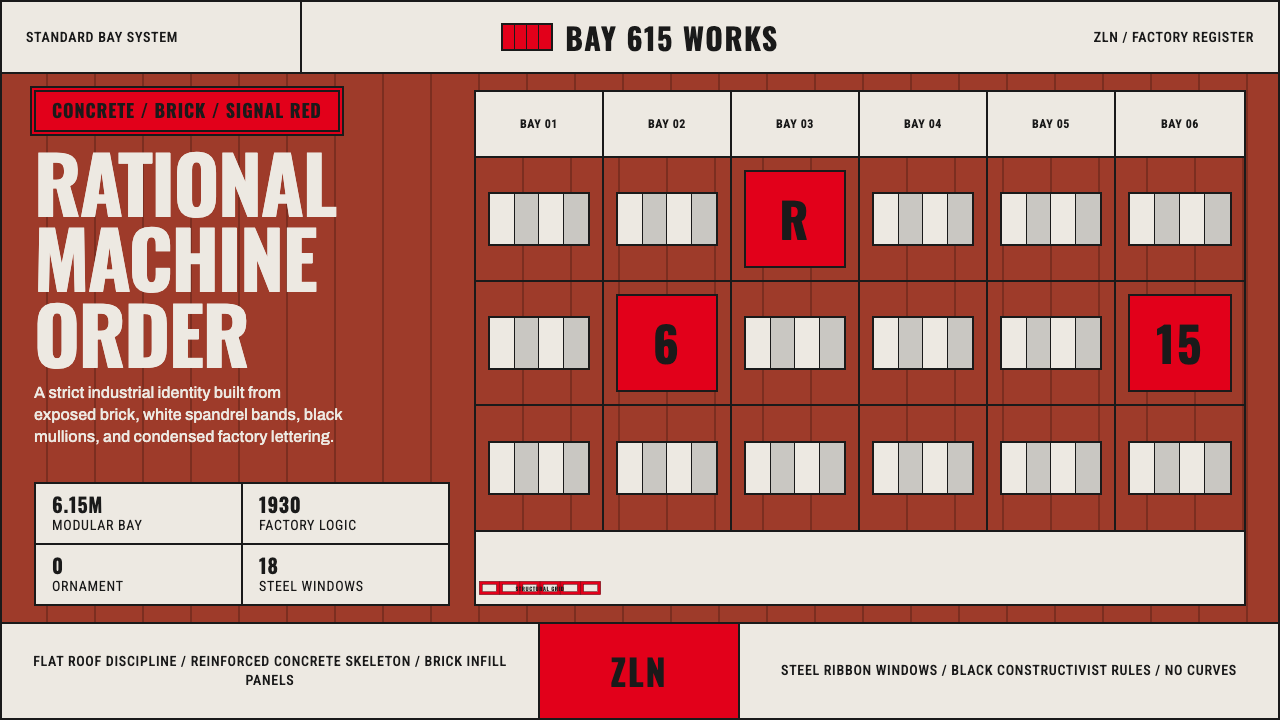 Baťa Zlín Functionalist BrandMachine-age precision. Brick red, concrete bands, and Oswald type lock into a…
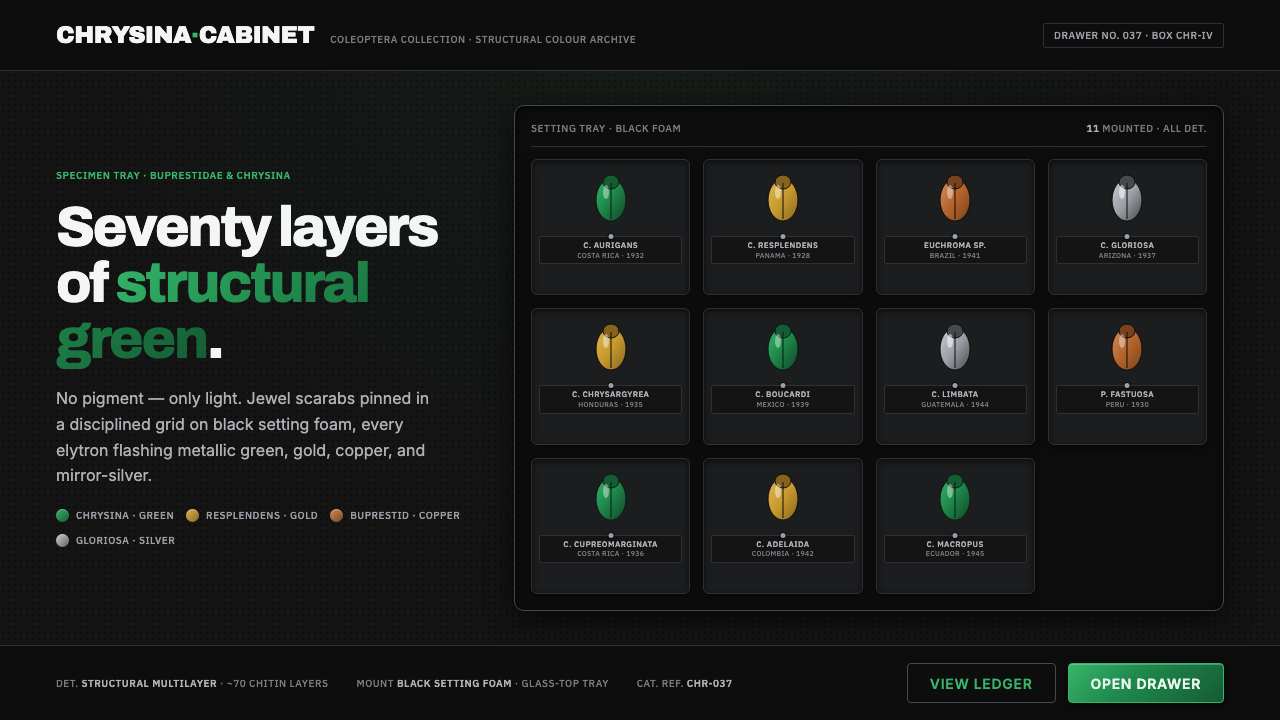 Iridescent Scarab DrawerOrder makes the shimmer read. Jewel scarabs pinned in a grid on black foam, m…
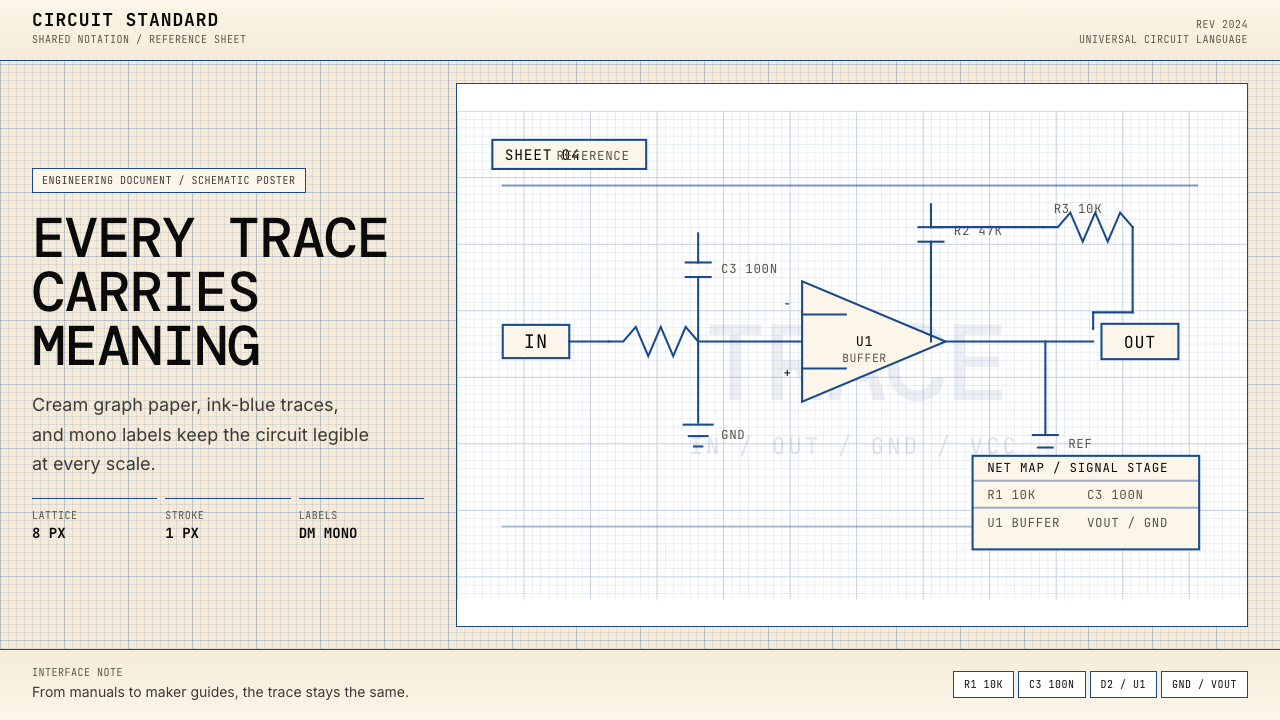 Electrical Schematic WiringAustere and exact. Cream graph paper, ink-blue traces, and mono labels make e…
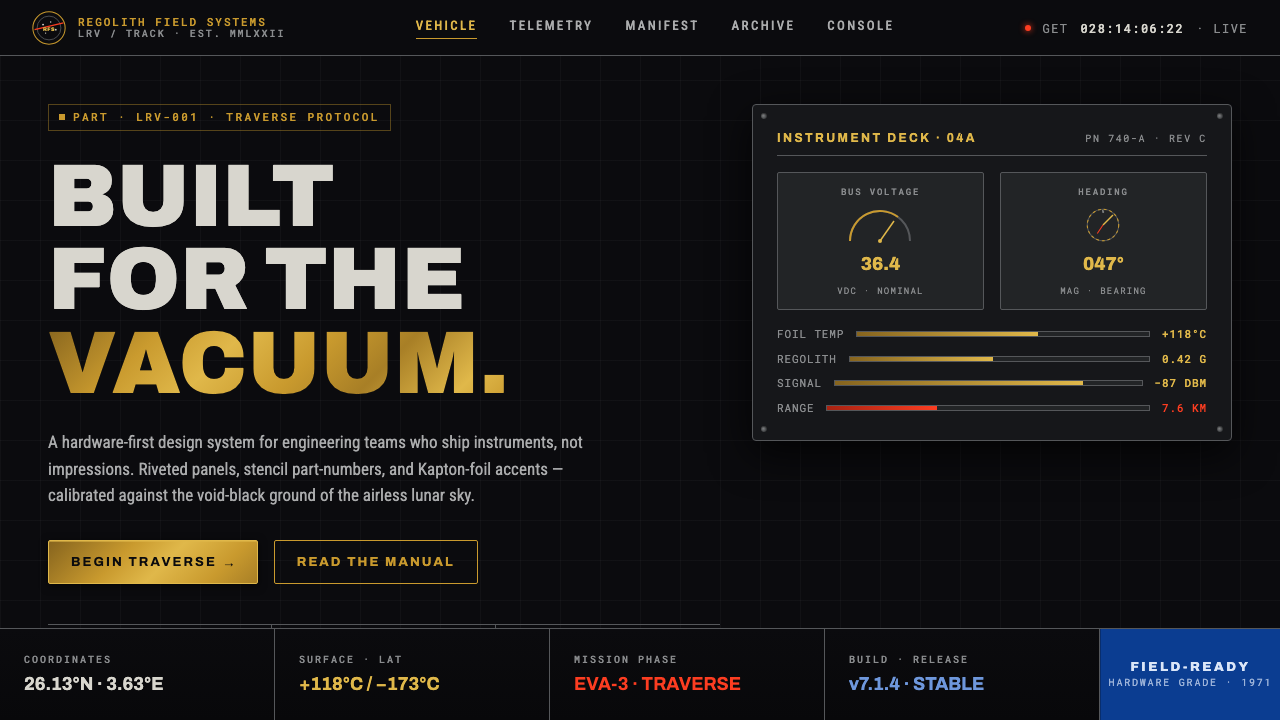 Lunar RoverBuilt for the vacuum. Kapton-gold foil and stencil part-numbers against void-…
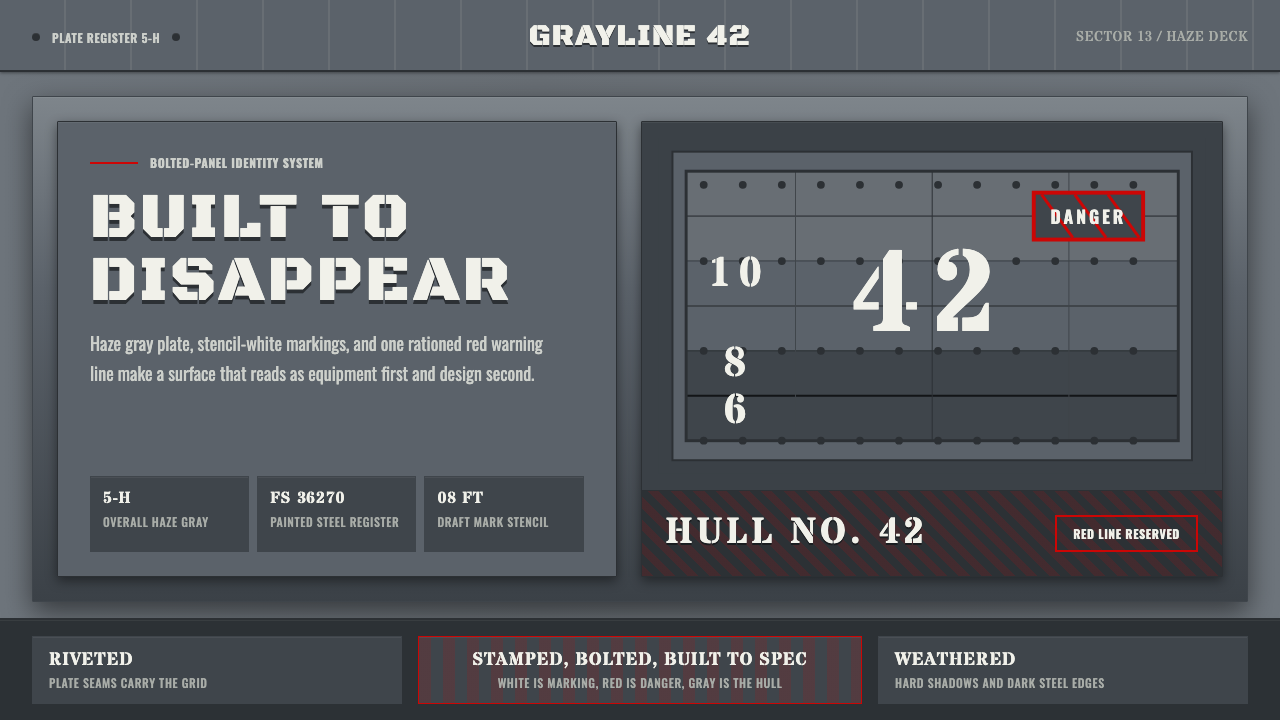 Battleship Naval GrayBuilt to spec. Haze gray steel, rivet grids, stencil white, and one danger-re…
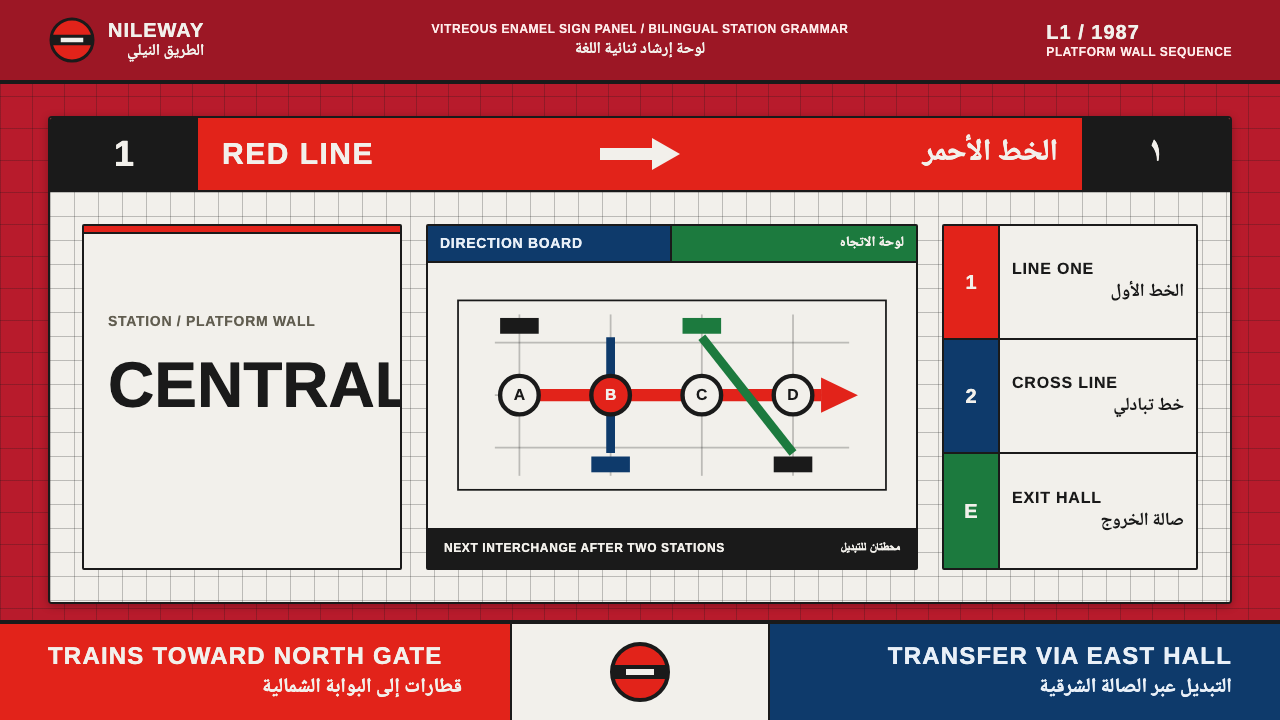 Cairo Metro WayfindingAuthority at speed. Enamel red, Arimo grids, and co-equal Arabic signage.