What is Belarusian Rushnyk?
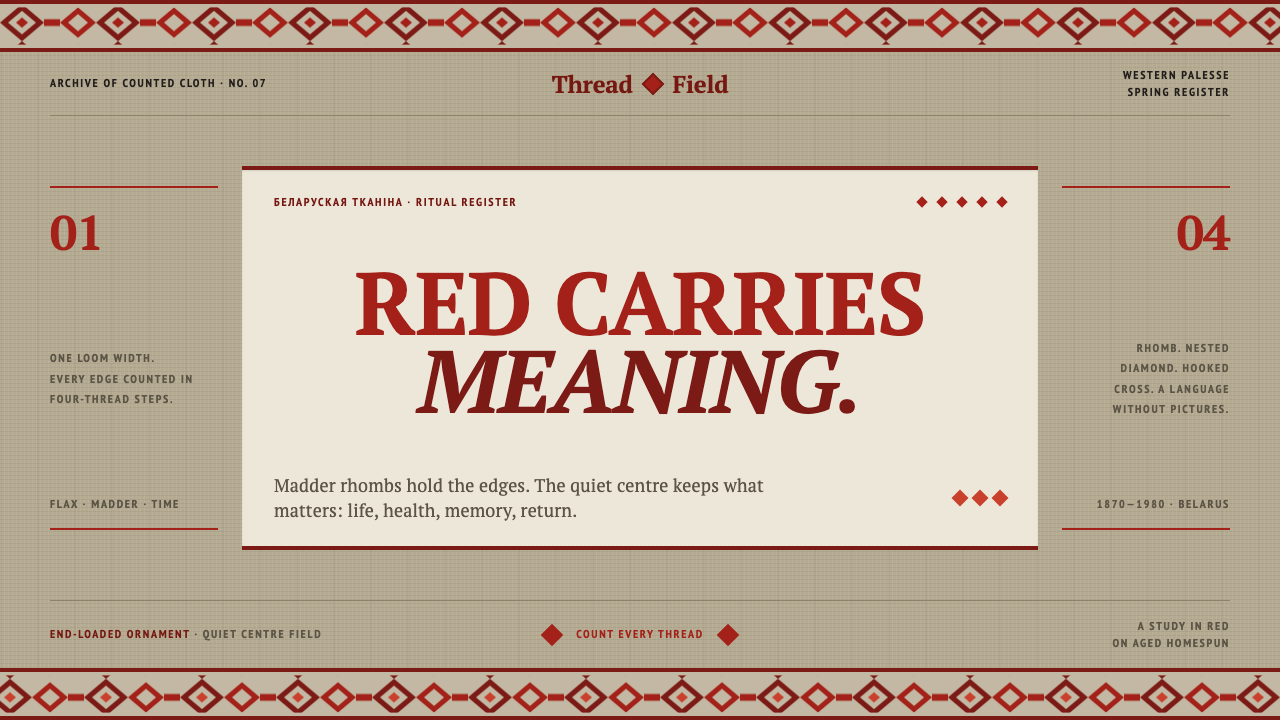
A Belarusian ruchnik says everything with two loaded ends and one deliberately empty middle — red carries the meaning, and silence carries the rest.
Belarusian Rushnyk in brief
Belarusian Rushnyk is a design language taken directly from the ruchnik, a hand-woven ritual cloth roughly one loom's width wide and some three yards long, worked in homespun flax. The two ends of the cloth carry dense geometric ornament in madder red — rhombs, nested diamonds, hooked crosses, and a tree of life set along the vertical axis — while the entire central stretch of fabric is left deliberately bare. Nothing pictorial ever appears: no scenes, no figures, no landscapes, only geometric pattern built up thread by thread on a loom.
This system takes the cloth itself as its page, rather than treating the ornament as a motif to be extracted and reapplied. The ground is an aged, slightly greyed flax tone, never bleached white and never warmed toward cream, because that grey is what genuinely old homespun linen looks like after decades of use and washing. Ornament is loaded onto the top and bottom edges of a composition and the center is left to breathe, mirroring exactly where pattern sits and does not sit on a real ruchnik.
Compared to the Ukrainian and Russian ritual towels it is most often grouped with, Belarusian work is markedly more austere and more geometric. There is no narrative embroidery, no floral naturalism softening the pattern — only rhombs and diamonds repeated with the strict discipline of a loom that physically cannot draw a curve, only a stepped line governed by thread count.
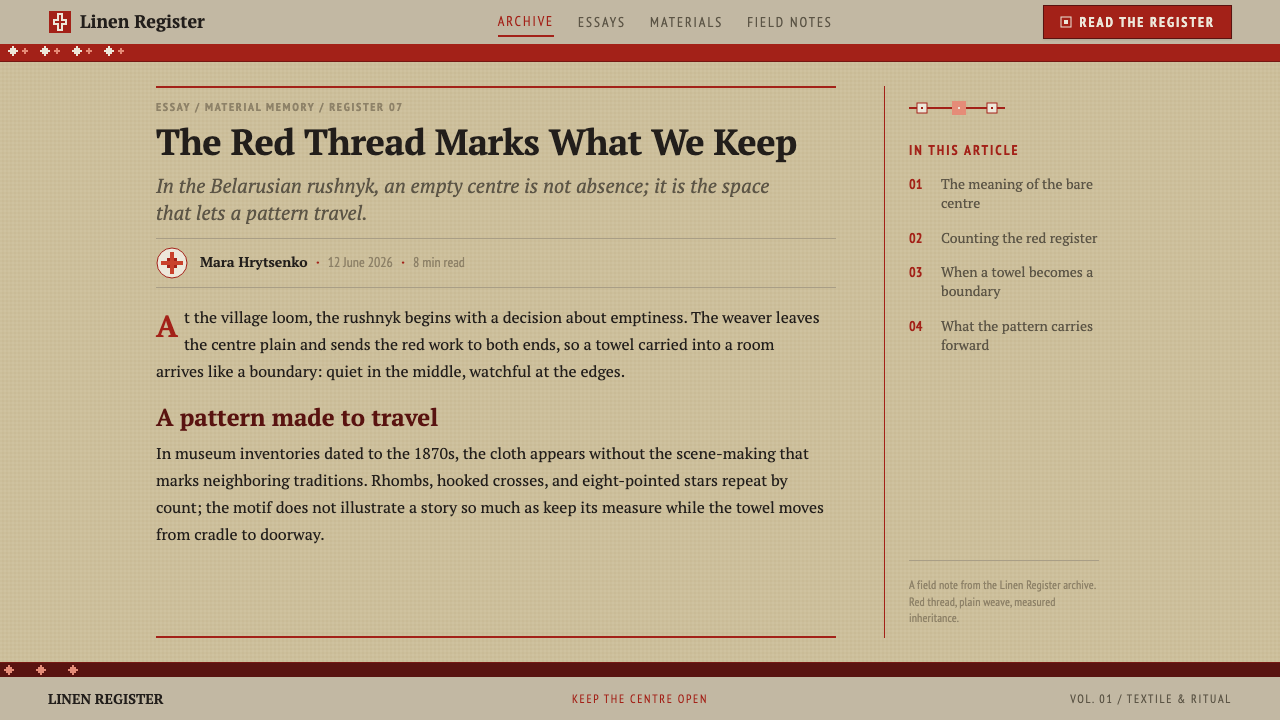
Where does Belarusian Rushnyk come from?
The core of this tradition dates to the nineteenth century, though the practice of weaving and embroidering ritual cloths in Belarus long predates systematic documentation. The pattern was recorded most thoroughly between the 1870s and the 1980s, first by ethnographic collectors working in the final decades of the Russian Empire and later by Soviet-period textile ethnographers who catalogued regional variation across Belarusian territory in detail.
The tradition belongs to a wider East Slavic family of ritual textiles — cloths woven for weddings, births, funerals, and the blessing of icons and doorways across Belarus, Ukraine, and Russia — but the specific regional strands most closely tied to this look come from Western Palesse, the Dnieper district, the Nioman river area, and the Lakes region, each of which developed its own inflection of the same rhomb-and-tree vocabulary.
This was, for generations, anonymous work. The weavers themselves were village women working within an inherited pattern language passed down through family and community rather than through any single named designer or workshop, and it is precisely this collective, repeated transmission — the same rhomb worked by countless hands across a century — that gives the tradition its remarkable internal consistency.
In the twentieth century, this ornament acquired a second life as a marker of Belarusian national identity. The red-and-white geometric band that appears on the modern Belarusian state flag is drawn directly from an actual historic ruchnik pattern, which means the ornament this system is built from is not simply a folk-art curiosity but a living national symbol, still recognized and reproduced today.
What defines the Belarusian Rushnyk look?
Aged, Ungreyed-Down Flax Ground
The base tone reads as genuinely old homespun linen — a soft, muted grey-beige built up over decades of use — rather than bleached white cloth or a warm decorative cream. This specificity matters: a true white or cream ground would misrepresent the actual material the tradition is built from.
Madder Red as Meaning
Red is not one color choice among several; it is the ornament's primary carrier of meaning, historically associated with life, sun, fertility, and health. Its dominance in the pattern is total — other hues appear rarely and only as accents, never as an equal partner to red.
Loaded Edges, Empty Center
Ornament concentrates entirely at the top and bottom of a composition, with the central field left genuinely bare rather than filled with a lighter secondary pattern. This edge-loading is structural to the whole system, not a decorative accent placed at the margins.
Rhomb and Nested-Diamond Geometry
The core vocabulary is built from rhombs and diamonds nested inside one another, along with hooked-cross motifs and a vertically oriented tree of life. These shapes repeat and combine but never dissolve into curves or naturalistic detail.
Thread-Count Stepped Edges
Every edge in the ornament steps in small increments rather than curving smoothly, because the loom that produced this pattern physically cannot weave a curve — only a line governed by counting warp and weft threads. Any smooth curve in an application of this style breaks the material logic entirely.
Vertical Axis Orientation
The tree-of-life motif and much of the surrounding ornament run along a vertical axis, giving the pattern an upright, standing quality rather than a horizontal, flowing one. This vertical emphasis distinguishes the composition from more horizontally banded folk-textile traditions.
No Pictorial Content
The vocabulary is exclusively geometric; no scenes, figures, animals, or landscapes ever appear. This is not a stylistic limitation but a defining rule of the tradition — pattern communicates meaning through abstract, repeated geometric form alone.
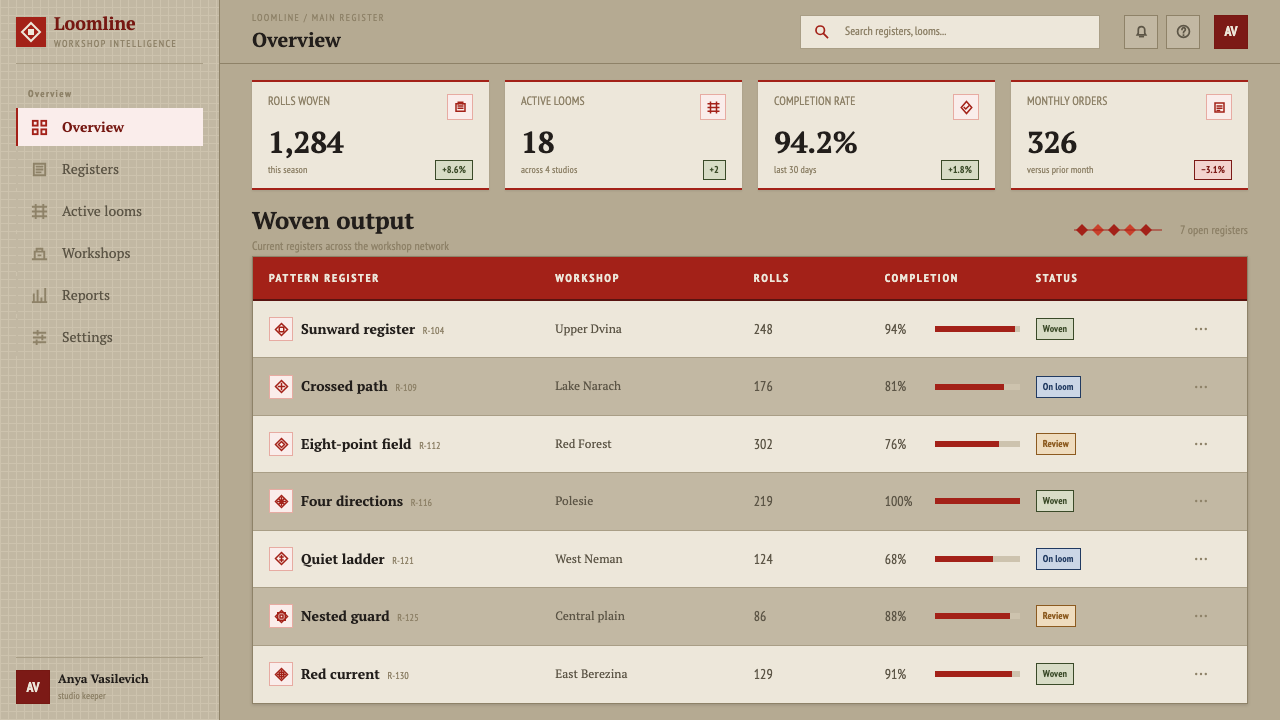
Who shaped Belarusian Rushnyk?
The tradition's actual authors were, for generations, unnamed village women weaving within an inherited pattern language rather than any individual design practice. Their collective, anonymous authorship — the same forms repeated and passed down across families and generations — is what gives this ornament its remarkable stability over more than a century.
Embroiderers working across Belarusian regions — Western Palesse, the Dnieper district, the Nioman area, and the Lakes region — each developed a local inflection of the same rhomb-and-tree vocabulary, producing the regional variation that later ethnographic documentation would carefully map.
Working in the final decades of the Russian Empire, these collectors were among the first to systematically document ruchnik patterns across Belarusian territory, beginning the record that would allow the tradition's regional variants to be preserved and studied.
Continuing the documentation begun under the late empire, Soviet-era ethnographers catalogued Belarusian ritual textiles in detail through the twentieth century, producing much of the regional and structural knowledge — where ornament sits, which motifs belong to which district — that this system draws on.
How do you use Belarusian Rushnyk today?
This system works well for presentation decks that want to project cultural specificity and quiet confidence rather than generic minimalism. A cover slide benefits from loading dense red geometric ornament along the top or bottom edge of the frame against the aged flax ground, leaving the central field genuinely empty for a title set in a plain, restrained typeface. Content slides should resist the temptation to spread ornament evenly across the page; instead, concentrate pattern at a single edge — a footer band, a header strip — and let the body of the slide breathe the way the center of a ruchnik does. Data visualizations translate well into the rhomb vocabulary itself: a diamond-based icon set or chart marker reads as native to the system rather than borrowed.
For web interfaces, the aesthetic suits cultural, craft, and heritage-focused products, as well as any brand that wants to signal handmade authenticity over industrial polish. A muted flax-grey background, red used exclusively for the most important structural or navigational elements, and geometric rhomb-based iconography in place of rounded, generic icon sets all reinforce the system's internal logic. Avoid rounded corners on cards or buttons entirely — the stepped, thread-count edge is the aesthetic's core signature, and a soft curve undoes it immediately.
In editorial and marketing contexts, the style supports storytelling about craft, heritage, and cultural identity, where a strong border of red geometric ornament framing an article's header — set against the aged flax tone — signals authenticity without needing decorative flourish elsewhere on the page. Section breaks work well as a narrow red rhomb band rather than a plain horizontal rule.
The style also carries weight in textile-adjacent product design and packaging, where the loaded-edge, empty-center composition maps directly onto real fabric proportions: dense pattern at the top and bottom of a label or panel, open space in the middle for a product name or message.
The most common mistake is treating the rhomb pattern as a generic all-over print, tiling it evenly across an entire surface the way a commercial textile pattern would be. Authentic ruchnik logic concentrates ornament only at the edges and insists on emptiness in the middle; filling that center defeats the entire compositional principle. A second common error is softening the palette toward pastel pink or adding curves to the geometric forms in the name of modern friendliness — both moves erase the austerity that defines this specific East Slavic tradition.
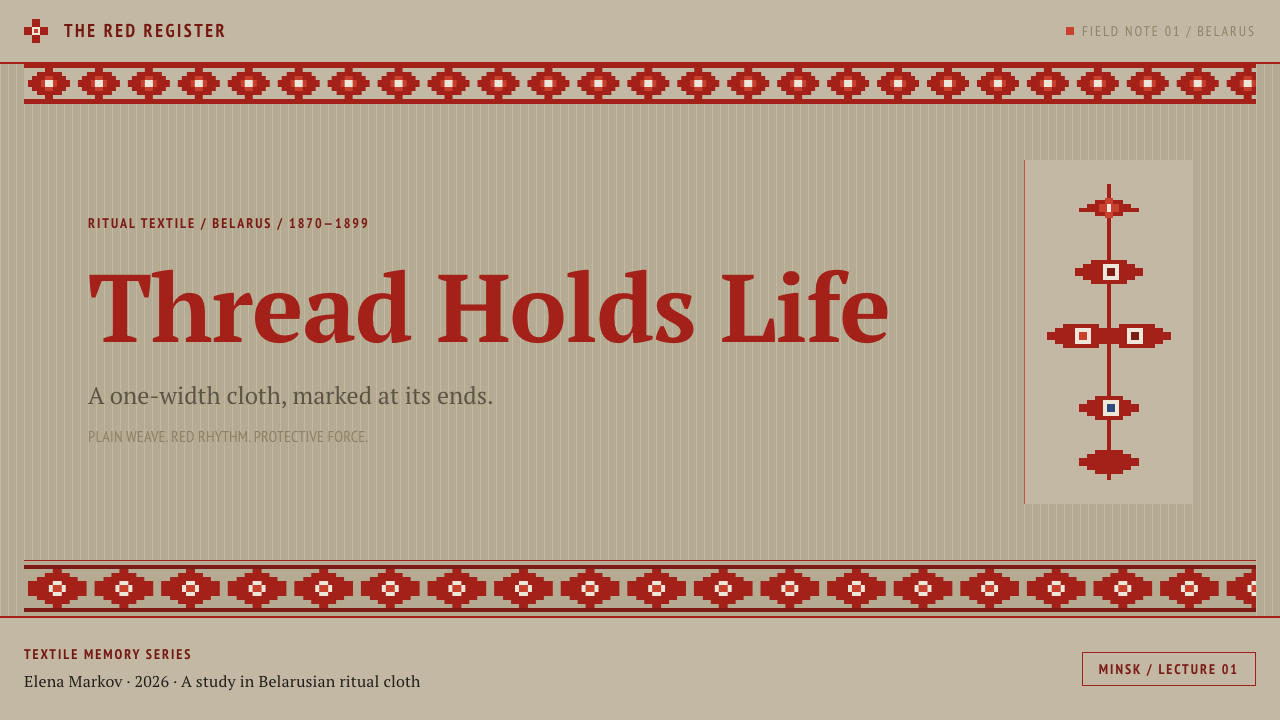
Belarusian Rushnyk — FAQ
Why does this style insist on leaving the center of a composition empty?
Because a real ruchnik is woven that way: ornament belongs at the two ends of the cloth, and the long central stretch is left bare by design, not by accident or economy of material. Filling that center with pattern would misrepresent the actual object the system is drawn from and would also crowd out the sense of stillness that the empty middle provides against the dense, meaningful ornament at the edges.
Can other colors replace red as the primary ornament color?
Not without changing the tradition's meaning. Red carries specific symbolic weight — life, sun, fertility, health — that other colors in this tradition do not carry; black appears only on mourning cloths, and blue appears rarely and only as a minor accent. Replacing red as the dominant hue would not simply be a palette swap; it would misrepresent what the ornament is understood to communicate.
Why must edges be stepped rather than smoothly curved?
Because the pattern originates on a loom, a device that produces form through counting warp and weft threads and physically cannot render a smooth curve. A stepped edge is the honest fingerprint of that weaving process. Introducing smooth curves into an application of this style breaks the connection to the actual material technique the ornament comes from.
Is this the same as Ukrainian or Russian ritual-towel embroidery?
They belong to the same wider East Slavic family of ritual textiles, but this system is specifically the Belarusian branch, which is markedly more austere and geometric than its neighbors — strictly rhombs, diamonds, hooked crosses, and a vertical tree of life, with no pictorial scenes. Ukrainian and Russian traditions in the same family often incorporate more floral or narrative embroidery, which this style deliberately does not include.
Does this style suit modern, non-textile digital products?
It can, particularly for products in cultural heritage, craft marketplaces, or storytelling contexts, where its handmade authenticity and geometric restraint stand out against generic modern interfaces. It is a poor fit for products that need a soft, rounded, universally friendly visual tone, since the style's stepped edges and loaded-versus-empty composition resist exactly that kind of softening.
Related design styles
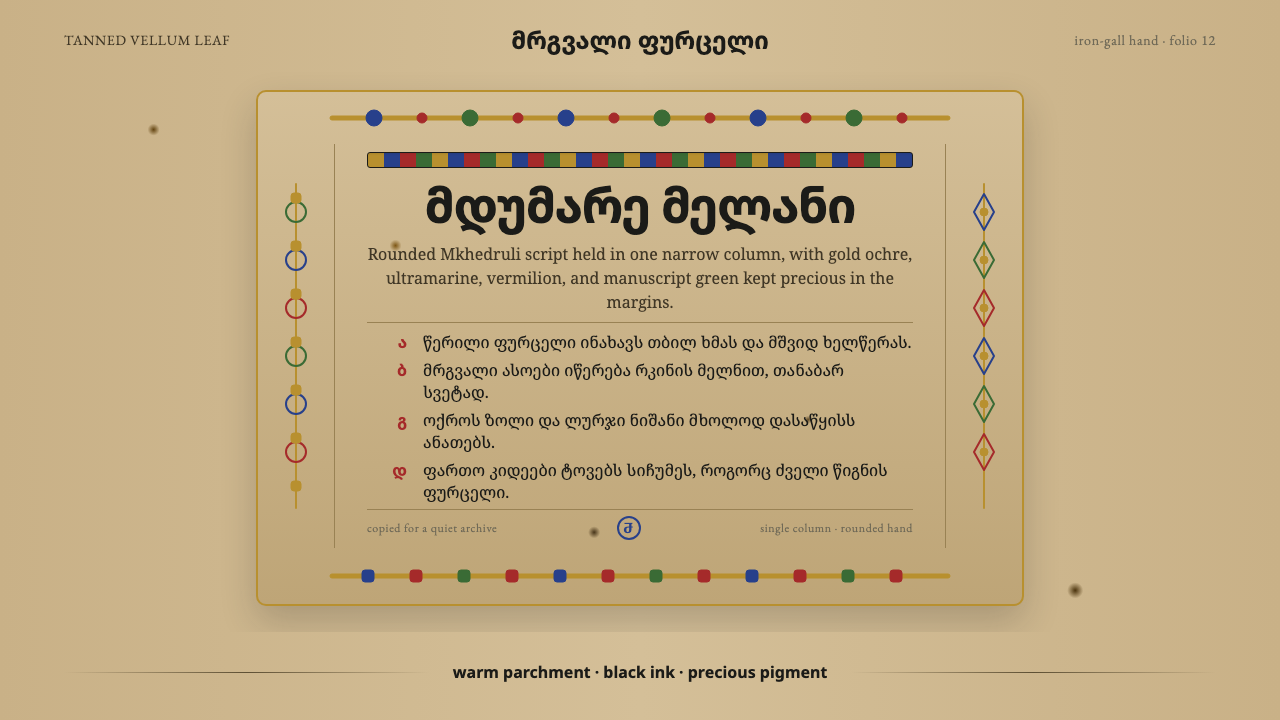 Georgian MkhedruliA manuscript breathes slowly. Tanned vellum, round Mkhedruli ink, ochre and u…
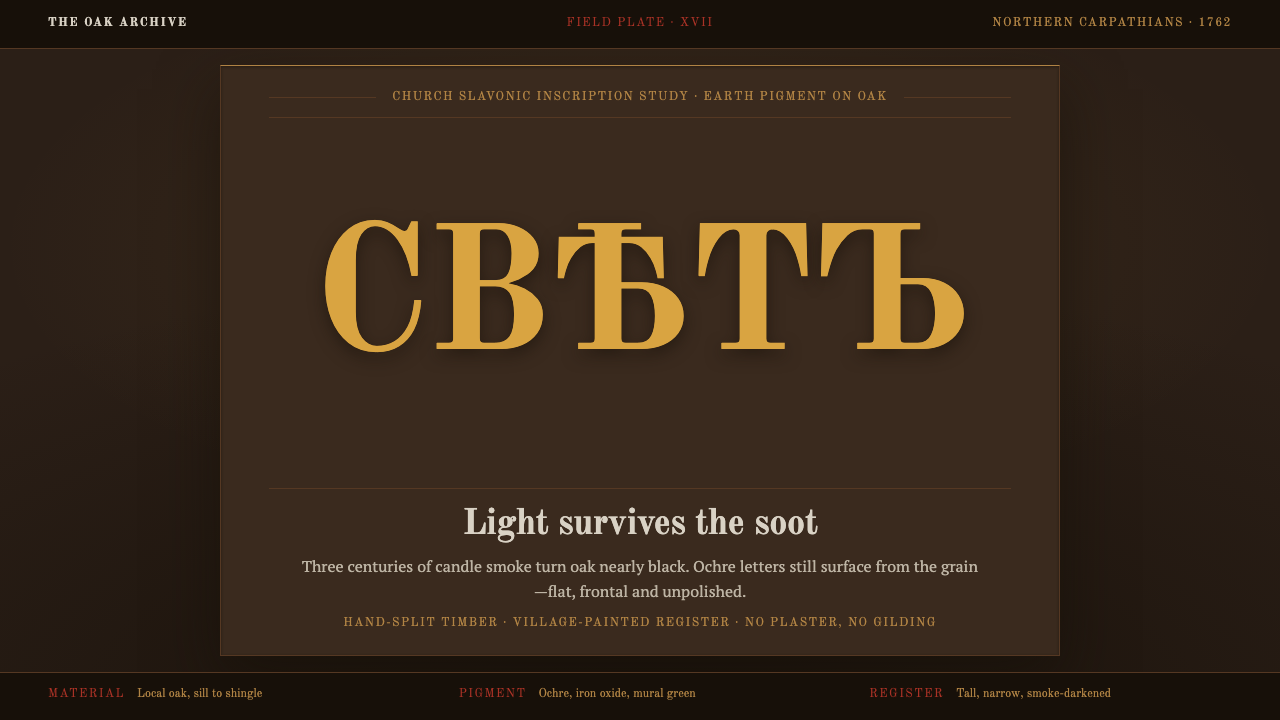 Maramureș Wooden ChurchLight survives the soot. Ochre type and earth-red geometry rise through smoke…
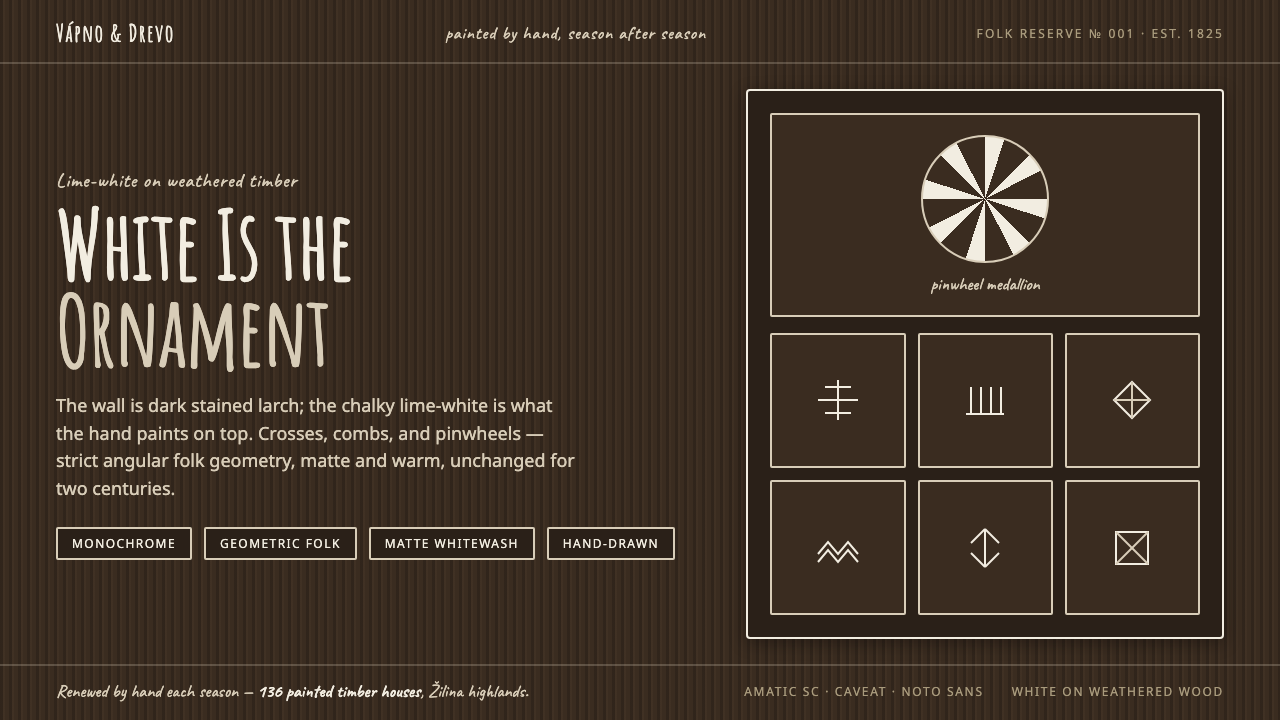 Čičmany Painted House OrnamentWhite is the ornament, not the page. Lime-white folk geometry on dark weather…
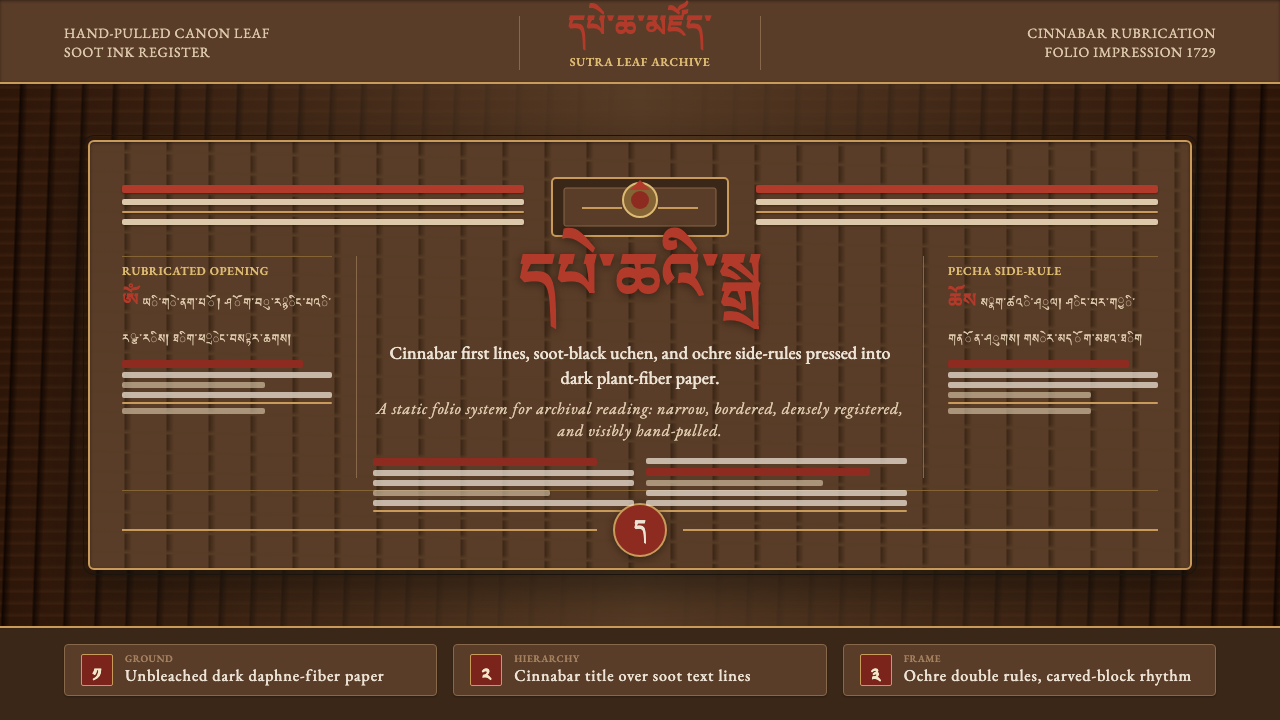 Derge Woodblock Sutra PrintHand-pulled scripture gravity. Cinnabar uchen and ochre rules press into dark…
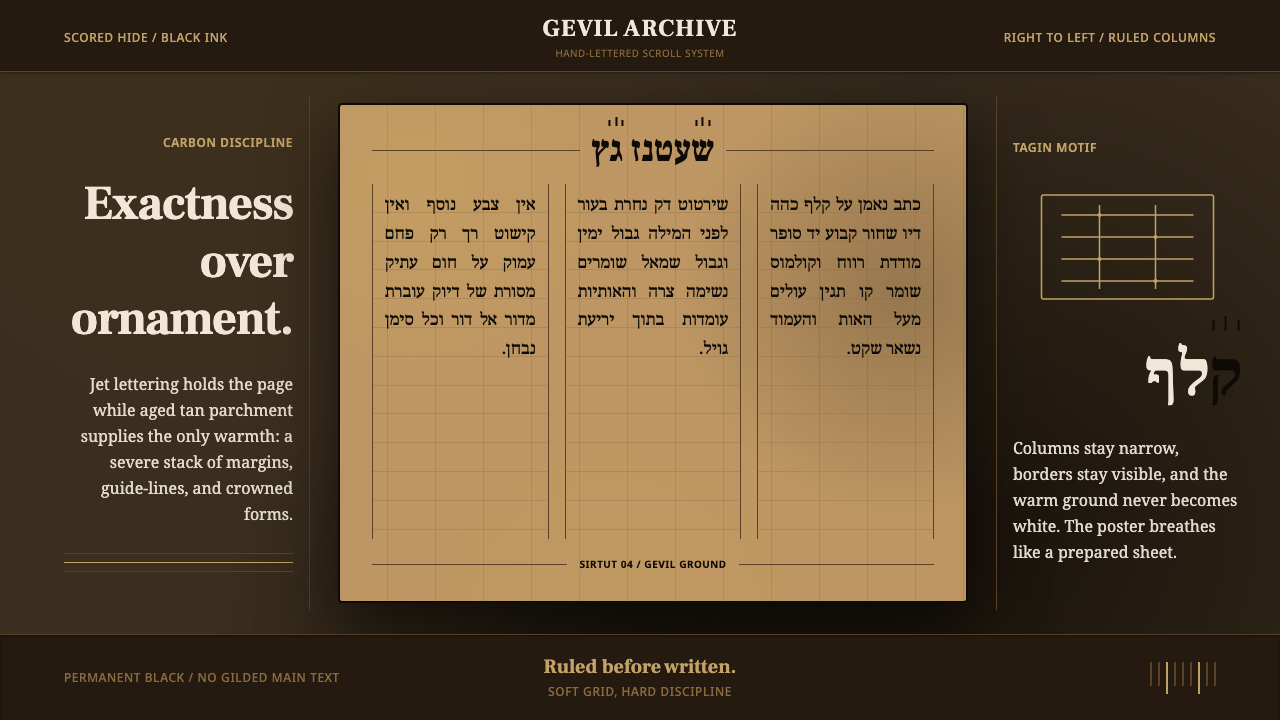 Hebrew STaM ScrollExactness over ornament. Jet ink, ruled Hebrew columns, and amber-tan parchme…
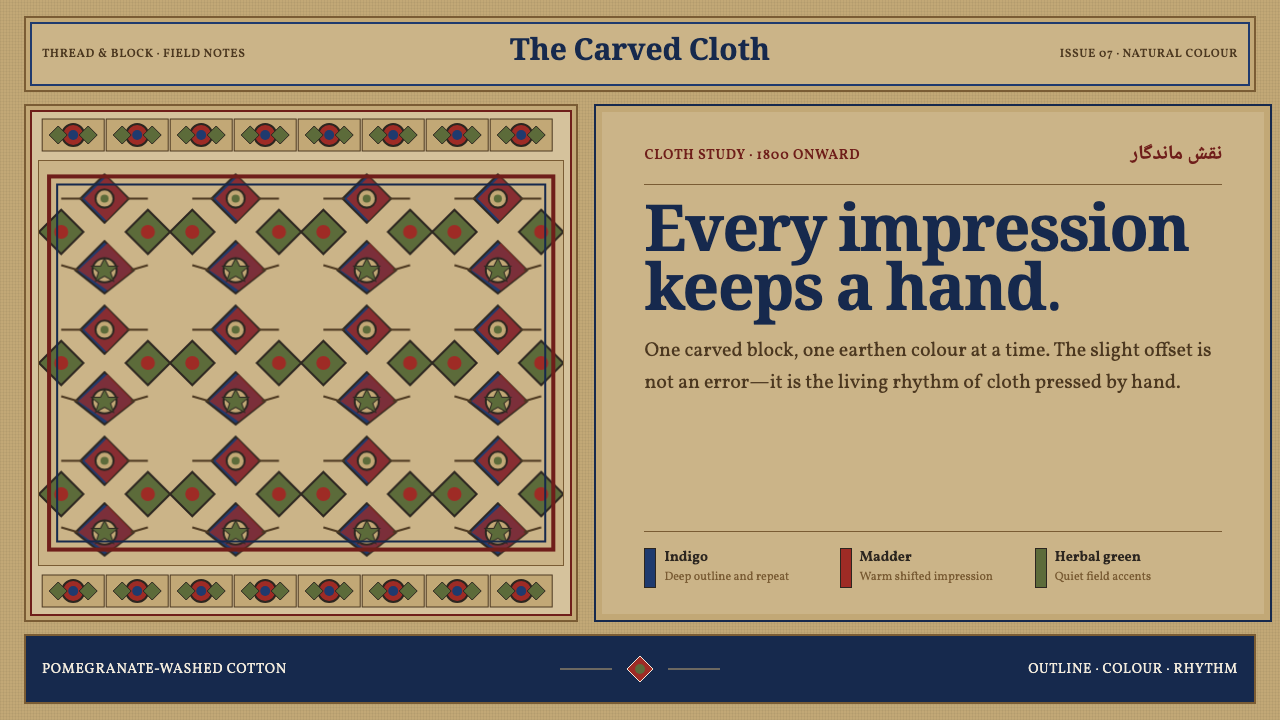 Isfahan Qalamkar PrintEvery impression keeps a hand. Indigo and madder repeats shift softly across…