What is Basquiat Neo-Expressionism?
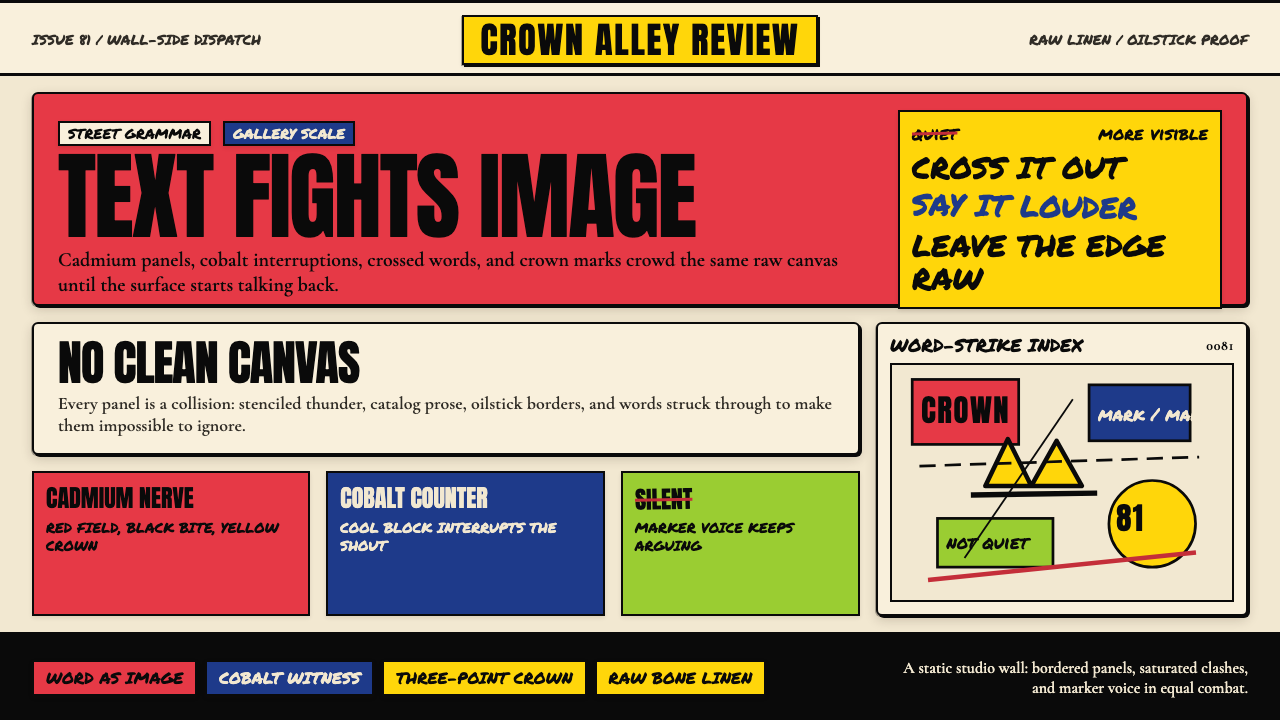
Basquiat's canvases detonate graffiti urgency and gallery ambition in the same breath — oilstick crowns, struck-through words, and anatomical diagrams colliding on raw linen at full voltage.
Basquiat Neo-Expressionism in brief
Basquiat Neo-Expressionism is the visual language drawn from Jean-Michel Basquiat's studio practice between roughly 1981 and 1988 — the years in which he moved from anonymous SAMO© graffiti on Lower Manhattan walls to internationally exhibited large-scale paintings. The style fuses the handmade rawness of street mark-making with the compositional ambition of gallery-scale painting: unstretched or raw-stretched canvas, oilstick and acrylic applied in dense overlapping strata, text and image granted exactly equal authority on the picture plane.
What distinguishes this aesthetic from broader Neo-Expressionism is its structural relationship between word and image. Basquiat did not illustrate text or caption images — he treated lettering as mark and figure as glyph, collapsing the boundary between reading and seeing. Crowns, copyright symbols, repeated words, and struck-through anatomical labels function as visual objects that carry simultaneous graphic and semantic weight. Erasure and overpainting are not corrections but compositional events; the history of making remains visible on the surface.
Tonally, the work refuses refinement. Saturated cadmium reds and yellows sit against cobalt or Prussian blue on bone-cream linen grounds. Marks are quick, angular, and gestural. Stenciled headline-weight text crowds hand-scrawled fragments. Nothing is resolved or polished; the surface vibrates with arrested energy, as though the painting caught a moment of thought mid-collision.

Where does Basquiat Neo-Expressionism come from?
Jean-Michel Basquiat was born in Brooklyn in 1960 to a Haitian father and a Puerto Rican mother of Haitian descent. He grew up between Brooklyn and Puerto Rico, spoke three languages, and was introduced to anatomy by his mother after he was struck by a car at age seven — a formative episode that seeded his lifelong preoccupation with the body, its internal diagrams, and the violence visited upon it. He dropped out of City-As-School at seventeen, left home, and began sleeping on cardboard in Tompkins Square Park while moving through the nascent downtown arts scene.
Between 1977 and 1980, Basquiat and his collaborator Al Diaz tagged walls throughout Lower Manhattan and Brooklyn under the pseudonym SAMO© — an abbreviation variously glossed as 'same old shit' — with cryptic poetic phrases that circulated among artists and critics before anyone knew who was making them. The SAMO tags were not simple vandalism; they were positioned precisely on walls near galleries, art schools, and lofts where the downtown scene congregated, functioning as interventions in an existing art-world conversation. By 1980, Basquiat had declared SAMO© dead by tagging 'SAMO© IS DEAD' across SoHo, and he began showing paintings.
His breakthrough came in 1981 through the group show 'New York/New Wave' at P.S.1, where his work was seen alongside Keith Haring and Kenny Scharf. The Italian art dealer Emilio Mazzoli and the New York gallerist Annina Nosei each gave him exhibition opportunities that rapidly internationalized his profile. Nosei famously offered him studio space in the basement of her Prince Street gallery — a circumstance Basquiat found both generative and constraining. By 1982 he was showing at documenta 7 in Kassel alongside Georg Baselitz, Anselm Kiefer, and Cy Twombly, cementing his position within the global Neo-Expressionist moment.
The friendship and collaboration with Andy Warhol, beginning in 1982 and lasting until Warhol's death in 1987, was as complex as it was consequential. Warhol introduced Basquiat to his brand of celebrity social machinery and to silkscreen-scale repetition; Basquiat reintroduced urgency and corporeality into Warhol's cooler register. Their joint paintings of 1984 to 1985 were initially dismissed by critics but have since been reassessed as a genuine dialogue between two artists at the intersection of commercial and avant-garde art worlds. The peak production years — 1981 to 1985 — generated hundreds of works across painting, drawing, and collage. Basquiat died in August 1988 at twenty-seven, of a heroin overdose.
What defines the Basquiat Neo-Expressionism look?
Palette
The palette is built around intense warm primaries — cadmium reds and yellows at full saturation — set against cobalt or Prussian blues and anchored by the off-white of raw, unprimed linen. Black, applied in thick oilstick strokes or heavy acrylic, functions as both line and ground. Color is never decorative; it carries urgency, temperature, and at times the visual weight of a shout. Secondary mixing is incidental — the result of one layer bleeding through another — rather than planned.
Text and Mark Collision
The style's most defining characteristic is the equal standing of word and image. Stenciled block letters, hand-scrawled words, repeated names, and struck-through annotations occupy the same compositional tier as painted figures and diagrams. Crossing out a word does not remove it — the erasure itself becomes a mark, a kind of visible thinking. The surface reads simultaneously as writing and as painting, and neither mode subordinates the other.
Raw Surface
Raw, unprimed linen or canvas — rather than gessoed white surfaces — is the characteristic ground. The fabric's own texture and warm cream tone become part of the composition; areas of bare ground are not voids but active visual fields. This approach to surface communicates material honesty and a refusal of finish. Paint is applied in dense, layered patches rather than smooth fields, and the edges of shapes are ragged, smeared, or otherwise unresolved.
Anatomical and Diagrammatic Imagery
Skeletal figures, exposed organs, muscle diagrams, and medical illustrations appear throughout — drawn from memory, from anatomy textbooks, and from Basquiat's own childhood introduction to the subject after his accident. These images function as both personal mythology and social critique: the body made transparent, mapped, and labeled carries the history of scientific examination of Black bodies and the vulnerability of flesh to systemic violence. The imagery is never clinical; it is always emotionally charged by its context.
Gestural Urgency
Marks are made quickly and confidently, with no aspiration toward technical perfection. Lines are angular rather than fluid, shapes are blocked rather than modeled, and the overall surface communicates speed of execution. This gestural quality is not carelessness — it is a deliberate register that aligns the painted surface with the energy of street mark-making, refusing the distancing effect of polished studio craft. Drips, smears, and over-application of paint are compositional choices, not accidents.
Symbolic Iconography
A recurring set of symbols — the three-pointed crown, the copyright mark, the halo, the specific names of Black historical figures — operates as a personal lexicon that accumulates meaning across works rather than within any single piece. The crown asserts sovereignty and dignity; the copyright mark signals ownership and appropriation; the halo confers sanctity on subjects whom history has denied it. These symbols are never illustrative; they are argumentative, marking territory on the picture plane as Basquiat's SAMO tags once marked territory on walls.
Layered Opacity
Compositions are built through successive layers of paint, text, and drawn marks, with earlier layers remaining partially visible beneath later ones. Nothing is fully covered; the painting's history is part of its present surface. This layering creates a sense of excavation — the viewer reads through the surface rather than simply at it, encountering buried words, overdrawn figures, and smeared grounds that give the work its characteristic density and visual weight.

Who shaped Basquiat Neo-Expressionism?
Basquiat remains the movement's irreducible center. Born in Brooklyn in 1960, he moved from SAMO© street tags to internationally exhibited large-scale paintings in under three years — one of the most compressed trajectories in twentieth-century art history. His work synthesized African and Afro-Diasporic visual traditions, American commercial signage, medical illustration, jazz and hip-hop culture, and the gestural ambitions of Abstract Expressionism into a visual language that was entirely his own. He died in 1988 at twenty-seven; his paintings now routinely achieve prices that rank him among the highest-valued artists of the postwar era.
Al Diaz was Basquiat's original collaborator on the SAMO© project, co-authoring the cryptic wall texts that established the sensibility — resistant, poetic, addressed to the art world from its margins — that Basquiat would carry into painting. Diaz's contribution to the project's origin is often underplayed in accounts focused on Basquiat's subsequent solo career, but SAMO©'s distinctive mode of engagement with public space was a genuinely shared invention. Diaz continued working as an artist after the partnership dissolved.
Warhol met Basquiat in 1982, when Basquiat reportedly sold him a postcard on the street. Their friendship evolved into a sustained collaboration: joint paintings made between 1984 and 1985 combined Warhol's silkscreen imagery with Basquiat's drawn and painted overpaints. The relationship was commercially strategic for both — Warhol provided access to collectors and institutional networks; Basquiat provided critical currency at a moment when Warhol's relevance was being questioned. Critics initially dismissed the collaboration as mutual exploitation, but the joint works are now understood as substantive dialogues about authorship, commerce, and race in the American art world.
Annina Nosei was one of the first gallerists to offer Basquiat a formal exhibition context, giving him both a show and studio space in the basement of her Prince Street gallery in SoHo around 1981 to 1982. Her support — which connected him to Italian collectors and the international Neo-Expressionist market — was critical in transforming Basquiat from a downtown art-scene figure into an internationally known painter. The gallerist-as-patron relationship was not without tension; Basquiat later described the arrangement as limiting and moved to other representation, but Nosei's early institutional commitment shaped the conditions under which his market and reputation first consolidated.
How do you use Basquiat Neo-Expressionism today?
Applying Basquiat Neo-Expressionism to designed outputs is not a matter of simply overlaying distressed textures or handwritten fonts onto an otherwise conventional layout. The style's coherence depends on understanding its underlying logic: text and image must be compositionally equal, the surface must read as constructed rather than rendered, and every mark — including erasures — must function as a deliberate visual event. When these principles are honored, the style produces work that feels genuinely urgent rather than artificially roughened.
For presentation slides, the style works most effectively when cover pages commit fully to the collision aesthetic: a large painted or drawn figure occupies one side of the composition while stencil-weight text crowds the opposite field, with overlapping elements creating visual tension rather than tidy separation. Content slides should resist the temptation to tidy the system into conventional grids; instead, use irregular text placement, visible layering, and deliberate misalignment as organizational tools. Data slides take on the quality of Basquiat's anatomical diagrams — charts and graphs treated as drawn objects, annotated with struck-through labels or repeated values, making the data feel like something being actively thought through rather than passively displayed.
For web interfaces, the aesthetic is best applied selectively rather than as a total system. A dashboard or portfolio landing page that uses the style's raw palette, gestural type treatments, and rough-edged containers for key feature sections can carry authentic expressive charge without making functional elements — navigation, inputs, data tables — unreadable. Pricing pages benefit from the style's visual hierarchy: a hero section in full Basquiat intensity, with progressively more restrained treatment as the page moves into detail. The style's confrontational quality can be an asset for brands positioning themselves as countercultural, creative, or anti-corporate.
In editorial and marketing contexts, the style is particularly effective for cultural, music, fashion, and arts coverage where its historical and aesthetic associations are legible to the audience. A magazine feature that uses raw-canvas-toned backgrounds, oilstick-weight type for pull quotes, and hand-drawn decorative elements alongside photographic content can achieve a sense of documentary urgency. Marketing campaigns for creative industries or artist collectives can use the full collision aesthetic — text overpainting imagery, symbols recurring across touchpoints, raw backgrounds — with greater coherence than consumer product campaigns, where the roughness may read as unpolished rather than intentional.
The most common mistake when applying this aesthetic is reducing it to surface texture — adding grain overlays, distressed brush strokes, and hand-lettered fonts without engaging the style's structural commitment to the equality of text and image. A layout that uses a conventional type hierarchy with decorative roughness applied on top is a pastiche; a layout in which type is treated as mark-making that competes with and interrupts image is the genuine system. A related error is treating the palette as simply expressive rather than structural — using warm reds and yellows to signal energy without anchoring them against the cool blues and cream grounds that give the warm tones their charge. The style demands internal logic, not just visual attitude.

Basquiat Neo-Expressionism — FAQ
Is this style appropriate for corporate or enterprise products?
Rarely in its full form. The confrontational rawness and political charge embedded in the aesthetic carry associations that are fundamentally at odds with the values most corporate brands want to project — stability, authority, and institutional trust. However, selective elements can be borrowed without adopting the full system: a palette drawn from cadmium reds and warm off-whites, or gestural type treatments for campaign headlines, can add expressive energy within an otherwise conventional corporate identity. The rule is that the more institutional the brand's positioning, the more selectively the style should be applied.
How does this style differ from generic graffiti or street-art aesthetics?
Basquiat Neo-Expressionism is distinct from generic graffiti aesthetics in its compositional seriousness and its intellectual content. Generic street-art influenced design tends to use wildstyle lettering, spray-can textures, and urban imagery as surface decoration. The Basquiat system is compositionally structured around the collision of text and image as conceptual equals, uses a specific palette rooted in painting tradition rather than spray-can color, and carries a weight of art-historical and political reference that generic street-art pastiche does not. Applied work in this style should feel closer to a painting reproduced at scale than to a tagged wall photographed and filtered.
Can the style work on light backgrounds, or does it require raw linen tones?
Light backgrounds work, but the specific warmth of raw linen — not pure white, but a slightly creamy, textured off-white — is load-bearing in the system. Pure white grounds make the palette's warm reds and yellows appear cooler and more graphic, which pulls the result toward illustration rather than painting. A slightly warm, slightly degraded off-white background preserves the sense that the surface has material presence. Dark grounds are possible and have precedent in Basquiat's own work, but they require committing to a narrower palette — typically one dominant warm tone against the dark — to prevent the composition from becoming illegible.
How do you handle typography without making it look like decorative grunge?
The distinction lies in function. In the Basquiat system, text is not styled to look rough — it is applied as a mark, with the same directness as a drawn line or a painted shape. This means committing to actual gestural application when the context allows it, or choosing typefaces whose forms are architecturally simple and can bear being set at unconventional scales, weights, and angles without becoming decorative. The test is whether the text element is doing compositional work — anchoring a zone, creating tension with an adjacent image, asserting a weight — or whether it is simply dressed up. Decorative grunge adds roughness to text that is otherwise laid out conventionally. The Basquiat approach uses text placement and scale as primary compositional decisions.
What contexts is this style genuinely wrong for?
The style is wrong for any context where visual refinement, calm, or institutional neutrality is the required register: healthcare and wellness products, financial services, children's education platforms, and luxury goods brands all depend on visual languages that signal care, precision, or status through different means. The style is also a poor fit for products whose primary audience is unfamiliar with Basquiat's work and where the aesthetic's rawness will register as low production value rather than artistic intention. In these contexts, the style's confrontational energy becomes a liability rather than an asset. Knowing when not to apply a style is as much a part of design judgment as knowing how to apply it.
Related design styles
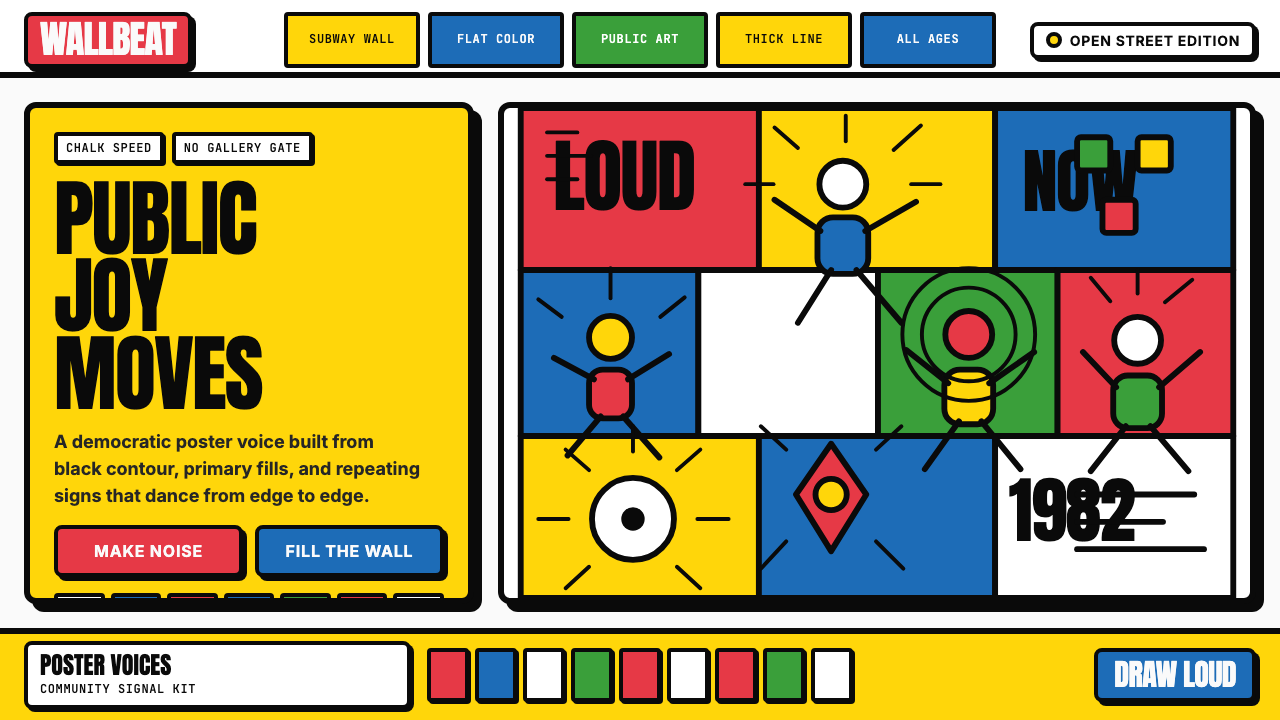 Keith Haring PopJoy refuses the gallery. Thick black contours pack primary color into a danci…
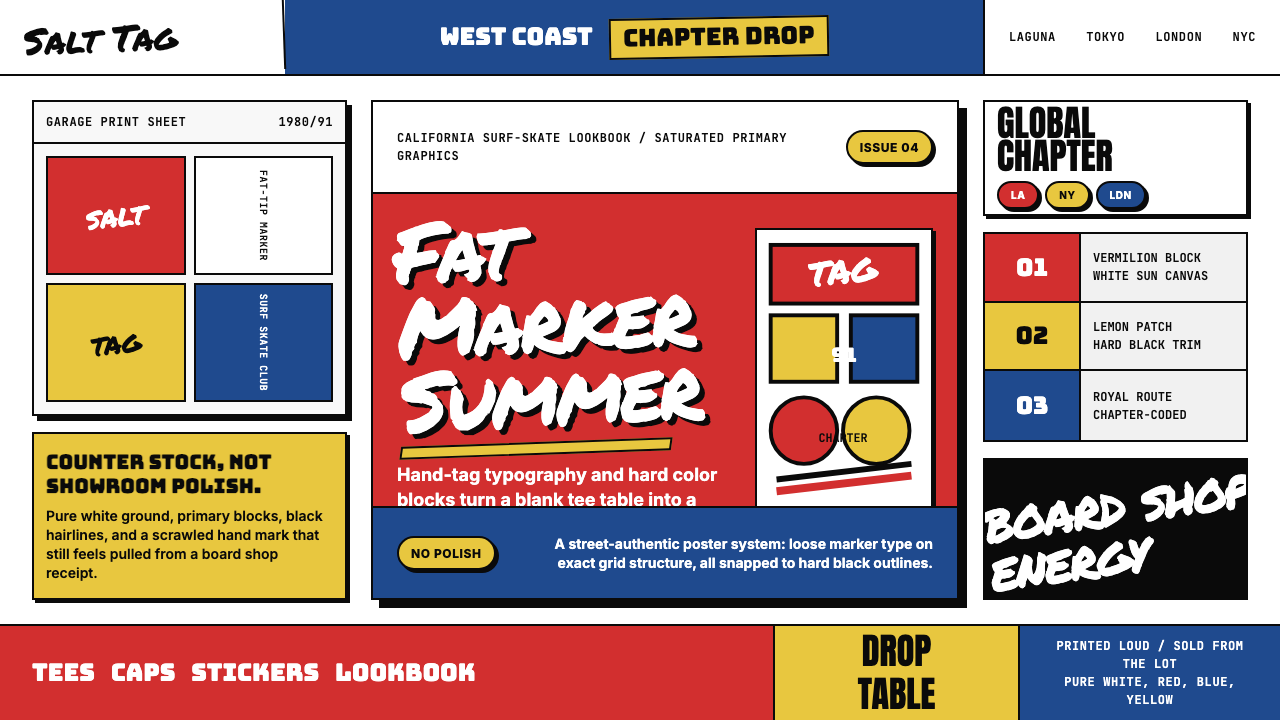 Stüssy StreetwearStreetwear starts rough. Vermilion blocks, marker script, and black hairlines…
 Wildstyle GraffitiBronx walls, sprayed loud. Neon pink-and-green fills, hard black outlines, Bu…
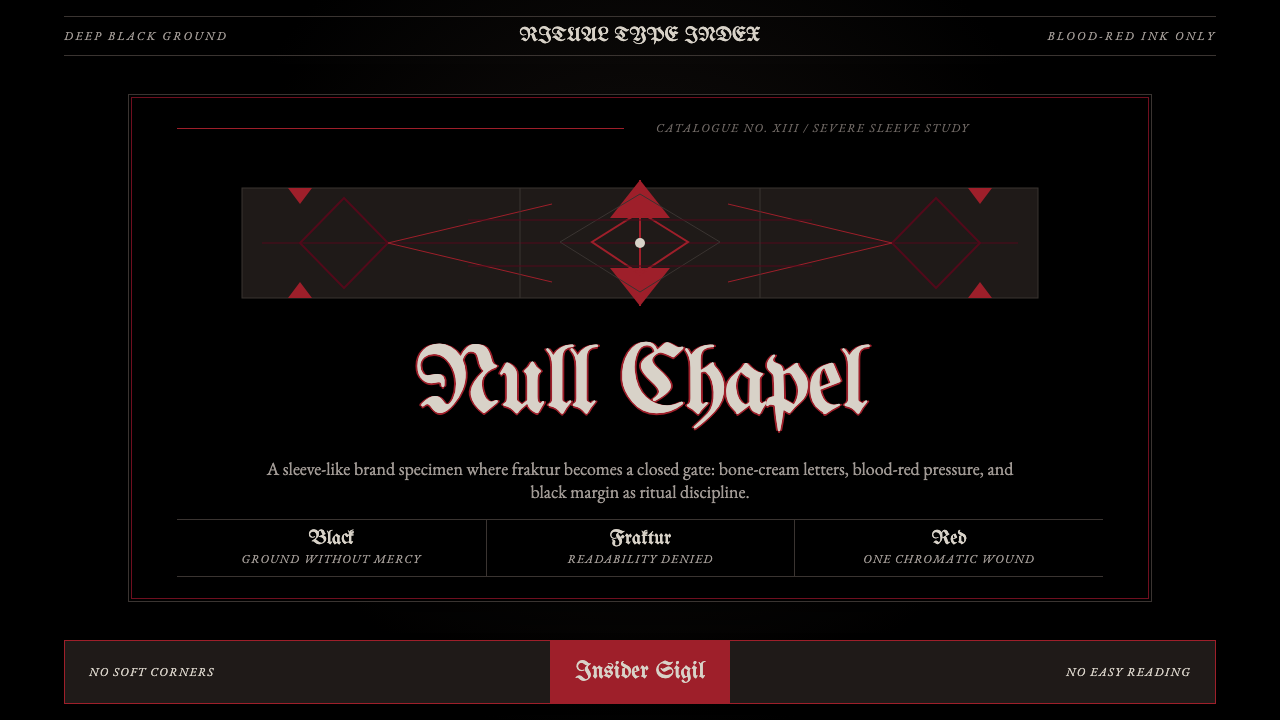 Death Metal BlackletterUnreadable by design. Bone fraktur on black, cut by one blood-red geometric s…
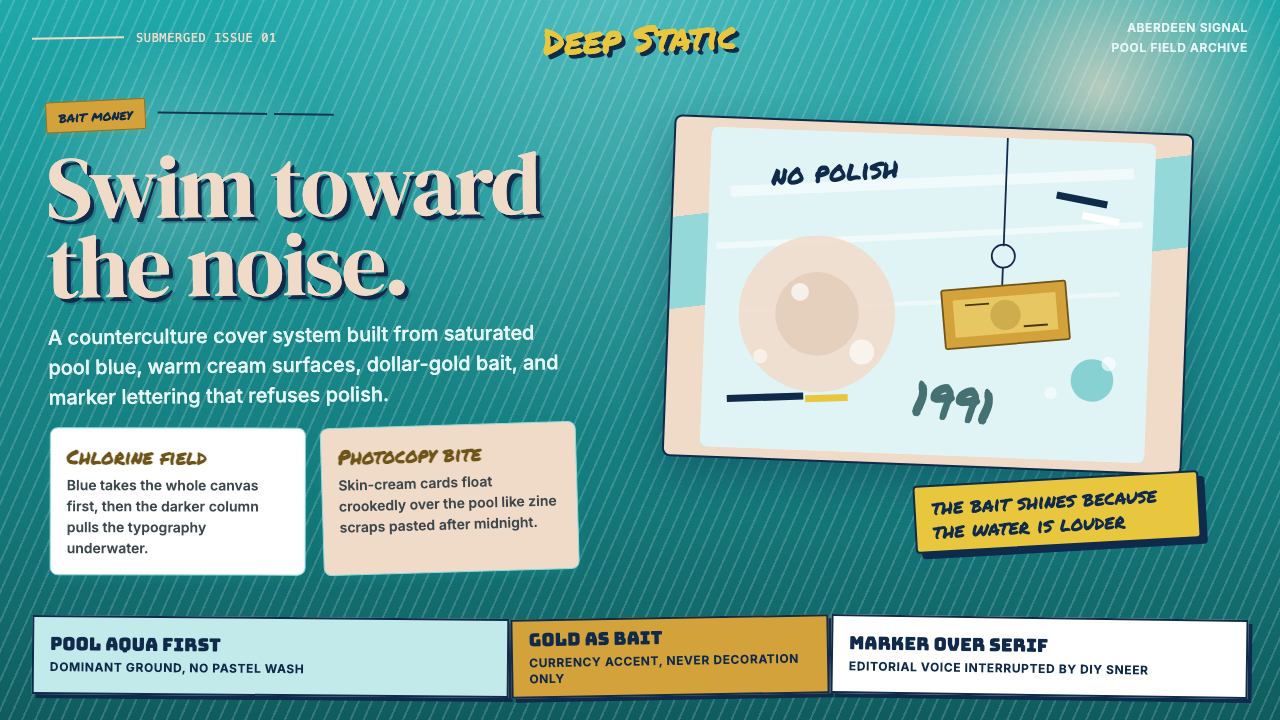 Nirvana — NevermindAnti-pop in pool blue. Cream cards, dollar-gold accents, and marker type roug…
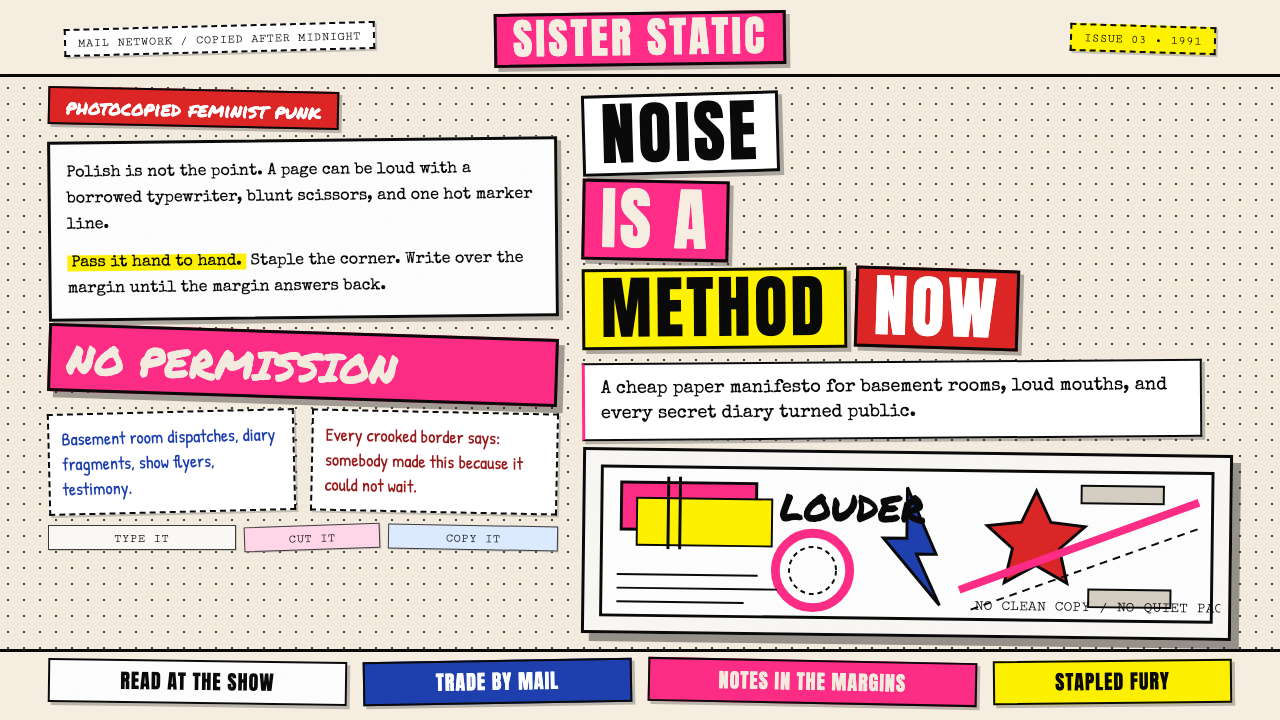 Riot Grrrl Zine (1991)DIY fury, unpolished. Cream Xerox grain, black toner type, hot-pink marker co…