What is Basque Pelota Fronton Red & Green?
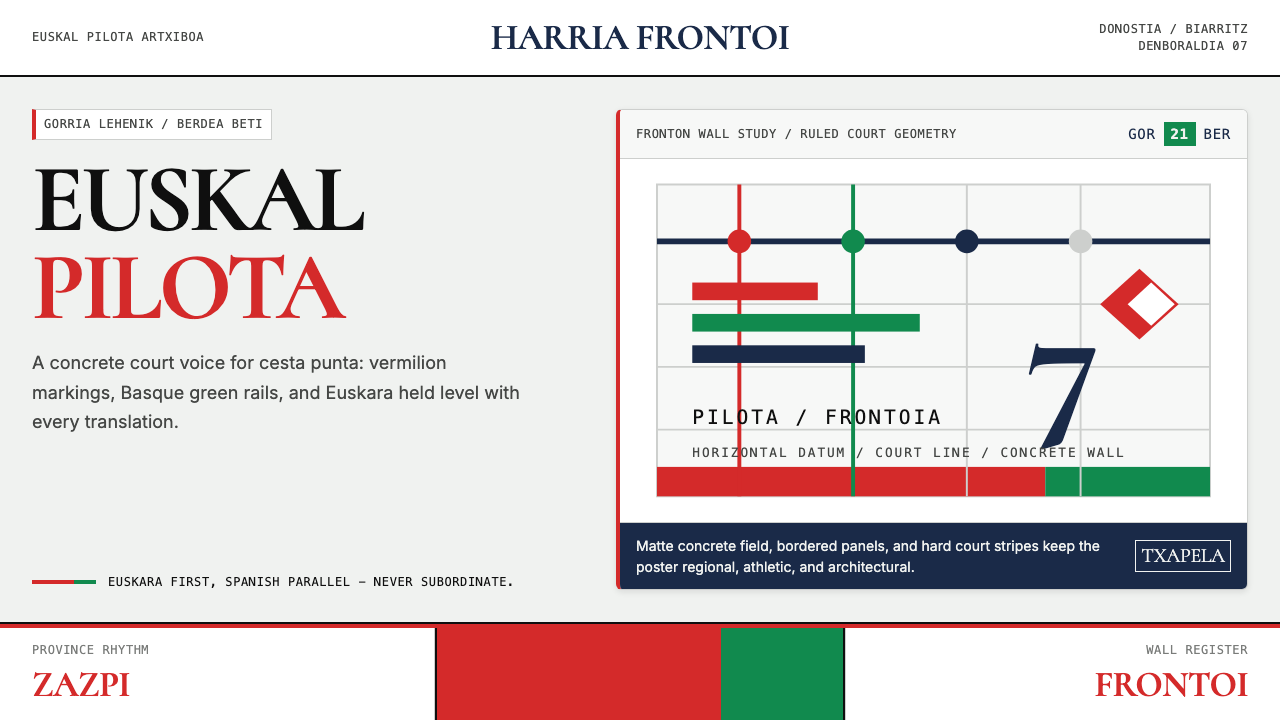
Basque Pelota Fronton Red & Green is a fiercely regional visual language forged on concrete courts and carried by a community that has never confused sport with mere entertainment.
Basque Pelota Fronton Red & Green in brief
Basque Pelota Fronton Red & Green is a design system rooted in the visual world of the fronton — the open-air or enclosed concrete court where pelota and its fastest variant, cesta punta, have been played for well over a century. At its core are two colors: a saturated vermilion red and a deep eusko green, placed against glacial white wall surfaces and rendered with a directness that owes more to functional signage than to graphic refinement.
The style is inseparable from place and identity. The palette echoes the ikurriña, the Basque national flag — a white background carrying a green diagonal cross overlaid by a red diagonal cross — and the saturated lithographic posters that advertised professional jai alai matches from Biarritz to Miami and Havana throughout the mid-twentieth century. This is not a color choice made for aesthetic pleasure alone; it is a declaration of origin.
Typographically, the system draws on nineteenth-century Basque commercial lettering: wide, high-contrast letterforms with strong vertical stress, designed for outdoor readability at speed. Euskara, the Basque language, is treated as a first-class visual element — never subordinate to Spanish or French, always present in signage, headings, and navigational text. The geometry of the fronton itself — long horizontal datum lines, clearly marked court boundaries, the vertical wall plane — provides the structural logic that underlies the compositional approach.
Where does Basque Pelota Fronton Red & Green come from?
Pelota — a catch-all name for a family of handball and racquet games played against a wall — is one of the oldest codified sports in Europe. Its roots are traced to medieval ball games played in the villages and plazas of the Basque Country, the mountainous region straddling what is now northern Spain and southwestern France. By the nineteenth century, the sport had developed a formal vocabulary: the fronton, a purpose-built court with a high front wall called the frontis, lateral walls, and a precisely measured playing surface. The court's geometry was strict and functional, and its proportions — the height of the frontis, the distances marked in chalk or painted lines — became the visual grammar of Basque athletic culture.
The most spectacular variant of the game, cesta punta — known in the Americas as jai alai, a Basque phrase meaning 'merry festival' — emerged in the Basque Country in the late nineteenth century and was exported to Cuba and Florida as Basque diaspora communities established themselves in the Americas. Professional jai alai frontons in Havana, Miami, and other cities became sites of intense spectatorship and gambling, generating a rich visual culture: painted fronton interiors in red and green, typographically bold promotional posters, numbered player pennants, and the distinctive curved cesta baskets that players used to hurl a hard rubber ball at tremendous speed.
The visual language of professional jai alai reached its peak expression between the 1920s and 1950s. Poster artists working for the Miami Jai-Alai fronton and Cuban venues produced lithographic images that combined high-contrast athletic photography with bold sans-serif and display lettering, saturated in the red-green palette that had by then become synonymous with the sport. These posters drew on both European modernist printing conventions and the local visual culture of the Americas — a fusion that gave the style an unusual cosmopolitan quality while retaining its strongly regional identity.
The Basque cultural revival that gathered force from the 1970s onward, and intensified after the transition to democracy in Spain, brought renewed attention to all aspects of Basque visual heritage, including the design language of the fronton. Contemporary Basque graphic designers — working in contexts ranging from municipal identity programs to cultural festival branding — have returned to the fronton palette and typography as a resource for expressing identity that is modern without being anonymous. The ikurriña tricolor, the court-line geometry, and the Euskara lettering conventions have been reinterpreted in digital and screen contexts while retaining the directness and regional pride that defined the original.
What defines the Basque Pelota Fronton Red & Green look?
Color
The palette is anchored by two dominant colors: vermilion red and eusko green. Vermilion is warm, almost aggressive — the red of sport markers, warning signals, and flag symbolism — while eusko green is deep and earthy, referencing the forested mountains of the Basque interior. These two saturated colors are never blended or graduated; they meet at hard edges, usually against an expanse of glacial white that represents the fronton wall itself. The white is not neutral — it is structural, the ground that gives both colors their maximum impact.
Typography
Letterforms draw on nineteenth-century Basque commercial signage tradition: wide, robust, and high in stroke contrast, designed to be legible at a distance from a moving position. Display type tends toward condensed width and generous height, mimicking the proportions of hand-painted fronton lettering. Crucially, Euskara — the Basque language — is always typographically present. Bilingual or trilingual text is treated as a feature rather than a complication, with Euskara given visual priority or at minimum equal weight alongside Spanish or French.
Geometry and Court Lines
The fronton's architectural geometry provides the structural vocabulary: strong horizontal lines define the datum of the court floor and the foul line painted on the frontis wall; vertical elements refer to the height of the frontis itself. These lines are functional in origin — they demarcate the playing field — but in the design system they become compositional devices, organizing space with the same directness as architectural drawing. Layouts follow a horizontal grid logic, with text and imagery aligned to strong horizontal anchors rather than centered on the page.
Material Directness
The fronton is a functional structure: raw concrete, painted lines, numbered sections. There is no decoration applied to the court beyond what is needed for the game. The design system inherits this absence of adornment — surfaces are flat, textures are avoided, gradients are absent. When a red field appears, it is solid and saturated, not shaded or textured to simulate depth. This material directness communicates athletic seriousness; ornamentation would read as incongruous.
Regional Identity as Structural Element
In most design systems, cultural identity is expressed through styling — it is applied over a neutral structural base. In this system, identity is structural. The palette is the ikurriña palette. The language on the page is Euskara first. The geometric references are the fronton's own proportions. This means the style cannot be separated from its origins without becoming something entirely different — it is constitutively Basque, not generically sporty or generically red-green.
Scale and Impact
The fronton poster tradition trained viewers at scale: these images were designed to be read from across a crowded public space, in motion, against the visual noise of a crowd. The design system carries this scale sensitivity into smaller formats. Type is set large relative to the field; color blocks are generous; thin lines and small detail are treated with suspicion. The system works best when it commits to boldness — an undersized headline or a timid color application produces work that looks like a facsimile of the style rather than an expression of it.
Who shaped Basque Pelota Fronton Red & Green?
Chillida is the most internationally recognized artist to emerge from the Basque Country in the twentieth century. Working primarily in sculpture and printmaking, his mature work — iron forms of tremendous physical presence, and graphic works combining geometric abstraction with Basque spatial sensibility — is inseparable from the landscape and cultural logic of Euskal Herria. While Chillida did not design for sport contexts, his visual grammar of hard-edged form, the tension between mass and void, and his insistence on Basque cultural rootedness as an artistic position informed the broader visual culture from which the fronton design language draws.
Sarrionandia is a Basque writer and poet whose work in Euskara has shaped contemporary understandings of Basque visual and textual identity. His commitment to writing exclusively in Euskara — maintained through years of political exile — exemplifies the principle that animates the typography of this design system: Basque language is not a decorative addition to a work produced primarily in Spanish or French, but its primary and essential medium. The visual insistence on Euskara in the fronton tradition mirrors this linguistic and political stance.
Atxa represents a generation of contemporary Basque graphic designers who have engaged directly with the fronton visual heritage as raw material for contemporary work. Designers in this tradition have applied the fronton palette and court-line geometry to municipal signage systems, cultural festival identities, and sports communications — demonstrating that the style is not a historical artifact but a living visual language capable of contemporary application. Atxa's work in particular has explored how the ikurriña color logic can function in screen-based and digital contexts without losing its intensity.
Lopez Mendizabal was among the key figures in the twentieth-century movement to codify and promote Euskara as a written and visual language. His work in typography and book design established models for how Basque text should look on the page — generous spacing, readable letterforms, and the positioning of Euskara as the primary language of any bilingual publication. These typographic norms filtered directly into commercial and sporting visual culture, shaping the way Basque sport venues and publications treated their language.
How do you use Basque Pelota Fronton Red & Green today?
Basque Pelota Fronton Red & Green is a style that demands commitment. Its strength comes from the combination of saturated color, bold scale, and regional identity markers — applied at half measure, it reads as generic sports branding. Applied with conviction, it produces work with an unusual combination of physical directness and cultural depth. The contexts where it works best are those where the product or event shares something of the style's own values: community identity, physical presence, seriousness about craft.
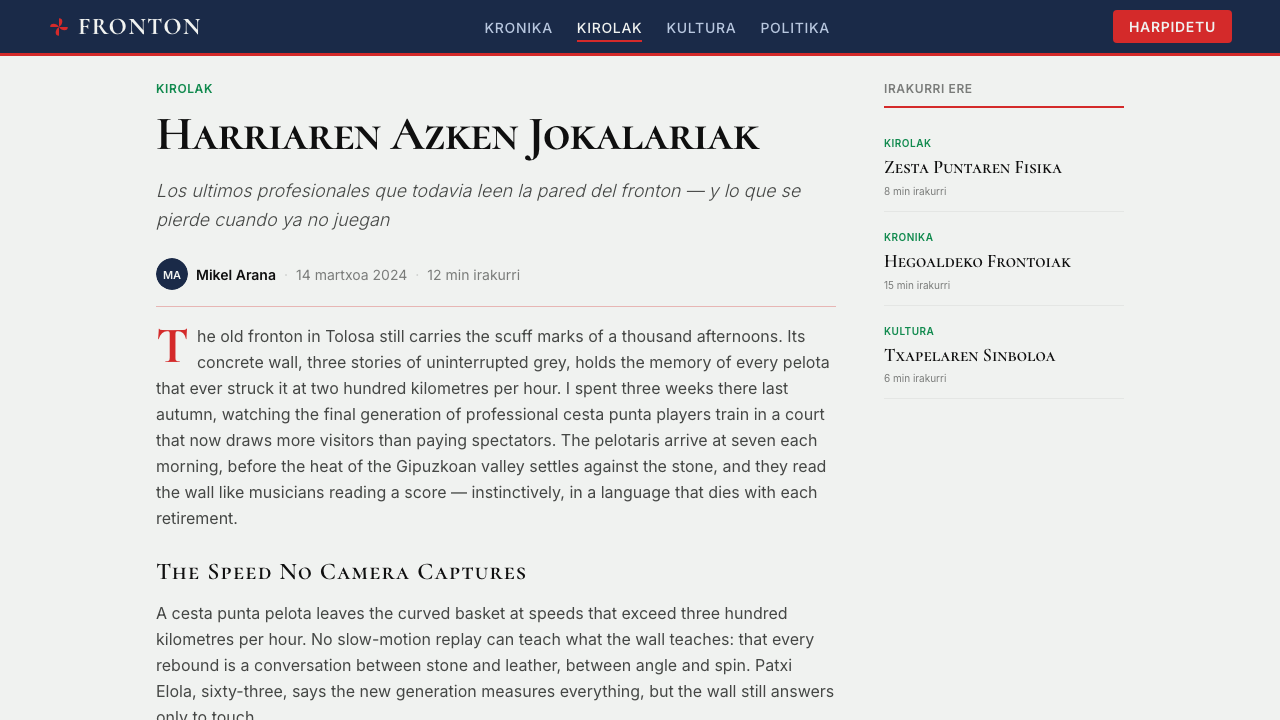
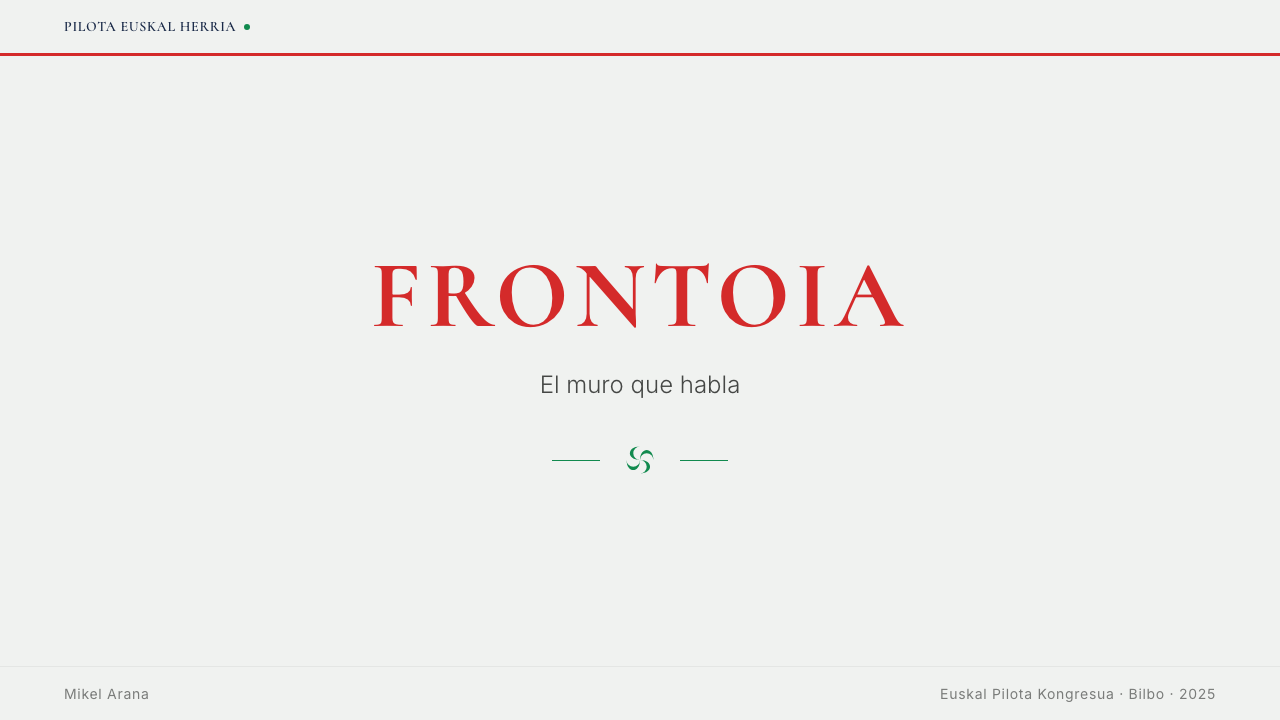
For presentation slides, the style works best on covers and transition pages where full-color impact can be used without overwhelming long text passages. A fronton-inspired cover might divide the slide field with a strong horizontal line at roughly one-third height, placing a vermilion block above it and a white or near-white field below, with the presentation title set in wide, high-contrast type. Content slides should discipline themselves to the horizontal grid logic: text anchored to a left or bottom rail, with color used only for structural emphasis — section markers, data highlights — rather than decorative fill. Data slides can adopt the color duality directly: two data series mapped to vermilion and green, with white or light gray as the neutral ground.
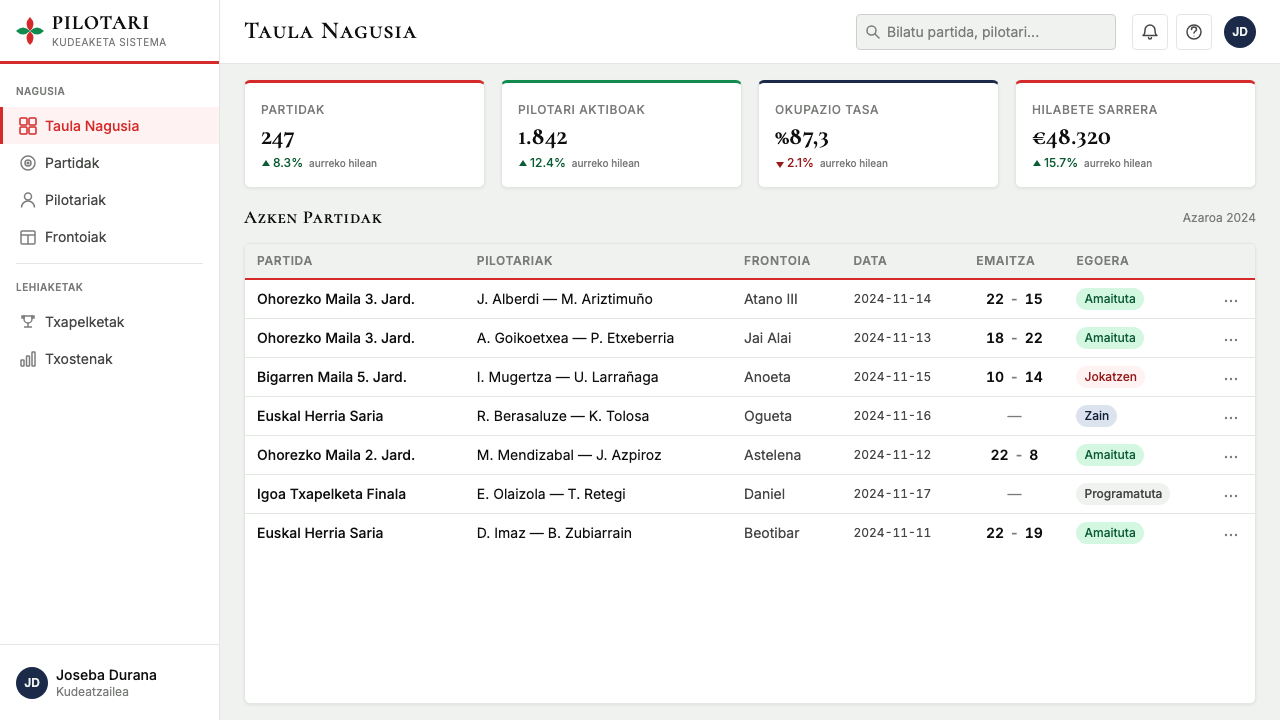
For web interfaces, the style is well-suited to event registration pages, sports league dashboards, cultural organization sites, and any context where a strong regional or community identity needs visual expression. The approach: a strict horizontal grid, generous use of white as the structural ground, color reserved for primary calls to action, headers, and active states. Navigation should be typographically bold — labels in wide, high-contrast letterforms — with Basque language support treated as a first-class feature rather than a localization afterthought. Card components should use the hard-edged aesthetic: flat color fills rather than gradients, solid borders or no borders at all, without soft drop shadows that would soften the style's physical character.
For editorial and marketing applications, the style's poster heritage provides a strong model. Full-width horizontal bands in vermilion or green, carrying reversed-out white text, can punctuate long-form content without resorting to decorative illustration. Section headings benefit from the wide letterform tradition: set large, allowed to occupy the full measure, with generous space above and below. Bilingual text — where both languages are given full typographic presence rather than one subordinated to a smaller size — is both historically accurate and visually distinctive in contemporary contexts where such equality is still uncommon.
A common mistake when applying this style is to treat the red and green as interchangeable accents, applying them at similar weight and frequency throughout a layout. Authentic fronton visual culture assigns clear roles: vermilion is the primary signal color, commanding immediate attention; green is the complementary ground or secondary signal, giving context to the red. Using them at equal weight creates visual competition rather than hierarchy. A second common error is softening the palette — choosing a more muted red or a less saturated green because the full-strength colors seem aggressive. The style's entire character depends on that intensity; softened, it loses its connection to the source.
Basque Pelota Fronton Red & Green — FAQ
Is this style appropriate for contexts outside sport and regional identity?
Yes, but with awareness of what the style carries. The fronton palette and geometry are visually powerful in any context that benefits from directness, physical presence, and strong hierarchy — food and beverage brands with a craft or artisanal positioning, cultural institutions presenting heritage content, and technology products that want to signal regional specificity rather than generic global modernity. The style struggles where warmth, softness, or decorative richness are valued, and it will always carry some association with Basque identity even when applied to entirely different subject matter. Designers should decide whether that cultural resonance is an asset or a liability for their specific context.
How does this style differ from generic sports branding?
Generic sports branding typically uses bold color and dynamic typography as stylistic choices — they signal energy and competition but carry no deeper content. The fronton style uses the same visual means but each element is load-bearing: the red-green palette references the ikurriña and specific cultural history; the wide letterforms reference Basque signage tradition; the horizontal geometry references the court itself. Removing any of these specifics produces work that looks generically sporty; retaining them produces work that communicates a particular place, history, and community. The difference is between style as decoration and style as argument.
Can the style work in a dark or night-mode layout?
The historic fronton palette is emphatically light-ground — the white of the court wall is structural, not incidental. A dark inversion is possible but changes the nature of the system significantly. On a dark ground, vermilion retains much of its impact while eusko green can read as either menacing or lush depending on its exact shade and surroundings. The key risk in dark mode is losing the structural role of white, which in the original system acts as a spatial anchor giving both colors room to operate. A dark variant works best when it uses black or very dark gray as a neutral structural ground and introduces white as a typographic element rather than trying to reproduce the full three-color fronton dynamic on a dark field.
How should Euskara be handled if the target audience does not speak Basque?
Euskara's visual presence in this design system is not primarily communicative — it is identity-marking. In the fronton tradition, Basque text appears in contexts where most viewers may not read it fluently, but its presence signals cultural location, seriousness about identity, and respect for the source community. In a contemporary application targeting a non-Basque audience, Euskara can still appear as headings, labels, or structural text — especially in contexts like event names, section titles, or navigational elements — without requiring full comprehension. The choice should be made intentionally: using Euskara as a decorative flourish without genuine commitment to the identity it represents will read as hollow. Using it with purpose, even in contexts where most viewers will treat it as texture, honors the visual tradition.
What is the relationship between this style and Basque nationalist visual identity more broadly?
The fronton style shares its palette and some of its typographic conventions with Basque nationalist visual identity — both draw on the ikurriña colors and on the Basque signage tradition. But the fronton style is sport-specific in its geometry and material sensibility: it is grounded in the physicality of the court, in the poster culture of professional competition, and in the specific aesthetic of painted concrete and hand-lettered signage. Nationalist political design tends toward more symbolic and heraldic compositions; the fronton style is more physical and commercial in origin. The two are related as cousins rather than parent and child — they share cultural DNA without being identical.
Related design styles
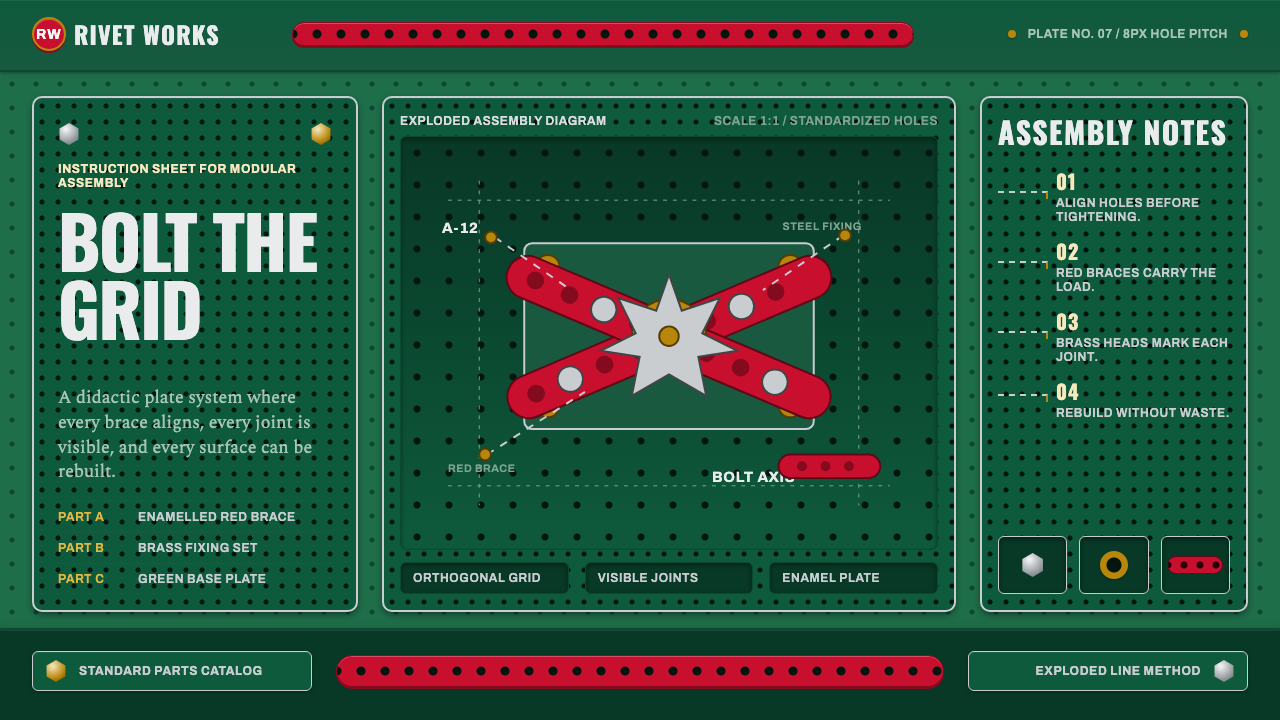 Meccano Erector SetEngineering becomes tactile. Red perforations and brass bolts lock to a green…
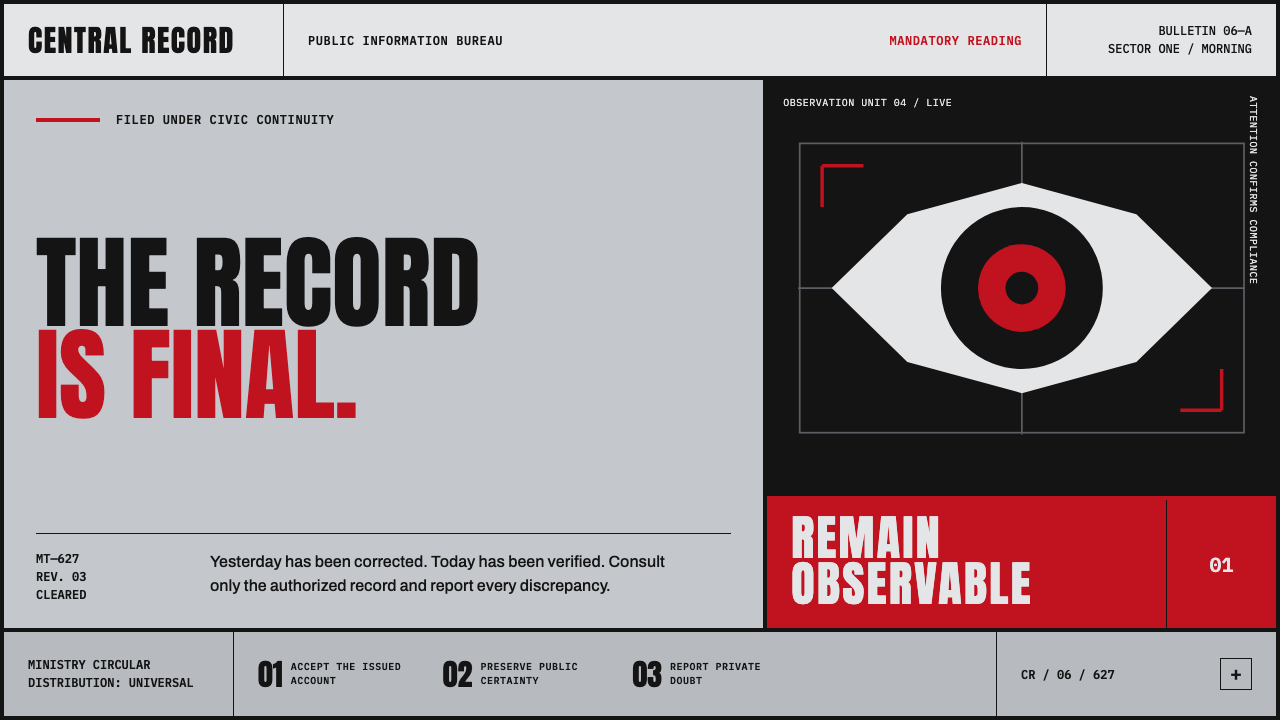 Orwell 1984 (Ministry Propaganda)Authority never blinks. Monumental black type and rationed red ink command a…
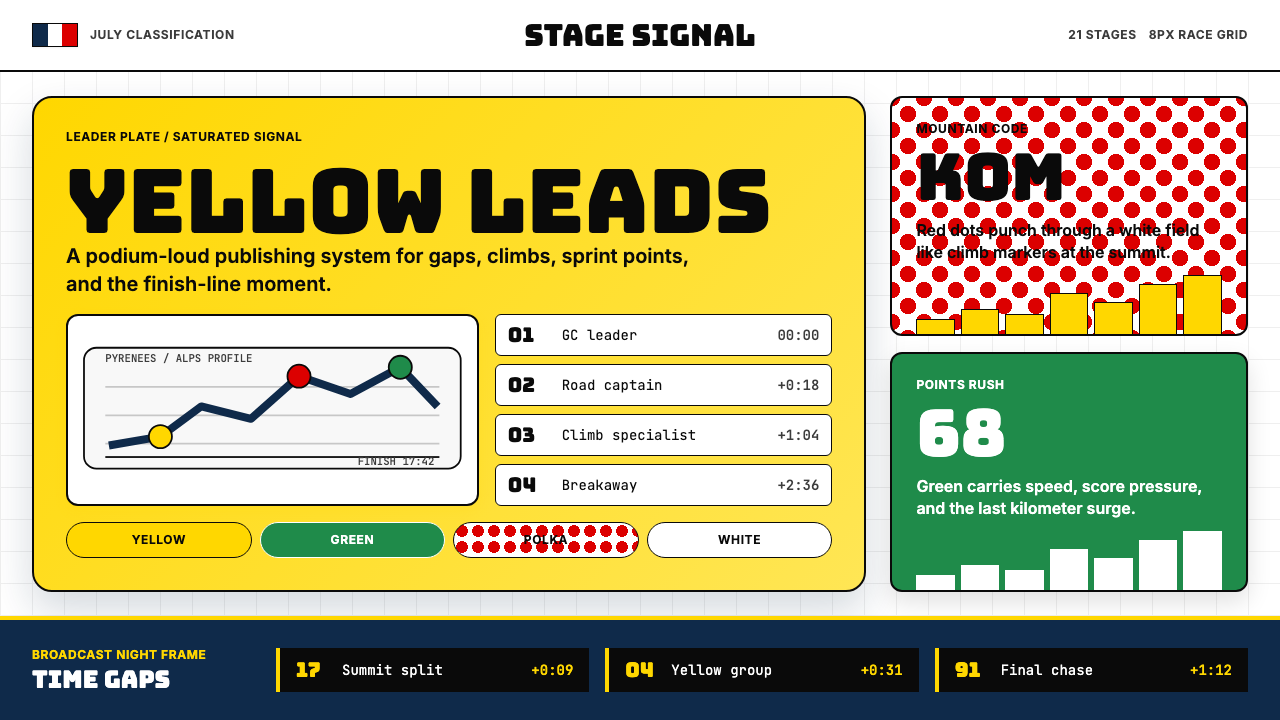 Tour de France (Yellow Jersey)Yellow owns the finish. Bungee type, polka dots, and navy tickers snap to an…
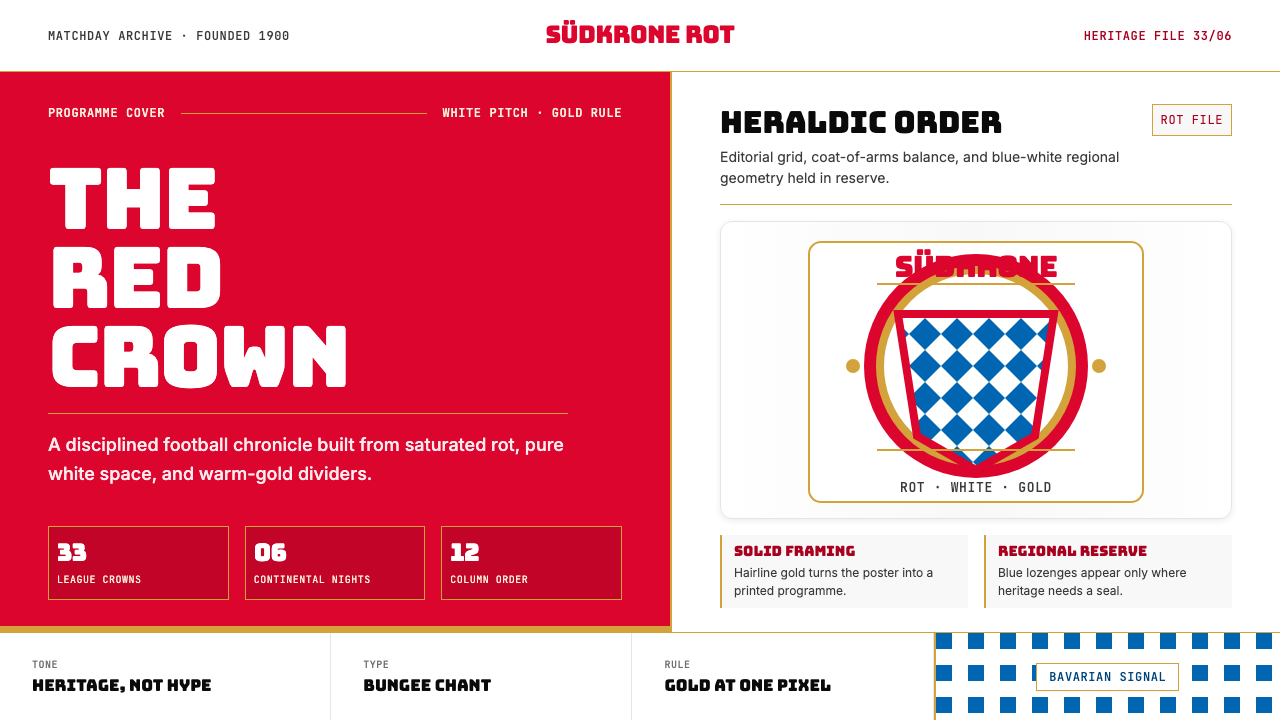 Bayern Munich (Rot)Heritage, not hype. Saturated rot fields, gold rules, and blue lozenges enfor…
 Harley Orange & BlackBuilt like a tank badge. Burnt orange, chrome hairlines, gothic type on near…
 Manchester United (Red Devils)Heritage hits like a chant. Red-black blocks, Bungee type, and gold filigree…