What is Arabian Oud Attar Bottle?
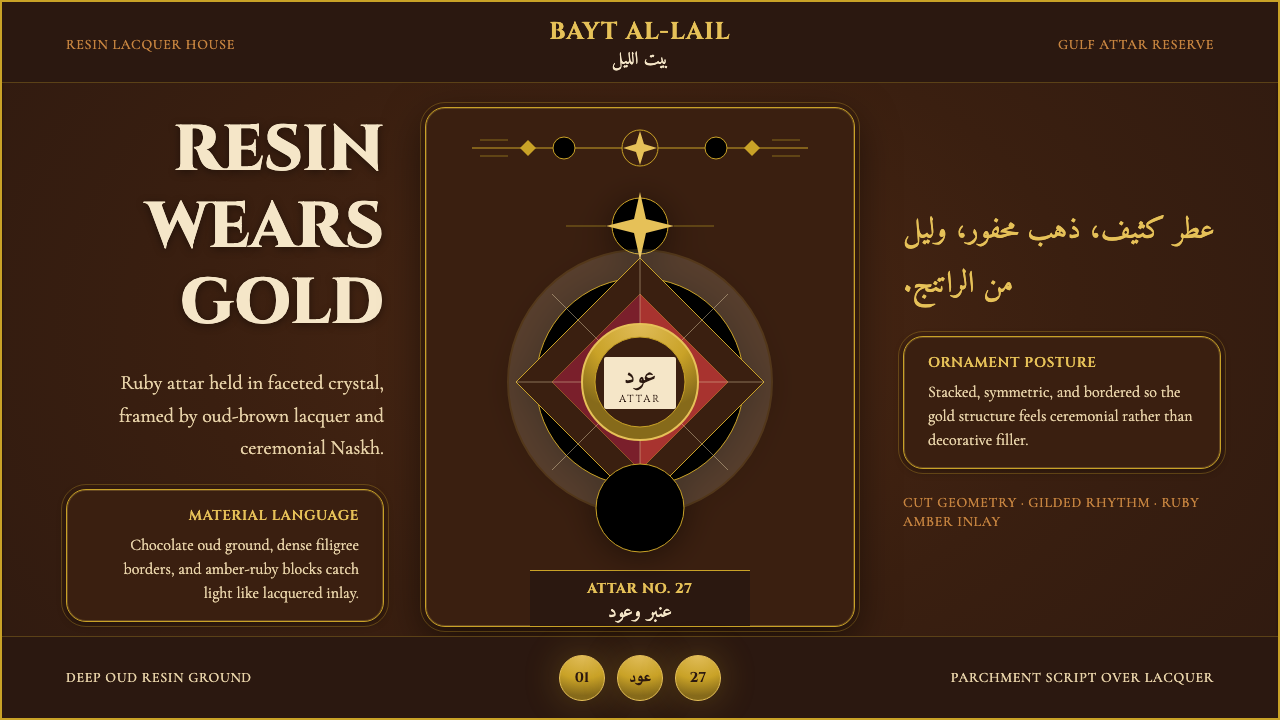
A faceted crystal flacon, crowned in gold filigree, holds a ruby-amber liquid worth more than the glass itself — this style is resinous luxury, gilded rather than washed clean.
Arabian Oud Attar Bottle in brief
Arabian Oud Attar Bottle is a design system built from the Gulf tradition of presenting concentrated perfume oils — attars — in heavy, faceted crystal bottles crowned with gold-domed, filigreed caps. The oils themselves, dakhoon and oud among them, read visually as deep ruby-amber liquid shading toward a dark oud-resin brown, and the packaging built to hold them favors weight and ornament over minimalism.
The system sits on a deep chocolate-brown ground evoking oud-resin lacquer, never a light or neutral base. Against that dark warmth, ornate gold filigree carries structural and decorative weight simultaneously, burgundy provides a secondary graphic accent, and ruby-amber tones stand in for the perfume oil itself as a recurring color note throughout the composition.
Typography draws on authentic Arabic Naskh-style script, reinforcing that this is a system rooted in a specific regional craft tradition rather than a generic 'Middle Eastern' pastiche. Every element commits to warmth and richness — nothing in this system is meant to feel light, airy, or minimal; the entire point is resinous, gilded density.

Where does Arabian Oud Attar Bottle come from?
Attar — from the Persian and Arabic word for perfume or fragrance — refers to concentrated, alcohol-free perfume oils traditionally distilled from botanical and animal-derived materials, a practice with deep roots across the Arabian Peninsula, Persia, and South Asia. Within the specific Gulf retail tradition this design system distills, attars are typically presented not in the slim glass atomizer bottles common to Western perfumery, but in dense, multi-faceted crystal flacons designed to be displayed and handled as objects of value in their own right.
Oud — agarwood resin, formed when a specific type of tree becomes infected with a particular mold and produces a dark, fragrant resin in response — is among the most prized materials in this tradition, commanding prices that can rival precious metals depending on quality and rarity. Dakhoon, a fragrant wood or incense material burned or distilled for scent, appears alongside oud in the region's fragrance culture. Both materials share a visual signature in their oil form: liquid that reads as deep ruby-amber to a dark, almost chocolate-brown resin color, which this design system takes as its defining palette anchor.
Contemporary houses such as Arabian Oud and Ajmal, both prominent names in the Gulf fragrance retail market, built their packaging language around presenting this dark, resinous liquid inside heavy faceted crystal, crowned with gold-domed caps featuring filigree metalwork — an ornamentation style with roots in broader Islamic decorative arts traditions of intricate, repeating geometric and organic patterning rendered in precious metal. The overall packaging effect communicates substantial material value before a customer even opens the bottle: weight, facet-cut crystal, and gold ornamentation all signal that the product inside is concentrated and precious rather than diluted or mass-produced.
This visual tradition has grown alongside the broader contemporary Gulf luxury retail market, particularly from the 2010s onward, as regional fragrance houses expanded their reach both within the Gulf states and to international markets seeking authentic oud and attar products distinct from Western perfumery conventions. The style deliberately resists the clean, minimalist, pale-glass aesthetic common in much of contemporary Western luxury packaging, instead committing to visible richness, warmth, and ornament as the honest visual expression of the product's actual material value.
What defines the Arabian Oud Attar Bottle look?
Chocolate-Brown Oud Ground
The base surface reads as a deep chocolate-brown, evoking oud-resin lacquer rather than any lighter neutral tone. This ground is never cream or beige — it carries genuine depth and warmth, establishing richness as the default rather than an occasional accent.
Ornate Gold Filigree
Gold appears as intricate, detailed filigree patterning rather than a flat metallic accent color — fine repeating linework reminiscent of the metalwork on an attar bottle's domed cap. The ornament carries genuine decorative complexity rather than being reduced to a simple gold-tinted flat shape.
Ruby-Amber Liquid Tones
A recurring ruby-amber tone, standing in for the perfume oil itself, appears throughout the system as a secondary color note — in accents, in gradients, in highlight details — reinforcing the sense that the entire composition orbits around a precious liquid material.
Burgundy Graphic Accent
A deep burgundy red serves as a secondary structural color, used for graphic elements like dividers, borders, or supporting shapes — distinct from the ruby-amber liquid tone and reserved for a more graphic, less luminous role within the composition.
Authentic Naskh Script
Typography draws on genuine Arabic Naskh-style calligraphy for key display text, rooting the system in a specific and authentic regional craft tradition rather than a generic decorative approximation of 'Arabic-style' lettering.
Faceted Crystal Quality
Surfaces and containers carry a faceted, multi-planed quality reminiscent of cut crystal glass, catching and refracting light across several angles rather than presenting a single flat reflective surface. This gives panels and cards a sense of weight and precious material.
Gilded Density, Never Minimal
The system deliberately rejects sparse, minimalist composition in favor of layered richness — ornament, color, and texture are meant to coexist and build on one another, mirroring how a real attar bottle presents its value through accumulated craft detail rather than restraint.

Who shaped Arabian Oud Attar Bottle?
One of the most prominent contemporary Gulf fragrance houses, Arabian Oud built its retail identity around presenting oud and attar products in heavy faceted crystal bottles with gold-domed filigree caps, helping establish the visual conventions this design system distills.
Alongside Arabian Oud, Ajmal is a major Gulf fragrance house whose packaging language reinforced the association between dark, resinous ruby-amber liquid and ornate gold-and-crystal presentation, contributing to the broader regional visual tradition this style captures.
How do you use Arabian Oud Attar Bottle today?
This style suits products that want to communicate luxury through visible richness and craft rather than through minimalist restraint — it is an intentional counterpoint to the pale, spare aesthetic common in much of contemporary Western luxury branding.
For presentation slides, the chocolate-brown ground and gold filigree work powerfully on a cover slide that wants to feel opulent and considered: an ornate gold border framing the title, set against the deep brown field, with a touch of ruby-amber as a highlight accent. Content slides should use gold filigree patterning sparingly at panel edges or section dividers rather than as a repeated background texture, keeping its detail legible and its impact concentrated.
For web interfaces, the system suits luxury fragrance and beauty product pages, premium e-commerce experiences for heritage or craft goods, and any brand wanting to signal authentic material value and regional craft heritage rather than mass-market accessibility. Buttons and interactive elements can use the ruby-amber tone as a warm, glowing accent against the dark brown ground.
For editorial and marketing content, the style suits brand storytelling around fragrance heritage, craft traditions, and material provenance — content that wants to slow a reader down and communicate that what they're looking at took genuine skill and rare material to produce. Pull quotes can be framed with a light gold filigree border to echo the bottle's own ornamentation.
A common mistake is lightening the palette toward cream or beige in an attempt to make the style feel more 'modern' or accessible — doing so strips away the deep, resinous warmth that is the entire foundation of the look. Another mistake is treating the gold as a flat accent color rather than genuine filigree detail; without the intricate patterning, the ornament reads as generic gilding rather than authentic craft.

Arabian Oud Attar Bottle — FAQ
Why does this style avoid a lighter, cream-toned background?
A lighter ground would undercut the style's core association with dark, resinous oud and dakhoon oils, whose actual liquid color is deep ruby-amber to chocolate brown. The deep brown ground is what makes the gold filigree and ruby-amber accents read as genuinely warm and precious rather than merely decorative against a neutral field.
How detailed does the gold filigree need to be to feel authentic?
It should carry genuine, fine repeating linework rather than a simplified gold-tinted shape or icon. The authenticity of this style depends on the ornament reading as craft — intricate, deliberate, and rooted in a real metalworking tradition — rather than a flat decorative gesture.
Can this style be adapted for a product unrelated to fragrance?
Yes, provided the underlying values transfer — material preciousness, craft heritage, and gilded richness. It suits luxury goods, heritage brands, and premium hospitality experiences well beyond fragrance itself, as long as the product genuinely wants to signal rare, high-value craftsmanship rather than mass accessibility.
Does this style suit a minimalist or restrained brand identity?
No — the style is built specifically around layered richness and ornament, the opposite of minimalist restraint. A brand wanting spare, minimal visual language should look to a different style; this one only works when density, gold detail, and deep warm color are allowed to coexist fully.
Related design styles
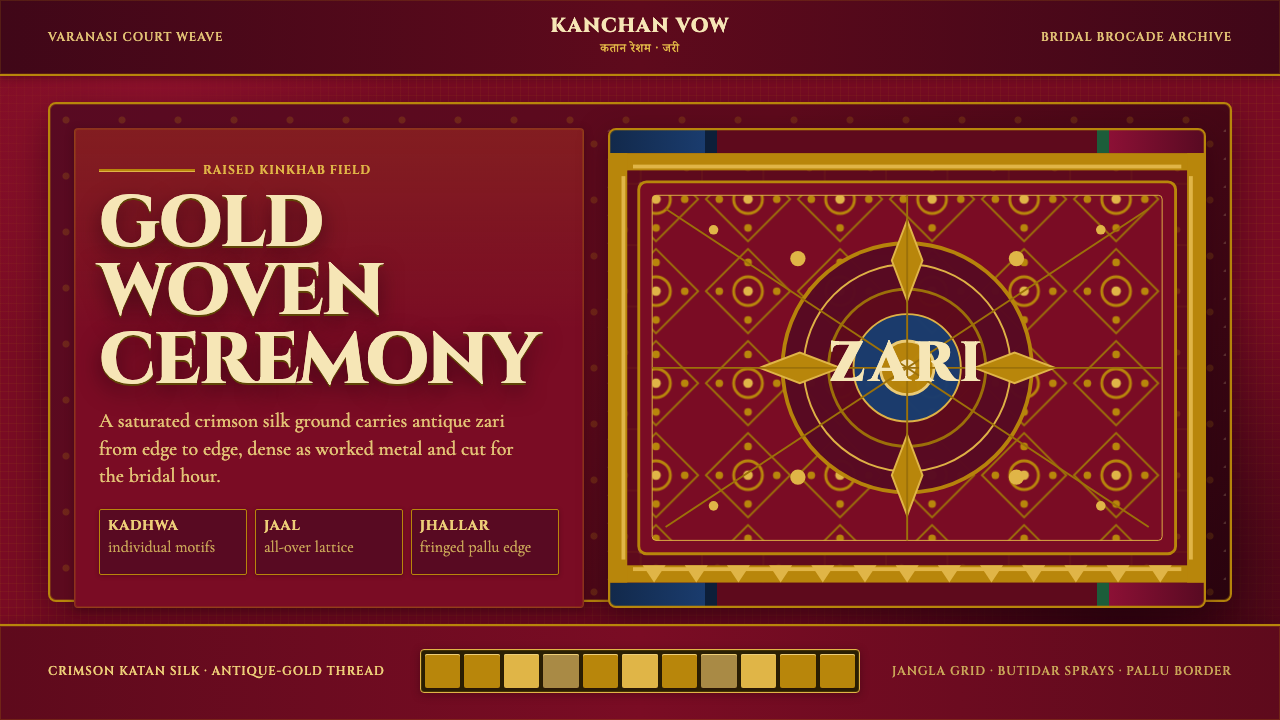 Banarasi Brocade SareeBridal maximalism, woven dense. Crimson silk grid carries raised antique-gold…
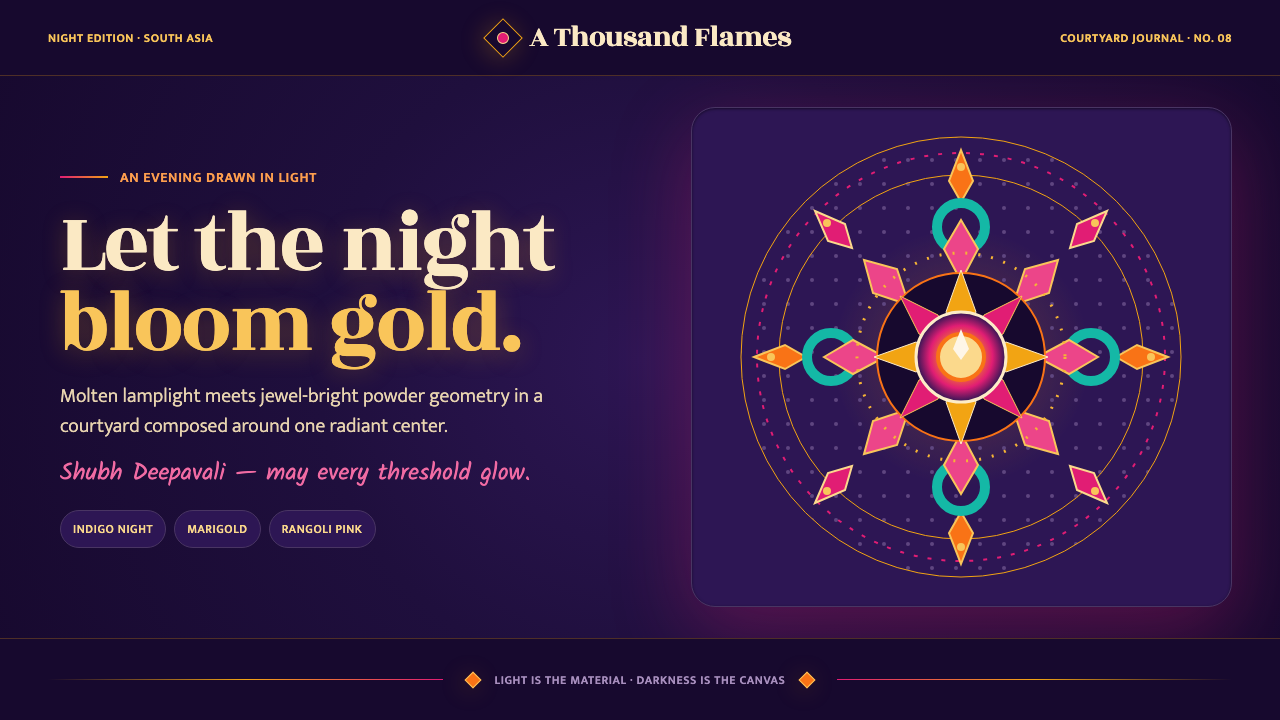 Diwali Festival of LightsNight blooms from within. Molten gold and jewel-bright rangoli radiate across…
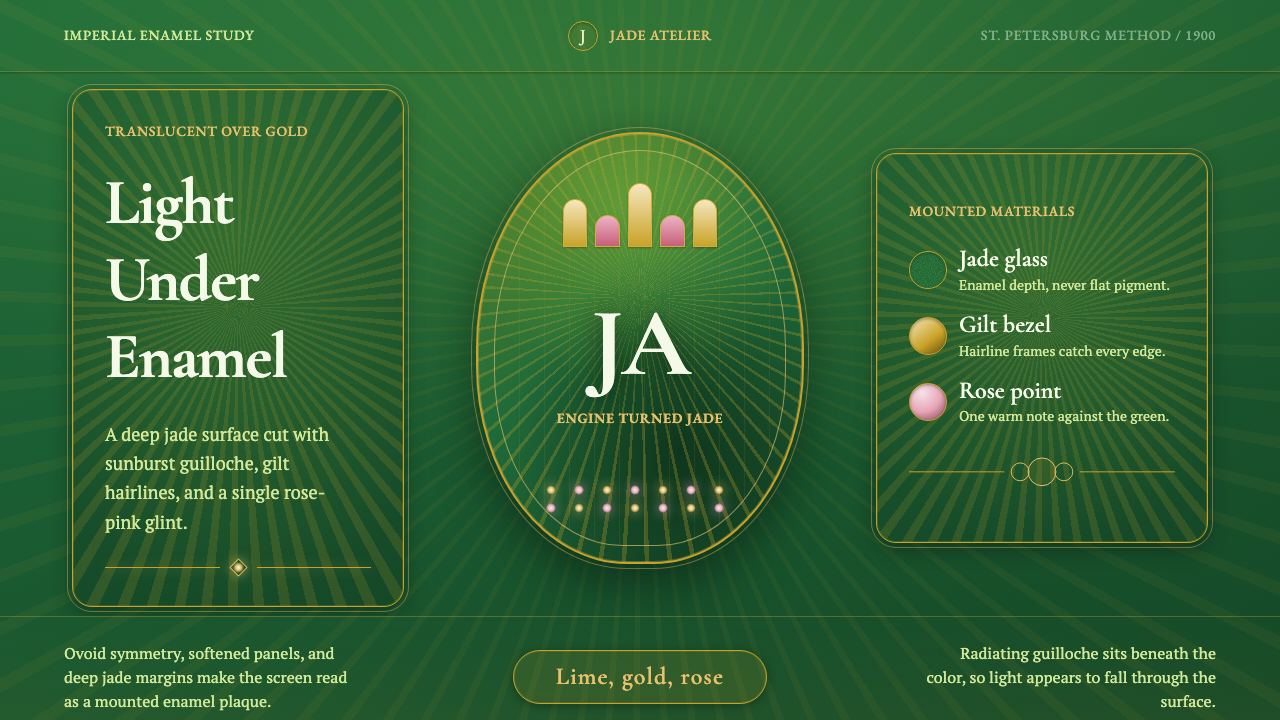 Faberge Guilloche EnamelImperial enamel glows. Jade guilloche, gilt hairlines, rose-pink points.
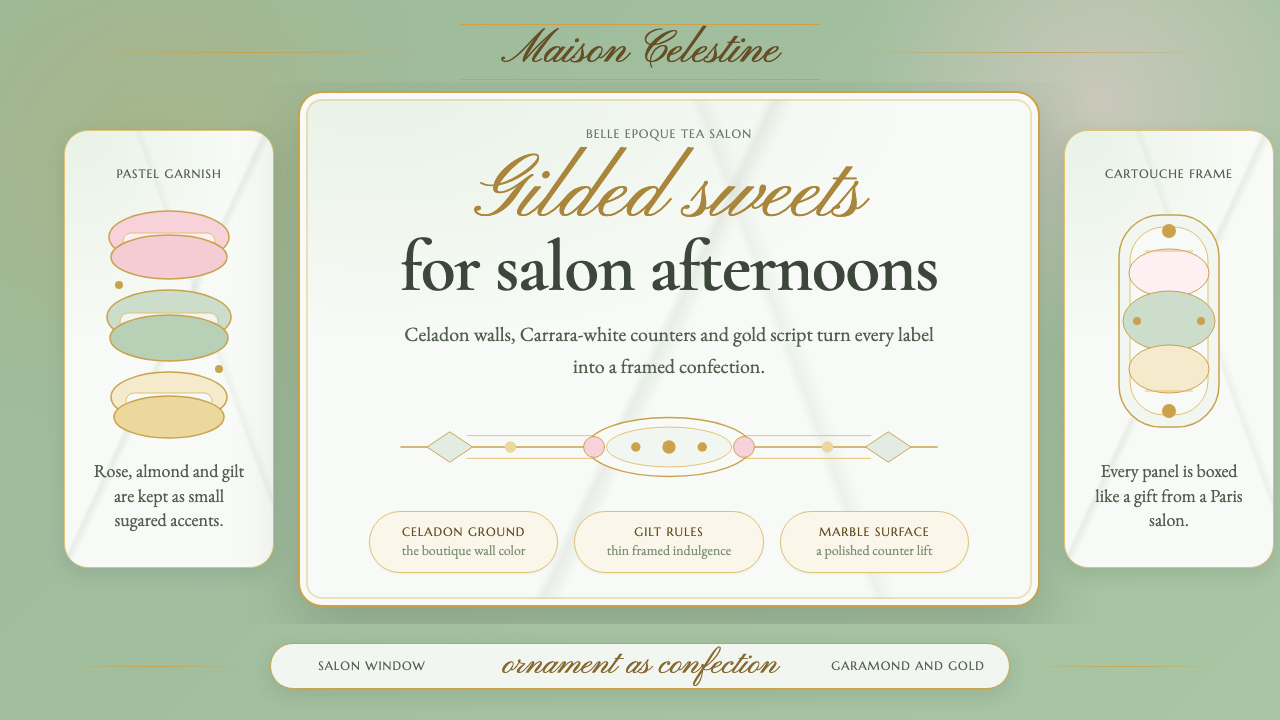 French PâtisserieOrnament is the luxury. Celadon ground, gilt cartouches, Garamond and script…
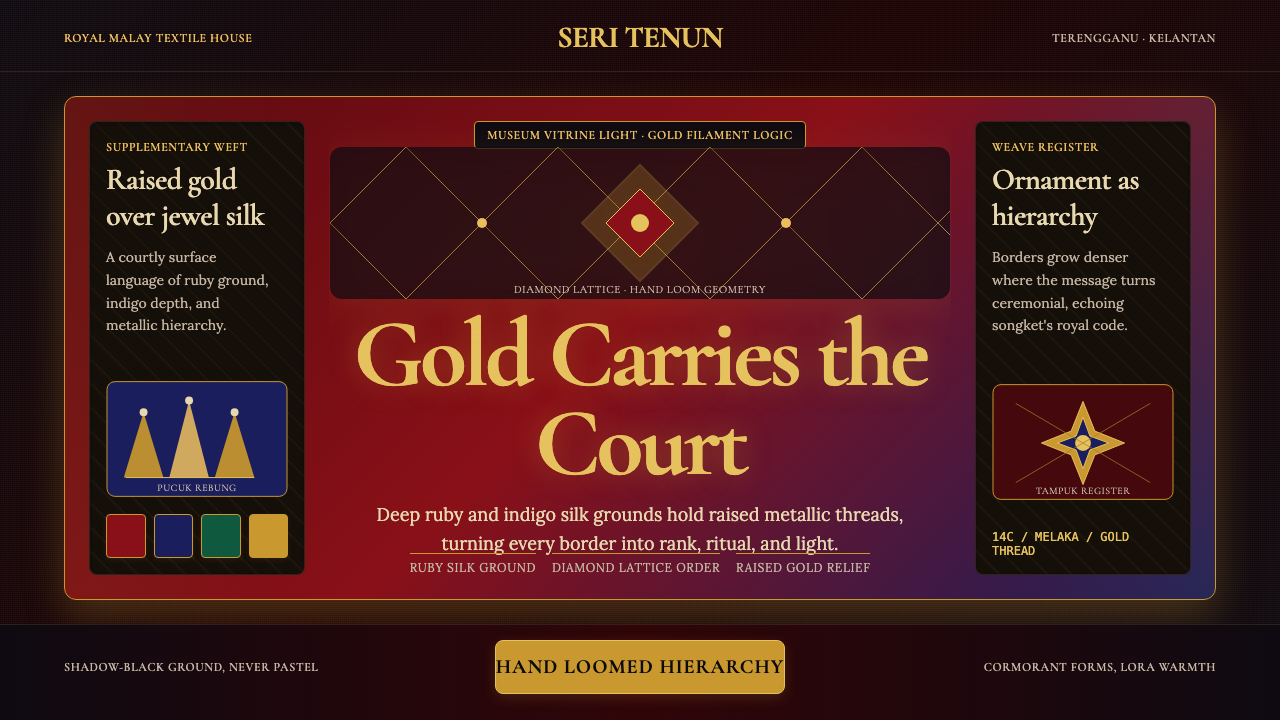 Malaysian Songket (Gold-Thread Weave)Royal textile opulence. Ruby and indigo silk grids lift gold-thread relief.
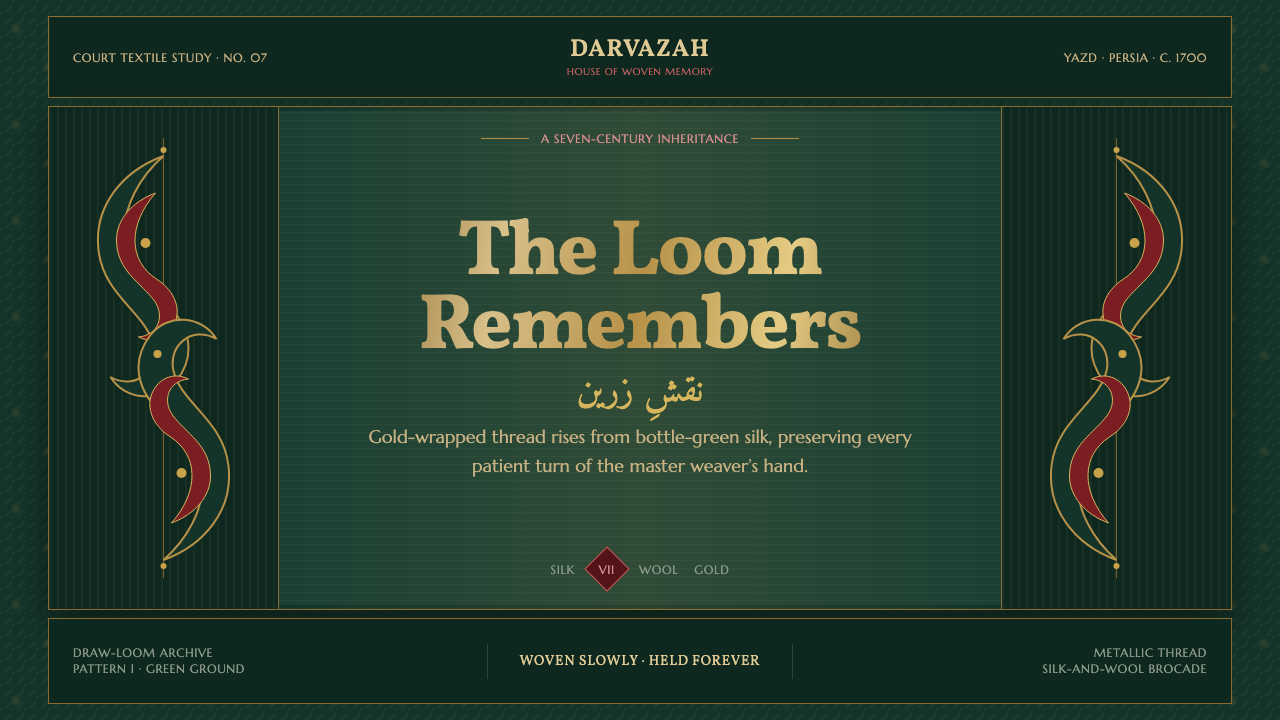 Persian Termeh BotehRoyal brocade, densely alive. Antique-gold boteh climbs across lustrous bottl…