What is Algae Bioreactor Facade?
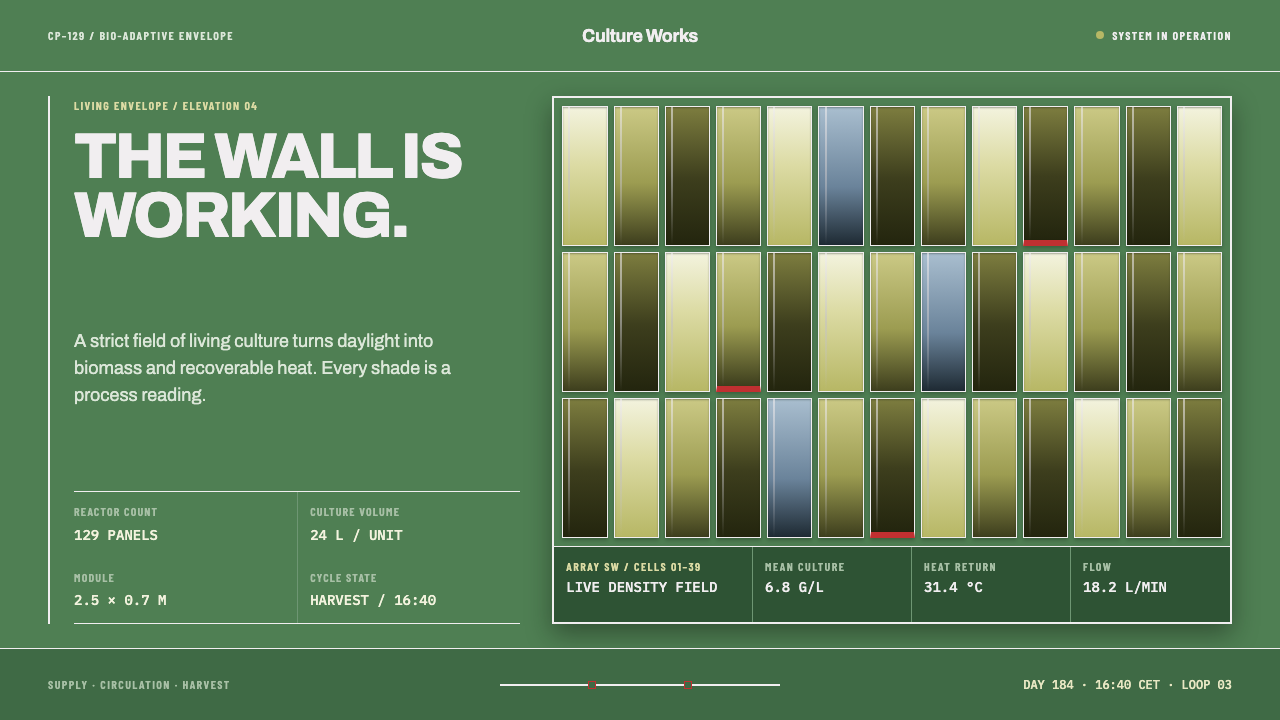
The Algae Bioreactor Facade turns a building wall into a working, living instrument: a rigid grid of glass panels whose liquid contents shift from bright chartreuse to near-black olive to cold blue-grey over a single day.
Algae Bioreactor Facade in brief
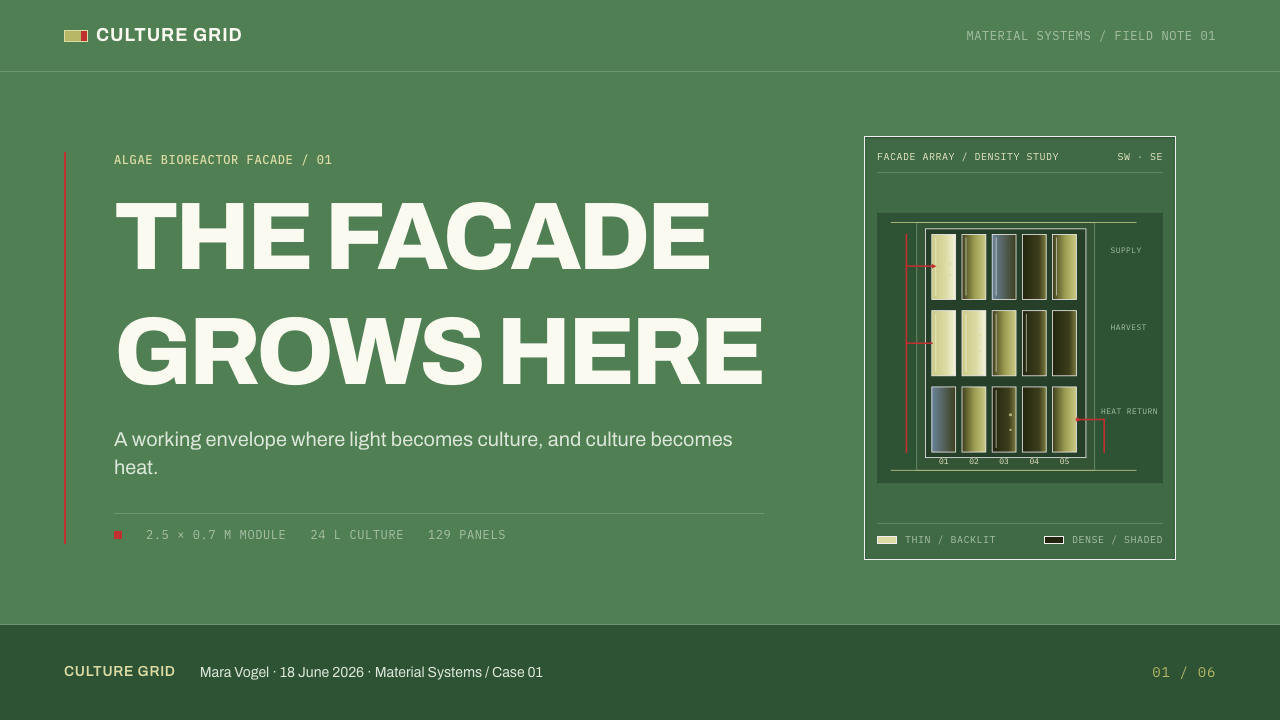
Algae Bioreactor Facade is a design style drawn from the BIQ Haus in Hamburg-Wilhelmsburg, the first building clad in living culture. One hundred and twenty-nine flat-panel photobioreactors, each about 2.5 metres tall and 0.7 metres wide, with four layers of glass and 24 litres of microalgae inside, hang in white aluminium mullions across two faces of a grass-green rendered block. The algae grow, producing biomass, and the panels harvest heat.
The style takes that facade literally. The painted wall is the ground, and the panel array is the figure. The living culture is never one flat color: it brightens where the medium is thin and backlit, collapses to near-black olive where it is dense or shaded, and reads as a cold blue-grey where a panel is idle and reflecting the sky. Everything is organised on a rigid grid of tall rectangles, thin metal frame lines and engineering-drawing type.
The central idea is that the surface is an instrument rather than a decoration. The wall is alive and working, and the design makes every process visible: what is growing, what is dense, what is idle, what is being harvested. Color here is information, and it changes with time.
Where does Algae Bioreactor Facade come from?
The BIQ Haus was completed in 2013 in Wilhelmsburg, a district of Hamburg, as part of IBA Hamburg, the international building exhibition that used the district as a testing ground for new approaches to housing and urban life. The exhibition format matters: it asked for buildings that would be experiments in public, and the BIQ Haus answered by putting a bioreactor where a conventional building would put cladding. It has been in operation since, which makes it a long-running field test as well as an image.
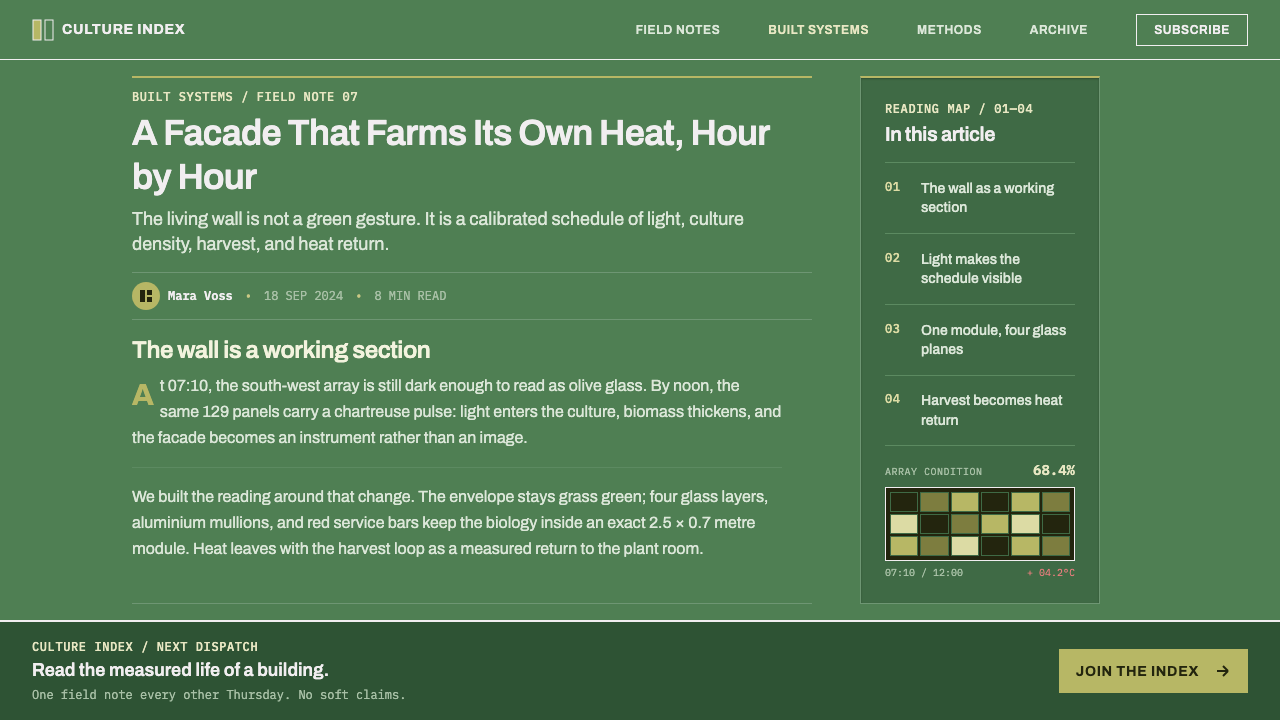
The idea sits within bio-adaptive architecture, the approach that treats a building as something closer to an organism than an object, responding to light, weather and time rather than standing indifferent to them. Microalgae are suspended in water inside flat glass panels. When light reaches them they grow, and the harvested culture can be used as biomass, while the panels also collect heat from the sun. The facade is therefore both a skin and a small production plant, and its appearance is a direct readout of the biology inside.
It is also a work of German environmental engineering, and that shapes the design language. The panels are standardised, the frames are thin and white, and the system is built from repeated modules that can be inspected and serviced. The team credited with the project includes Splitterwerk Architects, Arup, Colt International and SSC Strategic Science Consult, a mix of architecture, engineering, building-systems and science expertise. This is why the visual language feels less like an artistic gesture and more like a technical drawing that happens to be alive.
The design system translates the building into an interface vocabulary. The painted wall becomes a calm, flat ground. The panel array becomes a grid of tall rectangles, each with its own state. The shifting colors of the culture become a data palette that moves from bright to dark to cold. A frame is a thin line, type is plain and technical, and the liquid behind the glass becomes a layer of depth. The result is a style for products in which processes are the content.
What defines the Algae Bioreactor Facade look?
Wall as Ground, Panels as Figure
The painted wall is a flat, matte green that serves as the ground, and the panel array is laid on it as the figure. The wall stays quiet and uniform, so that all the visual interest comes from the panels. In an interface, this means a calm background and a clearly delineated set of modules, each of them readable as a distinct unit.
Chartreuse Where Thin and Backlit
Where the culture is thin and light passes through it, the color brightens to a vivid yellow-green, the acid chartreuse of new growth. This is the most luminous note in the palette. It is used for states that signal activity, freshness or emphasis, and it works precisely because the rest of the system sits much lower in value.
Near-Black Olive Where Dense or Shaded
Where the culture is dense, or a panel falls into shade, the color collapses to a deep olive that is almost black. This is the system's dark register and it provides the weight. It also explains how the style handles dark mode naturally: the darkness is not an inverted theme but the real appearance of a thick culture.
Cold Blue-Grey When Idle
An idle panel does not look green at all. It reflects the sky and reads cold blue-grey. In the system, this is the color of the inactive, paused or disabled state, and it provides a cool counterpoint to the warmer greens. Having a distinct color for idleness makes every state of the interface legible at a glance.
Rigid Vertical Grid
The panels are tall, narrow rectangles repeated across the facade, and the layout copies that geometry. Columns are regular and strictly aligned, every module has the same proportion, and rows line up edge to edge. There is no organic, hand-drawn irregularity here; the unpredictability is all inside the panels, in the color, while the structure around them stays exact.
Thin White Frame Lines
The panels hang in white aluminium mullions, and the interface renders those as thin, crisp white lines that separate modules. The frames are structural drawing, not decoration. They are consistent in thickness, they never bevel or glow, and they let the colored panels read as individual objects rather than a continuous wash.
Engineering Type and Visible Process
Type is a plain, technical German-style sans-serif, set like labels on an engineering drawing, with numerical readouts, units and short captions placed beside each module. Behind the glass, the liquid is the one fluid element in an otherwise rigid composition, so transparency and a sense of depth are used sparingly to suggest culture behind a pane. The aim is that every process on the page is visible.
Who shaped Algae Bioreactor Facade?
Splitterwerk Architects is the architecture practice named among the BIQ Haus project's key contributors. The practice is associated with the building's concept of a block clad in a bioreactor skin, in which the facade is designed as part of the building's function and not applied afterward. Their work gives the style its confidence in treating the wall itself as the subject.
Arup, the international engineering and design consultancy, is also listed among the project's key contributors. Its presence reflects the engineering seriousness behind the facade: the panels are not an art installation but a system that has to be built, fed, monitored and maintained. That discipline is why the visual language reads as technical.
Colt International is the building-systems company named among the project's contributors. Its role connects the biology of the algae to the hardware of a working facade, with modules, frames and fixings that can be repeated across the surface. The design system borrows this modularity directly: identical units, repeated, with their state as the only variable.
SSC Strategic Science Consult is the science partner named among the project's contributors, associated with the biological and process side of the facade. Its presence is a reminder that the colors in this style are not arbitrary: they come from real states of a culture, thin or dense, lit or shaded, active or idle.
How do you use Algae Bioreactor Facade today?
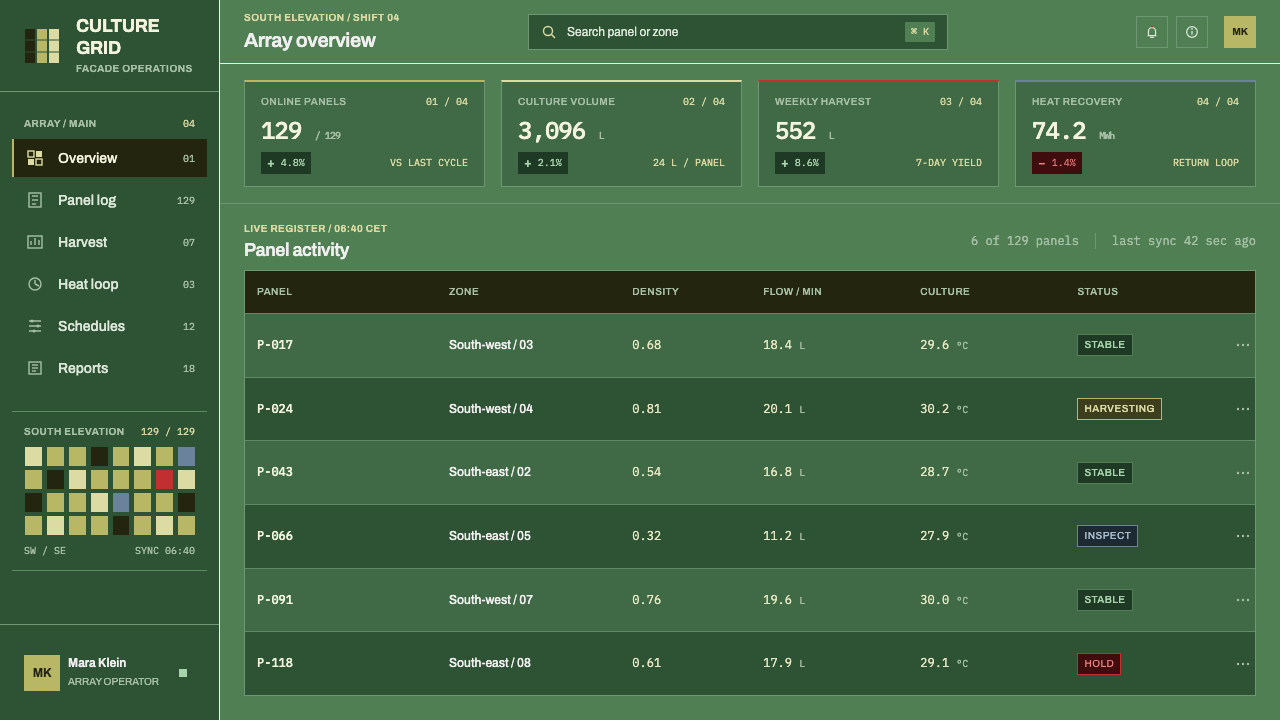
Algae Bioreactor Facade is a natural fit for products where something is happening and the user needs to see it: monitoring and operations dashboards, energy and climate tools, science and biotech companies, sustainability reporting, laboratories and research organisations, and architecture or engineering portfolios. It is a dark, technical, quietly futuristic style that favours data over decoration.
For presentation slides, a cover can be a field of dark olive with a grid of tall rectangles, each filled with a different state of the green-to-grey range, and the title set in a technical sans-serif in light tones. Content slides use the grid as a structure: modules aligned in columns, thin white lines between them, each module carrying a short label and one readout. Data slides are the strongest use, since bars, heatmaps and status grids can use the palette as a real encoding of low, high, dense or idle.
For web interfaces, treat the page as a facade. A dashboard becomes a grid of panel-like cards in uniform proportions with thin white frames; the state of each card is shown by its color, with chartreuse for active, deep olive for dense or heavy load, and blue-grey for idle or disabled. Navigation is a quiet strip of technical type. Avoid heavy shadows and ornament; depth comes from the liquid-behind-glass effect of subtle translucency, used only inside the modules.
For editorial and marketing work, the style suits long-form science and technology storytelling. Articles can pair a narrow text column with a tall panel strip as an illustration, with captions set like engineering annotations. Campaign pages work best when they use real numbers and states, such as output, capacity and uptime, as the headline content, with the grid of panels as the visual rhythm.
The usual mistake is to make the culture one bright green. A flat neon green on black looks like a generic eco brand and loses the whole point: the color changes with density, light and idleness. Another is to soften the grid with rounded organic shapes; this wall is rigid and exact, and only the liquid is alive. A third is to leave out the cold blue-grey idle state, which removes the contrast that makes the greens read as living. Keep the grid strict, the states distinct and the type technical.
Algae Bioreactor Facade — FAQ
What is a photobioreactor?
A photobioreactor is a container in which light-dependent organisms such as microalgae are grown under controlled conditions. In the BIQ Haus, the containers are flat glass panels hung on the facade, each holding 24 litres of algae culture. The design system borrows the panel as a unit: a flat, framed, transparent module whose color reflects what is happening inside.
Why does the color vary instead of staying one green?
Because the culture behaves differently depending on density and light. Thin and backlit it glows yellow-green; dense or shaded it turns near-black olive; an idle panel reflects the sky in cold blue-grey. The style turns these natural variations into a functional palette, so color communicates state rather than simply looking green.
Is this a dark-mode style?
Yes, it is built as a dark system. The deep olive register provides weight, and the brighter chartreuse and the thin white frames lift off it. The darkness is not an inverted light theme; it is the actual appearance of a dense, shaded culture, which is why it feels more natural than a simple color flip.
What kind of typography fits this style?
Plain, technical sans-serif letterforms in the German engineering tradition: legible, neutral, regular in rhythm, and used in small sizes for labels, units and readouts. The type should look like annotation on a technical drawing and should never compete with the colored panels for attention.
When does the Algae Bioreactor Facade struggle?
It struggles with warm, human, emotional or heritage-driven subjects, and with playful consumer products, because its grid is rigid and its mood is technical. It also needs a real reason to show states: if there is no process to display, the shifting palette has nothing to say. For monitoring, science and sustainability products, it is unusually expressive.
Related design styles
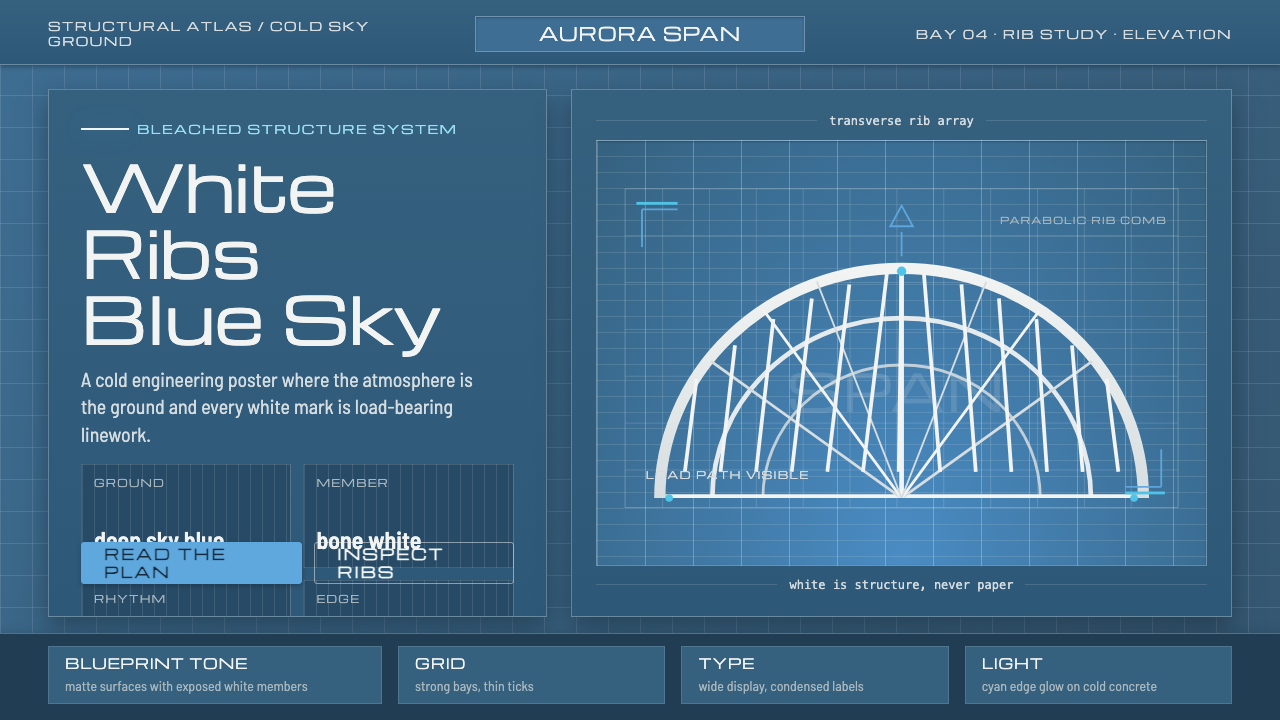 Calatrava White RibsArchitecture becomes blueprint. Bone-white ribs cut through deep Valencian sk…
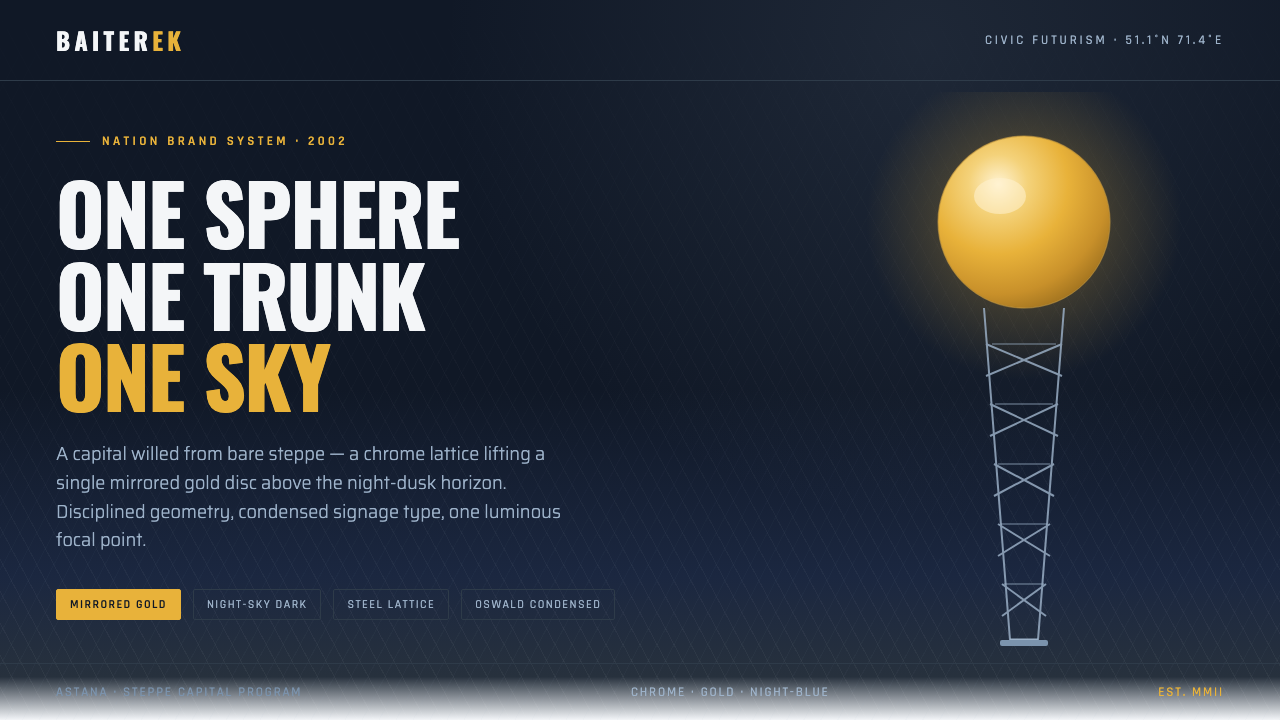 Astana Baiterek TowerCivic optimism in chrome and gold. A mirrored sphere crowns a white lattice t…
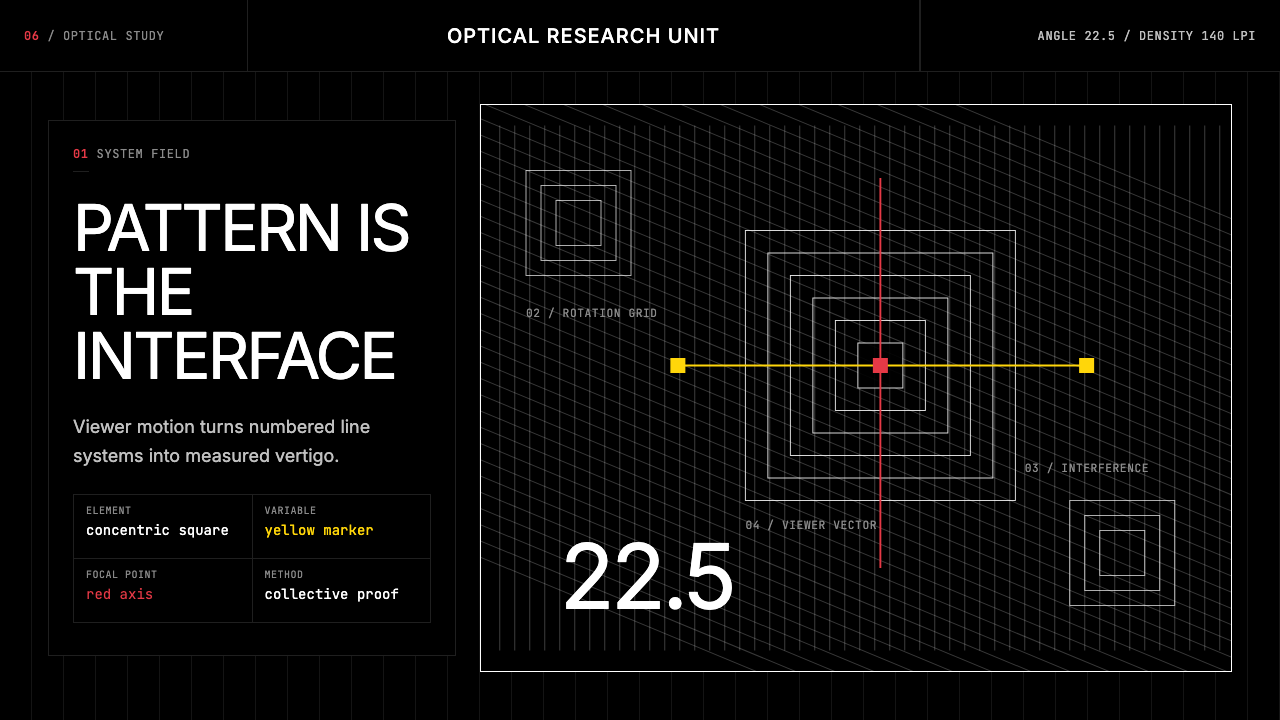 GRAV Op-Kinetic (1960)Vertigo by calculation. White line fields on black, with red and yellow as co…
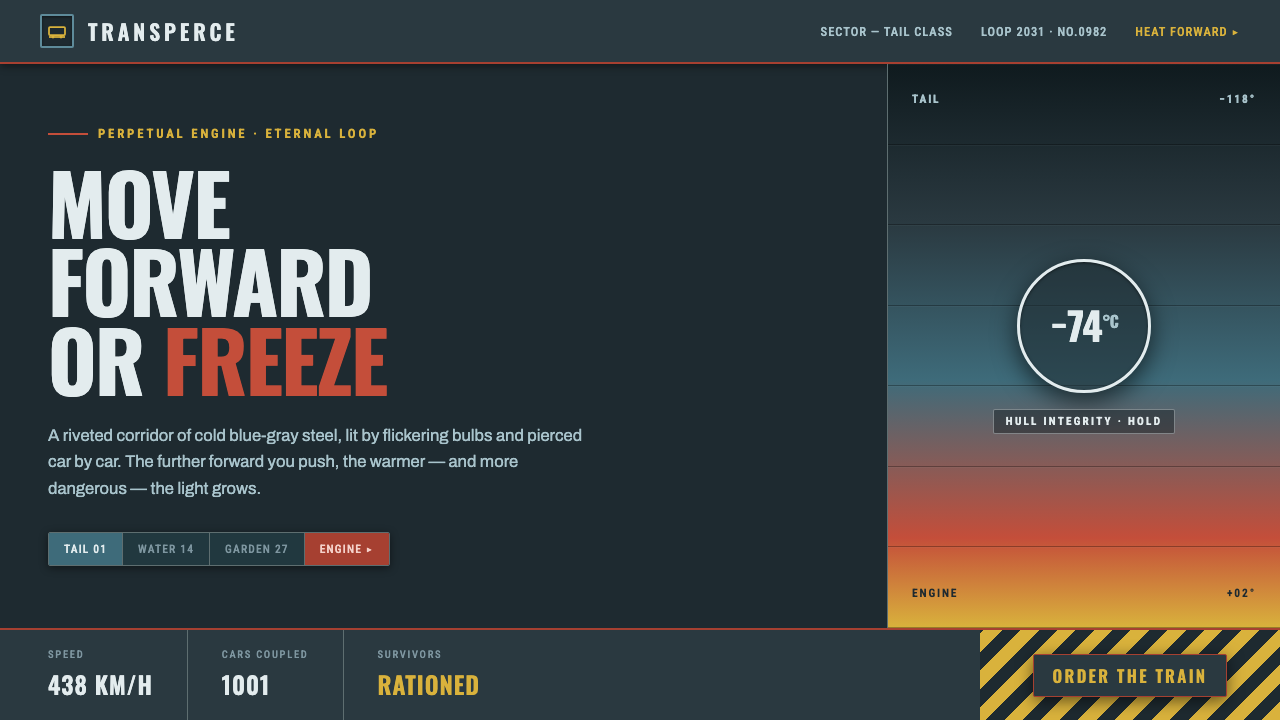 SnowpiercerMove forward or freeze. Cold blue-gray steel pierced by front-car red, conden…
 Swiss Franc NoteCurrency-grade calm. Oxblood grid, Inter numerals, amber-teal prism lines.
 Airport Wayfinding GeometricLegibility becomes command. Signal yellow, black sans, and green route bands…