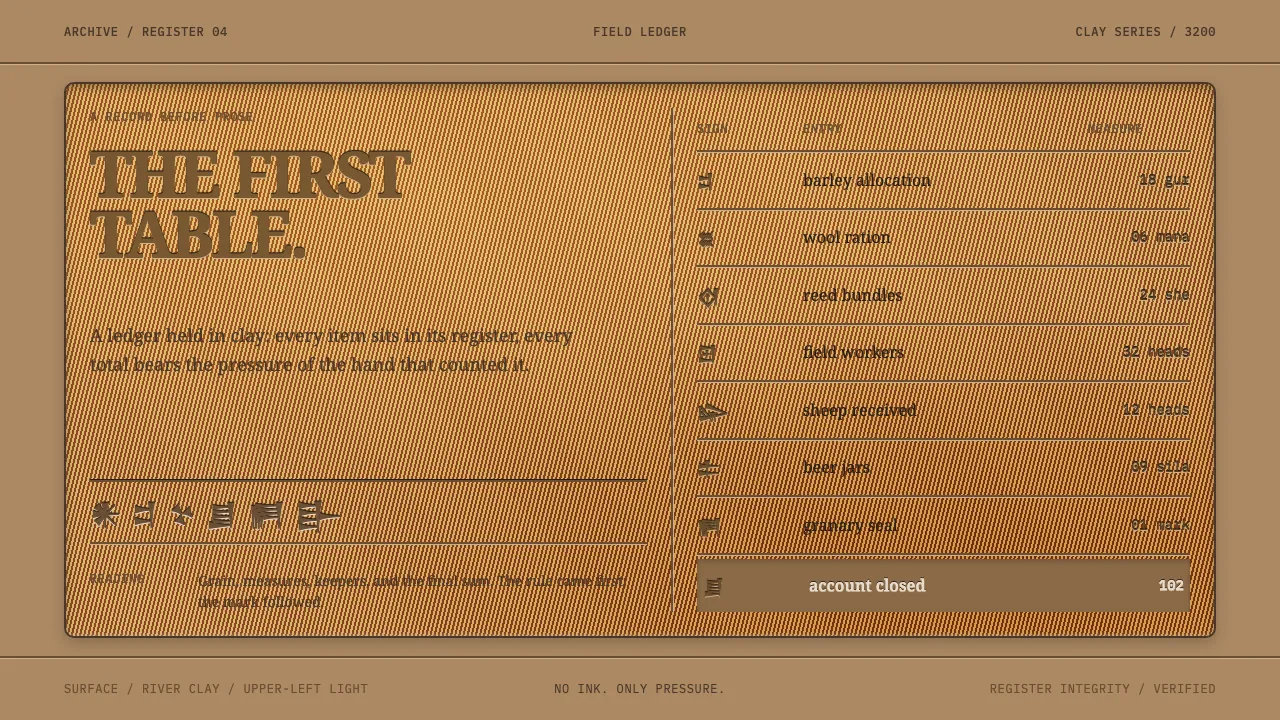
About Sumerian Cuneiform Tablet
Before anyone wrote a sentence, someone in Uruk wrote a table. Sumerian administrative tablets are palm-sized slabs of river clay, ruled into columns and horizontal registers with a straightedge before a single sign was pressed. Barley, sheep, rations, names, totals — each locked to a rule.
This system takes the tablet literally. The page is clay, not paper. Type sits in the surface rather than on it, dividers are scored grooves with measurable width, and the ledger grid carries the layout instead of decorating it. It is the oldest data design we still have, used as a data design.
- Origin
- Southern Mesopotamia — Uruk, Ur and Jemdet Nasr, present-day Iraq
- Era
- c. 3200–2000 BCE (Uruk IV proto-cuneiform through the Ur III archives)
- Key figures
- Enheduanna · Henry Rawlinson · Samuel Noah Kramer
- Movements
- proto-cuneiform bookkeeping · Ur III palace administration · Sumero-Akkadian tabular formatting
Sumerian Cuneiform Tablet design spec
Colors
Typography
The other 11 sections — buttons, cards, spacing, motion, techniques and more — open once you unlock. Download the DESIGN.md or send it to your AI in one click. Unlock once, yours forever.
Sign up nowStyles similar to Sumerian Cuneiform Tablet
Also inspired by print & type, with a close feel.
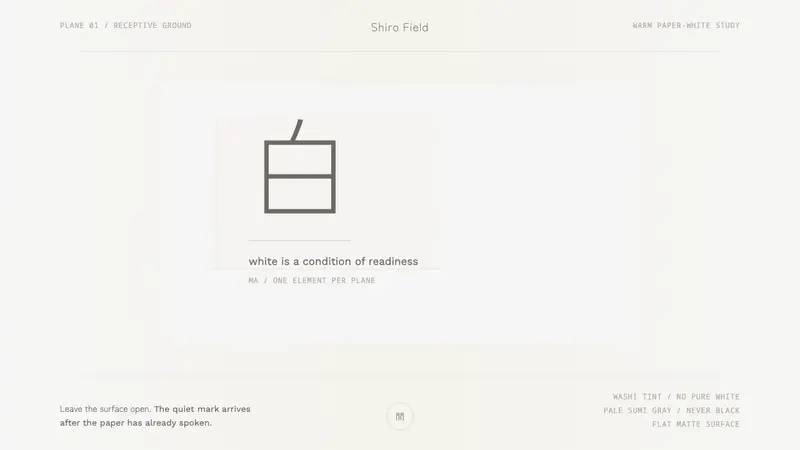 Kenya Hara «White»Emptiness is the subject. Warm washi white holds one pale sumi-gray mark.
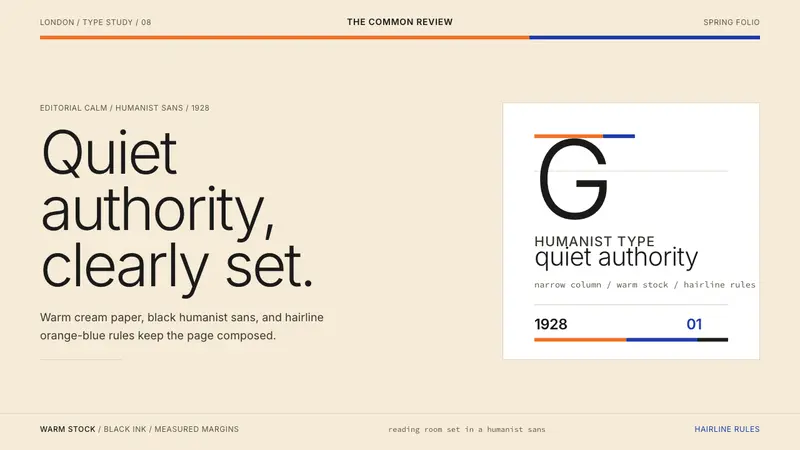 Gill Sans (BBC, 1928)Quiet authority, clearly set. Warm cream, black humanist sans, and hairline orange-blue rules.
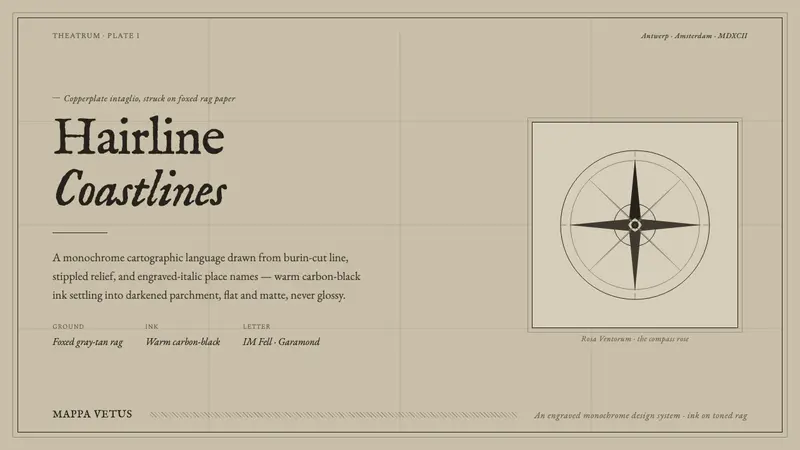 Engraved Monochrome MapThe gravity of an old printed sheet. Warm carbon-black ink on foxed rag paper, hairline coastlines.
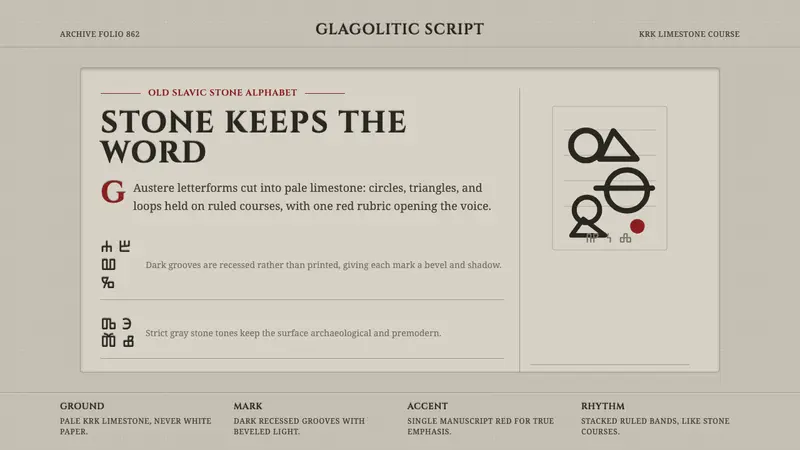 Glagolitic ScriptCarved faith in limestone. Cinzel capitals and red rubrics sit in shadowed grooves.