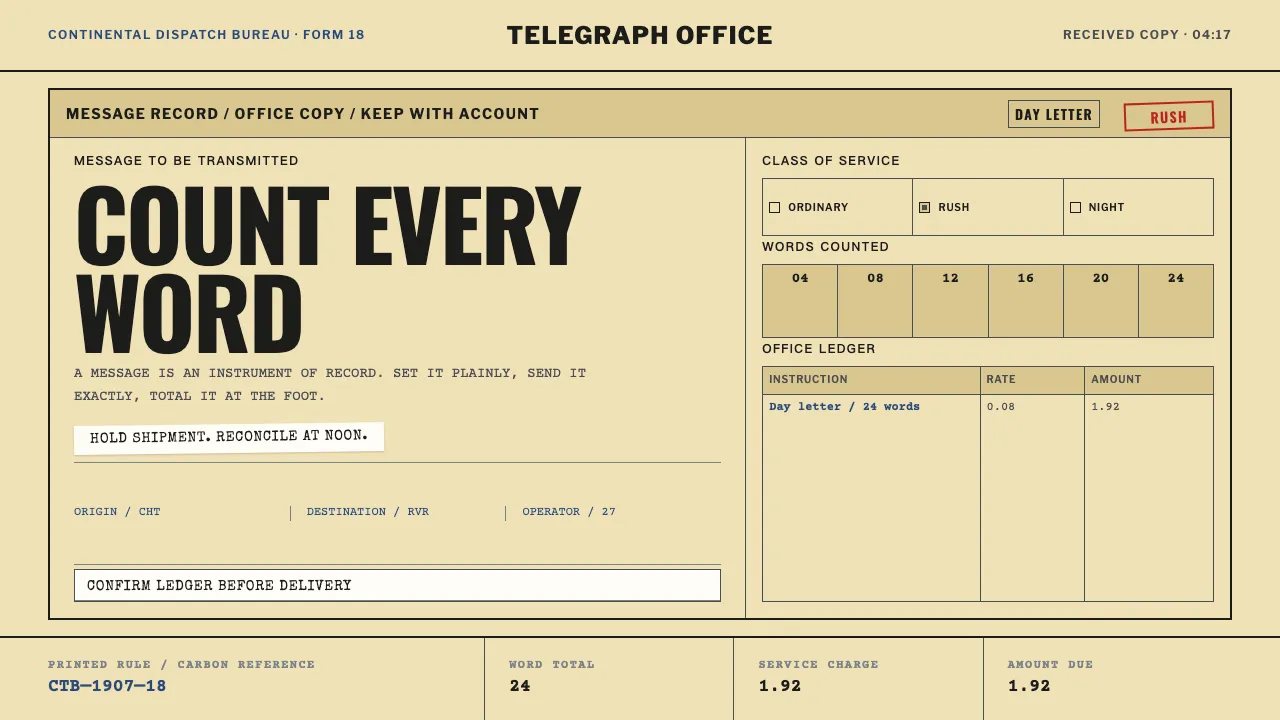
About Telegraph Office Form
A telegram blank was never decoration. The customer paid by the word, so the sheet had to count: ruled fields, boxed classes of service, a charge block totalled at the foot. Cheap yellow wood-pulp stock drank the ink, the rubber stamp landed a little off the rule, and the carbon underneath came out fainter than the top sheet.
The capitals are not a style choice either. Morse code carries no case, so every received message was transcribed in capitals, every time. This system keeps that logic: a page is an instrument for counting and recording, packed to the edge, ruled rather than styled.
- Origin
- North America — Western Union and Postal Telegraph offices across the United States
- Era
- 1900–1950, the peak decades of the commercial telegram
- Key figures
- Samuel Morse · Alfred Vail · Morris Fuller Benton
- Movements
- commercial Morse telegraphy · standardized business forms · American gothic job printing
Telegraph Office Form design spec
Colors
Typography
The other 11 sections — buttons, cards, spacing, motion, techniques and more — open once you unlock. Download the DESIGN.md or send it to your AI in one click. Unlock once, yours forever.
Sign up nowStyles similar to Telegraph Office Form
Also inspired by print & type, with a close feel.
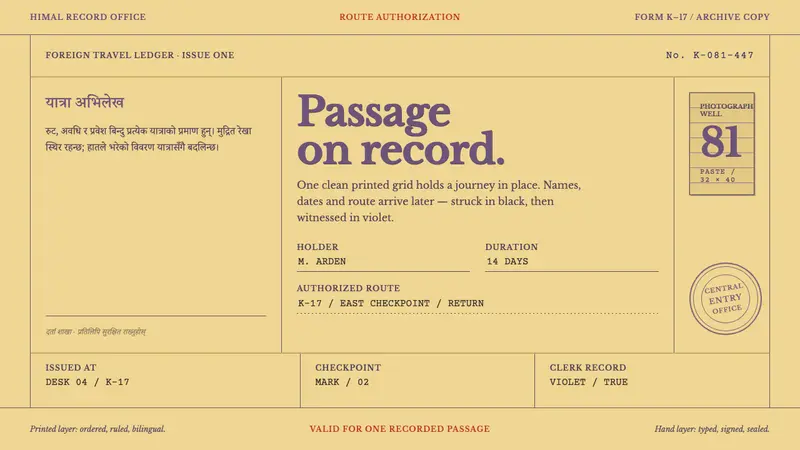 Trekking Permit 1980Order bears the journey. Violet letterpress rules hold typed records and crooked seals.
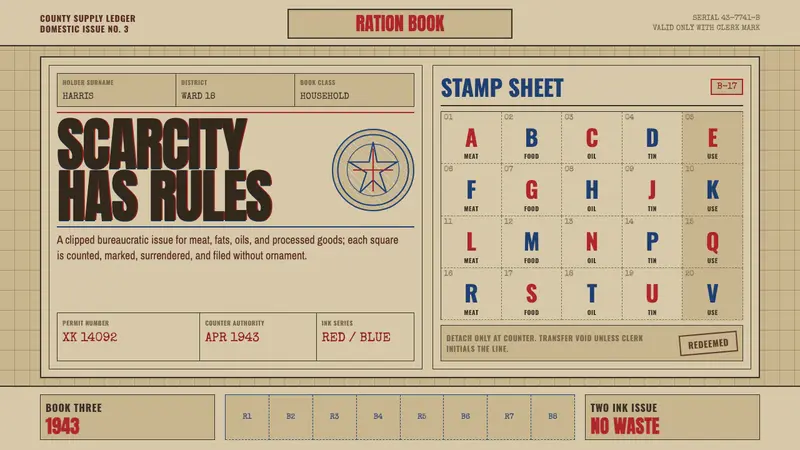 Wartime Ration CouponScarcity made visible. Buff card, red-blue overprint, and perforated grids do the work.
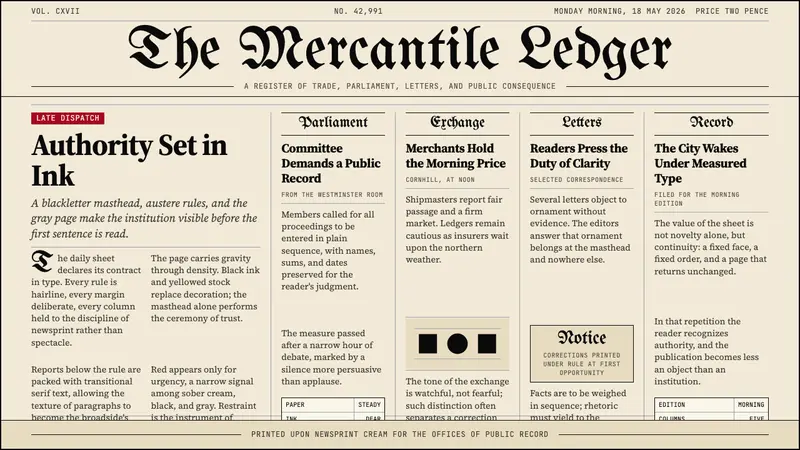 Gothic Blackletter Newspaper Masthead (1700)Authority in ink. Blackletter masthead, cream newsprint, and hairline columns.
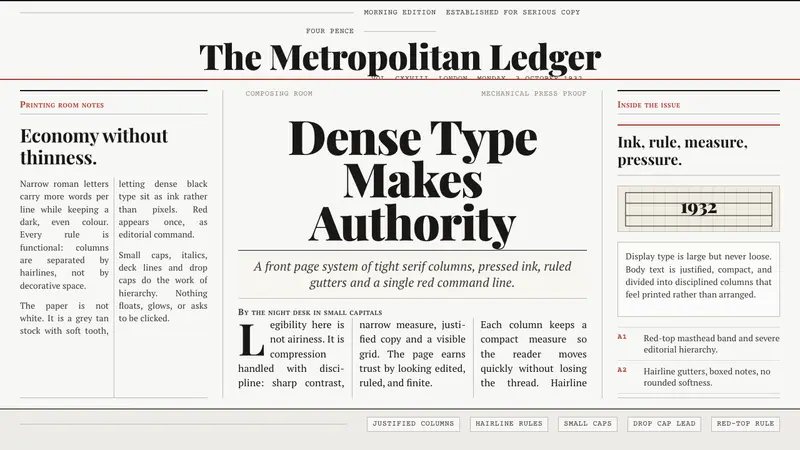 Times New Roman by MorisonAuthority under pressure. Dense black serif columns on grey-tan newsprint, ruled in red.