What is Tailscale Mesh VPN 2024?
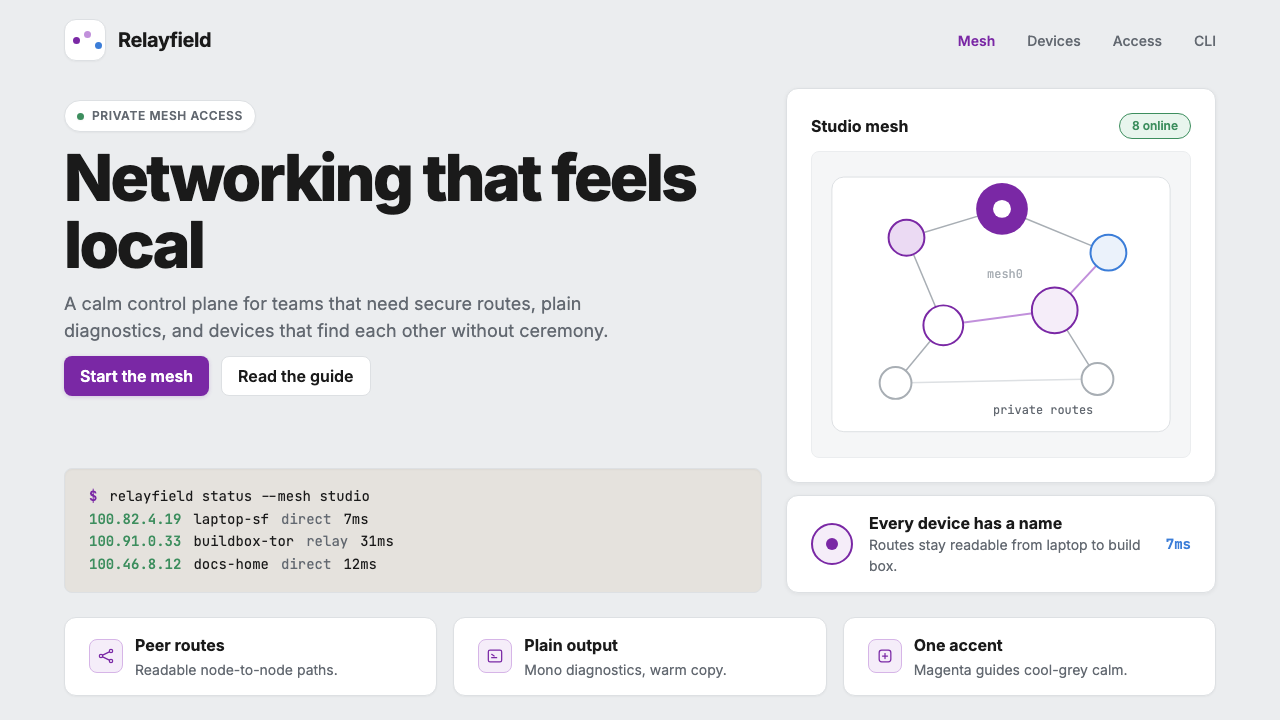
Tailscale made networking infrastructure feel approachable — pairing a single vivid magenta accent with cool-grey calm, hand-drawn capybaras with precise terminal output, and generous whitespace with serious technical credibility.
Tailscale Mesh VPN 2024 in brief
Tailscale Mesh VPN 2024 is a brand and interface visual language developed by Tailscale, a Canadian networking company that wrapped the WireGuard protocol in a consumer-friendly control plane. Its design identity emerged gradually between 2023 and 2025 as the product matured from a developer curiosity into a widely adopted zero-trust networking platform. The aesthetic result is something rare in infrastructure software: a system that reads as technically rigorous and humanly inviting at the same time.
The visual system is built around a single dominant accent — a warm magenta-pink that functions as the network's pulse — set against a foundation of cool greys, off-whites, and generous negative space. Rounded cards organize information into digestible clusters. Monospaced blocks of network diagnostics and command-line output appear throughout the interface and marketing materials, treated not as intimidating technical detritus but as proof of craft. The combination signals a company that takes networking seriously and itself not too seriously.
What distinguishes this aesthetic from generic developer-tool branding is its tonal self-awareness. Infrastructure products typically default to enterprise navy, fortress-grey, or aggressive dark-mode opacity. Tailscale chose warmth and openness instead: light backgrounds, soft shadows, and an illustrated mascot — a hand-drawn capybara created by illustrator Maya Shavin — that appears throughout the brand without undermining its credibility. The capybara is not decoration; it is a character, and its presence communicates that the people building this product understand the difference.
Where does Tailscale Mesh VPN 2024 come from?
Tailscale was founded in Toronto in 2019 by Avery Pennarun and David Crawshaw, both formerly of Google, alongside David Carney. The core technical premise was elegant: use WireGuard, a modern cryptographic tunneling protocol, as the data plane, and build a cloud-managed control plane that handled key distribution, device authentication, and network topology automatically. The result was a mesh VPN that required no central gateway and almost no configuration. You installed it, you logged in, your devices found each other.
The early product had minimal visual design — a functional web interface and a tray icon. As the company grew and the product expanded beyond its initial developer audience, the need for a coherent brand identity became apparent. The visual language that emerged during 2023 and 2024 was shaped partly by the product's values (simplicity, trust, openness) and partly by a deliberate rejection of the visual conventions of enterprise networking, which had long favored imagery of locked vaults, impenetrable shields, and dark command centers.
Maya Shavin joined the effort as a designer and illustrator, bringing the capybara mascot to life. The capybara was not a random choice: capybaras are known for their unusual sociability — they get along with nearly every other animal, a quality that maps neatly onto a mesh networking product that connects heterogeneous devices across any network. The mascot gave the brand a face and a personality that none of its competitors had attempted.
The magenta accent color was chosen for its distinctiveness within a category dominated by blues, greens, and corporate greys. Magenta sits at the boundary between red and violet, reading as simultaneously energetic and sophisticated — qualities that suited a product trying to bridge the gap between serious infrastructure and accessible tooling. Against the cool-grey neutral foundation, a single magenta signal does all the necessary work without requiring a complex multi-color system.
What defines the Tailscale Mesh VPN 2024 look?
Single-Accent Color Logic
The system relies on one bold chromatic statement — a warm magenta-pink — to carry all active, interactive, and brand-forward meaning. Everything else defers to a range of cool greys, near-whites, and black. This economy of color means the accent never competes with itself; when it appears, it is always a signal, never noise. The discipline produces interfaces that feel calm at rest and responsive in action.
Rounded Cards and Soft Containment
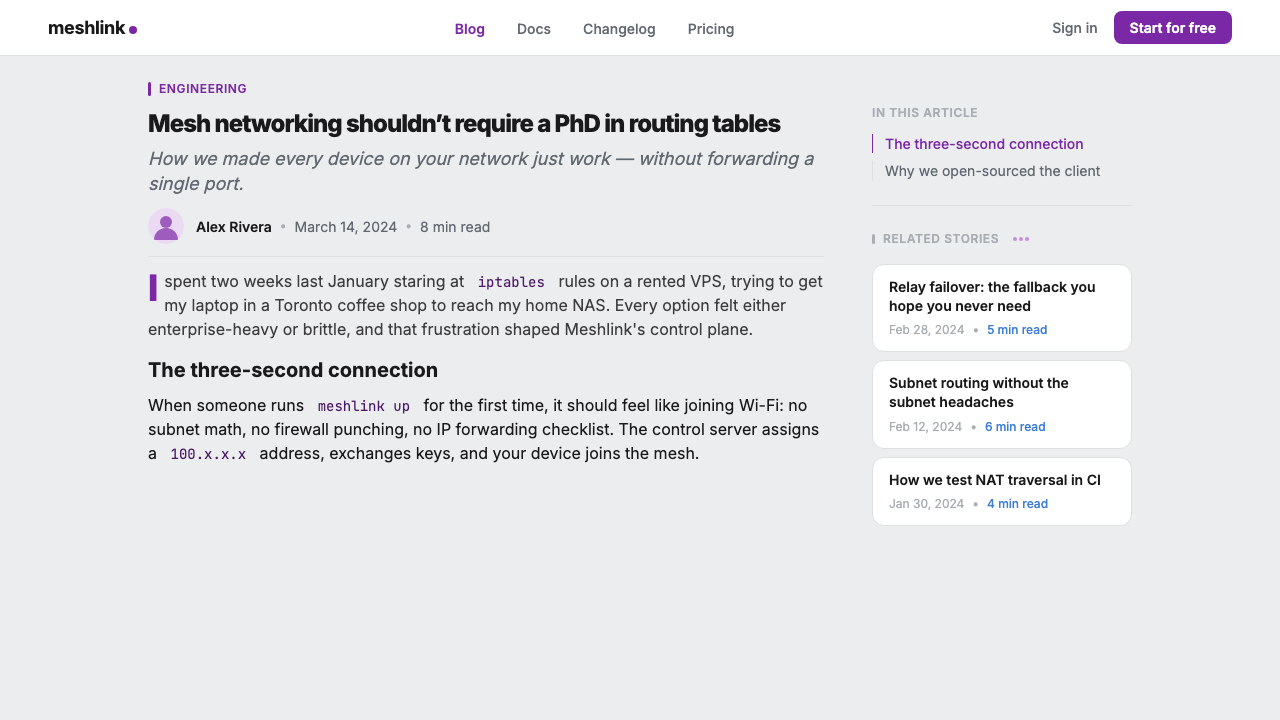
Information is organized into cards with generously rounded corners and quiet drop shadows that lift the surface slightly off the background without announcing themselves dramatically. The rounding is consistent and deliberate — it softens what could otherwise be a cold, clinical grid into something that feels handled and considered. Shadow depth is restrained: just enough separation to establish hierarchy, not enough to create theatrical depth.
Monospaced Blocks as Aesthetic Elements
Terminal output, configuration snippets, network diagnostics, and command examples appear throughout the visual system, rendered in monospaced type against lightly tinted backgrounds. Rather than being tucked away in documentation, these blocks are treated as design features — evidence of the product's technical seriousness and a direct address to an audience that reads code. Their consistent visual treatment — distinct background, subtle border, small label — makes them immediately legible as a class of content.
Illustrative Character Work
The hand-drawn capybara mascot occupies a specific tonal register: loose, warm, and slightly whimsical without becoming cartoonish or undermining trust. Maya Shavin's illustration style uses gentle line work and limited color, integrating with the cool-grey system without overwhelming it. The character appears in onboarding, empty states, error pages, and marketing — always deployed purposefully, never as filler.
Generous Whitespace and Breathing Room
The layouts are open and unhurried. Padding around cards, sections, and type is notably ample — the kind of spacing that communicates confidence rather than anxiety about real estate. Dense interfaces pack in maximum information per pixel; this system does the opposite, trusting that clarity at a glance is worth the space it costs. The result feels less like a control panel and more like a well-organized workspace.
Cool-Grey Neutral Foundation
The underlying palette is built on cool, slightly blue-shifted greys rather than warm or neutral ones. This chromatic orientation gives the system a technical, precise feeling that suits a networking product — the same quality found in precision instruments and well-calibrated monitors. Against this cool foundation, the magenta accent reads as warm and human, creating a subtle but effective tension between the technological and the approachable.
Typography as Clear Hierarchy
Type is set in a clean, humanist sans-serif for all editorial and interface content, with monospaced faces reserved strictly for technical content. The scale relationship between display text, headings, body, and labels is generous and unambiguous — you always know what level of information you are reading. Labels and metadata adopt a quieter weight; calls to action are direct and short. The system avoids decorative typographic moves entirely.
Who shaped Tailscale Mesh VPN 2024?
Pennarun co-founded Tailscale and serves as CEO. His background at Google, where he worked on infrastructure networking, shaped the product's foundational premise: that the complexity of mesh VPN setup was an engineering problem with an engineering solution. His public writing — including widely-shared technical blog posts — established Tailscale's voice as thoughtful and direct, qualities that carried into the brand's visual communication.
Crawshaw co-founded Tailscale and served as CTO. His engineering leadership drove the architectural decisions — particularly the choice of WireGuard as the data plane — that made the product's simplicity possible. The cleanness of the technical architecture has a direct analogue in the visual system: both favor doing less, better, over doing more with complexity.
Shavin is the illustrator and designer responsible for the capybara mascot and the illustrated dimension of the Tailscale brand. Her work demonstrates how character illustration can operate as a genuine design system component rather than a marketing afterthought. The mascot appears consistently across product surfaces — onboarding, error states, promotional materials — with enough visual restraint to coexist with technical content without destabilizing it.
Carney co-founded Tailscale and contributed to the company's early strategic direction. The founding team's shared background in large-scale infrastructure at major technology companies informed the product's dual audience: developers who understood what it was doing under the hood, and end users who simply wanted their devices connected. That dual-audience awareness is visible in the visual system, which communicates technical credibility and human warmth simultaneously.
How do you use Tailscale Mesh VPN 2024 today?
The Tailscale visual language translates well to a specific range of presentation and interface contexts, particularly those where the audience is technically sophisticated but where building trust and reducing intimidation are equally important goals. Understanding the system's underlying logic — one warm accent against cool restraint, personality balanced with precision — is more useful than copying its surface features.
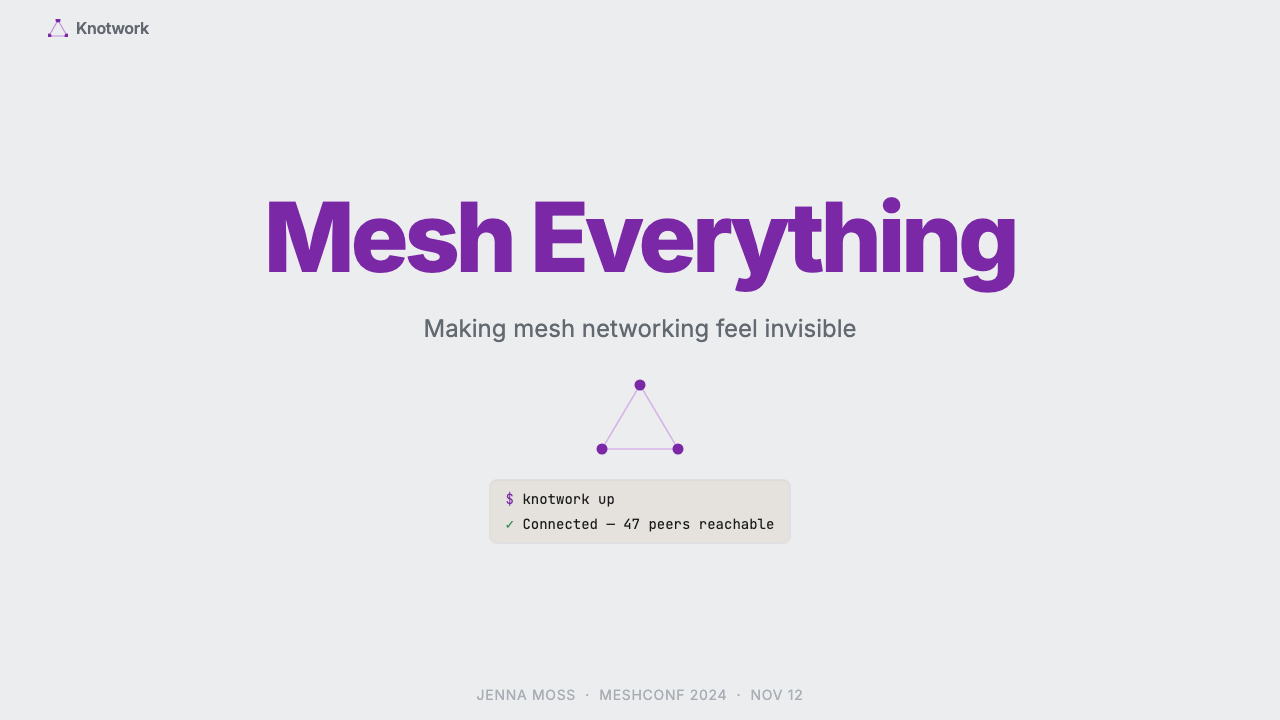
For presentation slides, the system works best when slide covers lead with a single strong visual statement: a full-bleed cool-grey field with the subject in clean sans-serif type, a single magenta element providing direction. Content slides benefit from the card logic: information organized into distinct, well-padded blocks that establish hierarchy without relying on decorative dividers. For technical presentations, code blocks and terminal output should be treated as first-class visual elements — given consistent container treatment and placed prominently rather than shrunk to footnote size. Data slides read cleanly when charts use the neutral palette for most values and the magenta accent to highlight the one number that matters.
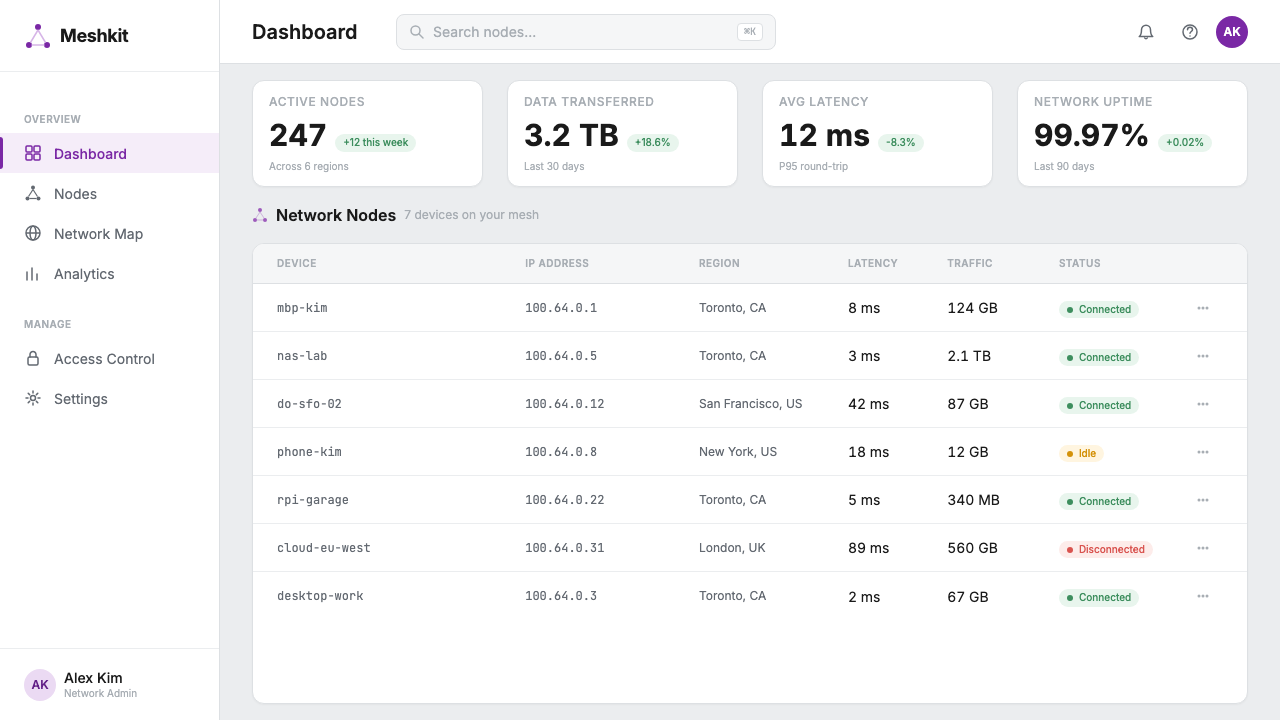
For web interfaces — particularly dashboards, developer portals, and SaaS pricing or onboarding pages — the system's principles translate directly. Maintain a light background with cool-grey surface elevation for cards. Reserve the accent color for primary interactive states, active selections, and progress indicators. Navigation should be typographic and quiet. When technical content (logs, diagnostics, config snippets) appears in the interface, give it consistent monospaced treatment in a contained, clearly labeled block. Avoid introducing secondary accent colors; the single-accent discipline is what gives the system its coherence.
For editorial and marketing work, lean into the contrast between the warm accent and the cool-grey foundation. Section headers can carry the magenta tone as an underline or left border rather than a fill. Feature callouts work well as cards with generous padding, where the illustration character can make a brief appearance to establish warmth before handing off to technical detail. Marketing pages are most effective when they alternate between light-background sections and slightly deeper grey surfaces, keeping the overall palette cool and the magenta reserved for calls to action.
A common mistake when applying this aesthetic is over-using the accent color to solve visual problems that spacing and hierarchy should solve instead. If a section feels flat, the answer is rarely more magenta — it is usually more breathing room between elements and cleaner typographic contrast. A second common error is importing warm, decorative illustration styles that clash with the mascot's restrained line work. The illustrated elements in this system work because they share the same tonal register as the rest of the design; bringing in illustration that is more saturated or more detailed breaks the balance between the technical and the human.
Tailscale Mesh VPN 2024 — FAQ
Is this aesthetic only appropriate for developer or infrastructure products?
Not necessarily, but it is most naturally at home there. The cool-grey foundation, monospaced code blocks, and technical precision of the system signal expertise and seriousness — qualities that resonate with technical audiences and read as authority to less technical ones. It becomes strained in contexts that require warmth, sensory richness, or cultural expressiveness: food brands, lifestyle applications, children's products. The illustrated mascot softens the system considerably, so products that lean into the character dimension can extend the aesthetic toward slightly warmer contexts without breaking it.
How does the mascot work as a design system element without becoming distracting?
The key is tonal matching and strategic placement. The capybara illustration shares the system's cool-grey palette and restrained line weight — it does not introduce new colors or compete with the magenta accent. It appears in specific states (onboarding, empty states, error pages) where a human touch is expected and welcome, not in data-dense interface areas where it would distract. Used this way, the character feels like it belongs to the system rather than being pasted onto it — which is the difference between a mascot that builds brand personality and one that undermines interface credibility.
Can this style work in a dark-mode interface?
Yes, and it adapts more gracefully than many single-accent systems because magenta holds its character across both light and dark backgrounds. On a dark surface, the cool-grey foundation shifts to deep grey or near-black, and the magenta accent continues to read as warm and active against the cool surround. The monospaced code blocks also benefit from dark mode — terminal-style dark backgrounds for code are natural and expected. The illustrated character is more delicate in dark mode; line work may need slightly heavier treatment to remain visible without inverting awkwardly.
What makes this different from other modern SaaS design languages?
Most contemporary SaaS visual systems converge on a shared grammar: blue or violet accent, gradient hero sections, photography of people on laptops, and a neutral Inter-based type system. Tailscale departs from this in several specific ways. The magenta accent is unusual in a category dominated by cooler hues. The illustrated mascot commits to character in a space where stock photography and iconography are standard. The explicit celebration of terminal output and technical content — rather than hiding it in documentation — directly addresses a technical audience rather than aspirationally gesturing toward one. The result is a brand that feels legible to the people actually using the product rather than designed to impress observers.
How does the visual system communicate trust for a security-focused product?
Conventional security product design communicates trust through intimidation: dark interfaces, lock iconography, fortress metaphors, and aggressive typography that implies impenetrability. Tailscale inverts this almost entirely. Trust is communicated through clarity — if you can see exactly how something works, including its diagnostic output and configuration, you have evidence that it is working correctly. The openness of the design (light backgrounds, generous padding, visible technical detail) mirrors the openness of the product's architecture. The friendly mascot signals that the company is comfortable being approachable, which in turn suggests confidence. Opacity and darkness in security design often mask complexity or uncertainty; transparency and warmth are harder to fake.
Related design styles
 1Password Purple VaultSecurity stays quiet. Vault purple, Inter type, and crisp white cards do the…
 Astro Islands Architecture 2022Warm cosmic devtools. Deep violet, magenta glow, Inter clarity, and island ge…
 Stripe 2024Trust earns its glow. Indigo mesh, neutral type, and whisper cards float on n…
 Android Bugdroid GreenFriendly tech, reduced to geometry. Vivid green pops from Grey 900 and rounde…
 AsanaCalm productivity breathes. Cream canvas, lavender panels, coral-blue-yellow…
 GitLab 2023DevOps in daylight. Tanuki orange-to-purple gradient, Inter, warm enough for…