What is Signal Encrypted Messenger?
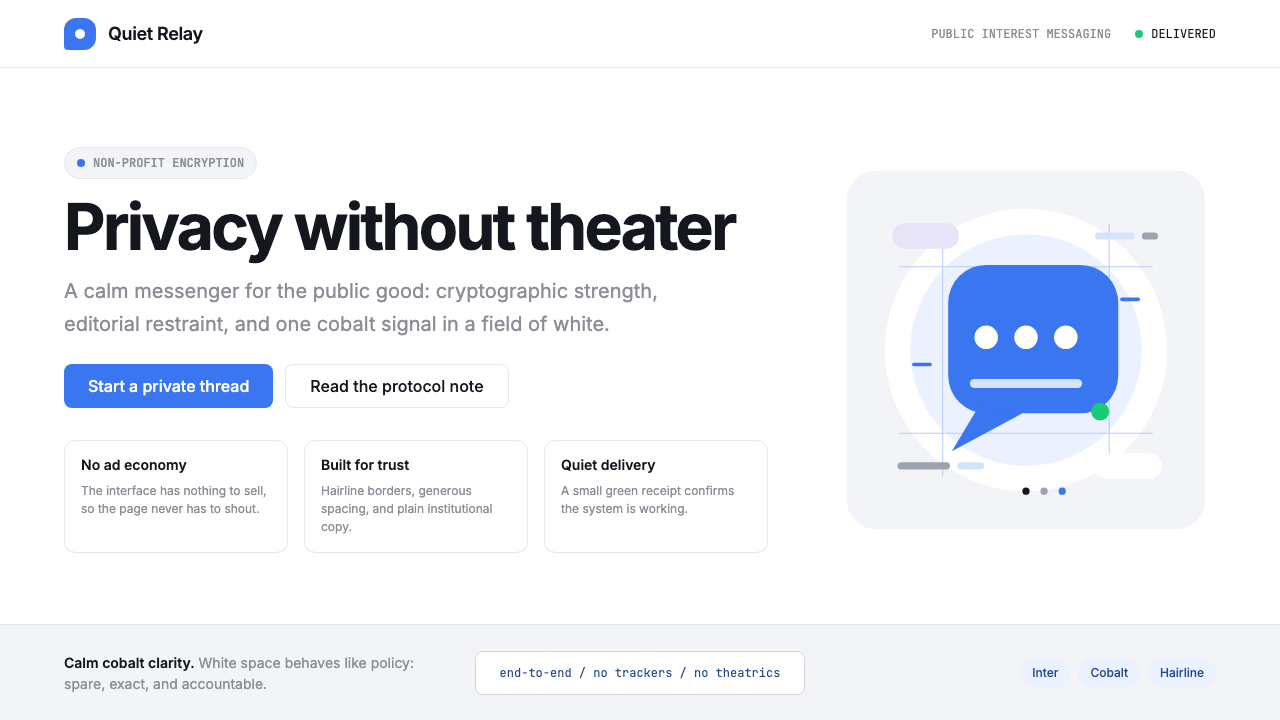
Signal's visual identity proves that radical privacy and radical restraint are the same design decision.
Signal Encrypted Messenger in brief
Signal Encrypted Messenger is a non-profit secure communications tool whose design language is as principled as its cryptography. The visual identity built around Signal's release of its current brand circa 2023–2025 distills the organization's mission into a single, immediately legible statement: we are a public-interest infrastructure project, not a consumer entertainment platform. Every design decision — the specific cobalt-blue, the generous white space, the essay-driven editorial voice — exists to communicate trustworthiness without theatrics.
The system is built on a foundation of calm clarity. White backgrounds dominate, punctuated by a distinctive cobalt-blue that functions as the brand's entire personality: not the corporate blue of enterprise software, not the friendly blue of social networks, but something colder, more deliberate, suggestive of policy documents and open-source repositories. Cool-grey card surfaces provide depth without warmth. The speech-bubble logomark — geometric, instantly recognizable — doubles as both product icon and privacy metaphor.
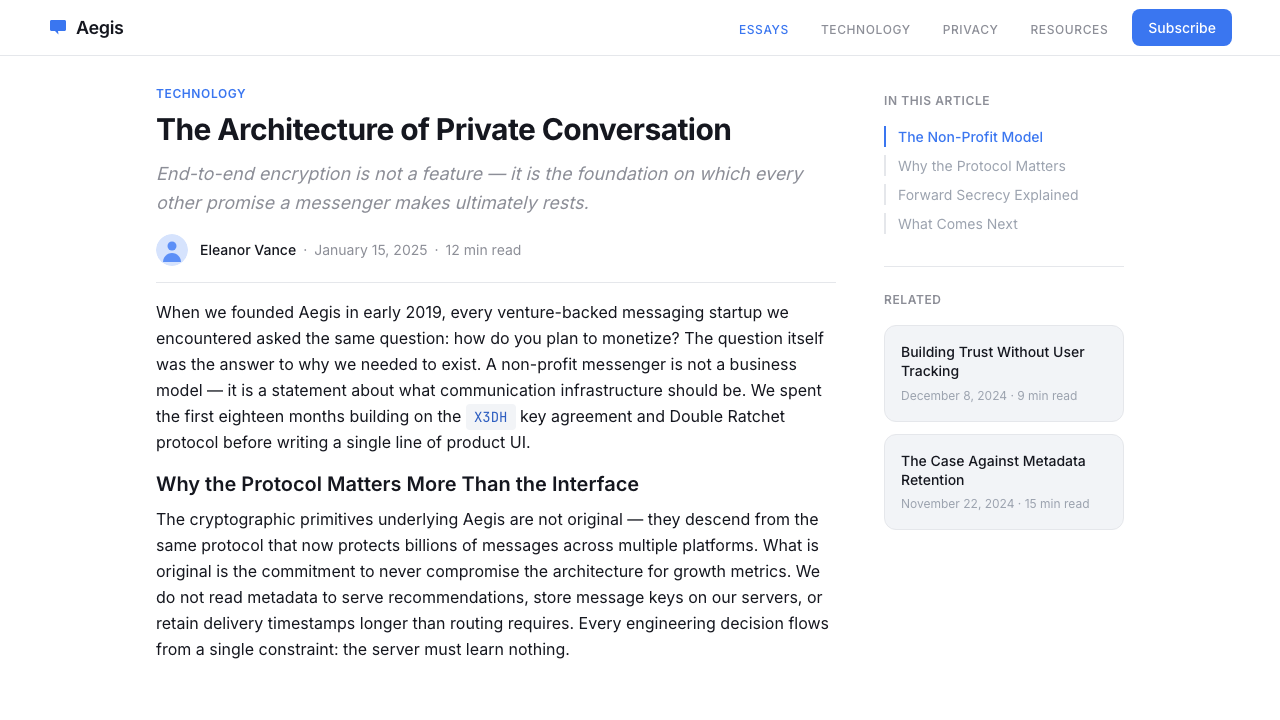
What makes Signal's design system distinctive is not any single element but the discipline of the whole. It reads like a well-edited magazine produced by cryptographers: long-form prose is given room to breathe, interface elements are stripped of all decoration that does not serve function, and the typographic hierarchy communicates authority without condescension. The overall effect is institutional confidence — the visual equivalent of a calm, measured statement of principles.
Where does Signal Encrypted Messenger come from?
Signal's roots reach back to 2010, when cryptographer Moxie Marlinspike and researcher Stuart Anderson founded Whisper Systems. Their early encrypted SMS and voice applications attracted attention from the security community but remained niche tools. In 2011, Twitter acquired Whisper Systems for its talent and technology, and Marlinspike subsequently released the core encryption protocols as open-source. In 2013, he co-founded Open Whisper Systems with Trevor Perrin, producing the Signal Protocol that now underpins encrypted messaging across WhatsApp, Facebook Messenger, and Google Messages — though most of those platforms implement it without Signal's visual or organizational commitments.
The Signal Foundation as a non-profit entity was established in 2018 when WhatsApp co-founder Brian Acton departed Facebook following disagreements over monetization and privacy, taking with him a fifty-million-dollar founding donation. Acton's involvement gave Signal both financial stability and a pointed organizational statement: here was someone who had built one of the world's largest messaging platforms and walked away on principle. The foundation model — no advertising, no data harvesting, funded entirely by donations — became inseparable from the brand's visual identity, which had to communicate that ideological stance at a glance.
Meredith Whittaker joined Signal as president in 2022, bringing with her a background as a tech policy scholar, AI ethics researcher, and one of the organizers of the 2018 Google Walkout. Her presence reshaped Signal's public communications toward long-form essay writing and direct engagement with surveillance capitalism debates. This editorial voice — precise, unhurried, willing to engage complexity — is reflected in the design system's generous typography and its preference for prose over bullet points.
The visual identity in its current form coalesced around 2023 to 2025, as Signal underwent brand refinement to bring its public face into alignment with its organizational maturity. The cobalt-blue became more consistently applied across product and marketing surfaces. The Inter typeface — open-source, designed for screen legibility at small sizes — became the typographic standard. The overall system moved away from any remaining consumer-app softness toward something closer to editorial publication design: structured, spacious, and unambiguous in its value proposition.
What defines the Signal Encrypted Messenger look?
Cobalt Blue as Mission Statement
Signal's primary color is a specific cobalt-blue that occupies a deliberate position in the color spectrum: cool enough to read as institutional and trustworthy, saturated enough to be unmistakable. It is not the warm blue of consumer platforms, nor the muted steel-blue of enterprise software. It carries connotations of precision, technical competence, and civic purpose. In practice, it is used sparingly — on calls to action, on the logomark, on key interactive elements — with large expanses of white doing the structural work around it.
Editorial White Space
Generous white space is not an accident or an aesthetic preference but a functional commitment: it signals that Signal has nothing to hide, no need to fill the frame with product claims or engagement hooks. Margins are wide. Line spacing is open. Sections breathe between them. This is white space that communicates organizational character — the visual equivalent of measured, unhurried speech.
Typographic Hierarchy as Structure
The typographic system relies on a single typeface — Inter — deployed at dramatically contrasting scales to create hierarchy. Headlines are large and confidently set. Body text is generously sized for reading comfort rather than information density. Pull quotes and policy statements occupy an intermediate scale. The effect is closer to a serious magazine or government publication than to a typical app interface: the typography tells you this is a place for ideas, not just tasks.
Cool-Grey Surfaces
Where white alone would create too little visual differentiation, Signal introduces cool-grey card and surface tones. These are neutrals shifted slightly toward blue — not warm beige or stone, but the grey of overcast northern light. They provide container structure without introducing emotional warmth or consumer-friendliness. The palette as a whole — white, cool grey, cobalt — has the tonal character of a well-lit archive or reading room.
The Speech Bubble Logomark
Signal's logomark is a speech bubble rendered in cobalt-blue — a geometric, near-perfect form whose simplicity is deceptive. As a product icon, it immediately communicates messaging. As a privacy symbol, it frames communication as something bounded, contained, and protected. The logomark functions at every scale from app icon to billboard without losing legibility, which reflects the discipline of its construction: no decorative detail, no gradient fill, no drop shadow.
Prose Over Bullet Points
Marketing and editorial copy in the Signal system is written as full prose paragraphs, not fragmented bullet points or slogan stacks. This is a deliberate signal: the brand trusts its audience to read and to think. Feature descriptions are explanatory rather than promotional. Policy positions are argued, not asserted. The writing register shaped by Meredith Whittaker's influence treats the audience as capable adults engaged in serious decisions about their digital lives.
Flat, Shadow-Free Surfaces
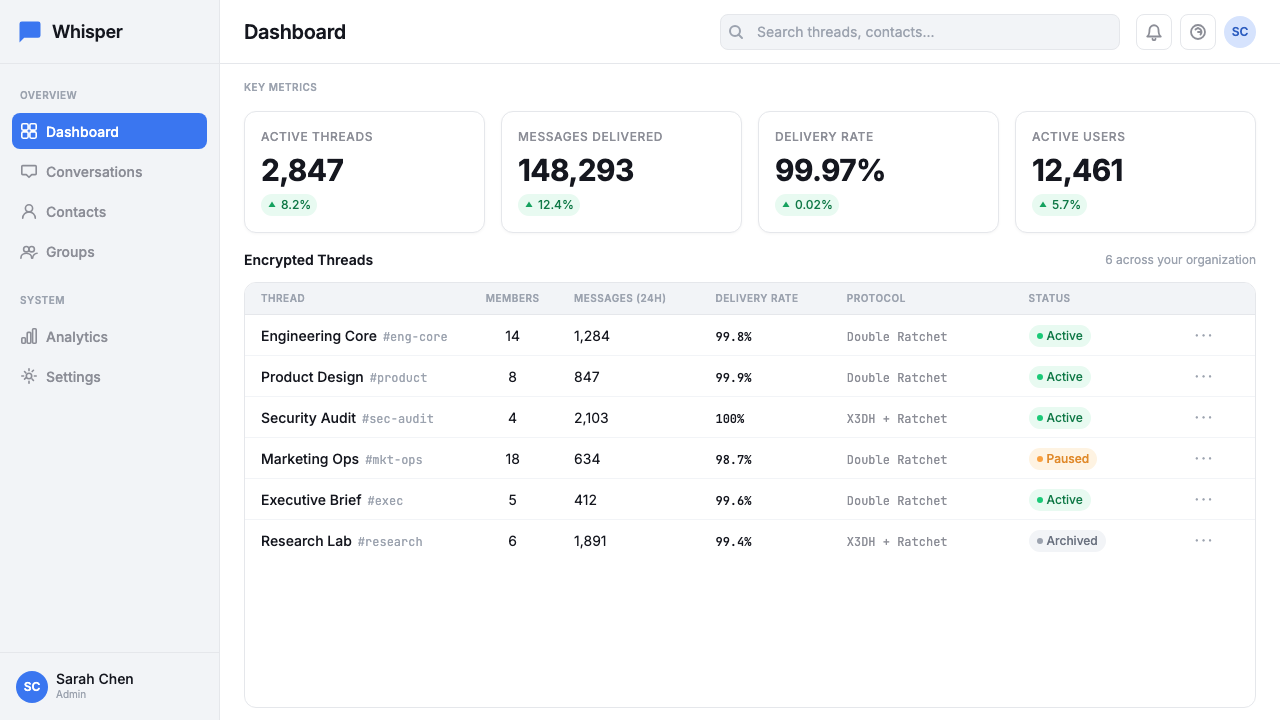
Signal's interface components avoid the soft drop shadows and layered depth effects common in contemporary application design. Surfaces are flat and clearly delineated by edge and tone rather than simulated elevation. This is not technological limitation but philosophical consistency: an interface that does not perform depth is harder to read as theatrical or manipulative. The flatness reinforces the trustworthiness narrative — what you see is what there is.
Who shaped Signal Encrypted Messenger?
Marlinspike is the founding technical architect of Signal's encryption infrastructure. He developed the Signal Protocol — the double-ratchet algorithm that provides forward secrecy and break-in recovery — and co-founded Open Whisper Systems in 2013. His decision to release the protocol as open-source transformed Signal from a product into a public utility: the same cryptography now protects billions of messages daily across platforms that are not Signal. His 2022 departure from the CEO role was announced in a characteristically understated blog post, maintaining the brand's editorial tone to the end.
Acton co-founded WhatsApp in 2009 and sold it to Facebook in 2014 for nineteen billion dollars. He stayed through the acquisition but resigned in 2017 amid conflicts over monetization, later tweeting the phrase 'It is time. #deletefacebook.' In 2018 he donated fifty million dollars to establish the Signal Foundation, making the non-profit model financially viable and providing Signal with both resources and a narrative: the person who had built one of the world's largest messaging services had chosen a different path. Acton's involvement gave the brand a credibility that no amount of marketing copy could manufacture.
Whittaker became Signal's president in 2022, bringing a background as an AI ethics researcher, founder of the AI Now Institute, and one of the principal organizers of the 2018 Google Walkout — a protest by twenty thousand employees over sexual harassment handling and military contract ethics. Her arrival at Signal aligned the organization's public voice with her own: long-form, policy-engaged, willing to directly name adversaries. Signal's blog posts and public statements under her leadership read more like academic essays or advocacy briefs than product announcements, and this editorial register is reflected directly in the design system's typographic choices.
Perrin co-developed the Signal Protocol alongside Marlinspike, designing the cryptographic mechanisms that give the system its security properties. While less publicly visible than his co-founders, Perrin's technical contributions are embedded in the foundation of the entire Signal design system: the reason Signal can position itself as trustworthy is that the cryptography beneath the interface genuinely delivers on that promise. The restrained visual language is in some sense the surface expression of the protocol's mathematical elegance.
How do you use Signal Encrypted Messenger today?
Signal's design language is one of the most directly applicable contemporary brand systems for any product that needs to communicate trustworthiness, institutional credibility, or principled restraint. The challenge is applying it precisely rather than loosely — the cobalt-blue's exact emotional register is easy to lose if you drift toward warmer or more saturated blues, and the white-space discipline requires genuine commitment to resisting the urge to fill emptiness with content.
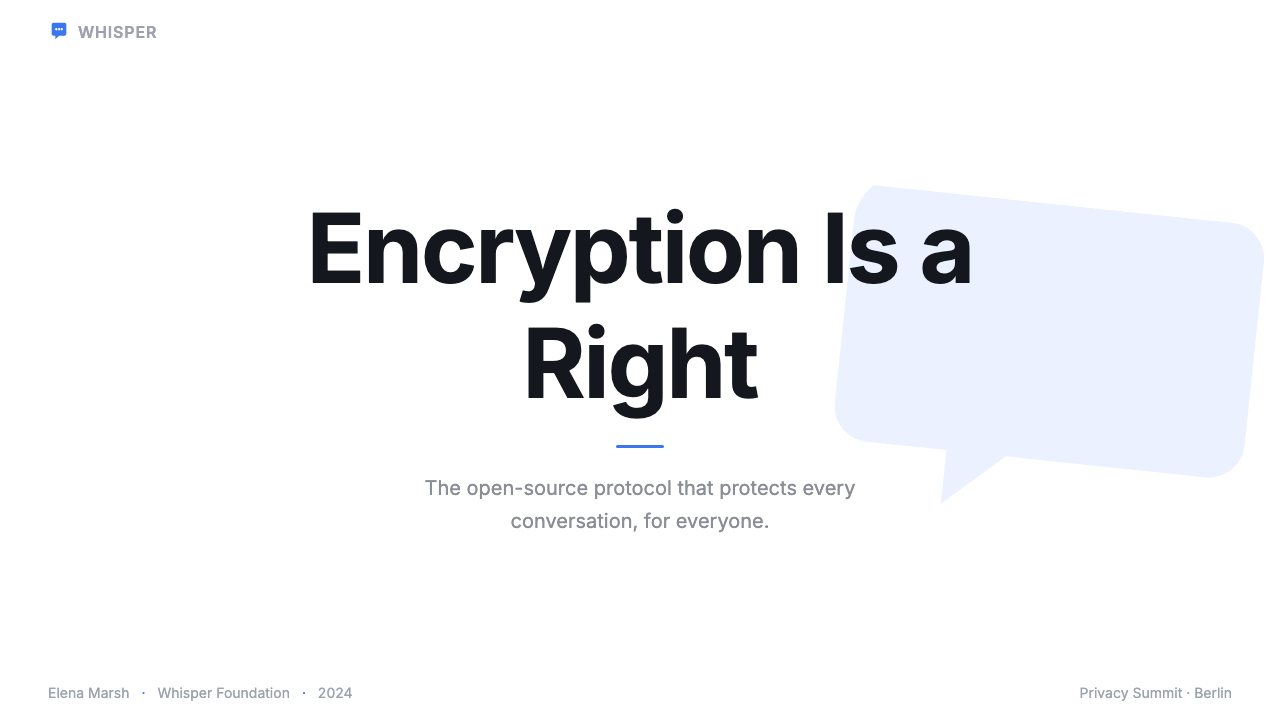
For presentation slides, the Signal aesthetic works particularly well for cover pages that need to establish authority immediately. A pure white ground with the cobalt-blue used for a single typographic element — a title, a year, an organization name — set in a clean sans-serif at generous scale communicates seriousness without aggression. Content slides should maintain the same discipline: wide margins, ample line spacing, and a clear typographic hierarchy that distinguishes heading from body from supporting detail through scale alone, without resorting to colored text boxes or decorative dividers. Data slides in this register should use the cobalt sparingly — one category highlighted, the rest rendered in cool grey — letting structure rather than color variety carry the analytical weight.
For web UI and dashboards, Signal's approach is well-suited to any interface where trust is a primary user concern: financial dashboards, health data applications, legal platforms, privacy-focused tools. The flat, shadow-free surface treatment communicates transparency in the visual sense — nothing is layered in ways that obscure what lies beneath. Navigation should be typographic and minimal, using the cobalt only for active states. Cool-grey containers organize content zones; white remains the dominant ground. Pricing pages benefit particularly from this register: the combination of generous white space and restrained cobalt calls-to-action signals that the product is confident in its value without needing to perform urgency.
For editorial and marketing materials, the system supports a voice that is substantive and direct. Long-form articles and policy documents should use the full typographic range — large, confidently weighted headlines; comfortable body text with open line spacing; wider outer margins for marginal notes or pull quotes. Marketing pages can take the poster-like quality of the brand further: full-width blocks that alternate between white-ground and cobalt-ground sections, with the reversal used sparingly to mark structural transitions rather than decorative rhythm. Photography, where used, should be treated coolly — desaturated, straightforwardly composed, never warm or heavily stylized.
A common mistake when applying this system is confusing its restraint with minimalism. Signal's design is not spare because it is fashionably simple; it is spare because every element is doing specific work and none is admitted that does not. Adding soft shadows, warm accent colors, or friendly rounded corners to this system does not make it more accessible — it undermines the institutional sincerity that is the entire point. Similarly, using multiple typefaces or introducing illustrative elements that soften the system's edges pulls it toward generic consumer app territory and away from the principled editorial character that makes it distinctive.
Signal Encrypted Messenger — FAQ
Is Signal's design system appropriate for commercial products, or does it only work for non-profits?
The system is appropriate for any product whose value proposition centers on trust, integrity, or principled operation — regardless of whether it is non-profit or commercial. Security tools, legal platforms, financial services, healthcare applications, and privacy-focused consumer products all share the same need to establish credibility at first glance. The risk is that using this design language without the organizational substance to back it up can feel hollow or even deceptive. Signal earns its visual restraint through its actual product commitments; a commercial product applying the same aesthetic needs to have comparable commitments to substantiate the claim.
How does Signal's visual identity differ from other privacy-focused brands?
Most privacy-focused brands in the consumer technology space reach for dark themes, heavy locks-and-shields iconography, or aggressive security aesthetics — visual language borrowed from cybersecurity that signals danger-avoidance rather than trustworthiness. Signal does the opposite: bright white grounds, calm cobalt, editorial typography, and long-form prose. It positions privacy as a civic value and a public good rather than as a defensive posture. This makes the visual system feel closer to a policy institute or a public broadcaster than to a security product, which is precisely the distinction Signal wants to draw.
Can this system work in dark mode?
Yes, Signal itself implements a dark mode in its messaging application, and the system translates well when the inversion is handled with the same discipline. The key is maintaining the cobalt-blue as the primary accent rather than allowing it to shift warmer under dark backgrounds. Dark surfaces should be genuinely dark and cool — shifted toward the blue end of neutral — rather than warm charcoal. The white-space discipline inverts to dark-space discipline: generous background between elements, never cluttered. The institutional character is preserved as long as the tonal relationships — cobalt accent against a cool, near-black ground — mirror the logic of the light version.
What kinds of products should avoid this design system?
Products that depend on warmth, pleasure, or sensory richness should look elsewhere. Food and beverage brands, social entertainment platforms, children's applications, wellness products, and anything where the user relationship is built on joy or comfort will find Signal's aesthetic too cold and institutional. Similarly, brands that need to communicate approachability, playfulness, or informality will struggle to make this system work — the editorial restraint that communicates trustworthiness in one context reads as standoffish in another. The system's strength is also its constraint: it speaks in one emotional register, and that register is deliberate, serious, and principled.
How does the system handle illustration and iconography?
Signal uses minimal iconography — the speech-bubble logomark is the primary figurative element, and interface icons are simple, geometric, and functional. The system resists decorative illustration almost entirely. Where imagery appears in marketing contexts, it tends to be documentary or photographic rather than illustrated, and treated with the same cool restraint as the rest of the palette. This is deliberate: decorative illustration introduces warmth and narrative ambiguity that would undercut the brand's institutional directness. If a design application requires illustration, the appropriate register is diagrammatic and geometric — flat forms in the cobalt-grey palette — not organic or expressive.
Related design styles
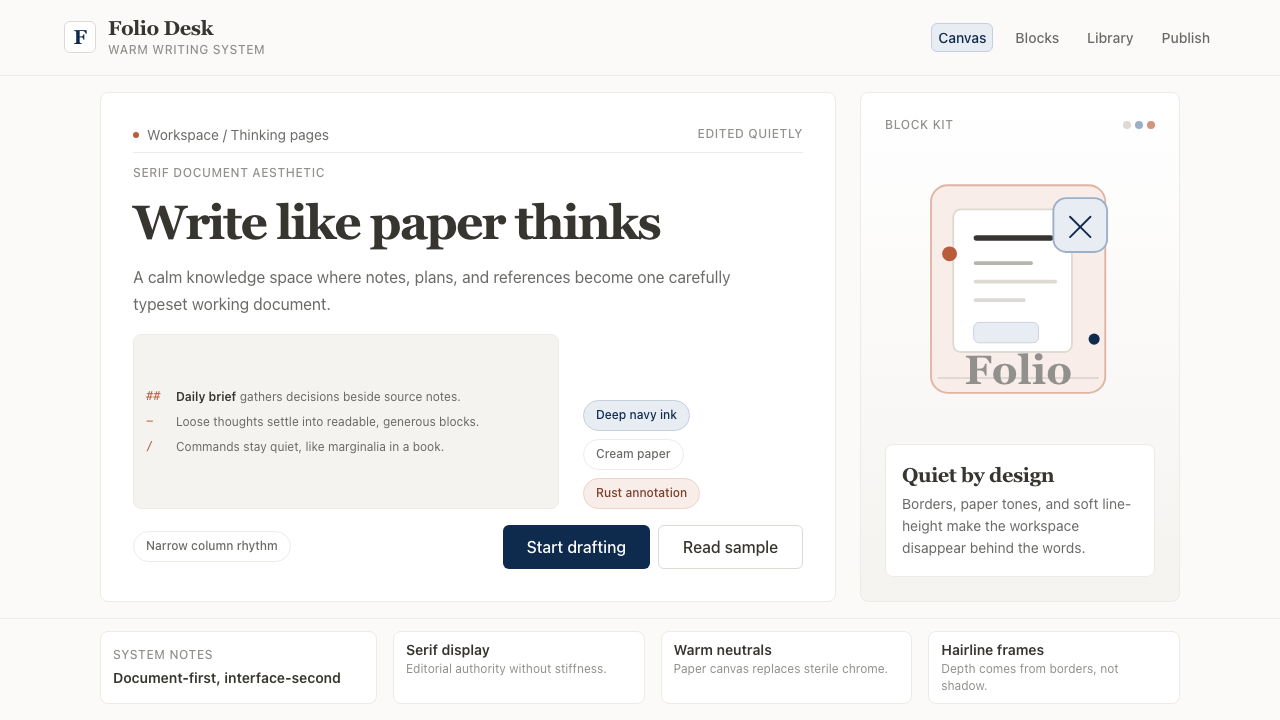 Notion ModernWriting feels papery. Source Serif on warm cream, navy ink, and hairline bord…
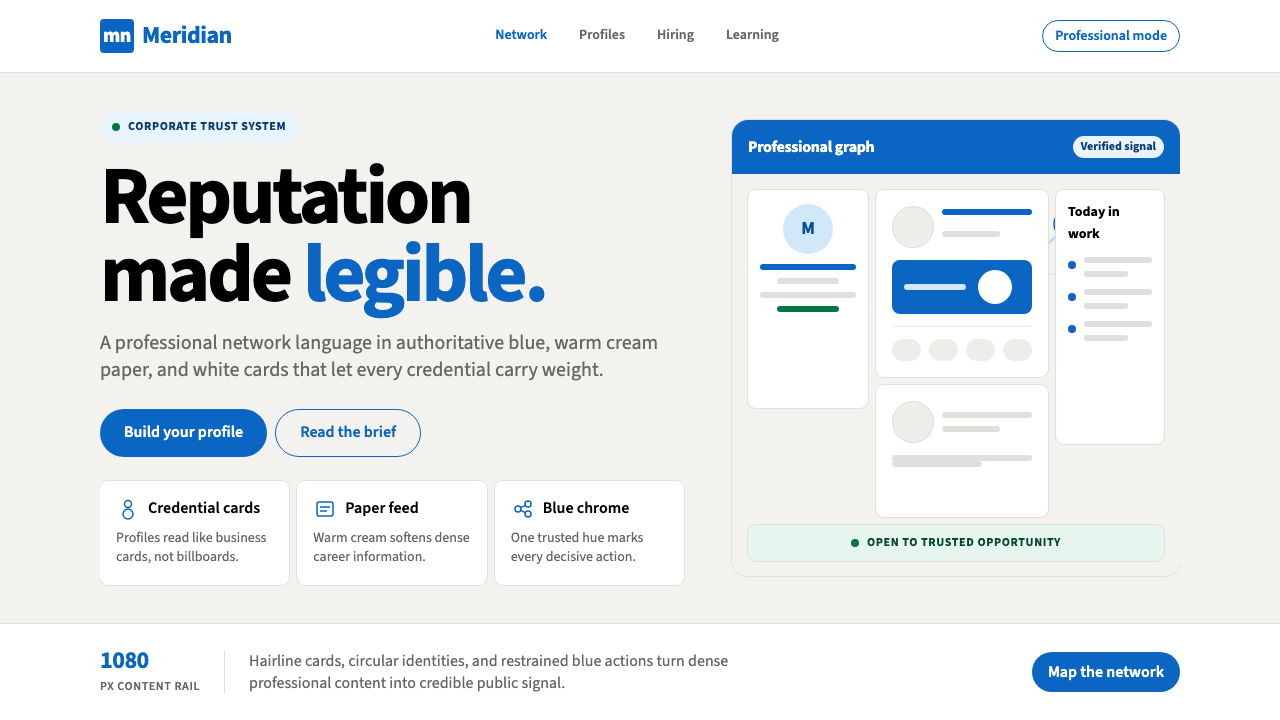 LinkedInCorporate trust, digitized. Authoritative blue frames white cards on warm cre…
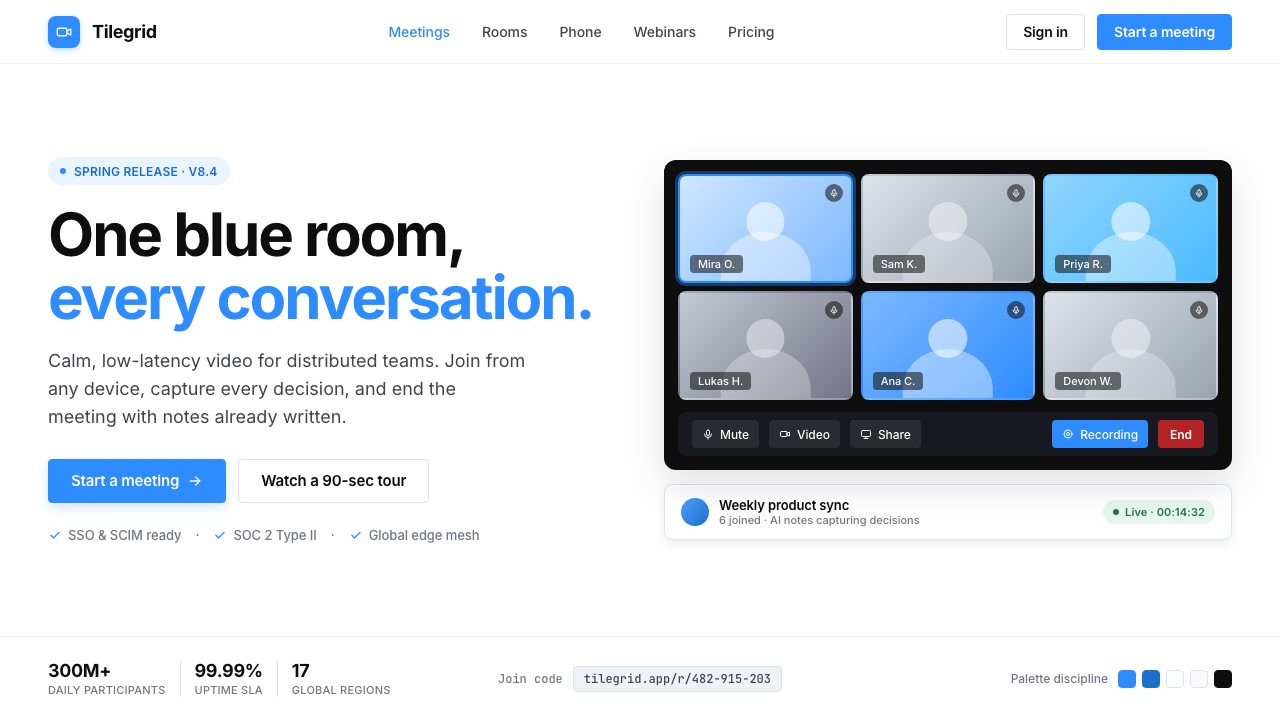 Zoom Meeting BlueRemote work's default discipline. One saturated cobalt on pure white, Inter s…
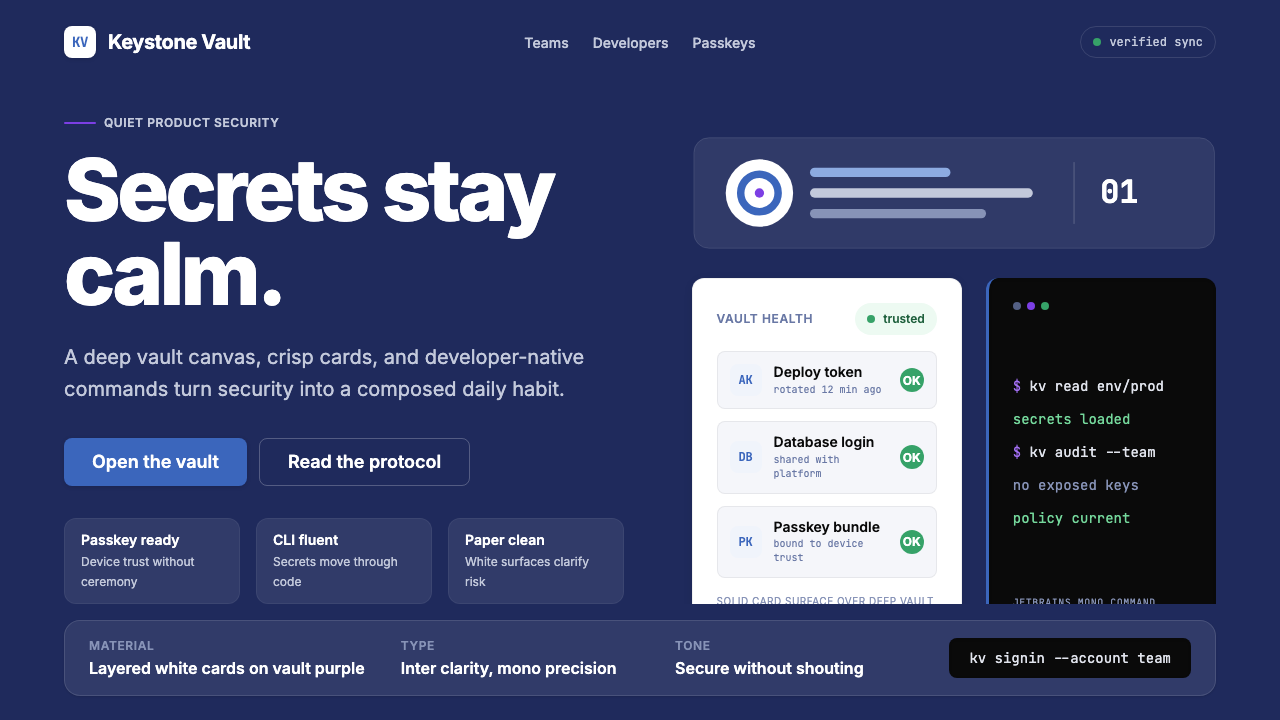 1Password Purple VaultSecurity stays quiet. Vault purple, Inter type, and crisp white cards do the…
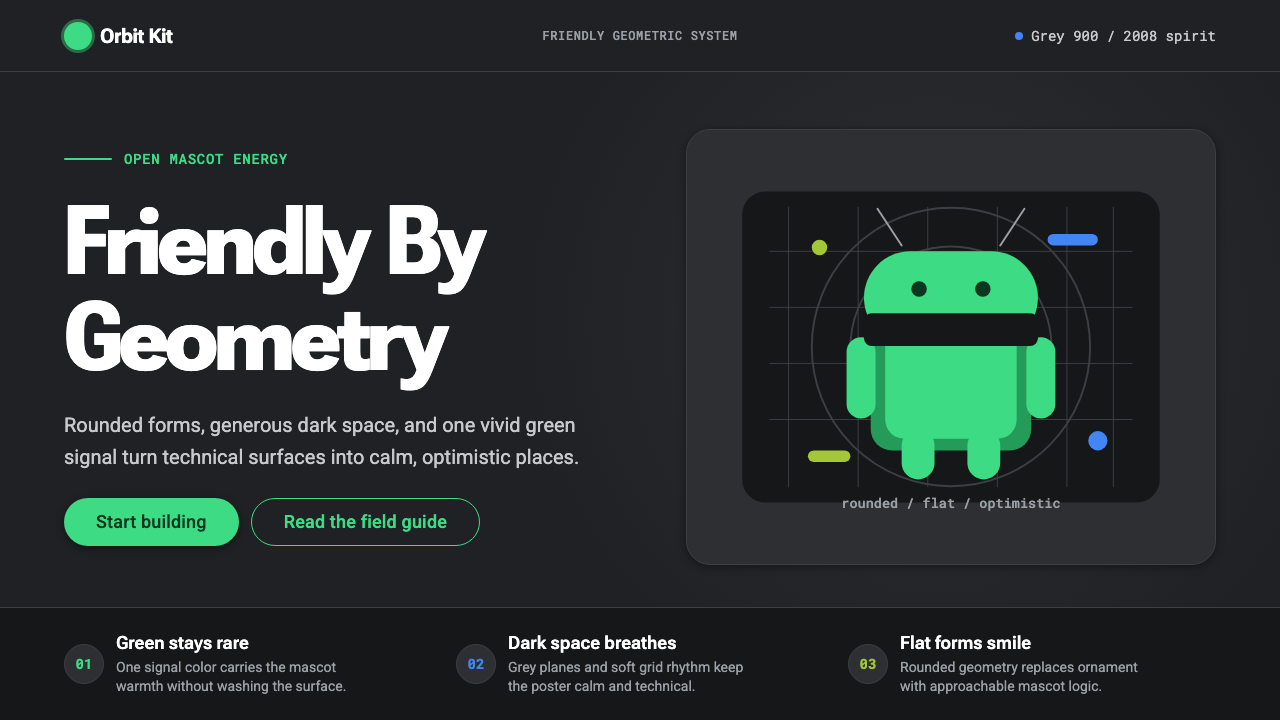 Android Bugdroid GreenFriendly tech, reduced to geometry. Vivid green pops from Grey 900 and rounde…
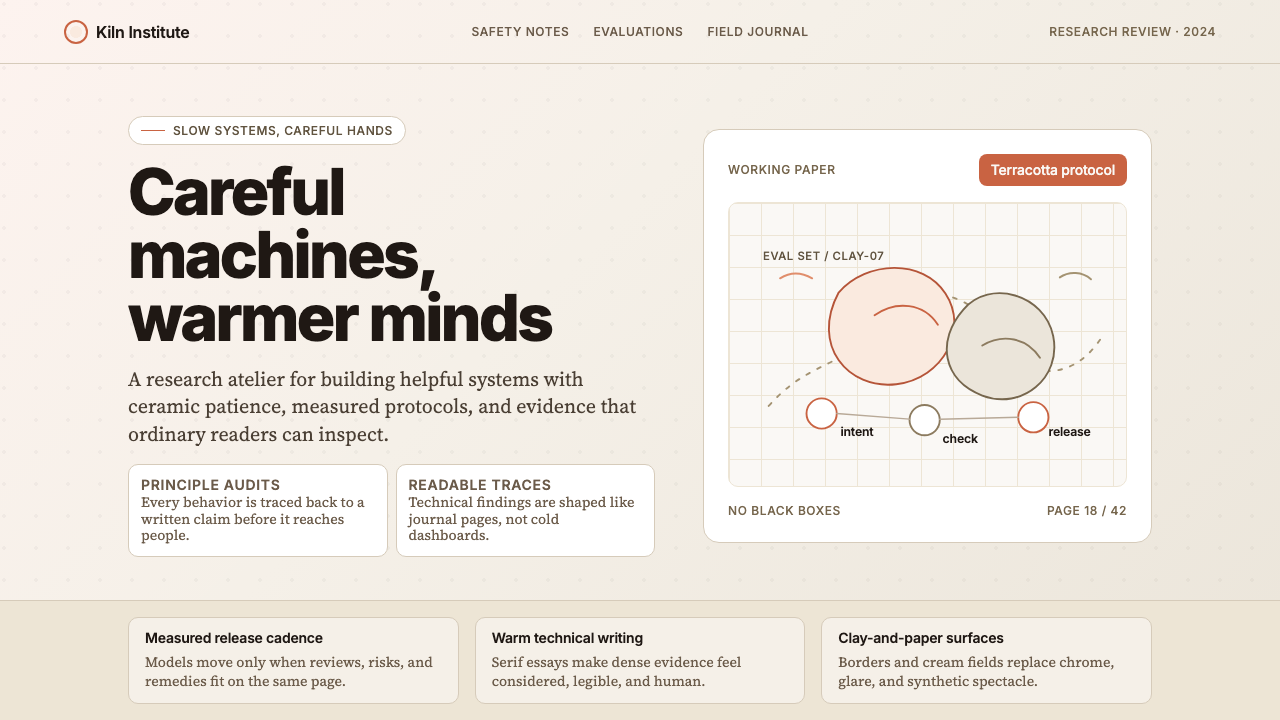 Anthropic ClayAI safety in handmade clay. Sand backgrounds, terracotta accents, serif body…