What is Rockabilly Greaser (1950)?
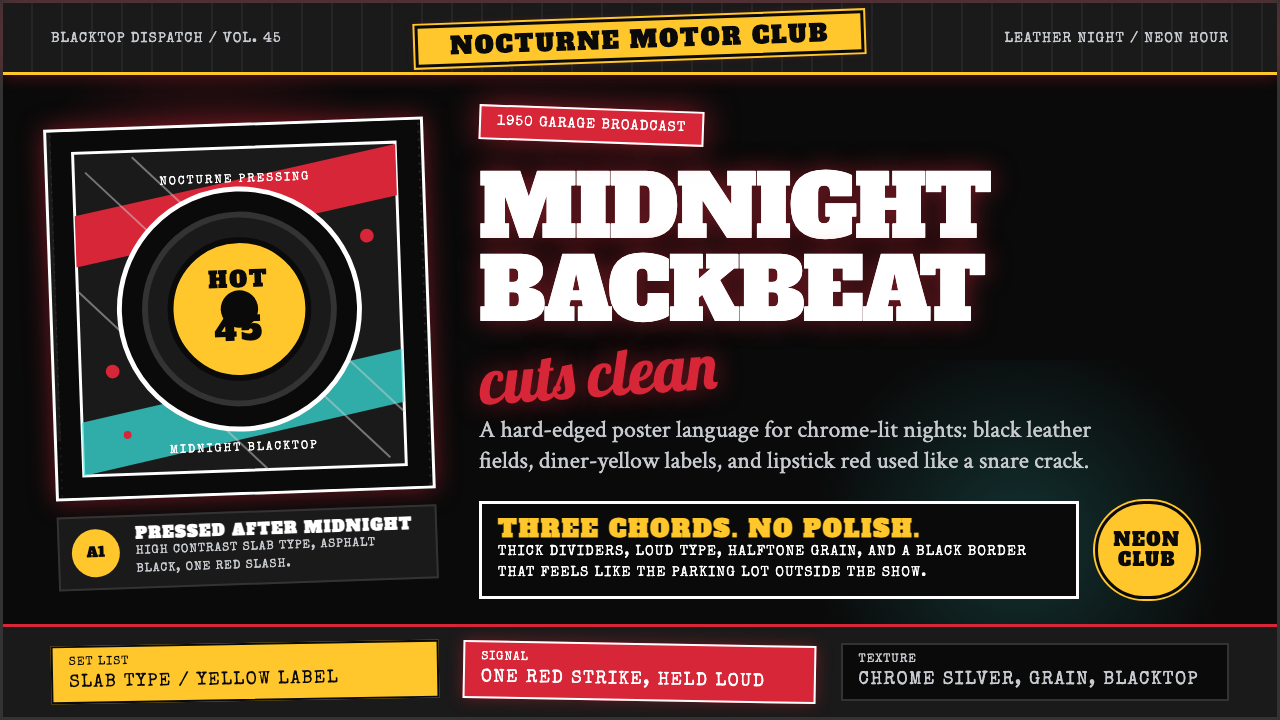
Rockabilly is the sound of a snare crack turned into a color palette — pure black, chrome yellow, and one slash of lipstick red that hit American culture like a lightning bolt in the summer of 1954.
Rockabilly Greaser (1950) in brief
Rockabilly Greaser is the visual identity of America's first youth subculture — the aesthetic that erupted around Sun Records in Memphis when country music fused with rhythm and blues to create rock and roll. The look is built on maximum contrast: a midnight-black ground, a single red accent as sharp as a snare hit, flashes of chrome yellow lifted directly from the Sun label's own signature color, and slab-serif type that belongs on a roadside diner or drive-in marquee.
Everything in this aesthetic is loud and unashamed. There is no subtlety in a leather jacket under a neon sign, no timidity in a two-tone Mercury parked outside a jukebox joint. The visual language channels that same refusal to whisper: high-contrast blocks, bold graphic shapes, lettering drawn with the confidence of someone who knows exactly what they want and is not asking permission.
The style carries the imprint of its twin cultural roots — country music's Southern directness and blues music's emotional intensity — translated into a graphic register that feels simultaneously dangerous and joyful. It is dark where other 1950s American design was pastel and cheerful, raw where mainstream advertising was polished, and personal where commercial culture was anonymous.
Where does Rockabilly Greaser (1950) come from?
The story begins at 706 Union Avenue, Memphis, Tennessee — Sun Studio, where producer Sam Phillips had been recording blues and country artists since 1950. Phillips had a theory: if he could find a white singer who could deliver the emotional authenticity of Black music, he would have something the mainstream would devour. On July 5, 1954, Elvis Presley, a nineteen-year-old truck driver from Tupelo, Mississippi, walked into that studio and began improvising on Arthur Crudup's blues song 'That's All Right.' The sound that emerged — country structure with a blues backbeat, delivered with a barely suppressed wildness — was rockabilly.
The music spread through the American South via 45rpm singles released on Sun's signature yellow-and-black label, played on regional radio stations, and heard at roadhouses and drive-in theaters. The visual world grew up around the sound organically: the performers dressed in whatever combined working-class practicality with rebellious flair — denim, leather, bowling shirts, two-tone shoes. The pompadour hairstyle, slicked high and swept back with pomade, became the movement's most recognizable symbol. These were working-class kids claiming glamour on their own terms.
The greaser identity — a term used both by the subculture itself and by outsiders — merged the rockabilly sound with motorcycle and hot-rod culture from the American coasts, producing a unified aesthetic of speed, rebellion, and hand-built cool. Chrome details on customized cars translated directly into the visual language: the gleam of polished metal, the curve of a fender, the glow of a dashboard gauge at night. This wasn't borrowed glamour — it was made by people who worked with their hands and displayed that work with pride.
The original moment was brief. By the early 1960s, the music industry had smoothed rockabilly's edges into the softer pop of teen idols. But the aesthetic proved extraordinarily durable. In the 1980s, the Stray Cats — led by Brian Setzer — brought a revivalist rockabilly to international audiences, and the visual language returned with them. Since then, rockabilly aesthetics have cycled through fashion, tattoo culture, graphic design, and advertising as a reliable signal for authenticity, rebellion, and an idealized vision of mid-century American working-class style.
What defines the Rockabilly Greaser (1950) look?
Color
The palette is built on pure black as the dominant ground — not charcoal or near-black, but the absolute dark of asphalt at midnight. Against this, a single lipstick red functions as the primary accent, used sparingly and with maximum impact: a stripe, a logo field, a call-to-action zone. Chrome yellow appears as a secondary flash, referencing the Sun Records label itself. White is reserved for type only, rarely used as a background field. The overall effect is high-contrast to the point of visual aggression — the entire composition is designed to be read at a glance from across a parking lot.
Typography
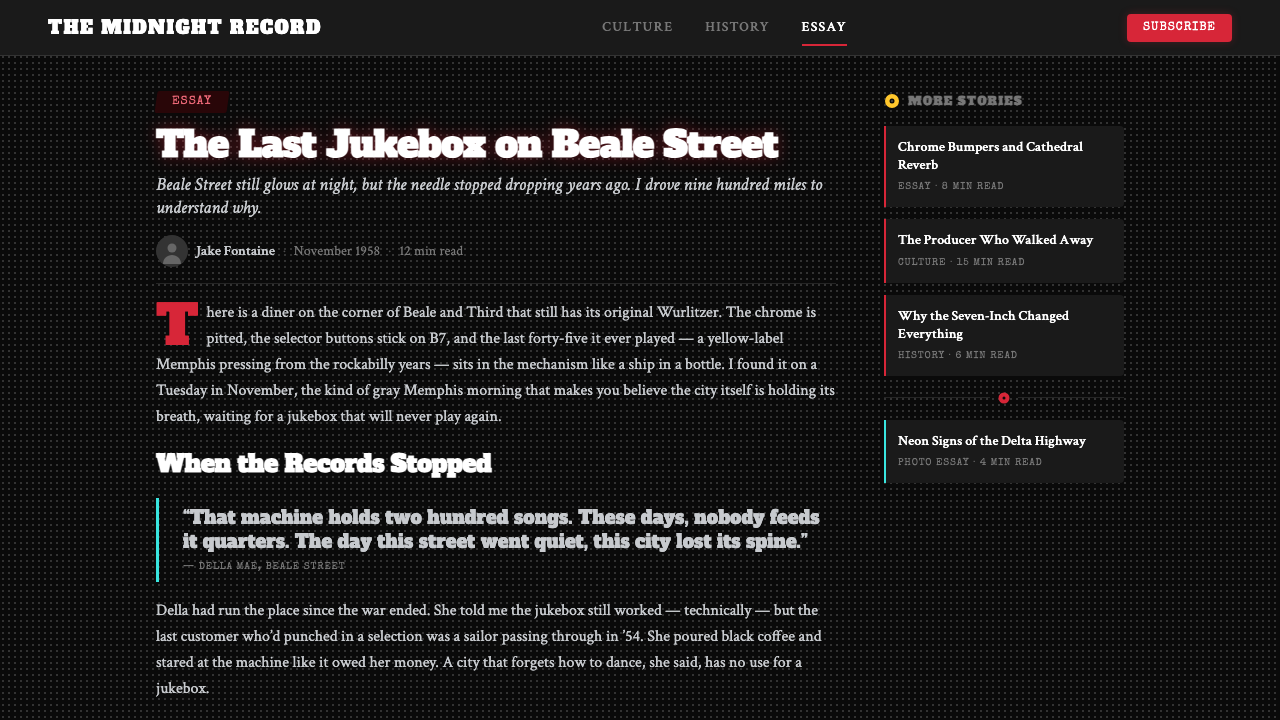
Slab serif — the thick, bracketed serifs that belong on American diner signage and circus posters — is the defining typeface category. The serifs are not elegant; they are blunt, heavy, and designed to carry at distance. Letterforms have the weight of carved wood or stamped metal. Headlines are set at extreme sizes, often with very tight leading, creating a compressed wall of text that reads more as image than as prose. Script lettering — the kind derived from neon-sign cursives and tattoo flash — appears in a supporting role, softening the slab-serif authority with a handmade quality.
Contrast and Tone
The entire visual system is calibrated for maximum tonal contrast. There are no midtones, no gentle transitions — elements are either fully on or fully off. This binary approach to contrast is both an aesthetic choice and a practical one: rockabilly graphics were originally designed for quick reproduction in single-color or two-color print, on newsprint, and on small-format labels. The high-contrast clarity that made them legible on a spinning 45 at arm's length translates directly into digital contexts where immediate legibility is required.
Shape and Motif
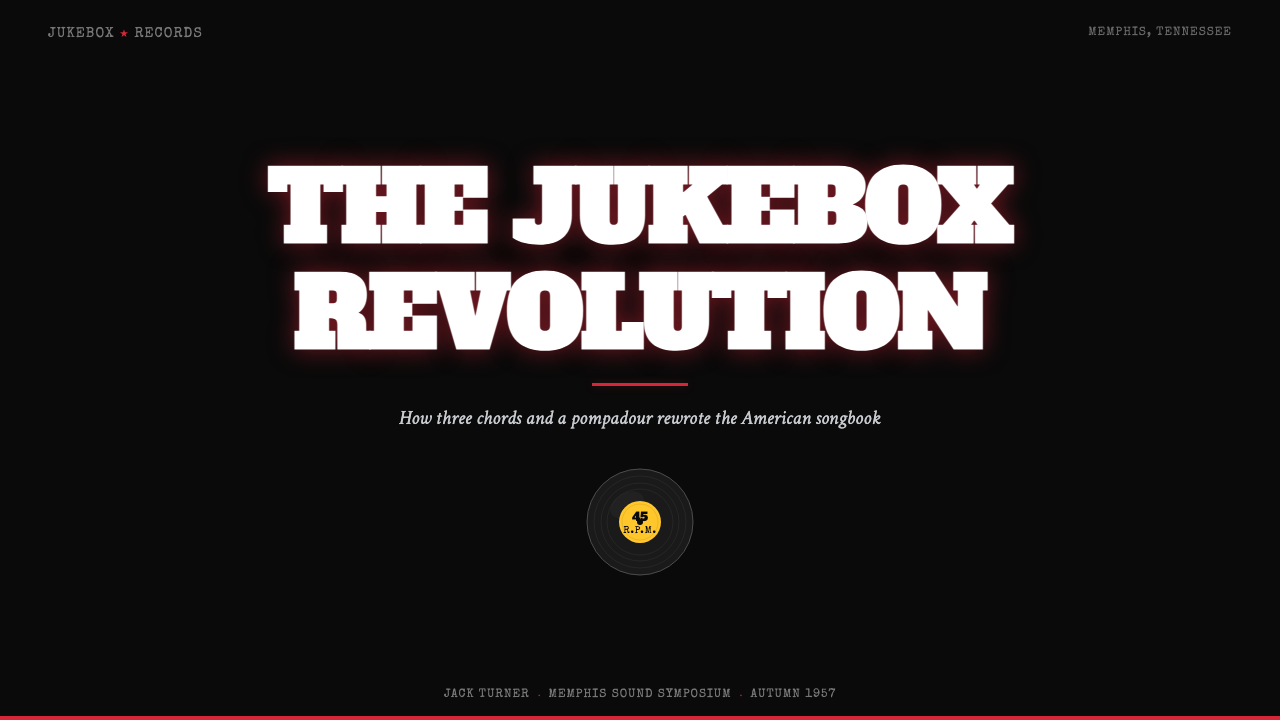
Flames, lightning bolts, stars, and rocket shapes appear as decorative motifs — but used with restraint, as punctuation rather than wallpaper. Circular badge forms reference the 45rpm label directly: a circle with concentric rings, a central hole, text arranged around the perimeter. Pinstriping lines — thin, flowing, hand-drawn curves borrowed from hot-rod custom work — add a sense of speed and craft. These motifs are never ironic or distanced; they are used straight, with the same conviction that a greaser would have about his pompadour.
Texture and Grain
Where other 1950s design styles celebrated the pristine and machine-perfect, rockabilly aesthetics embrace evidence of the hand and the press. A slight roughness at the edge of a letterform, the texture of heavily inked newsprint, the grain of a worn vinyl label — these imperfections are part of the vocabulary. In digital applications, this quality is achieved through deliberate aging: subtle halftone patterns, slight ink spread at stroke edges, the visual noise of a photographic grain overlay. The goal is to make something that looks like it has already lived a little.
Layout and Hierarchy
Compositions are typically centered or strongly weighted to a single axis, in contrast to the asymmetric dynamism of contemporaneous modernist design. The poster tradition — everything converging toward a single focal point — governs the layout logic. Headlines dominate; supporting text is secondary in both size and color weight. Negative space is used generously around the main graphic element but compressed within text blocks. The overall impression is of something designed to be seen all at once, not read top to bottom.
Light and Glow
Neon is the defining light source of the rockabilly world — not the clean digital glow of contemporary UI, but the warm, slightly buzzing light of a glass tube charged with gas. This translates visually as color edges that appear slightly luminous against the black ground, as if the red and yellow are generating their own light rather than reflecting it. The effect stops well short of a true glow or blur — it is more the memory of neon than neon itself, present as a heightened vividness rather than a soft halo.

Who shaped Rockabilly Greaser (1950)?
Phillips founded Sun Studio in 1950 and Sun Records in 1952, creating the institutional home of rockabilly. His production philosophy — capturing a performance in a single room with minimal intervention, preserving the spontaneity of first takes — shaped both the sound and the ethos of the movement. His visual instincts were equally formative: the yellow-and-black Sun label design, with its rooster crowing at sunrise and its bold circular typography, became one of the most recognized record label designs in history and the direct visual ancestor of the rockabilly aesthetic.
Presley was not just the defining performer of rockabilly — he was its most powerful visual symbol. The pompadour, the sneer, the gold lamé suit, the black-and-white television performances that introduced the style to the entire country: Presley's image became the template from which every subsequent greaser aesthetic was derived. His early Sun-era photographs — leather jacket, eyes challenging the camera — remain the canonical reference point for the rockabilly visual identity.
Perkins wrote and recorded 'Blue Suede Shoes' in 1955 — the song that made rockabilly's obsession with clothing and personal style into an explicit cultural statement. His guitar style, his combination of country picking technique with blues feeling, and his working-class Tennessee background made him the most representative figure of the movement's roots. While Elvis's fame eclipsed his, Perkins's influence on the rockabilly visual and musical vocabulary — particularly the integration of clothing as identity statement — proved equally lasting.
As the guitarist and frontman of the Stray Cats, Setzer led the most successful rockabilly revival of the 1980s, bringing the aesthetic to a new generation of international audiences. His own image — the extreme pompadour, the vintage clothing, the upright bass on stage — was a meticulous reconstruction of the original greaser look, executed with a degree of style consciousness that transformed nostalgia into influence. The Stray Cats made rockabilly aesthetics available to graphic designers, fashion houses, and tattoo artists who had no direct connection to the 1950s original.
Cash's visual identity — the relentless commitment to black clothing that earned him the nickname 'The Man in Black' — contributed a different dimension to the rockabilly aesthetic: gravity and severity. Where Elvis represented the movement's glamour and Carl Perkins its roots, Cash represented its darkness. His visual austerity, adopted as both personal statement and performance persona, made black not merely a neutral ground but a moral and emotional position. This depth of meaning in the color black is part of what distinguishes rockabilly aesthetics from more lighthearted 1950s styles.
How do you use Rockabilly Greaser (1950) today?
Rockabilly aesthetics are among the most immediately legible historical styles available to contemporary designers — the visual shorthand is widely understood, emotionally charged, and carries strong associations with authenticity, rebellion, and craft. Applying it well requires committing to its logic fully rather than borrowing selectively: the style reads as confident when it is used with conviction and as costume when it is used tentatively.
For presentation slides, the style is most effective for cover pages and section dividers rather than dense content slides. A cover built on a pure black ground with a single large typographic element in slab-serif, accented by a red or yellow badge shape, reads as a bold statement before a word is spoken. Content slides should be treated more sparingly — the high-contrast palette can overwhelm data and secondary information. Use the black ground for visual impact on key moments; pull back to a white or near-white ground for content-heavy slides, maintaining the color accents as navigational markers. Data visualizations benefit from the two-accent approach: use red for the primary data series and yellow for the secondary, letting the black ground provide neutral context.
For web interfaces, rockabilly is well-suited to landing pages, event pages, and product pages for brands that want to signal independence and authenticity. The approach: commit to a black ground as the page base, use the red accent for primary calls to action and the yellow for secondary highlights or hover states. Navigation should be typographic and direct — no soft shadows, no subtle borders, no rounded corners that would undermine the aesthetic's hardness. Card components work best with flat, hard-edged borders rather than shadows; the color palette provides all the depth the layout needs. The style is poorly suited to dense content interfaces, dashboards, or applications where a user needs to process a lot of information — the visual intensity that makes it effective for short-form communication becomes exhausting over long sessions.
For editorial and marketing work, the style's poster heritage is its greatest strength. Full-width feature blocks on a black ground, typographic hierarchy achieved through scale and weight rather than color variation, and the occasional badge or flame motif used as punctuation — this is the register where rockabilly aesthetics perform at their peak. Music and entertainment brands, independent retail, craft food and beverage, and events where attitude matters more than polish are natural homes for the style. Marketing campaigns benefit from the style's built-in sense of urgency: the high contrast and bold typography create a visual temperature that suggests something happening right now, not in the carefully considered future.
A common mistake when applying rockabilly aesthetics is treating the three-color palette as decoration rather than structure. The black is not merely a background — it is the dominant value from which the red and yellow are carved. Adding a fourth color, introducing soft gradients, or using the red and yellow at low saturation or large areas simultaneously will collapse the system's contrast logic and produce something that looks like a vague gesture toward the style rather than a commitment to it. The other typical failure is choosing a display typeface that is ornate rather than direct — rockabilly lettering is heavy and confident, not decorative. Elaborate script or delicate serif choices are incompatible with the aesthetic's character.
Rockabilly Greaser (1950) — FAQ
Is rockabilly aesthetics limited to music and entertainment contexts?
Not at all, though that remains its most natural home. The style has been successfully applied to craft food and beverage brands (artisan burger joints, small-batch whiskeys, specialty coffee roasters), independent retail with a strong point of view, automotive and motorcycle adjacent products, and any brand that wants to signal handmade quality and a refusal to follow trends. The key question is whether the brand's values — independence, directness, confidence, a certain proud roughness — align with what the aesthetic communicates. When they do, the style works across categories. When they don't, it reads as borrowed attitude, which is worse than no attitude at all.
How does rockabilly differ visually from other 1950s American design styles?
Most mainstream 1950s American commercial design was optimistic, pastel, and aspirational — the visual world of new appliances, suburban homes, and consumer prosperity. Rockabilly aesthetics came from a different America: working-class, Southern, Black and white musical cross-pollination, the parking lots and roadhouses rather than the living rooms. Where mainstream 1950s design used soft pinks, mint greens, and warm yellows on white grounds, rockabilly used absolute black, blood red, and chrome yellow. Where mainstream design was rounded and friendly, rockabilly was hard-edged and confrontational. The two aesthetics are roughly contemporaneous but emotionally opposed.
Can the style work with a light background instead of black?
A light-ground variant is possible but requires significant recalibration. The rockabilly palette was built around black as a structural dominant — the red and yellow derive their intensity from the black ground they sit against. On a white or cream ground, both the red and the yellow lose much of their charge; they read as colors rather than as light against dark. If a light ground is required, the most effective approach is to treat it as a day version of the system: keep the red as the primary accent at full saturation, reduce the yellow to a secondary supporting role, and use black typography at a heavier weight than would normally be comfortable. The slab-serif character and the poster-like hierarchy can survive the ground change, but the dramatic high-contrast effect of the dark-ground version cannot.
What is the right way to use texture and aging effects without making a design look gimmicky?
Restraint is the key. Aging effects — grain, halftone, ink roughness at letterform edges — should enhance the design's overall texture without becoming the central visual event. The test is simple: if the aging effect were removed, would the design still hold? If yes, the effect is contributing correctly. If no — if the design depends on the aging to look interesting — it is a substitute for substance rather than an enhancement of it. Grain overlays should be subtle enough to be felt rather than seen. Letterform edge roughness should read as a quality of the type rather than as a filter applied on top. The goal is a design that looks like it was made by someone who has been doing this for thirty years, not a design that has been run through a vintage preset.
How does the rockabilly revival of the 1980s differ aesthetically from the 1950s original?
The 1980s revival was more self-conscious and more polished than the original. The greaser aesthetic of the 1950s developed organically from practical circumstances — performers wore what they could afford and what expressed their identity; the visual design of labels and posters was produced quickly and cheaply under commercial constraints. The 1980s revival had access to the original as a reference point, which meant it could reproduce specific elements with deliberate precision — the right pompadour height, the right trouser cut, the exact typography of a Sun Records ad. This knowledge made the revival more visually accurate in detail but slightly more curated in overall effect. Contemporary applications inherit this self-consciousness: they are quoting the aesthetic rather than living inside it, which is fine so long as the quotation is accurate and confident rather than ironic or tentative.
Related design styles
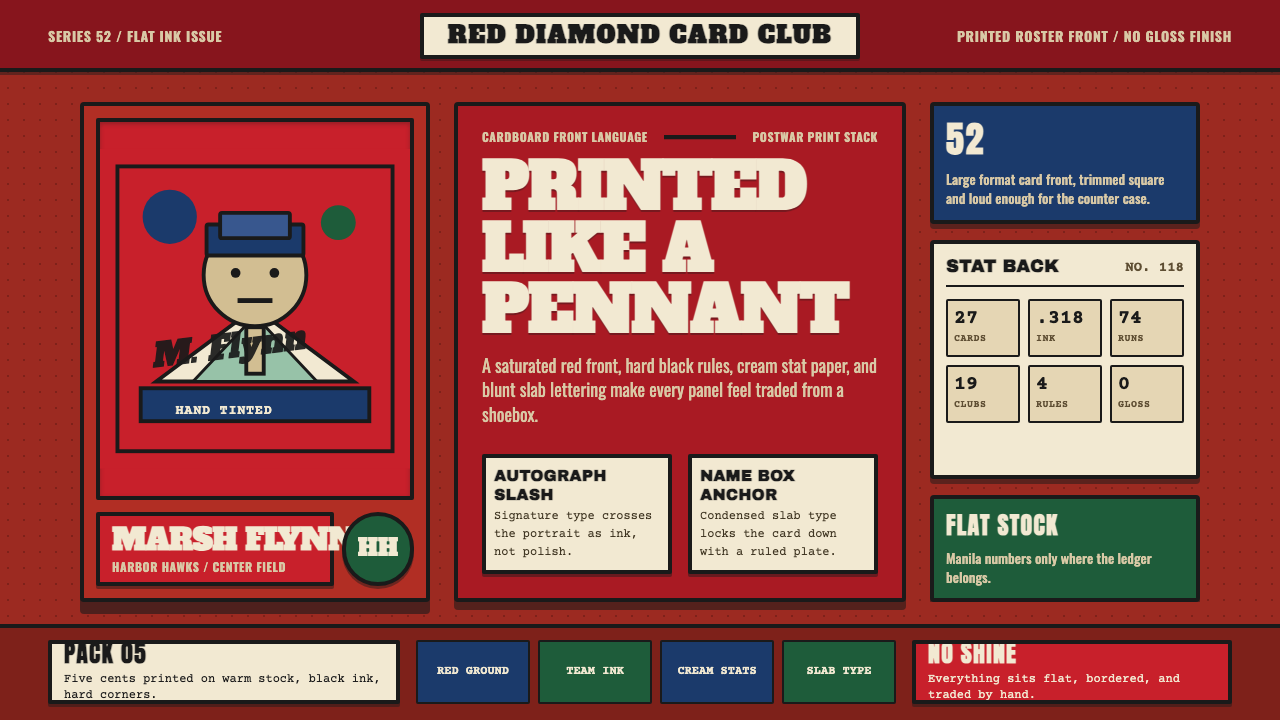 Topps Baseball CardCardboard heat. Brick-red slab panels, cream stats, and condensed type feel p…
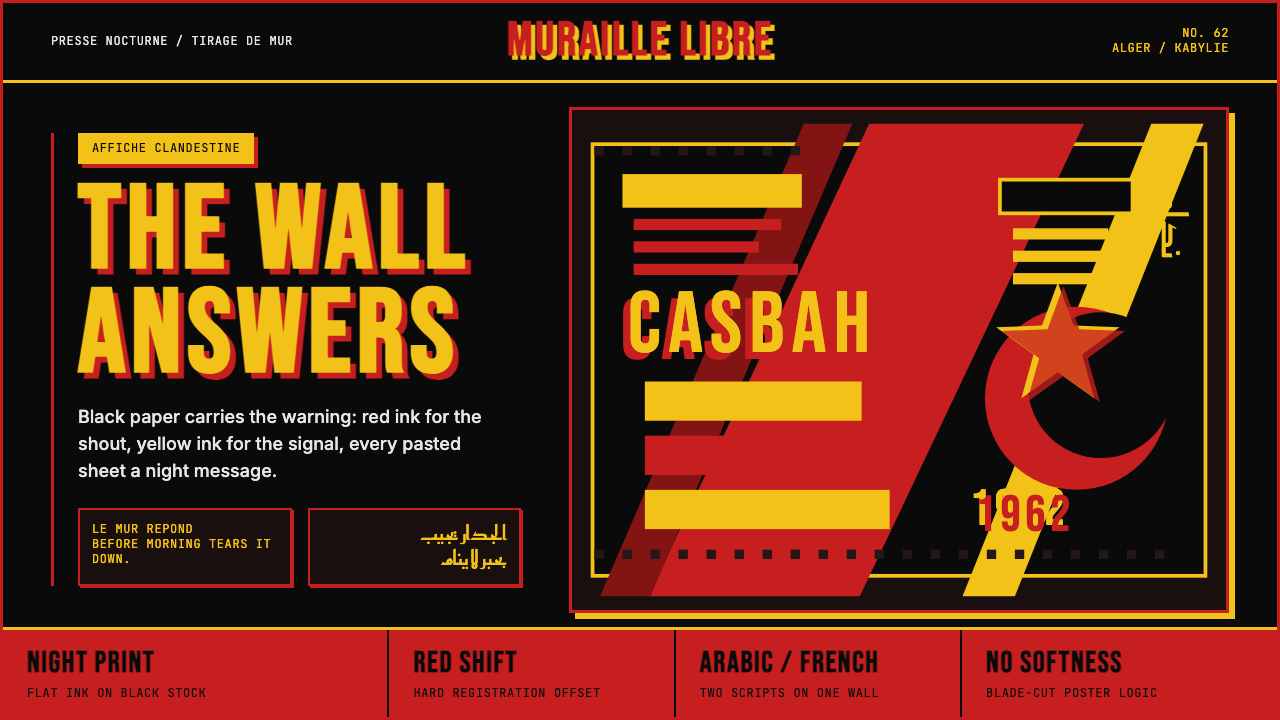 Algerian Casbah Poster (1954–1962)Every surface is a manifesto. Blood red, warning yellow, and stencil type hit…
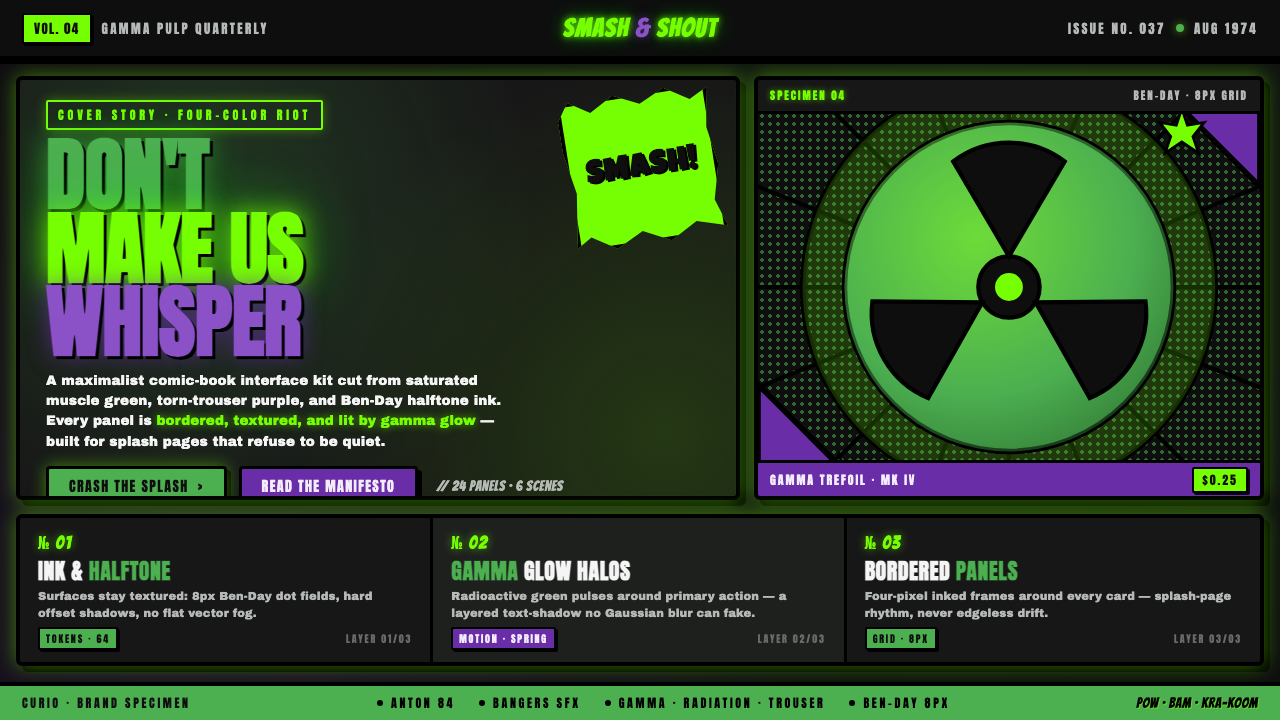 Hulk Gamma GreenDon't make us whisper. Muscle green, trouser purple, inked panels, Ben-Day ha…
 Kryptonite GreenRadioactive pulp glows hard. Neon green shard, black gutters, Ben-Day grit.
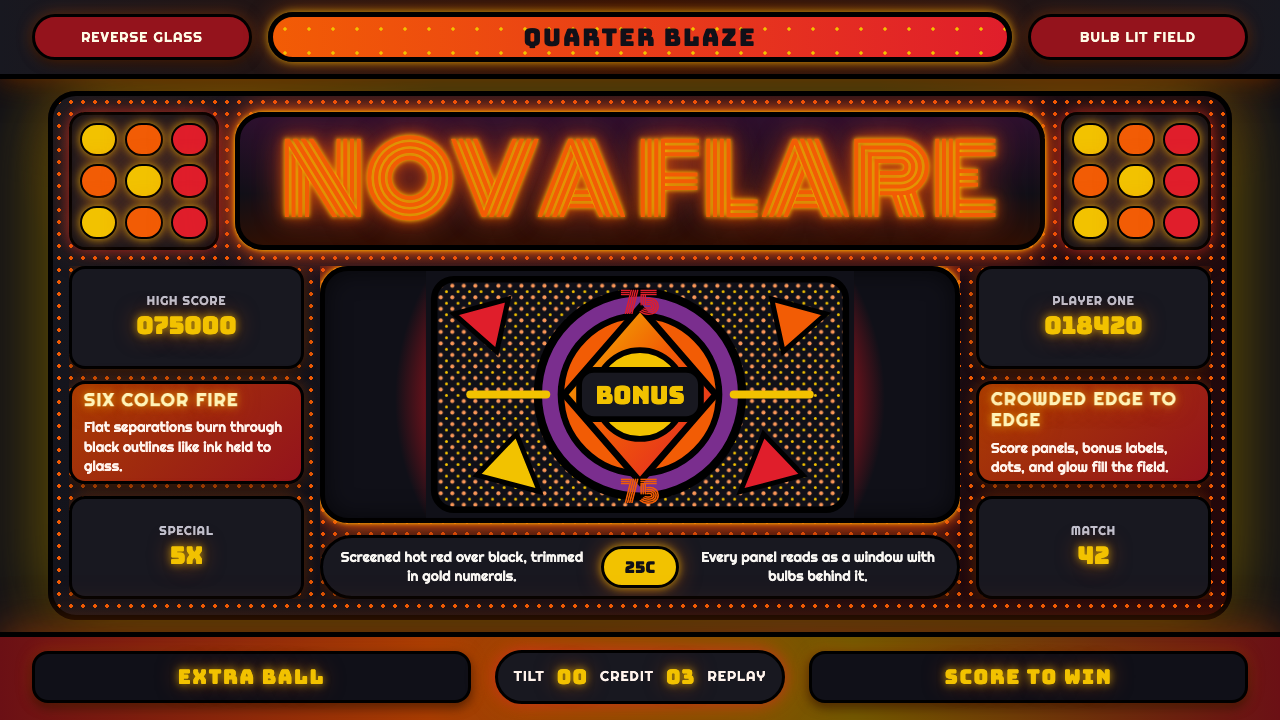 Pinball BackglassGlows like paid light. Monoton type, black outlines, orange-red halftones cro…
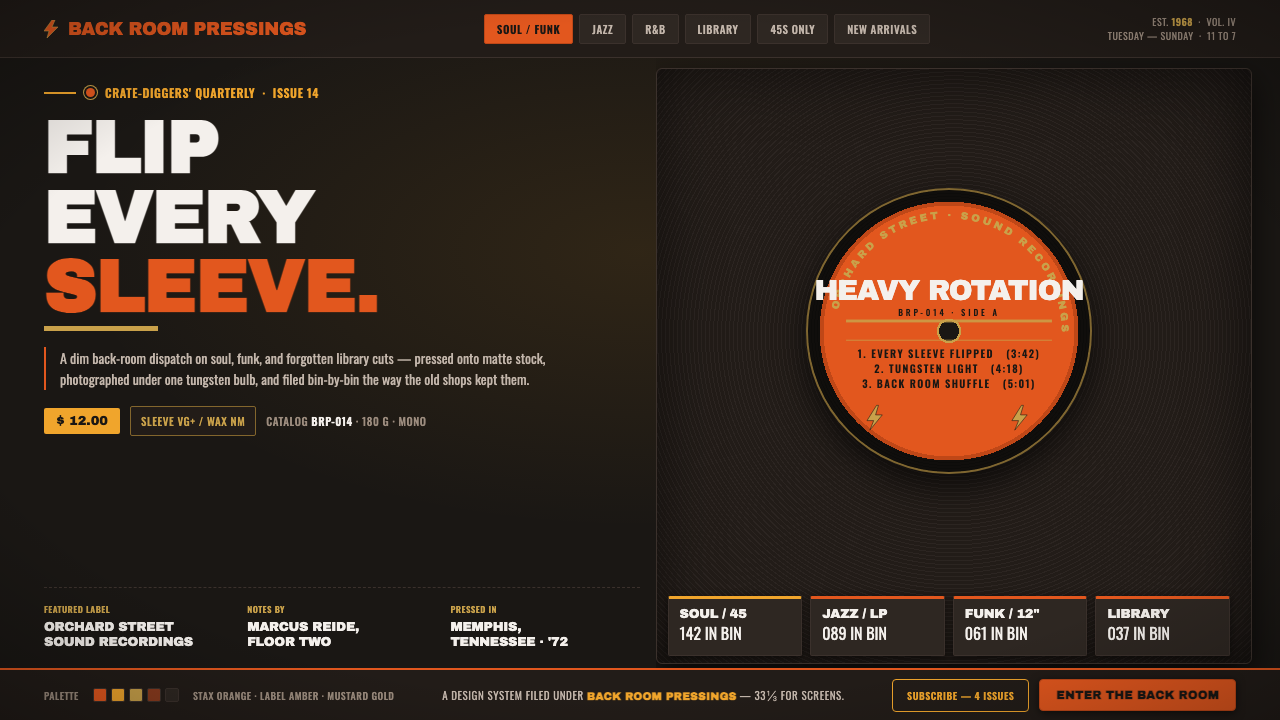 Vinyl Crate DiggingThe back room of a used record store. Stax-orange labels on near-black vinyl,…