What is Québec Maple Sugar Shack?
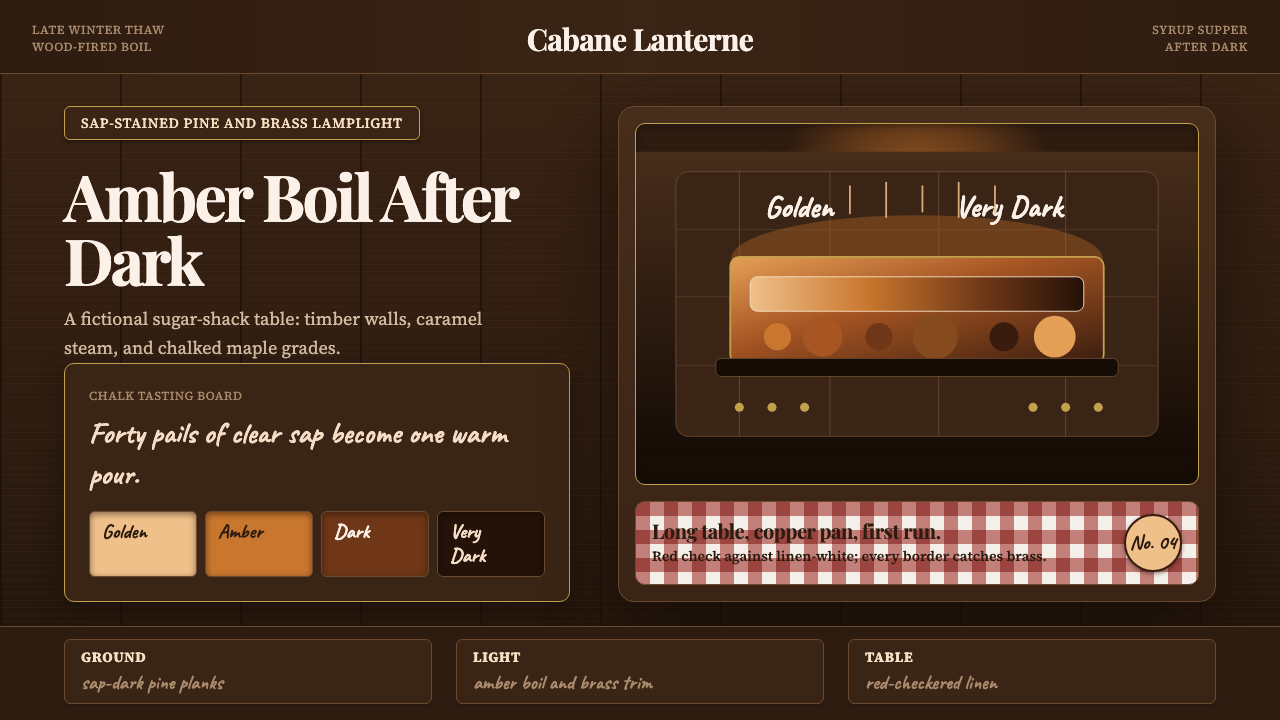
Every late winter, rural Québec fills a wood-fired shack with steam and firelight to boil sap into syrup — and this system is built from that dark, brass-lit, checkered-cloth world of harvest and heat.
Québec Maple Sugar Shack in brief
Québec Maple Sugar Shack is a design system built from the cabane à sucre, the wood-built sugarhouse where rural Québécois families gather each spring to boil maple sap into syrup. The visual world is dark and warm rather than bright and clean: sap-stained pine timber walls, brass and copper evaporator equipment catching lamplight, and the red-and-white checkered cloth that covers the long communal tables where the harvest is eaten together.
This is a system about a working season, not a finished product on a shelf. Everything carries the marks of a place that is actively boiling, dripping, and being used — timber grain rather than smooth panels, hand-chalked tasting notes rather than printed labels, and syrup itself treated as a graded, caramel-toned palette rather than a single generic brown. The four official grades recognized by Québec's maple industry — from pale golden to very dark — behave as a natural color gradient running through the system, lightest at one end and deepening toward a rich, almost burnt caramel at the other.
The overall feeling is closer to a harvest kitchen at night than a printed brochure: dim, timber-dark backgrounds; small pools of warm light around brass surfaces; and a rustic, slightly hand-formed typographic voice, as though a tasting note had been chalked onto a board rather than typeset on a screen.
Where does Québec Maple Sugar Shack come from?
Maple sap tapping predates European settlement in North America. Indigenous peoples of the northeastern woodlands — including Algonquian- and Iroquoian-speaking nations — first discovered that certain maple species could be tapped in late winter and their sap concentrated by boiling, and they passed this knowledge to French colonial settlers in what is now Québec. The practice depends on a narrow seasonal window: sap only flows well when daytime temperatures rise above freezing while nights stay below it, a cycle that occurs for a few weeks each year in late winter and early spring.
Over centuries, this seasonal harvest evolved into the cabane à sucre, a dedicated sugarhouse built near a maple grove, where a family or cooperative boils collected sap in a wood-fired evaporator until the water content cooks away and only the concentrated sugar remains as syrup — a process that historically required roughly forty parts of raw sap to produce one part finished syrup. The cabane became not just a production site but a seasonal social institution: neighbors and extended families gather there to eat a hearty traditional meal, often centered on pork, baked beans, and pancakes drenched in the fresh syrup, followed by tire sur la neige — hot syrup poured directly onto clean snow, where it sets into a soft maple taffy eaten off a stick.
Québec today produces the large majority of the world's maple syrup supply, and the industry is regulated by the Producteurs et productrices acéricoles du Québec (PPAQ), the organization representing the province's maple syrup producers, which oversees grading, quality standards, and — notably — a strategic reserve system that stabilizes supply and pricing across seasons of varying sap yield. Syrup is officially graded on a color-and-flavor scale, running from a pale, delicate golden syrup harvested earliest in the season to a very dark, robustly flavored syrup from sap collected later, when sugar concentration and flavor compounds intensify.
The cabane à sucre tradition remains a living, actively practiced part of Québécois rural culture rather than a historical reenactment: working sugar shacks open to the public every spring, serving the traditional meal and hosting the tire sur la neige ritual for visitors, making the season one of the most visible and widely celebrated annual food traditions in the province.
What defines the Québec Maple Sugar Shack look?
Color and Grade Gradient
The palette runs through the four officially recognized maple syrup grades as a natural progression — a pale, delicate golden at the light end, deepening through amber and a richer brown, down to a very dark, almost burnt caramel tone at the deep end. Rather than choosing a single syrup brown, the system treats this whole range as available tonal steps, using lighter tones for background warmth and the darkest tones for emphasis and depth.
Timber Surface
Backgrounds and large panels carry the look of dark, sap-stained pine — visible wood grain rather than a flat, uniform fill, and a surface that reads as aged and worked rather than freshly cut. This grounds the whole system in the interior of a real working sugarhouse rather than a generic rustic backdrop.
Brass and Lamplight
Metal accents are warm — brass and copper rather than cool chrome or steel — and are treated as if lit by lamplight rather than flat studio lighting, with a soft glow around them rather than a hard, even highlight. This echoes the actual evaporator equipment inside a sugar shack, which is traditionally copper and brass and catches firelight as it works.
Gingham Check
The red-and-white checkered pattern of the communal table cloth appears as a recurring textile motif, used sparingly to mark communal or celebratory moments — a table of contents, a footer, a section that signals gathering and shared food — rather than as an all-over decorative background.
Typography
Headline type has an amber, rustic serif character, and shorter notes take on a hand-chalked quality, as if written on a small board hanging near the evaporator to announce the day's grade or a tasting note. This rustic hand-formed voice replaces a clean, mechanical sans-serif wherever the system needs to feel personal rather than industrial.
Layout as Harvest Notes
Content is organized the way a working sugar shack might display information for visitors — a hand-chalked grade board, a printed feast menu, a seasonal calendar — rather than a corporate information hierarchy. This keeps the system feeling like a record of an ongoing seasonal activity rather than a static product catalogue.
Who shaped Québec Maple Sugar Shack?
The northeastern woodland Indigenous peoples first discovered that certain maple species could be tapped in late winter and their sap concentrated into syrup by boiling, and they taught this knowledge to French colonial settlers. Their discovery is the foundation of the entire maple syrup tradition and predates the cabane à sucre by centuries.
This organization represents Québec's maple syrup producers and oversees industry grading standards, quality control, and a strategic reserve system that stabilizes supply and pricing across seasons of varying yield. Its official four-grade color-and-flavor classification is the direct source of the caramel-toned gradient at the core of this design system.
Rural Québec's maple farmers are the families and cooperatives who own and operate the sugarhouses, managing the maple groves, tapping the trees each spring, and running the wood-fired evaporators that turn raw sap into finished syrup. Their working sugarhouses remain the living source of the entire visual world this system draws from.
Pouring hot syrup directly onto clean snow to set it into a soft maple taffy, eaten rolled onto a stick, is one of the signature communal experiences of a spring visit to a cabane à sucre. It represents the moment the harvest becomes a shared, celebratory food event rather than purely an agricultural process.
The traditional sugar shack meal — typically featuring pork, baked beans, and pancakes served with fresh syrup, eaten at long communal tables under a red-and-white checkered cloth — is as central to the culture as the syrup-making itself, and it is the direct source of the gingham motif and communal-table layout logic in this design system.
How do you use Québec Maple Sugar Shack today?
Québec Maple Sugar Shack works best where a message benefits from warmth, harvest-season authenticity, and a sense of communal gathering, because the entire system is built around the logic of a working sugarhouse rather than a polished retail shelf. Applying it well means keeping the dark, timber-grained warmth and the caramel gradient intact, rather than reducing the palette to a single flat brown.
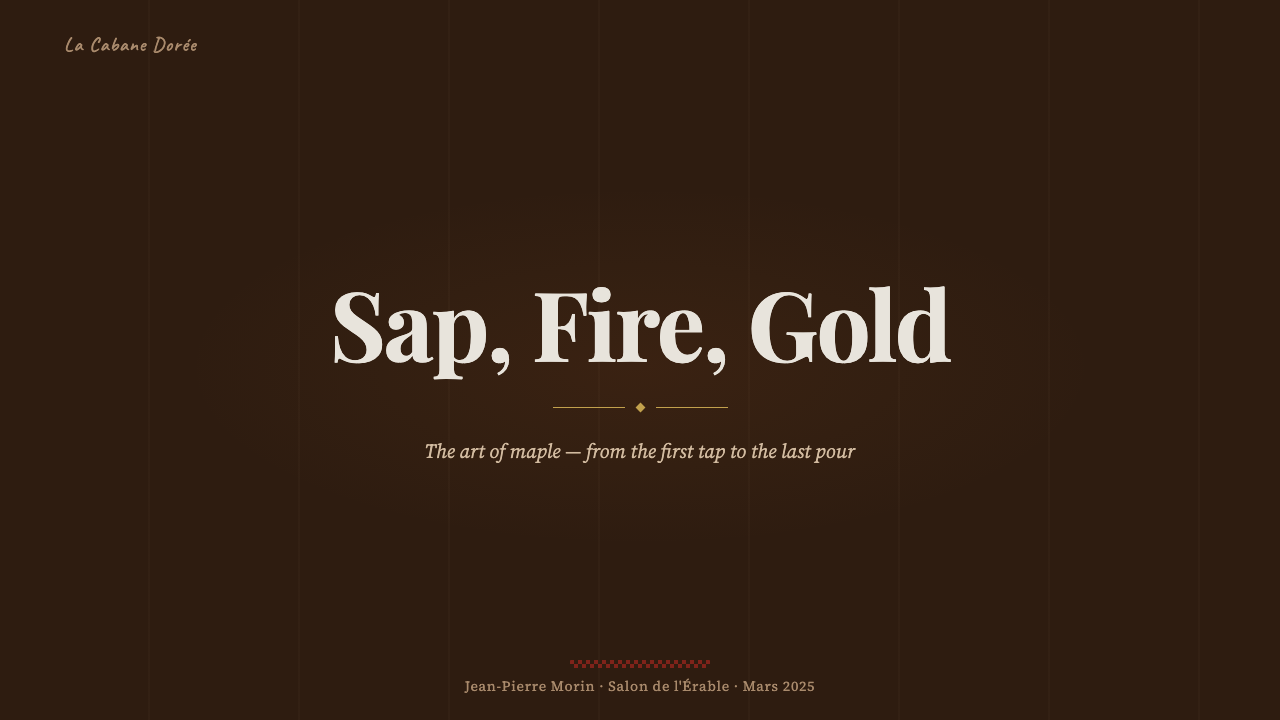
On presentation slides, the system is strong on cover and closing slides, where a dark timber background and a single warm brass accent can carry a title the way lamplight picks out equipment in a real sugarhouse. Content slides read well when data or comparisons use the four-grade caramel gradient as a natural sequence — lightest to darkest — rather than an arbitrary color scale, since it gives numeric progressions a built-in, legible logic.
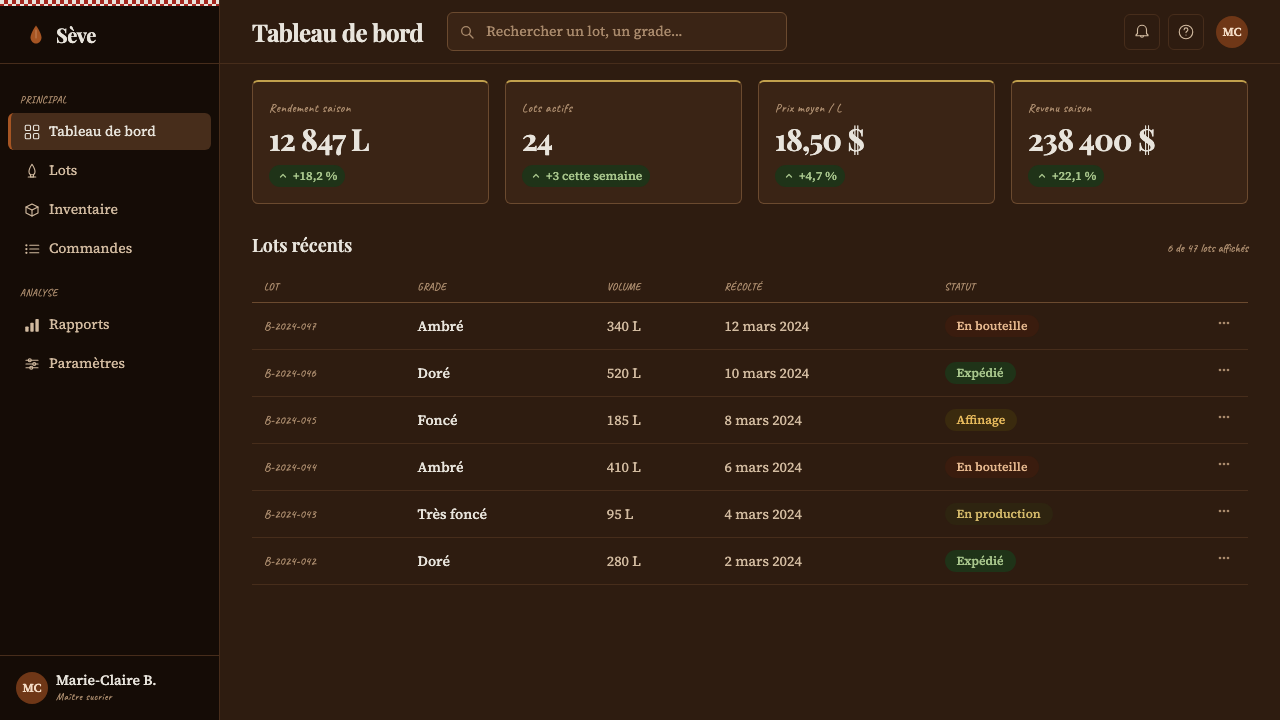
For web interfaces, the system suits food, hospitality, and artisanal-goods products where dashboards and pricing pages benefit from feeling warm and considered rather than sterile. Pricing tiers map naturally onto the four syrup grades — golden, amber, dark, very dark — giving a product ladder an intuitive, tasting-note-like structure; brass-toned accents work well for primary actions, while the gingham motif is best reserved for a footer or a celebratory confirmation state.
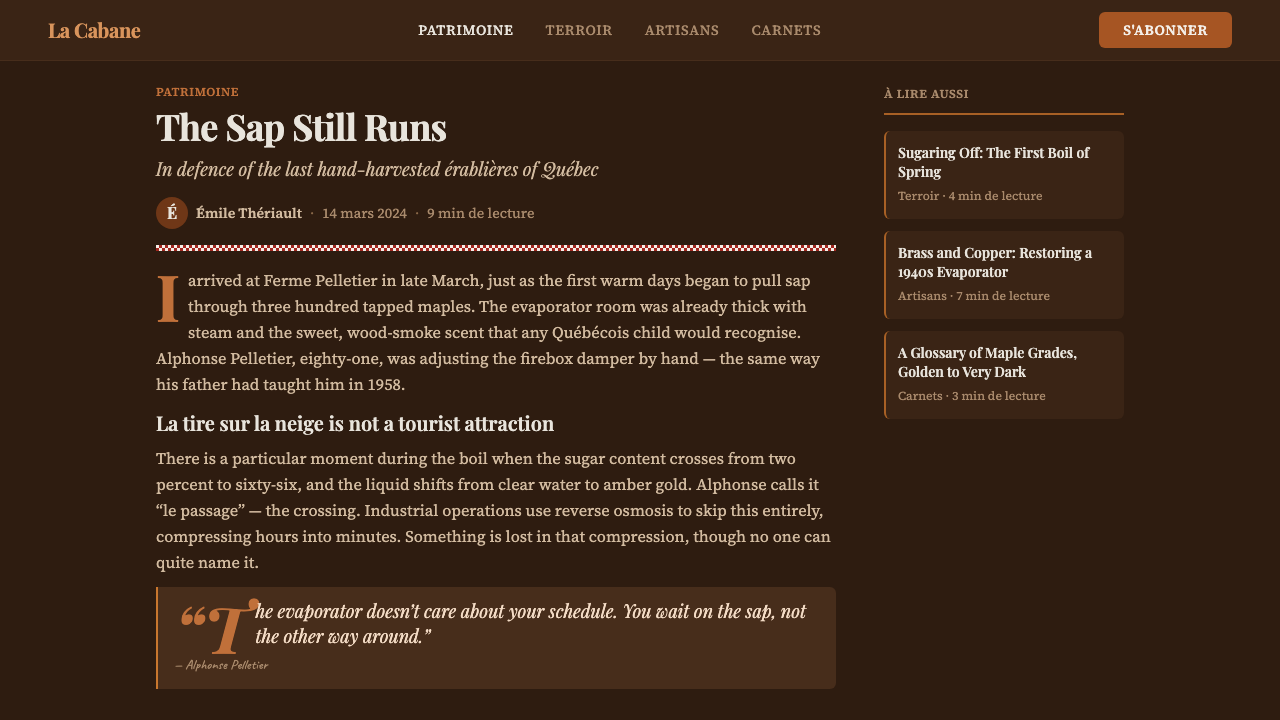
In editorial and marketing contexts, the system supports storytelling about seasonal harvest, rural tradition, and small-scale craft production. Long-form articles benefit from timber-dark section backgrounds with warm brass pull-quote accents, and a hand-chalked typographic voice works well for short callouts or tasting notes. Marketing pages centered on a seasonal product or limited harvest read naturally within this system's built-in sense of a short, celebrated window of time.
A common mistake is treating the four syrup grades as decorative labels rather than as the system's actual color logic — scattering golden, amber, dark, and very dark tones randomly instead of using them as a deliberate light-to-dark sequence. Another is overusing the gingham check as a background pattern everywhere; in the source tradition, it belongs specifically to the communal table, and using it too broadly dilutes its meaning as a marker of gathering.
Québec Maple Sugar Shack — FAQ
What exactly is a cabane à sucre?
A cabane à sucre, literally 'sugar shack,' is a wood-built structure near a maple grove where sap collected from tapped maple trees is boiled down in a wood-fired evaporator until it concentrates into syrup. Many working sugarhouses in rural Québec also open to the public each spring, serving a traditional feast and hosting activities like tire sur la neige, making the cabane both a production site and a seasonal social gathering place.
Why are there four grades of maple syrup?
Sap composition changes as the tapping season progresses, and the resulting syrup shifts in both color and flavor intensity — lighter and more delicate early in the season, darker and more robustly flavored later on. Québec's maple industry, regulated by the PPAQ, formalized this natural progression into four official grades, from golden to very dark, to give producers and consumers a consistent way to describe and choose syrup.
Did maple syrup production originate with French settlers?
No — the technique of tapping maple trees in late winter and concentrating the sap by boiling was discovered by Indigenous peoples of the northeastern woodlands well before European contact, and they taught this knowledge to French colonial settlers. The cabane à sucre and its associated traditions developed over the following centuries, building directly on that Indigenous discovery.
What is tire sur la neige?
It is a traditional treat in which hot, concentrated maple syrup is poured in a thin line directly onto clean packed snow, where the cold causes it to set almost immediately into a soft, chewy taffy. Visitors roll the taffy onto a small wooden stick and eat it on the spot. It is one of the most iconic and photographed rituals of a spring visit to a cabane à sucre.
What is the most common mistake when applying this style?
The most common mistake is collapsing the four-grade syrup gradient into a single generic brown, which erases the light-to-dark progression that gives the palette its structure and narrative logic. A second common mistake is spreading the red-and-white gingham pattern across the entire layout as a background texture, when in the source tradition it belongs specifically to the communal feast table and works best used sparingly, as a marker of gathering rather than an all-over print.
Related design styles
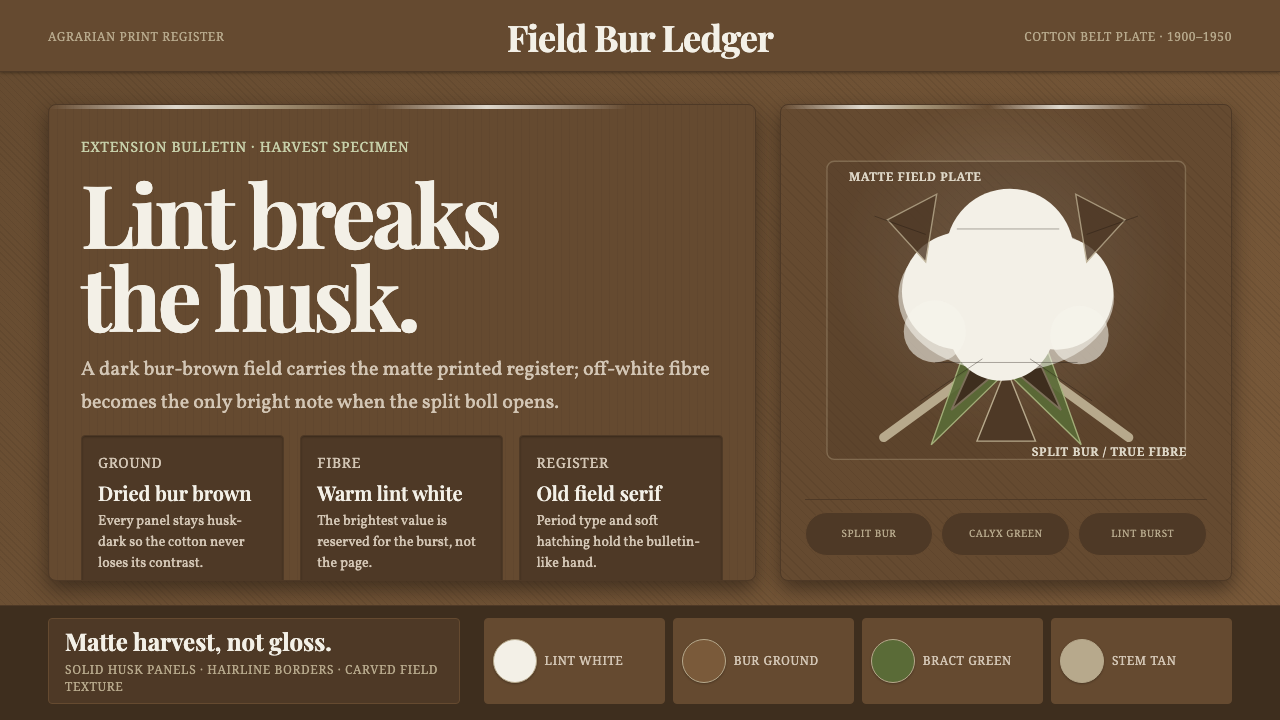 Cotton Boll HarvestHarvest contrast made matte. Off-white lint bursts from husk brown with field…
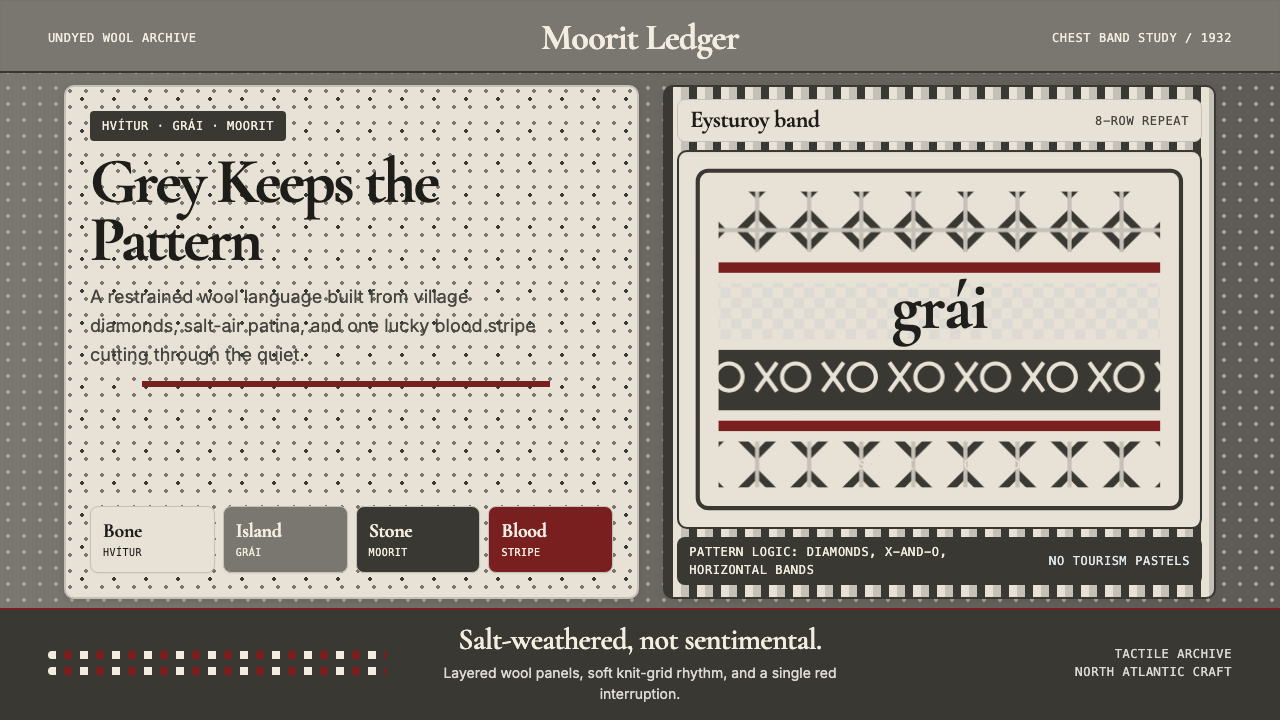 Faroese Knit Pattern Island GreyWeathered wool, not cozy kitsch. Island greys, Cormorant serif, one blood-red…
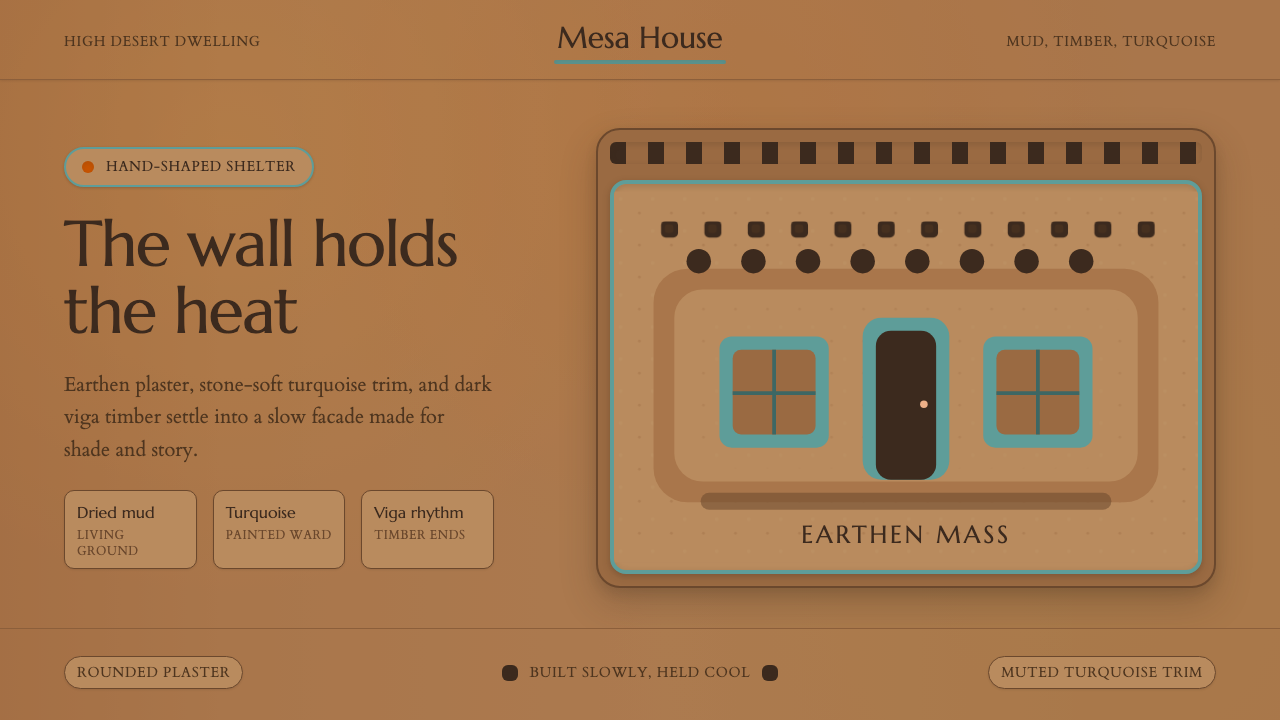 Adobe Pueblo SouthwestFeels made by hand. Earthen tan, turquoise trim, and viga rhythm shape the fr…
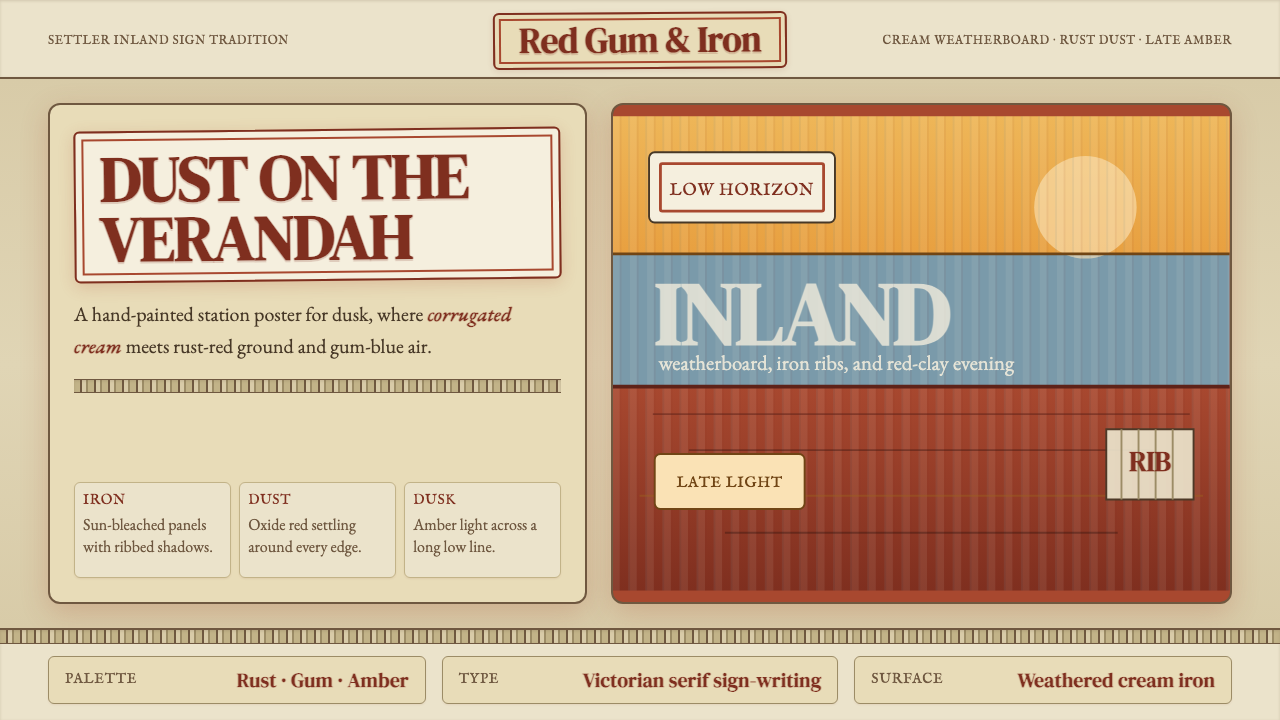 Australian Outback VernacularWeather is the voice. Rust dust, gum-blue bands, and serif sign-writing age t…
 Georgian Pirosmani 1910Oilcloth black turns memory ceremonial. Ochre panels and Cormorant type hold…
 Iñupiat ParkaStructure carries the signature. Caribou-hide bands frame a bounded qupak rep…