What is Kazakh Shanyrak Yurt Felt?
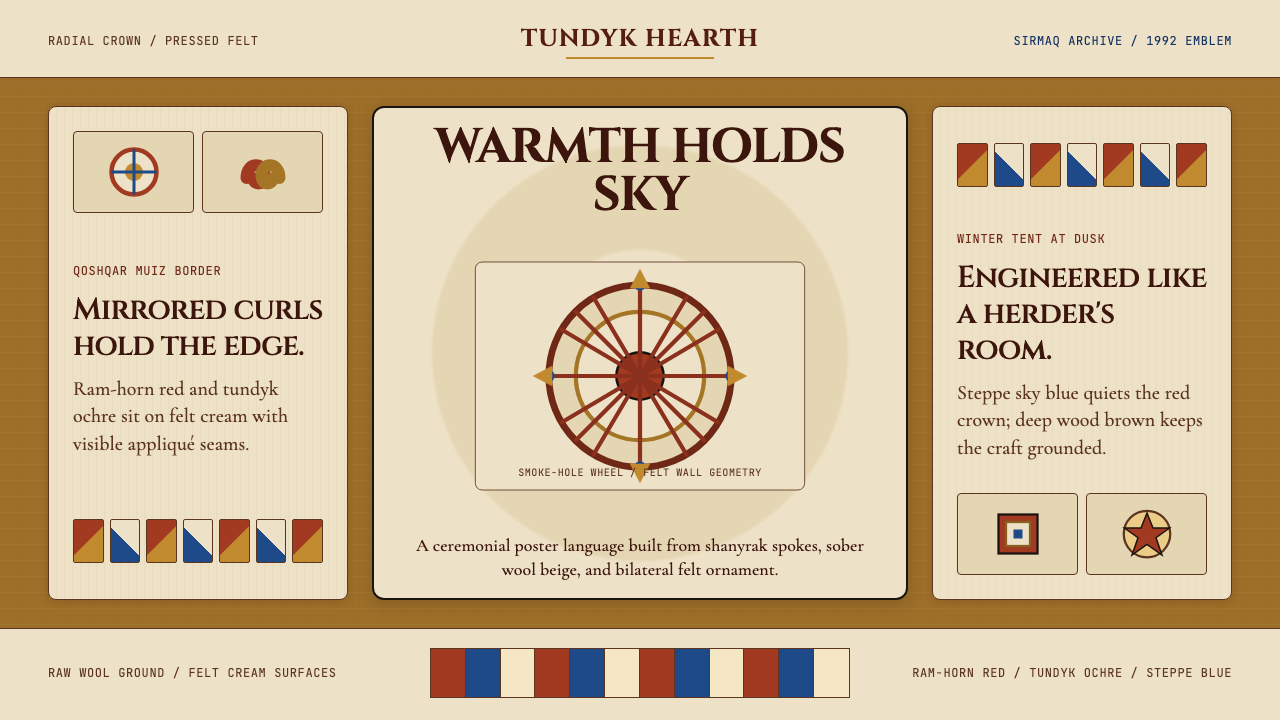
Kazakh Shanyrak Yurt Felt transforms the radial geometry of the nomadic smoke-hole crown into a living design language built on pressed-felt warmth, ram-horn red, and the bilateral symmetry of centuries-old appliqué craft.
Kazakh Shanyrak Yurt Felt in brief
Kazakh Shanyrak Yurt Felt is a design style rooted in the visual and structural logic of the Kazakh yurt — the felt-walled portable dwelling that sheltered nomadic communities across the steppe for over a millennium. At its center is the shanyrak, the radial wooden crown that sits at the apex of the yurt frame, simultaneously a structural keystone and a cosmological symbol: the wheel of the sky, the family hearth, the continuity of lineage. Every compositional decision in this style radiates outward from that centring geometry.
The palette draws directly from the felt-weaving and sırmaq appliqué tradition: a pressed-felt cream ground, deep ram-horn red as the primary accent, and the warm earth tones of undyed wool and boiled dye. Pattern is bilateral and symmetric, built from interlocking curvilinear forms — ram horns, water waves, floral scrolls — that tile across borders and field zones with the discipline of textile design. Unlike purely decorative folk art, the underlying logic is structural: every motif fills its ground evenly, achieving a visual equilibrium that feels engineered rather than spontaneous.
As a contemporary design system, this style reads as domestic warmth made rigorous. It carries the cultural weight of Kazakh independence and the scholarly revival of Central Asian craft traditions, making it well-suited to contexts where heritage, identity, and quiet authority are the desired register — heritage institutions, cultural platforms, hospitality design, and editorial work about material culture, craft, or community.
Where does Kazakh Shanyrak Yurt Felt come from?
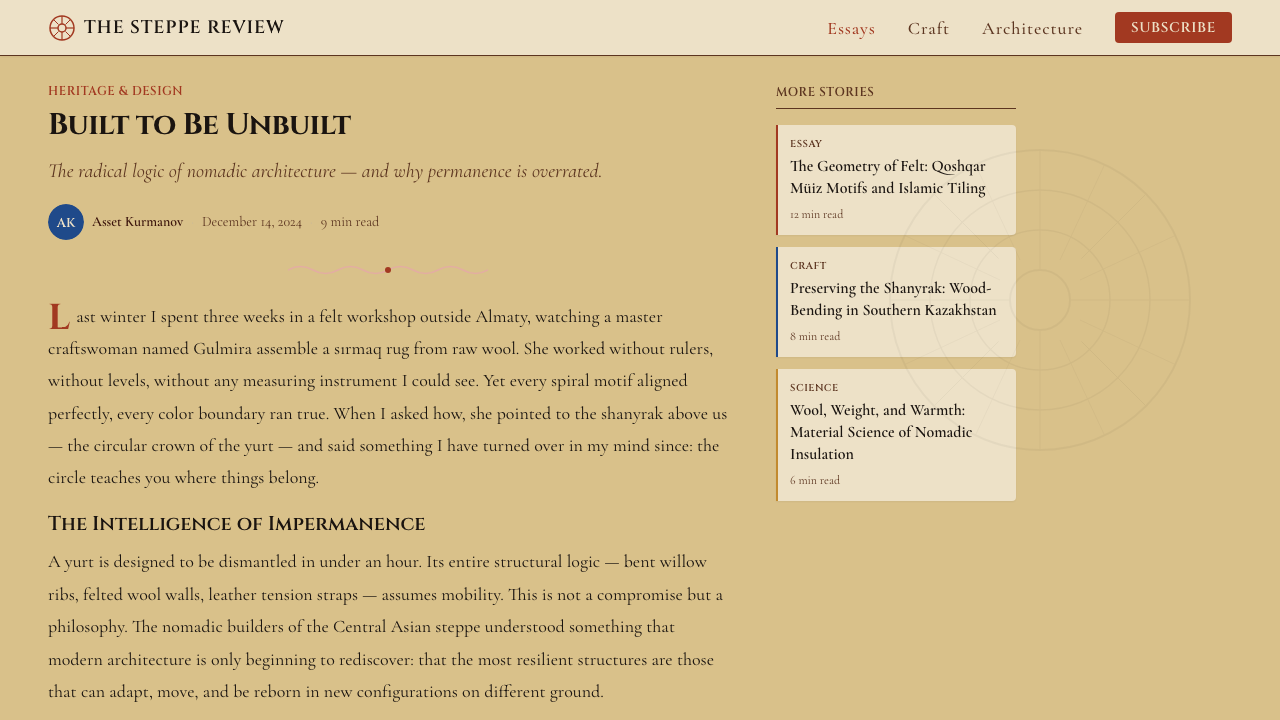
The yurt has served as the primary dwelling of Turkic and Mongolic nomadic peoples since approximately 500 CE, with variants documented across the steppe from the Caspian Sea to the Mongolian plateau. The Kazakh iteration — the kiiz üy, literally 'felt house' — evolved a distinctive aesthetic built around the tension between structural necessity and decorative richness. The bent-wood lattice walls, the radial roof poles converging at the shanyrak, and the pressed-felt panels that enclose them are not merely functional: every surface is a ground for patterned textile, and the shanyrak itself is carved, painted, and treated as an heirloom object passed through generations.
The felt arts that define this style reach their classical form in the eighteenth and nineteenth centuries. Sırmaq — the appliqué technique of cutting symmetric mirror-image pieces from two colors of felt and stitching them together in interlocking puzzle-form — produces the bilateral curvilinear motifs that are the style's signature pattern. Alongside sırmaq, the tekemets (plain pressed-felt rugs) and the shim (embroidered borders sewn onto felt panels) contributed additional layers of pattern logic. The dominant motifs — muyız (ram horns), su yoly (water path), and zhuldyz (star) — each carry cosmological meaning within a pastoral worldview that frames daily life in terms of celestial cycles, flock health, and seasonal movement.
The Soviet era (1920s–1991) subjected Kazakh felt arts to two contradictory pressures: systematic suppression of nomadic culture and collectivization of craft production, followed by state-sponsored institutionalization of 'folk art' as socialist cultural patrimony. The result was a paradox — felt patterns were preserved and catalogued even as the social context that generated them was dismantled. Scholars such as Alkey Margulan, the pre-eminent ethnographer of Kazakh material culture, documented the full vocabulary of motifs, construction techniques, and regional variations before they could be lost entirely.
Kazakhstan's independence in 1991 triggered a sustained cultural revival. The shanyrak was adopted as the central symbol of the national coat of arms and the flag of the capital, Nur-Sultan (Astana), making it one of the most legible national symbols in the post-Soviet world. Artists and designers including Aida Shoinbekova began reinterpreting the felt textile tradition for contemporary media. International scholars Peter Andrews and Stephanie Bunn brought rigorous academic attention to the yurt's construction and the felt arts' technical vocabulary, establishing a documented foundation on which the contemporary design revival rests. The result is a design language with deep ethnographic grounding rather than surface-level exoticism.
What defines the Kazakh Shanyrak Yurt Felt look?
Color
The palette centers on a pressed-felt cream — the natural color of carded, boiled wool — paired with a deep ram-horn red that reads as the dominant warm accent. Secondary tones include terracotta, saffron-tinged ochre, and the near-black of charred wood, all derived from the natural dye tradition of the steppe. Color is used in large, confident fields rather than in gradients or subtle transitions; saturation is high but tonally grounded, never garish. The overall effect is warm, interior, and deeply material — the palette of a dwelling rather than a gallery.
Bilateral Symmetry
Every major motif is constructed on an axis of bilateral symmetry — left mirrors right, and in many patterns top also mirrors bottom, producing a four-way balance that feels both rigorous and restful. This symmetry is the direct inheritance of the sırmaq technique, where two mirror-image pieces are cut simultaneously from stacked felt layers. In contemporary application, it gives compositions a settled, grounded quality: nothing is accidental, nothing slides off-center, every element belongs.
Curvilinear Motifs
Where geometric styles of the Western modernist tradition favor the straight edge, this style is organized around spiraling curvilinear forms. The muyız (ram-horn scroll) is the defining unit: a bold, open spiral that tightens as it turns, suggesting natural growth and torsional energy. Water-path undulations fill border zones, while floral scrolls bridge between major motifs. The curves are confident and calligraphic — drawn with a single decisive line — never timid or decorative for its own sake. They tile and interlock with a logic closer to geometry than to free-form ornament.
Radial Composition
The shanyrak's spoke-wheel structure invites radial composition as a primary organizing device. Hero elements are centered, and supporting motifs radiate outward from that center — the same movement as light through the smoke-hole, as the roof poles spreading from the crown. In layouts, this translates to strong centrist focal points, border patterns that frame rather than bleed, and a sense that every element belongs to a unified whole rather than assembled from separate parts.
Felt Texture as Visual Register
Although the style is applied across digital and print media, its visual register consistently evokes the compressed, matte surface of handmade felt — not through literal texture simulation but through tonal warmth, slight softness at edges, and palette choices that recall dyed natural fiber. Backgrounds carry weight; they are never clinical white but always warming toward cream or ivory. This material memory distinguishes the style from flat vector folk-art derivatives, giving it tactile presence even on screen.
Structured Border Logic
Felt textiles divide compositional space into a framed hierarchy: a center field (the primary pattern zone), a transitional inner border, and an outer edge band. This tripartite logic transfers directly to layout design. In a slide or web component, the outermost frame is a continuous border pattern; the inner zone is a breathing transition; the center holds the primary content or figure. Nothing bleeds to the very edge without a containing frame — the design always acknowledges its own boundary.
Warmth Over Severity
If Bauhaus or Swiss Style achieve authority through cool geometric precision, this style achieves it through domestic warmth. The same organizational rigor is present — symmetric structure, contained composition, controlled palette — but the emotional register is welcoming rather than demanding. The style communicates shelter, craft, and belonging. It is serious without being cold, structured without being clinical, and decorated without being cluttered.
Who shaped Kazakh Shanyrak Yurt Felt?
Margulan (1904–1985) was Kazakhstan's foundational ethnographer of material culture, whose multi-volume documentation of Kazakh applied arts — including felt-making techniques, motif vocabularies, and regional construction variations — provided the scholarly basis for all subsequent revival work. His systematic approach to recording the sırmaq tradition, oral histories of craft families, and the symbolic grammar of nomadic ornament preserved knowledge that survived the Soviet-era disruption of traditional craft transmission. Contemporary designers working in this style owe their factual grounding to his archive.
A contemporary Kazakh artist and designer who has been central to translating the felt textile heritage into contemporary visual and graphic contexts. Shoinbekova's work demonstrates that the Kazakh ornamental vocabulary — when applied with structural rigour rather than nostalgic pastiche — functions as a fully modern design language, not a cultural costume. Her practice has influenced how the post-independence generation of Kazakh designers positions traditional motifs within international design discourse.
British scholar of nomadic architecture whose research on Turkic and Mongolic yurt construction — including the structural engineering of the shanyrak crown, the geometry of the bent-wood trellis, and the technical properties of the felt panels — remains the definitive English-language reference. Andrews's work shifted the scholarly conversation from treating the yurt as ethnographic curiosity to understanding it as a sophisticated engineering system whose aesthetics are inseparable from its structural logic. His documentation of construction sequences and material properties underpins how the shanyrak is understood as a design element.
Scottish anthropologist and textile scholar specializing in felt-making traditions across Central Asia and beyond. Bunn's fieldwork with Kazakh and Kyrgyz felt-makers documented not only the technical processes — carding, layering, beating, and shrinking wool — but also the social and symbolic dimensions of felt production: the collective labor of women, the transmission of motif knowledge between generations, and the role of the finished textile in marking life events. Her research locates the design vocabulary within its living social context, preventing it from being reduced to surface ornament.
How do you use Kazakh Shanyrak Yurt Felt today?
Kazakh Shanyrak Yurt Felt is highly transferable to contemporary design when its structural logic — bilateral symmetry, radial composition, tripartite border framing, and a warm, materially grounded palette — is applied with the same discipline that governs the original textile tradition. The style works best when the designer understands what each element is doing structurally, not merely how it looks.
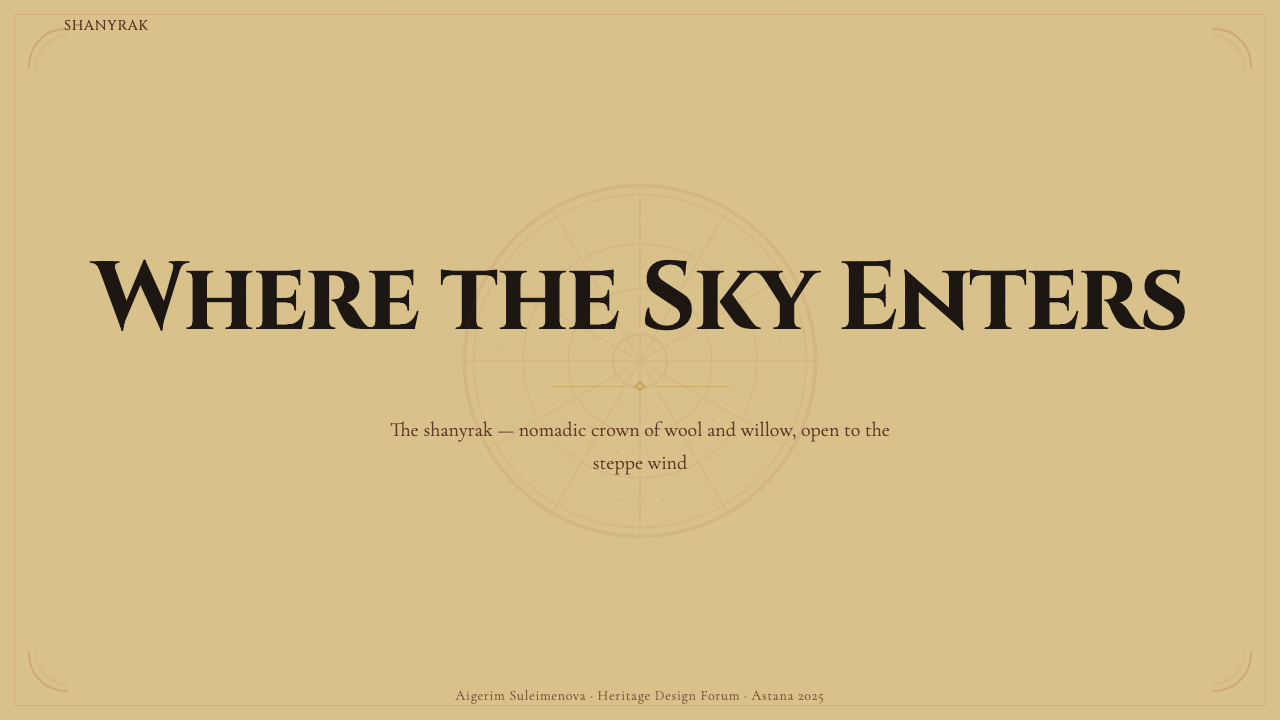
For presentation slides, the style excels on cover pages where bold centrist composition is appropriate. A shanyrak-derived radial motif placed at center, rendered in ram-horn red against the pressed-felt cream ground, creates a powerful anchoring element. Title typography should be set large and with weight, seated within the composition rather than hovering above it. Content slides benefit from the border logic: a repeating curvilinear edge pattern at the top or bottom of each slide creates a consistent visual frame without consuming the body space. Data visualizations — particularly pie charts and circular gauges — connect naturally to the radial grammar and can be styled to feel like extensions of the motif vocabulary rather than foreign graphic elements.
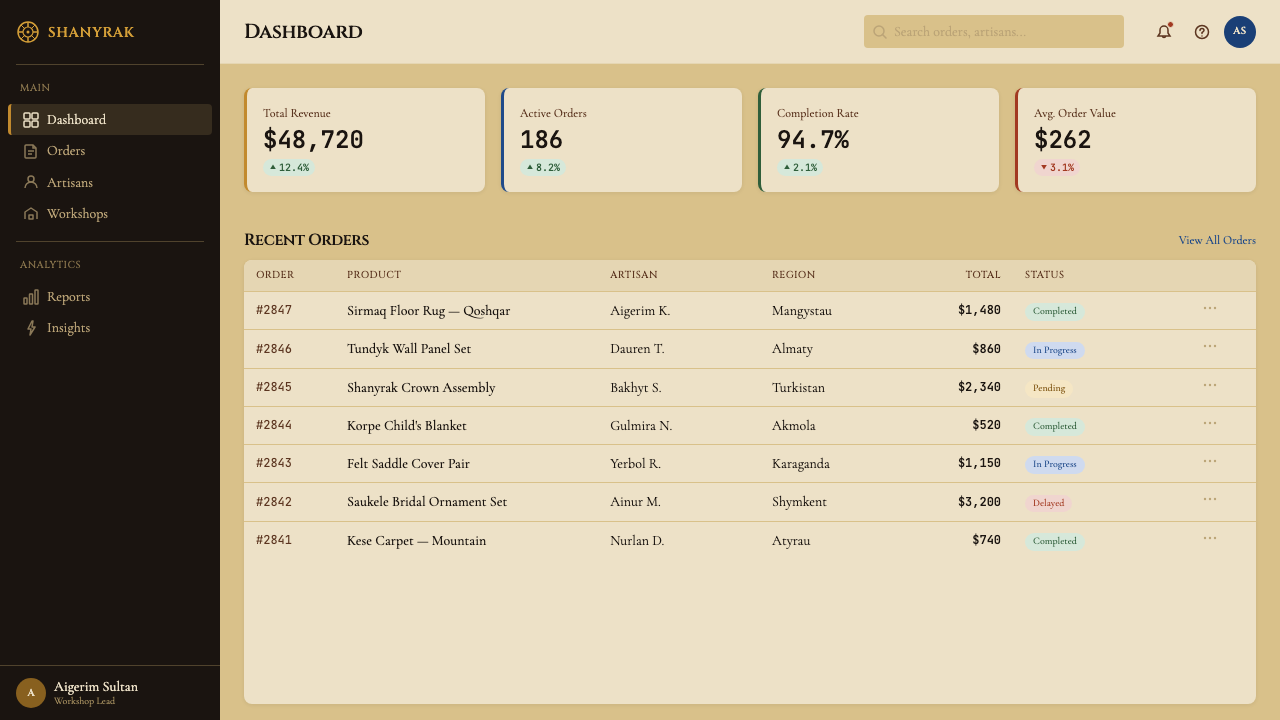
For web and digital interfaces, the style is particularly well-suited to dashboard landing pages, cultural institution websites, and hospitality platforms where warmth and heritage authority are valued. Use the cream-and-red palette for hero sections, let the curvilinear border motif frame section breaks rather than relying on ruled lines, and reserve the deeper earth tones for sidebar elements or secondary content. Navigation and body type should remain clean and readable — this style enriches the frame, not the text itself. Pricing pages and feature comparison tables gain legibility and warmth when organized within a bordered grid that echoes the sırmaq's structured field logic.
For editorial and marketing contexts, the style supports long-form content with visual depth. An editorial spread benefits from a strong framing motif in the margin zone, with body text set in a wide center column against the cream ground. Feature photography or illustration is contained within a compositional frame — the style does not suit full-bleed imagery that ignores boundaries. Marketing headers and promotional graphics carry the style's boldest expression: large symmetric compositions in high contrast, where the warm red and cream read as brand markers rather than decoration. Cultural, travel, food, and craft brands find the style particularly congruent with their content territory.
The most common mistake when applying this style is treating the curvilinear motifs as decorative flourishes to be scattered across a composition for visual interest. In the original textile tradition, every motif occupies a defined structural position — border, transitional zone, or center field — and the composition holds because the hierarchy is legible. Applied without that logic, the motifs become wallpaper: visually busy but structurally incoherent. A second common error is ignoring the bilateral symmetry requirement: an asymmetrically placed version of a ram-horn scroll reads as broken, not contemporary. The style permits modern asymmetric layouts, but the individual motifs within them must remain internally symmetric.
Kazakh Shanyrak Yurt Felt — FAQ
Is this style suitable for technology or software products, or only cultural and heritage contexts?
It can work for technology products, but the fit depends on what the product values. Software tools that emphasize precision, speed, or technical minimalism are a poor match — the warmth and material weight of the style work against those values. However, technology platforms focused on community, identity, cultural data, or human connection can use the style effectively. Fintech products serving Central Asian markets, or enterprise tools for organizations that prize heritage and craft, are natural fits. The key is that the product's values must align with warmth, belonging, and structured richness — not with speed, clinical precision, or frictionless simplicity.
How does this style differ from other Central Asian or nomadic-inspired design traditions?
The most important distinction is the structural logic. Kazakh sırmaq-derived composition is rigorously bilateral and built on a defined field-border-frame hierarchy, which gives it a systematized character that translates well to grid-based digital design. Kyrgyz shyrdak felt art shares the appliqué technique but tends toward bolder geometric angularity. Uzbek ikat and suzani traditions are more floral and less structurally rigorous. Mongolian ornament has more angular geometric character and a different motif vocabulary. The Kazakh tradition's distinctive quality is its combination of curvilinear warmth with structural discipline — the motifs are organic in form but geometric in placement logic.
Can the style work on dark backgrounds, or is the cream ground essential?
A dark inversion is possible and historically grounded — some Kazakh felt textiles use a deep indigo or charcoal base — but it requires care. On a dark ground, the ram-horn red loses some of its warmth and reads as more confrontational; saffron or ochre tones tend to carry the warmth better as foreground accents. The bilateral motifs read clearly at high contrast in either direction. The critical rule is that the material register — the sense of felt depth and domestic interiority — must be preserved. A cold, clinical dark background would drain the style of its defining quality. Warm charcoal, deep indigo, or near-black with slight warmth are appropriate; pure digital black or cool grey are not.
How do I use the shanyrak motif without it reading as a logo or icon?
The shanyrak reads as a logo or icon when it is isolated at small scale against a plain background — the condition under which it appears on the Kazakh national emblem. To avoid that reading in design contexts, use it at a scale and position that signals structural role rather than representative role: large enough to function as a compositional anchor, not small enough to be mistaken for a brand mark. Embedding it within a broader border or pattern system, or rendering it as a ground element rather than a foreground object, also prevents the logo-reading. The spoke-wheel geometry can also be abstracted — the radial compositional logic applied through layout structure rather than through a literal shanyrak illustration.
What typography pairs naturally with this style?
The felt-textile warmth and curvilinear character of this style pair most naturally with typefaces that have humanist construction — letterforms with slight calligraphic movement in the stroke, open counters, and warm proportions — rather than geometric sans-serifs or high-contrast serifs, both of which pull against the style's warmth. For headings, a robust display face with personality reads better than a neutral grotesque. For body text, a well-spaced humanist style with clear legibility at reading sizes serves the domestic, unhurried quality that the palette establishes. Avoid both the clinical precision of geometric type and the nostalgia of heavy slab serifs — the style sits between those poles, warm but not rustic, structured but not cold.
Related design styles
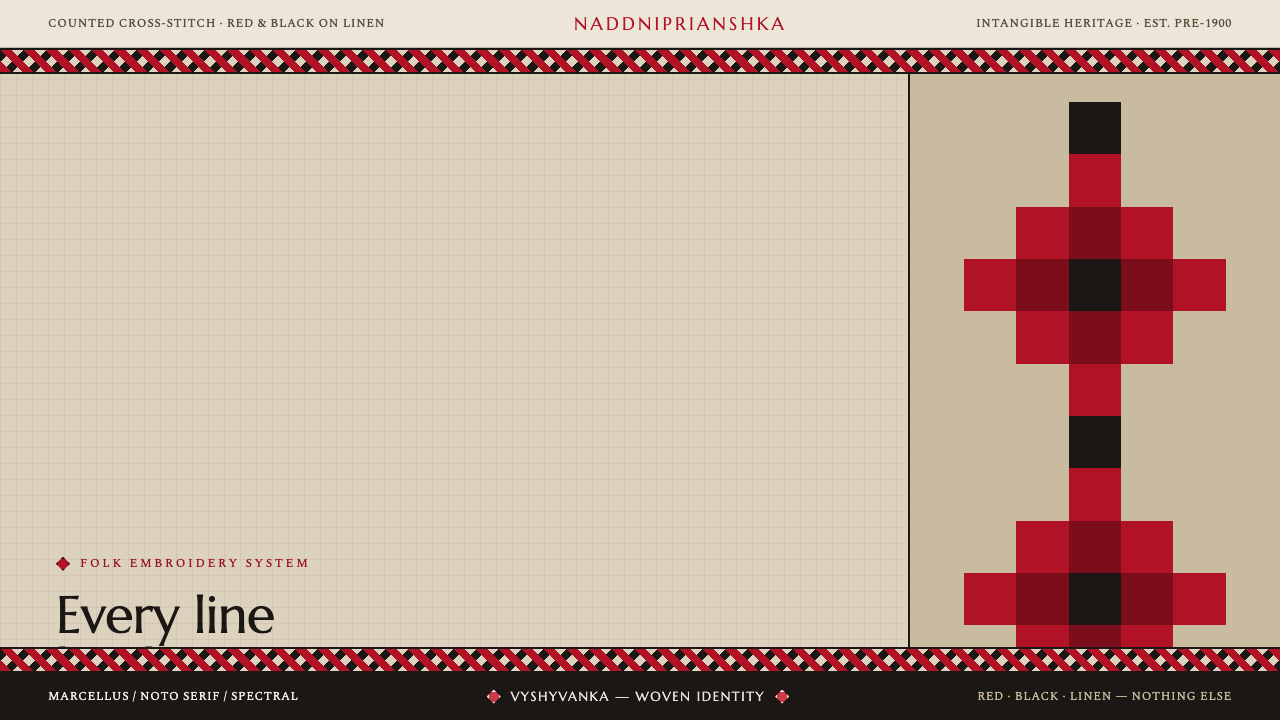 Ukrainian Vyshyvanka EmbroideryRed is life, black is protection. Stepped rhombus motifs counted thread by th…
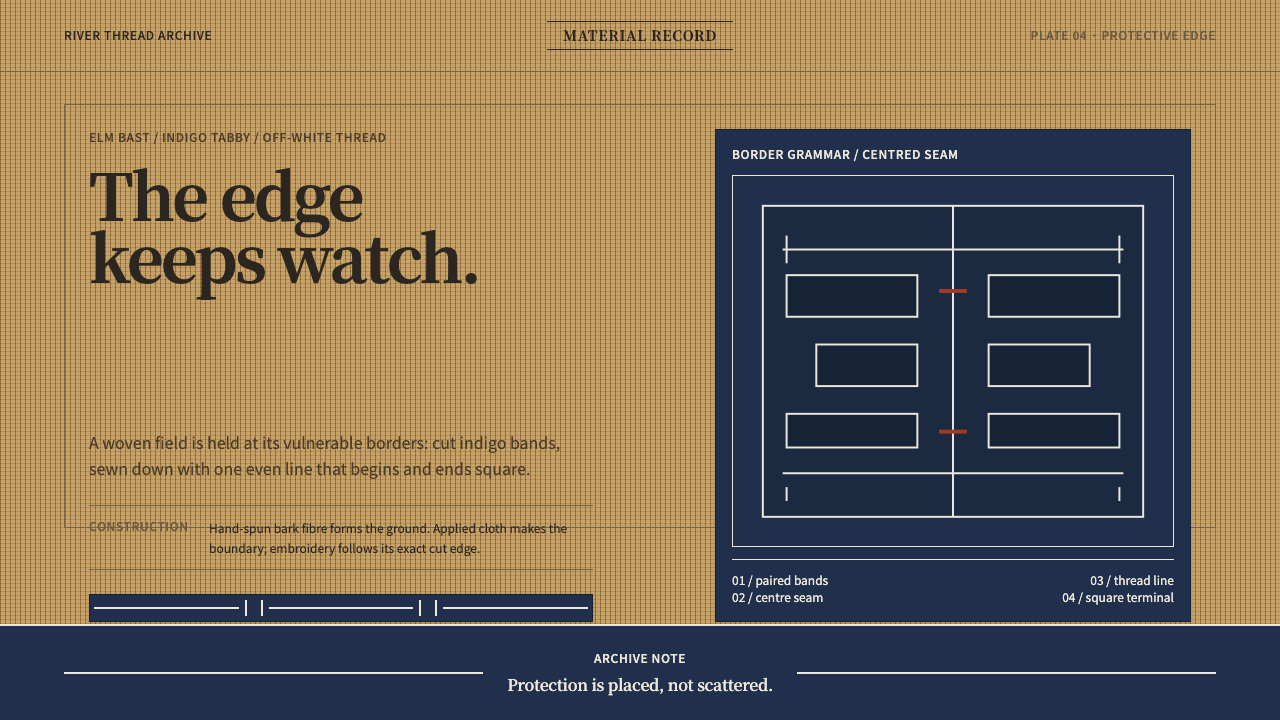 Ainu Attus RobeProtection is cut, not painted. Indigo bands and square-ended thread hold elm…
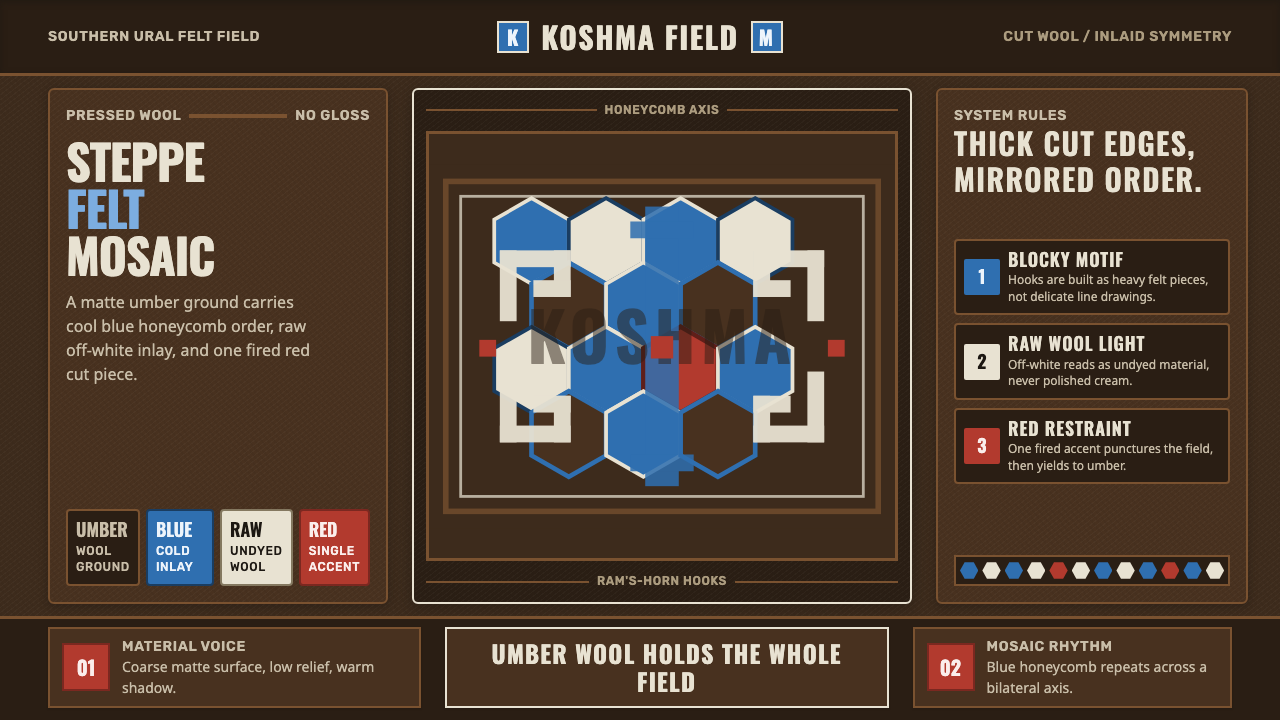 Bashkir Honeycomb Felt OrnamentSteppe craft feels weighty. Umber felt holds blue honeycomb and raw-wool hook…
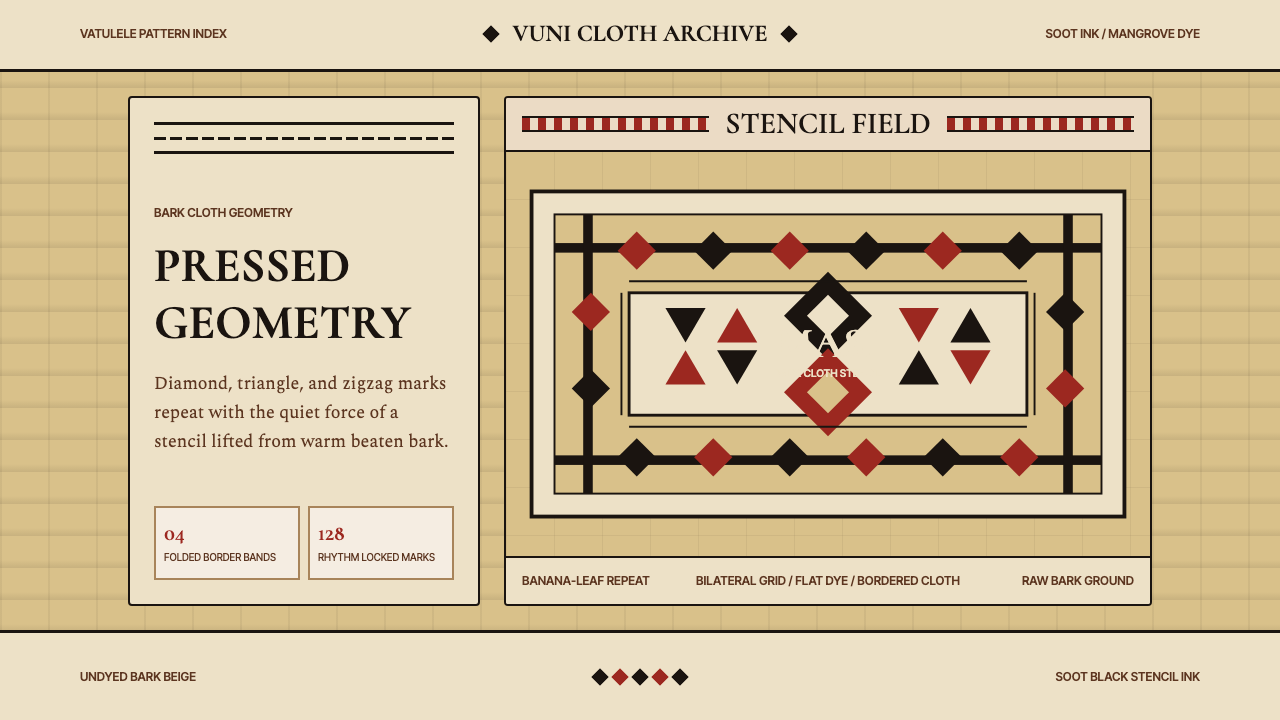 Fijian Masi Tapa StencilGeometry keeps ceremony. Soot-black diamonds repeat on bark beige with rust-r…
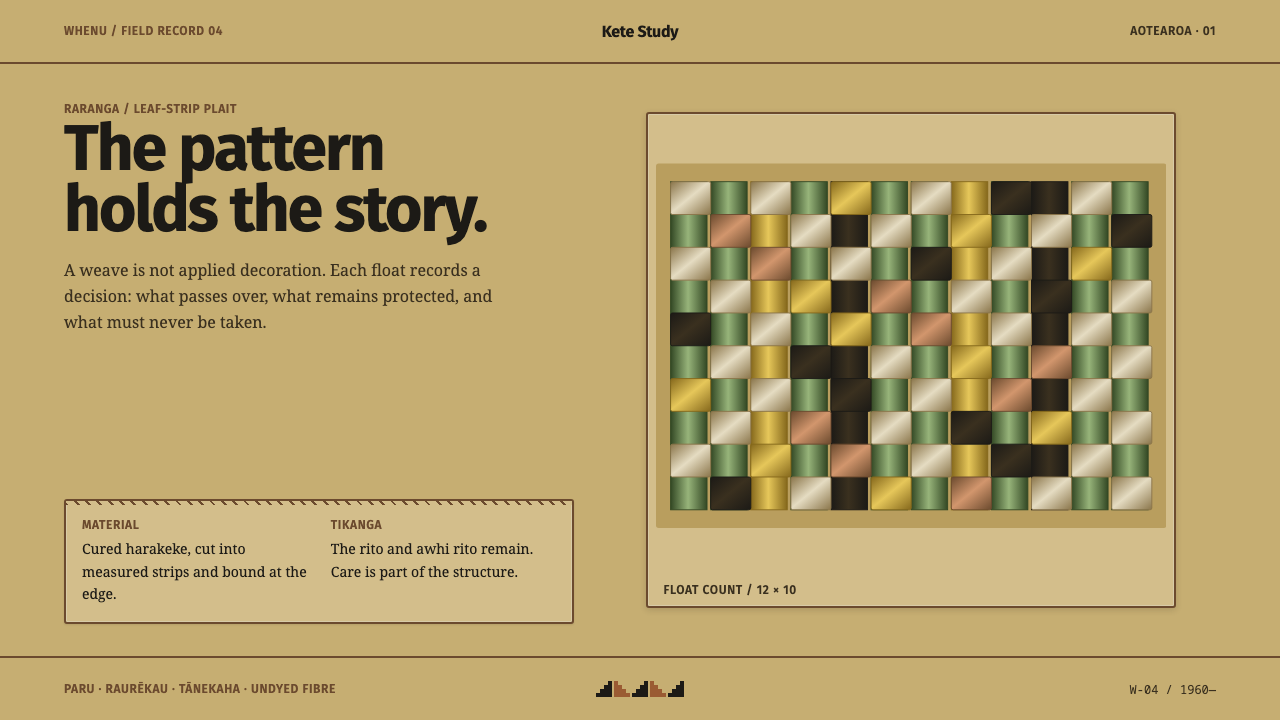 Harakeke Raranga WeavingStructure carries care. Honey-straw grids expose each green, bark and fibre s…
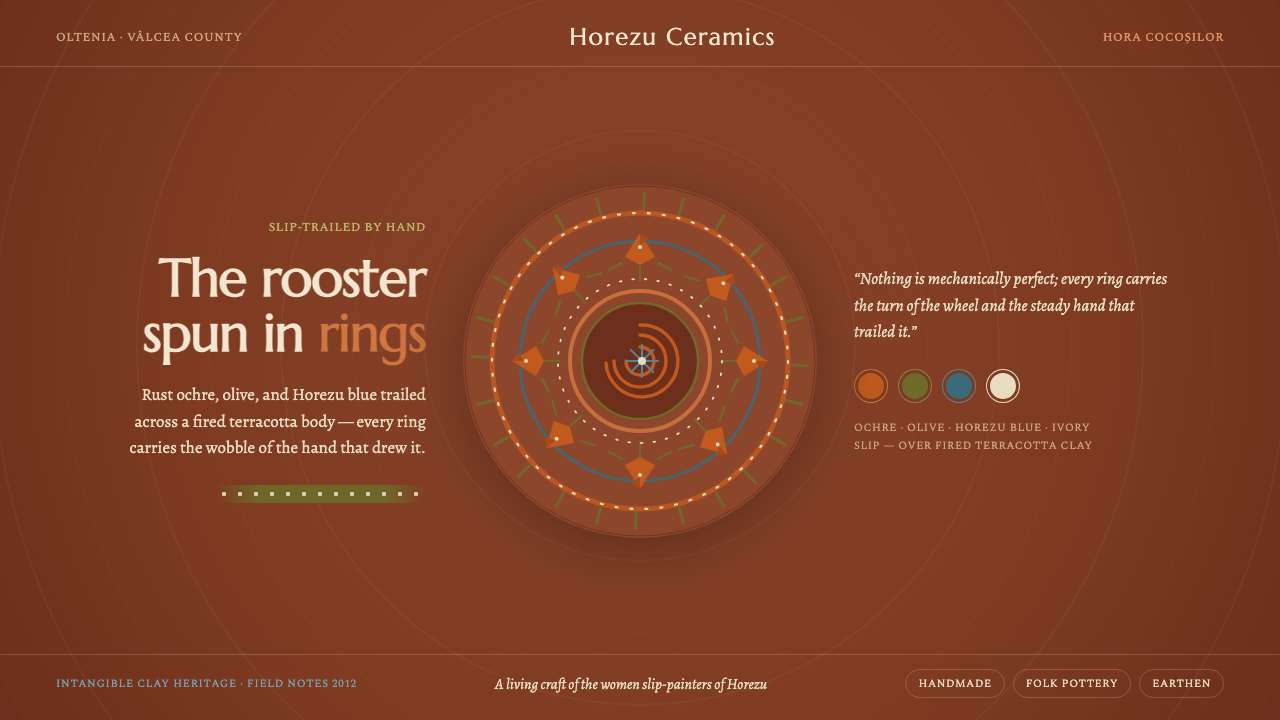 Horezu CeramicsWarm earth, steady hand. The Horezu rooster spun in ochre and olive slip acro…