What is Hong Kong Cha Chaan Teng?
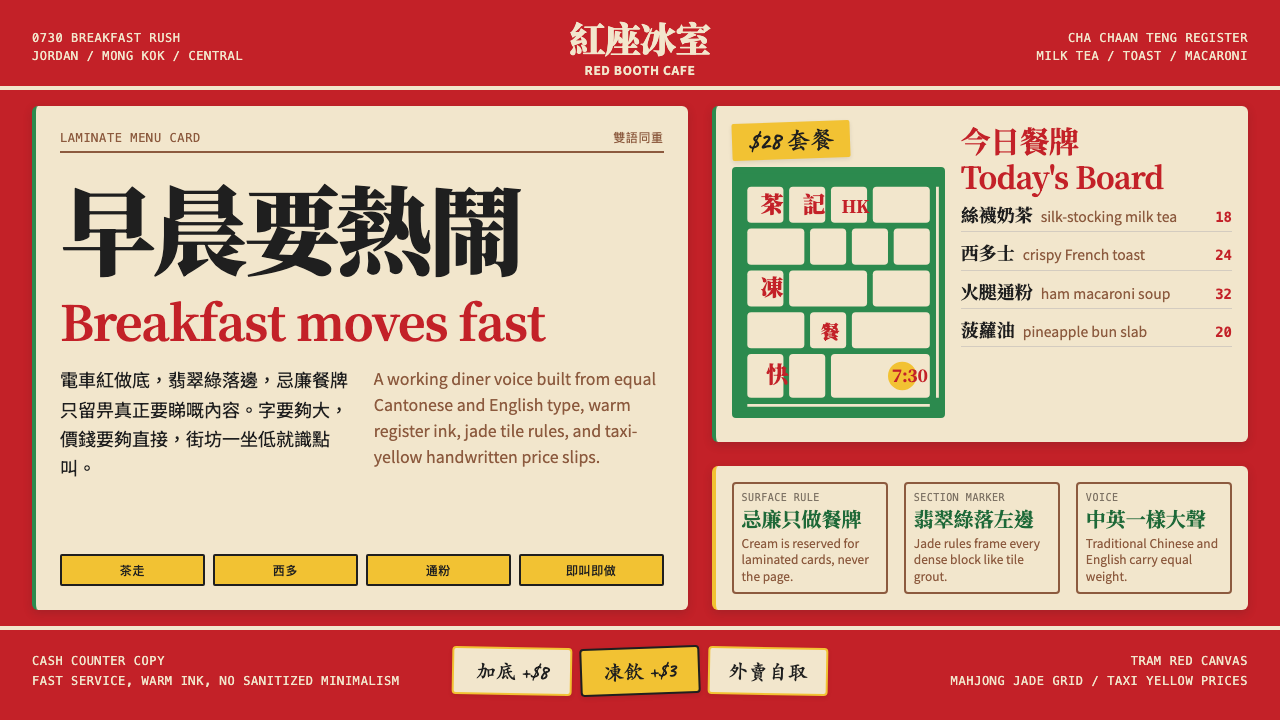
Hong Kong's cha chaan teng is democracy on a laminated menu — tram red, jade green, and bilingual type that treats Cantonese and English as equals at the linoleum table.
Hong Kong Cha Chaan Teng in brief
Hong Kong Cha Chaan Teng is a visual design style distilled from the vernacular energy of Hong Kong's iconic local diners — establishments that emerged in the 1950s as a working-class hybrid of British colonial café and Cantonese food stall. The style is defined by a bold chromatic signature: tram-route red as the anchoring structural color, mahjong-tile jade green for section markers and accents, and cream reserved strictly for menu-card surfaces. Against these, bilingual Traditional Chinese and English typography is set at equal visual weight — neither language subordinated to the other.
What distinguishes this system from mere nostalgia pastiche is its structural seriousness. The color choices are not arbitrary period references; each hue carries a specific functional role derived from its original vernacular context — the red of HK tram livery and neon signage, the jade of painted partition tiles and enamel chopstick rests, the cream of laminated menu boards rather than bare walls. The type treatment reflects the genuinely bilingual culture of mid-century Hong Kong, where handwritten Chinese characters and roman-alphabet prices coexisted on the same card without hierarchy.
Since roughly 2015, a generation of Hong Kong-based and diaspora designers has codified this vernacular into a disciplined, transferable design language. The resulting system is warm without being kitsch, historically grounded without being antiquarian. It honors working-class Cantonese material culture without sanitizing it into decorative surface — and therein lies its visual authority.

Where does Hong Kong Cha Chaan Teng come from?
The cha chaan teng — literally 'tea restaurant' — emerged in post-war Hong Kong during the 1950s as a pragmatic response to economic necessity. British colonial Hong Kong had imported Western café culture in the form of upscale dairy restaurants serving coffee, toast, and light meals. Working-class Cantonese residents could not afford these establishments and had little access to the full repertoire of Western foods they sold. The cha chaan teng was the vernacular answer: a cheaper, noisier, faster imitation that translated Western café staples into a hybrid Cantonese idiom. Silk-stocking milk tea — brewed strong through a cloth strainer — stood in for drip coffee. French toast fried in lard replaced continental pastry. Macaroni soup with luncheon meat became breakfast. The fusion was genuine rather than ironic: Hongkongers absorbed Western food culture and remixed it on their own terms.
The physical environment of the classic cha chaan teng established the aesthetic vocabulary that designers would later codify. Red or yellow tram-route numbers and livery saturated Kowloon and HK Island streets; jade-green ceramic tiles lined the interior walls and partition screens of the diners themselves; laminated cream menu boards — handwritten in both Chinese characters and English letters — hung above cramped Formica counters. The interiors were deliberately dense: tables packed close, orders shouted across the room, condensation beading on glasses of iced milk tea. This compression was not a failure of design — it was an expression of democratic energy, a space where factory workers and clerks and students occupied the same linoleum floor.
The cultural weight of the cha chaan teng deepened considerably after the Handover of 1997. As Hong Kong's political relationship with mainland China grew more complex through the early 2000s, the local diner became a powerful symbol of a distinctly Cantonese, distinctly local identity. The Tea Restaurant Act of 2008 in Hong Kong formalized certain protections for these establishments, recognizing their status as living cultural heritage. Wong Kar-wai's films — particularly the rain-slicked neon of Chungking Express and In the Mood for Love — had already brought the visual grammar of Hong Kong street culture to international art-house audiences from the mid-1990s onward.
The designer-revival phase began around 2015, driven partly by anxiety about cultural preservation and partly by a broader international appetite for vernacular design systems. Designers including Stanley Wong — known for his documentary-style graphic work under the alias anothermountainman — and Michael Lau, whose collectible toy figures drew on Hong Kong street culture, had established a framework for treating working-class Hong Kong aesthetics seriously rather than sentimentally. Lam Mui-kwun's documentation of cha chaan teng interiors and signage systems provided the archival foundation that graphic designers subsequently built upon. The resulting visual language reached a new generation through brand identity projects, packaging design, editorial work, and digital UI applications — carrying the energy of Jordan at seven-thirty in the morning into contexts its originators could not have imagined.
What defines the Hong Kong Cha Chaan Teng look?
Tram Red as Structural Anchor
The dominant hue in this system is a saturated, warm red derived from Hong Kong tram livery and the neon hoarding culture of mid-century Kowloon. It is not a soft or muted heritage red — it is assertive, close to signal intensity, and used to anchor the primary structural elements of any layout: the header band, the primary call-to-action surface, the border framing the most important content block. Every page has this color present; it is never purely decorative. Its function is identical to the tram's function on Nathan Road: a bold, unmistakable routing signal cutting through visual noise.
Jade Green as Section Marker
The secondary accent is a mid-depth jade green that reads simultaneously as traditional and contemporary — drawn from the painted ceramic tiles and enamel ware ubiquitous in cha chaan teng interiors. In layout application, jade green marks transitions: section dividers, category labels, sub-navigation indicators, and the ruled lines separating one content zone from another. It does not compete with tram red for attention; instead it operates at a slightly lower visual volume, guiding the eye through structure after red has established the page hierarchy. Used sparingly, it carries the weight of the tiled wall without visually overwhelming the surface.
Cream for Menu-Card Surfaces Only
Cream — the warm off-white of a laminated paper menu card — appears in this system as a contained surface applied to specific elements: content cards, text panels set apart from the primary background, quote blocks, and callout boxes. It is never used as the overall page background; that role belongs to a near-neutral light ground, or to tram red itself. Cream functions as the system's warm highlight, the visual equivalent of the menu board lifted from the diner wall and placed on the table — intimate rather than expansive. This discipline is the most commonly violated rule when designers attempt this style, and its violation immediately produces a reading of old-fashioned fussiness rather than considered warmth.
Bilingual Typography at Equal Weight
Perhaps the most culturally specific characteristic of this system is its treatment of Traditional Chinese and English as typographic equals. In historical cha chaan teng signage and menus, Chinese characters and English lettering shared space without either language taking typographic precedence — both appeared at comparable sizes, in comparable positions, with comparable visual confidence. The revival design system preserves this principle: headline treatments set the Chinese and English lines at the same optical scale, neither subordinated as a caption or translation. This bilingual parity is not just aesthetic; it encodes the genuinely hybrid cultural identity of mid-century Hong Kong, where Cantonese and colonial English coexisted as functional equals in commercial life.
Dense Composition, Democratic Space
Unlike Bauhaus or Swiss International Style, cha chaan teng design does not celebrate open negative space as a virtue in itself. The historical diners were deliberately packed environments — physical compression was evidence of popularity, not poor planning. The design system reflects this by allowing layouts to be information-dense rather than airy, with multiple content zones in close proximity. However, this density is organized rather than chaotic: strong color banding, ruled horizontal lines, and the red-green-cream tricolor signal system create readable structure even at high information density. The absence of generous white space is intentional; it creates an energy of busy-ness that is welcoming rather than overwhelming.
Handcrafted Texture Without Grunge
The original cha chaan teng aesthetic included genuinely imperfect, handmade elements: hand-brushed signage with visible stroke energy, laminated cards with slight misalignment, angled price stickers applied at speed. The contemporary design revival references this quality without reproducing actual degradation. The approach is to use display typefaces with visible calligraphic construction, allow slight irregularity in decorative ruled borders, and embrace angular rather than mathematically perfect text placement on certain graphic elements. The goal is the feeling of a sign painted by a skilled craftsperson rather than output from a laser printer — warm imprecision as character, not as flaw.
Neon Influence Without Literal Glow
The neon hoarding culture of Mong Kok and Causeway Bay — at its peak from the 1960s through the 1990s — cast a specific chromatic logic onto Hong Kong's visual identity: high-saturation color against darkness, type as illuminated object, the street as a competition of brightness. The cha chaan teng design system absorbs this influence without resorting to literal glowing effects, gradients, or soft halos. Instead, neon logic appears as high-contrast color blocking, bold type set at sizes that feel almost sign-like in their scale, and an overall willingness to let strong color dominate rather than recede. The suggestion of neon energy is achieved through boldness and saturation, not through imitation of the physical medium.

Who shaped Hong Kong Cha Chaan Teng?
A documentary photographer and cultural preservationist whose systematic recording of cha chaan teng interiors, signage, menus, and material culture across Hong Kong's older districts — particularly in Sham Shui Po and Jordan — provided the visual archive from which the contemporary design revival draws. Her work treated the laminated menu board, the tile partition screen, and the hand-painted shop sign as objects worthy of the same serious attention given to fine art, and established a framework for reading working-class Hong Kong material culture as a coherent aesthetic system rather than incidental background.
The filmmaker whose visual sensibility — shot through his longtime collaboration with cinematographer Christopher Doyle — internationalized the aesthetic grammar of Hong Kong street life. Films including Chungking Express (1994) and In the Mood for Love (2000) brought the rain-slicked neon reflections, the Formica counter surfaces, the condensation-beaded tea glasses, and the bilingual signage of Kowloon's dense commercial streets to global art-house audiences. For designers working with the cha chaan teng visual system after 2000, Wong Kar-wai's films functioned as a widely shared visual reference point that validated the aesthetic's emotional richness and made it legible to international clients and collaborators.
Operating under the alias anothermountainman, Stanley Wong is one of Hong Kong's most respected graphic designers and conceptual artists. His practice, which combines documentary rigor with graphic precision, has consistently engaged with questions of Hong Kong cultural identity and the preservation of vernacular visual culture. His series examining found text, everyday signage, and mass-produced objects from Hong Kong street life demonstrated that the aesthetic raw material of the cha chaan teng environment could sustain serious graphic design inquiry. His influence on the generation of designers who formalized the cha chaan teng revival style from 2015 onward was foundational.
A Hong Kong-based artist and designer whose collectible vinyl toy figures — particularly the Gardener series launched in 1999 — brought the visual language of Hong Kong street culture, including cha chaan teng typography and material references, into the global art toy and streetwear markets. Lau's work demonstrated that the specific visual codes of working-class Hong Kong could travel internationally without losing their cultural legibility, and his commercial success provided an early proof of concept for the broader designer-revival movement that followed in subsequent decades.
Not a designer but an institution — the Australia Dairy Company in Jordan, founded in the 1970s, is among the most internationally recognized exemplars of the authentic cha chaan teng experience. Its operational style — standing queues, shouted orders, three-minute service times, and the specific visual density of its interior — has been documented in design, food, and travel media worldwide. For designers working with the cha chaan teng visual system, it serves as a primary reference environment: the spatial compression, the bilingual signage hierarchy, the color density of the interior, and the material qualities of the service ware are all verifiable against this living example.
How do you use Hong Kong Cha Chaan Teng today?
The cha chaan teng visual system is one of the most immediately recognizable regional design languages in contemporary practice, and its transferability depends on understanding the functional role of each of its components rather than borrowing surface features. Tram red must anchor structural hierarchy, not decorate; jade green must mark transitions, not fill space; cream must surface specific content panels, not wash the whole layout. When these roles are respected, the system reads as confident and culturally grounded. When they are confused, it collapses into period costume.
For presentation slides, the system produces strong results on both cover and content pages. A cover should commit to a tram-red primary surface with the title set in large bilingual type — Chinese and English at equal optical scale — against a cream or near-white content panel inset within the red ground. Content slides work best with a narrow left or right band of red or jade green as a section indicator, body content in clear sans-serif on a light background, and data visualizations using the tricolor palette to assign categorical meaning. Avoid crowding all three colors onto a single slide; on data slides, assign tram red to the primary data series and jade to secondary, reserving cream for neutral or background reference values.
For web interfaces and dashboards, the style is well-suited to applications where warmth and specificity are strategic advantages — food and beverage brand sites, cultural institution platforms, Hong Kong or Cantonese diaspora community products, and any context positioning itself as approachable rather than corporate. Apply tram red to the top navigation bar and primary interactive elements; use jade green for secondary navigation, tags, and status indicators; reserve cream for card backgrounds and content panels that need visual warmth distinct from the page ground. Pricing pages benefit from the system's natural three-tier color logic: one tier in red, one in jade, one in neutral — each color carrying the hierarchy without requiring additional decorative differentiation.
For editorial and marketing work, the bilingual typographic system is the most powerful tool available. A hero section with a bold Chinese headline and its English equivalent at the same visual weight immediately signals a cultural positioning that is specific and intentional. Section breaks work well with a full-width red or jade band rather than decorative rules. Marketing sequences — email campaigns, social cards, promotional tiles — should maintain strict color discipline across the set: one color assigned to one type of information throughout, so the tricolor system functions as a navigational grammar rather than decoration. The style's density tolerance also means information-heavy marketing formats like feature comparison grids and pricing tables can be executed without feeling sparse or over-designed.
The most common mistake when applying this system is using all three colors simultaneously at full saturation, turning the palette into fairground decoration rather than structural signal. Authentic applications lead decisively with tram red and use jade green and cream as supporting voices. A second frequent error is applying cream as the overall page background — cream is a panel color, not a ground color, and this distinction is non-negotiable. A third mistake is romanticizing the aesthetic into something precious: the cha chaan teng was energetic, fast, and slightly rough around the edges. Layouts that are overly refined or symmetrical betray the source material. Leave room for the visual equivalent of a slightly askew price sticker.

Hong Kong Cha Chaan Teng — FAQ
Is this style appropriate only for Hong Kong-related brands, or can it be used more broadly?
The cha chaan teng system carries a specific cultural signature that should be acknowledged rather than ignored. It is most powerful when deployed by brands and projects with genuine connection to Hong Kong, Cantonese, or broader East Asian working-class culture — food and beverage, hospitality, community platforms, cultural institutions, diaspora media. Used in these contexts, it reads as authentic and grounded. Used by brands with no cultural connection to the source material, it risks reading as costume or appropriation. That said, the underlying structural logic — bold color hierarchy, bilingual typographic equality, information density with organized structure — can inform design thinking beyond the specific cultural context, as long as the application does not claim cultural authenticity it does not possess.
How does cha chaan teng differ from other Hong Kong design styles like Cantopop or wuxia aesthetics?
The distinction is primarily one of class register and chromatic logic. Cantopop aesthetics — associated with the 1980s and 1990s Cantonese pop music industry — tend toward jewel tones, high-gloss finish, star portraiture, and a kind of aspirational glamour rooted in celebrity culture. Wuxia aesthetics draw on inky atmospheric landscape painting, muted earthy tones, dramatic lighting, and literati calligraphic tradition. Cha chaan teng is resolutely working-class in its register: primary colors rather than jewel tones, flat graphic treatment rather than atmospheric depth, bilingual commercial signage rather than artistic calligraphy, and energy that is communal and fast rather than contemplative or aspirational. The three aesthetics can coexist within Hong Kong visual culture broadly, but they serve different emotional registers and should not be mixed without care.
Can this style work in dark-mode or dark-background applications?
A dark inversion is viable but requires careful recalibration. The original cha chaan teng environment was not a dark space — fluorescent-lit interiors with cream and jade surfaces are its natural register. Inverting to a dark background — charcoal or near-black — works best when tram red is used sparingly as a structural accent rather than a dominant surface, and jade green is elevated to the primary contrast color for body elements. Cream should shift to a warmer, slightly luminous off-white for text on dark grounds. Avoid the temptation to add neon-glow effects; the neon energy of the style is achieved through bold flat color, not through simulated luminescence. A dark version reads best as a night-mode variant rather than the primary expression of the system.
What is the right approach to photography and imagery within this design system?
Photography works best in this system when it reinforces the documentary quality of the source culture rather than aspiring to polished lifestyle imagery. High-contrast, close-up photography of food, people, and interior details — shot in available or fluorescent light with no artificial softening — reads as authentic. Lifestyle photography with studio lighting, color grading, and shallow depth of field pulls against the system's vernacular energy. When photography must be adapted to fit the system, a warm-toned, slightly desaturated treatment or a high-contrast duotone using tram red and cream can bring ambient photography into alignment with the tricolor palette. Illustration, when used, should reference the flat, graphic quality of hand-painted signage rather than contemporary digital illustration styles.
Does this style conflict with accessibility requirements for color contrast?
The tram red and jade green used in this system can present contrast challenges for body text if used directly as text color on light grounds, or as light-text backgrounds. The system's original solution — which also happens to be the accessible solution — is to use these colors as surface and structural colors rather than text colors. Body text should remain black or very dark on light grounds, and white or near-white on red or jade grounds. Cream panels used for highlighted content present no contrast issue when dark text is applied to them. Where colored type is used for headlines or labels, the large scale of display type compensates for reduced contrast ratios. The bilingual typographic system adds a layer of consideration: ensure both the Chinese and English lines meet contrast requirements at their respective sizes, since Chinese characters at equivalent point sizes often carry more visual weight than equivalent Latin characters.
Related design styles
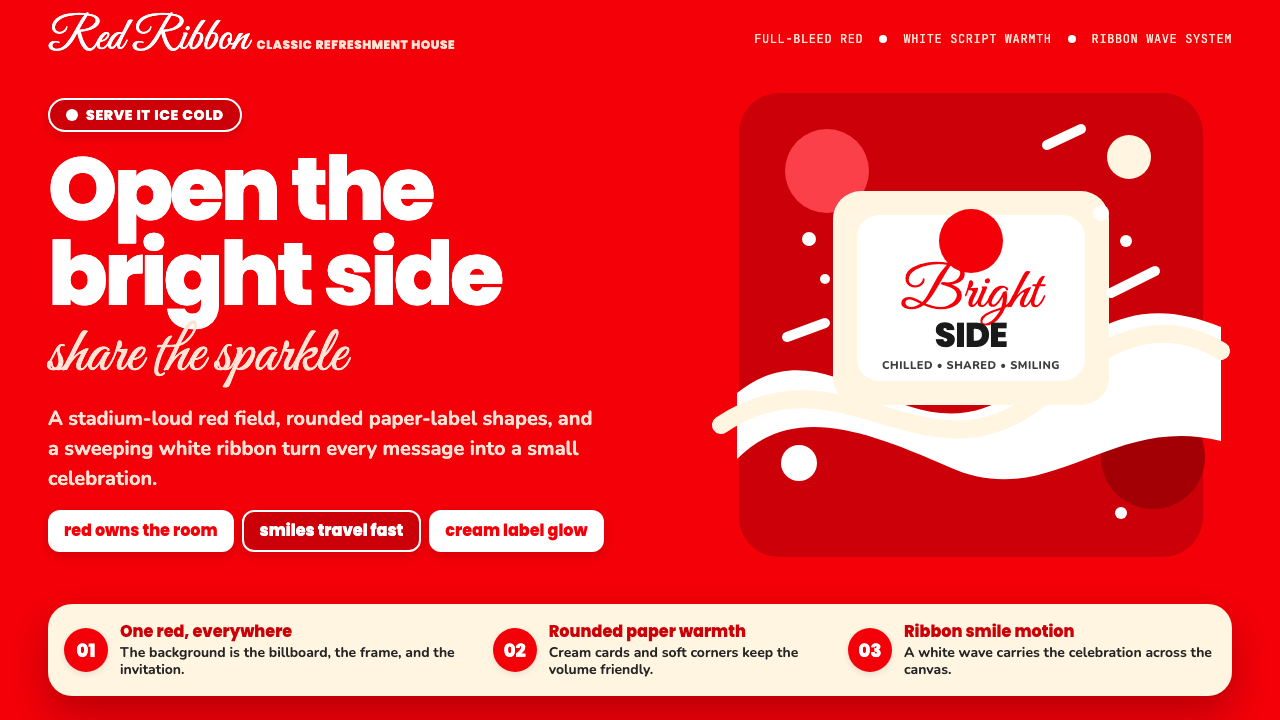 Coca-Cola ClassicHappiness goes full-bleed. Signature red, white ribbon waves, and warm rounde…
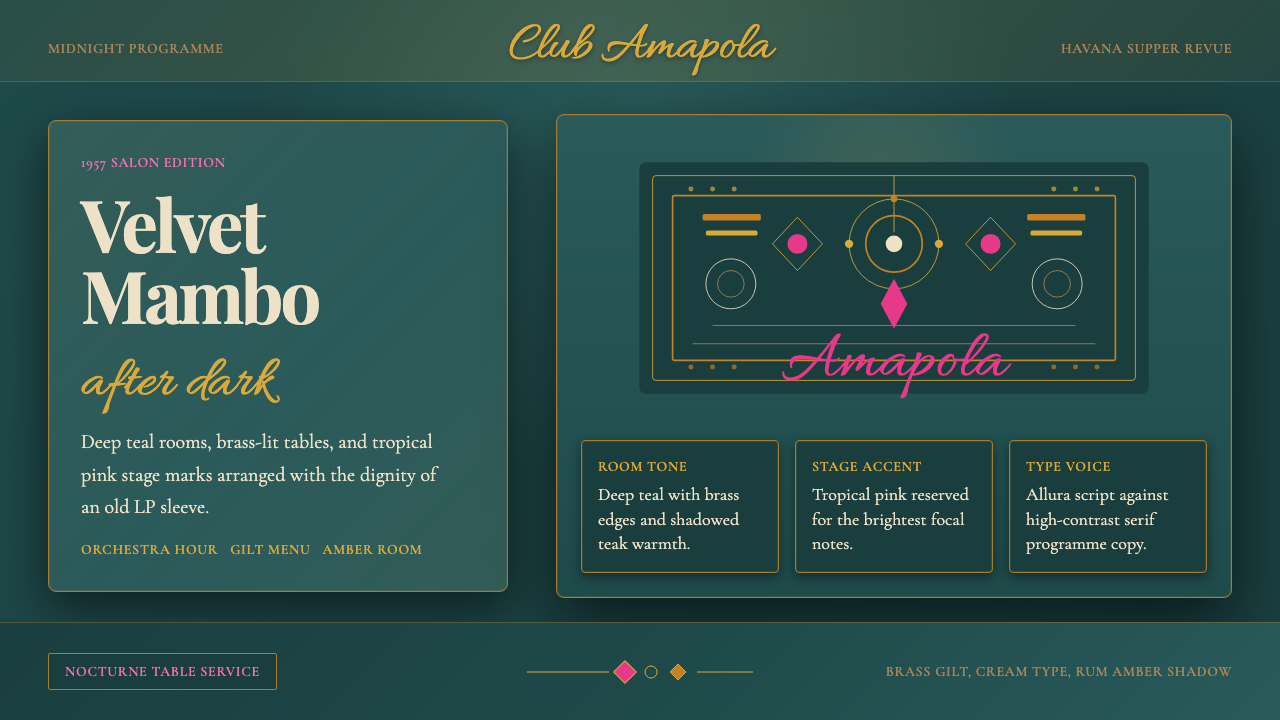 Cuban Salsa Cabaret (1950)Nightlife with dignity. Deep teal, brass gilt, and Allura script stage the ro…
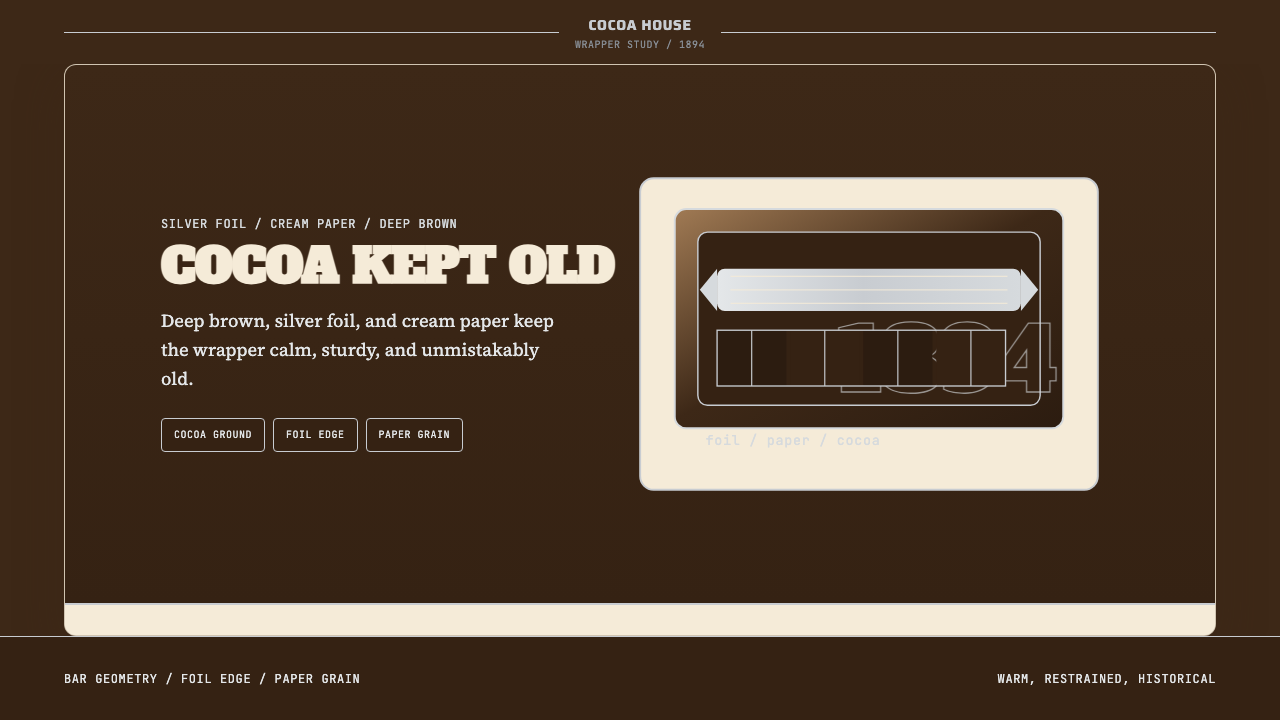 Hershey's Chocolate Brown (1894)Plain, enduring, warm. Cocoa brown meets silver foil on cream paper.
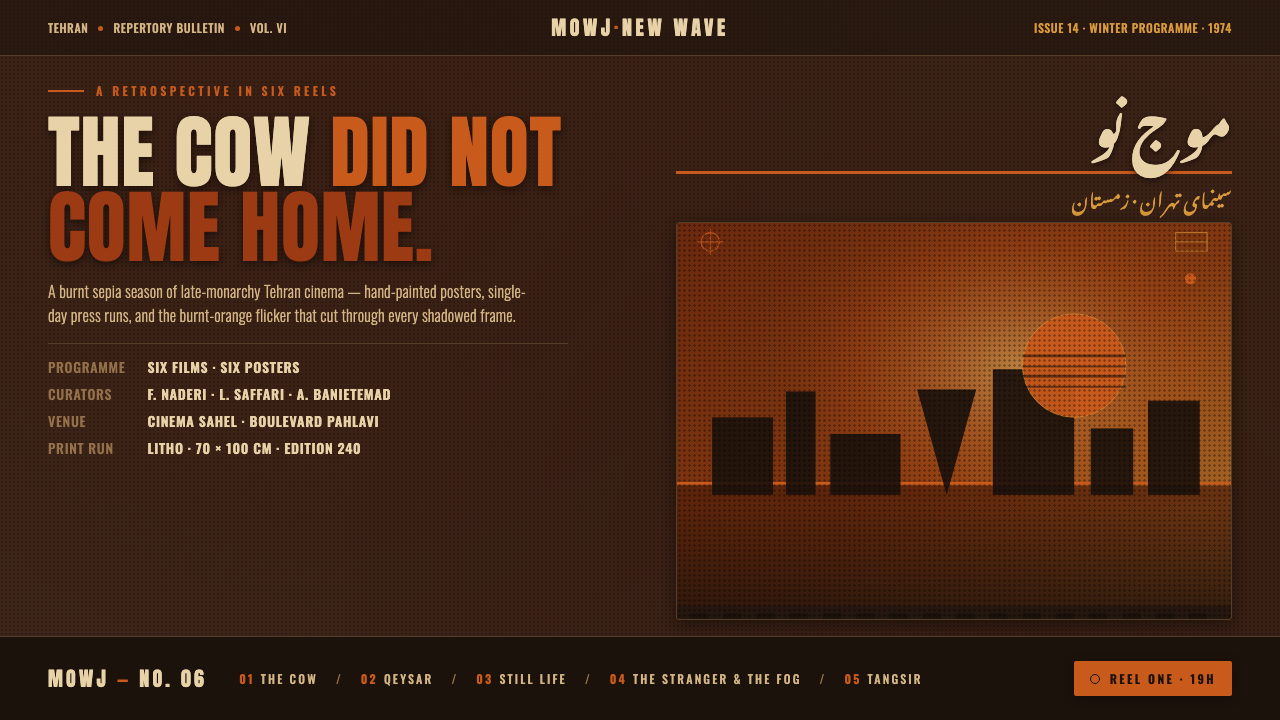 Iranian New Wave PosterPre-revolution Tehran cinema, burnt. Grainy ochre duotone over dark sepia, st…
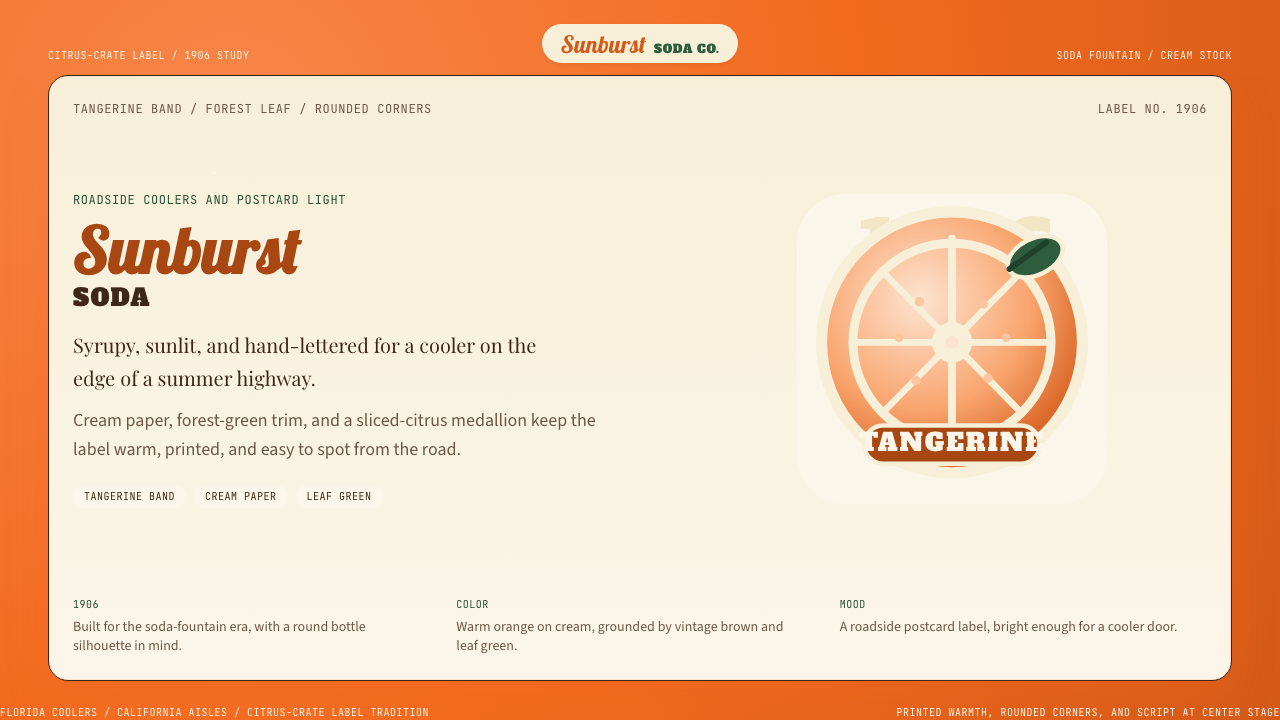 Orange Crush Soda (1906)Syrupy nostalgia. Tangerine, cream, and script make it a postcard label.
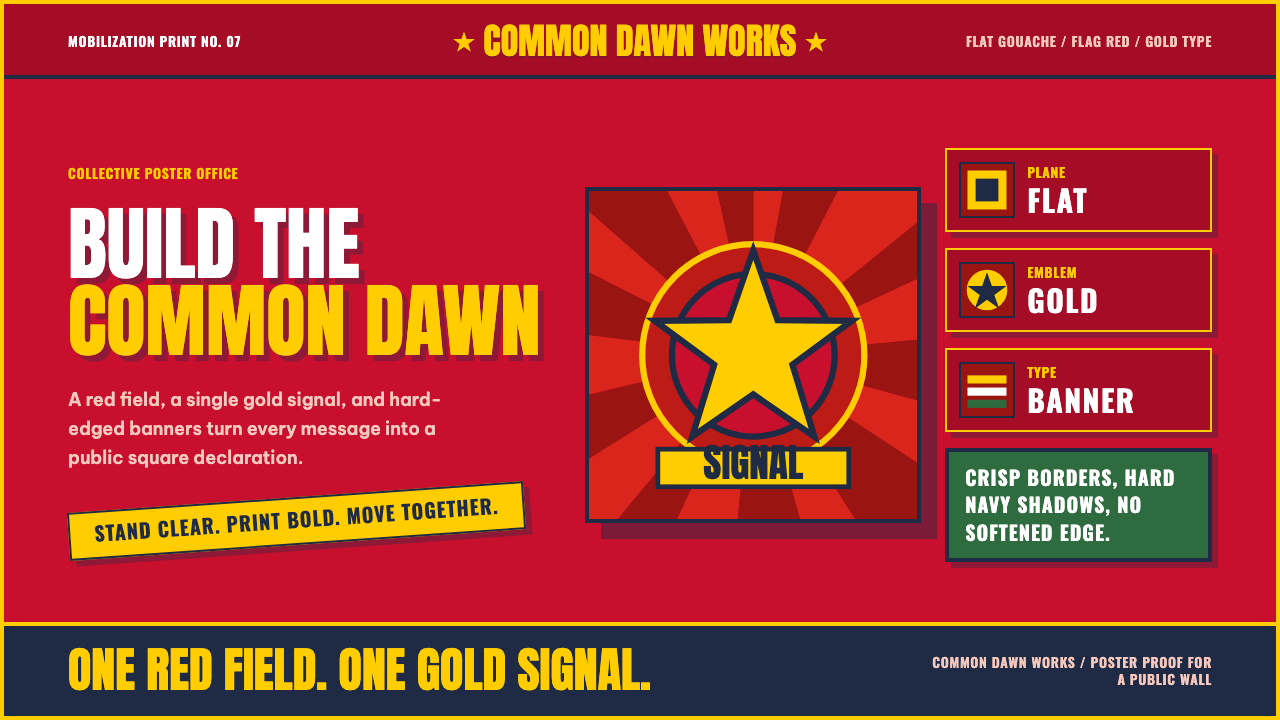 Vietnamese PropagandaFlat color commands. Flag-red fields, gold star rays, and Anton slogans hit a…