What is Tahrir Square 2011?
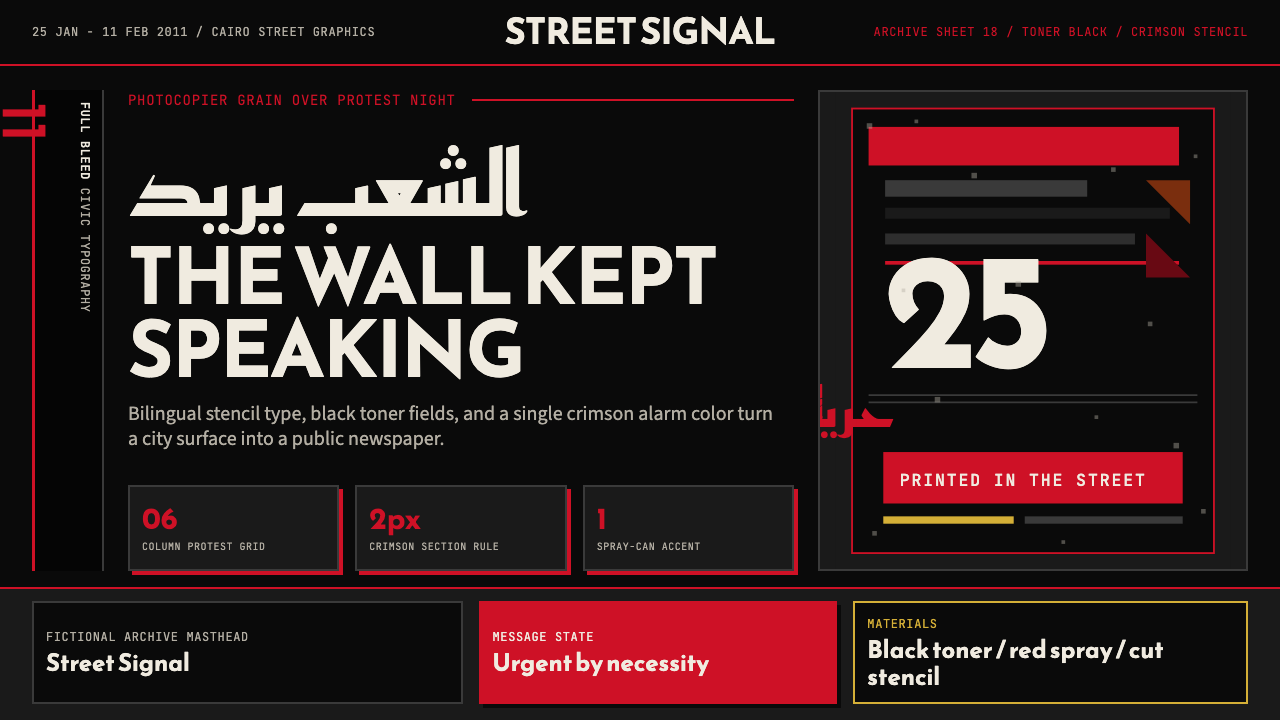
No polish, no decoration — Tahrir Square's revolutionary graphics reduced design to its most urgent form: stenciled crimson on black, bold Arabic lettering on crumbling downtown walls, civic signal stripped bare.
Tahrir Square 2011 in brief
Tahrir Square 2011 is a design language drawn directly from the street graphics of Egypt's January 25th Revolution — the eighteen-day uprising that filled Cairo's central square and toppled a three-decade presidency. Its visual vocabulary consists of photocopier-grain stencils, crimson-and-black protest banners, hand-sprayed Arabic calligraphy, and urgent typographic compositions that prioritized legibility at a distance over any consideration of finish or craft.
Where most historical design movements emerged from studios, academies, or corporate commissions, this one came from necessity and public space. Activists, artists, and anonymous participants produced visual communication under physical risk, using whatever materials were available — spray cans, photocopiers, house paint, torn fabric. The resulting aesthetic is one of deliberate rawness: grain is not a flaw but a record of production; imperfect edges are evidence of speed and circumstance. The style treats constraint itself as a design principle.
As a contemporary design system, Tahrir Square 2011 captures that urgency and translates it into a structured visual language. It is dark-ground by nature — backgrounds are deep black or near-black, against which stark white text and blood-crimson accents cut with maximum force. The effect is confrontational and immediate, communicating authority through visual weight rather than polish. It is design understood as direct civic action: every element earns its place by the force of what it says.

Where does Tahrir Square 2011 come from?
The revolution that generated this visual style began on January 25, 2011 — Egypt's national Police Day — when tens of thousands of Egyptians flooded Tahrir Square in central Cairo to demand the end of President Hosni Mubarak's thirty-year rule. The protests were the Egyptian arm of the wider Arab Spring, a wave of popular uprisings that spread across North Africa and the Middle East beginning in late 2010. By February 11, Mubarak had resigned. The visual material that covered Cairo's walls during those eighteen days, and in the turbulent years that followed through 2013, constitutes one of the most significant bodies of street art and protest graphic design produced anywhere in the twenty-first century.
The geography of the uprising shaped its visual culture. Tahrir Square itself was the focal point of mass assembly, but the street art was concentrated on Mohamed Mahmoud Street — a narrow artery running from the square into the surrounding neighborhood — and Talaat Harb, Cairo's downtown commercial spine. Mohamed Mahmoud became, in particular, the site of intense mural-making after street battles there in November 2011, when security forces blinded dozens of protesters with birdshot. Artists memorialized the injured and dead directly on the walls at the scale of buildings, turning the entire street into a public monument. These were not gallery works — they were acts of documentation and accusation made in the open, for everyone.
The key artistic figures who shaped the movement's visual language included Ganzeer (Mohamed Fahmy), whose large-scale stencils and wheat-paste compositions mixed Arabic script with imagery drawn from everyday Egyptian life, and Keizer, who worked in a rawer, more confrontational mode. Their work was complemented by the digital organizing efforts of Wael Ghonim, the Google executive whose anonymous Facebook activism helped mobilize the uprising, and by the posthumous presence of Khaled Said — a young Alexandrian man whose death at police hands in 2010 became a central symbol and whose image appeared repeatedly on protest materials. The movement was never centrally organized visually; it was a distributed production made by many hands responding to the same conditions.
The tools and constraints of the moment determined the aesthetic. Photocopiers were central — they allowed rapid, cheap duplication of text and imagery for flyers and banners. Stencils enabled fast wall-marking without requiring skilled draftsmanship at scale. Spray paint was the dominant medium for large works, giving edges their characteristic bleed and grain. Arabic typography was urgent and immediate, often rendered by hand rather than composed with type-setting tools — calligraphic forms merged with graffiti energy. Black was the dominant ground because it absorbed and did not compete with the stark, high-contrast signal of the message. Crimson and white cut against that dark field with maximum legibility and emotional force. The entire visual system was the product of specific material conditions and political urgency, not of stylistic preference.
What defines the Tahrir Square 2011 look?
Ground and Contrast
The fundamental condition of this style is deep black as the dominant ground. Against that near-absolute dark, white type achieves maximum legibility and crimson achieves maximum emotional intensity. The contrast ratio is not modulated for comfort — it is pushed to its extreme intentionally. Light does not leak in softly; it cuts. Midtones and muted intermediaries are absent. Every element is either signal or ground, with nothing in between.
Stencil Grain and Texture
The photocopier and the spray-paint stencil leave distinctive marks: ink that bleeds at edges, toner that clusters in uneven densities, paint that feathers beyond the mask's border. These are not imperfections to be corrected — they are the honest record of how the work was made. In the Tahrir Square system, grain and texture carry authenticity. Over-smoothed or vector-clean renditions lose the material evidence that gives the style its urgency and credibility.
Arabic Typography and Script Energy
Arabic letterforms are central to the style's identity, not optional decoration. The script appears at monumental scale, often rendered by hand rather than set from a typeface, carrying the energy of calligraphic tradition pushed into urgent immediacy. Strokes are bold and decisive; there is no fussiness. When Latin characters appear alongside Arabic, they are subordinated — auxiliary information in a system whose primary voice is Arabic. The visual rhythm of Arabic's right-to-left flow is built into the compositional logic.
Hard Grid and Banner Composition
Despite the apparent rawness, the compositions follow a rigorous underlying structure. Protest banners work within a strict horizontal register — a single message, full width, maximum type size, nothing else. Wall murals divide the picture plane into bold zones, each carrying one visual argument. There is no ambiguity about hierarchy: the largest element is the subject; everything else is support. This banner logic — single zone, single message, high contrast — is the structural spine of all compositions in the system.
Crimson as Signal
Among the very restricted palette, crimson carries a specific and loaded meaning. It reads simultaneously as blood, as danger, and as urgent attention. It does not function as a pleasant accent or a brand differentiator — it functions as an alarm. Used at full intensity against black, crimson stops the eye immediately. In this system, the color is never softened or used decoratively; it appears only where the maximum urgency of the content demands it.
Scale as Argument
In the original street works, scale was an argument — a figure painted at building height was a political statement about the importance of that person or cause relative to the surrounding architecture and authority. This principle translates into the design system as a consistent emphasis on maximum type size and bold proportional relationships. Headlines are not large to aid readability alone; they are large to assert primacy. The relationship between the largest and smallest elements is always extreme, never gradual.
Absence of Decoration
There are no decorative borders, no ornamental flourishes, no ambient texture applied for visual warmth. The absence is not the result of restraint as an aesthetic principle in the Bauhaus sense — it is the result of urgency eliminating everything that does not contribute to the message. In the original context, a decorative border would have been a waste of spray paint and time. That same logic, translated into contemporary design, produces compositions where every element is load-bearing.

Who shaped Tahrir Square 2011?
Ganzeer is the most internationally recognized artist to emerge from the Egyptian revolution's visual culture. Working under a pseudonym that means 'chain' in colloquial Egyptian Arabic, he combined large-scale stencil work with wheat-paste imagery and hand-lettered Arabic to produce compositions that merged the directness of propaganda with the sophistication of contemporary street art. His mural of a military tank facing a young man on a bicycle — the Tank vs. Bread Seller — became one of the defining images of post-Mubarak Cairo, reproduced worldwide as a symbol of the revolution's confrontation with military authority. He later emigrated to the United States, where he continued working across visual art, comics, and political graphic design.
Keizer worked in a rawer and more confrontational register than Ganzeer, producing stencil-based works that emphasized the immediate conditions of protest — faces of the fallen, riot scenes, figures in confrontation with security forces. His work is less concerned with legibility at distance and more with the visceral impact of close encounter. Where Ganzeer brought compositional refinement to the street-art tradition, Keizer pushed toward a directness that refused any aesthetic mediation between message and viewer. Both artists were central to defining Mohamed Mahmoud Street as a space of political art.
Ghonim was not a visual artist but a digital organizer whose role in shaping the revolution's communication culture made him inseparable from its visual history. As a Google executive based in Dubai, he administered the anonymous Facebook page 'We Are All Khaled Said,' which helped organize the January 25 protests and frame their demands for an Egyptian public. His arrest by Egyptian authorities and subsequent release became a galvanizing media event. The visual language of the Facebook-era protest communication he helped develop — stark, image-forward, emotionally direct — was the digital analog of the wall-based street graphics, and the two informed each other throughout the uprising.
Khaled Said was a twenty-eight-year-old Alexandrian man beaten to death by Egyptian police in June 2010. Photographs of his disfigured body were circulated online by his family, generating widespread outrage and becoming the visual catalyst for the movement that would culminate in the January 25 uprising. His face — in both the before photograph of a young man and the after photograph of police brutality — appeared repeatedly on walls, in stencils, on banners, and in digital graphics throughout the revolution. He was not a participant in the design culture but its most powerful recurring image: the specific human face of the argument for change.
Much of the most significant visual production of the Egyptian revolution was unsigned and unclaimed — made by activists, students, workers, and first-time image-makers responding to specific events in real time. This distributed, anonymous authorship is not a historical gap to be filled but a structural feature of the aesthetic itself. The style's authority comes not from individual genius but from collective urgency. Curating individual named figures therefore gives an incomplete picture of where the visual language actually came from: it emerged from conditions shared across thousands of participants, each contributing to a visual commons that belonged to everyone and to no one.
How do you use Tahrir Square 2011 today?
Tahrir Square 2011 is a high-intensity style and should be selected deliberately, not as a default. It communicates confrontation, urgency, and political or civic seriousness. It works for contexts where the message is more important than the medium, where directness is valued over elegance, and where the audience is expected to engage with something that demands attention rather than invites browsing. Applied to the wrong context — a wellness brand, a children's product, a hospitality service — it reads as aggressive or alienating.
For presentation slides, the style is most effective in contexts that carry real stakes: public policy decks, social impact reports, advocacy campaigns, or any presentation where the speaker wants the visual environment to signal that the content is not decorative. A cover built in this system uses a deep black field, a single high-contrast headline at maximum size, and a crimson accent on one phrase or one graphic element. Content slides follow the banner principle: one argument per slide, expressed at the largest legible type size the layout permits, with any supporting material in a secondary weight that does not compete with the primary statement. Data visualizations take on a stark, diagrammatic quality — charts are rendered without gridlines or soft fills, using only the core palette.
For web interfaces, the style is suited to platforms that want to signal conviction rather than comfort: investigative journalism sites, political organizing tools, advocacy organization homepages, or direct-action campaign pages. The approach is to work with a true dark background, high-contrast white body text, and crimson reserved for calls to action, alerts, or navigation states that require immediate attention. Card components use hard borders rather than shadows; spacing is generous but not soft. The overall density should feel deliberate and loaded rather than airy. Avoid the style for e-commerce or consumer-facing interfaces where purchase decisions depend on warmth and approachability.
For editorial and marketing work, the system's poster sensibility translates into section headers that dominate the page, pull quotes that take up more visual real estate than the surrounding text, and dividing elements that are bold cuts rather than hairlines. Marketing materials — event posters, social media graphics, campaign assets — are where the style is most naturally at home. A single full-bleed image in high-contrast treatment, one headline in bold script or heavy type, one crimson accent: this is the compositional core. The style rewards restraint in the number of elements; adding complexity undermines the banner logic that gives it its power.
The most common mistake when applying this style is softening it to make it more approachable — adding warm midtones, reducing contrast, substituting softer reds for crimson, adding drop shadows or glow effects that import visual comfort. Each of these choices diminishes what the style actually is. The rawness and extremity are not liabilities to be managed; they are the mechanism by which the style communicates. A second common error is treating the grain and texture as decorative elements that can be applied arbitrarily — overlaying noise filters on otherwise smooth compositions. Authentic grain in this system is the residue of a specific production process; it should appear structurally, where the stencil or print process would have left it, not as a uniform atmospheric wash.

Tahrir Square 2011 — FAQ
Is this style appropriate for commercial work, or is it too politically loaded?
The style carries real political history, and that history should be acknowledged rather than laundered. Commercial applications work when the brand or project has a genuine alignment with civic urgency, social advocacy, or the kind of directness the style embodies — a non-profit campaign, a journalism platform, an activist technology product. It becomes problematic when the aesthetic is borrowed purely for visual impact while the underlying purpose is neutral or commercially self-interested, in the same way that co-opting protest imagery for unrelated marketing has long been recognized as a form of bad faith. The style is not forbidden for commercial use, but it demands that the message justify the visual register.
Can this style work for light-background layouts, or is the dark ground essential?
The dark ground is not merely an aesthetic preference — it is integral to the visual logic. The original street works were largely produced on dark surfaces (walls, fabric, dark paper), and the system's contrast relationships are calibrated for that condition. A light-ground inversion is possible but fundamentally changes the character: on a white or cream background, the style loses much of its confrontational weight and begins to read as stark minimalism rather than political urgency. If a light background is required by context, the approach is to treat it as a constrained variant — retaining the boldness of type, the restricted palette, and the banner composition logic — while acknowledging that the result will be a lighter-intensity interpretation of the source material.
How should Arabic script be handled when the audience is primarily non-Arabic-reading?
Arabic script in this system is not merely decorative — it is the primary visual voice of the source material. Removing it entirely for non-Arabic audiences strips the style of its most culturally specific element and produces something closer to generic high-contrast brutalist design. The better approach is to treat Arabic text as a visual element even when it is not the primary readable content — as texture, as scale anchor, as historical reference — while ensuring that the information-carrying work is done by legible text in the audience's primary language. This preserves the visual character of the original while serving the communication needs of the specific context. Using Arabic text purely as decoration without acknowledging its meaning or origin is a form of appropriation that should be handled with care and, where possible, with input from Arabic-speaking collaborators.
What distinguishes this style from generic 'grunge' or distressed design?
Generic grunge design uses distress and texture as aesthetic choices — applied to create a mood of edginess, rebellion, or retro nostalgia without reference to any specific visual history. The Tahrir Square system's rawness is not applied for mood; it is the record of a specific production method (stencil, spray paint, photocopier) used under specific conditions (urgency, risk, limited materials) for a specific purpose (civic communication, political protest). The difference matters practically: in this system, texture and grain should appear where they would logically have appeared in the original production process, not distributed uniformly across the composition as a style overlay. The composition structure — banner logic, Arabic typography, dark ground — does most of the work that places this within a specific historical and cultural tradition rather than generic distressed design.
How can this style be applied respectfully given its origins in a real political uprising?
Respectful application starts with acknowledgment: understanding where the visual language comes from, who made it, and what it cost the people who produced it. This does not mean that the style can only be used in political contexts — design traditions migrate, and aesthetic influence is a form of historical recognition — but it does mean that the application should be intentional. Using the style in contexts of genuine civic purpose, social advocacy, or urgent communication honors the register of the original. Using it purely as visual novelty for a brand with no relationship to the values it embodies treats real human experience as scenery. When in doubt, ask whether the urgency of the visual form is matched by the urgency of the content — if the content does not justify the register, the register is borrowed in bad faith.
Related design styles
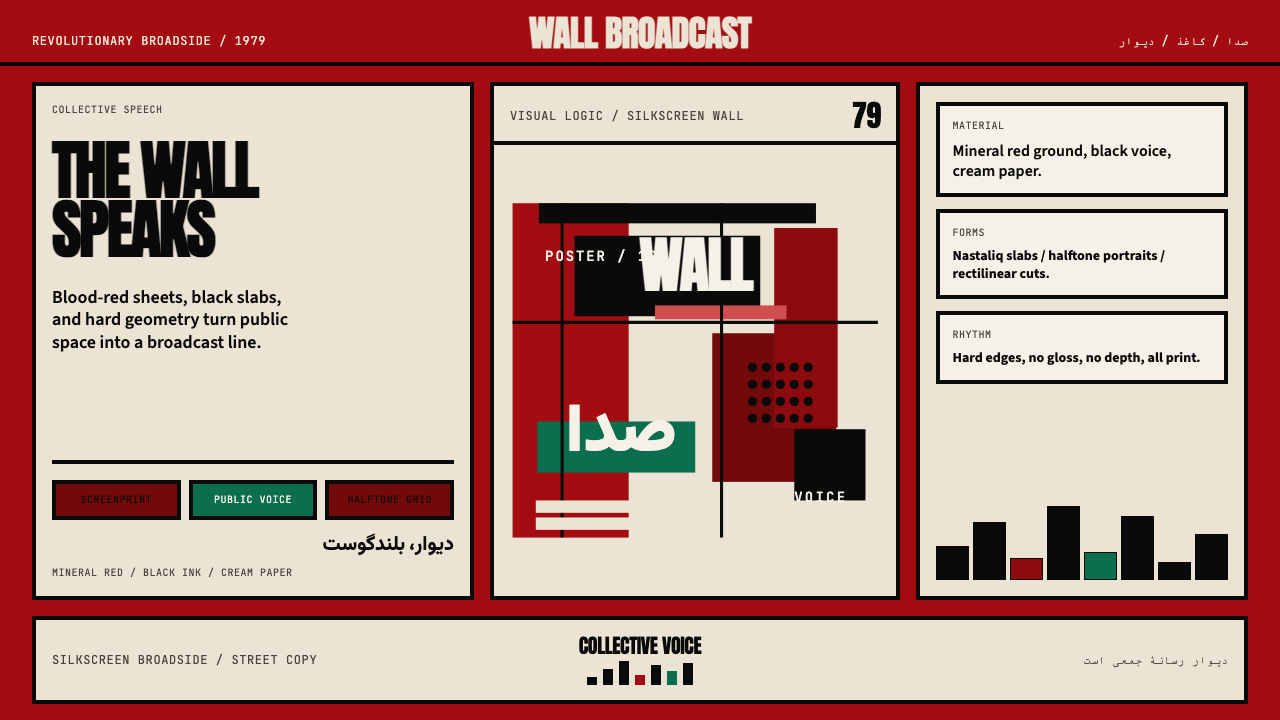 Iranian Revolution Poster (1979)Collective voice in ink. Blood red, black slabs, and hard screenprint geometr…
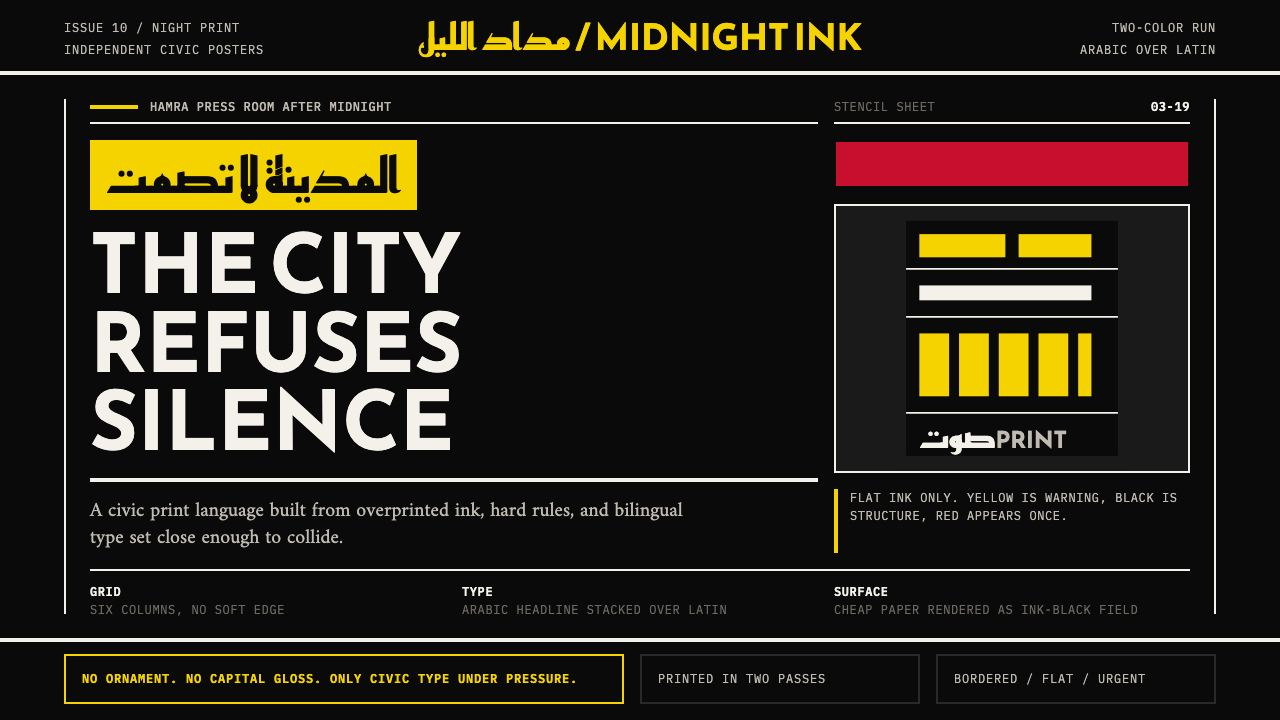 Beirut Indie Graphic DesignCivic type as protest. Sulfur yellow Arabic blocks collide with ink-black pos…
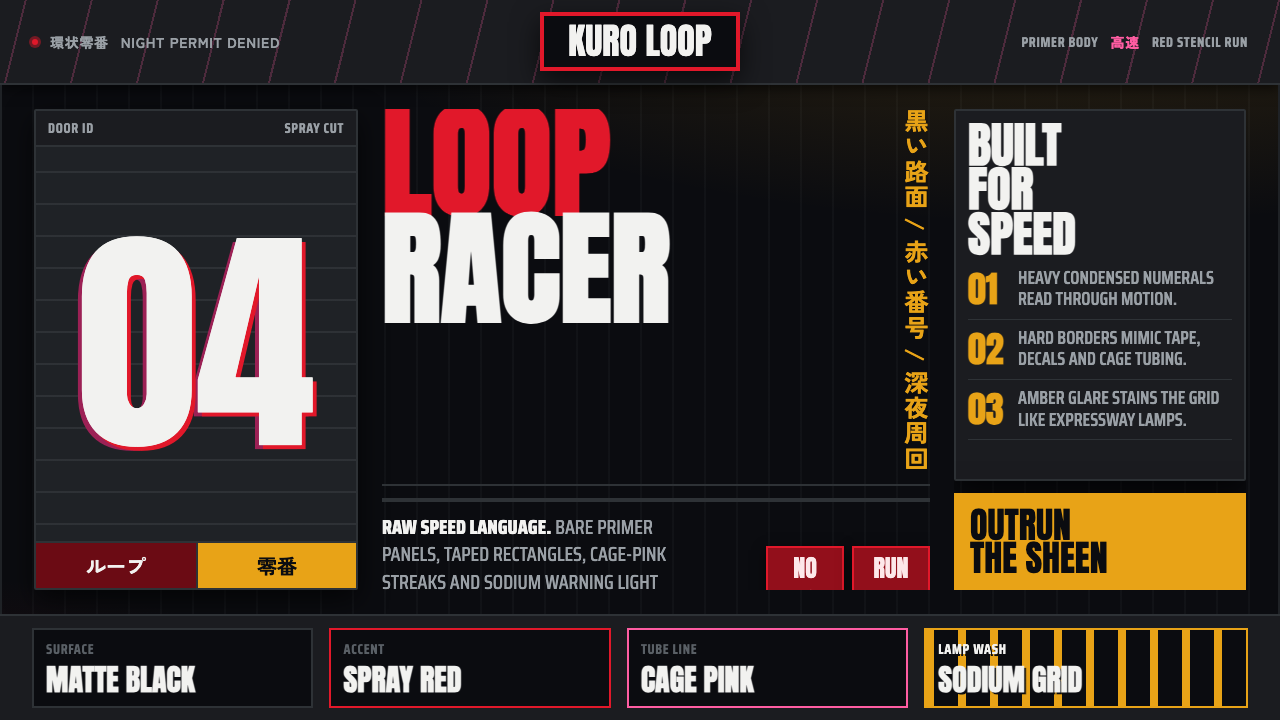 Kanjōzoku Loop RacerSpeed as contraband. Hot red numbers slice black tarmac with amber grid glare.
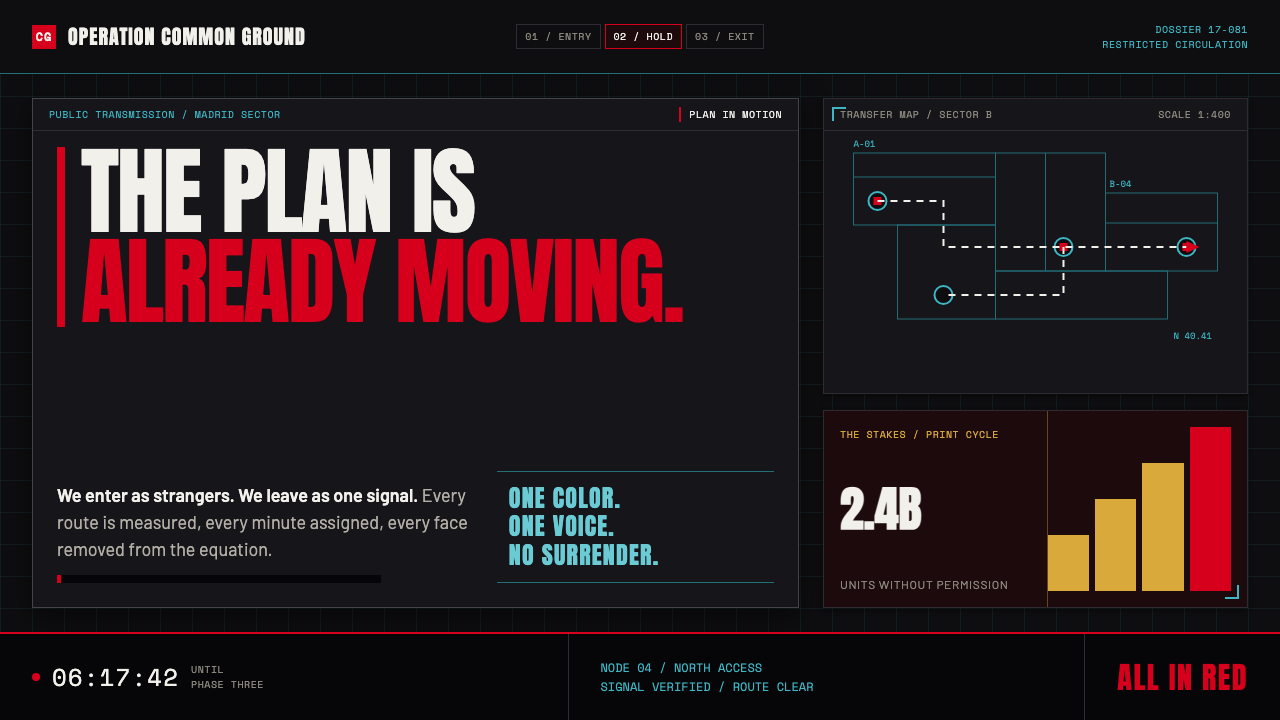 Money Heist (La Casa de Papel)Resistance becomes spectacle. Arterial red cuts through graphite grids and ta…
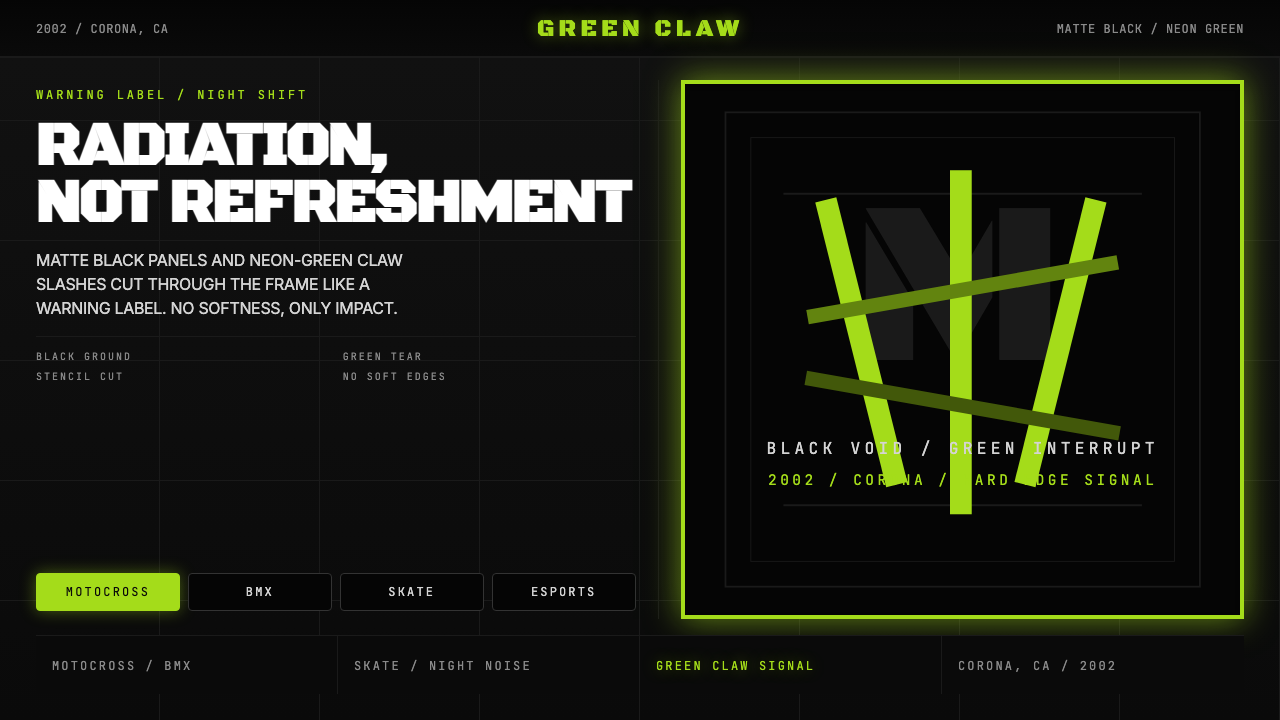 Monster Energy Claw (2002)Aggression, not refreshment. Matte black and neon-green claw slashes cut the…
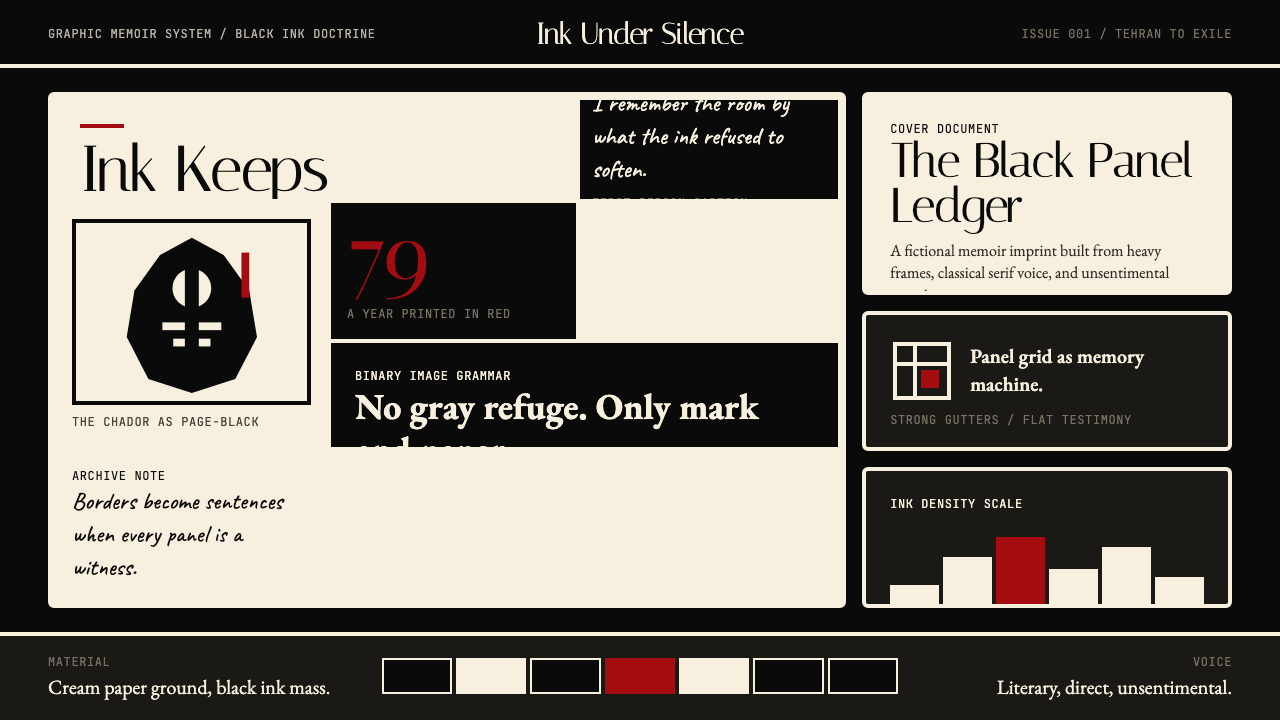 Persepolis (Marjane Satrapi, 2000)Stark memory, pure ink. Cream panels, heavy black borders, one revolution-red…