What is Bulgarian Revival Woodcarving?什么是 Bulgarian Revival Woodcarving?
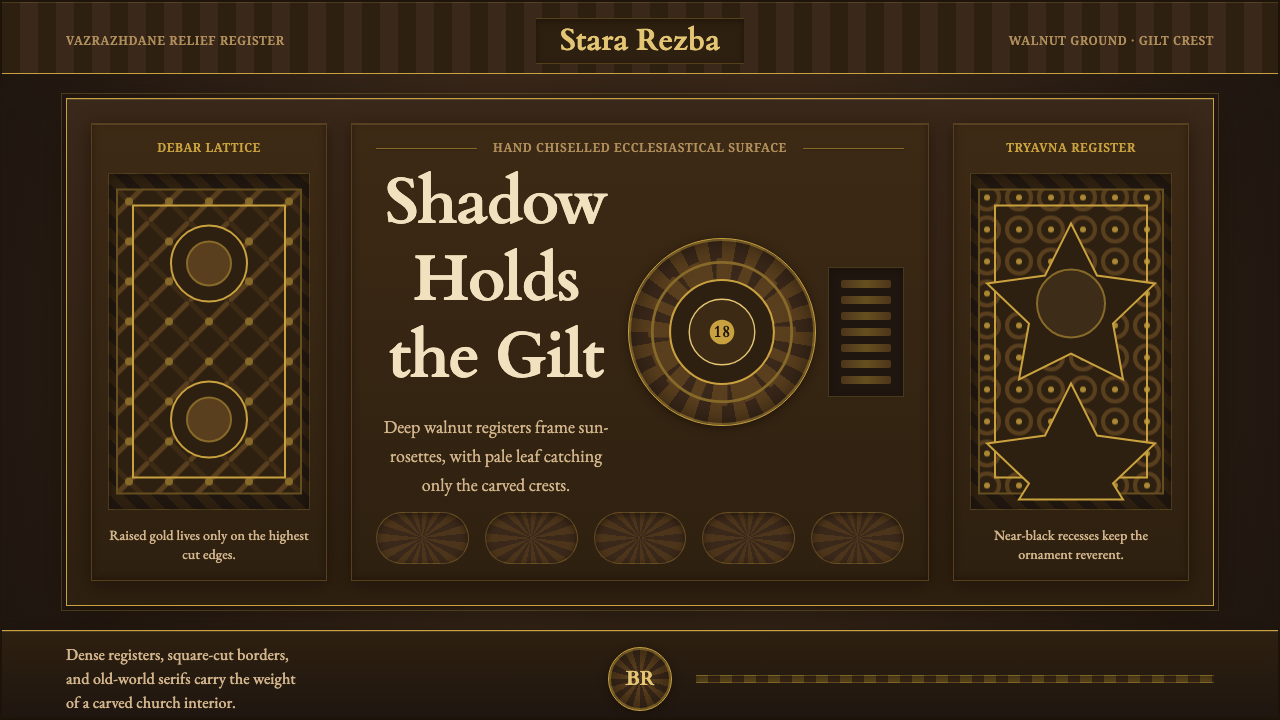
Bulgarian Revival woodcarving turns the church interior into a dark field of devotion—walnut depth, carved vines, sun-rosettes, and gilt crests brightening only where the chisel raises the surface.保加利亚复兴木雕把教堂内殿化为一片深色的虔敬之境——胡桃木的深度、雕刻的藤蔓、太阳花饰,以及只在凿痕凸脊处亮起的鎏金。
Bulgarian Revival Woodcarving in briefBulgarian Revival Woodcarving 速览
Bulgarian National Revival woodcarving is the dense ecclesiastical relief associated with the Debar, Samokov, Tryavna, and Bansko schools during the Bulgarian Vazrazhdane period. Its visual world is built from dark stained walnut, deeply cut vine lattice, sun-rosettes, raised crests, and shadowed recesses that approach black. The surface is not a picture applied to wood; it is an entire field of carved structure.保加利亚民族复兴木雕,是保加利亚民族复兴时期与德巴尔、萨莫科夫、特里亚夫纳和班斯科诸学派相关的密实教堂浮雕。它的视觉世界由深色染胡桃木、深刻的葡萄藤蔓格栅、太阳花饰、凸起的脊线与近乎全黑的凹陷阴影构成。它不是贴在木头上的图像,而是一整片由雕刻结构生成的表面。
The central experience is contrast between concealment and revelation. Recesses absorb light, while ridges and carved ornaments catch it. Gold leaf appears on the raised parts rather than covering the whole surface, so gilding reads as a sign of elevation, devotion, and attention. The result is solemn without being empty: density comes from the interlocking relief, not from a crowded collection of unrelated decoration.它最核心的感受,是隐藏与显现之间的对比。凹陷吸收光线,凸脊与雕花则将光线接住。鎏金不覆盖整个表面,而是集中在凸起之处,因此金色更像提升、虔敬与注视的标记。最终形成的庄严并不空洞:密度来自彼此咬合的浮雕,而不是来自互不相干的装饰堆积。
As a digital design system, the style translates hand-chiselled ecclesiastical surfaces into a dark interface language. Walnut replaces the expected cream ground, Cardo serifs carry the weight of liturgical text, and gilt accents are reserved for crests, selected dividers, and moments of emphasis. Every bright element should feel lifted from shadow rather than placed on top of it.作为数字设计系统,它把手工凿刻的宗教表面转译成深色界面语言。胡桃木取代惯常的奶油色底面,Cardo衬线承载礼拜空间般的文字重量,鎏金只用于花饰、精选分隔线与关键强调。每一处明亮都应像从阴影中被托起,而不是简单覆盖在表面之上。
See the Bulgarian Revival Woodcarving design system查看 Bulgarian Revival Woodcarving 完整设计系统
Where does Bulgarian Revival Woodcarving come from?Bulgarian Revival Woodcarving 从何而来?
The style belongs to the Bulgarian National Revival, or Vazrazhdane, a pre-1900 cultural period whose carving schools were active across the eighteenth and nineteenth centuries. The approved regional frame is Eastern Europe, specifically Bulgaria, with Debar, Samokov, Tryavna, and Bansko named as the principal school traditions.这一风格属于保加利亚民族复兴时期,即民族复兴文化阶段;相关木雕学派活跃于十八至十九世纪,历史范围止于二十世纪以前。其地域框架位于东欧的保加利亚,核心传统包括德巴尔、萨莫科夫、特里亚夫纳与班斯科。
These schools are remembered here through their reztabari and masters rather than through a single authorial figure. The Debar and Samokov school reztabari, the Tryavna woodcarvers, and the Bansko masters represent a distributed craft culture in which ecclesiastical carving is understood as a shared visual language shaped by regional practice.这里所说的代表不是某一位独立作者,而是各地的reztabari与木雕大师。德巴尔和萨莫科夫的reztabari、特里亚夫纳木雕师以及班斯科大师,共同构成一种分布式的工艺文化:教堂雕刻不是个人风格的孤立展示,而是由地域实践共同塑造的视觉语言。
The main historical object is the iconostasis relief: a carved church surface in which sun-rosettes and vine lattice are cut deeply into walnut, while raised crests catch gold leaf above dark recesses. Its meaning is inseparable from the interior it inhabits. The wood does not merely furnish a wall; it organizes attention through depth, rhythm, shadow, and selective radiance.它最重要的历史对象是圣障浮雕:太阳花饰与葡萄藤蔓格栅深深刻入胡桃木,凸起的脊线在深色凹陷之上承接金箔光泽。它的意义无法脱离所在的教堂内殿。木材不只是墙面的装饰,而是借由深度、节奏、阴影与选择性的明亮来组织观看。
The digital interpretation keeps that logic intact. It does not turn the style into a generic antique theme or a bright decorative pattern. Instead, it begins with a walnut ground, builds hierarchy through relief-like contrast, uses Cardo for the principal typographic voice, and lets gilt appear only at points where the interface needs to rise out of darkness.数字转译保留了这套逻辑,不把它变成泛泛的古典主题或明亮的装饰图案。它从胡桃木底面出发,用类似浮雕的明暗关系建立层级,以Cardo承担主要文字气质,并让鎏金只在界面需要从黑暗中升起的地方出现。
What defines the Bulgarian Revival Woodcarving look?Bulgarian Revival Woodcarving 的视觉特征是什么?
Walnut Darkness胡桃木深色
The ground should feel like dark stained walnut rather than neutral black or pale parchment. Its darkness has warmth and material presence, allowing the interface to suggest carved wood without simulating literal grain. Near-black recesses can deepen the field, but the overall surface should retain a sense of brown timber beneath the shadow.底面应让人联想到深色染木胡桃木,而不是中性的黑色或浅色羊皮纸。它的深暗带有温度与材料感,可以暗示雕木,却不必真的模拟木纹。近乎全黑的凹陷能够加深画面,但整体仍应保留阴影下棕色木材的气息。
Liturgical Serif礼拜衬线
Cardo serifs provide the principal typographic voice. Letterforms should feel engraved, ceremonial, and suited to an interior where words carry ritual weight. Headings may be stately and spacious, while supporting text remains quiet and legible. Avoid mixing the voice with playful display lettering or overly polished contemporary sans serifs.Cardo衬线承担主要的字体声音。字形应像被刻入木面,带有仪式感,适合文字本身承载礼拜空间般的重量。标题可以庄重而舒展,辅助文字则保持安静与清晰。不要把这种声音与俏皮展示字体或过度光洁的当代无衬线混在一起。
Deep Relief深刻浮雕
Hierarchy should behave like carving. Primary elements rise through contrast, gilt, or a stronger edge; secondary elements recede into the walnut field; inactive areas belong to the shadow. The distinction between raised and recessed states is more important than the presence of many decorative layers.层级应当像雕刻一样运作。主要元素通过对比、鎏金或更明确的边缘感被托起;次要元素退入胡桃木底面;非重点区域则归于阴影。真正重要的是凸起与凹陷状态的区别,而不是堆叠许多装饰层。
Sun and Vine太阳与藤蔓
Sun-rosettes supply focal radiance, while vine lattice creates continuity and density. Use the rosette as a crest, seal, or moment of ceremonial emphasis. Use the vine as a restrained framing rhythm or background structure. Together they establish a vocabulary that feels ecclesiastical without requiring figurative illustration.太阳花饰提供聚焦的光芒,葡萄藤蔓格栅则制造连续性与密度。花饰适合充当冠饰、印记或仪式性的强调点;藤蔓适合成为克制的边框节奏或背景结构。二者结合,便能建立带有教堂气息的词汇,而不需要依赖具象插画。
Selective Gilding选择性鎏金
Gold leaf belongs on crests and raised highlights, never as a general wash. Its force comes from scarcity and position: a small gilt detail can command a dark panel because the surrounding surface refuses to compete. Gilding should clarify what deserves attention, not make every component equally precious.金箔应属于冠饰与凸起高光,而不是覆盖全局的金色涂层。它的力量来自稀少与位置:由于周围表面不参与争夺,一处小小的鎏金细节就足以支配深色面板。鎏金应明确什么值得注视,而不是让所有组件都显得同样珍贵。
Devotional Density虔敬密度
The style is dense, but its density is ordered. Repeated carving, lattice, and shadow create a continuous field rather than visual noise. Empty space should appear as a deliberate pause within the relief, giving the eye somewhere to rest before returning to the ornament. The mood is solemn, concentrated, and inward-looking.这种风格具有密度,但密度必须有秩序。重复的雕花、格栅与阴影形成连续表面,而不是视觉噪音。留白应像浮雕中的有意停顿,让视线有地方休息,再回到装饰之中。整体气质应庄严、专注而向内。

See the Bulgarian Revival Woodcarving design system查看 Bulgarian Revival Woodcarving 完整设计系统
Who shaped Bulgarian Revival Woodcarving?谁塑造了 Bulgarian Revival Woodcarving?
The Debar school reztabari are one of the named carving traditions within Bulgarian National Revival iconostasis relief. In the design system, their presence represents the regional craft lineage behind the dark walnut surface, deep vine work, raised crests, and restrained gilding.德巴尔学派reztabari是保加利亚民族复兴圣障浮雕传统中的重要地域称谓之一。在这套设计系统中,他们代表深色胡桃木表面、深刻藤蔓、凸起冠饰与克制鎏金背后的地方工艺谱系。
The Samokov school reztabari are named alongside the Debar tradition in the approved historical frame. Their role in this visual language is expressed through dense ecclesiastical relief and the disciplined contrast between carved recesses and illuminated ridges.萨莫科夫学派reztabari与德巴尔传统并列于这一历史框架之中。在视觉转译里,他们所代表的是密实的教堂浮雕,以及雕刻凹陷与受光凸脊之间克制而明确的对比。
The Tryavna woodcarvers form one of the four regional traditions identified for Bulgarian Revival woodcarving. Within the system, their name anchors the idea that the surface is built by hand through repeated carved structure rather than assembled from unrelated ornaments.特里亚夫纳木雕师是保加利亚复兴木雕所指向的四个地域传统之一。在这套系统中,这一名称锚定了一个核心观念:表面应由反复而有秩序的手工雕刻结构生成,而不是由彼此无关的装饰拼合而成。
The Bansko masters complete the named group of regional carving traditions. Their inclusion keeps the style tied to Bulgarian ecclesiastical craft culture and reinforces the design principle that solemnity comes from material depth, rhythm, and selective light.班斯科大师构成这一地域木雕传统群组的最后一环。他们的存在使风格始终与保加利亚教堂工艺文化相连,也强化了这样一个设计原则:庄严感来自材料深度、节奏与选择性的光,而非来自表面炫技。
How do you use Bulgarian Revival Woodcarving today?今天怎么用 Bulgarian Revival Woodcarving?
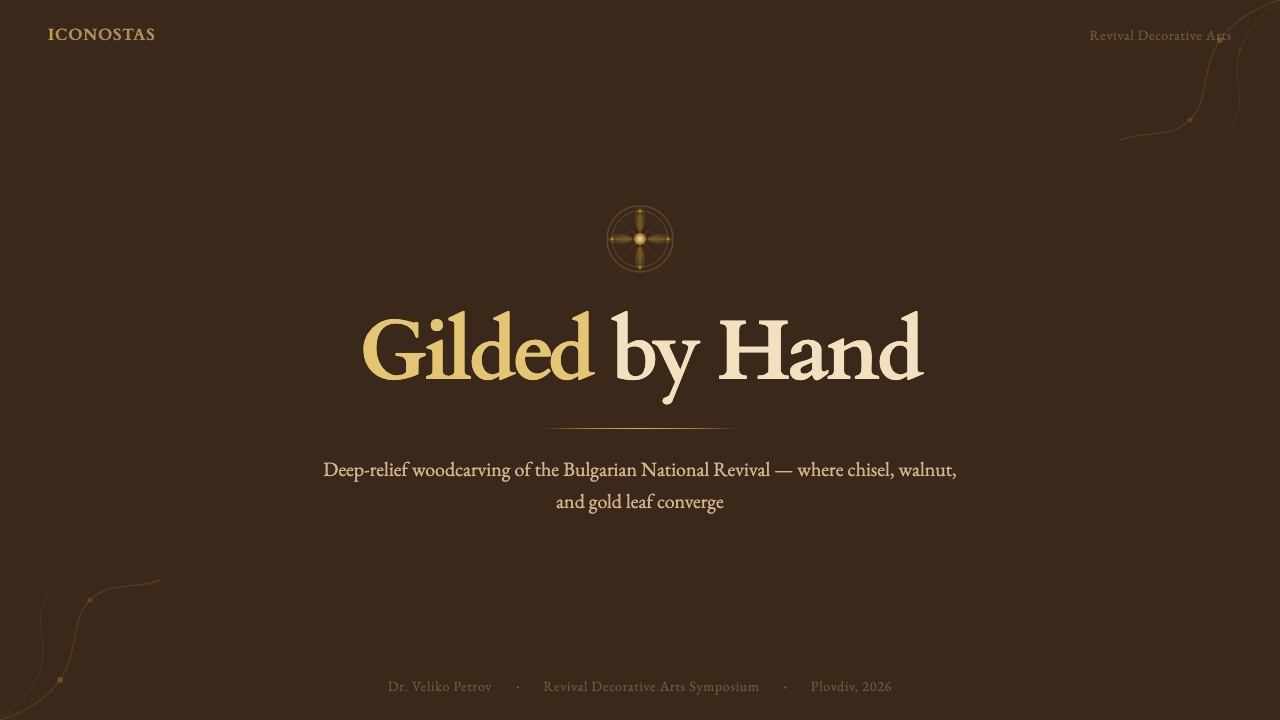
For presentation slides, use the cover as a dark iconostasis panel: a restrained Cardo title, a sun-rosette crest, and a small gilt accent emerging from walnut shadow. Content slides should keep the same devotional field while allowing carved dividers or vine structures to organize sections. Data slides can treat charts as raised panels, with the most important series receiving the brightest gilt emphasis and supporting information remaining recessed.在演示文稿中,可以把封面处理成一面深色圣障:用克制的Cardo标题、太阳花饰冠章,以及从胡桃木阴影中浮现的一处鎏金高光。内容页延续这片虔敬的深色场域,以雕刻般的分隔线或藤蔓结构组织章节。数据页可把图表处理成凸起的面板,让最重要的数据获得最明亮的鎏金强调,其余信息退入凹陷之中。
For web interfaces, the system suits dashboards, archives, cultural platforms, and pricing pages that need authority and a sense of curated value. Use walnut darkness for the main field, Cardo for titles and key labels, and relief-like contrast for cards, tabs, and active states. Pricing tiers should be distinguished through crest placement and selective gilding rather than a parade of unrelated accent colors. Controls should feel carved into or lifted from the surface.在网页界面中,这套系统适合仪表板、档案库、文化平台与定价页面,尤其适合需要权威感和珍藏感的产品。主场使用胡桃木深色,标题与关键标签使用Cardo,以类似浮雕的对比处理卡片、标签页和激活状态。定价层级应通过冠饰位置与选择性鎏金来区分,而不是堆叠互不相关的强调色。控件应像被凿入表面,或从表面抬起。
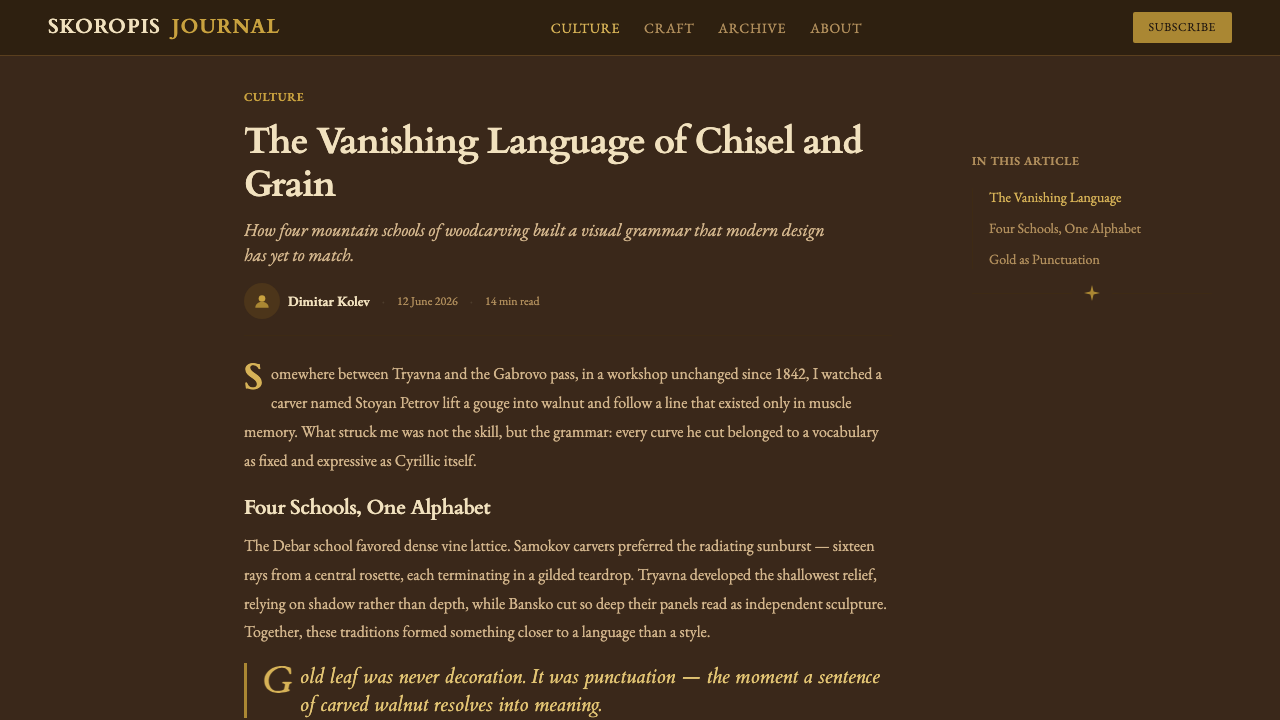
For editorial work, create a narrow, ceremonial reading column surrounded by generous dark space. Section headings can behave like carved inscriptions, while vine lattice or a quiet rosette marks transitions. Pull quotes and metadata should feel like small plaques within the larger iconostasis field, not floating stickers. The effect is especially appropriate for cultural writing, heritage material, religious history, craft documentation, and other subjects that benefit from gravity.在编辑设计中,可以建立一条窄而庄重的阅读栏,让四周保留充足的深色空间。章节标题可以像刻入木面的铭文,藤蔓格栅或安静的花饰用于标记转场。引语与元数据应像圣障中的小铭牌,嵌入整体场域,而不是漂浮的贴纸。这种处理尤其适合文化写作、遗产内容、宗教史、工艺记录,以及需要沉静分量的主题。
For marketing, the style can give a product or institution a sense of permanence, devotion, and carefully guarded value. Use a strong walnut field, a single recognizable gilt crest, and language with enough space around it to feel deliberate. Calls to action should be rare and clearly raised from the surface. The visual argument should be one of trust and depth, not luxury through indiscriminate shine.在营销内容中,这种风格能够赋予产品或机构一种持久、虔敬而珍贵的气质。使用明确的胡桃木场域、一枚易于识别的鎏金冠章,并给文案留出足够空间,使其显得经过慎重安排。行动号召应少而清晰,像从木面上被抬起。整体诉求应是信任与深度,而不是靠无差别闪耀制造奢华。
The common mistake is treating the theme as a generic dark luxury aesthetic. Black backgrounds, gold text, and ornamental flourishes alone do not create Bulgarian Revival woodcarving. The system depends on the relationship between walnut warmth, carved density, recessed shadow, Cardo serifs, and gilding confined to raised highlights. If every element glows, the hierarchy collapses; if every edge is ornate, the sense of devotion becomes theatrical decoration.最常见的错误,是把它当作泛泛的深色奢华美学。黑色背景、金色文字和大量花饰本身并不能形成保加利亚复兴木雕。真正重要的是胡桃木的温度、雕刻的密度、凹陷的阴影、Cardo衬线与仅施于凸脊的鎏金之间的关系。如果每个元素都在发光,层级就会崩溃;如果每条边都过于华饰,虔敬感就会沦为舞台化装饰。
See the Bulgarian Revival Woodcarving design system查看 Bulgarian Revival Woodcarving 完整设计系统
Bulgarian Revival Woodcarving — FAQBulgarian Revival Woodcarving · 常见问题
What is Bulgarian Revival woodcarving in this design context?在这套设计语境中,什么是保加利亚复兴木雕?
It is the digital translation of Bulgarian National Revival ecclesiastical relief associated with the Debar, Samokov, Tryavna, and Bansko schools. The defining ingredients are dark stained walnut, deep carving, sun-rosettes, vine lattice, raised crests, near-black recesses, Cardo serifs, and gold leaf restricted to elevated highlights.它是对保加利亚民族复兴时期教堂浮雕的数字转译,关联德巴尔、萨莫科夫、特里亚夫纳与班斯科诸学派。其核心要素包括深色染胡桃木、深刻浮雕、太阳花饰、葡萄藤蔓格栅、凸起冠饰、近乎全黑的凹陷、Cardo衬线,以及仅施于凸起高光的金箔。
Why is the background walnut rather than cream or white?为什么背景要使用胡桃木,而不是奶油色或白色?
The material ground is central to the style. Bulgarian Revival iconostasis relief is described through dark stained walnut and shadowed recesses, so a pale ground would reverse its visual logic. A walnut field gives the system warmth and weight while allowing raised details to read as carved structure.材料底面是这种风格的核心。保加利亚复兴圣障浮雕本就以深色染胡桃木和阴影凹陷为特征,因此浅色底面会颠倒它的视觉逻辑。胡桃木场域既提供温度与分量,也让凸起细节呈现为真正的雕刻结构。
How should gilding be used?鎏金应该怎样使用?
Use it as a selective highlight on raised crests, rosettes, or carefully chosen moments of emphasis. It should emerge from darkness and clarify hierarchy. If gold is spread across every surface, it stops reading as lifted light and becomes ordinary decoration.应将鎏金作为选择性的高光,用在凸起冠饰、花饰或少数关键强调点上。它应从黑暗中显现,并帮助明确层级。如果金色铺满每一处表面,它就不再像被托起的光,而会变成普通装饰。
Does the style require literal wood texture or carved illustrations?这种风格是否必须使用真实木纹或具象雕刻插图?
No. The system is based on the relationship between material darkness, relief, rhythm, and selective light. A restrained walnut-toned ground can suggest wood without imitating grain, while repeated vine structures and rosettes can imply carving without turning the interface into a literal historical replica.不必。它建立在材料深色、浮雕关系、节奏与选择性光线之上。克制的胡桃木色底面可以暗示木材,而不必模仿木纹;反复出现的藤蔓结构与花饰也能传达雕刻感,而不必把界面变成历史对象的直接复制。
How can the style remain solemn instead of becoming ornate?如何让风格保持庄严,而不是变得繁缛?
Keep the visual field dense but ordered. Let Cardo establish the ceremonial voice, reserve gold for elevated details, and allow recesses and quiet walnut areas to absorb attention. The discipline lies in contrast and restraint: every ornament should support the carved field, the hierarchy, or the devotional mood.让视觉场域保持密实,却始终有秩序。用Cardo建立仪式性的文字声音,把金色留给凸起细节,并让凹陷与安静的胡桃木区域承担吸收视线的作用。关键在于对比与克制:每一处装饰都应服务于雕刻场域、信息层级或虔敬氛围。
Related design styles相关设计风格
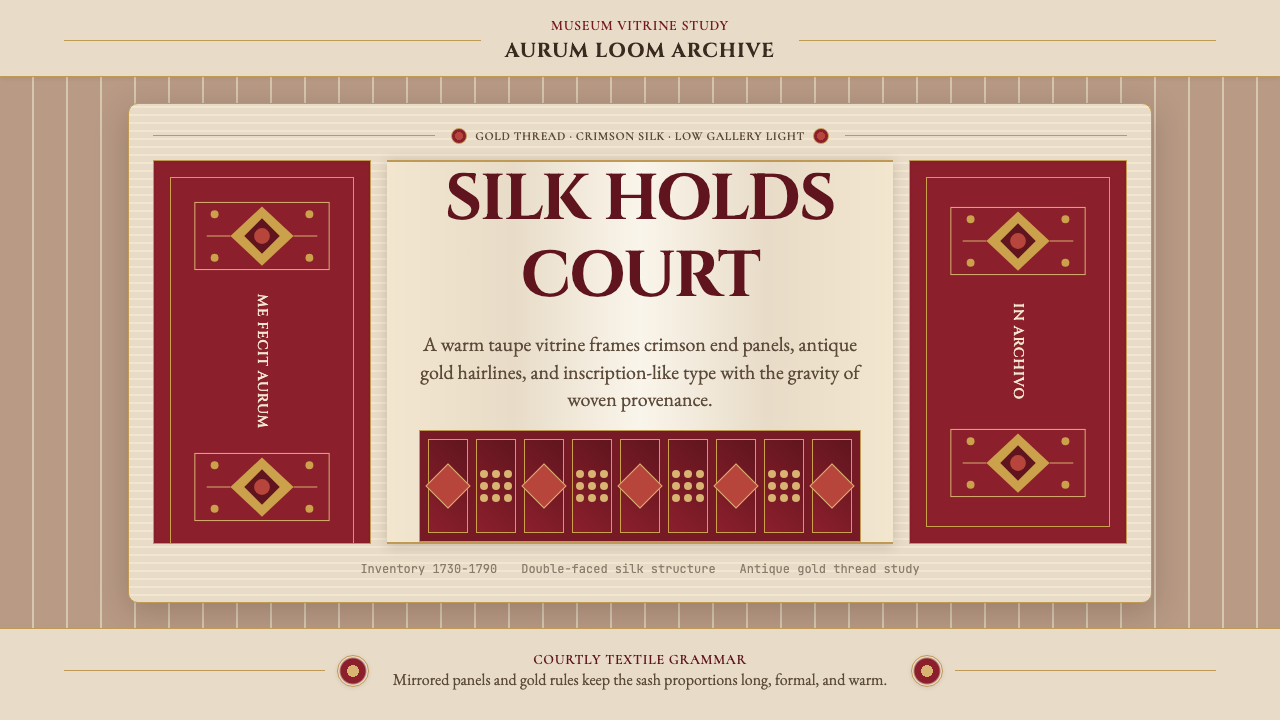 Belarusian Slutsk SashCourtly silk, vitrined. Taupe ground, crimson panels, Cinzel type, antique go…宫廷丝锦入展柜:赭褐底、深红端板、Cinzel 铭文与古金细线。
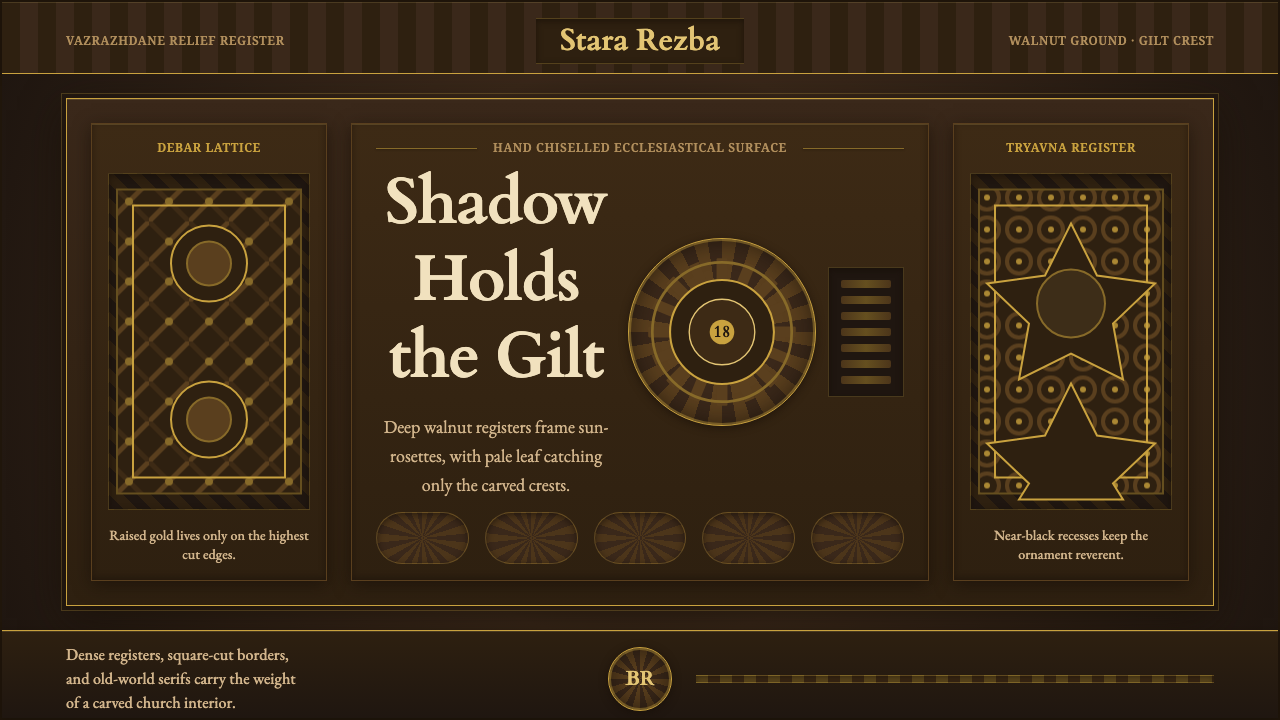 Bulgarian Revival WoodcarvingDark devotion in relief. Walnut panels, Cardo serifs, and gilt rosettes catch…深色浮雕的虔敬感:胡桃木面、Cardo衬线与鎏金花饰只亮在凸脊。
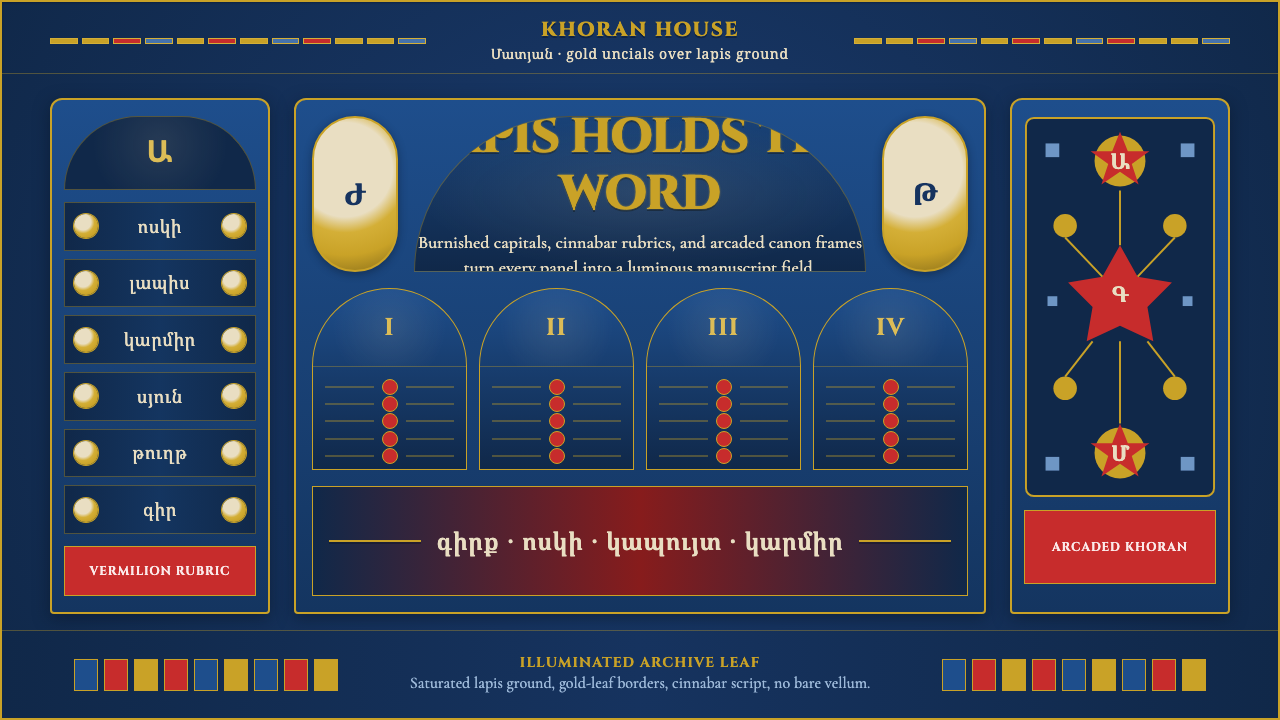 Armenian Manuscript FolkloreJewel-dense devotion. Lapis ground, gold uncials, and vermilion arcades fill…宝石般虔敬。青金石底、金色大写与朱砂拱廊填满画面。
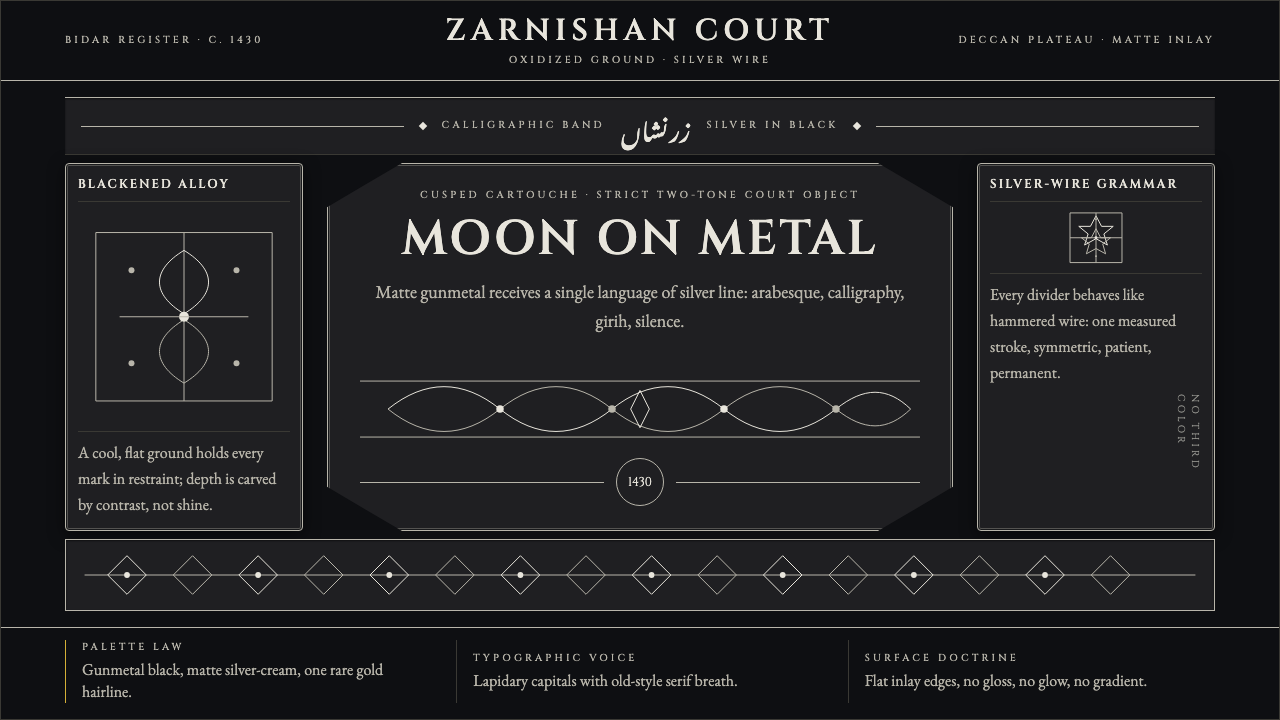 Bidri Deccan MetalworkCourtly darkness, tooled by silver. Cinzel caps and hairline arabesques cut g…宫廷般冷黑。Cinzel 大写与银色藤蔓线切入枪铁黑。
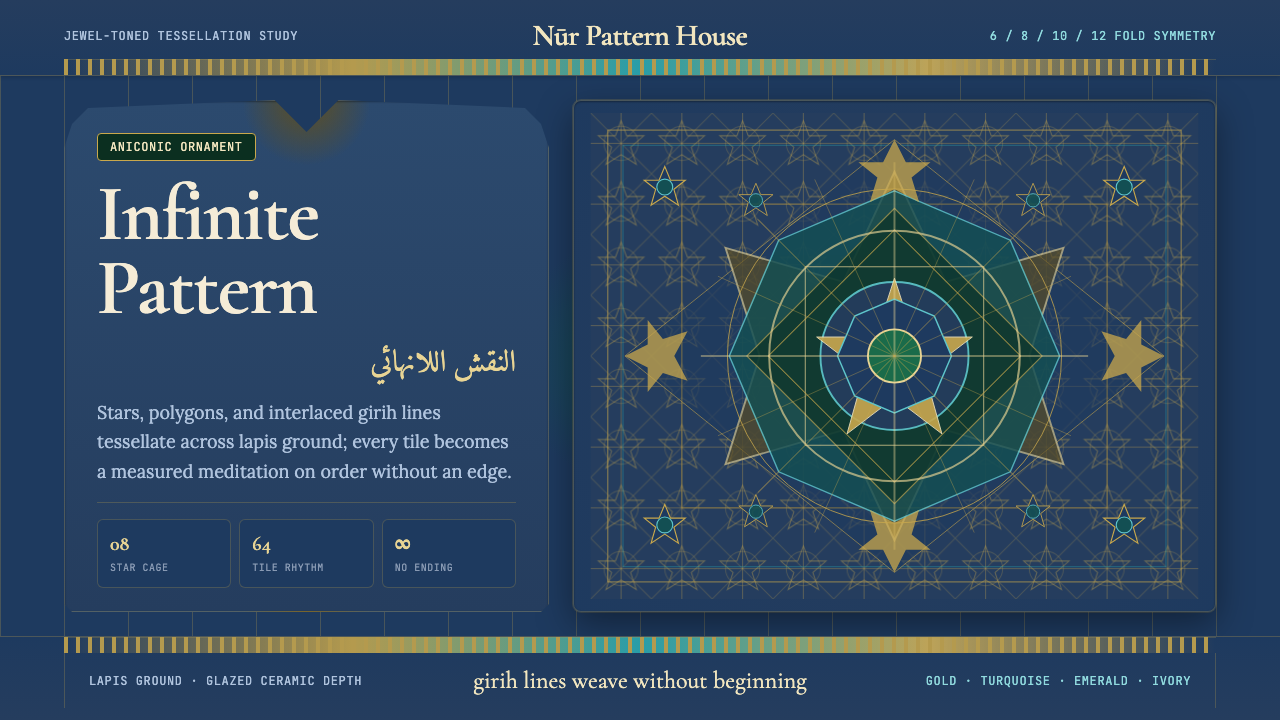 Islamic Geometric ArtInfinite order, fully tiled. Lapis ground with gold girih lines and turquoise…无限秩序,满幅铺陈。青金石底、金色girih线与绿松石星格。
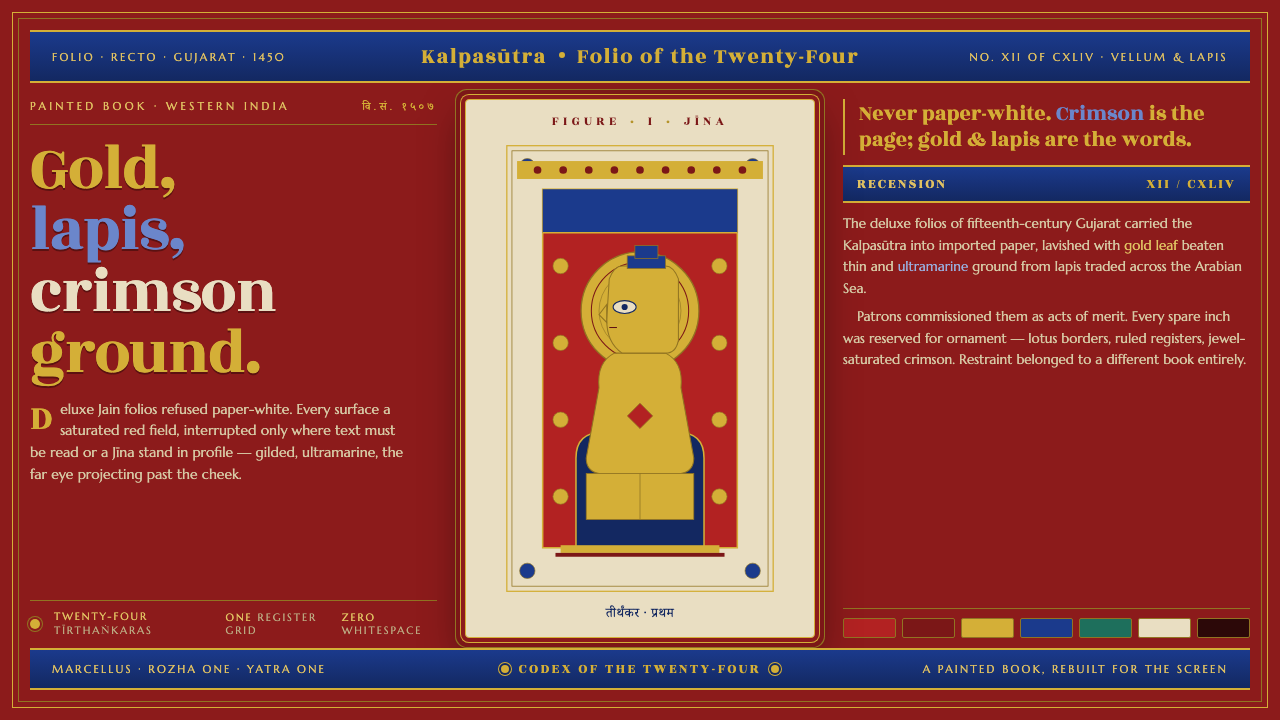 Jain Kalpasutra ManuscriptNever paper-white. Gold leaf and lapis figures on jewel-crimson, lotus-ruled…决不让页面留白:朱砂红底上以金箔与群青绘像,莲花栏边围合,如十五世纪豪华抄本。