What is Brazilian Bossa Nova Cool 1958?
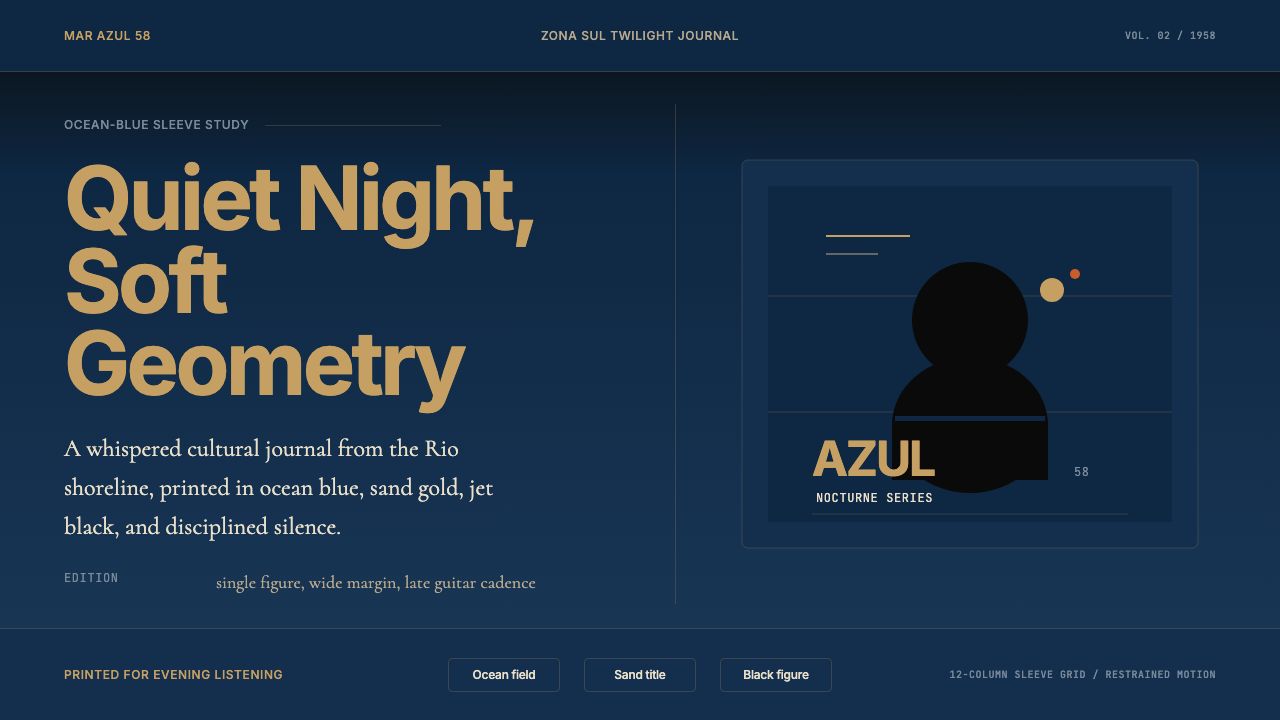
Bossa nova gave Brazil a new sound in 1958 — and Elenco Records gave that sound a visual identity so quietly radical it still reads as modern today.
Brazilian Bossa Nova Cool 1958 in brief
Brazilian Bossa Nova Cool 1958 is a design language rooted in the intersection of music, modernist architecture, and a particular moment in Rio de Janeiro's cultural history. It translates the defining qualities of bossa nova itself — restraint, intimacy, sophistication, and a specific kind of melancholy warmth — into a visual system organized around deep ocean-blue grounds, sand-gold type, jet-black silhouettes, and generous negative space.
The movement emerged not from a design school or a manifesto but from a record label. Elenco Records, founded in Rio in 1961, commissioned graphic designer Cesar G. Villela to create LP sleeves that would match the music's emotional precision. What Villela produced over the following years — spare covers with no more than a name, a silhouette, and a dominant field of color — became one of the most coherent and influential visual identities of twentieth-century Latin American design.
Visually, the system is immediately recognizable: deep blue like water at dusk, gold like last-light on sand, black used only as silhouette or structural type, and white space that breathes the way a rest between guitar notes breathes. The geometry is soft where Bauhaus is hard — curves echo Niemeyer's Brasília, organic forms replace the German movement's strict circle and square — but the underlying discipline of restraint and meaningful negative space belongs to the same modernist family.
Where does Brazilian Bossa Nova Cool 1958 come from?
Bossa nova — the name roughly translates as 'new trend' or 'new wave' — was born in the beachside neighborhoods of Rio de Janeiro's Zona Sul in the late 1950s. The movement crystallized around a small group of musicians and poets who gathered in Ipanema apartments and Copacabana bars: João Gilberto, who developed the signature understated guitar style sometimes called the 'violão gago' (stuttering guitar); Antônio Carlos Jobim, the composer and pianist who wrote the melodies that became the movement's canonical repertoire; and lyricist Vinicius de Moraes. The recording that is generally cited as bossa nova's founding document is João Gilberto's 1958 session that produced 'Chega de Saudade,' an Jobim composition whose title translates as 'No More Sorrow' — though 'saudade' carries the untranslatable Portuguese weight of longing for something loved and lost.
The broader cultural moment was inseparable from Brazil's architectural ambitions. The mid-1950s had seen President Juscelino Kubitschek commission Oscar Niemeyer and Lúcio Costa to design a new capital city, Brasília, from nothing. Niemeyer's buildings — the National Congress with its paired domes and dish, the presidential palace with its slanted external columns, the cathedral with its sixteen concrete ribs opening to the sky — embodied a specifically Brazilian version of modernism: rational structure softened by sensuous curves, European rigor tempered by tropical imagination. The same sensibility that produced those buildings was breathing in the living rooms where bossa nova was being invented.
Cesar G. Villela brought this convergence into two dimensions. Working for Elenco Records from around 1962, he developed a visual system for the label's LP covers that drew on the modernist confidence of Brasília and the emotional restraint of the music itself. His palette was anchored in deep ocean blue — the blue of Rio's bay at twilight, of the sea off Ipanema at dusk — and in a warm sand gold that echoed the beaches that were literally within walking distance of the studios where the recordings were made. The silhouettes he placed against these fields — a guitarist, a woman's profile, a couple — were rendered without detail: all shape, no texture, an approach that gave each image the quality of a long-held note rather than a photograph.
The wider influence of this visual moment extended beyond the record sleeves themselves. The bossa nova years coincided with a broader efflorescence of Brazilian graphic modernism: the Concretist movement in São Paulo was producing some of the most rigorous abstract art in the Americas, and designers like Aloisio Magalhães were beginning to articulate what a distinctly Brazilian modernism might look like — neither derivative of European high modernism nor trapped in nostalgic folklorism. The Elenco covers were part of this conversation: they demonstrated that restraint and sophistication were available in Brazil not in spite of its tropical location but because of its particular mixture of European transplants, African rhythm, and a landscape that makes formality feel slightly absurd.
What defines the Brazilian Bossa Nova Cool 1958 look?
Color
The palette is built on three anchoring values: a deep oceanic blue that reads as both sophisticated and melancholy, a warm sand gold that carries the thermal richness of a tropical beach without tropical brightness, and a near-absolute black used exclusively for silhouette and structural typography. White or off-white appears as the breathing ground between these three, never as a dominant surface. The blue is the emotional core — it carries the dusk quality that defines bossa nova's particular affect, neither night nor day, neither sad nor cheerful.
Silhouette and Figure
Human figures appear only as silhouettes — black shapes against the blue or gold ground, stripped of all detail except outline. This is the system's most distinctive visual move and its most culturally loaded one. A silhouette carries presence without individuality; it suggests without depicting. The figures that populate Elenco covers — guitarists, singers, women in profile — are universalized by this treatment: they could be anyone who has ever sat by a window at dusk with a guitar. The technique is visually economical in the same way bossa nova guitar is rhythmically economical: what is removed is as important as what remains.
Negative Space
Vast areas of the composition are left empty — not as default background but as active design choice. In a typical Elenco-derived layout, the dominant color field occupies more than half the available surface, and the elements placed within it — a name, a silhouette, perhaps a thin horizontal rule — are positioned with the same care one gives a note placed in a melodic phrase. The negative space is not empty; it is resonant. It gives the elements placed within it room to exist at full weight without competing for attention. This generosity of space is what distinguishes the style from mere minimalism: the emptiness has emotional content.
Typography
Type in this system serves as structural anchor, not decoration. The gold sans-serif letterforms on deep blue grounds define the Elenco template: names and titles set in clean, moderately weighted sans-serif at a scale that feels confident without being loud. Type is never set small for elegance — it is set at the scale it needs to be for the composition to hold. There is no decorative lettering, no display script, no type that attempts to look like music. The distance between music and text is maintained: words are words, sounds are sounds.
Curved Geometry
Where Bauhaus works with circles, squares, and triangles in their strict geometric purity, the bossa nova visual system introduces a softer geometry — the arc, the organic curve, the shape of a guitar body or a woman's shoulder — that owes more to Niemeyer's architecture than to the Bauhaus workshop. These curves are not decorative flourishes; they carry structural weight in compositions. A curved compositional line can organize a layout as decisively as a hard horizontal rule, but with the fluidity that the style's Brazilian origins suggest. The geometry breathes.
Tonal Restraint
The palette never becomes rich. The blue stays in the cool-deep range rather than brightening toward Caribbean turquoise; the gold never tips into orange warmth or tropical yellow. Both are held at a register that suggests sophistication and a certain wistfulness — what the Portuguese concept of saudade names, that quality of longing for what is beautiful and passing. This tonal discipline is the style's clearest analogue to bossa nova's musical affect: the refusal of full volume, the whispered note held just under the threshold of loudness.
Compositional Stillness
Layouts in this system do not move. There is no diagonal energy, no collision of elements, no tension created by opposing forces. The composition rests — a figure placed in the lower third of a blue field, a name positioned with careful asymmetry above it, the rest untouched. This stillness is not emptiness of idea; it is the visual equivalent of holding a note until it decays naturally rather than cutting it short. Dynamism in this system comes from contrast — the black silhouette against the blue ground, the gold name against the dark field — not from movement or tension.
Who shaped Brazilian Bossa Nova Cool 1958?
Gilberto's 1958 recording sessions in Rio are the founding event of bossa nova as a defined style. His approach to guitar reduced the instrument's role from melodic carrier to rhythmic-harmonic engine — the famous 'violão gago,' a subtly syncopated strumming pattern that created space for the voice to float above it. His vocal style was equally revolutionary: intimate, almost conversational, sung at a volume that suggested a private room rather than a concert hall. Gilberto's aesthetic of deliberate understatement is the musical analogue of everything the Elenco visual system was doing simultaneously in another medium.
Jobim — known internationally as Tom Jobim — was the composer and arranger whose work gave bossa nova its melodic identity. Where Gilberto provided the rhythmic framework and the performing style, Jobim provided the harmonic vocabulary: sophisticated chord substitutions drawn from both the European art song tradition and American cool jazz, set beneath melodies of unusual length and asymmetric phrase structure. His compositions — 'Garota de Ipanema,' 'Corcovado,' 'Água de Beber' — became the repertoire through which the world came to understand what bossa nova was. His musical architecture is as much a presence in the Elenco visual system as Villela's design choices: the cover images exist to hold the music, and the music shapes what the covers needed to be.
Villela is the designer responsible for translating bossa nova's musical values into a visual system. Working for Elenco Records through the early-to-mid 1960s, he produced a body of LP cover work that established the deep blue, sand gold, and black silhouette vocabulary that defines the style. His background in Brazilian modernism — the same movement that produced the Concretist painters and Niemeyer's Brasília — equipped him to understand that restraint was not poverty but precision, and that a cover with three elements and vast empty space was making a bolder statement than one crowded with imagery. His work remained largely unrecognized internationally until design historians began recovering the visual culture of mid-century Latin America in the late twentieth century.
Niemeyer was not a bossa nova figure in any direct sense, but his architectural vision permeates the aesthetic context from which the style emerged. His Brasília buildings — designed through the late 1950s and early 1960s, exactly concurrent with bossa nova's emergence — demonstrated that modernist discipline and sensuous form were not incompatible, that a building could be both rational and beautiful in ways that drew on specifically Brazilian cultural conditions rather than importing a European template. This coexistence of rationality and organic warmth is precisely what the Elenco visual system achieved in two dimensions: the clean geometry and restricted palette of European modernism, softened and given emotional resonance by the curves and light-quality of the Brazilian coast.
De Moraes was the poet and lyricist who co-wrote many of bossa nova's most enduring songs, including 'Garota de Ipanema' (with Jobim) and the texts that gave bossa nova its particular literary register: educated, ironic, intensely sensory, and shaped by the specific geography of the Zona Sul — the beaches, the bars, the evening light. His presence in the bossa nova canon reminds us that the style was literary before it was visual, and that the Elenco visual system was always working to represent not just music but text — words that described a world with the same economy and precision that Villela's covers depicted it.
How do you use Brazilian Bossa Nova Cool 1958 today?
The Brazilian Bossa Nova Cool 1958 design language is applicable wherever sophistication, emotional depth, and restrained confidence are the desired register. It performs particularly well in contexts that need to feel both warm and considered — not the cold authority of Swiss International Style nor the bold geometry of Bauhaus, but something more intimate. The key discipline when applying it is understanding that the style's power lies entirely in what is withheld: elements added beyond the minimum will not enrich the composition, they will destroy it.
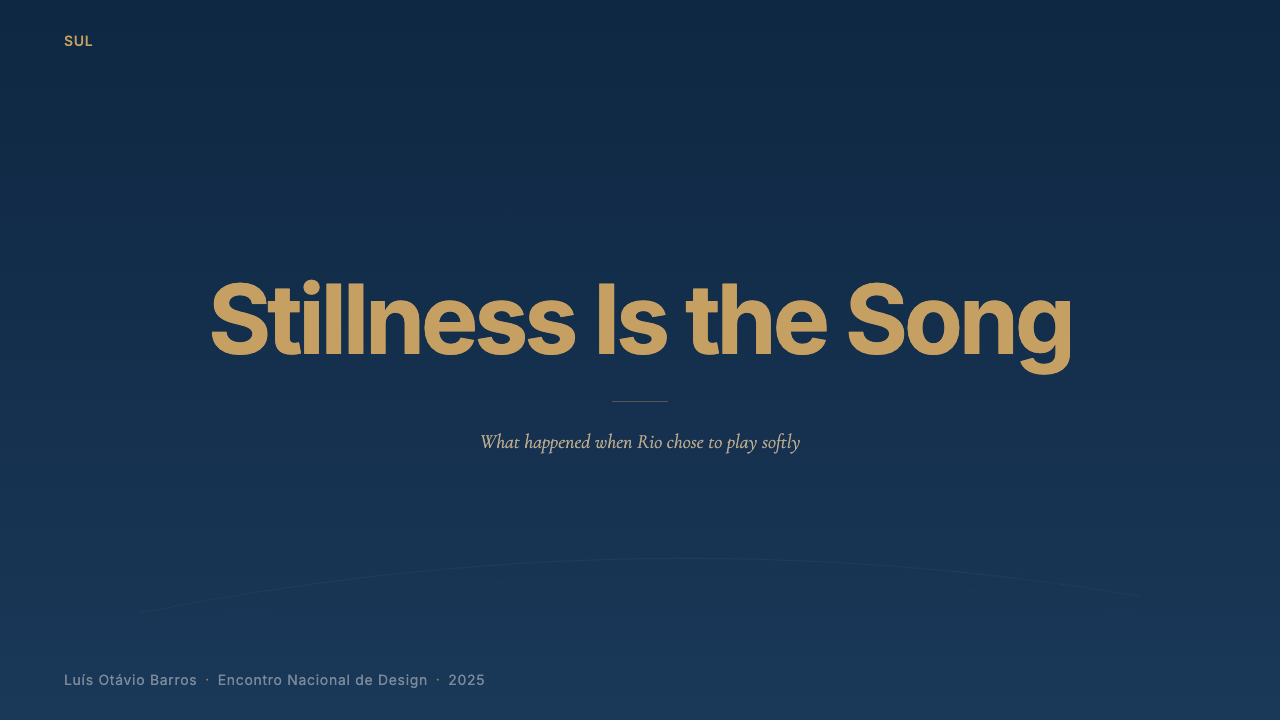
For presentation slides, this system works best when it is applied with the commitment of a record sleeve designer: a cover slide treated as a single-color field with one silhouette or graphic element and the title set in the system's warm gold against deep blue. Content slides should maintain the generous negative space — no slide should feel crowded. Data slides benefit from the palette's natural emotional range: blue for baseline or neutral data, gold for highlighted values, black silhouette shapes as infographic elements. The system translates beautifully to a deck about music, culture, travel, hospitality, or any product that wants to carry a sense of considered craft.
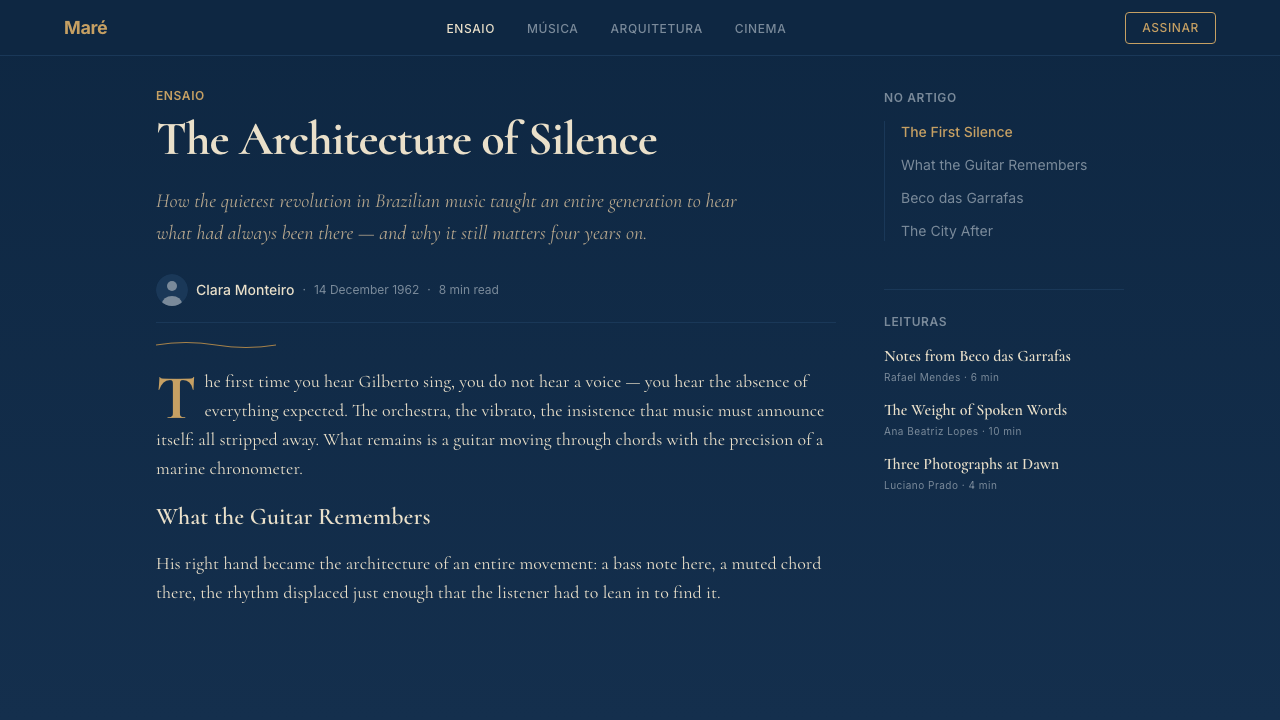
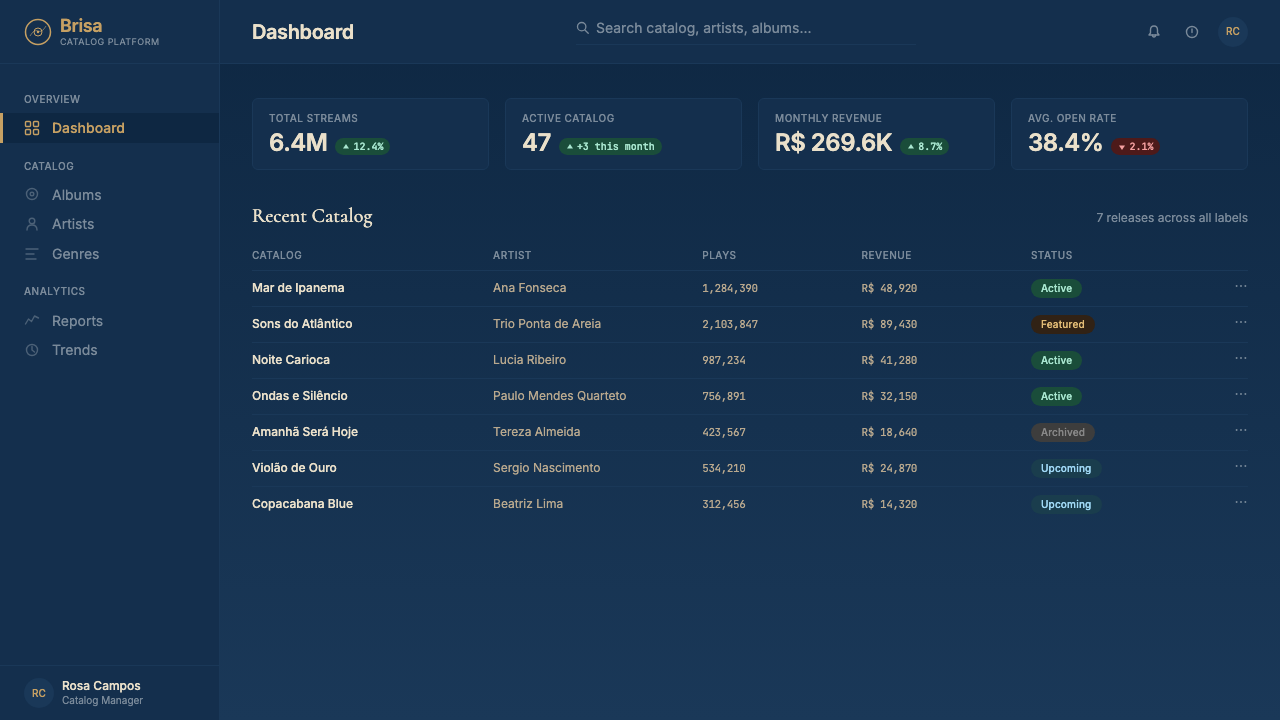
For web interfaces, the style is most effective in contexts that benefit from emotional warmth alongside visual discipline: a boutique hotel or travel booking interface, a music-adjacent platform, an arts or cultural institution site, a portfolio for creative work. The approach is: lead with deep blue as the dominant surface color, use gold sparingly for key calls to action and hover states, keep body text in near-black or warm dark tones rather than pure black, and resist the temptation to introduce secondary accent colors. Card components should have soft curved corners echoing the style's organic geometry; shadow, where used, should be subtle and warm rather than hard and cool.
For editorial and marketing work, the system offers a strong framework for covers, campaign imagery, and event materials. A poster in this style requires courage: trust that a silhouette, a field of blue, and a name are enough. Body text in editorial layouts should be given wide margins and generous line spacing — tightness is antithetical to the style's breathing quality. Marketing materials for cultural events, music releases, travel brands, or creative services can use this system to project the quality of being both internationally sophisticated and specifically rooted in a place and tradition.
The most common mistake when applying this style is introducing too many elements in an attempt to make compositions feel complete. A blue ground with one silhouette and one line of gold type is a finished composition; adding a secondary image, a decorative border, or a second color will not improve it. The second most common mistake is using a blue that is too bright — the system's blue should always read as deep water at dusk, never as the sky in the middle of the day. A bright blue turns the system from melancholy sophistication into something merely tropical, which is precisely the effect the original Elenco designers were working to avoid.
Brazilian Bossa Nova Cool 1958 — FAQ
Is this style specifically Brazilian, or does it belong to a broader mid-century design moment?
Both, and the tension between those two claims is what makes it interesting. The visual language shares significant DNA with mid-century European and American modernism — the restricted palette, the commitment to negative space, the sans-serif typography — but its emotional register is distinctly Brazilian. The particular quality of blue (oceanic, twilight, slightly melancholy), the warmth of the gold (sand rather than chrome), the organic curves (Niemeyer rather than Bauhaus), and above all the emotional affect that the system carries — something between sophistication and wistfulness — belong to a specific geography and cultural moment that cannot be fully transplanted.
How does this style differ from other cool-jazz-adjacent visual languages of the same period, like the Blue Note Records design?
Blue Note's visual identity — developed primarily by Reid Miles through the 1950s and 1960s — shares the commitment to high-contrast, photography-integrated, typographically bold design that marks sophisticated mid-century record design. But Blue Note is more urban, more confrontational, more typographically aggressive. It crops photographs dramatically and uses type as an architectural element at high contrast. The Elenco system is more atmospheric and less dynamic: silhouette over photography, emotional color over structural contrast, stillness over tension. Both are sophisticated, but Blue Note is a New York studio at midnight and Elenco is an Ipanema apartment at dusk.
Can this style work effectively in light-background layouts, or does it require the deep blue ground?
The style can be adapted to light backgrounds, but doing so requires understanding what is being traded. The deep blue ground is not merely a background color — it is the emotional carrier of the system. An inversion to light ground (cream or warm white) with dark type and silhouette elements in the style's characteristic tones can work, and may be appropriate for applications where the full dark palette would feel too heavy. But the result is not the same emotional register: it becomes cooler, more considered, less atmospherically charged. Think of it as the difference between listening to bossa nova in a dimly lit room versus a bright one — the music is the same, but something is lost in the light.
What kinds of products or brands should avoid this style?
The style is poorly suited to contexts that require high energy, urgency, or mass-market accessibility. A fast-food brand, a gaming platform, a sports retail identity, or any product whose primary emotional pitch is excitement or aggression will find this system's deliberate stillness working against it. The style's melancholy warmth is also potentially misaligned with categories that need to project pure optimism — a children's educational platform, a wellness app built around cheerful positivity, or a consumer brand that competes on brightness and vibrancy. The style does one emotional register very well; it is not emotionally versatile.
How should imagery and photography be treated in this system?
Photography, if used at all, should be treated with the same restraint applied to every other element. The Elenco original system used no photography — only silhouettes — and that is still the purest approach. When photography must be included, it should be converted to high-contrast treatment with strong dark tones, cropped to emphasize shape over detail, and positioned as one element within a composition that remains dominated by the color field and negative space rather than by the image itself. Photographic subjects should tend toward the human figure, natural landscapes of the Zona Sul type, or objects with strong silhouette quality. Busy documentary or product photography is antithetical to the system's values.
Related design styles
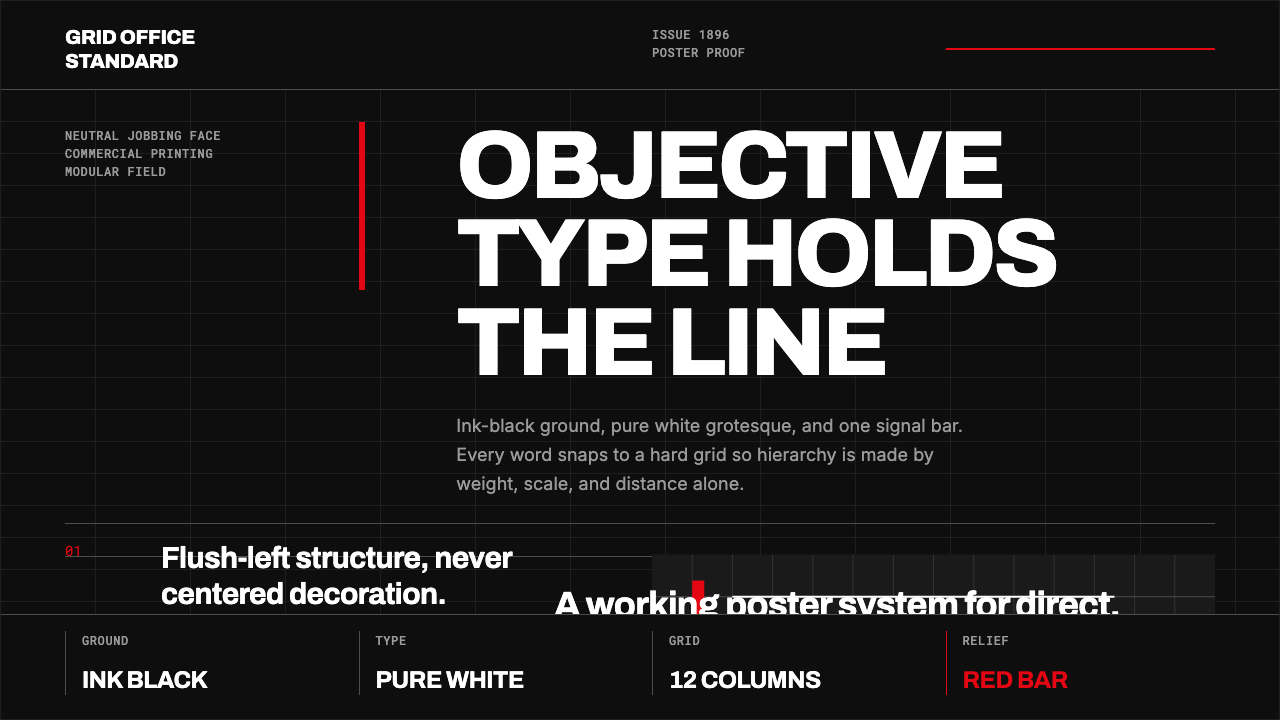 Akzidenz-Grotesk BertholdObjectivity in black ink. White grotesque type, hard grid, one rationed red b…
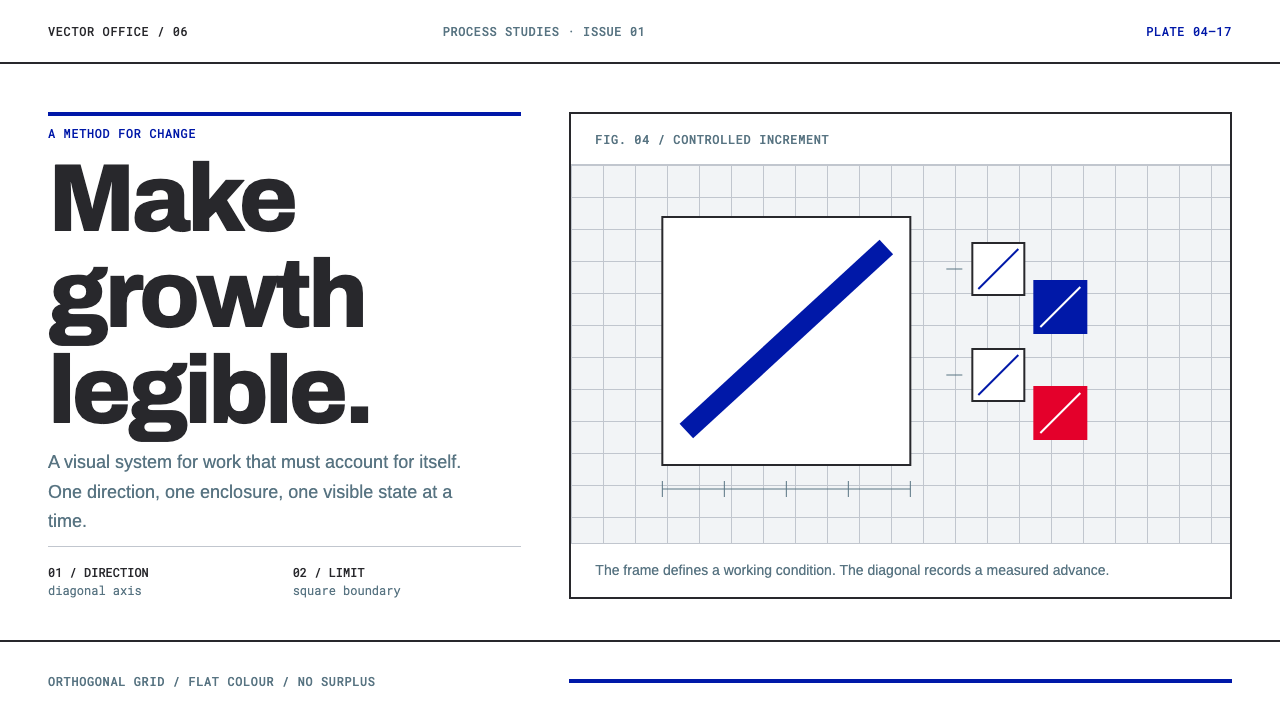 Anton Stankowski ConstructiveProcess becomes visible. Flat blue diagonals and hard square rules make chang…
 Bechers Industrial TypologyDeadpan order. Mid-grey ground, Archivo labels, and strict hairline grids rev…
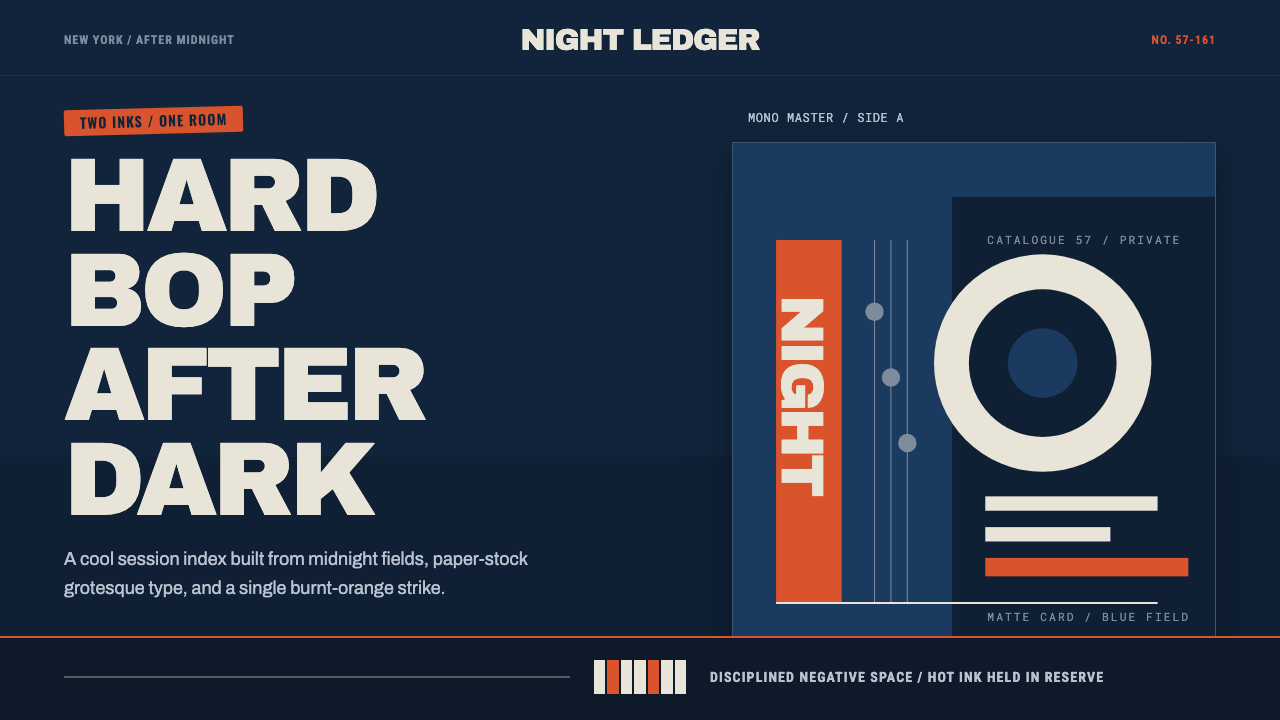 Blue Note JazzCool intelligence, printed flat. Midnight blue, paper type, and one burnt-ora…
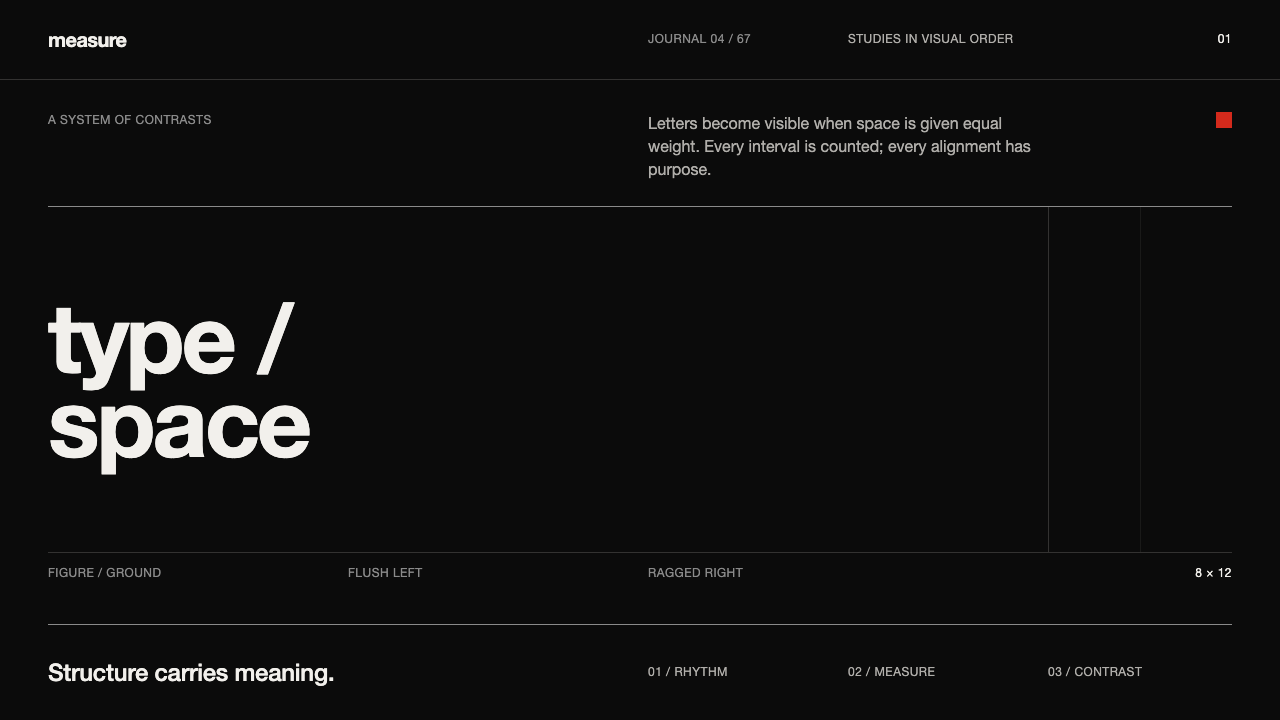 Emil Ruder TypografieDiscipline makes type visible. Near-white grotesque and measured space cut th…
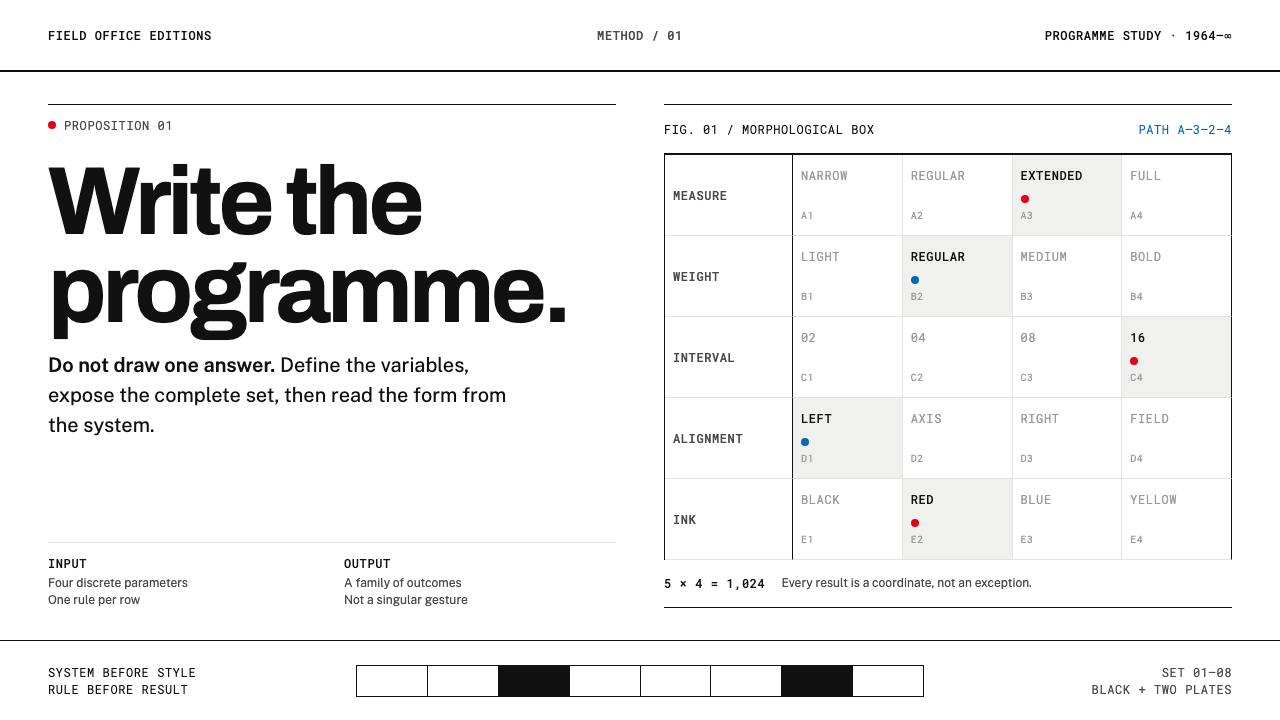 Karl Gerstner ProgrammesDesign becomes a programme. Black hairlines and a strict matrix turn paramete…