About Taíno Cemí
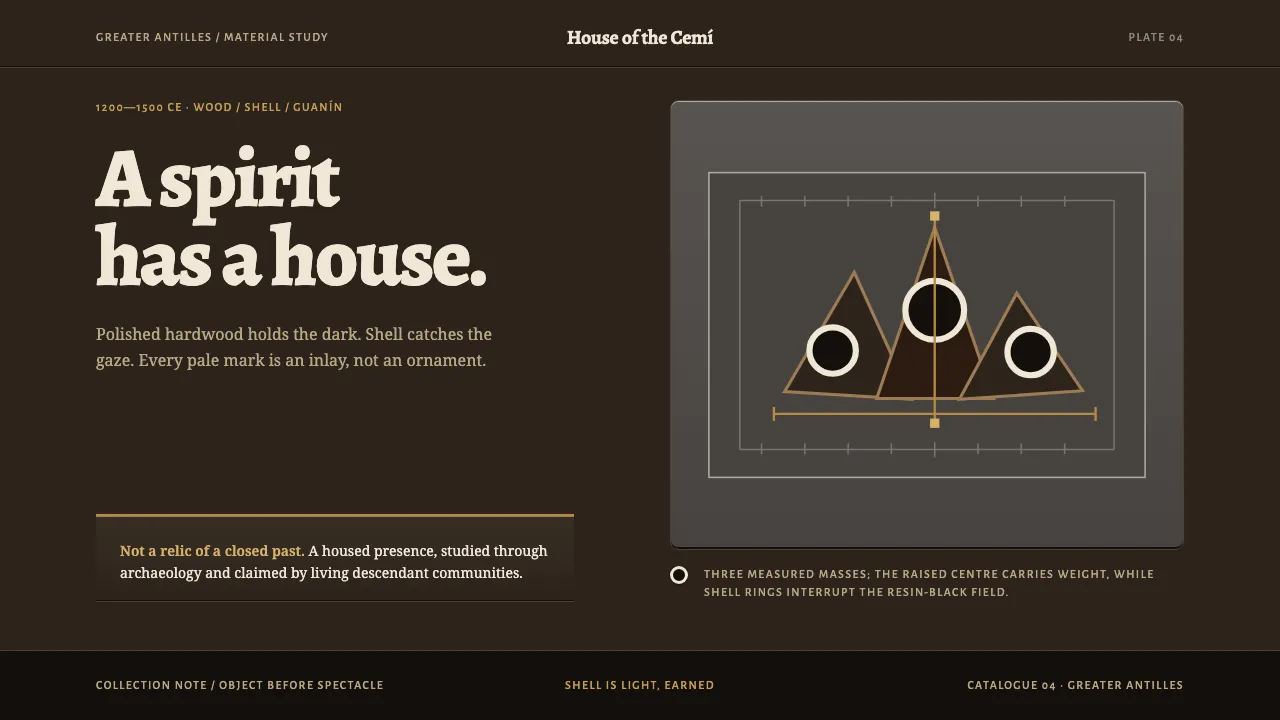
A cemí is a spirit and the object that houses it. Between 1200 and 1500 CE, carvers across the Greater Antilles cut three-pointed trigonoliths from dense grey volcanic rock, or from guayacan hardwood polished until the wood's own resin surfaced as a black lustre. Eyes and teeth were inlaid with shell, so a pale ring stares out of a near-black body.
This system takes that material logic literally. The page is polished hardwood. Type sits in the museum-editorial register that Spanish-language archaeology publishing actually uses. Light arrives only where shell, gold-copper alloy or annatto red was actually set — never as decoration spread evenly across a surface.
- Origin
- Greater Antilles — Puerto Rico, Hispaniola, Cuba, Jamaica
- Era
- c. 1200–1500 CE, into first Spanish contact 15th–16th century
- Key figures
- George Latimer
- Movements
- Taíno stone and wood carving · shell inlay · Vere hardwood zemi group
Taíno Cemí design spec
Colors
Typography
The other 11 sections — buttons, cards, spacing, motion, techniques and more — open once you unlock. Download the DESIGN.md or send it to your AI in one click. Unlock once, yours forever.
Sign up nowStyles similar to Taíno Cemí
Also inspired by crafts & folk art, with a close feel.
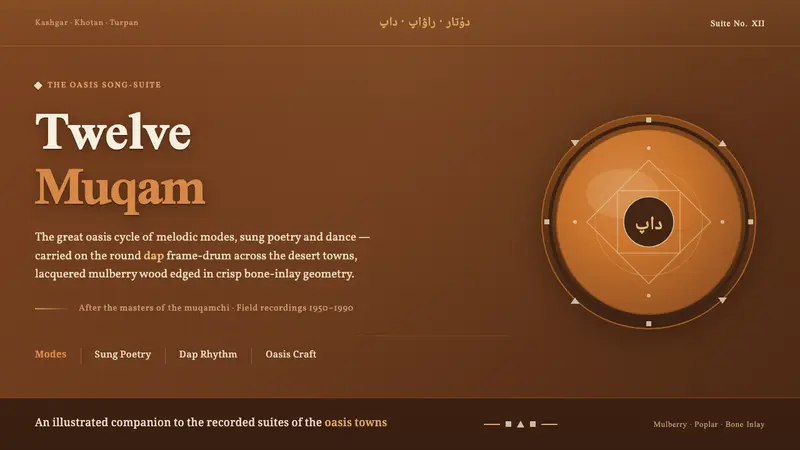 Uyghur Muqam & Dap DrumLamplight on carved wood. Ochre and amber over mulberry-brown, edged in bone-inlay geometry.
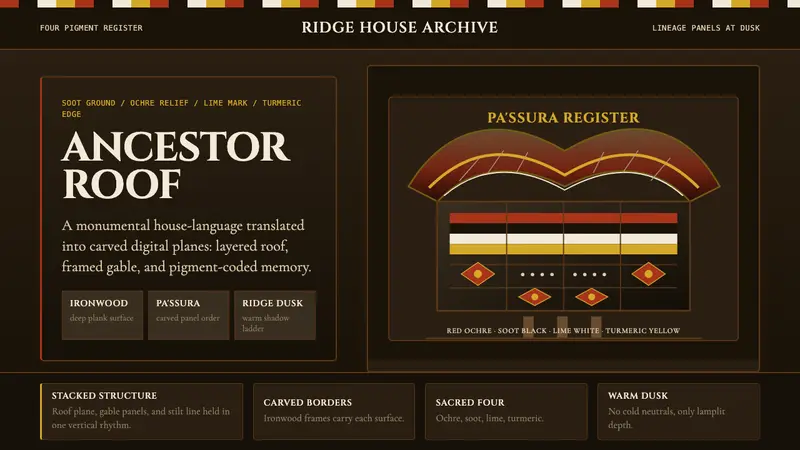 Torajan Tongkonan (Boat-Roof House)Ancestral dusk, carved in color. Soot black frames ochre, lime white, and turmeric bands.
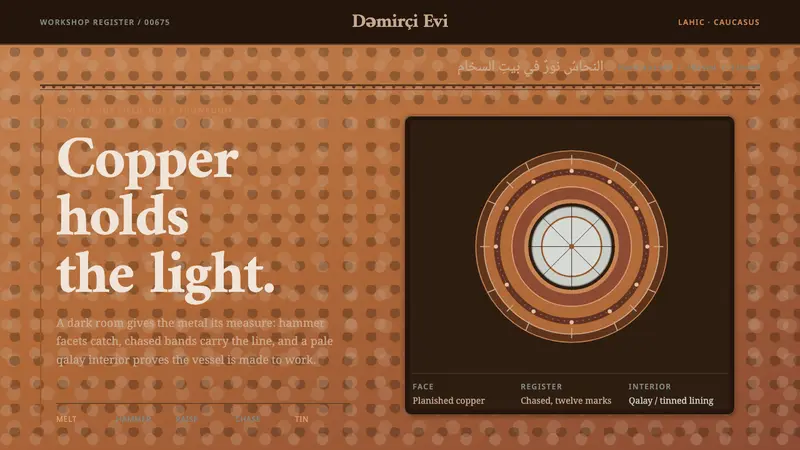 Lahic CoppersmithCopper becomes light. Soot-black bands, Amiri type, hammer facets and tin reveal the hand.
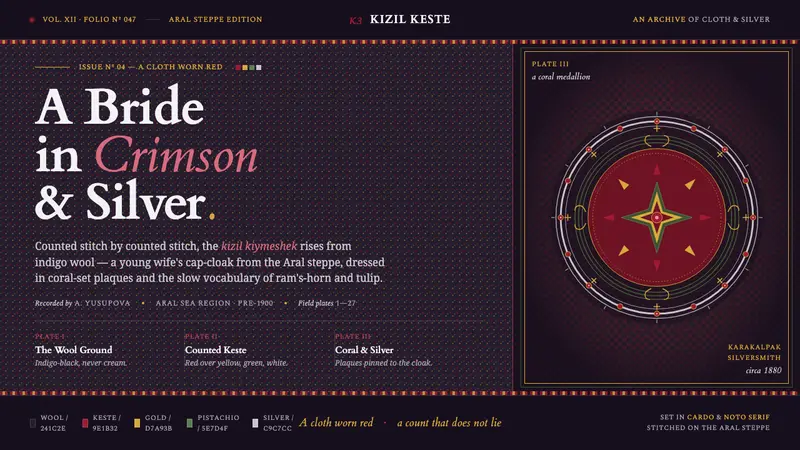 Karakalpak Kimeshek DressA cloth worn red. Crimson keste cross-stitch on indigo wool, set with silver-and-coral jewelry.