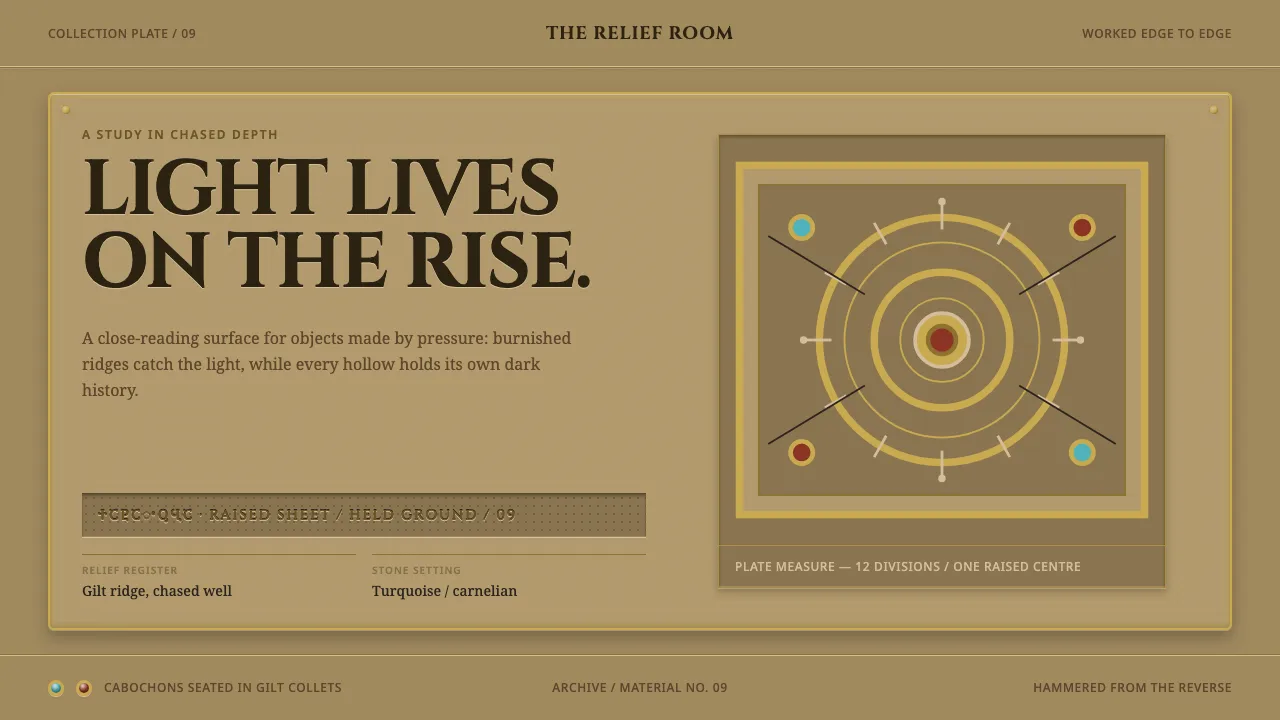
About Svaneti Repoussé Icon
In the stone-tower villages of Upper Svaneti, painted icons were sheathed in hammered silver — a gilded sheet worked from behind into high relief, nailed over the red-brown wooden panel, set with turquoise and carnelian cabochons, and chased across the plate with an asomtavruli inscription.
The valley churches served as vaults, and what survives there is the largest body of early medieval icons outside St Catherine's on Sinai. The Svan chasers pushed the relief unusually deep, so in this system the darkness lives in the recesses, never in the ground.
- Origin
- Upper Svaneti, Georgia — Mestia, and the church of Lagurka at Kala
- Era
- Early medieval through late medieval Georgian metalwork (9th–15th century), the practice continuing into the modern period
- Key figures
- the Gvazavaisdze brothers · the master of the Shaliani repoussé Crucifixion · the anonymous chasers of the paired Lagurka and Mestia Archangel icons
- Movements
- Georgian repoussé revetment · the Svan deep-relief chasing school · asomtavruli monumental lettering
Svaneti Repoussé Icon design spec
Colors
Typography
The other 11 sections — buttons, cards, spacing, motion, techniques and more — open once you unlock. Download the DESIGN.md or send it to your AI in one click. Unlock once, yours forever.
Sign up nowStyles similar to Svaneti Repoussé Icon
Also inspired by art & artists, with a close feel.
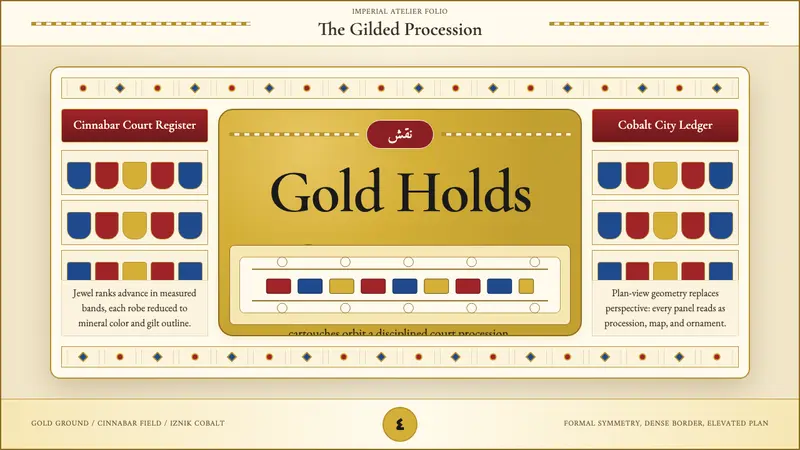 Ottoman Court Miniature (Topkapı)Ceremony made dense. Gold ground, cinnabar cartouches, cobalt procession geometry.
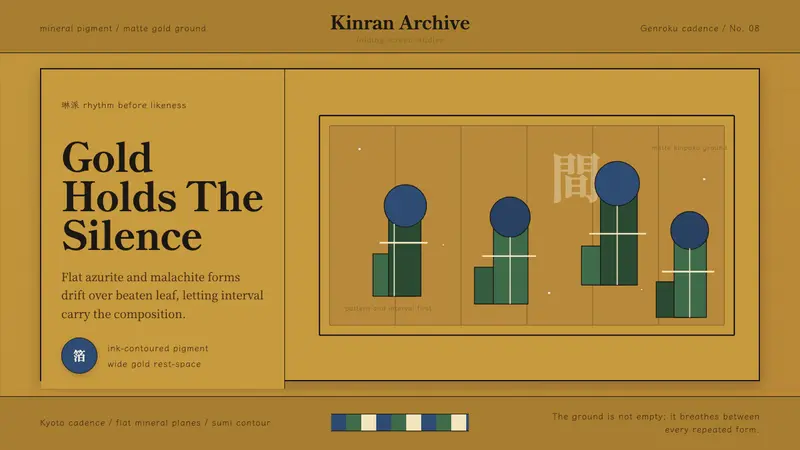 Edo Rinpa (Kōrin)Matte gold breathes. Azurite and malachite repeats float across inked screen folds.
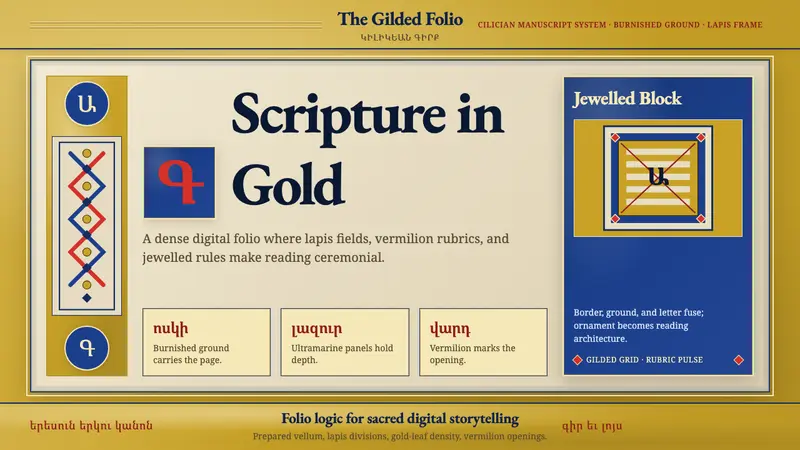 Armenian Illuminated Manuscript (Toros Roslin)Gilded maximalism. Burnished gold, lapis frames, and vermilion initials build a dense folio.
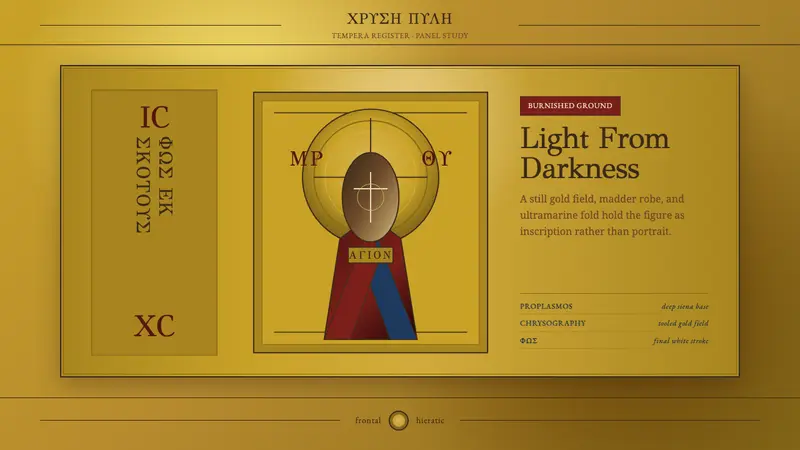 Mount Athos IconStillness becomes light. GFS Greek inscriptions frame madder, ultramarine, and gold.