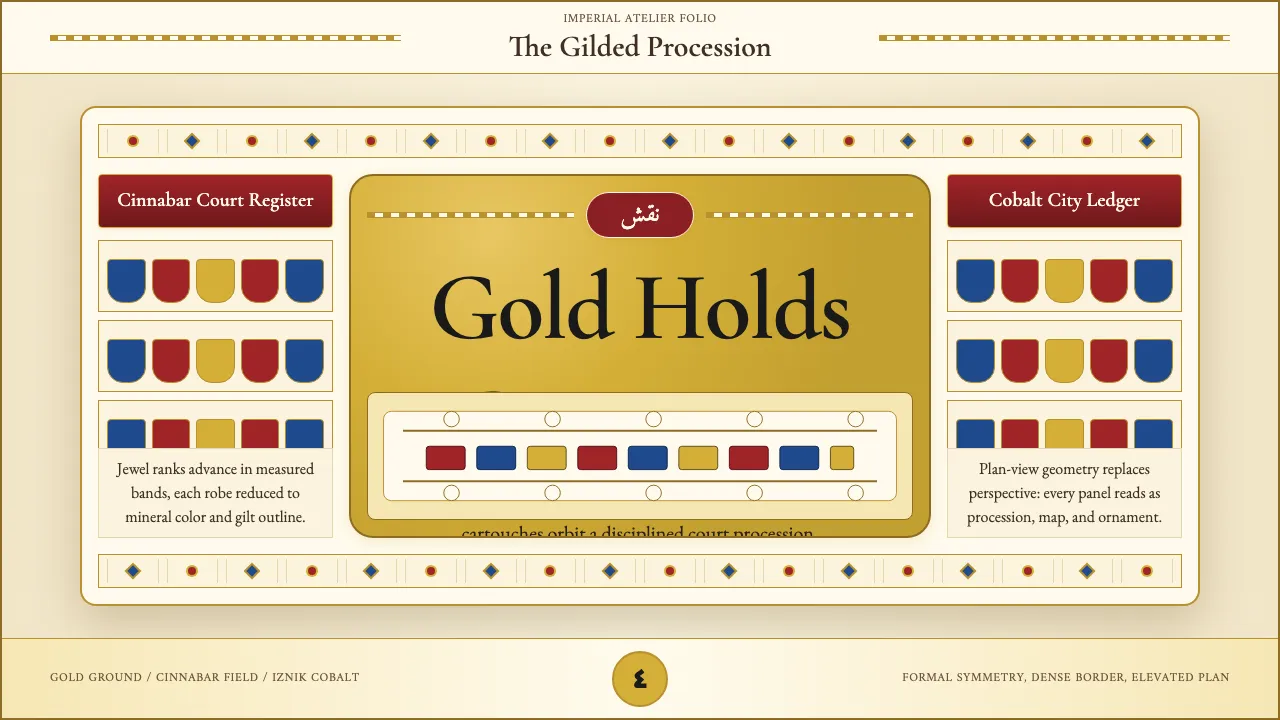
About Ottoman Court Miniature (Topkapı)
Ottoman Court Miniature is the high point of Sunni-Turkish-Islamic book art, produced in the Sultan's nakkaşhane inside Topkapı Palace between 1500 and 1750. Distinct from its Persian and Mughal cousins, it favors heavier gold ground, saturated cinnabar reds, topographical precision, and formal Sultan-on-throne court compositions.
Festival books like the *Sūrname-i Hümayun* (1582) and *Sūrname-i Vehbi* (1720) record processions, while Matrakçı Nasuh's city-views and Nakkaş Osman's Sultan-portraits define the visual canon — gold sky, jewel-toned kaftans, tulip-rose border bands, and Arabic-Nastaliq cartouches.
Learn more about the Ottoman Court Miniature (Topkapı) style
- Origin
- Ottoman Empire — Istanbul (Topkapı Palace nakkaşhane), with Cairo, Bursa, Edirne secondary centers
- Era
- Peak production 1450–1750 (classical codification under Süleyman the Magnificent 1520–1566, Murad III, Ahmed III); decline post-1750 Tanzimat
- Key figures
- Nakkaş Osman · Levni (Abdülcelil Çelebi) · Matrakçı Nasuh · Mehmed Siyahkalem
- Movements
- Ottoman court atelier tradition · Islamic illustrated manuscript tradition · Early-modern Mediterranean art exchange
Ottoman Court Miniature (Topkapı) design spec
Colors
Typography
The other 11 sections — buttons, cards, spacing, motion, techniques and more — open once you unlock. Download the DESIGN.md or send it to your AI in one click. Unlock once, yours forever.
Sign up nowStyles similar to Ottoman Court Miniature (Topkapı)
Also inspired by art & artists, with a close feel.
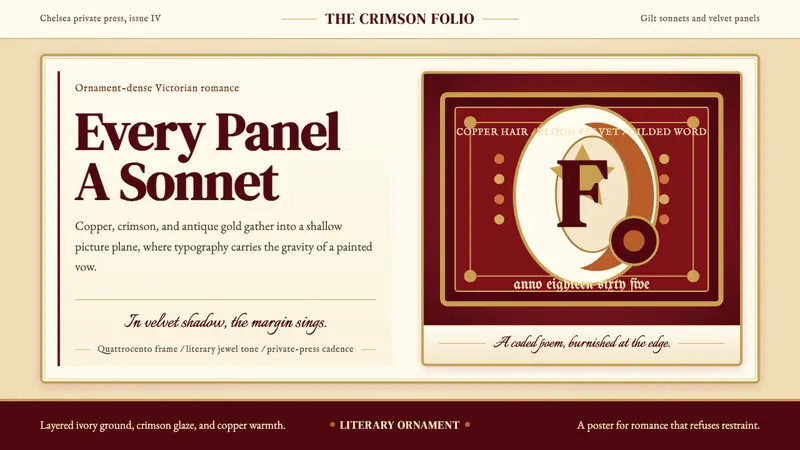 Rossetti — Pre-Raphaelite StunnerRomance refuses restraint. Crimson velvet, copper serif, and gilt frame turn type into sonnet.
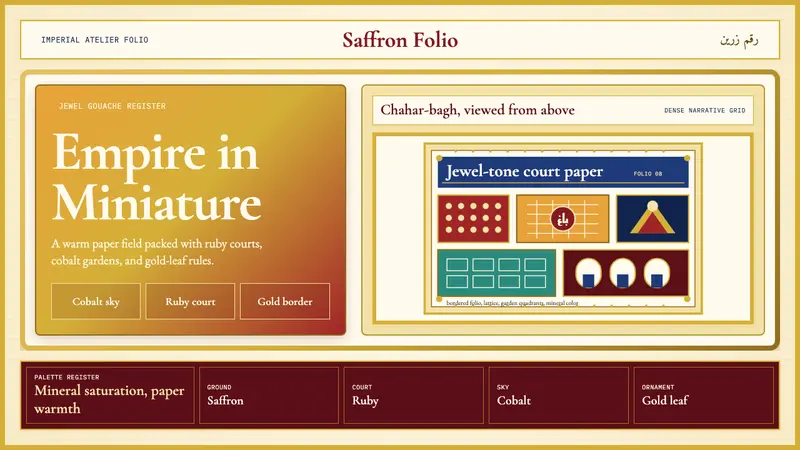 Mughal Miniature (Akbar era)Opulence refuses emptiness. Saffron paper, ruby panels, cobalt lattice, gold borders.
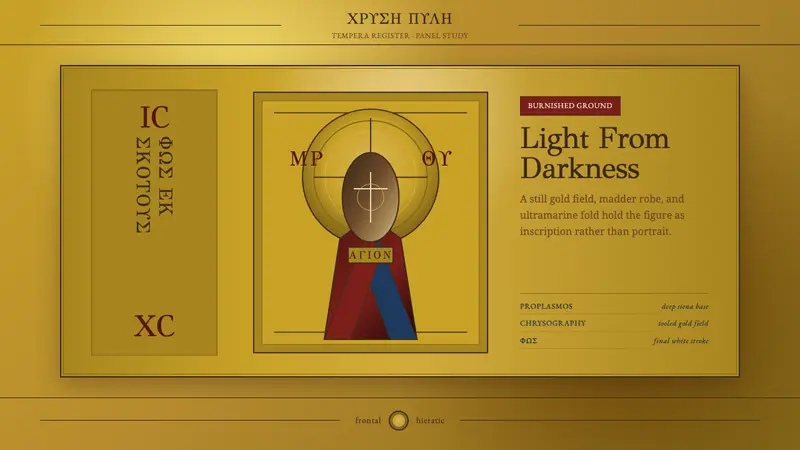 Mount Athos IconStillness becomes light. GFS Greek inscriptions frame madder, ultramarine, and gold.
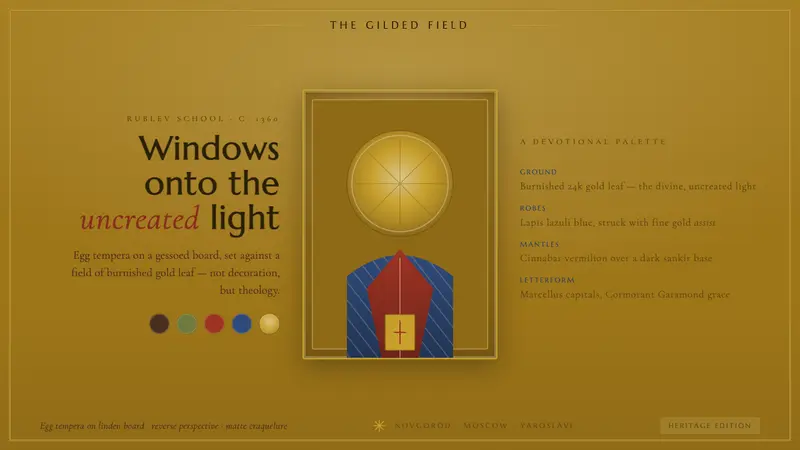 Russian Orthodox Icon (Rublev school)Burnished gold leaf as divine light. Lapis and cinnabar saints, incised halos, earthy sankir browns.