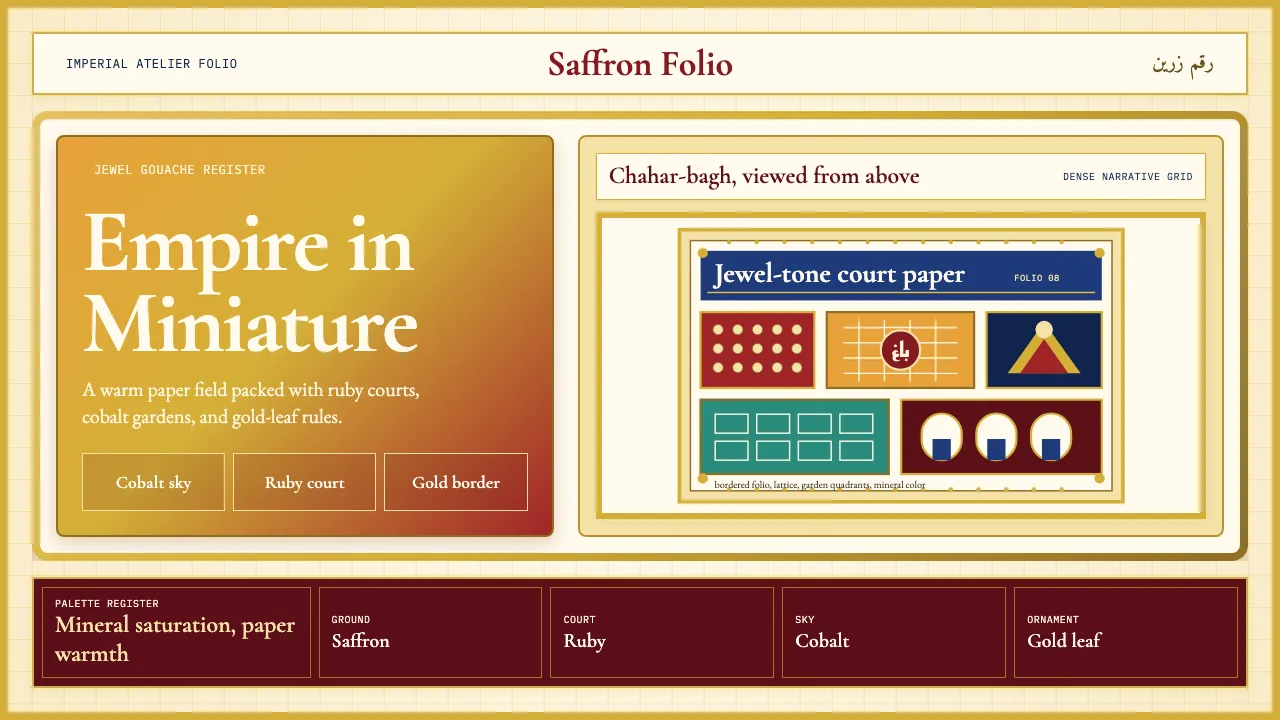
About Mughal Miniature (Akbar era)
Mughal miniature painting is the Indo-Persian synthesis that produced South Asia's most opulent illustrated book art. Akbar's imperial atelier in Agra and Fatehpur Sikri brought Persian masters from Tabriz together with Hindu Rajput painters, yielding manuscripts like the Akbarnama, Hamzanama, and Padshahnama.
The visual is jewel-tone gouache on warm cream paper — saffron-orange grounds, ruby-crimson tents, cobalt skies, and gold-leaf ornament. Every folio is dense narrative seen from an elevated Persian viewpoint, packed with micro-figures rendered in startlingly precise portraiture, framed by 1–2cm gold-leaf borders.
- Origin
- Mughal Empire — Agra, Fatehpur Sikri, Lahore, Delhi
- Era
- Peak Mughal painting 1556–1707; Akbar founded the imperial atelier 1556–1605
- Key figures
- Akbar the Great · Mir Sayyid Ali · Abd al-Samad · Basawan · Abu'l Hasan · Ustad Mansur · Bichitr
- Movements
- Mughal manuscript painting · Indo-Persian synthesis · Safavid-Timurid descent · Rajput cross-influence
Mughal Miniature (Akbar era) design spec
Colors
Typography
The other 11 sections — buttons, cards, spacing, motion, techniques and more — open once you unlock. Download the DESIGN.md or send it to your AI in one click. Unlock once, yours forever.
Sign up nowStyles similar to Mughal Miniature (Akbar era)
Also inspired by art & artists, with a close feel.
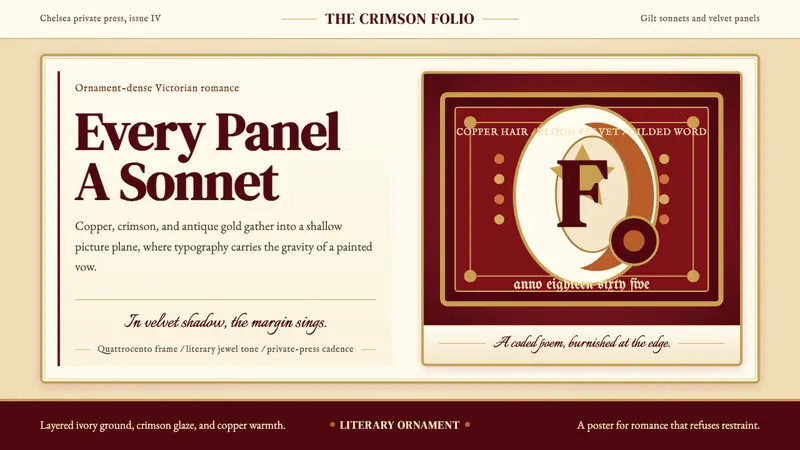 Rossetti — Pre-Raphaelite StunnerRomance refuses restraint. Crimson velvet, copper serif, and gilt frame turn type into sonnet.
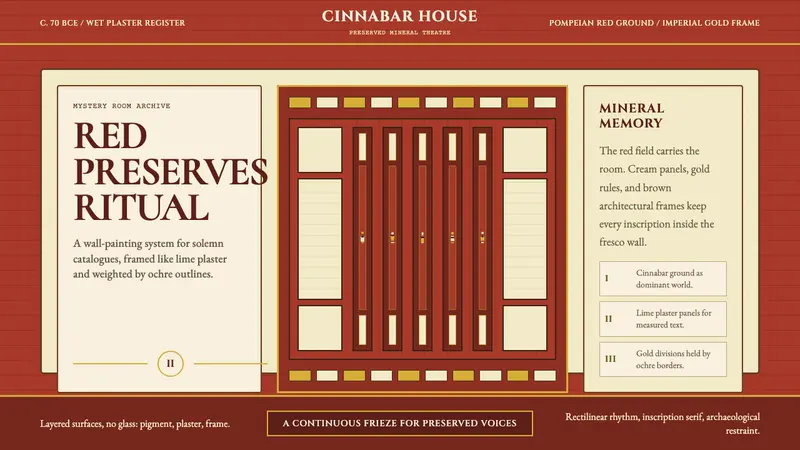 Pompeii Fresco Villa of MysteriesThe wall is the world. Pompeian red, cream plaster panels, and gold frames hold the ritual.
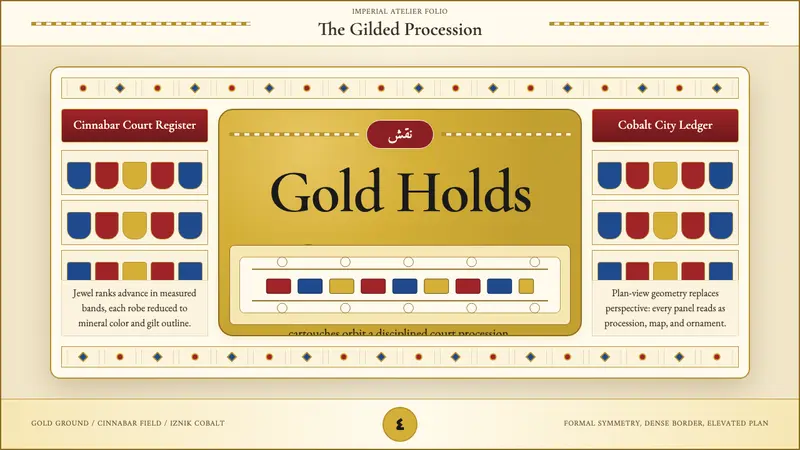 Ottoman Court Miniature (Topkapı)Ceremony made dense. Gold ground, cinnabar cartouches, cobalt procession geometry.
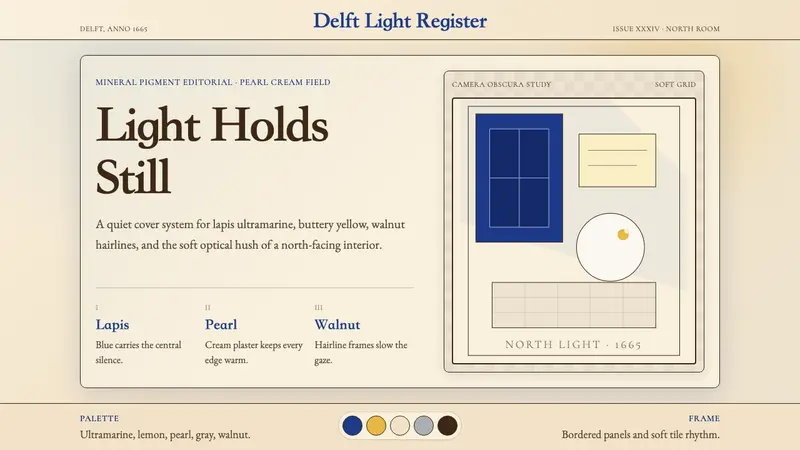 Vermeer Dutch Golden AgeStillness glows. Lapis ultramarine, pearl cream, and walnut frames hold north light.