关于 Svaneti Repoussé Icon
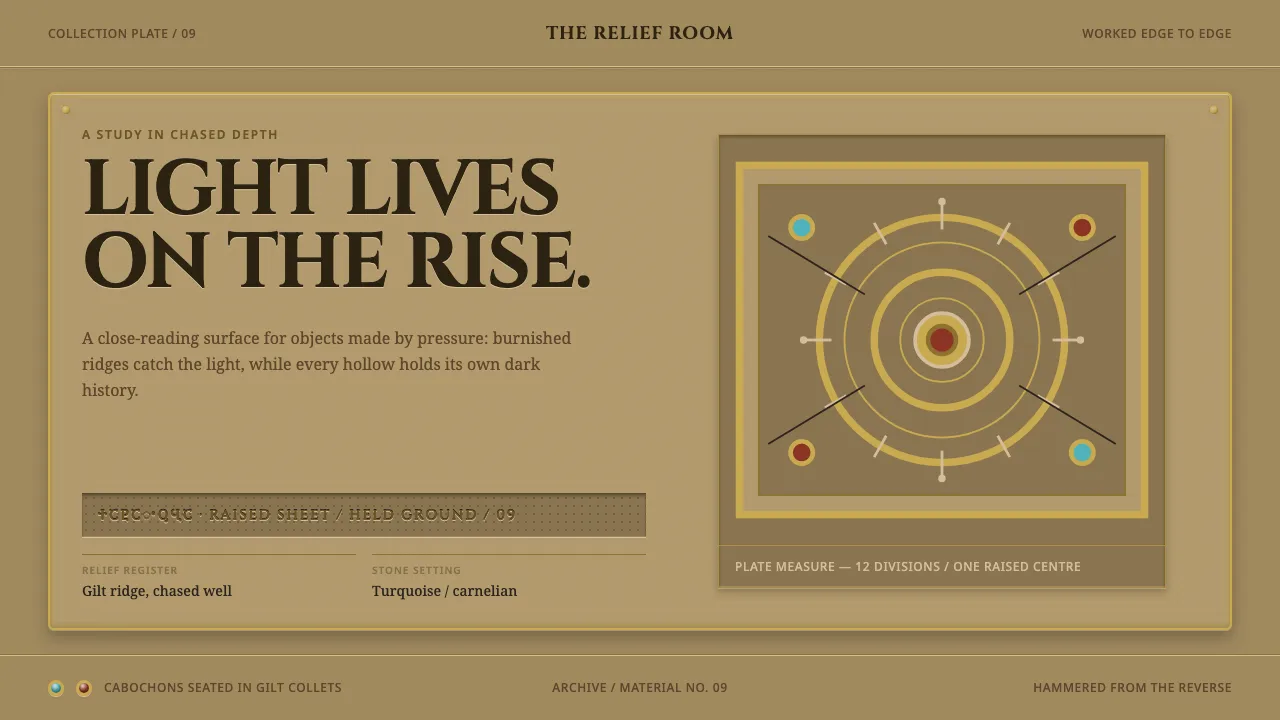
在上斯瓦涅季的石塔村落里,圣像不是挂着看的,而是被包起来的:一整张银片从背面锤打出高浮雕,鎏金之后钉在红棕色木板上,嵌入绿松石与红玉髓的弧面宝石,再用凿子在平面上刻出阿索姆塔符里体的铭文。
山谷里的教堂充当了金库,因而这里留下了西奈山圣凯瑟琳修道院之外规模最大的一批早期中世纪圣像。斯瓦涅季匠人把浮雕打得比别处更深,所以这套系统的暗部藏在凹陷里,而不是铺在底子上——底色始终是那层被摩挲过的银鎏金。
- 来源
- 格鲁吉亚上斯瓦涅季(梅斯蒂亚,以及卡拉村的拉古尔卡教堂)
- 年代
- Early medieval through late medieval Georgian metalwork (9th–15th century), the practice continuing into the modern period
- 代表人物
- the Gvazavaisdze brothers · the master of the Shaliani repoussé Crucifixion · the anonymous chasers of the paired Lagurka and Mestia Archangel icons
- 所属运动
- Georgian repoussé revetment · the Svan deep-relief chasing school · asomtavruli monumental lettering
Svaneti Repoussé Icon 的设计规格
和 Svaneti Repoussé Icon 相似的风格
同样来自艺术与艺术家,气质相近。