About Sashiko Boro
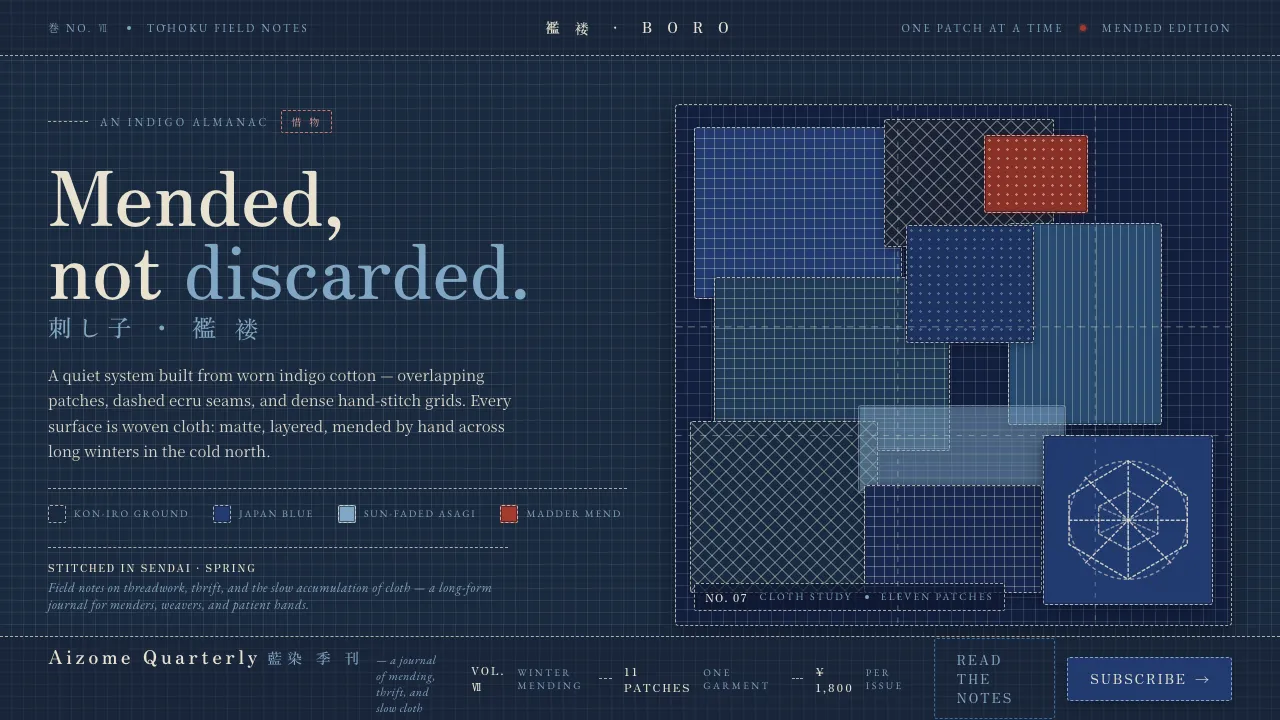
Sashiko boro is the Japanese folk practice of mending worn indigo-dyed cotton and hemp with white running stitches, layering patch upon patch until a garment becomes a palimpsest of deep navy fragments. Born of pre-1900 rural thrift, it reads as a dark kon-iro field gridded with fine ecru stitching and broken by sun-faded lighter-blue patches.
This design system translates that worn cloth into an interface: deep indigo grounds, overlapping rectangular patches with visible seams, dense hand-stitch geometric grids, and the occasional madder-red mend. The surface is woven fabric, never paper.
- Origin
- East Asia — northern Japan (Tōhoku farming and fishing villages)
- Era
- pre-1900 (Edo through Meiji rural Japan)
- Key figures
- anonymous Tōhoku farming households · rural fishing families · household women weavers and stitchers
- Movements
- boro (襤褛) textile tradition · sashiko (刺し子) reinforcement stitching · aizome indigo dyeing · mottainai / 惜物 thrift ethic
Sashiko Boro design spec
Colors
Typography
The other 11 sections — buttons, cards, spacing, motion, techniques and more — open once you unlock. Download the DESIGN.md or send it to your AI in one click. Unlock once, yours forever.
Sign up nowStyles similar to Sashiko Boro
Also inspired by crafts & folk art, with a close feel.
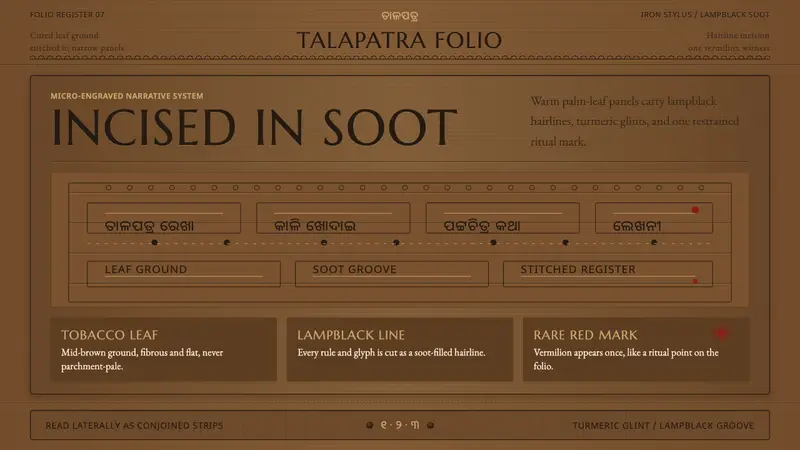 Odisha Palm-Leaf EtchingSacred narrative goes microscopic. Lampblack hairlines cut tobacco-brown leaf with turmeric glints.
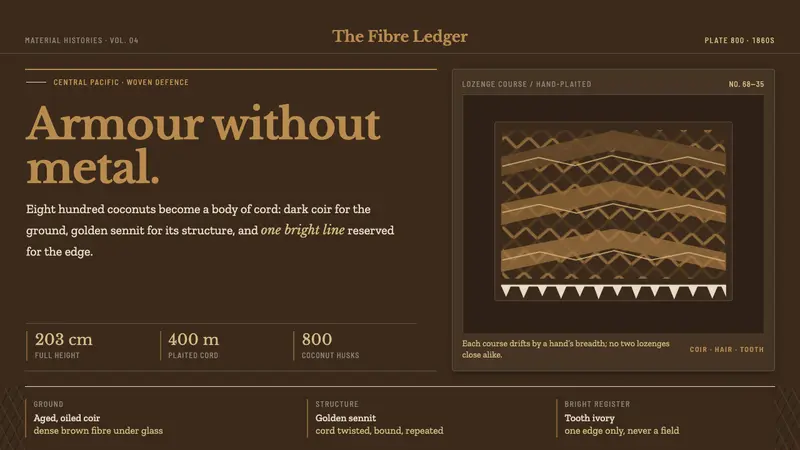 Kiribati Coconut ArmorArmour without metal. Dark coir, golden sennit and one disciplined tooth-ivory edge.
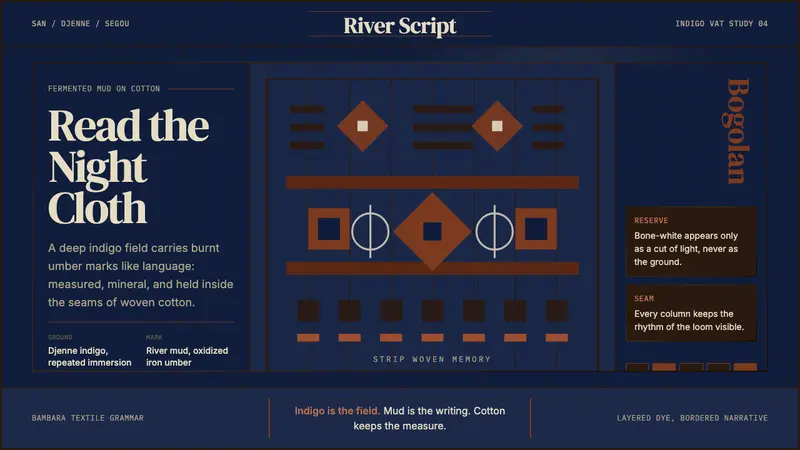 Malian Bogolan over Djenné IndigoCloth reads at night. Djenne indigo, burnt-umber mud marks, and strip seams.
 Belizean Garifuna PuntaNight rhythm burns. Indigo fields, flame-orange serif type, and flag stripes carry the beat.