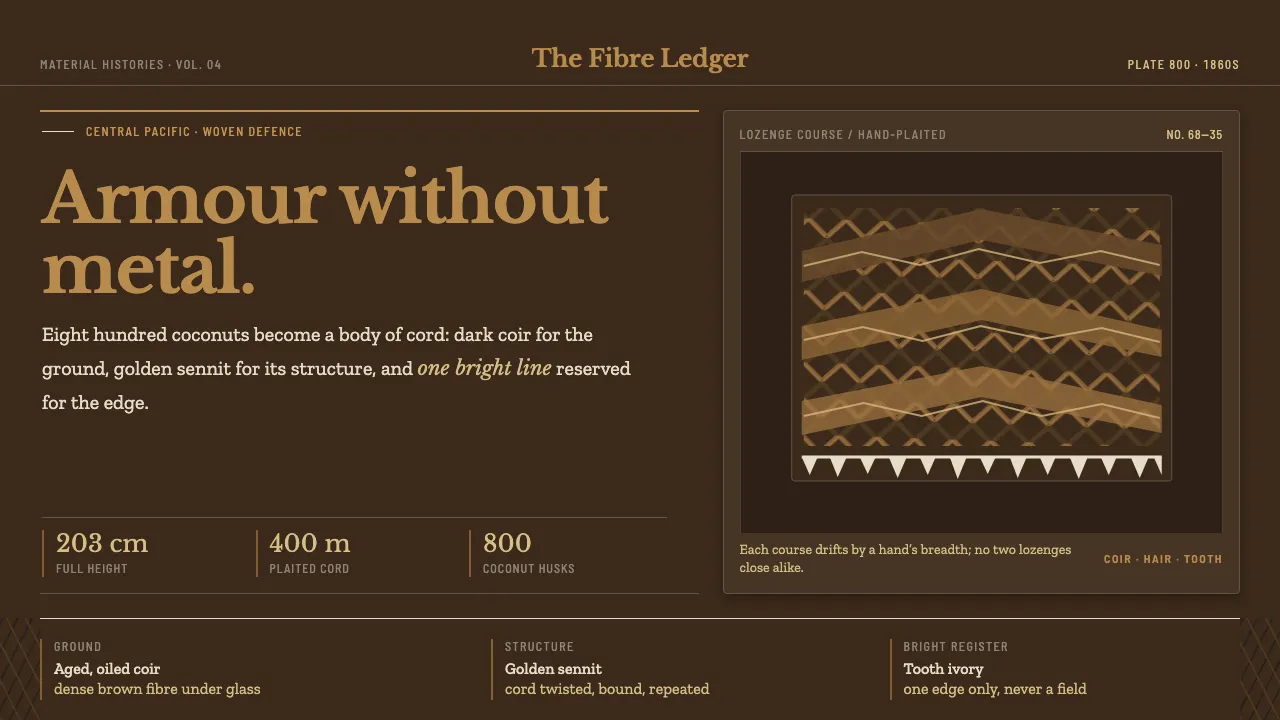
About Kiribati Coconut Armor
Kiribati armour is the only fully articulated body armour Oceania produced, and almost all of it is coconut. A mid-19th-century suit runs 203 × 68 × 35 cm and swallows more than 400 metres of plaited sennit — roughly eight hundred coconuts of husk fibre — bound with human hair, palm leaf, ray skin and shark teeth.
The system takes its structure from that material list rather than from any ornament. Aged oiled coir is the ground, fresh sennit is the primary, and tooth-ivory appears only as an edge — never a field. Type is Victorian museum label, because that is the honest register: Gilbertese has been written in Latin letters only since the 1860s mission presses.
- Origin
- Kiribati (Gilbert Islands), Micronesia, central Pacific
- Era
- 19th century; museum specimens collected mid-1800s (pre-1900)
- Key figures
- I-Kiribati plaiters and warriors · Royal Collection Trust · Peabody Museum of Archaeology and Ethnology · Världskulturmuseerna
- Movements
- Pacific fibre arts · 19th-century ethnographic collecting
Kiribati Coconut Armor design spec
Colors
Typography
The other 11 sections — buttons, cards, spacing, motion, techniques and more — open once you unlock. Download the DESIGN.md or send it to your AI in one click. Unlock once, yours forever.
Sign up nowStyles similar to Kiribati Coconut Armor
Also inspired by crafts & folk art, with a close feel.
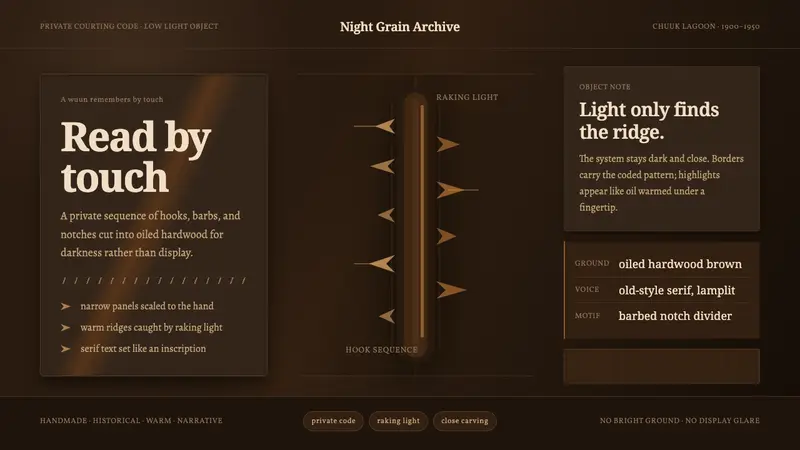 Chuukese Love Stick CarvingIntimacy carved for darkness. Oiled brown grain and hook-notches read by raking light.
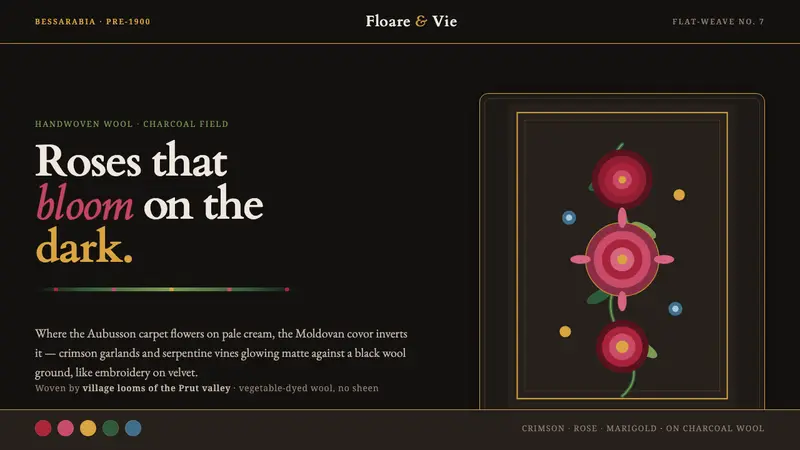 Moldovan Covor KilimRoses that bloom on the dark. Crimson garlands glow matte on a charcoal wool field, gold-fringed.
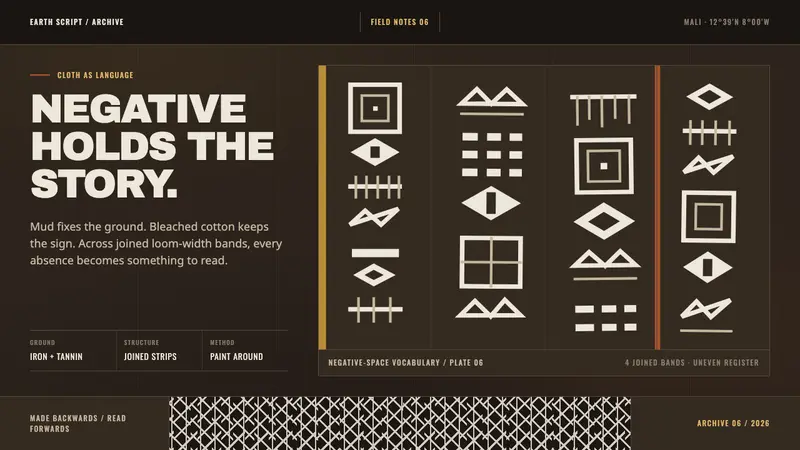 Bogolanfini MudclothAbsence becomes language. Warm iron-black bands hold uneven bleached-cotton symbols.
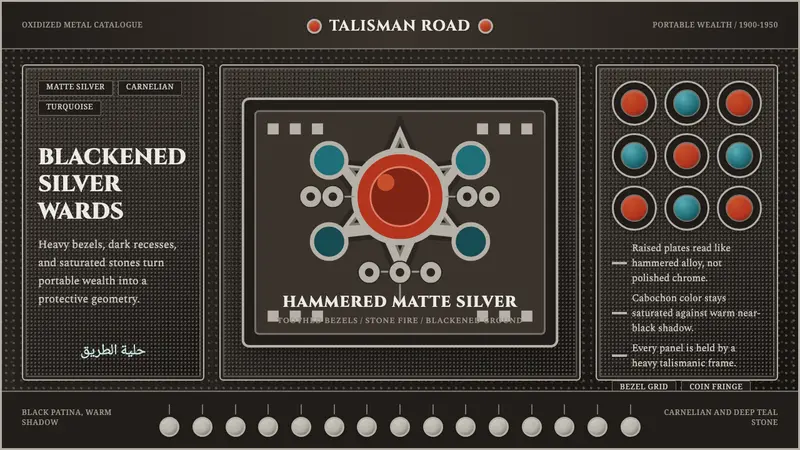 Kuchi Nomad Silver JewelryWeight becomes protection. Matte silver frames carnelian and teal stones on black patina.