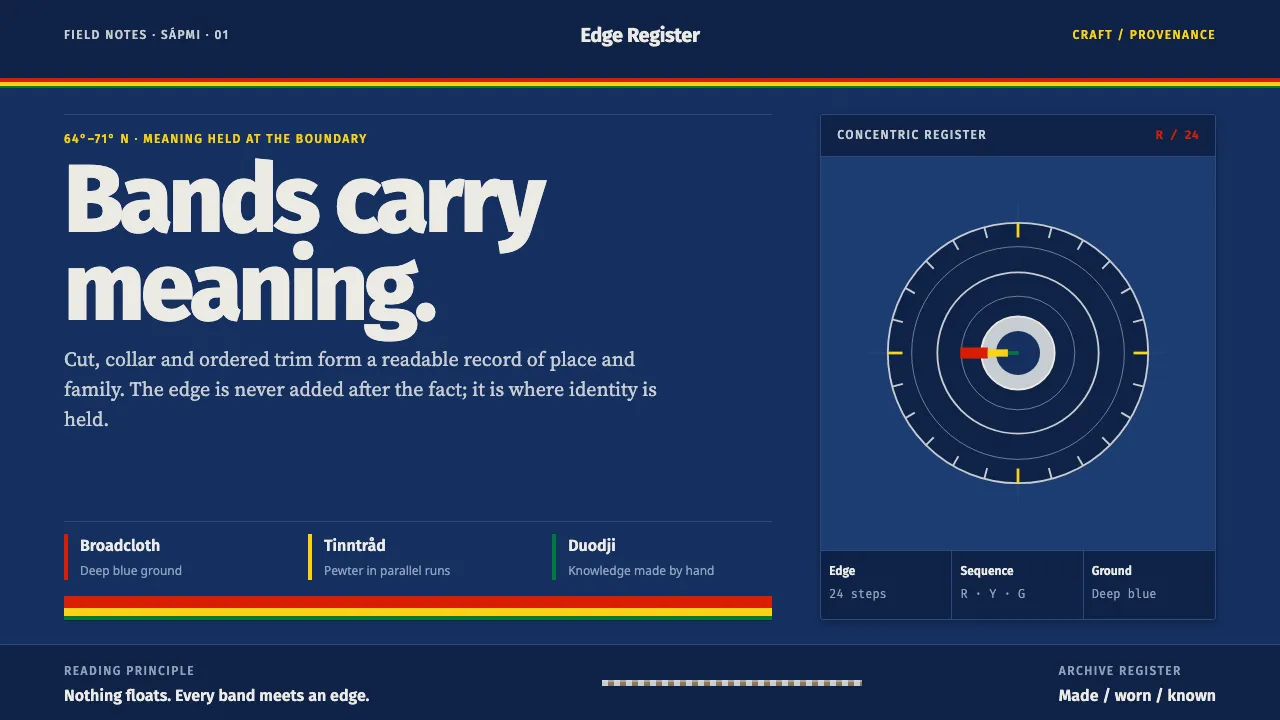
About Sámi Gákti & Duodji
The gákti is deep-blue wool broadcloth banded at hem, cuff, shoulder and collar with narrow strips of red, yellow and green. The bands are not decoration. Cut, collar, trim, belt and headwear together name a region and a family; square belt buttons mean married, round mean unmarried.
Duodji is the craft around the garment — pewter thread couched on reindeer leather, plaited bands, the risku brooch. When Astrid Båhl designed the Sámi flag in 1986 she took its colours from the costume, not the reverse. This system reads the garment the same way: bands carry meaning, edges hold them, nothing floats.
- Origin
- Sápmi — northern Norway, Sweden, Finland and the Kola Peninsula
- Era
- pre-1900, in unbroken use today; flag colours codified 1986
- Key figures
- Astrid Båhl
- Movements
- duodji · Sámi national revival
Sámi Gákti & Duodji design spec
Colors
Typography
The other 11 sections — buttons, cards, spacing, motion, techniques and more — open once you unlock. Download the DESIGN.md or send it to your AI in one click. Unlock once, yours forever.
Sign up nowStyles similar to Sámi Gákti & Duodji
Also inspired by crafts & folk art, with a close feel.
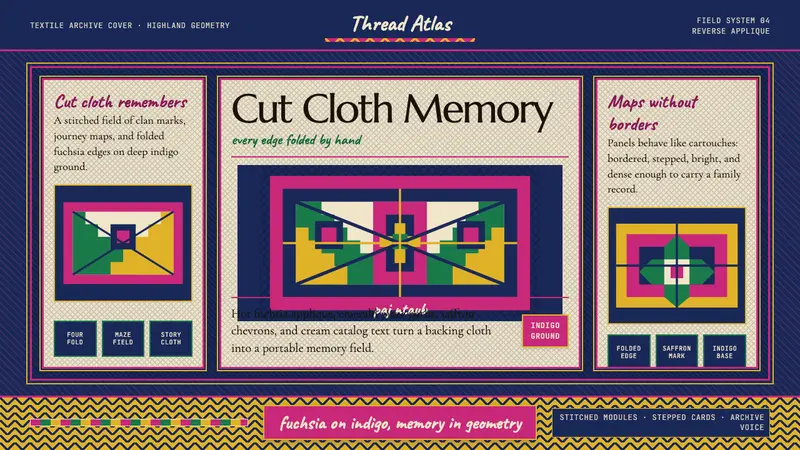 Hmong Paj Ntaub (Flower Cloth)Memory is geometric. Fuchsia applique on indigo forms stepped maze panels.
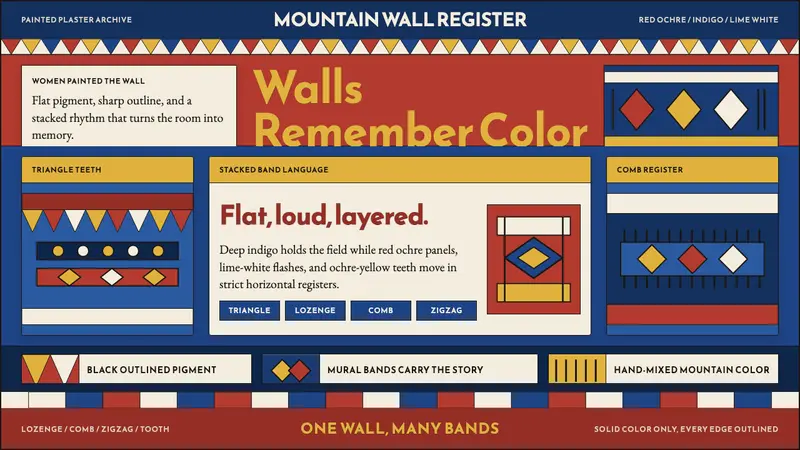 Saudi Asiri Qatt Wall PaintingPainted walls speak loudly. Indigo bands, red triangles, ochre teeth, black outlines.
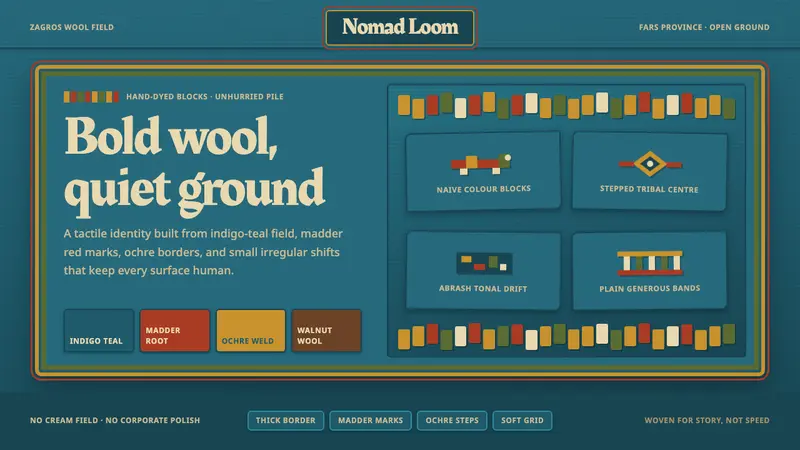 Persian Gabbeh RugBold wool, quiet ground. Indigo-teal field, ochre borders, madder block motifs.
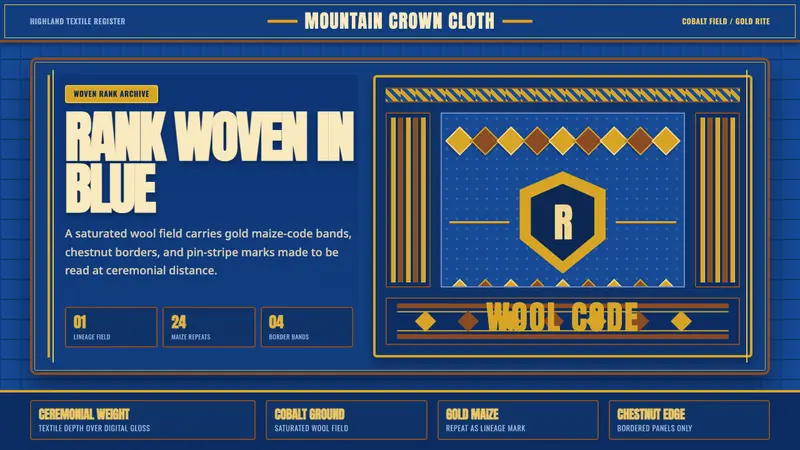 Basotho Seanamarena BlanketRank made visible. Cobalt wool, gold maize diamonds, and chestnut borders read like a crest.