About Victorian Mycology Plate
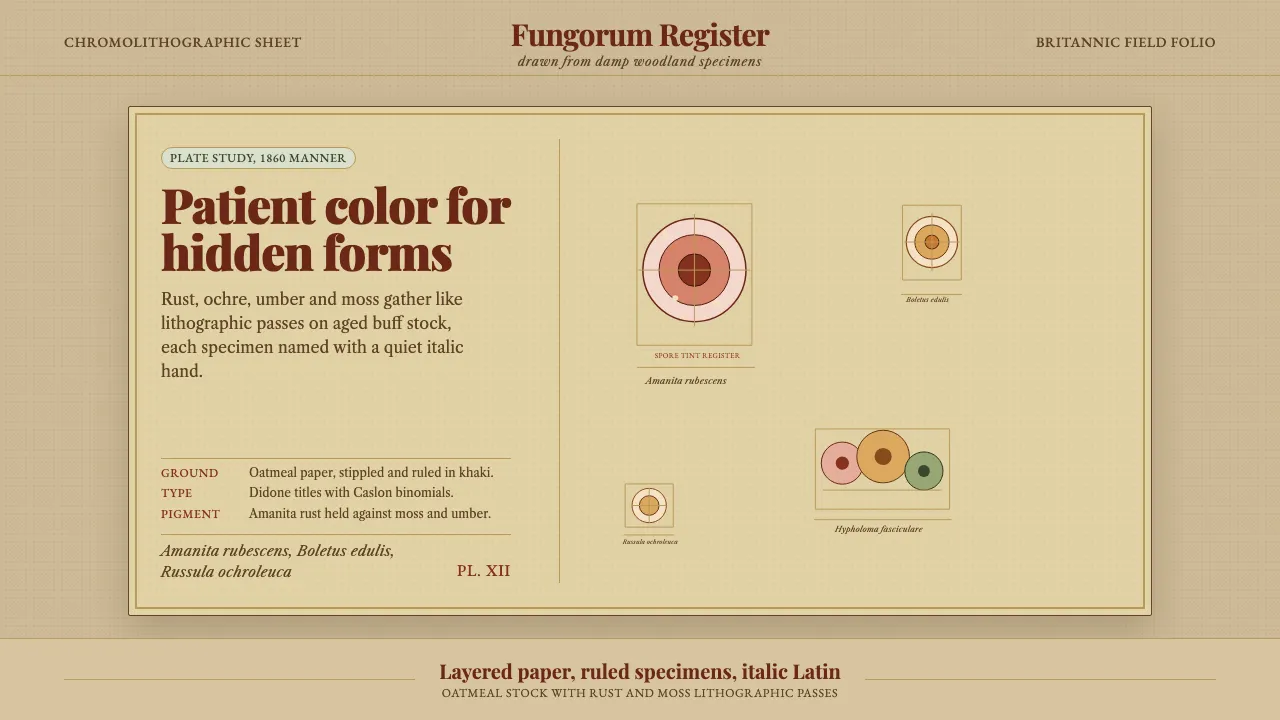
Victorian mycological plates record British fungi with the patient eye of the field naturalist: caps, gills and cross-sections grouped at angles, each specimen lifted from warm oatmeal paper and named in italic serif Latin. The color is chromolithographed — muted rusts, ochres and umbers laid in soft stippled passes, never flat, never bright.
This system rebuilds that plate as an interface. The aged buff page is the ground; the rusty Amanita red anchors action; moss green, khaki and umber fill the supporting register. Type stays in period serifs, headings rise to a high-contrast didone, and every surface reads like printed paper rather than glass.
- Origin
- Britain, Western Europe
- Era
- 1847–1891 (mid-to-late Victorian natural history); chromolithographed fungal plates
- Key figures
- Mordecai Cubitt Cooke · Anna Maria Hussey · James Sowerby
- Movements
- Victorian botanical illustration · Chromolithography
Victorian Mycology Plate design spec
Colors
Typography
The other 11 sections — buttons, cards, spacing, motion, techniques and more — open once you unlock. Download the DESIGN.md or send it to your AI in one click. Unlock once, yours forever.
Sign up nowStyles similar to Victorian Mycology Plate
Also inspired by print & type, with a close feel.
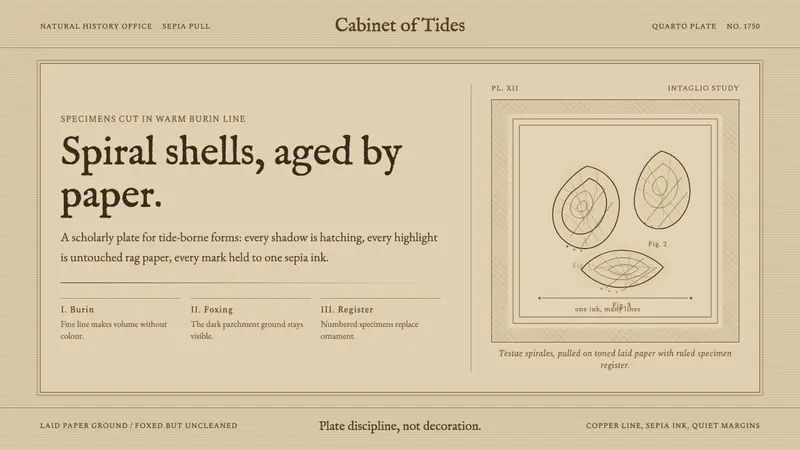 Conchology Shell PlateAged paper is the hero. Sepia Fell type and burin spirals make science feel antique.
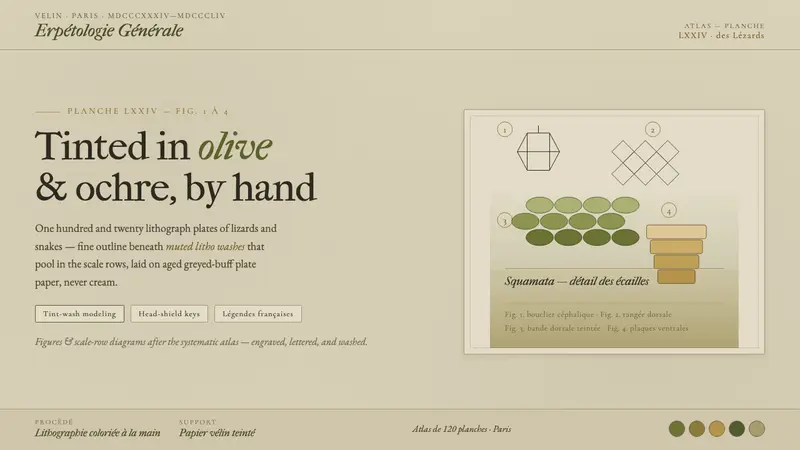 Herpetology Scale PlateA 19th-century herpetology atlas, digitized. Olive-and-ochre litho washes on buff plate paper.
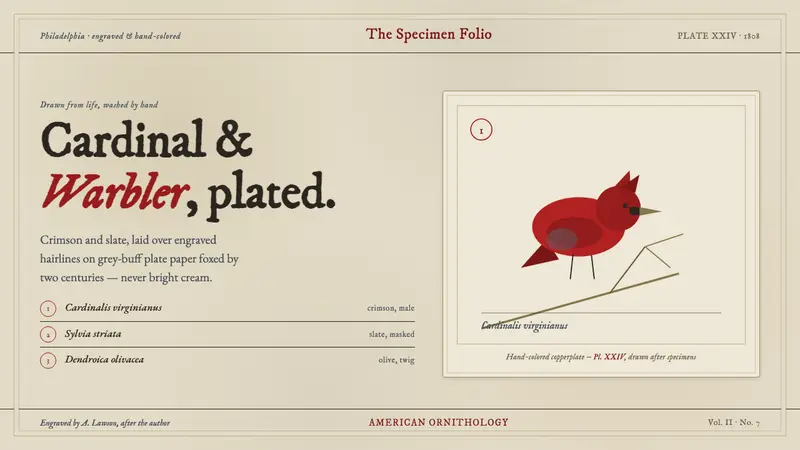 Wilson Ornithology PlateAn 1808 ornithology plate reborn. Cardinal crimson and slate, washed over engraving on foxed paper.
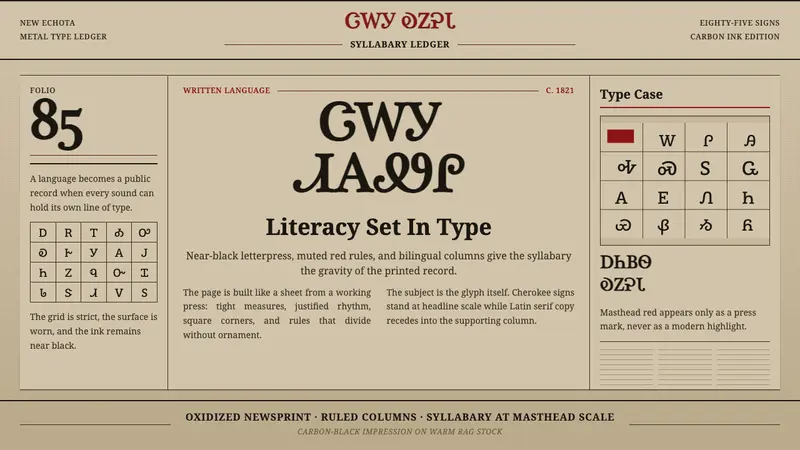 Cherokee SyllabaryLiteracy as inked record. Carbon type, muted red rules, and syllabary on tan newsprint.