About Mongolian Ovoo (Cairn Prayer Site)
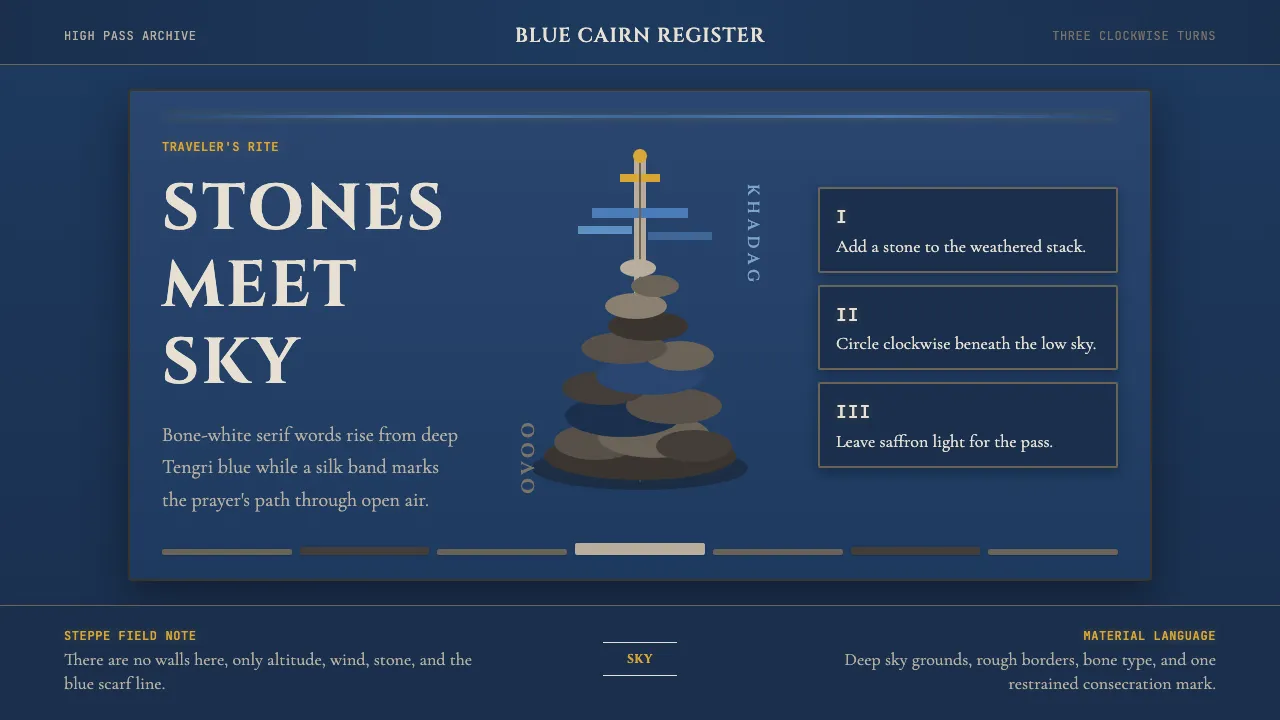
The ovoo is the steppe's architecture — a heap of stones, bleached wood, and sky-blue khadag scarves piled where mountain passes touch heaven. Travelers add a stone, circle three times clockwise, pour a libation. There are no walls, no roofs, only cairns at the high places and an enormous low sky pressing down on everything.
This design system translates that austere verticality into interface language: deep steppe-sky blue grounds, bone-white type carved like weather-patient stone, and silk-blue accents that flutter across compositions like prayer scarves caught in the wind.
Learn more about the Mongolian Ovoo (Cairn Prayer Site) style
- Origin
- Mongolia (all aimags), Inner Mongolia, Buryatia, Tuva, Kalmykia
- Era
- pre-13th century shamanic origins; Buddhist syncretism 1600s; continuous to today
- Key figures
- Zanabazar · Sergei Dordzhi Banzarov · Caroline Humphrey · Owen Lattimore
- Movements
- Tengrist shamanism · Mongolian Vajrayana Buddhism · Inner Asian sacred landscape tradition
Mongolian Ovoo (Cairn Prayer Site) design spec
Colors
Typography
The other 11 sections — buttons, cards, spacing, motion, techniques and more — open once you unlock. Download the DESIGN.md or send it to your AI in one click. Unlock once, yours forever.
Sign up nowStyles similar to Mongolian Ovoo (Cairn Prayer Site)
Also inspired by crafts & folk art, with a close feel.
 Belizean Garifuna PuntaNight rhythm burns. Indigo fields, flame-orange serif type, and flag stripes carry the beat.
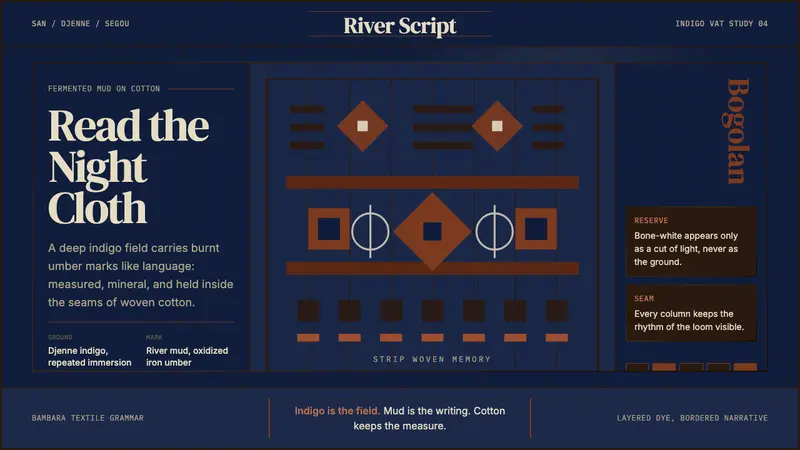 Malian Bogolan over Djenné IndigoCloth reads at night. Djenne indigo, burnt-umber mud marks, and strip seams.
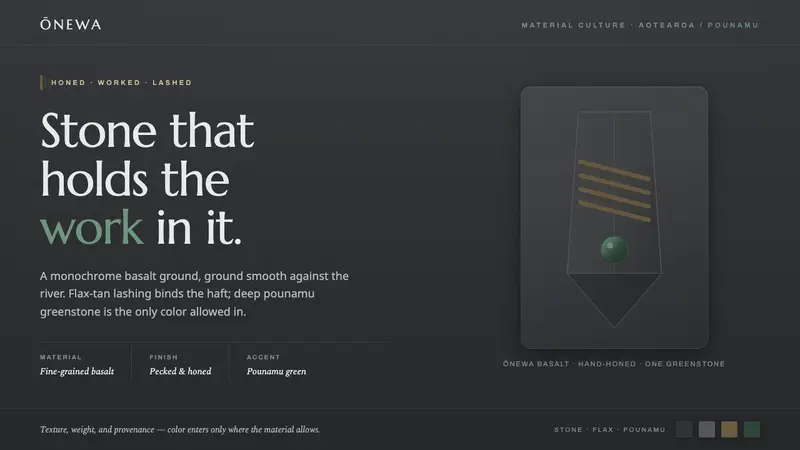 Māori Volcanic StoneColor enters only where the stone allows. Honed charcoal basalt, flax lashing, one pounamu green.
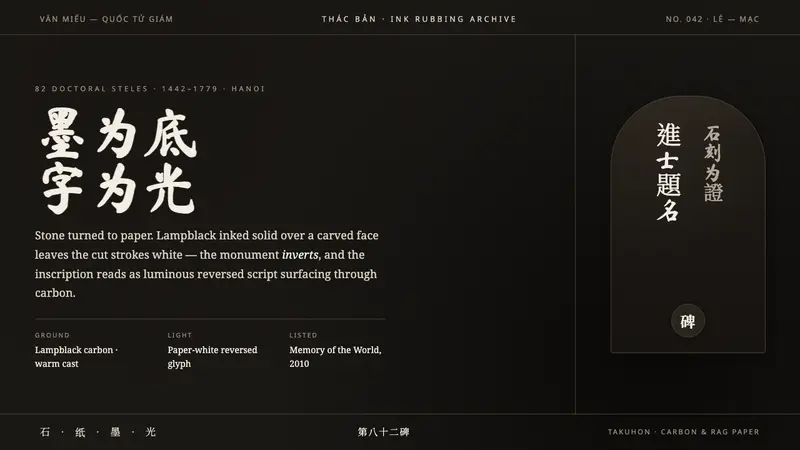 Vietnamese Stele RubbingStone turned to paper. Lampblack ground, ghost-white carved Han glyphs surfacing as reversed light.