About Vietnamese Stele Rubbing
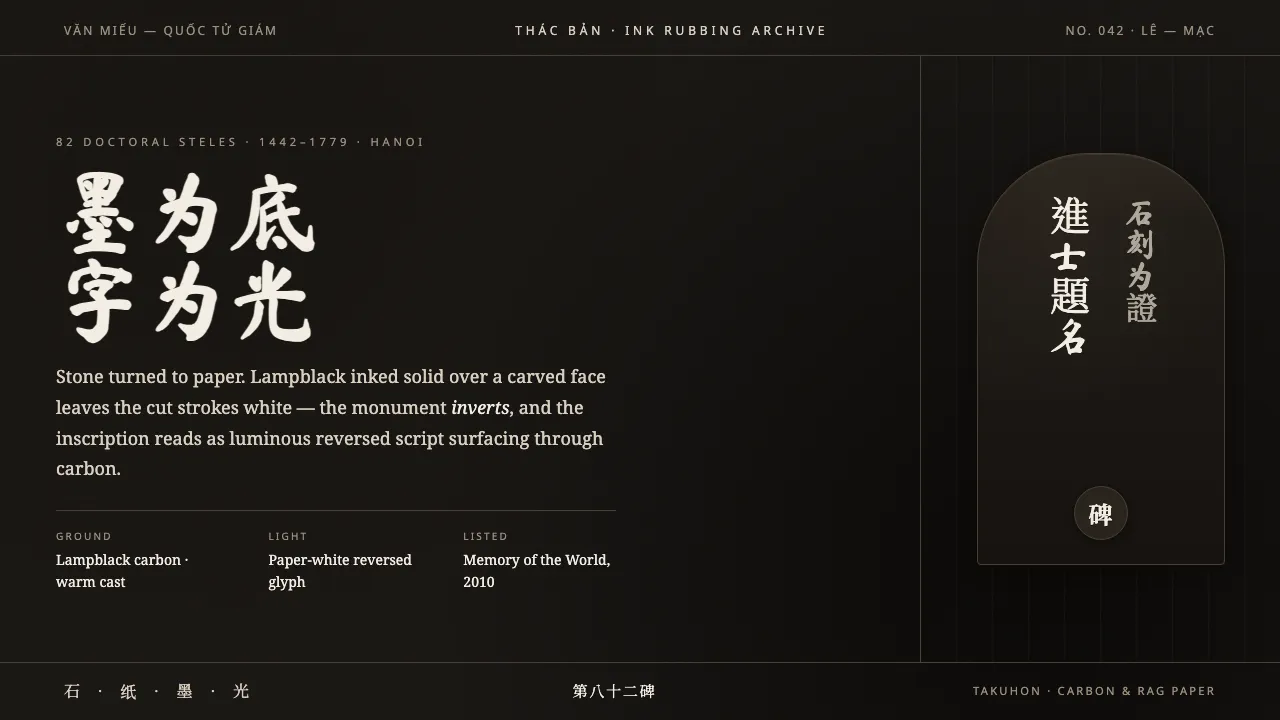
A Vietnamese stele rubbing is a sheet of handmade paper pressed onto a carved stone stele and inked solid in lampblack, so the cut characters surface as ghost-white reversed glyphs. Pulled from the 82 doctoral steles of Hanoi's Temple of Literature, carved under the Lê and Mạc dynasties, it inverts stone into paper — the ground is the ink, the script is the light.
This system distills that inversion into an interface: an inky carbon ground with a faint warm cast, dense vertical columns of Hán seal and regular script glowing in paper-white, and a granular hand-rubbed texture that resists every crisp digital edge.
- Origin
- Hanoi, Vietnam (Temple of Literature / Quốc Tử Giám)
- Era
- Lê and Mạc dynasties, 1442–1779 (rubbing tradition / takuhon); UNESCO Memory of the World inscribed 2010
- Key figures
- 82 tortoise-mounted doctoral steles · Temple of Literature / Quốc Tử Giám · Lê dynasty examination laureates · Mạc dynasty stone carvers
- Movements
- Confucian examination steles · Ink rubbing (takuhon / thác bản) · Hán seal & regular script · UNESCO Memory of the World
Vietnamese Stele Rubbing design spec
Colors
Typography
The other 11 sections — buttons, cards, spacing, motion, techniques and more — open once you unlock. Download the DESIGN.md or send it to your AI in one click. Unlock once, yours forever.
Sign up nowStyles similar to Vietnamese Stele Rubbing
Also inspired by crafts & folk art, with a close feel.
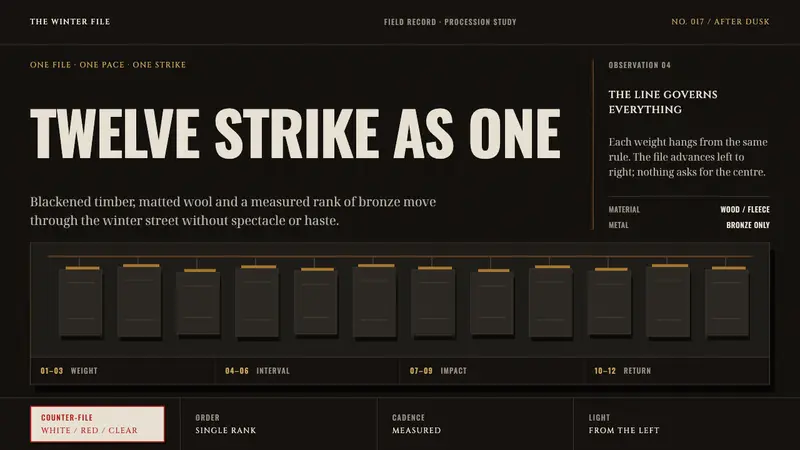 Sardinian MamuthonesRitual moves in one file. Soot-black planes and a rationed bronze rank set the cadence.
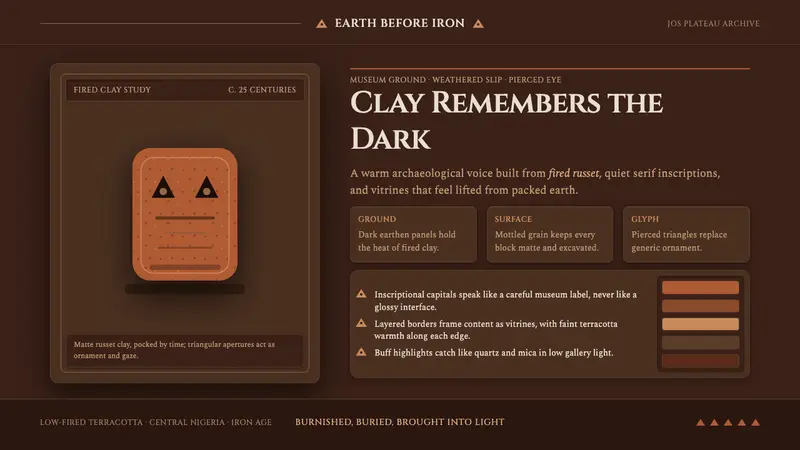 Nok Terracotta NigeriaAncient clay holds the dark. Russet grain, Cinzel labels, and pierced triangles glow.
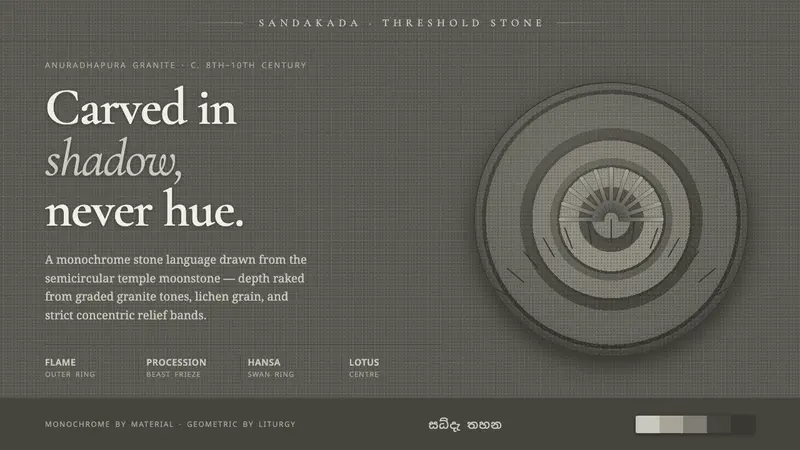 Sandakada Pahana MoonstoneDepth carved from shadow, never hue. Weathered-granite grays in concentric moonstone bands.
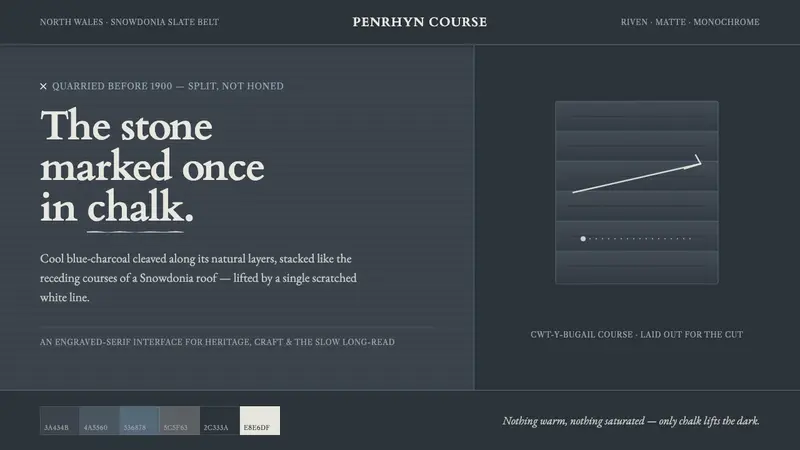 Welsh SlateCool blue-charcoal riven stone, lifted by one chalk-white mark. Stacked courses, engraved serif.