关于 Vietnamese Stele Rubbing
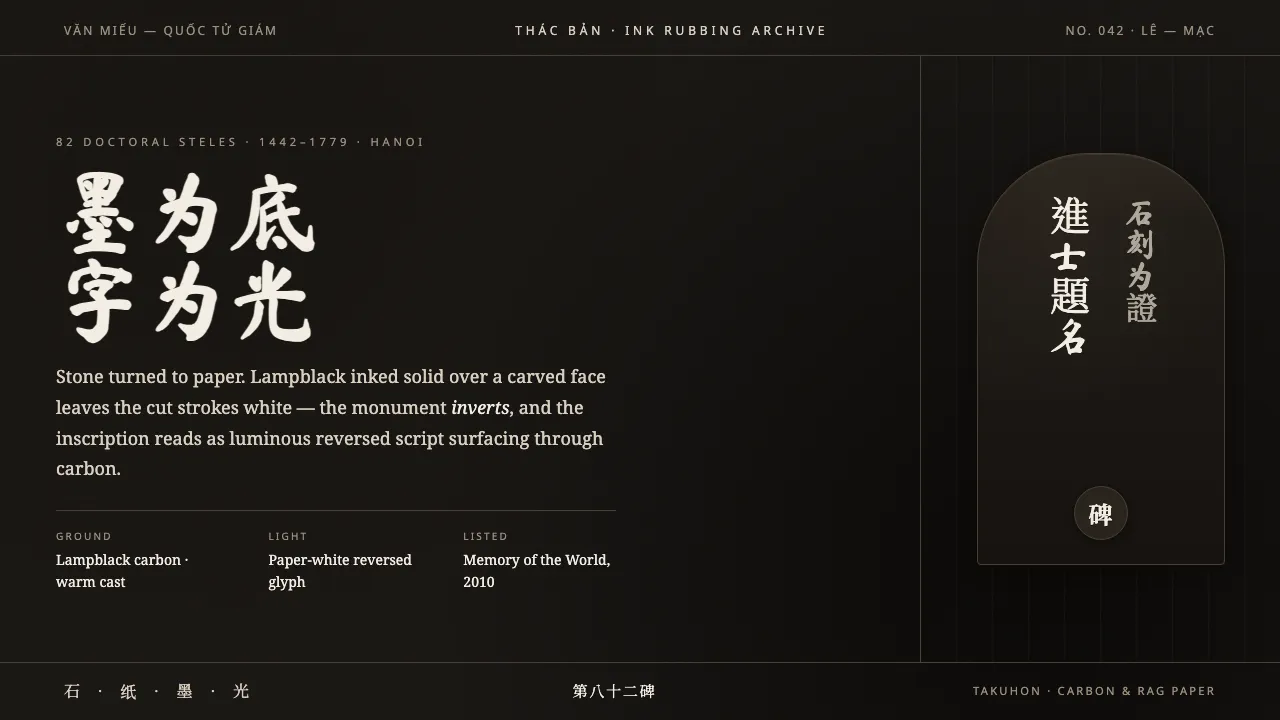
越南拓本(thác bản)是将手工纸覆于石碑之上、以松烟墨满拓而成的一张黑纸:刻入石中的文字反而以幽白阳文浮现,石与纸就此互换。它取自河内文庙的八十二通进士题名碑——黎、莫两朝所立,2010 年列入联合国教科文组织"世界记忆名录"。在这里,墨是底,字是光。
本设计系统将这种"反转"转化为界面语言:温润的炭黑底色透出拓纸的暖意,密排的汉字篆隶以纸白浮起成列,颗粒感的手拓肌理拒绝一切锐利的数字边缘。整体克制、肃穆、近乎单色,让文字本身成为唯一的发光体。
- 来源
- 越南河内(文庙·国子监)
- 年代
- Lê and Mạc dynasties, 1442–1779 (rubbing tradition / takuhon); UNESCO Memory of the World inscribed 2010
- 代表人物
- 82 tortoise-mounted doctoral steles · Temple of Literature / Quốc Tử Giám · Lê dynasty examination laureates · Mạc dynasty stone carvers
- 所属运动
- Confucian examination steles · Ink rubbing (takuhon / thác bản) · Hán seal & regular script · UNESCO Memory of the World
Vietnamese Stele Rubbing 的设计规格
和 Vietnamese Stele Rubbing 相似的风格
同样来自手工艺与民俗,气质相近。