About Moby-Dick (1851)
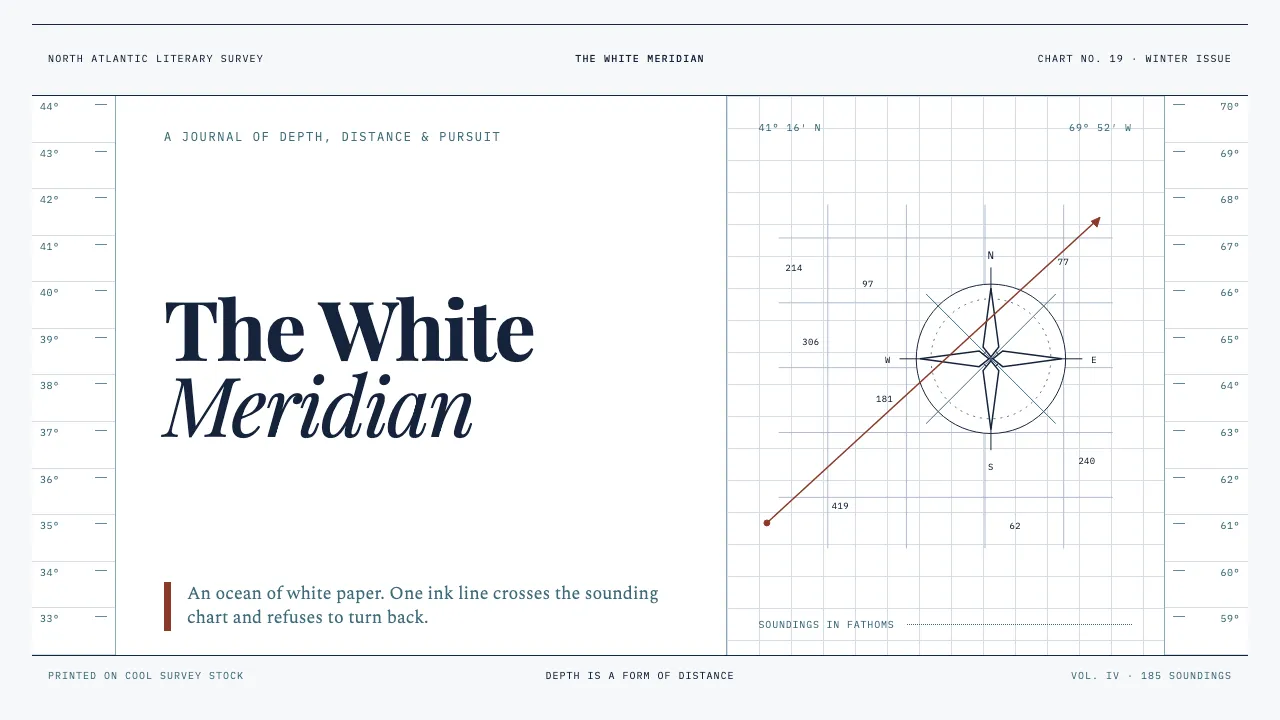
Moby-Dick is Melville's whaling world drawn as a hydrographic chart: bone-white paper stretched taut, and every mark on it a line. Hairline harpoon rules shoot across columns, compass roses radiate from corners, and figures are cut in the tight cross-hatched engraving of a sailor scratching a sperm whale onto ivory during a dead calm. There are almost no fills and almost no color — the drama lives in the density of the linework and the vast white swells of empty ground between. One thin black line pulls you toward the whale.
- Origin
- New Bedford & Nantucket, Massachusetts; the Pacific whaling grounds
- Era
- 1851 novel; whaling & scrimshaw folk art peak ~1820–1870; illustrated editions 1930 and 1979
- Key figures
- Herman Melville · Rockwell Kent · Barry Moser · Nathaniel Philbrick
- Movements
- American Romanticism · scrimshaw folk engraving · maritime cartography
Moby-Dick (1851) design spec
Colors
Typography
The other 11 sections — buttons, cards, spacing, motion, techniques and more — open once you unlock. Download the DESIGN.md or send it to your AI in one click. Unlock once, yours forever.
Sign up nowStyles similar to Moby-Dick (1851)
Also inspired by print & type, with a close feel.
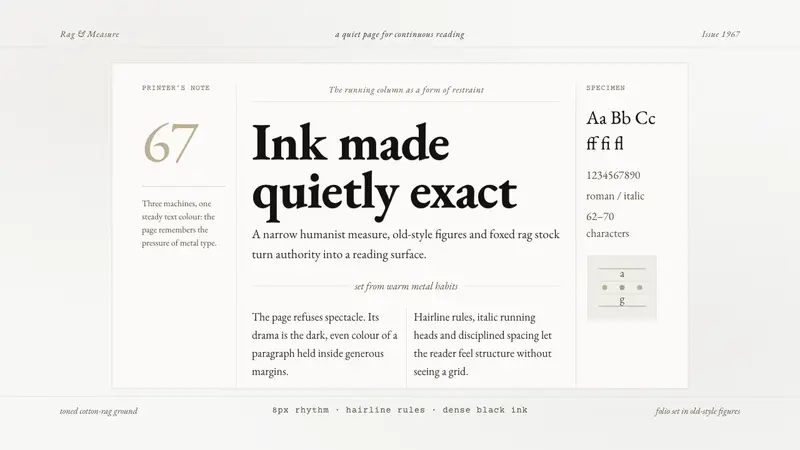 Sabon by Jan TschicholdQuiet authority in print. Dense black Garamond rests on foxed grey-tan rag paper.
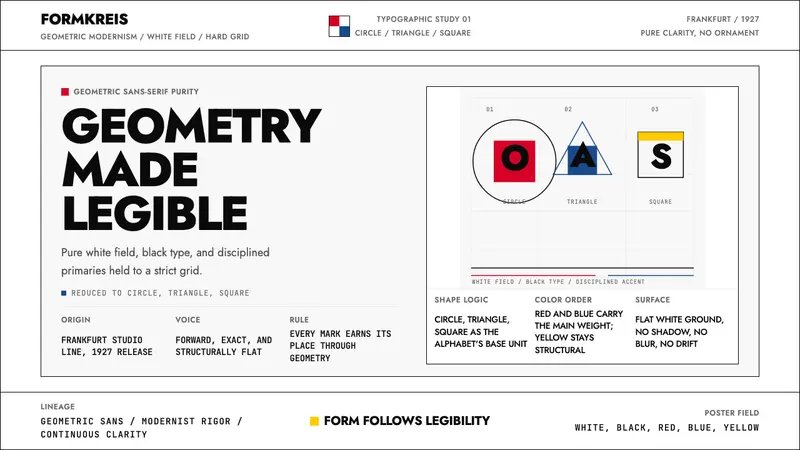 Futura Typeface (Renner, 1927)Geometry is legible. Black type and white fields, with red-blue-yellow anchors on grid.
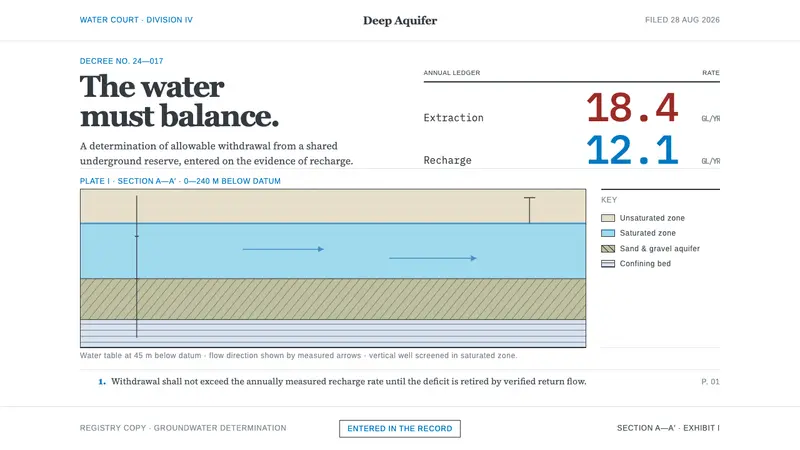 Deep Aquifer Water CourtRestraint makes the deficit undeniable. White bond, book serif, and a keyed aquifer section frame two rates.
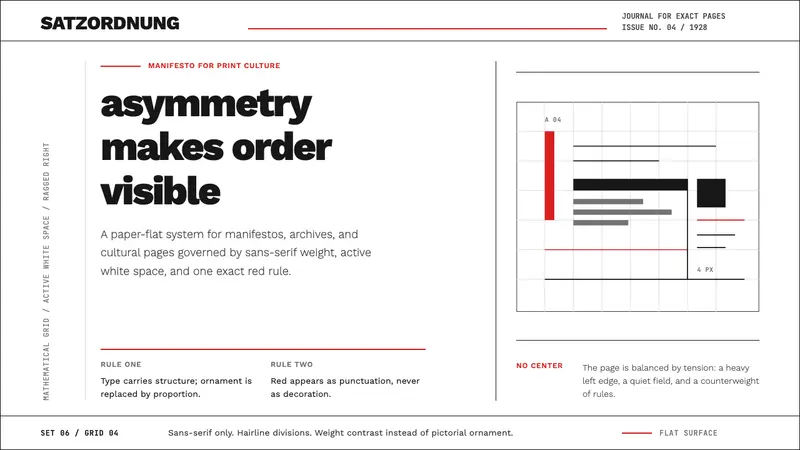 New Typography (Tschichold 1928)Tschichold's 1928 doctrine in CSS. Asymmetric grid, hairline rules, red-and-black as only ornament.